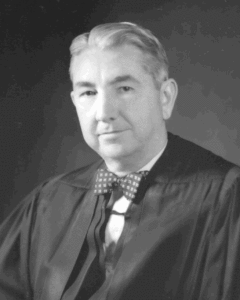
6/15/1804: The 12th Amendment is ratified.
The Volokh Conspiracy
Mostly law professors | Sometimes contrarian | Often libertarian | Always independent | Est. 2002

Congress Considers Bipartisan Bill Curbing Asset Forfeiture
The FAIR Act would be a significant step forward. It just passed the House Judiciary Committee on a unanimous 26-0 vote.

Earlier today, the House Judiciary Committee passed the FAIR Act on a 26-0 vote. We rarely see such unanimity in this era of partisan polarization! Reason's Jacob Sullum has a helpful summary of how this bill would reform the federal asset forfeiture system:
Two years ago, the FBI seized the contents of safe deposit boxes used by hundreds of people at U.S. Private Vaults, a Beverly Hills business that offered secure storage for cash and other valuables. One of those dismayed customers was Linda Martin, a Los Angeles resident whose box contained $40,200 that she and her husband had saved for a deposit on a new home.
Martin, whose money was seized without any evidence that she was involved in illegal activity, is still trying to get it back. Her predicament is emblematic of the injustice wrought by civil asset forfeiture, a system of legalized larceny that allows law enforcement agencies to pad their budgets by confiscating allegedly crime-tainted property without charging, let alone convicting, the owner.
A bill that has attracted bipartisan support in Congress aims to address that problem. The Fifth Amendment Integrity Restoration (FAIR) Act includes several substantial reforms that would make it harder for the federal government to take assets from innocent people like Martin.
The FAIR Act, which Reps. Tim Walberg (R‒Mich.) and Jamie Raskin (D‒Md.) reintroduced in March, would eliminate the perverse financial incentive that encourages agencies like the FBI to seize first and ask questions later (if ever). It would assign forfeiture proceeds to the general fund instead of letting the seizing agency keep the loot.
The bill also would eliminate the "equitable sharing" program that lets state and local agencies keep up to 80 percent of the revenue from forfeitures they initiate. By authorizing confiscation under federal law, that program invites money-hungry cops to circumvent state reforms that make forfeiture harder or less profitable….
To keep seized property under current federal law, the government needs to prove it is more likely than not that it was derived from or facilitated a crime. The FAIR Act raises that standard to "clear and convincing evidence," and it enhances protections for innocent owners: When another person uses someone's property to commit a crime, the government would have the burden of proving that the owner "knowingly consented or was willfully blind" to that unlawful use.
The FAIR Act would also abolish "administrative" forfeitures ordered by federal bureaucrats. Only federal judges would have the power to order the forfeiture of property.
Asset forfeiture abuse is a serious problem in both the federal law enforcement system and in many states. It often enables law enforcement agencies to seize citizens' property without convicting them of a crime or even charging them. Then, procedural barriers make it difficult or impossible for the owners to reclaim their assets, even if they are completely innocent. I go over these issues in more detail here.
The Supreme Court's 2019 ruling in Timbs v. United States, imposes some constitutional constraints on asset forfeiture. But it has a variety of limitations, and left several key issues for lower courts to resolve.
The "equitable sharing" program mentioned by Sullum allows state and local agencies to circumvent state-law limitations on asset forfeiture by working with the feds, and then sharing the loot. The system is an egregious attack on both federalism and property rights. It was curbed by Obama Administration Attorney General Eric Holder, but then reinstated by Trump's first AG, Jeff Sessions. Biden Attorney General Merrick Garland has - so far, at least - perpetuated Sessions' scheme to Make Asset Forfeiture Great Again.
For reasons Sullum notes, the FAIR Act would not completely put an end to unjust federal asset forfeiture. If it were up to me, I would go even further than Sullum recommends, and simply abolish asset forfeiture entirely - even for those convicted of crimes. There is no good reason to add property confiscation to ordinary criminal penalties, and also no reason to punish more harshly a criminal who used his own car to commit an illegal transaction as opposed to taking the subway or the bus. Law enforcement should be able to return stolen property, but not confiscate suspects' own property as a kind of extra punishment for their possible crimes.
Despite some limitations, the FAIR Act would be a major improvement over the current federal system. And the abolition of the equitable sharing program would bolster reform efforts at the state level, as well.
The overwhelming vote in the Judiciary Committee is a good sign. Libertarians, liberals, and many conservatives are united on this issue, which combines government abuse of property rights with violations of due process rights and disproportionate effects on the poor and racial minorities.
But it is too early to celebrate. Rep. Raskin, co-sponsor of this act (best known for being the lead impeachment manager on Donald Trump's second impeachment), is among those who have been here before. In 2017, he co-sponsored similar legislation (with libertarian Rep. Justin Amash, among others) that passed the House by a unanimous vote, only to have it die in the Senate. It's a rare issue that unites Amash, Raskin, the ACLU, the Institute for Justice and many others. Raskin deserves credit for sticking with this cause over many years.
But, despite this broad support, asset forfeiture reform remains politically difficult, because law enforcement agencies are loath to give up this source of income. In some years, federal law enforcement alone seizes more property through asset forfeiture than burglars around the country manage to steal. Hopefully, the Senate won't block asset forfeiture reform yet again.
Congress Should Improve and then Pass the Venezuelan Adjustment Act
The bipartisan legislation would grant permanent residency and work rights to some 400,000 refugees from Venezuela's brutal socialist dictatorship.
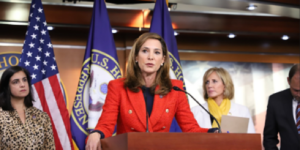
Yesterday, a bipartisan group of members of the House of Representatives introduced the Venezuelan Adjustment Act, which would grant permanent residency rights to some 400,000 Venezuelans currently in the United States, who have fled their home country's brutal socialist dictatorship:
A bipartisan group of lawmakers has introduced the Venezuelan Adjustment Act to adjust the legal status for Venezuelan nationals. Florida Rep. Maria Elvira Salazar (R), who's promoted the Dignity Act, joins Democrats in looking to address pressing concerns regarding Venezuelan nationals. With Florida Reps. Darren Soto (D), Debbie Wasserman Schultz (D), and Frederica Wilson (D), Salazar has introduced H.R. 4048.
According to a press release from Salazar's office, the bill "would adjust the legal status for certain Venezuelan nationals to that of lawfully admitted permanent residence if they meet certain criteria, including entering the United States before or on December 31, 2021."
Moreover, it "would provide a path to lawful permanent residency status to many Venezuelan nationals who have been living in the United States for years and allow them to continue making significant contributions to their communities, the state of Florida, and the country…."
Mildred Rodriguez, the CEO of My Voice Counts, praised the effort, commenting that the bill "will allow more than 400,000 Venezuelans who are fleeing an oppressive regime where totalitarianism prevails to obtain Permanent Residence…."
As Rep. Salazar (herself the daughter of Cuban refugees from communism), put it in her statement introducing the act, "The oppression of the Maduro regime and the failure of socialism of the 21st century has led to the world's worst refugee crisis. As a result, thousands of Venezuelans…. face an uncertain immigration situation and cannot return to Venezuela. I am proud to co-lead the Venezuelan Adjustment Act to provide refuge for those who have endured incredible suffering, so they do not have to return home to face the wrath of the dictatorship."
The poverty and oppression created by Venezuela's socialist government has caused over 7 million refugees to flee. It isn't entirely clear whether this really is the world's biggest current refugee crisis. Russia's invasion of Ukraine has led to the flight of a similar number of people. But the Venezuelan situation is certainly the biggest refugee crisis in the history of the Western Hemisphere.
Rep. Salazar and the other sponsors deserve credit for introducing this bill, and Congress should pass it. If enacted, it will help Venezuelan migrants in the US continue to escape deportation back to oppression, as opposed to being subject to the whims of the White House, where current and future presidents may or may not continue to extend the Temporary Protected Status (TPS) most of them currently enjoy. Granting permanent residency will also benefit American society as a whole, by enabling migrants to integrate into society more fully, and increase their contributions to the economy. I covered these and other advantages of passing adjustment acts in greater detail in an April article in the Boston Globe (non-paywall version here).
Rep. Salazar stands out relative to some other GOP politicians who simultaneously condemn socialism and try to keep Venezuelans and others fleeing it from entering the US. The rest of the party would do well to follow her example, though I fear many won't.
There is, however, one obvious flaw in the current version of the Venezuelan Adjustment Act. With a few exceptions, it only applies to Venezuelans who entered the United States on or before Dec. 31, 2021. That leaves out many thousands who have arrived since then, including a large number admitted under the Biden Administration's expansion of the Uniting for Ukraine private sponsorship model to cover migrants from four Latin American nations, including Venezuela. It is obvious that Venezuelans who arrived after Dec. 31, 2021 are no less worthy of refuge than those who came before that date. I hope the sponsors will drop this arbitrary date limitation.
Some might wonder whether it is unfair to grant permanent residency to Venezuelans, but not migrants fleeing comparable violence and oppression elsewhere. Why Venezuelans, but not Cubans, Ukrainians, and others? It's a reasonable question. The answer is the same one I have given on several previous occasions (e.g. here and here).
Ideally, we should indeed extend residency rights to all similarly situated migrants fleeing poverty, war, and oppression. I have long advocated adjustment acts for Afghans, Cubans, Ukrainians, Russians fleeing Putin's regime, and other migrants in similar situations.. But the best should not be the enemy of the good. We should not forego an opportunity to help some refugees from oppression unless and until we can simultaneously help all.
To the extent there is inconsistency and unfairness, the right way to address it is "leveling up," not leveling down. Moreover, a successful Venezuelan Adjustment Act can potentially serve as a model for similar legislation applying to other groups. The US actually has a long history of passing adjustment acts granting permanent residency to other refugees from socialism. This legislation can help reinvigorate that tradition, after an unfortunate hiatus in recent years.
UPDATE: It's worth noting that there is already an Afghan Adjustment Act before Congress, albeit it hasn't passed, despite significant bipartisan support (including from Rep. Salazar, who is one of its sponsors). On June 8, a different bipartisan group of representatives introduced a Ukrainian Adjustment Act, which I will say more about in a future post.
"Rewrite This Paper as if You Were Not Angry"
Good advice from Emily Chamlee-Wright, now the President of the Institute of Humane Studies and former professor, Associate Dean, and Provost.
Particular useful for academic articles, but also for whenever one seeks to persuade a skeptical audience that is looking for reasoned argument.
Government Entity May Turn off All Comments on Its Social Media Page
It just can't limit such comments in a viewpoint-based way.
From Cooper-Keel v. State, decided today by Magistrate Judge Sally Berens (W.D. Mich.):
Defendant Kengis is currently the Chief Judge of the Allegan County Circuit Court. Defendant Kengis presided over Cooper-Keel's previous divorce case. During that proceeding, Cooper-Keel moved to disqualify Defendant Kengis from deciding the case, but Kengis denied the motion. That ruling was subsequently affirmed by the Michigan Court of Appeals.
Cooper-Keel alleges that on September 7, 2021, he made the following comment on the Circuit Court's Facebook page referring to Kengis, "Is he going to help rig some more circuit court trials in that crooked ass sh*thole of a circuit court? https://www. google.com/amp/s/amp.hollandsentinel.com/amp/114417676." The article Cooper-Keel referenced in his comments reported on a criminal case in which the defendant was granted a new trial after it was discovered that then-Chief Judge Margaret Bakker had sent the prosecutor emails regarding the case during the trial. Cooper-Keel further alleges that on February 22, 2022, after Defendant Kengis became Chief Judge, the Circuit Court posted an announcement on its Facebook page introducing the recently-hired director of the Friend of the Court. Cooper-Keel made a comment in response to the post similar to the comment he had made on September 7, 2021. Later in the day, the comments were hidden, and the post no longer indicated that comments had been made. In contrast, Cooper-Keel alleges, his September 21, 2021 comment was never deleted, hidden, or censored in any way.
The Circuit Court's official Facebook page was created on December 18, 2018 …. The intended purpose of the Facebook page was to inform the public about court events and news, not to interact or debate matters with the public…. However, users or followers had the ability to interact with posts, which continued from December 2018 through October 2021. Mr. Dulac [the Page Administrator and court employee] thus was required to review each individual post on the Circuit Court's Facebook page for user comments.
When Defendant Kengis became Chief Judge in January 2022, he learned that Mr. Dulac was devoting time to manually reviewing each individual post on the Circuit Court's Facebook page, which took substantial time away from his other job duties.
"Hamtramck Council Approves Banning LGBTQ+, Other Flags on City Property"
Actually, the resolution just dictates what flags may be flown on city flagpoles; and that, I think, is constitutionally permissible.
So the Detroit News (Shawntay Lewis & Mark Hicks) reported yesterday:
City officials said the resolution was not rooted in division.
"It basically is council's attempt to keep the city's flag poles neutral," City Manager Max Garbarino said Tuesday.
"Last year there was a pride flag up there, and there was a dust-up in the community in regard to that. There was a lot of the community that was for it. There was a lot of the community that was against it.
"The thought process, I believe, is that it potentially could go up here again this summer. And this is basically a resolution specifically just saying these are the only flags we want in an attempt to stay neutral on the topic." …
[Garbarino] added he has "received some verbal requests from people representing some religious groups, and I expect more requests if we allow the flag of one group to be flown."
In 2022, Hamtramck seated its first all-Muslim city council and mayor. The council raised eyebrows in January when it approved updates to the city's ordinance outlining how residents can perform religious slaughters privately.
Here is the resolution:
Armslist Not Liable for Hosting Gun Sale Ads That Led to Purchases by People Who Used the Guns Criminally
The Seventh Circuit so holds, applying Wisconsin tort law, and not reaching the 47 U.S.C. § 230 issue.
From Monday's decision in Webber v. Armslist LLC, decided by the Seventh Circuit in an opinion by Judge Michael Brennan, joined by Judges Joel Flaum and Michael Scudder:
Erin Bauer and Richard Webber are the legal representatives and family members of two individuals killed using guns that had been listed on armslist.com, an online firearms marketplace. Bauer and Webber each sued Armslist LLC …, alleging negligence and other Wisconsin state law claims. The plaintiffs assert that the defendants designed the website to encourage and assist individuals in circumventing federal and state law regulating firearms. The defendants argue that the plaintiffs have failed to state a claim upon which relief can be granted because publishing third-party offers to sell firearms does not establish tort or other liability under Wisconsin law.
Because we affirm on the state law claims, we decline to rule on the [§ 230] preemption issue….
Armslist.com is an online marketplace for firearms…. Armslist LLC is not engaged in the business of selling firearms. Rather, its website hosts "for sale" and "want to buy" ads posted by users….
The plaintiffs level serious accusations against the defendants. They allege that armslist.com allows individuals to engage in the business of selling firearms without a license and to circumvent federal and state law governing firearms dealers, including avoiding background checks. The defendants purportedly accomplished this through design and content features. Among these are choosing to label purchases and sales as private party transactions by default. The plaintiffs also claim that armslist.com allows users to filter listings to identify private party sellers. This "filter function" allegedly facilitates the private sale of firearms without background checks to individuals prohibited from possessing firearms.
The plaintiffs also contend the defendants provided certain assurances that enabled both buyers and sellers to operate anonymously, including that:
Journal of Free Speech Law: "Noisy Speech Externalities," by Prof. Gus Hurwitz
Just published as part of the symposium on Media and Society After Technological Disruption, edited by Profs. Justin "Gus" Hurwitz & Kyle Langvardt.
The article is here; here is the Introduction:
A central tenet of contemporary First Amendment law is the metaphor of the marketplace of ideas—that the solution to bad speech is more, better, speech. This basic idea is well-established in both judicial and scholarly writing—but it is not without its critics. My contribution to this volume adds a new criticism of the marketplace-of-ideas metaphor. I argue that there are circumstances where ostensibly "good" speech may be indistinguishable by listeners from bad speech—indeed, that there are cases in which any incremental speech can actually make other good speech indistinguishable from bad speech. In such cases, seemingly "good" speech has the effect of "bad" speech. I call this process by which ostensibly good speech turns the effects of other speech bad "a noisy speech externality."
This thesis has important implications. First, it offers a poignant critique of the marketplace-of-ideas aphorism introduced by Justice Holmes in his Abrams dissent. If the marketplace of ideas is subject to significant market failure, correctives may be justified. Market failures, after all, are a standard justification for regulatory intervention. But, second, my contribution goes a step farther, suggesting not only that there are circumstances in which good speech may fail as a corrective to bad speech but also that there are circumstances in which the addition of seemingly good speech may only yield more bad speech. In such cases, the only solution to bad speech may be less speech—encouraging more speech may actually be detrimental to our speech values. If that is the case, then correctives may be not only justified but needed to satisfy an important societal interest. And, third, this chapter presents solutions for content-neutral ways in which to implement such correctives.
Amicus Brief Supporting Netflix in Tort Lawsuit Over 13 Reasons Why
From the just-filed amicus brief in Estate of Herndon v. Netflix, Inc. (9th Cir.), prepared by my UCLA School of Law students Aaron Boudaie, Eimile Nolan, and Simon Ruhland and by me, on behalf of the Foundation for Individual Rights and Expression (FIRE), PEN American Center, Inc. (PEN America), the National Coalition Against Censorship (NCAC), and the Student Press Law Center (SPLC):
Summary of Argument
Suicide is an enduring, though tragic, facet of human existence. Many great works of literature, history, and religion depict it, and those works are routinely taught to teenagers. For just some of the most famous literary examples, consider Shakespeare's Romeo and Juliet, Othello, and Julius Caesar, as well as the novels Anna Karenina, Madame Bovary, Les Miserables, The Catcher in the Rye, and The Great Gatsby. In political, scientific, and artistic history, consider any biography or history describing Cleopatra, Mark Antony, Hannibal, Vincent van Gogh, Alan Turing, Ernest Hemingway, Marilyn Monroe, or Kurt Cobain. In mythology, consider the myths of Hercules and of Aegeas, the father of Theseus; in the Bible, Samson and Saul. And these are just the possibly sympathetic figures: For others, see the Bible's account of Judas, or any book noting the deaths of Hitler, Himmler, Goering, or Goebbels.
Yet all the books, plays, and films that include such suicides are of course fully protected by the First Amendment, whether or not they include minors among their audience, and however they may be sold or marketed. None of them, from Shakespeare to the Bible, has to be distributed with a warning label. Publishers and distributors are free to promote them based in part on what they can infer about their target audience. And there is no First Amendment exception or California anti-SLAPP law exception for 13 Reasons Why.
Argument
I. Works discussing suicide, including 13 Reasons Why, are generally protected by the First Amendment and by the California anti-SLAPP statute
Today in Supreme Court History: June 14, 1810
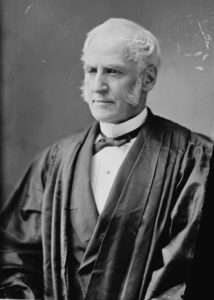
6/14/1810: Justice Ward Hunt's birthday.
How America's Growing Diversity Weakens the Case for Racial Preferences in Education
Affirmative action becomes harder to defend when it entails discrimination against a variety of racial and ethnic minority groups.

The Supreme Court will soon issue its decisions in cases challenging the legality of racial preferences in admission at Harvard and the University of North Carolina. Most likely, the justices will rule that such policies are either categorically illegal or at least subject to much tighter judicial scrutiny than imposed by previous precedents. But, even aside from legal considerations, there is a different factor that has weakened the case for affirmative action preferences over the last several decades. Ironically, that factor is America's growing racial and ethnic diversity.
There is a simple standard rationale for affirmative action, dating back to its origins in the 1960s: America has a long history of horrific discrimination against some of its minority groups, especially blacks and Native Americans. If not for that history, those groups would be better off than they are now. Whites, by contrast, have often benefited from that discrimination (call it "white privilege," if you will). Thus, justice requires some form of compensation to the groups that have been wronged, at the expense of those that have unjustly benefited. Various types of carefully targeted racial preferences can help provide that compensation, and enable us to achieve a more just society.
This rationale is far from air-tight. Among other weaknesses, it is wrong to assume that most whites are beneficiaries of slavery, Jim Crow, and other historical wrongs. Many were actually harmed by it (albeit, less so than blacks, of course). Some of the white victims of affirmative action policies are even members of groups that themselves faced extensive discrimination at various times. Jews are an obvious example, given the once- widespread discrimination against Jewish students at many elite educational institutions.
Still, the traditional rationale for affirmative action is compelling in some ways. Most notably, it is undeniably true that slavery, segregation, and other forms of state-sponsored discrimination inflicted terrible harm on black Americans, and some other groups. Absent that history, we would likely have fewer racial conflicts and less racial inequality today.
But, as conservative political commentator Christopher Caldwell explains in a recent New York Times article, the traditional rationale has been weakened by America's increasing racial and ethnic diversity, most notably the growing role of Asian-Americans in higher education:
Affirmative action is on a shaky footing not just because the composition of the [Supreme] court has changed but also because the composition of the country has changed. Demography has caused the moral ground to fall out from under the policy….
Affirmative action dates from executive orders issued by Presidents John F. Kennedy and Lyndon Johnson in the 1960s. The policy was meant to help Black people at a time when the country was effectively biracial, with white people outnumbering Black people by a ratio of about seven to one…..
[B]ecause white people constituted an overwhelming majority, the number of white applicants disadvantaged by affirmative action was relatively low… And advantages were being redistributed from descendants of the former oppressor race (white people) to descendants of the former oppressed race (Black people)….
That has changed. The arrival of large numbers of immigrants over the past half-century has upset the logic of affirmative action in several ways. For one thing, white Americans no longer dominate the educational system. (They make up only 22 percent of the Stanford class of 2026, for instance.) Early on, affirmative action was also extended to Latinos, whose numbers continue to grow. In addition, African and Caribbean immigrants and their children now account for more than 40 percent of the Black enrollment in the Ivy League, which risks crowding out the people that affirmative action was originally intended to help….
More than any other development, though, the enormous rise in Asian immigration since the Immigration and Nationality Act of 1965 has complicated the administration of affirmative action. The complication, simply put, is that Asian students, on average, have been considerably more qualified for college than students of other groups….
Students for Fair Admissions presents evidence (which Harvard disputes) that Asian enrollment stalled because Harvard tweaked its admissions system to keep Asian students out. Citing internal Harvard documents, Students for Fair Admissions argues that if Harvard pursued a neutral admissions policy focused on academics alone, its incoming classes might have been more than half Asian.
Harvard did a number of things with Asian applicants differently from other applicants…
When majorities discriminate against their own kind, as largely white universities did in the early days of affirmative action, it may not feel like a bad kind of discrimination…. But the biracial historical context that used to tug at consciences, pushing admissions officers (and the parents of rejected students) to a more indulgent understanding of affirmative action, is gone….
[T]he United States has become a multiracial country, and affirmative action has turned into a different kind of program. Building diverse student bodies now requires treating Asian overrepresentation as a problem to be solved. This means discriminating by race in a way that is radically more direct and intrusive.
As Asians have become increasingly prominent among the victims of affirmative action, it becomes more difficult to argue that the policy is just redistributing ill-gotten gains from a group that has benefited from oppression to those harmed by it. Asians themselves, of course, have a history of being victims of discrimination in the US, from racist immigration policy to Japanese internment, among many other examples.
The beneficiary class has also been expanded to include groups far removed from the horrific history of slavery, Jim Crow, and persecution of Native Americans. Many are post-1965 Hispanic, African, and Caribbean immigrants, or children thereof. These groups have surely suffered some prejudice and discrimination. But not on anything like the enormous scale of victims of slavery, Jim Crow, and the forcible displacement of Native Americans.
To the extent that the rationale for racial preferences has shifted from alleviating historical injustice to promoting "diversity," current policies have other flaws. I summarized some of them in a Boston Globe article about the Harvard-UNC cases:
The racial categories used by Harvard, UNC, and many other universities are remarkably crude. The "Hispanic" or "Latino" category lumps together such varied groups as Argentinians, Cubans, Mexicans, and Puerto Ricans. "Asian" encompasses more than half the world's population, including Chinese, Indians, and Japanese. Arabs, native-born white Protestants, and Swedish immigrants are all classified as "white." "African American" includes both native-born Black Americans and immigrants from Africa and the Caribbean. Such sweeping and arbitrary classifications amount to little more than crude racial stereotyping of a kind courts would reject in almost any other context. They certainly don't reflect any carefully nuanced assessment of different groups' distinct characteristics or potential contributions to educationally useful diversity.
Perhaps Harvard, UNC and other institutions could fix these problems by applying the "diversity" rationale in a more nuanced way. But I am skeptical that real-world government and educational bureaucracies are capable of doing so fairly and accurately. Moreover, it is dangerous to provide an open-ended rationale for a vast range of racial and ethnic preferences.
Alternatively, we can try to reinvigorate the compensatory justice rationale for affirmative action by confining it to American descendants of slaves (ADOS) and perhaps also some Native Americans, such as those living on reservations. This latter option might even potentially avoid the use of racial preferences, as such. But it has a variety of potential pitfalls of its own.
The problems Caldwell highlights are not as completely new as he suggests. The truth is that the US has never been a purely "biracial" country. Even before recent waves of Asian and Latino immigration, there were substantial populations of those groups - descendants of 19th and early-twentieth century immigrants and Hispanics living in territories the US acquired after the Mexican War. Native Americans have, of course, been present in large numbers since before the Founding. And, obviously, white Americans have long been divided into a wide range of ethnic and religious groups that make it hard to lump all of them into a single "privileged" class. But even if not completely new, the growing diversity of the last several decades has weakened the case for affirmative action programs and made it even harder than before to structure them in a way that is plausibly just.
I think the best way to address these problems is simply to bar racial and ethnic preferences in government and government-funded educational institutions. I advocate a similar hard line against forms of racial and ethnic discrimination supported by many on the political right (e.g. - racial profiling in law enforcement, and discrimination in immigration policy).
But those more supportive of affirmative action than I am should at least give careful consideration to the challenges created by an increasingly diverse society. When a policy originally intended to compensate blacks for a long history of oppression has gradually morphed into efforts to cap the number of Asian students at selective universities, something has gone badly wrong.
Originalism in the Lower Courts: Fifth Circuit Panel Invites Amicus Briefs on Second Amendment
"Of particular interest are historical gun regulations applicable to intoxicated or impaired individuals."
On June 5, a Fifth Circuit panel (Smith, Higginson, and Willett) heard oral argument in United States v. Daniels. In this case, the defendant argues that a prohibition on possession of firearms for users of intoxicants and marijuana violates the Second Amendment, as construed by Bruen. No amicus briefs were filed in this case. The only submissions were made by the Federal Public Defender and the Department of Justice. Two days after oral argument, the panel issued a directive:
The court invites briefs from amici curiae who wish to supply relevant information regarding the history and tradition of restrictions on the use and possession of firearms as pertinent to the issues presented in this case. Of particular interest are historical gun regulations applicable to intoxicated or impaired individuals. Such briefs must be filed by July 6, 2023 (regardless of any time limitations set by rule).
I wholeheartedly endorse this directive. In my article, Originalism and Stare Decisis in the Lower Courts, I explain that lower courts can remedy the lack of originalist briefing by inviting amici to submit briefs. Specifically, with such a request, the panel is indicating there is interest. Moreover, there is no need to seek leave from the parties.
I encourage scholars on the Second Amendment to submit briefs in this case. Hunter Biden's lawyers may also be interested!
Going forward, the Fifth Circuit, and other courts, should create some sort of repository of such requests, and provide public notification. At it stands, only the handful of lawyers who made appearances in these cases would have seen the directive. Thankfully, a few people pointed it out to me.
Why Legal Immigration is Almost Impossible for the Vast Majority of those Who Want it
Cato Institute immigration policy expert David Bier outlines how the US immigration system bars the vast majority of potential migrants, much like Prohibition banned almost all uses of alcohol.
Many people say that illegal migrants should instead "get in line" and "wait their turn" to enter legally. In a new Cato Institute study, immigration policy expert David Bier explains why, for the vast majority, that simply isn't possible. For most there simply is no "line" that they can join. Even for many of those who are potentially eligible, the "line" is so long that it might take decades for them to get permission to enter - if it ever happens at all. In most cases, demanding that would-be immigrants wait in line is much like demanding that people who wanted to get a drink during Prohibition do so legally:
America traditionally had few immigration restrictions, but since the 1920s, the law has banned most aspiring immigrants. Today, fewer than 1 percent of people who want to move permanently to the United States can do so legally. Immigrants cannot simply get an exception to immigrate any more than restaurateurs in the 1920s could simply get an exception to sell alcohol. Instead, just as Prohibition granted only a few exemptions for religious, industrial, or medical uses of alcohol, people seeking an exception to immigration prohibition must also fit into preexisting carve‐outs for a select few.
Many Americans have the false impression that these carve‐outs are realistic options for potential immigrants to join American society, but the government's restrictive criteria render the legal paths available only in the most extreme cases. Even when someone qualifies, annual immigration caps greatly delay and, more frequently, eliminate the immigrant's chance to come to the United States. Legal immigration is less like waiting in line and more like winning the lottery: it happens, but it is so rare that it is irrational to expect it in any individual case.
This study provides a uniquely comprehensive, jargon‐free explanation of U.S. rules for legal permanent immigration. Some steps are simple and reasonable, but most steps serve only as unjustified obstacles to immigrating legally. For some immigrants, this restrictive system sends them into the black market of illegal immigration. For others, it sends them to other countries, where they contribute to the quality of life in their new homes. And for still others, it requires them to remain in their homeland, often underemployed and sometimes in danger. Whatever the outcome, the system punishes both the prospective immigrants and Americans who would associate, contract, and trade with them.
Bier methodically goes through every currently existing option for legal immigration and explains their scope and limitations. For example, as he points out, the refugee admissions system is constrained by a narrow legal definition of who qualifies as a refugee, a tight annual cap (currently 125,000) that the US nonetheless fails to reach because of bureaucratic obstacles, and other constraints. Along the way, Bier also dismantles some other common myths about immigration policy, such as that the US takes the majority of the world's migrants (it in fact only takes about 7.5%), and that it is more open to immigration than any other country (far from it).
Bier proposes a variety of useful reforms, such as abolishing discriminatory country-based caps for employment visas, eliminating long waits for visas of many kinds, and much else.
Much of what Bier covers is well-known to immigration policy experts. But the paper is a valuable overview for both specialists and interested laypeople.
Over the last two years, the combination of the end of the Covid pandemic and policy changes by the Biden administration has enabled the US to regain pre-pandemic and Pre-Trump levels of legal migration. But while Biden's changes have had a significant liberalizing impact, Bier's paper shows they still exclude the vast majority of would-be migrants.
Bier's paper cannot and does not resolve all debates over immigration policy. A committed restrictionist could potentially read it, agree with all or most of its points, and conclude that the status quo is much better than he previously thought!
But it does have a number of policy implications, nonetheless. Bier catalogues many ways in which the current system is self-contradictory, undermining its own stated objectives, such as preventing family separation and attracting workers to industries with labor shortages.
The extraordinary difficulty of legal migration also undercuts arguments that migrants have a moral duty to "get in line" rather than try to enter illegally. The near-impossibility of legal entry for most strengthens the case that they are morally entitled to disobey immigration laws, especially in situations where the alternative they face is a lifetime of poverty, violence or oppression.
The paper also has implications for the ongoing public debate over disorder at the border. Most of that disorder is in fact caused by restrictions on legal migration, which incentivize people fleeing horrific conditions to try illegal routes instead (the only ones available to them). Just as Prohibition predictably led millions of people to purchase alcoholic beverages from organized crime, so severe immigration restrictions predictably lead migrants to cross illegally or seek out the services of smugglers.
The best way to reduce illegal alcohol sales and the involvement of organized crime in that industry was to end Prohibition. Similarly, the best way to reduce illegal border crossings and associated problems is to make legal migration easier, as the Biden Administration has begun to do with its CNVH parole program, a policy that has significantly reduced illegal border crossings by migrants from the four nations it covers.
I do have a few quibbles with Bier's analysis. Most notably, I think the estimate that 158 million people (based on surveys) would migrate to the US if legal barriers were dropped is probably an overstatement. It doesn't take account of various moving costs associated with migration, which respondents may not consider when answering survey questions (e.g. - the cost of learning a new language, finding a job, etc.). It also does not consider constraints imposed by employment and housing markets. In a section of Chapter 6 of my book Free to Move, I discuss the limitations of such estimates in more detail.
It may be that the current system bars "only," say, 80 or 90 percent of would-be migrants to the US, as opposed to Bier's estimate of 99%. But even the lower figure is enough to show the severely restrictive nature of the status quo - and the ways in which it consigns many millions of people to lives of poverty and oppression largely because of morally arbitrary circumstances of ancestry and place of birth. As Bier notes, the system also severely constrains the liberty and economic opportunities of native-born Americans.
"Minnesota Appeals Court Decides 4 Cases on Religious Exemptions from Vaccine Mandates"
A post by Prof. Howard Friedman (Religion Clause), which he kindly allowed me to pass along:
Yesterday, the Minnesota Court of Appeals decided four separate appeals from decisions of Unemployment Law Judges who denied unemployment benefits because an applicant refused on religious grounds to comply with an employer's Covid vaccine mandate. Goede v. Astra Zeneca Pharmaceuticals, LP, (MN App., June 12, 2023), was the only one of the four cases published as a precedential decision. The court affirmed the ULJ's denial of benefits even though the state Department of Employment and Economic Development urged its reversal. The court said in part:
The ULJ found that "Goede does not have a sincerely held religious belief that prevents her from receiving a COVID-19 vaccine." The ULJ explained: "Goede's testimony, when viewed as a whole, shows by a preponderance of the evidence that Goede's concern is about some vaccines, and that she is declining to take them because she does not trust them, not because of a religious belief." The ULJ further stated that "[w]hen looking at the totality of the circumstances, Goede's belief that COVID-19 vaccines are not okay to put in her body is a personal belief not rooted in religion."
In Daniel v. Honeywell International, Inc., (MN App., June 12, 2023), the appellate court again upheld a denial of benefits, this time to a former employee who refused both the Covid vaccine and refused to comply with the employer's religious accommodation. The court said in part:
Relator asserts that Honeywell's COVID-19 policy requiring that he get weekly COVID-19 tests and submit the results "required [him] to defy [his] religious faith." He asserts that he was upholding his religious faith "by practicing [his] God given right of 'control over [his] medical' by not subjecting Jesus Christ's temple to forcefully coerced medical treatments such as weekly PCR and/or rapid antigen test requirements."…
The ULJ found that relator lacked credibility because he provided inconsistent testimony and he struggled to explain his religious beliefs.
The court reversed the ULJ's denial of benefits in two other cases. In Benish v. Berkley Risk Administrators Company, LLC, (MN App., June 12, 2023) the court said in part:
Dr. Luke Is a Public Figure for Purposes of His Libel Lawsuit Against Ke$ha
From Judge Garcia's majority opinion in Gottwald v. Sebert, decided today by New York's high court, though all the judges agreed on this point:
By 2014, when Gottwald initiated this defamation action, he was, by his own account, a celebrity—an acclaimed music producer who had achieved enormous success in a high-profile career. As self-described in the complaint, he "has written the most Number One songs of any songwriter ever" and "was named by Billboard as one of the top ten producers of the decade in 2009." Gottwald's engagement with the media was "obviously designed to project his name and personality" before a wide audience to establish his reputation in this field. He purposefully sought media attention for himself, his businesses, and for the artists he represented, including Sebert, to advance those business interests. He had been featured in various publications, as well as on radio and television, highlighting the nature of his relationships with those artists and his development of their talent and careers.
Sebert alleged that, shortly after establishing a professional relationship as her producer, Gottwald sexually assaulted her. Therefore, Gottwald is appropriately considered a limited-purpose public figure, and as a result he must prove that Sebert's allegedly defamatory statements were made with actual malice.
To quote Judge Rivera's dissent, which agrees with the majority on this point,
If Employee Is Fired for Off-the-Job Political Speech, Can He Be Denied Unemployment Compensation
on the grounds that the firing was for "misconduct" (such as violation of a social media policy)?
From Pinnacle Bancorp, Inc. v. Moritz, decided Mar. 31 by the Nebraska Supreme Court (in an opinion by Justice John Freudenberg, joined by Chief Justice Michael Heavican and Justices Stephanie Stacy and Jonathan Papik):
At issue in this appeal is whether social media posts directed toward local public figures from a public account of an officer of a local bank constituted misconduct in connection with work disqualifying the employee from unemployment benefits. The reason for the employee's termination was that the posts violated the employer's social media policy. The posts were not sent from work, during work hours, or using the employer's equipment. The posts did not contain information obtained in the capacity as an employee, mention the employee's position at the bank, or refer to coworkers or customers….
Moritz was fired from his internal audit supervisor job at Pinnacle Bancorp, Inc. because of complaints that Pinnacle got about Moritz's social media posts:
The Twitter posts tagged the incumbent mayor, whose husband had recently died from suicide. In one post, it was suggested the mayor "take your husband's lead … he had a good idea." Another post stated that "your husband couldn't stand you why should we?" and that "everyone will blow their brains out if you're still the mayor." …
Pinnacle's investigation revealed other posts on Moritz' Twitter account beginning in 2020 in which disparaging remarks were made about public figures. The posts included calling the chief executive officer of a local hospital "fat" and calling a politician a "cunt" who had "tried to [expletive]" a former political commentator's "corpse to attempt to extract sperm and create the antichrist."
Pinnacle's Social Media Policy provided the following though also added that "[o]fficers of the bank" (a category that included Moritz) "and their significant others have additional responsibilities as the viewpoints they express on social media may be interpreted by customers and the community as the Bank's viewpoints":
The same principles and guidelines found in the Bank's policies apply to your activities online. Ultimately, you are solely responsible for what you post online. Before creating online content, consider some of the risks and rewards that are involved. Keep in mind that any of your conduct that adversely affects your job performance, the performance of fellow employees or otherwise adversely affects employees, customers, suppliers, people who work on behalf of the Bank or the Bank's legitimate business interests may result in disciplinary action up to and including termination.
Carefully read these guidelines and the Bank's other policies and ensure your postings are consistent with these policies. Always comply with our Code of Conduct and Ethics and never reveal information about a customer or other confidential information. Inappropriate postings that may include discriminatory remarks, harassment, and threats of violence or similar inappropriate or unlawful conduct will not be tolerated and may subject you to disciplinary action up to and including termination.
Always be fair and courteous to fellow employees, suppliers and people who work on behalf of the Bank. Also, keep in mind that you are more likely to resolve work-related complaints by speaking directly with your co-workers or by utilizing our open door policy than by posting complaints to a social media outlet. Nevertheless, if you decide to post complaints or criticism, avoid using statements, photographs, video or audio that reasonably could be viewed as malicious, obscene, threatening or intimidating, that disparage employees or suppliers, or that might constitute harassment or bullying. Examples of such conduct might include offensive posts meant to intentionally harm someone's reputation or posts that could contribute to a hostile work environment on the basis of race, color, religion, sex, pregnancy, national origin, age, disability, military status, genetic information, marital status, sexual orientation, or any other status protected by law or Bank policy.
Moritz claimed unemployment benefits, but was largely disqualified on the grounds that he had been fired for misconduct. The court concluded otherwise, applying Nebraska's unemployment compensation law, under which "to determine whether an employee is partially or totally ineligible for benefits, one must consider (1) whether there was an act of proven misconduct and (2) whether the misconduct was connected with the employee's work":
Journal of Free Speech Law: "Brokered Abuse," by Prof. Thomas Kadri
Just published as part of the symposium on Media and Society After Technological Disruption, edited by Profs. Justin "Gus" Hurwitz & Kyle Langvardt.
The article is here; here are the Introduction and Part I:
"It's accually obsene what you can find out about a person on the internet."
To some, this typo-ridden remark might sound banal. We know that our data drifts around online, with digital flotsam and jetsam washing up sporadically on different websites across the internet. Surveillance has been so normalized that, these days, many people aren't distressed when their information appears in a Google search, even if they sometimes fret about their privacy in other settings.
But this remark isn't a throwaway line by a disgruntled netizen. No. It's a boast by a stalker, Liam Youens, who went online to find his victim, Amy Boyer. Youens traced Boyer after buying her work address from a data broker—a company that traffics information about people for profit. Youens documented his search for Boyer's whereabouts on his personal website: "I found an internet site to do that, and to my surprize everything else under the Sun. Most importantly: her current employment." After he asked the broker for more information, he just had to bide his time. "I'm waiting for the results," he wrote ominously, not long before shooting Boyer dead at work.
Data brokers fuel abuse by sharing people's information and thwarting their obscurity. The value of obscurity, though sometimes overlooked in privacy discourse, rests on the idea that "information is safe—at least to some degree—when it is hard to obtain or understand." Brokers hinder obscurity by making it easier and likelier to find or fathom information about people. This act of foiling obscurity, in turn, facilitates interpersonal abuse. The physical violence suffered by Amy Boyer is but one kind of abuse; people also face stalking, harassment, doxing, defamation, fraud, sextortion, and nonconsensual sharing of their intimate images.