From Tilley v. Gibbs, decided yesterday by the Mississippi Court of Appeals:
John and Tiffany were married on April 6, 2019, in Lowndes County, Mississippi. The parties had one child, V.G., born prior to the marriage on December 19, 2018. On December 14, 2021, John filed his original complaint for divorce against Tiffany…. On September 16, 2022, the chancery court issued its opinion and final judgment, granting an irreconcilable differences divorce, awarding joint legal custody with John being awarded physical custody. The court awarded Tiffany visitation and ordered her to pay child support of $490.00 per month….
The court went through the various factors that Mississippi courts consider in child custody cases; but I thought this was particularly noteworthy:
Tiffany also asserts that the home, school, and community records should have been deemed a neutral factor because the chancellor relied on two issues she believes do not favor either party—John's church attendance and her potential move. In support of her position on appeal, she highlights only a portion of the relevant evidence submitted at trial, including that they did not go to church often while married, John only began attending church more regularly after the separation, and John previously indicated to her that he was an atheist. She further argued that her admitted plan to relocate should not be held against her because the specifics of it require speculation at this juncture.
In evaluating part of this factor, our "supreme court has affirmed that a chancellor may consider the issue of religion when determining custody." Davidson v. Coit (Miss. Ct. App. 2005) (quoting Weigand v. Houghton (Miss. 1999)). Evidence has previously been considered to weigh in favor of a parent, such as "a father[,] who took his child to church." Montgomery v. Montgomery (Miss. Ct. App. 2009) (citing Pacheco v. Pacheco (Miss. Ct. App. 2000))…
After reviewing the evidence as a whole, the chancellor noted that John has been taking V.G. to the same church for years and that Tiffany stated she "does not attend church now, as I don't feel it is required." Further, this was not the only basis for the chancellor's ultimate ruling on this factor, as he also concluded that John plans to remain near V.G.'s family and friends while Tiffany plans to move to a different state were persuasive. We find sufficient evidence was presented to support the chancellor's decision to weigh this factor in John's favor.
Such consideration of the parties' churchgoing strikes me as a violation of the First Amendment, for reasons I discussed in this article. Perhaps the custody decision in John's favor was sound for other reasons; but I don't think the question of which parent is the more religious—or the more regular church attendee—can be a permissible factor here. To quote Bonjour v. Bonjour (Alaska 1979), which strikes me as taking the correct approach (and indeed one that remains correct despite the changes in Establishment Clause doctrine since),
Along with dozens of Title VI administrative complaints filed with the Office of Civil Rights, at least fourteen colleges and universities are facing lawsuits over their handling of antisemitism on campus since October 7. I asked around, and no one seems to have a compiled a list of defendants with links to the complaints, so I've created one, which I will update as needed. Let me know if I have missed any. UPDATE: It turns out that there is a website keeping up with the litigation, though it's currently missing a few of the ones I have listed below.
UPDATE: The success in these cases will obviously depend on the individual facts, the judges involved, and in some cases on state law claims that provide for particularly onerous damages. On the civil rights claims, in general I find the double standard in how universities enforce their rules to be the most persuasive claim. To win those claims, the plaintiffs don't have to get into the borderline between harassment and free speech, or whether the university has done the minimum necessary to combat harassment to meet Title VI. They only need to show, as seems pretty clear in most instances, that Jewish students who complain about antisemitism and their complaints are treated differently than complaints of discrimination by other groups, and/or that universities enforce their disciplinary rules differently with regard to antisemitic acts than with regard to other violations off school rules.
I have spoken to a half dozen or so attorneys involved in litigation on behalf of plaintiffs who experienced antisemitism on campus. Universally, their concern is not whether claims are strong enough to get past motions to dismiss and summary judgment. Rather, they regret that students on many campuses feel so intimidated that it's hard to persuade them to sign up as plaintiffs. That's a major reason why there are so many administrative complaints as opposed to lawsuits, the former don't require a named plaintiff.
Can Congress require China-based ByteDance to divest itself of TikTok as a condition for TikTok continuing to be easily accessible in the US? Prof. Alan Rozenshtein (Minnesota) joins Jane Bambauer and me to discuss this.
From Luke v. Schwartz, decided yesterday by Judge Robert Pitman (W.D. Tex.); of course, as usual, keep in mind that at this stage of the lawsuit these are only allegations:
Plaintiff David Luke … alleges the following facts …. Luke dated [defendant Jeffrey] Schwartz's daughter, Emma Schwartz …, … while they were both 17-year-olds attending Park City High School in Park City Utah. [Sex between 17-year-olds is not itself criminal in Utah. -EV] Luke and Emma had consensual sex on multiple occasions during their relationship. Luke alleges that he and Emma had a tacit agreement that sex without a condom was an acceptable option as Emma had initiated unprotected sex once before and had performed unprotected oral sex on Luke on more than one occasion.
On December 18, 2021, Luke and Emma had sex. Luke was intoxicated and Emma was not. Luke removed his condom during sex, which he did not believe would upset Emma because they had engaged in unprotected sex before. During the encounter on December 18, Emma did not realize Luke had removed his condom until she noticed it lying on the bed next to her. Emma told Luke that she "was upset by him removing the condom without discussing it with her first, and he apologized." A few weeks later, Luke and Emma broke up. Luke alleges that Emma tried to get back together with Luke and "certainly did not act like he had sexually assaulted her."
In May of 2022, Emma, Schwartz, and Emma's mother, filed a civil lawsuit against Luke and his parents in Utah state court (the "Utah civil suit"). Emma and her mother then went to the Summit County District Attorney's office and "complained that [Emma] had been sexually assaulted." Emma gave a full statement to the District Attorney's office in which she claimed that because Luke "had taken the condom off … without her verbal consent, she was a victim of sexual assault." The District Attorney declined to prosecute Luke because "those acts do not amount to sexual assault under Utah Law." The Utah civil suit proceeded publicly for about a year before being sealed and dismissed.
Luke alleges that Schwartz has been "obsessed with [Luke]'s family and specifically obsessed with doing anything he can to hurt [Luke]." Schwartz sent an email to Bobby Orr … stating that "[Luke] sexually assaulted my daughter during their senior year in high school." Orr is on the board of the Phi Gamma Delta Fraternity at the University of Texas where Luke attends college. Luke is a member of Phi Gamma Delta. Luke further alleges that Schwartz "has also engaged in a letter-writing campaign sending similarly defamatory statements to members of sororities across Texas in an effort to destroy Plaintiff's reputation and turn private allegations into matters of public knowledge."
Schwartz has also, according to Luke, used social media to identify sorority girls who may come into contact with Luke at the University of Texas and has sent "these girls copies of the unverified civil complaint" (the "Utah complaint") from the Utah civil suit which has been sealed by the Utah court. Schwartz sent the Utah complaint with no return address and "no cover letter explaining who the letter was from or why they [were] receiving it." Emma, her mother, and Schwartz have also been engaging in legislative advocacy to change the criminal sexual assault laws in Utah so that taking off a condom during sex without verbal consent—also known as "stealthing"—is considered criminal sexual assault in the state.
I was pleased to participate in an excellent symposium at the SMU Law Review on Students for Fair Admissions v. UNC. This journal made a strong effort to seek out diverse viewpoints. This is one of the more balanced symposium issues I've seen in years. Well done. Here is the roster of submissions:
Students for Fair Admissions v. Harvard will be studied by law students for generations, in much the same way that Bakke and Grutter were studied before. But there is much more to SFFA than the final decisions about Harvard University and the University of North Carolina will reveal. This Article, published for a symposium by the SMU Law Review, focuses on three stages of the litigation: the petitions, the oral arguments, and the decision. Part I recounts the complex procedural history, which began in federal courts in Massachusetts and North Carolina. The Harvard case reached the Supreme Court first, while the UNC case lingered in District Court. The Supreme Court called for the views of the Solicitor General. By doing so, the Court could punt the case to the following term, which allowed the UNC case to catch up, and Justice Breyer's replacement to be confirmed. Both cases would be argued on October 31, 2022.
Part II parses the questions asked by all nine Justices during oral argument. Chief Justice Roberts signaled up front that he would rule against the universities. Justice Thomas repeated his charge that arguments in favor of racial preferences mirror the arguments made by segregationists. Justice Alito worried about discrimination against Asian-American applicants. Justice Sotomayor focused on the detailed findings of the trial courts. Justice Kagan questioned whether SFFA would favor universities with few, or no racial minorities on campus. Justice Gorsuch looked to Title VI of the Civil Rights Act of 1964. Justice Kavanaugh suggested preferences could be reserved for the descendants of slaves. Justice Barrett inquired about the expiration date of Grutter. And Justice Jackson recounted how the Reconstruction Congress used racial preferences for the freedmen.
Finally, Part III breaks down four aspects of the Court's decision. SFFA eliminated the "educational benefits" rationale for affirmative action. Chief Justice Roberts continues to take inconsistent positions in similar cases during the same term. Justice Kavanaugh continues to follow the lead of Chief Justice Roberts in leading cases, including SFFA. And I defend Justice Jackson's likely-involvement in the Harvard case, notwithstanding her recusal.
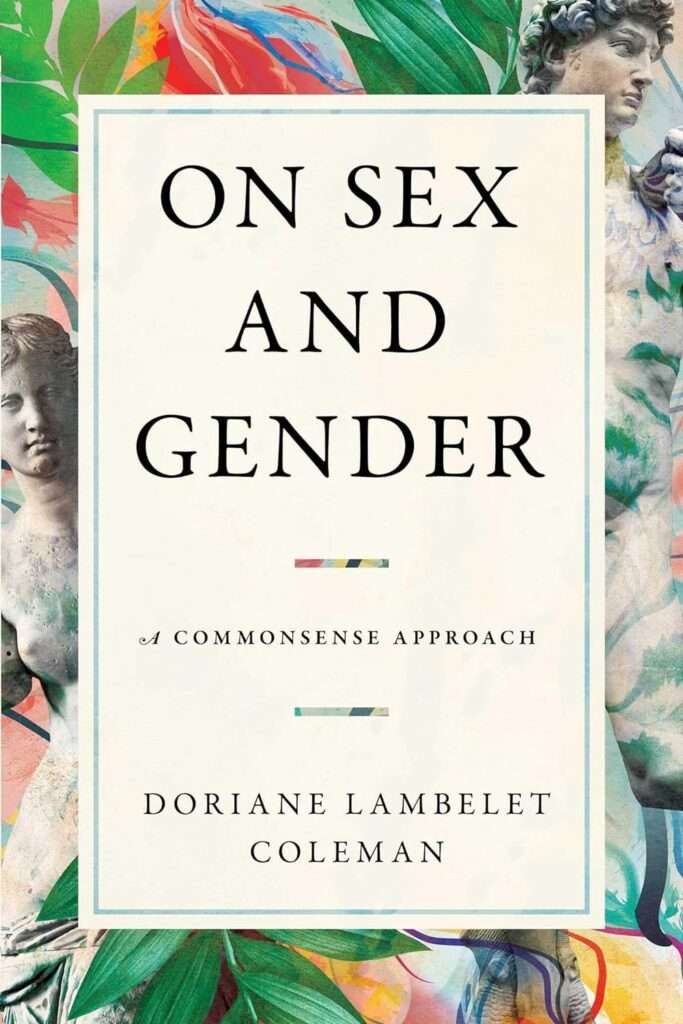
In a 2022 law review article called Sex Neutrality, I adopt the classification of sex in American legal history as being in three successive overlapping phases starting with structural sexism, followed by sex skepticism, with sex blindness either already here (in come contexts) or on the horizon (in others). Chapter Seven of my new book On Sex and Gender makes this sequence accessible for a general audience, taking the reader on an adventure that begins with Myra Bradwell's case against Illinois (1872), through the battles over the Equal Rights Amendment, the groundbreaking sex discrimination cases of the 1970s starting with Reed v. Reed (1971) that marked the first turn from structural sexism to sex skepticism, the dialing up of the skepticism we see in the cases through the 1980s, and the race and sex discrimination cases of the early 1990s that immediately precede United States v. Virginia (1996).
In United States v. Virginia—known as VMI for the defendant Virginia Military Institute—the Court faced the choice whether to continue to be (by that point highly) skeptical of sex classifications or to move to sex blindness as it had just done in a set of cases that involved affirmative not subordinating race discrimination. In the book, I join others who have argued that it chose not to take this last step in part because the justices, including Ruth Bader Ginsburg and Sandra Day O'Connor, agreed that sex is importantly different from race. Here's how I put the point:
Ginsburg's VMI opinion also appears to be a response to how equal-protection law had developed in the three short years from 1993, when she joined the Court, through 1996 when VMI was decided. The justices had been debating the costs and benefits of sex blindness—il n'y a pas de difference entre les hommes et les femmes—at the same time as they were debating the costs and benefits of race blindness, i.e, of "eliminat[ing] entirely from governmental decisionmaking such irrelevant factors as a human being's race."
Given the opportunity finally to cement the analogy of sex to race and formally to take sex over the line to strict scrutiny, Ginsburg chose instead to distinguish between the two. In so doing, her opinion not only froze in place O'Connor's approach from Hogan, but it added a list of objectives that could make it possible for a sex-based classification to pass muster—objectives that, after Adarand, would be insufficient as justifications for race-based classifications.
Instead, the Court allowed that sex classifications could still pass muster—we could continue to see sex in law—if their raison d'être wasn't sexism but rather correcting disparities, promoting equality, and generally developing the nation's people. In Ginsburg's words,
Since 2016, the Roman Catholic Diocese of Albany has been challenging a New York law that mandates that insurance policies must cover abortions. The state courts upheld this mandate as a neutral law under Employment Division v. Smith. In June 2021, the Supreme Court decided Fulton. Justices Thomas, Alito, and Gorsuch would have overruled Smith. But Justices Barrett and Kavanaugh had some questions. After Fulton was decided Roman Catholic Diocese of Albany wound its way to the Court.
In November 2021, after several relists, the Court GVR'd the case in light of Fulton. Justices Thomas, Alito, and Gorsuch would have granted the petition. There was no reason for a GVR, since Fulton did not actually change Smith. The options were grant or deny. At the time, I wrote "It is very obvious to me that Justices Kavanaugh and Barrett have no interest in deciding another Free Exercise Clause case now–especially after the denial of review in the Maine case."
Since that GVR, the case moved its way through the state courts. In June 2022, the New York Appellate Division ruled that Fulton did not change the relevant standard, so the Diocese lost again. I observed:
And why did Fulton not change the relevant standard? Because in Fulton, Justices Barrett and Kavanaugh declined to overruleEmployment Division v. Smith, a decision that required courts to deferentially review laws that burden religion. Even when Justices Barrett and Kavanaugh joined a conservative majority opinion, they tempered its reach.
Today, nearly two years later, the case was decided by the New York Court of Appeals (the highest court in New York). And, no surprise, the court ruled against the Diocese. The court held that since Fulton did not overrule Smith, the prior New York precedent decided under Smith still stands.
When the Court GVRs a case, it may wipe the issue off a Justice's plate, and conscience. But the matter continues in the lower courts. Lawyers on both sides dutifully litigate the issue. Judges and clerks have to write opinions. The Diocese continues to operate under a sword of Damocles. Yet, throughout this entire process, the ending is preordained. In 2021, there was no reason to GVR the Albany case because it was decided under Smith, a precedent that Justices Kavanaugh and Barrett did not overrule. The GVR wasted everyone's time.
And here we are. Three years after Fulton and thirty months after the GVR, the case is ready for review. No doubt the Diocese will file a cert petition. It will probably come up for conference later this year. The Court could grant the case, and add it to its ever-shrinking docket for argument in February. If so, there would be a nearly four year gap between the GVR and the decision in June 2025. Or the Justices could stew on the petition for a while and grant in February, kicking the case to the OT 2025 term, with a decision by June 2026, five full years after Fulton. Or, the Court could deny cert altogether.
If after all of these deliberations, we are still left with three Justices dissenting from certiorari, what will we have to show for it? The Court should have put the case out of its misery in 2021 rather than wasting everyone's time.
I realize the symbol of the Court is a turtle--slow, deliberate, and careful. But these sorts of GVRs are not like the turtle. They are like the ostrich--sticking your head in the sand and hoping a problem goes away. But it never does.
For what it's worth, there is another case in the pipeline that would allow the Court to revisit whether to overrule Smith. New York compels Amish schoolchildren, living in remote communities, to receive vaccinations that conflict with their sincerely held religious beliefs and Amish way of life. The District Court ruled against the Amish plaintiffs in Miller v.McDonald, relying on Smith. The case was recently briefed before the Second Circuit. The plaintiffs squarely preserved the question of whether Smith should be overruled. There is a similar case pending up for conference next month from Connecticut involving K-12 education, though I tend to think the Amish case may be a better vehicle.
Legal and policy debates about land-use restrictions tend to focus on exclusionary zoning that restricts housing construction. Such restrictions do indeed cause great harm, and also violate constitutional rights. But restrictions on commercial uses of property also have major negative effects. A recent National Bureau of Economic Research (NBER) study by economists Fil Babalievsky, Kyle Herkenhoff, Lee Ohanian and Edward Prescott attempts to quantify the effect. Here is the abstract:
Commercial real estate accounts for roughly 20% of the U.S. fixed asset stock, and commercial land use is highly regulated. However, little is known about the quantitative impact of these regulations on economic activity or consumer welfare. This paper develops a spatial general equilibrium model of the U.S. economy that includes commercial real estate regulations and congestion effects, the latter of which provide a rationale for such regulations. The model is tailored to exploit the near-universe of CoreLogic's commercial, parcel-level, property tax records to construct a quantitative index of commercial real estate regulations for nearly every commercial property. We use the model to evaluate the positive and normative impacts of commercial land use deregulations. Moderately relaxing commercial regulations across all U.S. cities yields large allocative efficiency effects, with output gains of about 3 percent to 6 percent and welfare gains of about 3 percent to 9 percent of lifetime consumption. We also find significant positive and normative gains from deregulation with 40 percent of the labor force working remotely.
Ohanian summarizes their findings in a bit more detail here:
The size of a building relative to the value of a parcel of land is influenced by the stringency of the land-use regulations governing the parcel. For example, the skyscrapers in midtown and downtown Manhattan that sit on extremely valuable land indicate that commercial land-use regulations are relatively small and thus allow for building larger structures. On the other hand, the very small buildings that are home to Silicon Valley venture capital firms on the extremely valuable land on Sand Hill Road indicate very stringent land-use regulations, which deny larger buildings.
My coauthors and I use this concept to quantify the stringency of these regulations by collecting tax assessment data from most commercial building parcels in the United States. Our approach requires only two numbers: the assessor's total valuation of a parcel and the amount of that valuation accounted for by just the structure that sits on the land. On Sand Hill Road, much less of the total value of a commercial parcel is accounted for by the structure, while in midtown Manhattan, much more of the total value is accounted for by the structure.
Given this simple but powerful economic logic, our analysis develops an economic model comprising the more than two hundred metropolitan statistical areas (MSAs) of the United States. The model calculates the regulation stringency at the individual parcel level, aggregates the individual parcels to the MSA level, and then aggregates each of the MSAs to the national level. The analysis finds that the least-regulated MSA is Midland, Texas, known as the "Tall City" for its towering buildings. Los Angeles and San Jose are among the most-regulated MSAs, having smaller commercial buildings that account for less of the total value of commercial parcels than the average of all MSAs. The model accounts for the positive role of land-use regulations that limit the congestion arising from completely unfettered land use in a city. Thus, the model recognizes the potential benefits of some regulations.
The analysis conducts several policy experiments that assess how real US GDP, as well as consumer welfare and developer profits, would be affected if land-use regulations were changed. One experiment analyzes what would happen if all MSAs adopted the relatively low level of land use regulation found in Midland, Texas. With this policy reform, we find that real US GDP would increase by about 3 percent in perpetuity, or about $1 trillion per year. The amount of commercial square footage would increase by around 15 percent under this scenario. Consumers would benefit from this change, as a better allocation of land use would increase their incomes, boost their consumption, and allow them to work less. The results of this experiment indicate that our present land-use regulations are far too stringent.
This model is admittedly imperfect. There are likely factors other than regulatory stringency that account for the relative value of structures compared to that of the land they sit on. For example, in some areas, tall buildings may have little value, even if permitted, because the highest-value use of the land consists of shops or restaurants that can only operate effectively if customers don't have to ascend to a high floor to reach them. The authors try to control for some of these factors. But I don't think they fully succeed in this admittedly difficult task.
On the other hand, as the authors recognize, their model only captures restrictions on building size and floor space. It does not fully consider restrictions on types of uses (e.g. - the types of commercial enterprises allowed on the property). In that important respect, they actually underestimate the impact of commercial zoning restrictions. For example, their model does not capture restrictions like the one at issue in the recent Indiana case addressing whether tacos and burritos qualify as "sandwiches" (the answer determines whether a Mexican restaurant qualifies as one of the types of restaurants allowed to operate in the area, under the local zoning code).
Despite the debate it triggered in the media and in legal circles, the Indiana sandwich restriction is relatively trivial in its impact. But it's the tip of a much larger iceberg of use-based (as opposed to height and floor spaced-based) commercial zoning restrictions, many of which are probably not captured by the NBER model.
Despite its limitations, the NBER study is likely right to conclude that legal restrictions on commercial land uses have large negative effects. Even if the effects are only a quarter or a third of what the authors estimate (about $250 billion or $333 billion per year in lost GDP, as opposed to $1 trillion), it's still an enormous negative impact. That's a high cost in lost production, job opportunities, and foregone innovation.
As the authors note, their figures take into account the possibility that many workers can work remotely. And the vast majority of jobs still require workers to be in person at least part of the time. Thus, the remote-work revolution has only modestly reduced the need for people to be able to "move to opportunity" and work in the places where they can be most productive. It's also worth noting that working class and lower-middle class people are more likely to need to work in person than upper-income professionals. Thus, commercial-use restrictions (like residential zoning restrictions) disproportionately harm the poor and disadvantage.d I discuss the remote work aspect of the issue in more detail in Chapter 3 of my book Free to Move: Foot Voting, Migration, and Political Freedom.
In our forthcoming Texas Law Review article, Josh Braver and I argue that exclusionary zoning rules restricting housing construction violate the Takings Clause of the Fifth Amendment (unless the government pays "just compensation" to the owners, which it rarely does). Restrictions on commercial development are a more complicated case. But under the originalist theories discussed in Part II of the Article, such constraints also violate the "right to use," which part of the " private property" protected by the Takings Clause. The exception is regulations that protect against serious threats to public health or safety, and thereby fall within the "police power" exception to takings liability (see Section II.C of the article). But most commercial-use restrictions cannot be justified on such grounds, certainly not most that restrict height and floor space. Things are likely to be different under the living constitution approaches covered in Part III of the article, which focus more exclusively on housing.
My new trade book On Sex and Gender, out today from Simon & Schuster, developed out of an academic project—first in the legal literature with Sex in Sport (2017) and Sex Neutrality (2021), then with scientists and policymakers in the medical research and sports spaces. This interdisciplinary collaboration allowed me a forest-through-the-trees view of three separate storylines from science, law, and progressive advocacy, all with the same basic theme: What is 'Sex'? In this post, I excerpt sections of the book that summarize these separate storylines and conclude with a reflection on how, taken together, they inform the current moment.
Note: In my first post I explained that I use the word sex in its biological sense. In this post I use gender not as a synonym for sex but rather consistent with one or more of the three ways it's otherwise defined: (1) The expectations others attach to us because of our sex, i.e., gender norms. (2) The ways we express ourselves that are coded as gendered, i.e., gender expression. (3) Our inner sense of our sex and/or gender, i.e., gender identity.
From Science
The following excerpt is from Chapter Five, Sex Just Is (Like Age):
Before the late 20th century, there wasn't a great deal of interest in—and so no real funding for—research into how males and females are different beyond the fundamentals of sex development. Work on human anatomy, physiology, function, and disease continued, of course, but on the male model.
This almost singular focus and the corresponding erasure of the female model was rationalized on the historically ironic grounds that we're alike enough that it's okay only to use males as research subjects—and to assume that the typical human is the average male. The fact that the menstrual cycle makes it more difficult to study the female body—and that it is certainly more expensive to study both and then contrast the two—helped to lock in this focus even as it was obviously inconsistent with the premise of sameness to take this position.
As a result, researchers did such famously inane things over the years as to study breast cancer—which primarily affects females and is tied to estrogen and progesterone production—using only male research subjects.
In April 2009, a law student at American University asked Justice Scalia how a student from her school could become "outrageously successful" without "connections and elite degrees." (The clip begins around 52:00.) Scalia laughed out loud. He answered, "Just work hard and be very good." But then he digressed to a story about Judge Jeff Sutton.
Let me tell you a story. By and large, unless I have a professor on the faculty who is a good friend and preferably a former law clerk of mine whose judgment I can trust--I'm going to be picking for Supreme Court law clerks, I can't afford a miss. I just can't. So I'm going to be picking from the law schools that are the hardest to get into, they admit the best and the brightest. They may not teach very well, but you can't make a sow's ear purse out of a silk purse. If they come in the best and the brightest, they are probably going to leave the best and the brightest. One of my former clerks [Judge Jeff Sutton] who I am the most most proud of, now sits on the Sixth Circuit Court of Appeals. And I always refer to him as one of my former law clerks. He wasn't one of my former law clerks. [Sutton] was Lewis Powell's clerk. After Lewis took senior status, Lewis didn't have much work. [Sutton] worked full time for me. So I couldn't tell the difference between [Sutton] and my other clerks. But I wouldn't have hired Jeff Sutton. For G-d's sake, he went to Ohio State. [Scalia laughs.] And he is one of the very best law clerks I've ever had. He is just a brilliant guy. So don't tell me this stuff about "what do you have to do to be successful." You have to be good. I think we're done.
Scalia relayed this story several times over the years, and he was fond of telling it. The upshot is that under his own policy, he would have never hired one of his favorite law clerks.
In November 2008, during my 3L year, Justice Thomas visited the George Mason University School of Law. After a lecture in then-Professor Rao's class, I asked Justice Thomas what it would take for a GMU grad to clerk on the Supreme Court. (Apparently I had a similar thought as the American student would some months later.) Justice Thomas answered, matter-of-factly, "I hired Will Consovoy, ask him," and pointed at his clerk. I don't think I had met Will Consovoy before, but I would never forget him. (Justice Thomas also signed my pocket Constitution that day, which still hangs on my wall.)
There were many differences between Justices Scalia and Thomas. One of them concerned clerk hiring. In OT 2008, Thomas hired law clerks from Creighton, George Mason, George Washington, and Rutgers. Thomas told students at the University of Florida, "They referred to my clerks last year as TTT, third-tier trash. That's the attitude that you're up against."
Things have gotten slightly better over the past decade. Justice Thomas still routinely hires outside the T14 (top 14, roughly defined). Justice Alito has joined the mix with clerks from BYU, George Mason, LSU, Minnesota, Ohio State (yes, THE Ohio State University), and a few others. Justice Gorsuch has hired grads from Iowa, Mississippi, and BYU. And Notre Dame, which is skyrocketing in the clerkship rankings, is consistently placing grads at the Court. But otherwise, the Justices exclusively hire from elite, T14 law schools. Would anyone say that the non-T14 clerks hired by Justices Thomas, Alito, and Gorsuch, are inferior to the regulars from Harvard, Yale, and Stanford? I personally know many of these clerks, and they have gone on to great accomplishments.
Could one say that the Justices have imposed a boycott of every other law school outside the T14? I'm sure they would resist the characterization. For sure, they have not announced any public boycott. But the practical consequences of their hiring pattern is that students who graduated from non-elite law schools are persona non-grata. How many Jeff Suttons were missed by having such a restrictive view of hiring? On a related note, Justice Ginsburg had a de facto boycott of all HCBUs.
The Ninth Circuit, in U.S. v. Duarte, has joined the Third Circuit's Range decision in holding the Gun Control Act's ban on firearm possession by felons (18 U.S.C. § 922(g)(1)) in violation of the Second Amendment as applied to convictions for non-violent offenses that have no Founding-era analogues. Prof. Volokh summarized the decision when it was released on May 9. The court's opinion is extraordinarily thorough and deserves a deeper dive.
The opinion was written by Senior Judge Carlos Bea and joined by Judge Lawrence VanDyke. Judge Milan D. Smith, Jr., dissented and expressed hope for an en banc rehearing, which is all but automatic when a Ninth Circuit panel renders a decision favorable to the Second Amendment. The decision will undoubtedly be considered by the Supreme Court Justices in deciding Rahimi, which involves the ban on gun possession by a person subject to a domestic violence restraining order, and in disposing of Range, another felon case which may be taken up by the Court or remanded for reconsideration in light of Rahimi.
At the textual level, Durate states, the right to bear arms is guaranteed to "the people," which per Bruen refers to "all Americans," not an "unspecified subset." While Heller stated that the Amendment protects "the right of law-abiding, responsible citizens to use arms" for self-defense, the universe of "the people" is larger. (I suggest thinking of the two-circle Venn diagram – law-abiding citizens are the subset and they are within the larger superset of "the people.")
While Heller referred to "longstanding prohibitions on the possession of firearms by felons" as among the "presumptively lawful regulatory measures," Bruen expressly requires courts to assess whether a restriction "is consistent with this Nation's historical tradition of firearm regulation." The felon ban was not an issue in Heller, and "the Court has yet to explore this country's history of banning felons from possessing firearms."
That's where the Duarte panel hits a home run, noting the need for "distinctly similar" historical regulations given that violence with firearms is a "problem that has persisted [in this country] since the 18th century." The government sought historical regulations from three sources: proposals in three of the state ratifying conventions, laws disarming classes of persons, and the historical practice of executing felons.
"The disciplinary proceedings arose from Plaintiff's development of an 'artificial intelligence-based learning tool,' with another student, which the University's Honor Council eventually concluded 'was offensive to Emory's community standards' as it might result in academic dishonesty and cheating."
From Doe v. Emory Univ., decided Friday by Judge Steve Jones (N.D. Ga.):
Plaintiff … alleges that Defendant, Emory University, breached its contract with him as a student in the disciplinary proceedings against him, which resulted in his suspension. The disciplinary proceedings arose from Plaintiff's development of an "artificial intelligence-based learning tool," with another student, which the University's Honor Council eventually concluded "was offensive to Emory's community standards" as it might result in academic dishonesty and cheating….
Plaintiff seeks to proceed anonymously in this litigation, as well as to keep the identity of Emory Student 1 anonymous….
Generally, all pleadings filed in federal court must "name all the parties[.]" Fed. R. Civ. P. 10(a)…. The Eleventh Circuit has approved of parties proceeding anonymously when cases involve governmental activity, the disclosure of information of "utmost intimacy," or would require admitting to illegal conduct and risk of criminal prosecution. …
The Court acknowledges Plaintiff's concerns regarding his reputation. The Court, however, disagrees that Plaintiff should be allowed to proceed anonymously in this case. The ordinary factors permitting a party to continue under a pseudonym are absent: Plaintiff is not challenging government activity, is not a minor, has not identified any threat of physical violence against him, and has not specifically shown his accusations require the disclosure of intimate information.
[J]obseekers who disagree with the ideological premises of such inquiries have an overwhelming incentive to suppress their true beliefs, or pretend to have the "right" ones, lest they be eliminated from consideration. It's a dilemma, especially given the high stakes: As the University of California at Davis's vice chancellor for DEI explained, "In these searches, it is the candidate's diversity statement that is considered first; only those who submit persuasive and inspiring statements can advance for complete consideration." In one faculty search at University of California at Berkeley, around 75 percent of applicants were screened out of consideration — irrespective of criteria such as teaching ability and research skills. Small wonder that many applicants engage in what Daniel Sargent, a history professor at UC Berkeley, calls "performative dishonesty."
The last thing academia — or the country — needs is another incentive for people to be insincere or dishonest. The very purpose of the university is to encourage a free exchange of ideas, seek the truth wherever it may lead, and to elevate intellectual curiosity and openness among both faculty and students. Whatever their original intent, the use of DEI statements has too often resulted in self-censorship and ideological policing….
The last time I blogged for the Volokh Conspiracy was in March 2019, following my testimony in the Semenya case at the Court of Arbitration for Sport (CAS). That case was one of the first—if not the first—to raise two questions which have since become central features of our culture wars:
(1) Whether 'female' still means a person with a female body—or more generally whether 'sex' still means biological sex, e.g., per the NIH, 'the differences between males and females caused by differential sex chromosome complement, reproductive tissues, and concentrations of sex steroids' (emphasis mine); or per Oxford via Google, 'either of the two main categories (male and female) into which humans and most other living things are divided on the basis of their reproductive functions.'
(2) Whether it's still permissible to have (biological) sex classifications and then to sort people in and out of those categories on the basis of (biological) sex differences—or whether gender (here as legal gender or gender identity) is the better sorting tool.
(I emphasize caused by because sex isn't our chromosomes, our gonads, and/or our gonadal hormones. Rather, these are part of a much larger set of sex characteristics two of whose functions are to drive human sexual development and to sustain our bodies thereafter.)
In line with some progressive positions on these questions, at the CAS in 2019, two-time Olympic Gold Medalist Caster Semenya claimed—unsuccessfully in that forum—that she has a human rights-based reliance interest in her (female) legal gender that trumps her (male) sex so that she should have unconditional access to the female competition category.
In the wake of the announced boycott against Columbia University, I posed several questions to Judge Matthew Solomson of the U.S. Court of Federal Claims. I provide his answers, with light editing, below:
Q: Shortly after October 7, you announced that you would not hire clerks who signed a letter supporting the Hamas attacks. Why did you make that decision?
The pro-Hamas letter you reference, signed by many Harvard student groups, engaged in extreme victim-blaming, assigning all culpability to Israel for the October 7th Hamas-led massacre. Justifying Hamas's murderous pogrom by saying Israel deserved what it got is nothing less than supporting a terrorist organization – the same as blaming the United States for 9/11. And I simply made the point that supporting Hamas – a terrorist group designated as such by the United States government – is inexcusable and should be disqualifying for a federal clerkship (just as supporting Al-Qaeda or ISIS would be).
Particularly in the wake of the Hamas-led butchering, raping, and kidnapping of civilians – including Americans – living peacefully within Israel's 1948 borders, the Harvard letter truly disgusted me.
Of course, there is literally zero doubt that if someone signed a letter supporting the KKK, they wouldn't get a clerkship (or any job with any law firm of significance). The letter justifying the Hamas terrorist attacks on 10/7 was no different. The only reason anyone would consider my statement controversial is if they think Hamas is not comparable to the KKK. The two groups, of course, are both abhorrent.
Judge Lee Rudofsky (E.D. Ark.) also issued a statement similar to mine (but addressed to his future clerks and interns). Both our statements received a fair deal of news coverage but no criticism of any note.
The most pushback I received was from a colleague who said that the disqualification was so obvious, I need not have said anything.
Q: Although you boycotted particular students who signed the Hamas letter, you refused to support a boycott of an entire school, like Judges Ho and Branch proposed. You said, "There's just a big difference between saying someone should quit Stanford, Yale and go to a different school and saying that you should resign from a student organization." Why did you reach that position in October?
It wasn't a "position," as much as an off-the-cuff reaction distinguishing between what the other judges had done with respect to Yale and Stanford, and what I had said with respect to pro-Hamas students. But the Ho-Branch boycott wasn't really on my mind at all. I hadn't considered it in any detail (and didn't realize, for example, that it was prospective only).
That said, my reaction to the Harvard letter was that a localized problem warranted a limited response. Since then, the pro-Hamas, anti-American, intellectual rot has proven pervasive. The full extent of the campus problems Judges Ho and Branch were trying to address is obviously much worse than anyone thought, including me.