The Volokh Conspiracy

Mostly law professors | Sometimes contrarian | Often libertarian | Always independent | Est. 2002

The Volokh Conspiracy

Gun Control

National Firearms Act Seminar

Free and online, Oct. 18, from U. Wyo. Firearms Research Center.

|

This Friday, October 18, there will be an all-day seminar on the National Firearms Act, the 1934 federal statute that regulates machine guns, short-barreled rifles and shotguns, sound suppressors, and some other items. Continuing legal education credit is available, and the seminar is free and online. Registration, CLE information, and the schedule are available here.

The seminar is hosted by the University of Wyoming College of Law's Firearms Research Center, where I am a Senior Fellow. This is the first-ever legal seminar on the National Firearms Act, in important topic for anyone who practices general federal criminal law. It begins at 8:30 a.m. Mountain Time, and concludes at 3:30 p.m. If you happen to be in Laramie, you can attend in person. Some readers may remember the call for papers that I posted this summer. The seminar is collaboration with the Wyoming Law Review, which will publish revised versions of papers presented at the seminar.

The program is:

Session 1. Benjamin Hiller, Deputy Associate Chief Counsel for the Firearms & Explosives Law Division at the ATF. Implementation of the National Firearms Act, and insights into legal issues surrounding firearms regulation.

Session 2. David Kopel. The history of machine guns.

Session 3. Stephen P. Halbrook, Yang Liu, Matthew Larosiere, and Charles K. Eldred. The National Firearms Act's impact on regulated arms. Also, tax issues.

Lunch. Kelly Todd of the Wyoming Game and Fish Department. The National Firearms Act's impact on wildlife management and enforcement

Session 4. Tom W. Bell, Chris Land, Clayton Cramer, and Ted Noel. Second Amendment issues. How historical firearms are categorized in the NFA.

Session 5. Michael Williams, General Counsel for the American Suppressor Association. Recent policy developments related to the NFA.

Free Speech

SpaceX's First Amendment Claim Against California Coastal Commission

|

The California Coastal Commission recently decided to block SpaceX's increase in annual launches at Vandenberg Space Force Base from 36 to 50. SpaceX has just sued, claiming the decision was preempted by federal authority, violated state law, and also violated the First Amendment. I can't speak to the preemption arguments and the statutory arguments, but I wanted to pass along some thoughts about the First Amendment question.

SpaceX is arguing that the Commission's 6-4 decision was influenced by the Commissioners' disapproval of Elon Musk's politics and speech:

The Commission also made clear that its objection was rooted in animosity toward SpaceX and the political beliefs of its owner Elon Musk, not concern for the coastal zone. After talking at length about concerns with changes in Department of Defense leadership following the November 2024 election, Commission Chair Hart said explicitly: "The concern is with SpaceX increasing its launches, not with the other companies increasing their launches." She explained, "we're dealing with a company … the head of which has aggressively injected himself into the Presidential race and made it clear what his point of view is."

Other Commissioners similarly made clear their decision was based on political disagreements with Mr. Musk. Commissioner Newsom, for instance, said that "Elon Musk is hopping about the country, spewing and tweeting political falsehoods and
attacking FEMA while claiming his desire to help the hurricane victims with free Starlink access to the internet." Commissioners Aguirre and Escalante voiced similar concerns regarding the political uses of Starlink. As these statements show, the impact of the proposed launch cadence increase on the coastal region was the last topic on the Commissioners' minds at the October 2024 meeting.

At the same time, there have also been other arguments given for the decision, related to the potential environmental effects of the launches.

Here's the general rule: The government generally may not deny a license or approval to a regulated entity because of that entity's speech, or the speech of its owners or managers (unless the speech falls within a First Amendment exception, such as for true threats of illegal conduct). "[T]he standard for evaluating whether a regulated entity has established a claim of retaliation based on the exercise of free speech rights," to quote CarePartners LLC v. Lashway (9th Cir. 2008), is:

Read More

Did Yale, Princeton, and Duke Violate SFFA in Last Year's Admissions Cycle?

|

Following the Supreme Court's decision in SFFA in 2023, barring the use of racial preferences in admissions, admissions patterns at most elite universities followed the pattern one would expect: enrollment of black and Hispanic students declined, and enrollment of Asian-American students increased. Three major exceptions to this pattern are Yale, Princeton, and Duke. At each of these universities, enrollment of black students was basically flat, and enrollment of Asian-American students was actually down. Enrollment of Hispanic students, meanwhile, was flat at Princeton and Duke and actually up at Yale.

In today's New York Times, University of Chicago lawprof Sonja Starr argues that we shouldn't assume that these schools were cheating, and offers 3 alternative explanations:

The first possible reason is that schools do not admit students in a vacuum. They compete for them. Why did fewer Asian American students enroll this year at Yale, Duke and Princeton? Perhaps they went to other elite schools instead … The second plausible explanation for the schools' demographics has to do with the statistics themselves: Duke and Princeton had a large rise in the number of students declining to identify themselves by race. (Yale does not report this figure.) If that rise was concentrated among Asian American students, it could explain the apparent drop-off in their numbers. [DB This would not explain the Hispanic and African American figures.]… The third possible reason the critics' suspicion is unfounded is the most important: It is perfectly lawful for universities to seek to preserve racial diversity. Even if it turns out that colleges are deliberately seeking to keep Black and Hispanic students well represented, this would not in itself raise a legal problem.

Color me skeptical. First, I find it extremely suspicious that all three schools had almost exactly the same percentage of African-American matriculants this year as in the recent past, and two of the three had almost the exact same percentage of Hispanic students. Given what necessarily were substantial changes in their admissions processes, this is an awfully "interesting" coincidence. Relatedly, I find it unlikely that Starr's first explanation would have nearly the dramatic effect it would need to have to explain this year's matriculation results.

Second, each of these schools signed an amicus brief to the Supreme Court stating that there was no way no they could possibly achieve similar racial diversity as in the past without using racial preferences. If Starr is right that the universities in question found other ways to achieve diversity without using race as a factor in admissions, it suggests one of two possibilities, neither of which is flattering. First, the schools knew that they could achieve diversity without using racial preferences but declined to do so, even though pre-SFFA Supreme Court precedent required them to use race only as a last resort, and even though this meant that they were lying in their amicus brief. Second, the schools were able to achieve racial diversity without using racial preferences but had never bothered to try to do so before, again despite precedent requiring them to.

Most likely though, all three schools illegally considered race in filling a soft quota for underrepresented minority students while also avoiding accepting more Asian-American students.

crime victims

Should the Boeing Plea Deal on the 737 MAX Crashes Be Approved?

I have argued to Judge Reed O'Connor that he should reject the proposed "binding" plea deal because it obscures the relevant facts and fails to hold Boeing accountable for killing 346 people. A decision is expected soon.

|

For the last several years, I have represented families who lost loved ones in the crashes of two Boeing 737 MAX aircraft (see earlier posts here, here, and here). The families want Boeing held fully accountable for the harms caused by its federal conspiracy crime of defrauding the FAA about the safety of the 737 MAX. Last Friday, I argued before Judge Reed O'Connor (N.D. Texas) that he should reject the proposed plea agreement negotiated between Boeing and the Justice Department. Among other arguments, I explained that the proposed plea deal would improperly transform Boeing's conspiracy into a "victimless" crime rather than recognize the 346 deaths Boeing directly and proximately caused through its lies. This post summarizes a few of my arguments against the deal, along with linking to the main filings from both sides in the case--and the oral argument transcript--so that readers can see the competing positions. This post also includes an order from Judge O'Connor, issued yesterday, that directs DOJ and Boeing to provided additional briefing on a DEI provision in the proposed plea.

Some quick background to set the stage: In 2018 and 2019, two brand-new Boeing 737 MAX aircraft crashed in Indonesia and then Ethiopia, killing 346 passengers and crew. The Justice Department opened a criminal investigation into Boeing and soon developed compelling evidence that Boeing had defrauded by the FAA by concealing the capabilities of one of the plane's new software programs.

Faced with the Government's compelling evidence, in late 2020 and early 2021, Boeing secretly negotiated a lenient deferred prosecution agreement (DPA) with the Justice Department. The parties then filed the DPA with Judge O'Connor in the Northern District of Texas. Receiving no immediate objection to the DPA, Judge O'Connor allowed the agreement to move forward.

In December 2021, I filed an objection to the deal. I argued that the Justice Department had violated the rights of the families of the victims killed in the two crashes. In secretly negotiating the deal, DOJ violated the families right under the Crime Victims' Rights Act to confer with the prosecutors during the DPA negotiations. DOJ (and Boeing) responded that the families did not represent "crime victims," because the connection between Boeing's conspiracy crime and the crashes was too attenuated. But after two days of evidentiary hearings, in October 2022, Judge O'Connor disagreed—finding that the families represented "crime victims" and that the Justice Department had violated the families' CVRA rights to confer about the deal.

But ultimately, after a further hearing, in January 2023, Judge O'Connor ruled that while he had "immense sympathy for the victims and the loves ones of those who died in the tragic plane crashes resulting from Boeing's criminal conspiracy," he was unable to award them any remedy. I sought review in the Fifth Circuit. Last December, the Circuit concluded that, if a properly presented issue came before Judge O'Connor, he did have the power to take victims' rights into account in deciding how best to proceed.

Since then, in the wake of the Alaskan Air 737 doorplug blowout, in April the Justice Department concluded that Boeing breached its safety and compliance obligations under the DPA. Following that breach determination—which ended the deferral of prosecution provided by the DPA—in July Boeing and DOJ announced that they had reached a plea agreement to resolve the pending conspiracy charge.

When the parties unveiled the terms of their plea deal, the families were outraged. Previously I blogged about the families' objections to the plea and their motion to Judge O'Connor asking him to exercise his discretion to reject it. Both the Justice Department and Boeing have filed responses. Read More


Free Speech

Teacher's Defamation Lawsuit Over Allegations She Mistreated Muslim Student Can Go Forward …

against the online critic who first posted the allegations, but not against CAIR (the Council on American-Islamic Relations), which echoed them.

|

From Herman v. Muhammad, decided yesterday by the N.J. appellate court (Chief Judge Thomas Sumner and Judges Ronald Susswein and Stanley Bergman):

The following facts are alleged in the amended complaint. Herman is a second-grade teacher at an elementary school (school) in the South Orange-Maplewood school district. On October 6, 2021, Herman believed that one of her students, who normally wears a form-fitting hijab as part of her Muslim faith, was wearing a "hood" covering her eyes. Attempting to reengage the student in schoolwork, Herman asked the student to remove the hood from her eyesight. Unbeknownst that the student was wearing a loose-fitting hijab, Herman "lightly brush[ed] back" the student's hijab and "immediately and gently brushed [it] back to cover … the [s]tudent's hair." Herman claims that "out of respect for the religious practices of Islam and for the [s]tudent's observation of same, [she] apologized to the [s]tudent." Herman maintains the hijab "never left the [s]tudent's head," and class resumed without disruption. After the student told her mother about the incident, the mother spoke to the school's principal and assistant principal.

The next day at 4:00 p.m., Muhammad, a practicing Muslim who wore a hijab while winning a Sabre fencing medal for the United States in the Olympics, posted the following sentiments on Instagram:

I wrote this book [The Proudest Blue: A Story of Hijab and Family] with the intention that moments like this would never happen again. When will it stop? Yesterday, Tamar Herman, a teacher at Seth Boyden Elementary School in Maplewood, NJ forcibly removed the hijab of a second[-]grade student. The young student resisted, by trying to hold onto her hijab, but the teacher pulled the hijab off, exposing her hair to the class. Herman told the student that her hair was beautiful and she did not have to wear [a] hijab to school anymore. Imagine being a child and stripped of your clothing in front of your classmates. Imagine the humiliation and trauma this experience has caused her.

This is abuse. Schools should be a haven for all of our kids to feel safe, welcome and protected—no matter their faith. We cannot move toward a post-racial America until we weed out the racism and bigotry that still exist in all layers of our society. By protecting Muslim girls who wear hijab, we are protecting the rights of all of us to have a choice in the way we dress.

Writing books and posting on social is not enough. We must stand together and vehemently denounce discrimination in all of its forms. CALL Seth Boyden Elementary (973) 378-5209 and EMAIL the principal sglander@somsd.k12.Nj.us and the superintendent Rtaylor@somsd.k12.Nj.us

About thirty minutes later, Muhammad edited and reshared the post on Instagram and Facebook. The edited post omitted the first two sentences ("I wrote this book with the intention that moments like this would never happen again. When will it stop?") and included a photo of the school. Muhammad's posts garnered considerable reactions in mass media and social media, including by the Counsel on American Islamic Relations (CAIR) Foundation, CAIR-NJ, and CAIR-NJ's executive director Selaedin Maksut (collectively CAIR defendants), calling for Herman's immediate termination….

As a result of Muhammad's "defamatory social media posts … the Essex County Prosecutor's Office opened a [three-month] criminal investigation" of the incident, and though "vindicated by the outcome," Herman alleges she has endured "acute emotional distress," destruction of her "hard-earned reputation," and physical threats. Herman also alleged she was even "condemn[ed]" by the "rabbi from her childhood congregation." …

Herman sued Muhammad and CAIR for defamation, and the court allowed the case to go forward against Muhammad but not CAIR. The court concluded that Herman had adequately alleged that Muhammad's statements about her were false (though of course the question whether they were in fact false can't be decided until later):

Read More

AI in Court

LLM AIs as Tools for Empirical Textualism?: Manipulation, Inconsistency, and Related Problems

LLM AIs are too susceptible to manipulation—and too prone to inconsistency—to be viewed as reliable means of producing empirical evidence of ordinary meaning.

|

A corpus linguistic study can produce datapoints on empirical questions of ordinary meaning—like the question in the Snell case on whether the installation of an in-ground trampoline falls within the ordinary meaning of "landscaping." But LLM AIs do not and cannot do so, for reasons developed in detail in our draft article.

We highlighted some of the reasons for our conclusions in yesterday's post. But the problem is even bigger than we let on there.

It's not just that AIs are black boxes. Or even that their bottom-line responses obfuscate any empirical detail on how a term like "landscaping" is ordinarily used. We must also come to terms with the fact that AI responses are easily affected by even slight variations in search terminology and vary a lot even when the identical query is presented multiple times.

Studies have shown that "[t]he tone of a prompt"—even subtleties in "politeness"—may affect the sources an LLM "pull[s] from" in "formatting its reply." "Polite prompts may direct the system to retrieve information from more courteous … corners of the Internet," while a "snarky prompt" could "direct the system" to a seedier source like Reddit. And "supportive prompts"—requests to "[t]ake a deep breath and work on this problem step-by-step"—could trigger the AI to refer to online tutoring sources, "which often encourage students to break a problem into parts." These are just two examples of the potentially myriad ways in which chatbot responses could be influenced by a human user. Our best guess is that we have barely begun to scratch the surface in our understanding of these sources of variability. Regardless of the causes or effects,  the unexplained variability in chatbot responses renders them opaque, non-replicable, and fundamentally unempirical.

Read More

Free Speech

No Civil Court Claim Over Publicizing Religious Court's Statement That Litigant Refuses to Appear in the Religious Court

Plaintiff had argued that defendants' publicizing the religious court's statement "serves as a form of social pressure, calling on the community to shun or ostracize the individual until they comply with the court's demands."

|

From today's decision by Judge Rachel Kovner (E.D.N.Y.) in Esses v. Rosen:

Plaintiff Regina Esses has moved for a preliminary injunction under Federal Rule of Civil Procedure 65 against defendants Tanya Rosen and Tanya Rosen Inc. enjoining defendants from disseminating a declaration from a rabbinical court and an accompanying instructional document. Plaintiff's motion for a preliminary injunction is denied….

The following facts are taken from plaintiff's filings in support of her motion for a preliminary injunction and are assumed true for purposes of this motion.

Both plaintiff and defendant Tanya Rosen are members of the Orthodox Jewish community. As relevant to plaintiff's request for a preliminary injunction, plaintiff asserts that, before she filed this lawsuit, Rosen secured the issuance of a summons against plaintiff by a Jewish rabbinical court, or beth din, called Badatz Mishpitei Yisroel ("BMY"), regarding plaintiff's former employment contract with defendant Tanya Rosen Inc. According to plaintiff, "[u]nder Jewish law, when an individual is summoned to beth din, the recipient has the right to propose an alternative beth din to avoid potential bias or undue influence from the summoner's chosen venue." Plaintiff alleges that "BMY, at Rosen's request, continued to issue summonses demanding [plaintiff's] appearance," even though plaintiff proposed an alternative rabbinical court in New Jersey.

Plaintiff asserts that Rosen later "sought a seiruv from BMY against" plaintiff. According to plaintiff, a "seiruv is a public declaration issued by beth din that a person has refused to comply with rabbinic court orders to appear." The seiruv lists plaintiff's home address and states:

Whereas, close to a year has passed since we have sent out our first summons to [plaintiff] and until this day a Din torah has not been scheduled, we have no choice but to declare [plaintiff] a Mesareves, in addition to her filing in court against [Rosen] without permission from a Bais Din. She claims to have permission from her Rabbi, which she has not substantiated to the Beis Din. Anyone that may impress upon her the severity of the grave sin of refraining from appearing in Beis Din shall do so and it will be to his merit.

Rosen distributed the seiruv, along with an "instructional document" purporting to describe what a seiruv generally entails, "throughout [plaintiff's] neighborhood," in various "Jewish community Whatsapp group chats," and to Rosen's listserv, which contains thousands of recipients. The instructional document describes a seiruv as "a form of contempt order issued by a rabbinical court." It states that the "public declaration serves as a form of social pressure, calling on the community to shun or ostracize the individual until they comply with the court's demands."

Read More

Legal Ethics

Colorado Elected District Attorney Disbarred for Litigation Misconduct

|

From People v. Stanley, decided Sept. 10 by the Office of Presiding Disciplinary Judge of the Supreme Court of Colorado but just posted to Westlaw; the opinion is by Presiding Disciplinary Judge Bryon M. Large, joined in part by Member Sherry A. Caloia (a lawyer) and in part by Member Melinda M. Harper (a citizen member):

Following the highly publicized disappearance of a Chaffee County woman [Suzanne Morphew], Stanley, who was the newly elected District Attorney of Colorado's 11th Judicial District, brought first-degree murder charges against the woman's spouse [Barry Morphew]. During the prosecution, Stanley made three improper extrajudicial statements about the case to the media, which threatened to prejudice the defendant and undermine the public's interest in justice. Those statements contributed in part to a judicial ruling changing venue in the case. Through this misconduct, Stanley violated Colo. RPC 3.6(a) (a lawyer who participates in the investigation or litigation of a matter must not make an extrajudicial statement that the lawyer knows or reasonably should know will be disseminated by means of public communication and will have a substantial likelihood of materially prejudicing an adjudicative proceeding) and Colo. RPC 3.8(f) (prosecutors must refrain from making extrajudicial comments that have a substantial likelihood of heightening public condemnation of the accused unless the comments serve a legitimate law enforcement purpose, are necessary to inform the public of the nature and extent of the prosecutor's action, or are permitted under Colo. RPC 3.6(b)).

At the same time, Stanley did not adequately supervise the prosecution of the case. She failed to timely direct adequate administrative resources to process discovery, leading to a series of judicially imposed sanctions against the prosecution for discovery violations. She failed to take reasonable measures to establish a leadership structure that ensured accountability within the prosecution team, with the result that the prosecution team overlooked important projects in the case. And she failed to intervene when the prosecution team was given an opportunity to cure its deficient endorsements for expert witnesses, the majority of whom were eventually excluded. Through this conduct, Stanley violated Colo. RPC 5.1(b) (a lawyer with direct supervisory authority over another lawyer must make reasonable efforts to ensure that the other lawyer conforms to the Rules of Professional Conduct).

After the presiding judge [Ramsey Lama] issued several adverse rulings less than two months before jury selection, Stanley instructed her chief investigator to interview the judge's former spouse to determine whether the judge committed domestic abuse. Even though she had no credible evidence to believe that the judge had ever engaged in such criminal conduct, Stanley ordered the investigation in an effort to uncover information about the judge that would require him to recuse from the case. Shortly after the interview, which revealed that the judge had never abused his former spouse, Stanley dismissed the case without prejudice. Though this conduct, Stanley attempted to violate Colo. RPC 8.4(d) (it is professional misconduct for a lawyer to engage in conduct prejudicial to the administration of justice), thereby contravening Colo. RPC 8.4(a) (it is professional misconduct for a lawyer to attempt to violate the Rules of Professional Conduct).

In a bid to rehabilitate her relationship with the media, Stanley later agreed to sit for a videotaped interview with a local reporter. During that interview, which Stanley reasonably should have known was on the record and would be publicly disseminated, she again made improper extrajudicial statements about two defendants criminally charged in the death of a ten-month-old baby.

She effectively pronounced that one of the defendants was guilty, revealed inadmissible details about the defendant's sexually based juvenile offenses, and impugned the motives and character of the defendants. Two judicial officers, ruling independently, concluded that Stanley's extrajudicial statements amounted to outrageous government conduct so severely prejudicing the defendants that the judiciary was required to dismiss each defendant's criminal case. Through this conduct, Stanley violated Colo. RPC 3.6(a) and Colo. RPC 3.8(f)….

In their opening statement, the People likened Respondent's handling of the Morphew prosecution to that of a ship's captain who never appeared on the bridge. In some ways, this analogy is apt. Respondent's absence at the helm during key phases of the prosecution—even when she was warned that it faced rough waters—led to a series of events that ended with the first-degree murder case running aground.

The analogy captures Respondent's dereliction of her duty as an elected official and the top prosecutor in her district. In that role, her obligation was not to win or to protect her reputation but to see justice done. Instead, her unjustifiable extrajudicial statements in the Jacobs and Crawford cases led to the opposite result, prejudicing each criminal defendant and torpedoing the criminal cases against them. And her baseless decision to launch an in-house investigation of a judge presiding over a case that was close to trial prejudiced the administration of justice and abused her position of trust. She must be disbarred.

This is just the introduction and the conclusion; the full opinion goes into much more detail. Member Caloia dissented in part:

Read More

Free Speech

Journal of Free Speech Law: "The Future of Free Speech: Curiosity Culture," by Olivia Eve Gross

A new article from the Daedalus (Journal of the American Academy of Arts and Sciences) Future of Free Speech Symposium.

|

The article is here; the Introduction:

Before entering college in 2020, I thought cancel culture existed solely in the domain of celebrities, newsmakers, social media, consumer brands, and large corporations. I first became aware of the phenomenon in its original context: a TV show was canceled in response to a backlash after its star committed an abhorrent act. In another case, a product-endorsement contract was canceled ahead of public outcry over the spokesperson's reported behavior. As these scenarios grew more common, I assumed cancellations only took place in the realm of the famous.

At the start of my first year at the University of Chicago, I learned that cancel culture had infiltrated campus life. Students were being shunned for voicing an unpopular view in class, excoriated on social media over a pun, or shamed for asking a question because they were of the "wrong" identity for the subject matter. My campus wasn't unique—if anything, Chicago does more than almost any other university to advocate and defend principles of free speech.

This revelation was as bewildering as it was upsetting. The fundamental mission of a liberal-arts education is to promote diverse perspectives, thoughtful debate, intellectual growth, and, hopefully, classmate camaraderie in the shared experience of it all. And my university does a lot to support this objective. But students themselves are now stifling the university experience by using a variety of methods to either silence speech or ensure that certain speech receives social punishment. Such trends have detrimental consequences for the campus community at-large, eroding the university's formative environment of speech. In polling conducted by the Foundation for Individual Rights and Expression, more than half of students (56 percent) expressed worry about damaging their reputation because of someone misunderstanding what they have said or done.

Property Rights

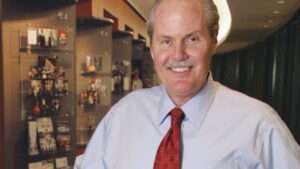
William "Chip" Mellor, RIP

Mellor was cofounder and longtime president of the Institute for Justice, one of the nation's leading public-interest law firms.

|

William "Chip" Mellor. (Institute for Justice)


William "Chip" Mellor,  visionary cofounder and longtime president of the Institute for Justice - a leading public interest law firm focused on economic liberty, property rights, and free speech - passed away on October 11. Here is an excerpt from the obituary posted on the IJ website, written by John Kramer:

On Friday, October 11, America lost one of the most significant civil liberties pioneers of the past 40 years: William "Chip" Mellor—the founding president and recent board chairman of the Institute for Justice, a national, public interest law firm—died at his home in Moab, Utah, after a battle with leukemia.

Mellor's philosophically and tactically consistent approach to protecting the rights of ordinary Americans—especially those of modest means—led him to cofound the Institute for Justice in 1991 with Clint Bolick. He created IJ to protect private property and free speech, to challenge arbitrary government regulations that interfere with economic liberty, and to expand educational choice for those stuck in failing public schools. In the process, he and IJ reshaped America's legal landscape and how public interest cases are litigated in the courts of law and in the court of public opinion.

"Chip demonstrated remarkable vision and a knack for public interest litigation throughout his life," said Scott Bullock, who worked with Mellor for 25 years and in 2016 succeeded him as IJ's president. "He brought together cutting-edge legal advocacy, media relations, grassroots activism, legislative work, and strategic research in a pioneering and innovative way. He made the Institute for Justice a powerhouse for the protection of constitutional rights."

Thanks to Mellor's vision and the advocates he hired and inspired, IJ has won many pathbreaking constitutional cases that have set the standard for legal change. Mellor understood that principled change takes time, so he established IJ to engage in long-term, strategic public interest litigation rather than react to current controversies or issues of the week. He fostered an entrepreneurial, happy warrior culture within IJ, where many make their careers to change the world for the better.

As a law student, I served as a law clerk at IJ during the summer of 1998, at which time I got to know Chip. His leadership was incredibly impressive. In large part thanks to his efforts, IJ litigated and won numerous precedent-setting cases. Few could match his skill at combining strategic litigation with effective campaigns in the court of public opinion.

The time I spent at IJ helped generate an abiding interest in constitutional property rights that has been a major part of my work ever since. The institution Chip played a key role in creating had a similar impact on many other future lawyers and academics.

Chip will be greatly missed. I extend my condolences to his colleagues, family, and friends.

AI in Court

Corpus Linguistics, LLM AIs, and the Future of Ordinary Meaning

Our draft article shows that corpus linguistics delivers where LLM AI tools fall short—in producing nuanced linguistic data instead of bare, artificial conclusions.

|

Modern textualism is built on at least three central pillars. Textualists credit the ordinary meaning of the language of law because such meaning: (1) can reasonably be discerned by determinate, transparent methods; (2) is fairly attributable to the public who is governed by it; and (3) is expected to constrain judges from crediting their own views on matters of legislative policy.

To fulfill these goals, textualist judges expected to show their work—to cite reliable evidence to support their conclusions on how legal words or phrases are commonly used by the public. Judicial intuition is a starting point. But judges who ask the parties and public to take their subjective word for it are not engaged in transparent textual analysis; cannot reliably be viewed as protecting public reliance interests; and may (at least subconsciously) be advancing their own views on legislative policy.

The Snell concurrence acknowledges these concerns (as do the academic pieces it relies on). But the tools it advances (AI LLMs) fall short of fulfilling these key premises. Corpus linguistic tools, by contrast, are up to the task.

We show how in our draft article. In Part III we investigate the empirical questions in Snell through the tools of corpus linguistics. We performed transparent searches aimed at assessing (a) how the term "landscaping" is commonly used in public language; and (b) whether people commonly use the term "landscaping" when they speak of the installation of in-ground trampolines. Our results are granular and nuanced. They stand in contrast to the conclusory assertions of AI chatbots—conclusions that gloss over legal questions about the meaning of "ordinary meaning" and make it impossible for a judge to lay claim to any sort of transparent, determinate inquiry into the ordinary meaning of the language of law.

Read More

The WSJ Story About Future Trump Judicial Nominees

|

The Wall Street Journal published an article titled, "Trump Loyalists Push for a Combative Slate of New Judges." The first sentence repeats the theme of loyalty: "A rising faction within the conservative legal movement is laying the groundwork for Donald Trump to appoint judges who prioritize loyalty to him and aggressively advocate for dismantling the federal government should he win a second term." The implied connection is clear: Trump loyalists in executive branch seek to install Trump loyalists in the judiciary branch. Nonsense.

There is not a single word in the story to suggest that Trump appointees would be "loyal" to Trump. These judges have a constitutional vision that far surpasses whatever ephemeral issues matter to Trump. Judicial appointments can last up to forty years. Trump will be in office for, at most, four years. And if Trump prevails, he will not have to stand for any more elections, thus no more Trump-election-related litigation. More likely than not, anti-Trump litigation will be brought in blue circuits, where Trump-appointees are a discrete and insular minority. Does anyone think that a handful of Trump appointees on the Ninth Circuit will make a difference? Judges Katsas, Rao, and Walker will be flying solo on the D.C. Circuit for some time. And the Fourth Circuit is lost for a generation. I truly do not understand the thrust of this "loyalist" meme. It is not accurate, and even if accurate, will have no practical effect.

Instead, the true thrust of the piece comes in a quote from Mike Davis:

Future Trump judicial nominees must be "even more bold and more conservative and more fearless," than those appointed in the first administration, said Republican legal activist Mike Davis, one of the conservative lawyers pushing for a harder line in a potential second Trump administration.

As I've written "judicial courage," should be an important metric for any future judges. I think any plausible judicial nominee will profess fidelity to textualism and originalism. Or at least they will pretend to. That is a given. The better question is what a judge will do with that jurisprudence. To use an analogy, what quantum of originalist evidence is sufficient to upset the status quo. This is not merely a question about stare decisis. I've written at some length how Justice Barrett has imposed extremely onerous burdens on litigants seeking to change things. And the Barrett mode is common enough on the lower courts. Of course lower court judges cannot reverse Supreme Court precedent. And individual panels cannot reverse circuit precedent. But between those lines, there is some space for lower-court originalism.

The article goes on to say that conservatives were "surprised" by Justice Gorsuch's Bostock majority and Justice Kavanaugh's concurrences.

Some were shocked in 2020, for instance, when Gorsuch, the most libertarian of the Trump three, joined with liberal justices and Chief Justice John Roberts to extend federal civil-rights protections to LGBT employees. Others have expressed exasperation at Kavanaugh's practice of filing concurring opinions that credit the concerns of liberal dissenters even when he votes with the conservative majority—something he did in the 2022 decision eliminating women's federal right to abortion before fetal viability.

No one should have been surprised by anything the Trump appointees have done. They are behaving now exactly as they behaved below. To the extent that conservatives are frustrated with these Justices, they should reconsider the criteria for appointment.

The rest of the article tries to sketch some divide between the "old guard" and the "new guard" within the Federalist Society.

The movement's old guard, including lawyers who helped found the Federalist Society in the 1980s, is pushing back, fearful of discrediting the conservative principles they worked for decades to legitimize within a legal profession that leaned left.

Since losing the 2020 election, Trump has broken with Federalist Society leaders who had eagerly boosted his blitz of judicial appointments during his first term but later balked at his efforts to thwart President Biden's victory and didn't openly support him as he faced dozens of criminal charges.

Trump has gravitated to more-combative lawyers outside the conservative legal establishment who have said they want to hobble regulatory agencies and concentrate power in the White House. The shift has sidelined the old guard in favor of groups like America First Legal, run by former Trump adviser Stephen Miller, who isn't a lawyer but said he set up the group to fight what it called "an unholy alliance of corrupt special interests, big tech titans, the fake news media and liberal Washington politicians."  . . . .

Longtime Federalist Society members said the group was designed not to advocate for specific positions but to promote conservative and libertarian thought more broadly—and provide a career network for right-leaning lawyers interested in government and the judiciary.

"I'm one of the traditionalists who believe the strength of the Federalist Society is that it doesn't take positions, it allows its members to take positions," said former Solicitor General Ted Olson, who took part in the 1982 conference at Yale Law School where the group was founded. . . .

Sarah Isgur, who was a spokeswoman for the Trump Justice Department and considers herself more of a traditional conservative, said that while the Federalist Society historically sought to associate its movement with the most prestigious law schools and professional accomplishments, the upstarts have other criteria.

The direction of FedSoc seems separate from the question about potential Trump nominees. But I do think that FedSoc is standing at something of a turning point, given the pending search for President.

Free Speech

Journal of Free Speech Law: "The Future of Speech Online: International Cooperation for a Free & Open Internet," by Nick Clegg

A new article from the Daedalus (Journal of the American Academy of Arts and Sciences) Future of Free Speech Symposium.

|

The article is here; the introductory paragraphs:

The internet is the latest in a long line of communications technologies to have enabled greater freedom of speech. From the printing press to the radio to the television and the cell phone, technological advances have made it possible for more people to express themselves, share news, and spread ideas. At every stage, speech has been further democratized, empowering people who could not previously make themselves heard and challenging the influence of the traditional gatekeepers of public information—including the state, the church, politicians, and the media. These advances have often been met first with excitement and enthusiasm, followed by a public backlash fueled by a mix of legitimate concerns about the impact of technology on society and moral panic stoked by the vested interests whose power has been challenged. In time, these pendulum swings have come to a resting point through a combination of the normalization of the technologies in society, the development of commonly understood norms and standards, and the imposition of guardrails through regulation.

The internet has enabled the most radical democratization of speech yet, making it possible for anyone with an internet connection and a phone or computer to express themselves, connect with people regardless of geographical barriers, organize around shared interests, and share their experiences across the world in an instant. Over the last two decades, social media and instant messaging apps have turbocharged internet-enabled direct communication—and have exploded in popularity. More than one-third of the world's population uses Facebook every day. More than one hundred forty billion messages are sent every day on Meta's messaging apps, including Messenger, WhatsApp, and Instagram.

These technologies have made it possible for grassroots movements to grow rapidly and challenge established authority and orthodoxy, and in doing so, change the world—from the Arab Spring to the Black Lives Matter movement and #MeToo. A decade ago, sociologist Larry Diamond called social media a "liberation technology." Without the ability of ordinary people to share text, images, and video in close-to-real time, and to have it amplified via networks of people connected through social media apps like Facebook, Instagram, and Twitter, the groundswell of public support for these causes and others would never have been possible. Social media also made it possible for millions of spontaneous grassroots community-based initiatives to start and flourish during the emergency stages of the COVID-19 pandemic to help the vulnerable or celebrate frontline workers, and for millions of small businesses to stay afloat and reach customers during lockdowns.

It would be naive to assume that connection inevitably leads to progress or harmony. The free and open internet is not a panacea. With hindsight, the techno-utopianism of the Arab Spring phase of social media was never going to last. But the pendulum has now swung far the other way, as it has done in the aftermath of previous technological advances, to a phase of techno-pessimism, with many critics decrying social media as the source of many of today's societal ills. This backlash has led us to a pivotal moment for the internet. Politicians around the world are now responding to the clamor with a new wave of laws and regulations that will shape the internet for generations to come.

Read More

Free Speech

FCC as Truth Police / Racism Police / Sowing Discord Police

|

Thursday, FCC Chair Jessica Rozenworcel denounced Trump's calls for the FCC to strip CBS of its license (and to investigate ABC) for alleged bias against him. Seven years ago, then-Chair Ajit Pai likewise rejected then-President Trump's calls for the FCC to strip NBC of its license for supposed "fake news."

The FCC had also been asked to deny renewal to a FOX Philadelphia affiliate on the grounds that it "aired 'false information about election fraud' about the 2020 presidential election and arguing it sowed discord and contributed 'to harmful and dangerous acts on January 6' at the U.S. Capitol." That matter is pending, though a month ago FCC Commissioner Nathan Simington urged the FCC to close it.

Back in 2014, the FCC rejected the claim that broadcasters that referred to the Washington Redskins (the team name at the time) should lose their licenses. Marilyn Mosby, then the Baltimore State's Attorney (since convicted of perjury and mortgage fraud), asked the FCC to investigate a local TV station on the theory that its coverage of her was "blatantly slanted, dishonest, misleading, racist, and extremely dangerous"; Commissioner Brendan Carr put out a statement condemning the complaint, and I haven't seen any indication that the FCC has taken any action on it.

The law in this area is, regrettably, complicated. The Supreme Court has broadly protected the right of newspapers, magazines, book authors, filmmakers, cable companies, Internet companies, and others to speak, without the fear that a government agency will strip them of the right to speak based on the content of their speech. But the rule for broadcast television and radio has been different. Since the 1920s, the government has required a license to broadcast; part of the rationale was to prevent stations from interfering with each other using the same frequency, but once the licenses were given, the government has used that as a means to impose "public interest" requirements on licensees. Here is an excerpt on this from Justice White's opinion in Red Lion Broadcasting Co. v. FCC (1969):

Read More

Free Speech

Submit Your Articles to the Journal of Free Speech Law, Before You Circulate Them to the Law Reviews

We'll give you an answer within 14 days, and we can publish them within several weeks, if you'd like.

|

Our peer-reviewed Journal of Free Speech Law, which is now nearly four years old, has published 65 articles, including by Robert Post (Yale), Jack Balkin (Yale), Keith Whittington (Yale), Mark Lemley (Stanford), Geoffrey Stone (Chicago), Vince Blasi (Columbia), Jeremy Waldron (NYU), Cynthia Estlund (NYU), Christopher Yoo (Penn), Danielle Citron (Virginia), and many others—both prominent figures in the field and emerging young scholars (including ones who didn't have a tenure-track academic appointment). The articles have been cited so far in eight court cases, over 235 articles, and over 90 briefs. And note that all the articles have only had three years or less to attract these citations.

I expect that many authors are planning to submit articles on free speech to the usual law reviews when the submission cycle restarts in February. But if you submit exclusively to us before that, we will give you an answer within 14 days (our guarantee, which we have so far never broken); and then if you'd like to have it published quickly, we can publish it in within several weeks, if it's sufficiently clean and cite-checked by your research assistant. (If you don't have a research assistant, we can have it cite-checked for you by one of our student staffers, but that takes a bit longer.) This means your article can be published by us, if it's accepted, almost a year (or more) before it would be published by the law journals.

Of course, also please pass this along to friends or colleagues who you think might be interested. Note that the submissions don't compete for a limited number of slots in an issue or volume; we'll publish articles that satisfy our quality standards whenever we get them.

Read More

More