
A Visit to a Gun Store Shouldn't Put You on a Government List
Gun registry bans might not be enough to protect gun owners from lists built from license-plate data.

Gun registry bans might not be enough to protect gun owners from lists built from license-plate data.

The technology of self-defense is more widely distributed than in the past.

Montgomery County officials want to prevent houses of worship from making security decisions.

Armed people at the scene of the crime fired on the attacker and drove him away.

The ATF is reconsidering some of its dumber regulations as the feds sue states with restrictive gun laws.

Three in 10 Americans at least occasionally carry a firearm.
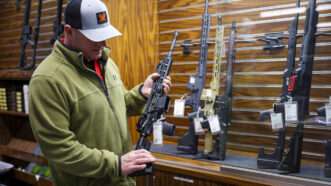
Law enforcement in Colorado can now inspect the records of any firearms dealer in the state "at all times" without a warrant, probable cause, or limits.

In a unanimous opinion, the court ruled that it is unconstitutional for officers to stop and frisk someone based solely on suspicion that the person is carrying a gun.

Guns disrupted the established order—and sparked modern-sounding debates over whether they could be effectively regulated.

At best, the authorities will show up after the threat has already occurred.

Panic over guns drives government officials to propose restricting popular technology.

Federal law bans the creation of a gun registry, but regulators made one anyway.

The right to bear arms is inherently anti-authoritarian at a time when Trump wields authority.

"Carrying a firearm is not a death sentence, it's a Constitutionally protected God-given right," writes Rep. Thomas Massie (R–Ky.).

The right to keep and bear arms is about resisting tyranny.

Once we let our rights become privileges, government officials can revoke them on a whim.

According to California lawmakers, Kamala Harris’s pistol is a potential machinegun.

A unanimous three-judge panel concluded that "no historical tradition supports" the 1987 law.

DIY firearms aren’t just an end-run around the law; they represent a libertarian political movement.


Despite record seizures and restrictive laws, New York City has struggled to stem the tide of untraceable firearms.

Long restricted by federal law, suppressors are poised to be freed by litigation or legislation.

My wife and I built our defensive skills with six days of sweat, dust, and the right mindset.

It’s a small step in the right direction for self-defense rights.

More litigation is required to find out which kits and unfinished parts are subject to regulation.

Canada long relied on the U.S. for protection. Now it needs to rediscover self-reliance.

The police targeted “sovereign citizens” for surveillance and disarmament.


Innovation and defiance hobble government efforts at control.
Often, the best thing for lawmakers to do is nothing.

Fortson answered the door holding a legally owned handgun at his side. Within three seconds, a police officer shot him six times.

Gov. Janet Mills’s office referred critical social media posts to the police. The FPC pushed back.

Vague rules and an unjustified raid led to Bryan Malinowski’s brutal death at the hands of federal agents.
Fortson, a 23-year-old active duty airman, was shot and killed by a Florida sheriff's deputy when he opened the door to his apartment holding a gun at his side.

Lower courts have been extremely skeptical of attempts to regulate unfinished parts as firearms.

Tucson and Pima County have a history of passing restrictions that conflict with state law.


Rather than destruction of property, Wendell Goney was convicted of possession of a firearm as a felon.

A watchdog group cites ATF "whistleblowers" who describe a proposed policy that would be plainly inconsistent with federal law.
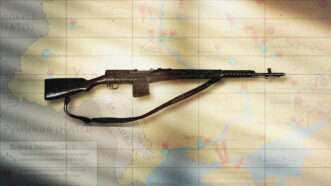
Survey finds growing acceptance of civilian firearms among the country’s population.

Flagstaff keeps digging a hole over commercial free speech.
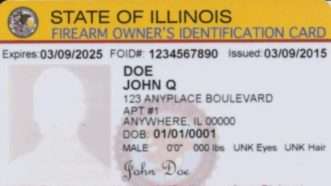
The 4th Circuit’s rejection of Maryland’s handgun licensing system suggests similar schemes in other states are unconstitutional.

Plus: A listener asks for the editors’ advice on how to spend his money.

No response to authoritarian government actions is quicker or more reliable than non-compliance.

Americans support tighter laws, but not as much as they distrust government and like owning guns.

The events expose an underappreciated downside to government registries: In addition to civil liberties concerns, so much information in a concentrated database is a potential privacy nightmare.

Researchers report that many gun owners, especially newer ones, falsely deny owning guns.

Now both a violent and nonviolent felon have been found by lower courts to have a Second Amendment right to own weapons. The Supreme Court will likely consider the issue in the near future.
Celebrate your independence with a subscription to Reason magazine, your most trusted source of honest, insightful news and analysis.




