
Trump Says States Are Required To Enforce Federal Immigration Laws. He's Wrong.
"The Framers...designed a system in which the State and Federal Governments would exercise concurrent authority over the people," wrote Justice Antonin Scalia.

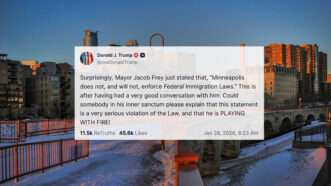
"The Framers...designed a system in which the State and Federal Governments would exercise concurrent authority over the people," wrote Justice Antonin Scalia.

The plan violates multiple constituitonal provisions and goes against Supreme Court precedent. If somehow allowed to stand, it would gravely imperil federalism and the separation of powers.

There is no evidence that institutional investors increase prices. Barring them from the market could actually exacerbate the housing crisis.

The main practical benefits would be tax relief for the cannabis industry and fewer barriers to medical research.

Only time will tell if the president's order achieves its stated purpose of checking state laws that threaten to stymie innovation.
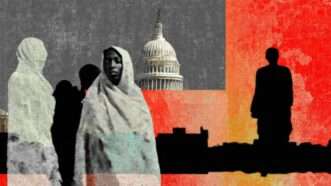
In America, we judge people according to the content of their character, not the behavior of a narrow minority of their coethnics.
Columbia Prof. Philip Hamburger urges the Supreme Court to hear this caseand take the opportunity to overturn Gonzales v. Raich.

Raich is one of the Court's worst federalism decisions, holding that Congress's power to regulate interstate commerce allows it to ban possession of marijuana that never crossed state lines, and was never sold in any market.

Without federal preemption, a regulatory thicket of state AI laws threatens to slow the technology's development.

A spending bill approved as part of the package that ended the federal shutdown aims to close a loophole that gave birth to $28 billion industry.

I coauthored the article with four other legal scholars from across the political spectrum.

Congress justified that National Firearms Act of 1934 as a revenue measure—a rationale undermined by the repeal of taxes on suppressors and short-barreled rifles.
Judge Willett thinks that some federal statutes have been interpreted and applied in ways that conflict with the notion that the federal government only has limited and enumerated powers.
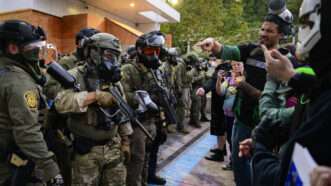
U.S. District Judge Karin Immergut concluded that the president's description of "War ravaged Portland" was "simply untethered to the facts."
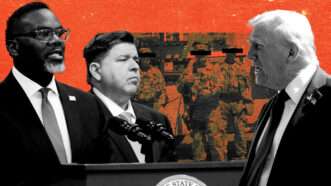
This is the second lawsuit in a week challenging the Trump administration's National Guard deployments absent a qualifying emergency.
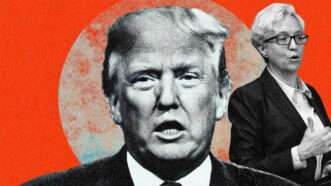
The administration ordered the federalization of 200 Oregon National Guard members for 60 days, citing the same suspect legal authority used to send troops to California earlier this year.

The decision, which hinges on an exception to the Gun-Free School Zones Act, does not say whether that law is consistent with the Second Amendment.

Another in a long line of court decisions striking down Trump efforts to attach conditions to federal grants that were not approved by Congress.

Lawsuits against Oregon and Maine test how far the federal government can go in demanding access to voter information.

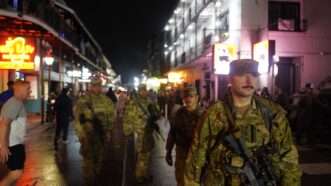
Trump’s federal takeover of D.C. was just one example of Republicans curbing local autonomy under the banner of public safety.
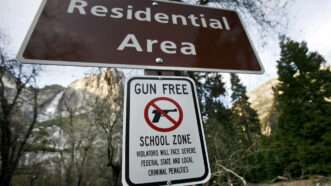
The federal law relies on a risible reading of the Commerce Clause to restrict a constitutional right.

The results of America's overly burdensome housing regulations aren't great. But they're not an "emergency."
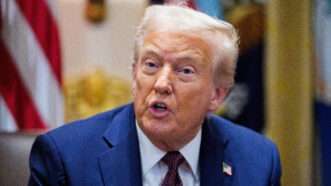
The president's plan to promote public safety by deploying troops in cities across the country is hard to reconcile with constitutional constraints on federal authority.

It makes the case for abolishing ICE and transferring its funds to state and local police.

The president signed an executive order on Monday establishing specialized units within the National Guard to support federal law enforcement in American cities.

His executive order directs the Justice Department to deny federal funds to jurisdictions that use cashless bail for suspects for many types of crimes. The plan is another assault on federalism and separation of powers.

As part of his response to the alleged crime emergencies taking place nationwide, Trump signed an executive order restricting federal funding from jurisdictions with cashless bail policies.
The Trump administration is considering plans for a "Reaction Force" of National Guard troops to deploy quickly to American cities with signs of civil unrest.
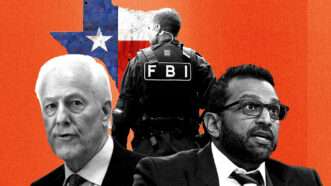
Using the FBI to track down AWOL Texas Democrats is an unnecessary expansion of federal law enforcement authority.
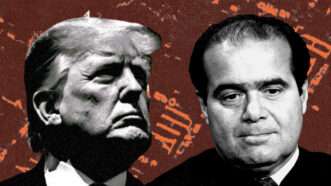
The anticommandeering doctrine stands in the way of Trump’s immigration crackdown.
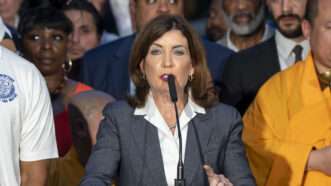
Kathy Hochul's focus on "assault weapons" is puzzling, since the perpetrator easily could have killed the same number of people with a gun that did not fall into that politically defined category.
Congress considers a consensus housing supply bill while the White House cracks down on the homeless.

The Trump administration's lawsuit against New York City challenges decades of sanctuary policies and local independence.
The court ruled the state and local policies are protected by the Tenth Amendment.
A mifepristone manufacturer is unsuccessful in evading West Virginia's prohibition on abortion, even when performed by medication.

Academics are supposed to discover nonobvious, counterintituitive truths. But, especially in recent years, much of my work involves defending positions that seem obvious to most laypeople, even though many experts deny them.

The taxes on sound suppressors, short-barreled rifles, and short-barreled shotguns, originally enacted in 1934, were meant to be prohibitive, imposing bans in the guise of raising revenue.

Telling states to pay for a share of the food stamp program makes a lot of sense and would likely reduce fraud.
Now nearly 100 state AI laws will remain in force—and nearly 1,000 more are already waiting in the wings.

The deployment of National Guard soldiers on a DEA drug raid is a serious test of whether the Posse Comitatus Act means something or not.
The Senate parliamentarian says the 10-year AI moratorium may be passed by a simple majority through the Senate's budget reconciliation process.

Although the appeals court said the president probably complied with the law he invoked to justify his California deployment, it emphasized that such decisions are subject to judicial review.

The ruling is the latest in a long line of court decisions striking down executive efforts to attach conditions to federal grants that were not approved by Congress.
The government's lawyer told a 9th Circuit panel the president's deployments are "unreviewable," so he need not even pretend to comply with the statute on which he is relying.
On its face, the law gives the president sweeping authority to deploy the military in response to domestic disorder.
An interesting tidbit from today's NYT profile of Justice Amy Coney Barrett
Celebrate your independence with a subscription to Reason magazine, your most trusted source of honest, insightful news and analysis.




