
Federal Appeals Court Sneaks in One Final Ruling Against the CDC's Expiring Eviction Moratorium
Circuit Judge John K. Bush accuses the federal government of laying claim to "near-dictatorial powers."


Circuit Judge John K. Bush accuses the federal government of laying claim to "near-dictatorial powers."

The ruling is unsurprising. But it does further strengthen the case against the moratorium, and increases the odds the issue might eventually make it to the Supreme Court.
The Sixth Circuit's decision is at odds with that of the D.C. Circuit, and features a Judge Thapar concurrence on delegation.

The city approved developers' plans for a 10-unit complex. They built 29 homes instead. Now some of those illegal units could have to be dismantled.
The decision is based on the conclusion that the landlords failed to prove they suffered an "irreparable" injury. It upholds a trial court ruling denying a preliminary injunction to landlords challenging the moratorium.

Ending single-family zoning doesn't ban single-family homes from neighborhoods. It merely allows more freedom for people to build what they want.

Governments at the state, local, and federal levels can obstruct our pursuit of happiness and at times even jeopardize our safety.

Federal Judge David O. Carter says Los Angeles' “inaction" is "so egregious, and the state so nonfunctional" that it's likely "in violation of the Equal Protection Clause."

It's the second in a two-part series on eminent domain reform.
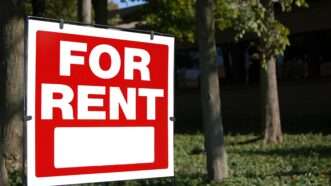
Congress approved $25 Billion in emergency rental assistance in December. Only 6 percent of that money has been spent so far.
The general assumption that the Fifth Amendment bars takings for economic development purposes rests on shaky ground.

It's an indication that the notorious decision holding that the government can take property for private "economic development" may be vulnerable.

A measure awaiting the governor's signature would make it easier for natural hair braiders in Wisconsin to work.

The controversial 2005 case "strayed from the Constitution," say Thomas and Gorsuch.

The government and media relied on studies plagued by shoddy statistics to make the case for blocking evictions during the COVID-19 pandemic.

Brett Kavanaugh, who provided a crucial fifth vote, said he agrees that the CDC does not have the authority to override rental contracts.

The agency’s legal defense of its eviction moratorium implies that it has vast powers to order Americans around.
A majority refused to lift a stay of a district court injunction against the order, but five justices indicated they believe the order is illegal.

The Court's ruling in PennEast allows the federal government to delegate the power of eminent domain to private firms seeking to condemn state-owned property.

More and more cities have taken preliminary steps toward allowing "missing middle" housing options in once exclusive single-family neighborhoods, but the devil is in the details.

The Texas governor wants to keep incoming migrants out at all costs. But those costs are insurmountable.

A bipartisan bill in Congress seeks to get the FDA out of the premium cigar industry.

A North Carolina city council member wants to make feeding homeless people a misdemeanor.

San Francisco politicians are raising eyebrows at the high costs of an emergency program that provides secure camping sites to the city's homeless.
The federal government's ban on the removal of non-paying tenants was supposed to expire on June 30. It'll now run through July 31.

Dr. Lee Gross' direct primary care practice takes the complexity and unaffordability out of health care.

COVID-19 has exposed the problems of a centralized food supply and built momentum for sweeping deregulation of the meat industry.

Plus: Hong Kong police raid a pro-democracy newspaper, Fed officials change their tune on inflation, and more...

The president is doubling down on bad regulations that raise labor and material costs of federal infrastructure projects.

Grocery stores hate expanding food freedom, but why is the head of Maine's farmers market coalition so nervous?

Crashing website and impenetrable government bureaucracy greet the tenants and landlords trying to access billions in federally funded rent relief.

A clean-energy future will require more than just spending money.

Lawmakers are proposing to create a "California Dream Fund" that would subsidize up to 45 percent of the costs of a new home.

Oklahoma, Alabama, and Montana are the latest states to deregulate homemade food sales.
The dubious decision breaks a streak of wins for plaintiffs challenging the legality of the CDC order.

Cruel NIMBYism hides in call for historic preservation.

Will home cooking become the new dining out?

The Biden administration wants to give $5 billion to jurisdictions that deregulate their housing markets.

If politicians want lower housing prices, they need to let people build more housing.


As in the US, they often block the building of new housing in response to demand.

A crop of bipartisan bills in Congress aims to reduce local and state regulations on new housing.
The Restoring Board Immunity Act would give states yet another reason to rein in overzealous licensing authorities.

Government officials who wield land grabs to pick economic winners and losers now want to use them to kill disfavored businesses.

The San Francisco Board of Supervisors voted to landmark the longtime home of gay rights activists Phyllis Lyon and Del Martin.

This ruling has some distinctive elements, and may have a broader impact than previous decisions.
PennEast v. New Jersey features a clash between the power of eminent domain and state sovereign immunity.


New from Reason: a look into what Javier Milei has accomplished and what it will take to make the most of Argentina’s window for real change. Out now for subscribers.