
Still the Stare Decisis Court (At Least For Now)
Even with a six-justice conservative majority, the Roberts Court has not (yet) increased the rate at which it overturns precedents.

Even with a six-justice conservative majority, the Roberts Court has not (yet) increased the rate at which it overturns precedents.

Multiple judges say SCOTUS is going out of its way to grant emergency relief to the president without even bothering to explain why.

Plus: new tariff threats escalate China trade war, federal layoffs begin amidst the government shutdown, and Democrats face a candidate-quality crisis
An interesting Reuters report on the new locus of lawsuits challenging the Trump Administration.
A set of interviews with the late justice is now available
Thoughts on the New York Times' Selective Survey of District Court Judges

Limits on government power are a venerable and beneficial feature of our system.
Interesting tidbits in an interview with Adam Liptak
A revealing interview with the Supreme Court's "Steel Magnolia."
A reply to the Associate Justice's recent remarks.
A recent panel discussion on the current Supreme Court.
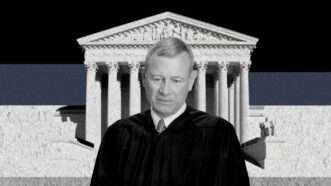
Which version of the chief justice will emerge in the Supreme Court’s newest term?
Should it be the interim docket? The emergency docket? The emergency orders docket? The short order docket? Something else?
The New York Times examines the "sharp partisan divides" on the Supreme Court's interim docket.
Justice Kavanaugh on what to call the "shadow docket" now that it is no longer in the shadows.
There are fewer early-term vacancies than one might have expected.
A New York Times column on the Supreme Court offers a misleading picture and errant analysis.
My new paper on judicial independence as a constitutional construction.
The judges on the U.S. Court of Appeals for the Sixth Circuit split over whether they should write about the reasons for their splitting over en banc review.
Judge Katsas and Judge Rao disagreed on the reasons, but both agreed that Judge Boasberg overstepped; Judge Pillard dissented.
In Chandler v. Brown, the Sixth Circuit may have been too quick (again) to grant a habeas petition.
A defense to Steve Vladeck's critique and a brief comment on Adrian Vermeule's related op-ed in the New York Times.
Rushing out opinions can lock in erroneous conclusions and create problematic precedent.
The Supreme Court's critics are too quick to assume the Court's orders are motivated by political considerations as opposed to principle.
Trump v. CASA was important, but it is not clear district courts have gotten the message.
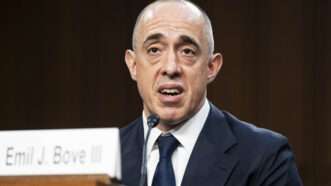
The alleged incident goes to the heart of the objections raised by critics who worry about Bove's respect for the rule of law.
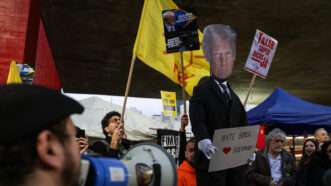
Brazil’s judiciary has abandoned neutrality, with sweeping crackdowns on speech and political rivals. A U.S. tariff response signals the crisis has gone international.
Indications are that the second Trump Administration will not have as significant an effect on the Courts as the first.
There's a tension between Progressives' efforts to delegitimize the courts and hopes the judiciary to constrain executive power.
Justice Jackson Sees Her Colleagues' Rulings As Threats to Democracy and the Rule of Law
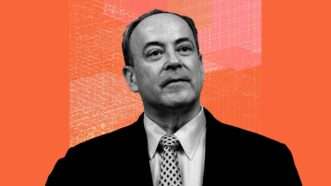
When Arizona Supreme Court Justice Clint Bolick is worried about our constitutional order, we should all pay heed.
Justice Kavanaugh's Trump v. CASA concurrence appears to reply to Judge Ho.
Justice Kagan said "it just can't be right" that a single court judge can stop a federal policy in its tracks nationwide.
Other than the Chief, Justice Kagan wrote the fewest opinions.
Justice Barrett writes for the Court's majority that universal injunctions likely exceed the equitable power of federal courts.

Plus: The Supreme Court upholds a state ban on transgender care for minors.
The Court's majority avoids the larger question of whether laws targeting transgender individuals should be subject to heightened scrutiny, but Justice Barrett did not.
Perceptions of Amy Coney Barrett may have changed more than her jurisprudence or voting record.
The Senate has adopted its own version of a provision designed to limit preliminary injunctions against the federal government when no bond is posted.
My contribution to an interdisciplinary symposium on "Donald J. Trump, the Supreme Court, and American Constitutionalism"
Professor Joel Alicea on how to understand what may be the most important jurisprudential divisions on the Supreme Court.

Unanimous rulings on discrimination, guns, and religion once again challenge the common media narrative that the Court is hopelessly polarized.

The MAGA loyalty that Trump demands is anathema to everything that originalism is supposed to be about.
Claims that Justice Amy Coney Barrett is at the center for the Court are not supported by the data. The truth is more complicated.
This question can be informed by more than anecdote and intuition.
Is it a problem if a provision requires judges to comply with the Federal Rules of Civil Procedure?
The Maine legislature has sought to silence and disenfranchise one of its members due to objections to things she said.
The Chief Justice is more consistent than his critics, left and right.
Celebrate your independence with a subscription to Reason magazine, your most trusted source of honest, insightful news and analysis.




