
Is It War?
America's longest, most depressing game show



The massive new tariffs are illegal, just like the IEEPA tariffs previously invalidated by the Supreme Court.
The article explains why the war requires congressional authorization,and why this requirement is important.
The Court's law-declaration approach not only departs from its dispute-resolution premise but risks yielding a faulty product.

Importantly, the Court ordered payment of refunds even to those businesses who have not filed a lawsuit to claim them.
The "three buckets" picture of the federal government, in combination with the unitary executive thesis, gives extravagant power to the President.
In the "three buckets" picture of the structure of the federal government, a federal entity that is not part of Congress or part of the judiciary must inevitably be in the Executive Branch.
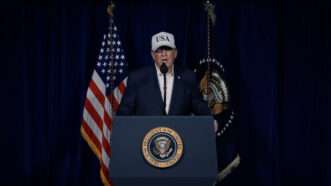
Trump's attack on Iran is obviously unconstitutional. The moral and policy issues are a closer call.
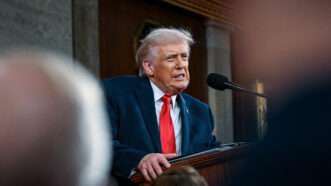
The president's wildly inaccurate ideological labels are no more meaningful than his other ad hominem attacks on people who disagree with him.
I was one of the participants, along with Zach Shemtob (SCOTUSblog) and Julie SIlverbrook (NCC).
Gregg Nunziata interviewed me.
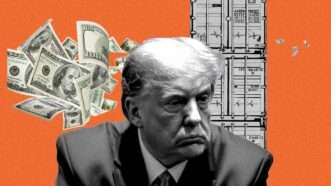
Only time will tell how great the impact of the ruling will really be. But, at this point, it seems like a very significant decision.
The article explains why the new Section 122 tariffs are illegal, and courts should strike them down, when (as is likely) lawsuits are filed against them.
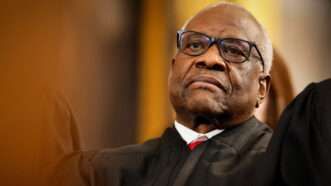
The conservative justice’s regrettable opinion in Learning Resources v. Trump.
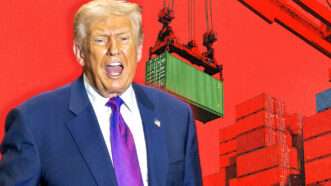
The president is relying on a provision that the government's lawyers said had no "obvious application" to his goal of reducing the trade deficit.
The president neither understands nor appreciates the vital role of judicial independence in upholding the rule of law.
President Trump will undoubtedly keep trying to impose protectionism, but his options are limited.
The prominent conservative legal commentator outlines the case against Trump's latest tariff power grab.
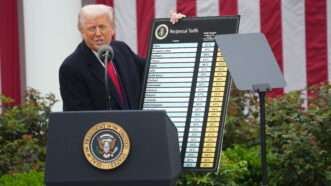
It covers many issues raised by the decision.
Thanks to our victory in the tariff case before the Supreme Court, businesses that paid billions of dollars in illegally collected tariffs can seek refunds. But the process may be difficult.
The new tariff will be implemented under a 1974 law that gives the president authority to impose tariffs for up to 150 days.
"will appreciate the legislative process for the bulwark of liberty it is."
There are many laws that explicitly authorize the president to impose taxes on imports, but they include limits that Trump was keen to avoid.
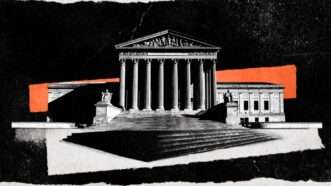
"There is no exception to the major questions doctrine for emergency statutes," wrote Chief Justice John Roberts.
In a 6-3 decision, the Court ruled that the International Emergency Economic Powers Act does not authorize tariffs.
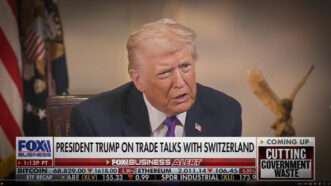
The story is an exercise in pettiness but also a perfect reason why Congress and the Supreme Court should limit the president's power grab.
Plus: Speaker of the House Mike Johnson embraces warrantless ICE searches, the Super Bowl halftime culture war, and Trump continues funding the Department of Education
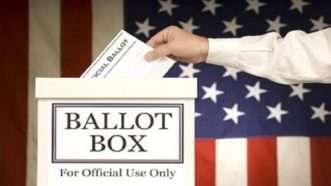
Trump's call to "nationalize elections" leads prominent election law scholar Rick Hasen to reverse his longstanding support for such a policy.

Trump's endorsements of Viktor Orbán and Sanae Takaichi, like Clinton's support for Boris Yeltsin or Obama's opposition to Benjamin Netanyahu, do not make America great.
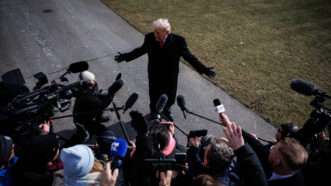
Limited government means those in power can do limited damage to the rest of us.
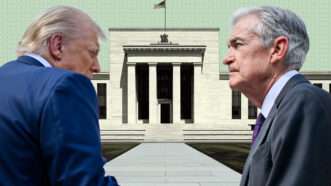
Trump’s legal arguments “would weaken, if not shatter, the independence of the Federal Reserve,” the justice said.
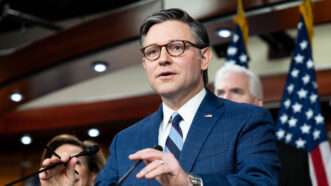
A House rule prohibiting tariff resolutions from coming to the floor will expire at the end of the month and is unlikely to be renewed.
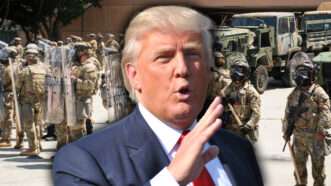
The antiquated statute arguably allows the president to deploy the military in response to nearly any form of domestic disorder.
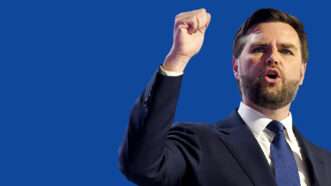
Vice President J.D. Vance on the nature of power
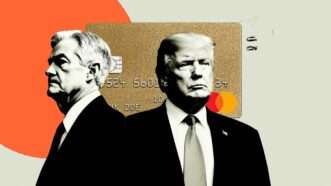
No one likes high interest rates on credit cards and loans, but artificially lowering interest rates via executive power is not a solution.
Presidential non-acquiescence in Humphrey's Executor from 1989 to 2009.
Humphrey's Executor from 1969 to 1989.
Almost every president since 1945 has refused to accept Humphrey's Executor as having been correctly decided.
President Franklin D. Roosevelt did his best to defend presidential removal power at will notwithstanding the Supreme Court’s lawless decision in Humphrey’s Executor v. United States.
Every President from 1921 to 1933 successfully defended presidential removal power at will.
The Supreme Court’s January docket is packed with big cases.
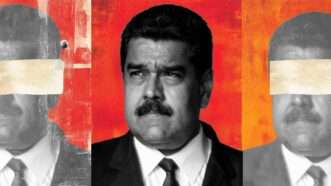
That embarrassing mistake highlights the slipperiness of Trump's attempts to justify legally dubious policies by invoking the specter of "foreign terrorist organizations."
Every president from 1901 to 1921 successfully defended presidential removal power at will.

If an indictment is enough to justify military action, why bother seeking congressional approval?
Every president from 1881 to 1901 successfully defended presidential at-will removal power.
Here as elsewhere, lethargy in the legislature is no way to counter execss energy in the executive.
Celebrate your independence with a subscription to Reason magazine, your most trusted source of honest, insightful news and analysis.




