
Dave Smith and Alex Nowrasteh Debate Immigration
Is it consistently libertarian to support government restrictions on immigration?


Is it consistently libertarian to support government restrictions on immigration?

"It's not just one or two administrative errors," says the Cato Institute's David Bier.

In Operation Fool Around and Find Out, 244 "human trafficking" arrests, but no human trafficking.

A new Cato Institute study by David Bier presents the most extensive available evidence on these points.

The legal principle safeguards civil liberties, protecting even unpopular people from the government.
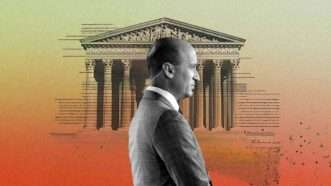
Stephen Miller's trial balloon about abrogating habeas corpus in immigration cases shows how any libertarian with pragmatic intelligence should reject so-called "libertarian" arguments for strict immigration laws.

The 1866 debate over birthright citizenship included a debate over immigration.
In a 2-1 ruling, the Court ruled Trump's invocation of the Alien Enemies Act cannot supersede a settlement barring deportation of a group of migrants. One judge also held the AEA was invoked illegally.
The latest SCOTUS order shows the justices are taking a more nuanced approach to district court injunctions of Trump Administration policies than its critics, left or right.

Kovarsky and Rave defend the use of class actions in AEA habeas cases. Vladeck highlights the significance of the Supreme Court's grant of an injunction to a "putative class" of AEA detainees.

The Administration isn't wrong to admit white South African migrants. But it is wrong to exclude all other refugees, including many fleeing far worse discrimination and oppression.

The brief is on behalf of the Cato Institute and myself.
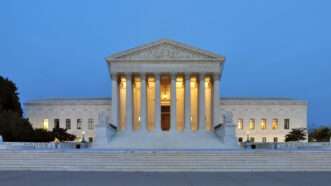
The ruling held that migrants detained under AEA had not been given adequate notice of their potential deportation. It also reflects the Court's growing distrust of the Trump Administration.
A majority of the justices seem unconvinced the Administration was prepared to provide the process that was due. Justices Alito and Thomas dissent.
Nationwide illegality by the federal government requires a nationwide remedy.


The president's executive order on birthright citizenship had its first test before the Supreme Court.

The article explains why these claims to emergency powers are illegal and dangerous, and how to stop them.
In a badly flawed decision, a federal district court ruled that Trump can invoke the AEA because the Tren de Aragua drug gang's activities amount to a "predatory incursion."
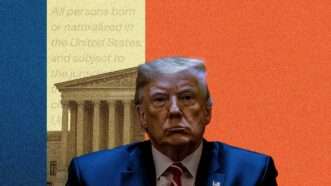
The text and history of the Fourteenth Amendment run counter to Trump’s executive order.

Nominees include stories on inflation breaking brains, America's first drug war, Afghans the U.S. left behind, Javier Milei, and much more.

Stephen Miller's understanding of the Constitution is dubious for several reasons.
One of the justices wrote extensively about when and whether the writ of habeas corpus may be suspended.

“Between the cost of labor and the inputs that goes in, it’s more cost-effective for farmers” to plow over ripe tomatoes, said one expert.
Briefs urging the Supreme Court to stay injunctions against the order challenge "the conventional wisdom" about the meaning of an 1898 decision interpreting the 14th Amendment.

Plus: Air traffic controller issues, tariff deal between U.S. and China, "murder insurance," and more...

The ruling is a victory for the proposition that the First Amendment applies to immigration and visa restrictions.
I have long warned of this dangerous implication of the argument that illegal migration qualifies as "invasion."

Three libertarians—Dave Smith, J.D. Tuccille, and Liz Wolfe—revisit their reluctant votes for Trump, weighing the promises, chaos, and consequences of his second term so far.
Ozturk's continued detention "potentially chills the speech of the millions and millions of people in this country who are not citizens," said U.S. District Judge William K. Sessions III.

The first American pope has a history of advocating for migrants' rights.

We don't need more of the same. We need evidence of a serious turnaround.
The court instituted a preliminary injunction against the Administration's use of the Act to deport Venezuelans.

Plus: Conclave time, land acknowledgements, deporting to Libya, and more...
Trump admits he could return migrant illegally deported to El Salvador. And an intelligence community report concludes the Tren de Aragua drug gang isn't controlled by the Venezuelan government.
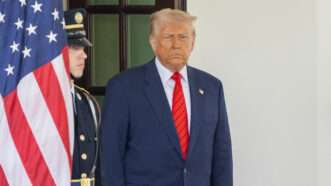
A declassified assessment contradicts the president's assertion that Tren de Aragua is "closely aligned with" the Venezuelan government and acts at its "direction."
An important (and importantly civil) debate on birthright citizenship.
The Southern District of New York rules Trump invoked the Act illegally, because there is no "invasion" or "predatory incursion."

Plus: Deporting the worst of the worst, Bessent tries to promote the Trump economic agenda, and more...

The Trump administration is desperate to avoid judicial review.

ICE deported Andry Hernandez Romero because his "mom" and "dad" tattoos were allegedly related to a Venezuelan gang.

Plus: Depriving the children of toys, a curbside rat feast, China wants to talk, and more...

Campus protests against Israel have revived debates over the limits of First Amendment protections.

The Trump-appointed judge found that the administration's use of the Alien Enemies Act "exceeds the scope of the statute and is contrary to the plain, ordinary meaning of the statute's terms."

The president's bizarre insistence that Kilmar Abrego Garcia "had MS-13 tattooed" on "his knuckles" makes him seem like a confused old man.
Federal district court Judge Fernando Rodriguez ruled that Trump invoked the AEA illegally, and that migrants threatened with deportation under the Act can file class action habeas petitions.
The brief gives a good explanation of why such actions violate the First Amendment.


New from Reason: a look into what Javier Milei has accomplished and what it will take to make the most of Argentina’s window for real change. Out now for subscribers.

