Police Violence, COVID-19 Lies, and the End of Legitimate Authority
Our leaders and institutions are failing us spectacularly. It's up to us to reboot society.


Our leaders and institutions are failing us spectacularly. It's up to us to reboot society.
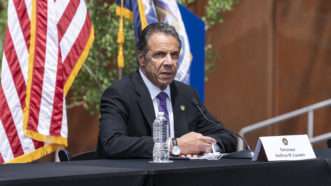
Making a living is a right, not a privilege, and should be respected as such.

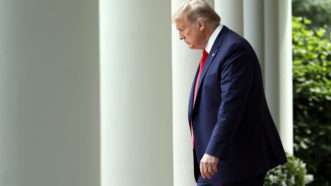
The president’s tariffs have hiked prices and harmed consumers.
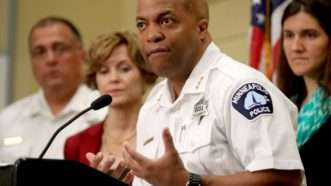
After George Floyd’s death, the city will bring in outside advisers to recommend changes to make policing more transparent and accountable.

The Ogilvy ad man and Alchemy author says Ludwig von Mises is his hero and that efficiency has nothing to do with free markets.

Two new studies create counterfactual pandemic scenarios seeking to answer that question.
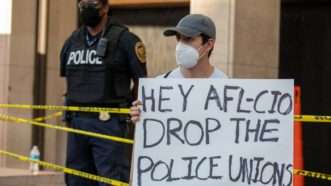
Union leaders show very little interest in considering collective bargaining’s role in protecting bad cops.
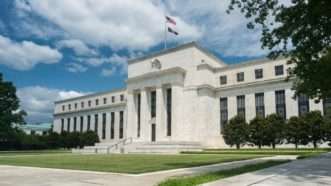
Some economists believe that a negative interest rate policy will stimulate the economy by reducing the cost of loans. That isn’t how it has worked in practice.

No amount of protesting is likely to reduce police brutality in the absence of structural reforms that increase accountability, competition, choice, and incentives.

That's probably because those goals were always completely unrealistic. Less than six months after the deal was signed, it's already coming apart.
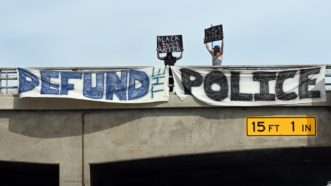
Reducing law enforcement requires more than merely cutting and shifting a budget.
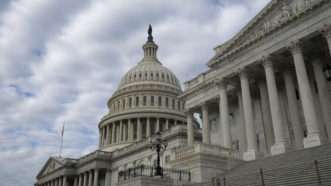
If Congress extends boosted temporary unemployment benefits into early 2021, nearly five out of every six beneficiaries would be earning more money by not working.

Even after government had imposed an almost unfathomable level of intervention on the economy, the markets are chugging along much better than expected.

Making masks, face shields, and other protective equipment is the bottom-up, COVID-19 version of rolling bandages or knitting socks for the troops.
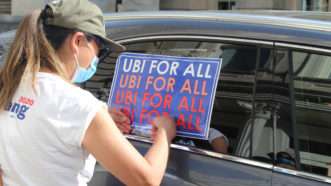
There are problems with the UBI idea.

The Food and Drug Administration now says there is no evidence that any country attempted to cut off America's essential pharmaceuticals.


Such laws end up causing more shortages than they solve, especially during a crisis.

Today's Crew Dragon launch marks the first time a private company has sent humans into orbit.
The available evidence suggests that police unions are a major obstacle to holding rogue police officers accountable.
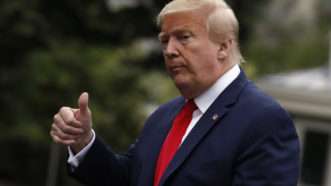
Sen. Chuck Grassley says it's dead because lawmakers feared upsetting the president.

Top-down, one-size-fits-few mandates are recipes for conflict.

Plus: the weird new battle lines on warrantless surveillance, more CDC incompetence, Minneapolis on fire, and more…


The pandemic has exposed many of America’s destructive barriers to work. It’s time to eliminate them.

A member of the five-month-old company's board has been touting bogus stats about America's supposed dependency on Chinese-made drugs.

Rather than criticize the charitable donations of the very rich, we should be grateful for them.

In a Senate floor speech Wednesday, Hawley outlined a half-baked plan to tear down global trade. It's aimed at winning elections, not helping America prosper.

The longtime activist is the front-runner for the L.P. presidential nomination and has a special message to young people.
John Baker and Robert Miller identify an alternative

Two economists calculate that U.S. farms lost $14 billion because of retaliatory tariffs, while South American countries boosted their exports by $13 billion to fill the gap.

Ludwig von Mises is “my hero,” and free markets have nothing to do with efficiency, says Ogilvy ad man Rory Sutherland.

Will changes to how many of us work outlast the pandemic?
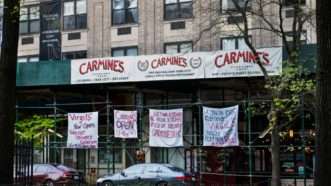
Regulations are making it harder for restaurants in NYC to adapt to COVID-19.
The Reason Roundtable discusses Federal Reserve Chair Jerome Powell's 60 Minutes admission, as well as the Libertarian Party presidential race post-Justin Amash
It may be a statement about the decline of the dollar, but the best-case explanation of the resilient stock market is that it is sending us a positive message about a rapid recovery of both public health and corporate profits.

No amount of money can buy victory for candidates who fail to persuade voters.

A new round of hyperinflation was taking a heavy toll on daily life, even before the coronavirus hit.
Businesses need to be able to adjust to a world where COVID-19 remains an ongoing concern.
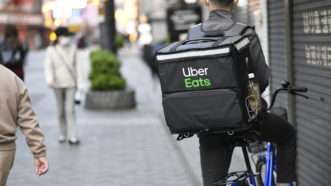
Cities are imposing "emergency" regulations capping the fees that delivery services like Uber Eats may charge. That's a mistake.

Marveling at people's endless ability to love, connect, and create.
His proposed law would require that corporations return bailout funds if they don't rehire the same number of employees.

Even in a healthy economy, rising debt and deficits posed challenges. The current crisis has magnified those problems.
Shame on the U.S. government for making unemployment pay better than work.

What might learning to live with COVID-19 look like?

The Reason Roundtable discusses eternal New Deals, multi-trillion-dollar mistakes, and sobbing face-first in the parking lot of life. Happy Monday!

That has interesting implications for where people will base themselves in the future.

Help Reason push back with more of the fact-based reporting we do best. Your support means more reporters, more investigations, and more coverage.
Make a donation today! No thanks
Every dollar I give helps to fund more journalists, more videos, and more amazing stories that celebrate liberty.
Yes! I want to put my money where your mouth is! Not interested
So much of the media tries telling you what to think. Support journalism that helps you to think for yourself.
I’ll donate to Reason right now! No thanks
Push back against misleading media lies and bad ideas. Support Reason’s journalism today.
My donation today will help Reason push back! Not today
Back journalism committed to transparency, independence, and intellectual honesty.
Yes, I’ll donate to Reason today! No thanks
Support journalism that challenges central planning, big government overreach, and creeping socialism.
Yes, I’ll support Reason today! No thanks
Support journalism that exposes bad economics, failed policies, and threats to open markets.
Yes, I’ll donate to Reason today! No thanks
Back independent media that examines the real-world consequences of socialist policies.
Yes, I’ll donate to Reason today! No thanks
Support journalism that challenges government overreach with rational analysis and clear reasoning.
Yes, I’ll donate to Reason today! No thanks
Support journalism that challenges centralized power and defends individual liberty.
Yes, I’ll donate to Reason today! No thanks
Your support helps expose the real-world costs of socialist policy proposals—and highlight better alternatives.
Yes, I’ll donate to Reason today! No thanks
Donate today to fuel reporting that exposes the real costs of heavy-handed government.
Yes, I’ll donate to Reason today! No thanks