
Another Study Finds Trigger Warnings Are Useless, or Even Harmful
A scientific consensus has emerged that trigger warnings just don't work—and student activists should stop demanding them.


A scientific consensus has emerged that trigger warnings just don't work—and student activists should stop demanding them.
More than just a mixed metaphor -- it's a legal doctrine.
Aggressive asset forfeiture collides with First Amendment rights.
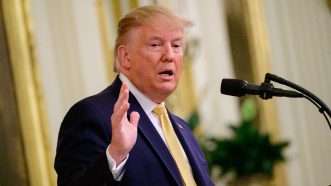
At his social media summit on Thursday, the president ranted incoherently about the media's "crooked," "dishonest," and "dangerous" speech.
The idea that the internet should enjoy minimal government oversight precisely because it was a technology that enabled open and free speech for everyone has been turned on its head.
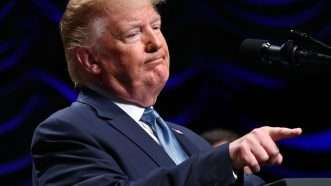
Plus: Air-launched rockets, the GOP becomes the party of Trump, and Pelosi feuds with AOC.
"The cost of not doing this is the harm done to other Googlers every time they encounter these terms," says the company's diversity and inclusion team.
An interesting D.C. trial court decision from last year, involving an image of nudity submitted as part of a court case.
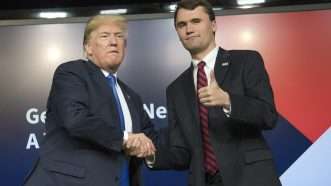
The president invited Republican lawmakers as well as social media stars who claim that tech giants are suppressing free speech.
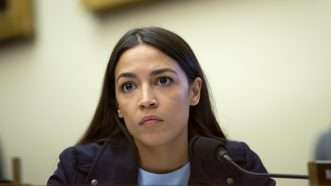
The New York congresswoman's use of Twitter seems similar to the president's in constitutionally relevant ways.
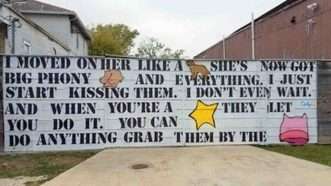
New Orleans can't use zoning regulations to decide what counts as artistic expression.
The plaintiff had pleaded guilty to, among other things, having sex with a minor (apparently when he was 21 and the minor was 15); the alleged libel stemmed from, among other things, reports of that crime.
So a district court held today.
Today’s decision fits awkwardly with a usual element of a designated public forum – that the government has created rules allowing for open discourse and is thus bound by those rules.
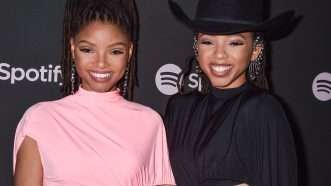
Few people who tweeted #NotMyAriel were actually upset about Halle Bailey portraying the mermaid princess.
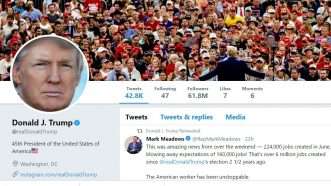
The court says the "interactive space" created by his account is a public forum, meaning that the president's viewpoint discrimination violates the First Amendment.
The reasoning would apply to other politicians' accounts that are seen as "official" rather than personal, and to accounts that are run by government entities (such as school boards) rather than individual politicians.

Jon Goldsmith was charged with third-degree harassment after calling Deputy Cory Dorsey a "stupid sum bitch" online.
An interesting Massachusetts decision from a couple of months ago, upholding a trial court's refusal to seal under such circumstances.
An anonymous lawsuit claims that it's tortious to try to artificially boost the prominence of an embarrassing article.
An academic debate turns into professional and legal accusations.
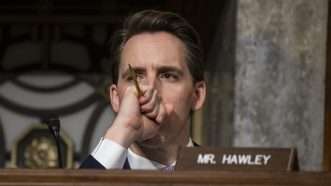
Sen. Josh Hawley (R–Mo.) has proposed a dreadful bill that would give the government control of internet content. He thinks the only reason anyone could be opposed is because they've been bought off.

Nicole Prause and Donald Hilton, longtime opponents on the subject of pornography, are now facing off in court.
The Supreme Court has held that the government generally may not terminate contracts with contractors based on their constitutionally protected speech; the same likely applies to financial incentives..
That's what a New York trial court decision just posted online today held -- correctly, I think.
Noted political publicist Trevor FitzGibbon (who had represented Julian Assange) sues whistleblower lawyer Jesselyn Radack (who had represented Edward Snowden) -- a second time.
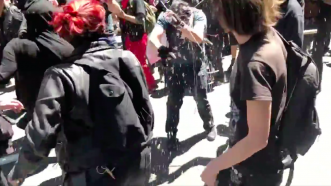
Masked activists attacked the Quillette editor with fists and milkshakes, sending him to the emergency room.

The state's Liquor and Cannabis Board changed its policy after Hempfest and two marijuana retailers challenged it on constitutional grounds.
The Court of Appeal has ordered that the formerly nonprecedential decision, which I blogged about four weeks ago, will now be precedential.
Countries across the world tackle political misinformation with authoritarian censorship.
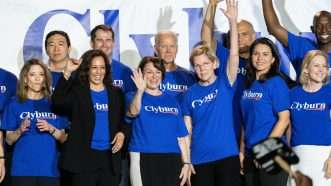
Early debates actually tell us a good deal about where political parties are heading.
Prior Minnesota precedents had said that some First Amendment protections against defamation liability applied only to media speakers.

The government's latest moral crusade shields traffickers, empowers pimps, and undermines free speech online.

It's Ravelry, and it's not just a "knitting site."
Boggs-Perez is the recently elected trustee of the San-Antonio-area Judson Independent School District, and the requests aimed to deindex columns about her in the Las Vegas Review-Journal and the San Antonio Express-News.
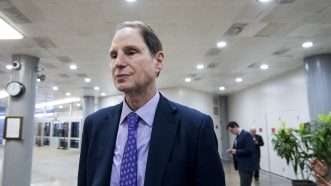
"Section 230 has nothing to do with neutrality. Nothing. Zip. There is absolutely no weight to that argument," Wyden says. He oughta know. He wrote the damn thing.
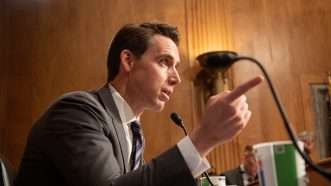
From Sohrab Ahmari to Josh Hawley, what the new right really wants is to squelch free expression.
Such speech, whether about elected officials or others, is punishable, the court held, if it "[does] not express social or political beliefs or constitute legitimate conduct" and "could only serve to harass, annoy or alarm the complainant."

"Support of the Trump administration is undeniably support for white supremacy."
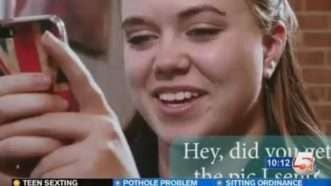
That result "may strike some as unfair," the court says, but it's what state law required at the time.

A 6-3 ruling says that the First Amendment protects brand names that are considered “immoral” or “scandalous.”
So the majority held in today's decision about the exclusion of "immoral or scandalous" marks from trademark registration (the FUCT case).
The Supreme Court rules that the bar on "immoral or scandalous" marks is viewpoint-based, but Chief Justice Roberts and Justices Breyer, Alito, and Sotomayor say that an exclusion of "vulgar or profane" marks would be viewpoint-neutral though content-based. (The other five Justices express no opinion on a hypothetical "vulgar or profane" mark ban.)

A local bakery accused the college of defamation after students launched a public campaign against the store for racial profiling. Oberlin mounted a free speech defense.
According to the ACLU of Rhode Island, which is representing the blogger, the order was issued without any adversarial hearing at which the blogger could appear.
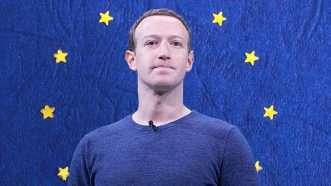
Stanford Law professor and former Google attorney Daphne Keller says tech giants are facing pressure from governments worldwide to clamp down on content.
Celebrate your independence with a subscription to Reason magazine, your most trusted source of honest, insightful news and analysis.




