
What is this even supposed to mean?
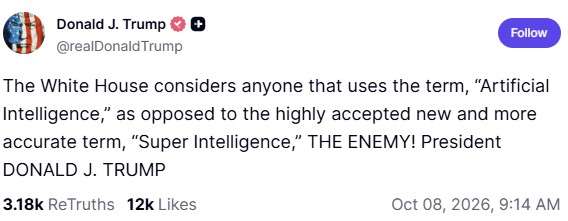
Is it just self-parody?

Mostly law professors | Sometimes contrarian | Often libertarian | Always independent | Est. 2002
From the Sept. 30 decision in People v. Barraza by California Court of Appeal Justice Richard Huffman, joined by Justices William Dato and Truc Do:
[1.] Alberto Jorge Barraza cut off parts of Nikko G.'s hair with a knife as Nikko tried to fight him off. Barraza stabbed Nikko in the leg, severing an artery and killing him. A jury convicted Barraza of [1] first degree felony murder, with the underlying felony being robbery and [2] assault with a deadly weapon. Barraza appeals, contending insufficient evidence supported his first degree felony murder conviction because the evidence did not establish a robbery or attempted robbery.
This appeal presents a question of first impression—whether growing human hair, still attached to the victim's body, constitutes "personal property" for purposes of robbery. We conclude that growing human hair that is still attached to a person's head is part of the human body and not personal property. Accordingly, removing it by force does not meet the legal definition of robbery.
Nikko became acquainted with Barraza and two of Barraza's friends—John W., and John's mother, Lee Ann W. (together the Ws). Nikko was a member of an Indian tribe who was very proud of his Native American heritage. He had long hair that went down to his waist. Nikko took great pride in his hair and had spoken to John about his plan to sell it to a "cancer company that made wigs."
In early 2022, Barraza and his friends turned against Nikko after concluding he had stolen from them. Barraza and John discussed cutting off Nikko's hair to teach him a "lesson." Knowing of Nikko's intention to sell his hair, John referred to it as an "asset"—the "bank account" on top of his head. Another acquaintance similarly regarded Nikko's hair as his "prized possession" recalling, "[h]e was always in his hair or always fixing his hair." John went so far as to warn Nikko directly, "don't be surprised if that—that hair gets cut off" "one of these days."
Prison phone calls, volcanic eruptions, and animal testing.
Please enjoy the latest edition of Short Circuit, a weekly feature written by a bunch of people at the Institute for Justice. Read More
Reps. Clay Fuller, Diana Harshbarger, and Keith Self are cosponsors of H.R. 10501, introduced three weeks ago:
The Communist Control Act of 1954 is amended—
- in section 3 (50 U.S.C. 842), by striking "or any successors of such party" and inserting ", the Democratic Socialists of America, or any successors of such party or organization"; and
- in section 4(b) (50 U.S.C. 843(b))—
- by inserting "the organization now known as the Democratic Socialists of America," after "the organization now known as Communist Party of the United States of America,"; and
- by inserting "or any successor organization" after "any unit or subdivision of any such organization".
What this would do isn't entirely clear. Title 50 U.S.C. § 843 subjects covered organizations to "all the provisions and penalties of the Internal Security Act of 1950," but that has largely been repealed. Title 50 U.S.C. § 842 provides,
The Communist Party of the United States, or any successors of such party regardless of the assumed name, whose object or purpose is to overthrow the Government of the United States, or [any U.S. state or local government] by force and violence, are not entitled to any of the rights, privileges, and immunities attendant upon legal bodies created under the jurisdiction of the laws of the United States or any political subdivision thereof ….
Whether that would strip the DSA of, say, status as a corporate body or some such is unclear; see Communist Party v. Catherwood (1961) for the Court's one attempt to interpret the statute, which concluded that the Party wasn't excluded from employer registration under state unemployment insurance law.
But whatever the bill might do precisely, its only possible meaning would be to strip the DSA of at least some ordinary protections that all other organizations, including political organizations, enjoy, based on its viewpoint. That would violate the First Amendment.
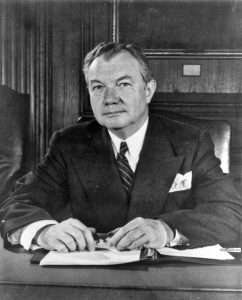
10/9/1954: Justice Robert H. Jackson dies.
What’s on your mind?
A report from Amnesty International and the ACLU argues that if universities allowed misbehavior in the past, they must continue to do so.
Amnesty International USA and the ACLU issued a report last month purporting to document what they describe as an illicit crackdown on "pro-Palestine" expression since October 7. Needless to say, I think the problem has primarily been the opposite, university officials and local politicians and prosecutors being far too indulgent of illicit behavior by Hamasnik protestors, including vandalism, threats, disruptions, harassment and violence.
Be that as it may, the report makes a big to-do over the fact that universities have cracked down on illicit behavior by anti-Israel activists in ways that constitute disparate treatment. In particular, the report suggests that many universities that have a history of being extremely lax about disciplining rule-breaking student protestors in other contexts have been much harsher toward anti-Israel protestors.
There is some truth to that conclusion, but I don't find the claim that alleged viewpoint discrimination required universities to stand down, for three interrelated reasons.
First, arguing some sort of estoppel for cracking down on rule-breaking is a bad legal argument. "But your honor, the government did not prosecute the last ten rapists" isn't going to get you far.
Second, the failure of universities to properly punish misbehavior by, say, climate activists was itself viewpoint discriminatory. One can hardly imagine, say, Columbia University, acting with equanimity if anti-abortion or anti-affirmative action protestors engaged in the illicit shenanigans that leftist protestors have engaged in.
And finally, civil rights law require universities to take action against illicit hostile environments. Climate change activists may have broken university rules, but they did not intimidate, harass, and engage in violence against any identifiable group protected by civil rights laws. And that's a legally crucial difference. I elaborated on these points in a recent article:
From Outlaw v. Outlaw, decided in 2019 by Judge Katharine von Ter Stegge (Ore. Cir. Ct.) but just posted on Westlaw; the lawsuit was brought by a woman against her ex-husband and her ex-mother-in-law, all with the last name Outlaw:
In April 2017, [mother-in-law] arrived at [the then-wife-and-husband's home] in order to provide emotional support to [husband].
In June 2017, [husband] filed Petitions for Dissolution of Marriage and a Temporary Protective Order of Restraint against Plaintiff. Plaintiff then filed a Motion requesting exclusive use of the [home]. On approximately July 14, 2017, Defendant [mother-in-law filed a Petition for Restraining Order to Prevent Abuse of Elderly Person or Person with Disability ("EPPDAPA Petition") against Plaintiff as the Respondent.
The EPPDAPA Petition included allegations that Plaintiff verbally abused [mother-in-law], stole her property, and antagonized her through late-night use of laundry machines adjacent to her living quarters, including allegations that Plaintiff ran the dryer with sneakers in it during sleeping hours. [Mother-in-law] also alleged that Plaintiff rendered the bathroom she was using non-operational by forcefully removing pipes, the toilet, and the door to the bathroom.
On July 21, the EPPDAPA Petition was granted on a temporary basis pending a contested hearing. The resulting EPPDAPA restraining order ("Restraining Order") contained various restrictions on Plaintiff. Plaintiff was restricted from being within 150 feet of [mother-in-law] or making any contact with her. Plaintiff was also ordered to move from the Hassalo House and to remain at least 150 feet away from it. Plaintiff was served with the Restraining Order and left the house immediately.
Perhaps the most wrongheaded analysis in the Report is this:
Because the government may not "conscript private institutions to act as censors by dangling the threat of civil liability for a hostile environment," the First Amendment "'demands substantial deference to a college's decision not to take action against' students who engage in expressive activity on matters of public concern."
In other words, courts must "'defer to colleges' decisions to err on the side of academic freedom.'"Whereas a grade school's failure to take action against a student who sexually harasses a classmate might well support an inference of deliberate indifference to that harassment—because any reasonable actor would intervene—the same is not true when a university determines how to enforce rules regarding the use of campus spaces in light of its academic mission and competing claims of different groups."
"Expressive activity" is doing far too much work here. Universities have rules against vandalism, harassment, intimidation, and also have time, place, and manner restrictions for protest/speech activities, to avoid disruption. You might, for example, be able to chant on the campus green at lunch time, but not in the campus library.
Breaking these rules--vandalizing, harassing, intimidating, disrupting contrary to campus rules are often "expressive activities." But they are not protected by the First Amendment, and have nothing to do with academic freedom.
And to the extent these rules are clearly stated in the student handbook, everyone breaking the rules has fair notice of what the rules are. Suggesting that universities should get deference in enforcing these rules is an open invitation to college officials to discriminate; to, for example, have a full-on campus wide meltdown when students disrupt a "Take Back the Night" rally, but do nothing when a Hillel event is disrupted.
Indeed, in a recent Harvard Law Review article, Prof. Eidelson and Hellman, cited frequently in the USCCR report, positively endorse such discrimination, suggesting that universities, for reasons that make zero sense to me, may have a greater reason for not intervening in the context of debating the Israel-Palestine conflict than elsewhere. Read More
The DSA would abolish the police, open borders, socialize medicine, abolish the Department of War, and abolish the Senate.
The Democratic Socialists of America ("DSA") have won an unprecedented number of Democratic primaries, and their candidates are on the ballot now in many places. Even those Democrats who are not members will follow much of their platform because that is what activists in the Democratic Party want to see done. DSA members may well elect the next Speaker of the House of Representatives, who will be second in line for the presidency.
Among the Democratic Socialists of America who have been nominated for seats in Congress in this year's midterm elections are:
U.S. Senate Nominations
U.S. House Nominations
Because of the Democratic Socialists of America's rise to power, I wanted to know more about what they stood for. I googled their Platform, which is titled "Workers Deserve More," and I will quote from it below in bold face and respond in ordinary type. Much of what I will quote comes from a section of the Platform that describes "What We Fight For." Here are just a few key elements of the DSA's platform.
[1.] Demilitarize police departments … and redirect funding to public services as steps towards fully abolishing the police and prison system which protects the rich and jails the poor. Treat drug addiction and mental illness as health issues, not crimes.
From Straight Arrow News (Devin Pavlou):
One morning in late September, Carli Heller opened up an artificial intelligence chatbot and began venting. She took aim at the Lee County Sheriff's Office in Florida, saying she was "going to shoot up the sheriff's right the f— now," she wrote to the phone app, according to a probable cause statement. Heller continued venting a day later, writing that it was "100% LAST CHANCE" and that she "GOT A NEW F—— GUN TODAY."
Anthropic's safety features triggered and sent the chats to its human review team to analyze. The team believed there was a big enough risk to escalate the risk to the FBI, which then notified the sheriff's office. Authorities arrested Heller on Sept. 30, charging her with making a written or electronic threat of a mass shooting or act of terrorism, a felony under Florida law to which she pleaded not guilty.
Heller admitted writing the messages but denied any intent to carry them out, the report says. She pleaded not guilty.
I doubt that this is a punishable threat, at least under the Florida law, Fla. Stats. § 836.10, unless there is evidence that the woman subjectively realized at the time that the message would be communicated to a human being who would perceive it as a threat. T.R.W. v. State (Fla. App. 2023) makes clear that "To prove the commission of a violation of section 836.10, the trier of fact must find that the defendant transmitted a communication for the purpose of issuing a threat, or with knowledge that the communication will be viewed as a threat." Simply typing a prompt into a chatbot, expecting it to be viewed only by the software, wouldn't qualify.
"Senator Ted Cruz’s new biography about Justice Clarence Thomas, Going Further, is a must-read contribution to this third genre of Supreme Court books."
Civitas Outlook published my review of Senator Ted Cruz's biography about Justice Clarence Thomas. The introduction sketches why I think so highly of Cruz's book, and why I think not-so-highly of other Supreme Court books.
Three general types of books about the Supreme Court exist. First, most books are based entirely on publicly known information. These books, often written by academics, rely primarily on the author's opinion and analysis. Second, some books provide inside information about the Court that largely comes from anonymous sources. These books, usually authored by journalists, are intriguing but are impossible to verify because unnamed sources have unknown biases. Third, few books deftly blend public and private information, most of which is directly attributed to named sources. With these tomes, readers learn directly from the principals, and there is no speculation about anonymous sources. This final category, usually an authorized biography, is the rarest and most useful because few authors have earned such trust at the Court.
Senator Ted Cruz's new biography about Justice Clarence Thomas, Going Further, is a must-read contribution to this third genre of Supreme Court books. Indeed, Cruz is uniquely qualified to write this book because he has observed the third branch from three perspectives over three decades: as a law clerk to Chief Justice Rehnquist, as a Supreme Court litigator in public and private practice, and as a member of the Senate Judiciary Committee. Most importantly, Cruz has earned the trust of Clarence Thomas. If "somebody else was asking," Thomas said, "I would say no. But if it's you writing, I'm glad to do it." In late 2025, Cruz visited the Thomas chambers six times over six months, compiling nine hours of on-the-record interviews. Justice Thomas did not speak "on background" like other Justices trying to improve their reputation. Thomas was an open book.
Often, when I read a book about the Supreme Court, there is little new material. Indeed, you can safely skip most books in the first category unless you find the author's perspective agreeable. And when I read a book in the second category, I am usually titillated, but left to wonder, "How accurate is this information?" But I could not put Cruz's book down, because virtually every attribution is backed up by one of his sit-downs with the Justice. Moreover, as Cruz acknowledges, "some of what Justice Thomas said surprises me." Ditto. I hope that the full or partial transcripts of those interviews might be published in the future.
The conclusion, I think, sums up who Justice Thomas is:
Since President Trump's re-election, some conservatives have called on Justice Thomas, as well as Justice Alito, to retire. These entreaties fell on deaf ears. As Justice Thomas has said many times, he doesn't care what people write about him. But a resignation would go against everything Thomas stands for. As Thomas told Cruz, "If you collapse at the end of this, you've lived a noble life."
A just released episode of the Blessings of Liberty podcast.
On Wednesday I recorded an episode of the "Blessings of Liberty" podcast, hosted by Jeffrey Rosen, on Suncor Energy v. Boulder County. I was joined in the discussion by my friend Donald Kochan, Professor of Law and Executive Director of the Law & Economics Center at George Mason University's Antonin Scalia Law School.
As one might anticipate, we have different views on the proper outcome in the Suncor case. I think our exchange helped elucidate what is at issue in the case, but you can judge for yourself below.
For more on Suncor, here are (some of) my posts on the subject (with more to come):
An excerpt from a long opinion by Judge Jasmine Yoon (W.D. Va.) Monday in Doe v. Albemarle County School Bd.:
Plaintiff J. Doe is a nonbinary student who attends a high school that is operated by Defendant Albemarle County School Board ("ACSB"). Doe has experienced gender dysphoria for as long as they can remember. As a result of discomfort with their biological sex and experiences being misgendered, Doe has battled significant symptoms of anxiety.
In September 2025, a Turning Point USA ("TPUSA") student club at Western Albemarle High School ("WAHS") informed the principal that they planned to host guest speaker and Defendant Victoria Cobb for an event entitled "Two Genders: One Truth." Cobb, the president of a Christian lobbying organization, has publicly opposed gender affirming efforts and denied that gender identity is immutable. After receiving community pushback, as well as demand letters advocating both for and against allowing the event, ACSB decided that the speaker event could proceed as a club meeting during the lunch hour, where student attendance was voluntary, so long as the event remained orderly and respectful. The club promoted the event with flyers throughout the school during the week leading up to the event.
Doe sued, "claiming that ACSB's decision to allow the TPUSA club to host and promote the Event constituted deliberate indifference to severe and pervasive sex-based harassment." The court rejected the claim on the facts, but concluded that allowing the event may have created a subjectively hostile educational environment:
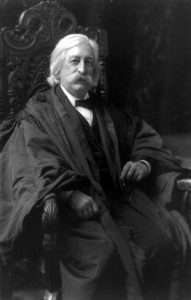
10/8/1888: Chief Justice Melville Fuller takes the judicial oath.
What’s on your mind?
Biskupic no longer has any inside information so instead she is forced to make up reporting based on the Justice's apparent body language.
Recently, Justice Alito sat down with Kyle Peterson of the Wall Street Journal for an extended chat about his new book. (The transcript is here.)
There is much to commend here, but I'd like to focus in particular about how Justice Alito responded to claims by Joan Biskupic of CNN.
Kyle asks:
Well, I don't know how much coverage of the court you read, but you may not be surprised to learn that one light motif [likely an erroneous transcription of "leitmotif"] is that you are brooding figure. Um here's a a passage from a book by Joan Biskupic of CNN: you wear a heavy cloak of grievance as if perpetually wronged, destined to be misunderstood.
Biskupic has made similar comments in the past. In December 2025, she published a column titled "Samuel Alito keeps getting his way. So why does he seem so unhappy?" Without any actual evidence beyond staring at the Justice in Court, Biskupic wrote:
Alito's aggravation is regularly on display in the courtroom, too. . . .
In the courtroom, even the little things can visibly irk Alito. He often grimaces and rolls his eyes. . . .
Other justices laughed. They appear accustomed to his unguarded irritability.
At the time, I remarked how empty this commentary was:
The media does not fairly cover the conservative Supreme Court justices. But it is not enough to criticize their written opinions. Rather, pundits feel compelled to opine on how the Justices feel. Case in point is a recent headline from Joan Biskupic, titled "Samuel Alito keeps getting his way. So why does he seem so unhappy?" Does Biskupic have any evidence that Alito is unhappy? Did she talk to the Justice or his clerks? No, Biskupic apparently no longer has access to that sort of actual information. Instead, she based her conclusions on the Justice's facial expression on the bench.
Now, Justice Alito has fired back:
I think that's very unfair, and it is part of a process of caricaturing the justices with whom the people who are writing these things disagree. Nothing similar is written about some of my colleagues who have issued blistering dissents, blistering dissenting statements from the bench, made what can only be described as very angry comments during oral argument. None of that is written about any of them, but this is written about me. Now, what do court watchers, so to speak, see of me? They see me at oral argument, and that's basically it. Oral argument to me is a serious business. It's supposed to help us make good decisions. And so I challenged the lawyers. I argued a lot of cases. I expected to be challenged. I actually welcomed it because I thought that I could, by responding to the challenges, I could win over a justice or a judge who came into the argument perhaps disposed to rule against me. But I don't treat oral argument like a moot court. I don't treat it like show. I don't play to the audience. I don't try to get laughs. I don't try to show how smart I am. It's pretty businesslike, and perhaps that's what they're referring to.
Good for Alito. Watch this hour long interview, and others. You will not see some sort of brooding, grumpy old man. Alito is charming, funny, and engaging. He just doesn't waste his time talking to elites who hate him.
Biskupic will never criticize the demeanor of Justice Ginsburg on the bench. Lord help us if someone writes that Justice Sotomayor looks "angry" or Justice Jackson looks "confused." Only the conservative Justices get this sort of treatment.
The fact is that Joan Biskupic long ago stopped gaining useful information about the Court. Other Supreme Court reporters simply write about the questions and answers during oral argument. They perform a useful service. But Joan wants to convey the impression that she still has useful things to say, so she reports on body language. I've seen her at work in the Court. She stares intently at the bench and takes careful notes. I think it's best to just skip over her work.
On a related note, Justice Alito commented to USA Today about Nina Totenberg's failed report that he was retiring.
In the privacy of his chambers, how did Alito react to the inaccurate story, quickly retracted by National Public Radio?
"I was amused and puzzled," Alito told USA TODAY in answers to written questions. "I wondered what had led to the erroneous report. And when the error was corrected, I wondered how many people were crest-fallen."
Who was sad when the story was corrected? I suspect everyone on the left let out a high sigh of relief when NPR retracted, as the 76-year old would (likely) stay on the bench. Remember, Totenberg successfully spiked the nomination of Doug Ginsburg, nearly spiked the nomination of Clarence Thomas, and failed miserably in trying to spike the nomination of Neil Gorsuch. Their goal is to keep new conservative Justices off the bench.
Speaking of which, Jodi Kantor has come up pretty dry over the past year. She published some memos from ten years ago, which seems to be a fluke that some law clerk held onto things for that long. Her frolic and detour to the Chief's summer home was pretty pathetic. Longtime readers may remember that I initially called for the Chief to resign back in 2020 after the torrent of leaks--not in response to any particular decision. But it seems that Roberts has locked things down. Maybe the NDAs are working? Maybe the liberal justices realize that leaks can get their colleagues assassinated? (Although Justice Alito insinuated that there was no urgency in the two months after the Dobbs opinion leaked.) Whatever happened, it is working. I think I can rescind my call on the Chief to step down.
The talk, "Litigating for Liberty / Judging About Liberty," is part of the Libertarian Litigation Speaker Series at UCLA School of Law (room 1457). Justice Bolick, as many of you know, is one of the most prominent judicial experts on state constitutions, including the special protection they offer individual rights. And before going on the bench, he was a prominent libertarian litigator: Among other achievements, he cofounded the Institute for Justice, one of the nation's leading libertarian public interest law firms, which specializes in matters such as economic liberty, school choice, and more. He will speak about his experience, and his approach to liberty, both in his time as a lawyer and in his time as a judge.
The event is mostly aimed at UCLA students, but is also open to the public. If you're in L.A. and would like to join us, please RSVP at this link by October 9 (this Friday) for a dinner box catered by Sweetpea. You should feel free to attend in any case, but only an RSVP will get you dinner.


New from Reason: a look into what Javier Milei has accomplished and what it will take to make the most of Argentina’s window for real change. Out now for subscribers.

