

5/27/1935: Schechter Poultry Corp. v. U.S. decided.
The Volokh Conspiracy
Mostly law professors | Sometimes contrarian | Often libertarian | Always independent | Est. 2002

A Lawyer's Filing "Is Replete with Citations to Non-Existent Cases" -- Thanks, ChatGPT?
The lawyer's colleague, who drafted the filing, says he relied on ChatGPT to draft the filing and provide the text of the cases, and neglected to check them.
From Judge Kevin Castel (S.D.N.Y.)'s May 4 order in Mata v. Avianca, Inc.:
The Court is presented with an unprecedented circumstance. A submission filed by plaintiff's counsel in opposition to a motion to dismiss is replete with citations to non-existent cases. When the circumstance was called to the Court's attention by opposing counsel, the Court issued Orders requiring plaintiff's counsel to provide an affidavit annexing copies of certain judicial opinions of courts of record cited in his submission, and he has complied. Six of the submitted cases appear to be bogus judicial decisions with bogus quotes and bogus internal citations. Set forth below is an Order to show cause why plaintiff's counsel ought not be sanctioned.
The Court begins with a more complete description of what is meant by a nonexistent or bogus opinion. In support of his position that there was tolling of the statute of limitation under the Montreal Convention by reason of a bankruptcy stay, the plaintiff's submission leads off with a decision of the United States Court of Appeals for the Eleventh Circuit, Varghese v China South Airlines Ltd, 925 F.3d 1339 (11th Cir. 2019). Plaintiff's counsel, in response to the Court's Order, filed a copy of the decision, or at least an excerpt therefrom.
The Clerk of the United States Court of Appeals for the Eleventh Circuit, in response to this Court's inquiry, has confirmed that there has been no such case before the Eleventh Circuit with a party named Vargese or Varghese at any time since 2010, i.e., the commencement of that Court's present ECF system. He further states that the docket number appearing on the "opinion" furnished by plaintiff's counsel, Docket No. 18-13694, is for a case captioned George Cornea v. U.S. Attorney General, et al. Neither Westlaw nor Lexis has the case, and the case found at 925 F.3d 1339 is A.D. v Azar, 925 F.3d 1291 (D.C. Cir 2019). The bogus "Varghese" decision contains internal citations and quotes, which, in turn, are non-existent: …
The following five decisions submitted by plaintiff's counsel contain similar deficiencies and appear to be fake as well ….
Justice Kavanaugh's "Principal Concurrences"
On the Supreme Court, there is a hierarchy for listing opinions. The majority opinion always comes first. When the Court is fractured, and there is no clear majority, the opinion with the most support is usually listed first. When the case is an absolute cluster, sometimes the opinion by the Justice with the most seniority is listed first, but there is some play in the joints. After the majority/controlling opinion, the concurrences are listed by seniority. Next come the concurrences in judgment only, which are also listed by seniority. Finally, the dissents are listed, which again are sorted by seniority.
When there are multiple dissents, the majority opinion will refer to a particular dissent as the "principal dissent." But the term "principal concurrence" is far more rare. A quick search of Westlaw reveals only one such usage before 2021. In Morrison v. National Australia Bank Ltd.(2010), Justice Scalia wrote the majority opinion, Justice Breyer wrote an opinion concurring in part, and concurring in judgment, and Justice Stevens wrote an opinion concurring only in judgment. Justice Scalia referred to Justice Stevens's opinion as the "principal concurrence."
More recently, the phrase "principal concurrence" has popped up twice. In Lange v. California (2021), Justice Kagan wrote the majority opinion, Justice Kavanaugh wrote a concurrence, Justice Thomas wrote an opinion concurring in part and concurring in judgment, and Chief Justice Roberts wrote an opinion concurring in judgment. Justice Kagan's majority opinion referred to Justice Kavanaugh's opinion as the "principal concurrence."
And yesterday, the Court decided Sackett v. EPA. Justice Alito wrote the majority opinion, Justice Thomas wrote a concurring opinion, Justice Kagan wrote a concurrence in judgment, and Justice Kavanaugh wrote a concurrence in judgment. Justice Kagan's dissent, again, referred to Justice Kavanaugh's separate writing as the "principal concurrence." Kagan's opinion, which had three votes, was listed first, because she has more seniority, but Kavanaugh's opinion had four votes. I suppose the number of votes makes it the "principal concurrence."
In two cases, decided in the span of two years Justice Kagan has referred to a Justice Kavanaugh concurrence as the "principal concurrence." Nothing much to see here, but I enjoy tracking these new nomenclatures on the Court.
Finally, I would be remiss if I did not point out an obvious pun, given the fact that President Nixon signed the Clean Water Act: SCOTUS said Sackett to me!
The Lemon test was established in 1971, the Clean Water Act was passed in 1972, and Roe was decided in 1973. The Nixon years are not having a good time at the Supreme Court.
Short Circuit: A Roundup of Recent Federal Court Decisions
A kangaroo court, a diversified student body, and lying drug cops.
Please enjoy the latest edition of Short Circuit, a weekly feature written by a bunch of people at the Institute for Justice.
Neat! This week, Michigan's Supreme Court agreed to hear an IJ appeal on two crucial Fourth Amendment questions: Can the gov't fly a drone all around your property, without a warrant, to surveil you and your family? And assuming the Fourth Amendment prohibits that (it does), should the gov't still get to use what it gathered from its warrantless surveillance to punish you in court? (It should not.) Read all about it.
Institute of Economic Affairs Podcast on UK Immigration Policy
British immigration policy expert Sunder Katwala and I discuss the debate over UK immigration policy, which has notable similarities and differences with that in the US.
The Institute of Economic Affairs - the prominent British pro-free market think tank - posted a podcast on UK immigration policy. IEA Director of Public Policy and Communications Matthew Lesh interviews British immigration policy expert Sunder Katwala and myself about the British debate over immigration, which has notable similarities and differences with that in the United States. I cannot figure out how to embed the podcast in this post. But you can listen to it here.
We covered a wide range of issues, including how the British political right is more divided on immigration than the US right, the determinants of public support and opposition to immigration in the two countries, whether a culturally more confident nation is likely to be less afraid of migration, the relationship between migration policy and zoning restrictions on the construction of new housing (the latter are a serious problem in both countries), and much else.
Katwala is Director of the British Future think tank, and author of the notable new book How to Be a Patriot: Why Love of Country Can End Our Very British Culture War. Some of the ideas in the book were referenced in our discussion, as well as some from my own book Free to Move: Foot Voting, Migration, and Political Freedom.
The Founders were well aware of continuing advances in arms technology
Building on what had come before, the Madison-Monroe research program led the way to the many innovations of the 19th century
During the 19th century, firearms improved more than in any other century. As of 1800, most firearms were single-shot muzzleloading blackpowder flintlocks. By end of the century, semiautomatic pistols using detachable magazines with modern gunpowder and metallic cartridges were available. Would the Founders be surprised by the improvements in ability to exercise Second Amendment rights? Perhaps not, given the tremendous advances in firearms that had taken place before 1791. And certainly not, given that James Madison, author of the Second Amendment, initiated a federal government industrial with the specific aim of vastly improving the quality and quantity of firearms manufacture.
Part I of this post briefly describes Some of the firearms advances before 1791. Part II describes the federal industrial policy for advancing firearms technology.
This post is based on my article The History of Bans on Types of Arms Before 1900. It is forthcoming in Notre Dame's Journal of Legislation, vol. 50, no. 2, in 2024. The Post also draws on chapter 23 of my coauthored textbook Firearms Law and the Second Amendment: Regulations, Rights, and Policy (Aspen Pub., 3d ed. 2022).
I. Firearms improvements before 1791
While the Founders could not foresee all the specific advances that would take place in the nineteenth century, the Founders were well aware that firearms were getting better and better.
Tremendous improvements in firearms had always been part of the American experience. The first European settlers in America had mainly owned matchlocks. When the trigger is pressed, a smoldering hemp cord is lowered to the firing pan; the powder in the pan then ignites the main gunpowder charge in the barrel.
The first firearm more reliable than the matchlock was the wheel lock, invented by Leonardo da Vinci. In a wheel lock, the powder in the firing pan is ignited when a serrated wheel strikes a piece of iron pyrite. The wheel lock was the first firearm that could be kept loaded and ready for use in a sudden emergency. Although matchlock pistols had existed, the wheel lock made pistols far more practical and common. Paul Lockhart, Firepower: How Weapons Shaped Warfare 80 (2021).
The wheel lock was the "preferred firearm for cavalry" in the sixteenth and seventeenth centuries. Id. The proliferation of wheel locks in Europe in the sixteenth century coincided with the homicide rate falling by half. See Carlisle E. Moody, Firearms and the Decline of Violence in Europe: 1200-2010, 9 Rev. Eur. Stud. 53 (2017)
However, wheel locks cost about four times as much as matchlock. Moreover, their moving parts were far more complicated than the matchlocks'. Under conditions of hard use in North America, wheel locks were too delicate and too difficult to repair. The path of technological advancement often involves expensive inventions eventually leading to products that are affordable to average consumers and are even better than the original invention. That has been the story of firearms in America.
Flintlocks quintuple the rate of fire
The gun that was even better than the wheel lock, but simpler and less expensive, was the flintlock. The earliest versions of flintlocks had appeared in the mid-sixteenth century. But not until the end of the seventeenth century did most European armies replace their matchlocks with flintlocks. Americans, individually, made the transition much sooner. Lockhart at 106.
Why The Statutory Debt-Limit Gimmicks Don't Work
They are all looking for elephants in mouseholes, and even the "premium bonds" theory has its flaws.
I've gotten some texts and emails the past few days about various statutory tricks that the President might use to circumvent the debt limit. If it's right that the President has the statutory authority to circumvent the limit, of course, then the whole negotiation process going on right now would be gratuitous.
So far as I can tell, the two big proposed statutory gimmicks are: (1) mint the giant platinum coin (practically infeasible, already rejected by Treasury, and amply dissected elsewhere over many years); and (2) issue "premium bonds," wherein the "face value" for debt limit purposes is low, but the interest rate is high—so they sell for a higher price. Because the premium bonds scheme has been dissected in less detail and has struck some commentators as obviously more plausible, I'll offer a few preliminary thoughts on it below. This is one where I'd like to learn more.
But I'd also like to offer a kind of macro reaction to this class of theories: If any of the statutory gimmick theories were correct, it would suggest that Congress—despite having re-upped the debt limit more than 100 times and having behaved in numerous other ways in numerous other statutes as if the limit really were a binding constraint on the government—also gave the Executive Branch a simple tool (perhaps many tools!) to render the limit a dead letter. The Scalia line has become something of a cliché, but still: It's a lot of elephants for some little (or at best medium) mouseholes. For legal realists, I don't see any of these strategies prevailing in litigation.
Today in Supreme Court History: May 26, 1868
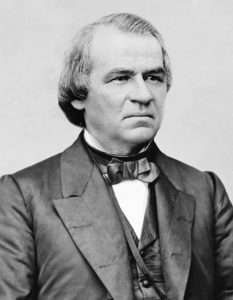
5/26/1868: Senate acquitted President Andrew Johnson and adjourned as court of impeachment. Chief Justice Chase presided over that trial. Johnson is one of four presidents that did not appoint any Supreme Court Justices. The others are William Henry Harrison, Zachary Taylor, and Jimmy Carter.
Impeachment of the Attorney General Under The Texas Constitution
Attorney General Ken Paxton faces a likely impeachment.
On Thursday, a committee of the Texas House of Representatives recommended twenty articles of impeachment against Attorney General Ken Paxton. We are in somewhat uncharted waters. It seems there have been only two impeachments in Texas history. In 1917, a governor was impeached, but resigned before the Senate convicted him. And in 1975-76, a district judge was convicted, removed, and disqualified. In this post, I will provide a high-level overview of the impeachment process in Texas, with a focus on the particular issues that may arise in the Paxton case.
Article 15 of the Texas Constitution governs the impeachment process. Section 1 states that the House of Representatives has the "power of impeachment." Presumably, a simple majority is enough to impeach, but that threshold is not clearly spelled out. Sections 2 and 3 provide that the impeachment shall be tried by the Senate, and 2/3 of the Senators "present" are required to impeach. (The same threshold is used in the federal Constitution). Section 4 includes a provision that mirrors the Impeachment Disqualification Clause in the federal Constitution: "Judgement in cases of impeachment shall extend only to removal from office, and disqualification from holding any office of honor, trust or profit under this State." However, Section 5 provides a unique wrinkle: after an article of impeachment is "preferred" to the Senate, the impeached officer "shall be suspended from the exercise of the duties of their office, during the pendency of such impeachment." In other words, an impeached official is temporarily removed from office. And the Governor may make a "provisional appointment." (Governor Abbott could pick someone from Paxton's staff, or one of the Republicans who challenged Paxton in last year's primary, or a "caretaker" to fill the gap for a short time).
Section 7 seems to provide the legislature some additional authority with regard to impeachment. It provide, "The Legislature shall provide by law for the trial and removal from office of all officers of this State, the modes for which have not been provided in this Constitution." In the federal system, Congress has adopted various rules governing impeachment. For example, evidence can be heard by a Senate committee, rather than by the full Senate. Judge Walter Nixon challenged this delegation of authority as being inconsistent with the federal Constitution. The U.S. Supreme Court declined to resolve that issue on justiciability grounds, but did leave open the possibility that some deviations from the process spelled out in the Constitution could be justiciable. (Chief Justice Rehnquist flagged this issue during oral argument.) Section 7 seems to expressly delegate the power to the legislature to establish certain rules by law. And "by law," as a general matter, means through actual legislation, rather than by single-house resolution.
Those laws appear in Chapter 665 of the Government Code. At quick glance, Article 15 does not provide a standard for impeachment, such as "high crimes and misdemeanors." Section 665.062 lists specific causes for removal "by address," including "willful neglect of duty," "incompetency," and "breach of trust." But, pursuant to Section 665.051, the Attorney General is not subject to removal "by address." So these grounds are not directly relevant for Paxton.
Subchapter D of Chapter 665 includes one provision: Section 665.081. It provides, in part: "An officer in this state may not be removed from office for an act the officer may have committed before the officer's election to office." Many of the allegations against Paxton occurred before Paxton was elected to a third term in office in November 2022. And Paxton's lawyer has cited Section 665.081 as a possible defense. He contends that the voters re-elected Paxton, with full knowledge of the allegations against him.
Overturning elections begins behind closed doors.
pic.twitter.com/Mved9ddU3i— Attorney General Ken Paxton (@KenPaxtonTX) May 25, 2023
Section 665.081 can be read in two different ways. First, an officer cannot be removed for an act he committed before being elected to his current term in office. Second, an officer cannot be removed for an act he committed before being elected to his first term of his current position. Under the first reading, Paxton could not be removed for conduct that occurred before November 2022. Under the second reading, Paxton could not be removed for conduct that occurred before November 2014, when he was elected to his first term.
The Texas courts have recognized something called the "forgiveness doctrine." The Texas Supreme Court described it this way:
Neither may removal [of judges] be predicated upon acts antedating election, not in themselves disqualifying under the Constitution and laws of this State, when such acts were a matter of public record or otherwise known to the electors and were sanctioned and approved or forgiven by them at the election. This holding is in harmony with the public policy declared by the Legislature with respect to other public officials. Article 5986, R.C.S. [An older version of Section 665.081] .
But this doctrine has limits:
We hold that the willful and persistent acts of misconduct committed by Judge Carrillo prior to his last election were such as to cast just as much public discredit upon the judiciary as if they had been committed after the election; and they were not in any manner absolved by his election.
The Texas Supreme Court opined on this standard in a disciplinary proceeding of the lone impeached district judge:
In Brown, supra, we recognized that the sound rationale for this doctrine is that the public, as the ultimate judge and jury in a democratic society, can choose to forgive the misconduct of an elected official if the public knows about such misconduct prior to the election. If, on the other hand, the misconduct is unknown to the public prior to the election and is of such willful nature as to cast public discredit upon the judiciary, it cannot be said that the judge was forgiven by his election or re-election.
And a later decision by the Court of Appeals applied this doctrine:
There is language in Brown, Bates and Carrillo which completely disposes of any doubt over the applicability of the "forgiveness" doctrine to article 5986. According to Brown and Carrillo, it was essentially an attempt by the Supreme Court in Laughlin to articulate the "spirit" of article 5986, which prompted the court to use that language which has come to stand for the "forgiveness" doctrine. According to Bates, the phrases "prior term" and "forgiveness" mean essentially the same thing. Thus, it is an unavoidable conclusion that the "forgiveness" doctrine merely states the rationale behind article 5986 and the "prior term" rule.
Should the forgiveness doctrine apply to an official who is re-elected? The Texas Court of Criminal Appeals addressed this issue, indirectly, in Williams v. State, 150 S.W.2d 803 (1941):
Appellant's next contention is that if the evidence shows that he sold the bonds and converted the money to his own use and benefit prior to his re-election as County Attorney in 1936, that, therefore, he cannot be prosecuted for the offense so charged, because Article 5986 of the Revised Civil Statutes, relieves of the prosecution. The article referred to reads as follows: "No officer shall be prosecuted or removed from office for any act he may have committed prior to his election to office."
To hold that a person running for office might commit murder, burglary, theft, robbery, rape or any of those offenses and thereafter be elected to office would be relieved from punishment is the most monstrous proposition that the writer of this opinion has ever heard advanced in justification of any of such offenses. To so hold would be contrary, not only to every law on the subject, but also to public policy. We think that the Legislature, in the enactment of said law, meant that the same should apply to any offense committed relating to misfeasance of office and certainly not to make him immune to punishment for any other offense. We therefore overrule appellant's contention.
This case concerned a criminal prosecution, though it would seem to suggest that the Forgiveness Doctrine would not immunize an official from removal based on conduct prior to re-election. However, none of these cases arose in the direct context of an impeachment. (Westlaw lists about two dozen references in the "Notes of Decision" under the Statute.) Ultimately, the Senate, when sitting as a court of impeachment, would have to resolve this question of law.
Of course, Paxton may seek some sort of judicial intervention. As a general matter, the Texas courts have far more permissive rules concerning standing and justiciability. And, as I noted earlier, Walter Nixon v. United States did leave open the possibility that certain issues concerning impeachment may be justiciable. For example, what would happen if someone other than the Chief Justice presided over a presidential impeachment? The construction of this statute, in the government code, may provide a justiciable question--especially since the Texas Supreme Court has already interpreted the forgiveness doctrine.
My thoughts here are based on somewhat abbreviated research, in an area where there is little precedent. If I missed something, please email me, and I would be happy to post an update.
Update: In 1924, the Texas Supreme Court opined on the fact that the state Constitution does not define the impeachable offenses. This case concerned the Governor who resigned before the Senate convicted and disqualified him. Apparently, he tried to get back on the ballot, but the Court held that he was disqualified.
While impeachable offenses are not defined in the Constitution, they are very clearly designated or pointed out by the term 'impeachment,' which at once connotes the offenses to be considered and the procedure for the trial thereof.
Impeachment,' at the time of the adoption of the Constitution, was an established and well-understood procedure in English and American parliamentary law, and it had been resorted to from time to time in the former country for perhaps 500 years. It was designed, primarily, to reach those in high places guilty to official delinquencies or maladministration. It was settled that the wrongs justifying impeachment need not be statutory offenses or common-law offenses, or even offenses against any positive law. *97 Generally speaking, they were designated as high crimes and misdemeanors, which, in effect meant nothing more than grave official wrongs.
In the nature of things, these offenses cannot be defined, except in the most general way. A definition can, at best, do little more than state the principle upon which the offense rests. Consequently, no attempt was usually made to define impeachable offenses, and the futility as well as the unwisdom of attempting to do so has been commented upon. In the Constitution of the United States impeachable offenses are designated as 'treason, bribery, or other high crimes and misdemeanors.' Const. U. S. art. 2, s 4. Substantially the same language is used in many of the state Constitutions. In others 'misdemeanors in office,' 'maladministration,' 'oppression in office,' and the like, are declared to be impeachable offenses.
And more importantly, the Court opined on the role of the judiciary with regard to impeachment:
This opinion should not be concluded without a statement as to the status under our organic law of the judgment of the Senate, sitting as a court of impeachment. It is unquestionably true that such judgment cannot be called in question in any tribunal whatsoever, except for lack of jurisdiction or excess of constitutional power. For instance, an attempt by the Senate to try an officer who had not been impeached by the House, or to pronounce a judgment other than that authorized by section 3, of article 15, would be without effect and its action void. The Senate must decide both the law and the facts. It must determine whether or not the articles presented by the House set forth impeachable offenses, and it must determine whether or not these charges and sustained by the evidence produced. Its action with reference to these matters is undoubtedly within its constitutional power and jurisdiction. This is as it should be. The power reposed in the Senate in such case is great, but it must be lodged somewhere, and experience shows there is no better place. The courts, in proper cases, may always inquire whether any department of the government has acted outside of and beyond its constitutional authority. The acts of the Senate, sitting as a court of impeachment, are not exempt from this judicial power; but so **894 long as the Senate acts within its constitutional jurisdiction, its decisions are final. As to impeachment, it is a court of original, exclusive, and final jurisdiction.
Update: The House released a memorandum, which contended that Section 665.062 "does not apply when the Texas Constitution authorizes a procedure for removing a state officer." Rather, this section "only applies when the Legislature enacts a statutory method for removal under Section 7, Article XV, Texas Constitution." A 1976 decision of the Texas Supreme Court, In Re Carrillo, provides some support for this postion:
As heretofore indicated, substantially all of the misconduct set forth above occurred prior to November 5, 1974, when Judge Carrillo was re-elected to the office of district judge. He insists that Article 5986, V.A.C.S. is applicable. It reads:
"No officer in this State shall be removed from office for any act he may have committed prior to his election to office."
We have heretofore held that the above statute does not apply to the office of district judge. In re Brown and In re Laughlin, supra. Section 7 of Article XV of the Texas Constitution authorizes the Legislature to provide for the removal of officers for whom the methods of removal are not provided in the Constitution. This proceeding for removal is authorized by the Constitution, and for that reason Article 5986 is not applicable.
But the Court still followed the "spirit of the decision."
The memorandum also points out that the impeachment of Governor James P. Ferguson concerned "conduct that occurred before and during the 1916 election."
Thursday Open Thread
What's on your mind?
John Sununu on Boyden Gray's Legal Legacy
C. Boyden Gray was a pivotal figure within the Republican Party on environmental law.
Yesterday's WSJ features an article by former New Hampshire governor and White House Chief of Staff John Sununu on the late C. Boyden Gray, with whom he served in the George H. W. Bush Administration.
C. Boyden Gray, White House counsel to President George H.W. Bush, died Sunday at 80—an unsung hero whose leadership was defined by his quiet, thoughtful determination. A key member of the Bush team, he deftly navigated the complex intersections of law, policy and politics. More than a lawyer, he was a skilled tactician and diplomat, bringing together diverse factions to create consensus around difficult issues.
Gray's legacy is perhaps most evident in his work on the Clean Air Act Amendments of 1990, a visionary law that pioneered the use of market incentives to curb acid rain, urban air pollution and toxic emissions. His negotiation skills convinced industry leaders and lawmakers of both parties. The law passed 401-21 in the House and 89-11 in the Senate, and it has guided environmental policy since.
As Sununu recounts, Gray was also heavily involved in the development and enactment of the Americans with Disabilities Act.
As it happened, one of my first environmental law research projects focused on the 1990 CAA Amendments, and the alternative fuels provisions in particular--provisions that were of particular interest to Gray. He had a particular interest in methanol, and helped ensure that alternative fuels provisions ended up in the final bill. (My research results in a chapter in the book Environmental Politics: Public Costs, Private Rewards, a version of which was published in The Public Interest).
It was only later that I got to know him--and became comfortable calling him Boyden. After he had returned to private practice I had the opportunity to work and interact with him on a range of environmental and administrative law matters and questions. We did not always agree, but I was always struck by his insight, knowledge and wit.
Boyden was a true giant in the fields of administrative and environmental law (and not just because he was so tall!). He demonstrated that one could take environmental protection seriously while maintaining a healthy skepticism of centralized federal power and adminsitrative regulation. His influence and presence in these fields will be missed.
In Sackett v. EPA, the Supreme Court Cuts Back Federal Regulatory Authority Over Wetlands
The Clean Water Act decision was a unanimous win for the Sacketts, and a 5-4 victory for Justice Scalia's 2006 Rapanos v. United States plurality.
Today, in Sackett v. Environmental Protection Agency, the Supreme Court adopted a narrowing interpretation of the scope of federal regulatory authority under the Clean Water Act (CWA). The justices were unanimous in rejecting the U.S. Court of Appeals for the Ninth Circuit's expansive interpretation of the EPA's regulatory authority and Justice Kennedy's "significant nexus" test for CWA jurisdiction. But the justices split 5-4 on how to interpret the CWA and the extent to which Congress authorized the regulation of wetlands as part of "the waters of the United States."
Justice Alito wrote the opinion for the Court, joined by the Chief Justice and Justices Thomas, Gorsuch, and Barrett. Justice Thomas concurred, joined by Justice Gorsuch. Justice Kavanaugh concurred in the judgment (in what is effectively the principal dissent), joined by Justices Sotomayor, Kagan, and Jackson, and Justice Kagan wrote a separate opinion concurring in the judgment joined by Justices Sotomayor and Jackson.
Justice Alito's opinion for the Court embraces Justice Scalia's plurality opinion from Rapanos v. United States. Writes Justice Alito:
the Act applies to "navigable waters," which had a well-established meaning at the time of the CWA's enactment. But the CWA complicates matters by proceeding to define "navigable waters" as "the waters of the United States,"§1362(7), which was decidedly not a well-known term of art.This frustrating drafting choice has led to decades of litigation, but we must try to make sense of the terms Congress chose to adopt. And for the reasons explained below, we conclude that the Rapanos plurality was correct: the CWA's use of "waters" encompasses "only those relatively permanent, standing or continuously flowing bodies of water' forming geographic[al] features' that are described in ordinary parlance as 'streams, oceans, rivers, and lakes.'"
According to Justice Alito, this means that wetlands that have a continuous surface water connection or are directly adjoining jurisdictional waters may be regulated as part of the waters of the United States, those wetlands that are physically "separate" from such waters may not be, even if they would satisfy a more capacious definition of "adjacent." He writes:
In sum, we hold that the CWA extends to only those wetlands that are "as a practical matter indistinguishable from waters of the United States." Rapanos, 547 U. S., at 755 (plurality opinion) (emphasis deleted). This requires the party asserting jurisdiction over adjacent wetlands to establish "first, that the adjacent [body of water constitutes] . . . 'water[s] of the United States,' (i.e., a relatively permanent body of water connected to traditional interstate navigable waters); and second, that the wetland has a continuous surface connection with that water, making it difficult to determine where the 'water' ends and the 'wetland' begins." Id., at 742.
Justice Thomas concurred separately to suggest that a fuller examination of the scope of federal regulatory authority might require more dramatic limits on the regulatory authority of the EPA (and Army Corps of Engineers). Joined by Justice Gorsuch he writes:
Major Unanimous Supreme Court Victory for Property Rights in Tyler v. Hennepin County
The Supreme Court ruled that home equity theft qualifies as a taking, and that state law is not the sole source for the definition of property rights. The ruling is imprecise on some points, but still sets an important and valuable precedent.

This morning, the Supreme Court issued a unanimous decision in Tyler v. Hennepin County, an important Takings Clause property rights case addressing the issue of "home equity theft," a legal regime under which local governments can seize the entire value of a property in order to pay off a much smaller delinquent property tax debt. Geraldine Tyler, the plaintiff in the case, is a 94-year-old widow whose home, valued at $40,000, was seized by Hennepin County after she was unable to pay off $15,000 in property taxes, penalties, interest, and fees. The County then kept the entire $40,000 for itself, as Minnesota law allows.
Today the Supreme Court unanimously ruled that such practices qualify as takings requiring the payment of "just compensation" under the Takings Clause of the Fifth Amendment. Importantly, it also concluded that state law is not the sole source of the definition of property rights under the Takings Clause, and therefore state governments cannot seize private property without compensation simply by redefining it as the state's property.
The unanimous nature of the decision is noteworthy. Takings issues often split the justices along traditional right-left lines. In this case, however, the oral argument made clear that both conservative and liberal justices were highly skeptical of the government's position. An ideologically diverse range of groups also filed amicus briefs supporting Tyler. This broad agreement may be because the case combines traditional conservative and libertarian interest in property rights with left-liberal solicitude for the interest of the poor, the elderly, and minorities - groups that are particularly likely to be victimized by home equity theft.
While the Supreme Court decision left some notable issues unresolved, it nonetheless sets a significant precedent. Most obviously, the jurisdictions that currently authorize home equity theft - some twelve states and the District of Columbia - will no longer be allowed to do so. In addition, the holding that states cannot just redefine property rights at will has important implications for other property rights issues. It makes it harder for states to avoid takings liability.
Here are some key excerpts from Chief Justice John Roberts' majority opinion:
Hennepin County, Minnesota, sold Geraldine Tyler'shome for $40,000 to satisfy a $15,000 tax bill. Instead of returning the remaining $25,000, the County kept it for itself. The question presented is whether this constituted a taking of property without just compensation, in violation of the Fifth Amendment…..
The Takings Clause, applicable to the States through the Fourteenth Amendment, provides that "private property[shall not] be taken for public use, without just compensation…. States have long imposed taxes on property. Such taxes are not themselves a taking, but are a mandated "contribution from individuals . . . for the support of the government . . . for which they receive compensation in the protection which government affords." County of Mobile v. Kimball, 102 U. S. 691, 703 (1881). In collecting these taxes, the State may impose interest and late fees. It may also seize and sell property, including land, to recover the amount owed… Here there was money remaining after Tyler's home was seized and sold by the County to satisfy her past due taxes, along with the costs of collecting them. The question is whether that remaining value is property under the Takings Clause, protected from uncompensated appropriation by the State.
The Takings Clause does not itself define property. For that, the Court draws on "existing rules or understandings" about property rights. Phillips v. Washington Legal Foundation, 524 U. S. 156, 164 (1998). State law is one important source…. But state law cannot be the only source. Otherwise, a State could "sidestep the Takings Clause by disavowing traditional property interests" in assets it wishes to appropriate. Phillips, 524 U. S., at 167; see also… Hall v. Meisner, 51 F. 4th 185, 190 (CA6 2022) (Kethledge, J., for the Court) ("[T]he Takings Clause would be a dead letter if a state could simply exclude from its definition of property any interest that the state wished to take."). So we also look to "traditional property law principles," plus historical practice and this Court's precedents….
The principle that a government may not take more from a taxpayer than she owes can trace its origins at least as far back as Runnymeade in 1215, where King John swore in the Magna Carta that when his sheriff or bailiff came to collect any debts owed him from a dead man, they could remove property "until the debt which is evident shall be fully paid to us; and the residue shall be left to the executors to fulfil the will of the deceased….."
That doctrine became rooted in English law……
This principle made its way across the Atlantic. In collecting taxes, the new Government of the United States could seize and sell only "so much of [a] tract of land . . . as may be necessary to satisfy the taxes due thereon." Act of July 14, 1798, §13, 1 Stat. 601. Ten States adopted similar statutes shortly after the founding….
The consensus that a government could not take more property than it was owed held true through the passage of the Fourteenth Amendment. States, including Minnesota, continued to require that no more than the minimum amount of land be sold to satisfy the outstanding tax debt. The County identifies just three States that deemed delinquent property entirely forfeited for failure to pay taxes…..
The minority rule then remains the minority rule today. Thirty-six States and the Federal Government require that the excess value be returned to the taxpayer…..
Finally, Minnesota law itself recognizes that in other contexts a property owner is entitled to the surplus in excess of her debt. Under state law, a private creditor may enforce a judgment against a debtor by selling her real property, but "[n]o more shall be sold than is sufficient to satisfy" the debt, and the creditor may receive only "so much [of the proceeds] as will satisfy" the debt. Minn. Stat. §§550.20, 550.08 (2022)….
In collecting all other taxes, Minnesota protects the taxpayer's right to surplus…. Until 1935, Minnesota followed the same rule for the sale of real property. The State could sell only the "least quantity" of land sufficient to satisfy the debt, 1859 Minn. Laws p. 58, §23, and "any surplus realized from the sale must revert to the owner," Farnham, 32 Minn., at 11, 19 N. W., at 85.
The State now makes an exception only for itself, and only for taxes on real property. But "property rights cannot be so easily manipulated." Cedar Point Nursery v. Hassid, 594 U. S. ___, ___ (2021) (slip op., at 13)…. Minnesota may not extinguish a property interest that it recognizes everywhere else to avoid paying just compensation when it is the one doing the taking.
In his brief and at the oral argument, Neal Katyal, the prominent Supreme Court litgator representing Hennepin County, claimed that Tyler lacked standing to challenge the seizure of her home equity. The Court rejected his convoluted theory, pointing out (correctly) that Tyler's claim to the $25,000 in home equity "is a classic pocketbook injury sufficient to give her standing." The Court also rejected the similarly weak argument that Tyler had "constructively abandoned" her property by failing to pay the taxes and fees.
While today's ruling is an important win for property rights and sets a significant precedent, it is vague on one key point, and leaves others for future resolution by lower courts. Though the Court decisively repudiated the idea that state law is the sole source of property rights under the Takings Clause, the formulation that courts must "also look to 'traditional property law principles,' plus historical practice and this Court's precedents" is far from precise. For example, what happens if some of these factors cut in favor of the government and others in favor of the property owner? It is also not clear what qualifies as a "traditional property rights principle." Perhaps this vagueness was the price Chief Justice Roberts had to pay to generate a rare unanimous Takings Clause ruling. The justices might not have been able to agree on anything more precise. Regardless, the question of how to apply the Court's standards for identifying property rights is likely to bedevil lower courts, and may have to be clarified in a future Supreme Court case.
The Supreme Court left to lower courts the question of how to calculate compensation in home equity theft cases. During the oral argument, the justices struggled with the issue of whether Tyler should automatically get all of surplus value from the sale of her property at auction, or whether she should instead get the difference between the amount she owed the government and the value of the property at the time it was foreclosed for tax delinquency. The Court chose not to resolve this issue, which is now left to the lower courts.
Finally, in addition to her Takings claim, Tyler argued that the seizure of her home equity violated the Excessive Fines Clause of the Eighth Amendment. Because Tyler prevailed on the takings issue, the Supreme Court chose not to address the Excessive Fines Clause. However, conservative Justice Neil Gorsuch filed a concurring opinion, joined by liberal Ketanji Brown Jackson, in which they conclude that Tyler should likely have prevailed on this issue, as well, if the Court had reached it:
Given its Takings Clause holding, the Court understandably declines to pass on the question whether the Eighth Circuit committed a further error when it dismissed Ms. Tyler's claim under the Eighth Amendment's Excessive Fines Clause…. But even a cursory review of the District Court's excessive-fines analysis—which the Eighth Circuit adopted as "well-reasoned," 26 F. 4th 789, 794 (2022)—reveals that it too contains mistakes future lower courts should not be quick to emulate.
First, the District Court concluded that the Minnesota tax-forfeiture scheme is not punitive because "its primary purpose" is "remedial"—aimed, in other words, at "compensat[ing] the government for lost revenues due to the nonpayment of taxes." 505 F. Supp. 3d 879, 896 (Minn. 2020). That primary-purpose test finds no support in our law. Because "sanctions frequently serve more than one purpose," this Court has said that the Excessive Fines Clause applies to any statutory scheme that "serv[es] in part to punish." Austin v. United States, 509 U. S. 602, 610 (1993)….
Second, the District Court asserted that the Minnesota tax-forfeiture scheme cannot "be punitive because it actually confers a windfall on the delinquent taxpayer when the value of the property that is forfeited is less than the amount of taxes owed." 505 F. Supp. 3d, at 896. That observation may be factually true, but it is legally irrelevant….
Third, the District Court appears to have inferred that the Minnesota scheme is not "punitive" because it does not turn on the "culpability" of the individual property owner. 505 F. Supp. 3d, at 897. But while a focus on "culpability" can sometimes make a provision "look more like punishment," this Court has never endorsed the converse view. Austin, 509 U. S., at 619….
Economic penalties imposed to deter willful noncompliance with the law are fines by any other name. And the Constitution has something to say about them: They cannot be excessive.
In Timbs v. Indiana (2019), the Supreme Court ruled that civil asset forfeitures sometimes qualify as excessive fines under the Eighth Amendment. The question of whether other types of property seizures are also restricted by the Clause is another one that is likely to come up in future cases. Gorsuch and Jackson - justices representing opposite wings of the court - today signal that they, at least, are open to such claims.
NOTE: Geraldine Tyler is represented by the Pacific Legal Foundation, which is also my wife's employer. She, however, is not one of the attorneys working on the case. Congratulations to PLF on the impressive feat of posting two unanimous Supreme Court wins in one day - this one and Sackett v. EPA.
No Pseudonymity for Woman Suing Mike Tyson, Alleging He Raped Her 30 Years Ago
The general allegations, and the argument in favor of pseudonymity, are here; the argument against pseudonymity is here. Magistrate Judge Andrew Baxter (N.D.N.Y.) didn't release a written opinion, but stated that the motion was denied "for the reasons stated on the record during the stenographically-recorded telephone conference on 5/24/2023"; I expect no transcript has yet been prepared, but if the plaintiff appeals to the District Judge, the transcript will likely be filed at that point.
To my knowledge, plaintiffs alleging that they had been raped or otherwise sexually assaulted are more often than not allowed to proceed pseudonymously in federal court, but there is a large minority of cases in which such motions are denied; see PDF pp. 78-85 of The Law of Pseudonymous Litigation. (My sense is that there's also a split among state court cases, but I can't speak to that with confidence.) Here's an excerpt from Rapp v. Fowler (S.D.N.Y.), in which pseudonymity was likewise denied; Fowler is Kevin Spacey:
[1.] The harm that C.D. claims would result from the public disclosure of his name would be the "re-trigger[ing]" of his post-traumatic stress disorder ("PTSD"), which he allegedly developed as a consequence of the assault…. [But] even assuming there were no "leak" of C.D.'s identity as the case proceeded, "[b]eing 're-exposed' to the perceived wrong [of which he complains] is an inevitable consequence of litigation itself. If the case goes forward, [plaintiff] will be deposed, no doubt in the presence of the accused defendant; in the less certain event of trial, [ ]he will presumably testify in a public courtroom and be subjected to cross-examination." Neither of the declarations suggests that proceeding with the case anonymously would protect C.D. from those consequences.
[2.] [Pseudonymity is not justified here] despite the harassing Instagram comments that Rapp received after he went public with his allegations against Spacey, which C.D. implies that he will receive if he discloses his name…. [W]hile online harassment of any kind is repugnant, it is an unfortunate consequence of the social media age. Many who make accusations against public figures are forced to endure it. Without a specific threat of harm and a privacy interest that outweighs the prejudice to the defendant and the public's right to open courts, however, C.D.'s allegation that he would be subjected to online harassment if he were identified, even if it proved accurate, would not alone entitle him to proceed by anonymously.
[3.] Spacey has shown that he would be prejudiced during discovery because C.D.'s use of a pseudonym likely would prevent persons with information about C.D. or his allegations that would be helpful to Spacey's defense, but that now are unknown to Spacey, from coming forward.
Rep. George Santos's Bail Guarantors Are Being Kept Secret
The New York Times asked that their names, and information related to the bail hearing, be released.
Insider (Jacob Shamsian) has the story, and you can read the New York Times' letter motion requesting access to this information. Here's an excerpt from the motion:
The surety records play a significant role in this Court's exercise of its Article III power. The Second Circuit, among other federal appellate courts, has held that the public has a common law right of access to bail hearings. [See, e.g.,] Associated Press v. U.S. Dist. Court for Cent. Dist. of California (9th Cir. 1983) (holding that "pretrial documents, such as those dealing with the question whether [the defendant] should be incarcerated prior to trial … are often important to a full understanding of the way in which the judicial process and the government as a whole are functioning"); United States v. Chagra (5th Cir. 1983) ("Pretrial release proceedings require decisions that attract significant public interest, and invite legitimate and healthy public scrutiny.").
The public interest in openness is particularly strong in this case. The surety records relate to three individuals who have committed large sums of money to ensure that Rep. Santos can remain at liberty, pending further proceedings. This presents an obvious opportunity for political influence, given Rep. Santos's elected position and his dependence on these suretors. {If the suretors are not family members, the surety also may be contrary to Congressional ethics rules. See generally House Ethics Manual (2008).} That risk is further heightened by the fact that the very crimes Rep. Santos has been charged with involve abusing the political process for personal gain.
The public also has an interest in ensuring that Rep. Santos duly appears in court and, thus, an interest in exercising democratic oversight of the effectiveness of the bond. For the bond to be effective, first, the suretors must be individuals with sufficient influence or connection to Rep. Santos that forfeiture of their security would deter him from flight. Second, the amount of the forfeiture must be sufficient that the impact on the suretor would similarly deter flight. And, at the same time, the suretors would need to be free from circumstances that would undermine bail's intended purpose. For example, a suretor who owed sums of money to Rep. Santos potentially would not be appropriate….
Court Upholds Order Limiting Divorced Father's Talking to Gay Son About Sexual Orientation and Religion
"[W]e find no error by the trial court in finding that Father had mentally abused N. The circuit court concluded that N. was 'frightened,' 'scared,' and 'fearful' of his Father's anger and his Father's refusal to accept his sexual orientation."
From C.M. v. J.M., decided yesterday by the Maryland intermediate appellate court (opinion by Judge Alexander Wright, joined by Judges Christopher Kehoe and Terrence Zic):
Father and [Mother] were married for about five years and had two children before divorcing in 2012. As part of the divorce settlement, the parties agreed to joint legal custody of their two children with Mother to have primary physical custody and Father to have visitation every other weekend from Friday to Sunday.
Roughly three years later, on June 15, 2022, Mother filed for a protective order for herself and her children, then aged 15 and 12, alleging that Father had caused her and the children mental injury based on abusive texts and emails he had sent to them….
As to their older child, "S.", Mother testified that about three years ago, S. told her that he believed he was transgender. Mother denied steering S. toward identifying as transgender but has actively supported S. by arranging for therapy and attending meetings of Parents, Families, and Friends of Lesbians and Gays ("PFLAG"). When S. told Father that he identified as transgender, Father "opposed" his decision and refused to call him by his preferred name. S. subsequently engaged in the self-harming behavior of "cutting." On March 4, 2022, Father sent the following text messages to S.:
What is your email address? I'm sending you an email and I'm copying your mother and my lawyer. I'm t[ir]ed the BS manipulations. Your grandmother doesn't call you S[.] and neither does either one of your aunts and uncle up here and for some reason my Christian beliefs are being attacked, so the intent is for a trial, so that everyone can understand what your mother that has manipulated a wedge after you and I had already came to an agreement [to call you a shortened version of your given name]. Thanks[.]
Mother testified that S. is "scared" to be around Father because "he doesn't feel support; doesn't feel that S[.] can be himself, … his true self[.]" {We shall refer to the parties' oldest child as "S." which is the first letter of the name the child prefers to be called rather than his given name. We shall also refer to S. with his preferred pronouns, he/him/his.}
As to their younger child, N., Mother testified that about five months ago N. told her that he believed he was gay. On June 11, 2022, Father sent N. the following text:
You can text me anytime. Just between us and call if you ever need to talk. I will tell you like I told you before – you are being heavily manipulated and influenced by your mother and sister. Son. Listen to your dad and our father who created us (God) in this matter. Please please do not allow these demons you are surrounded by influence you. Pray my son. For protection. I love you. Dad.
What Exactly Is a "Default"?
The term gets thrown around loosely to refer to different concepts, but with very different implications.
Negotiations over the debt limit are still ongoing, and we are starting to hear a lot about the imminent prospect of a "default." The term gets thrown around a lot in the press, usually attached to words like "unprecedented" and "catastrophic." But the term creates confusion wherever it lands. Some of this reflects garden-variety misunderstanding. But I worry that some of it reflects a kind of intentional slipperiness by motivated actors who want to frame debt-limit issues a certain way.
There are at least two senses in which the term "default" gets used. The first, and probably the more intuitive usage, refers to a failure to make payments on the public debt securities of the United States, like bonds and Treasury bills. On this point I am not Pollyanna: If that kind of default happens it is likely to be a really bad thing. But as I'll explain more below, I don't think that outcome is particularly likely. (Though it's not impossible.)
The second sense in which the word "default" gets used is something like: "Any failure by the United States to make any payment in full and on time." I confess I find this usage of the term spectacularly unintuitive. But, putting intuitions aside for the moment, this second usage also covers a huge potential breadth of potential outcomes. What payments, exactly? And for how long? There is a big difference between a subset of federal salaries getting paid a day late (perhaps against the backdrop of a deal that has been struck but is still grinding its way through bicameralism and presentment), and large swathes of the federal budget going unfunded for many weeks as Congress and the President continue to flounder.
Today in Supreme Court History: May 25, 1861
5/25/1861: John Merryman arrested. Chief Justice Taney ruled that his detention was unconstitutional in Ex Parte Merryman.




