The Volokh Conspiracy

Mostly law professors | Sometimes contrarian | Often libertarian | Always independent | Est. 2002

The Volokh Conspiracy

Takings

My New Brennan Center Article on Tyler v. Hennepin County and the Cross-Ideological Case for Stronger Judicial Protection for Constitutional Property Rights

The Tyler home equity theft case is just the tip of a much larger iceberg of property rights issues where stronger judicial protection can protect the interests of the poor and minorities, as well as promote the federalist values of localism and diversity.

|

Geraldine Tyler is seen next to the Supreme Court
Geraldine Tyler, the winning plaintiff in Tyler v. Hennepin. (Illustration: Lex Villena; Adam Parent )


The Brennan Center for Justice State Court Report (NYU) has published my new article on the Supreme Court's recent important takings decision in Tyler v. Hennepin County. Here's an excerpt:

Last week, the Supreme Court issued its decision in an important Takings Clause case that increased protections for property rights. Tyler v. Hennepin County addressed "home equity theft," a legal regime under which local governments can seize the entire value of a property in order to pay off a smaller delinquent property tax debt. The ruling has substantial implications for the relationship between state law and constitutional property rights. While states are free to protect property rights — and other rights — more than the federal Constitution requires, the latter sets a vital floor below which states must not fall.

Geraldine Tyler, the plaintiff in the case, is a 94-year-old African American widow whose home was seized by Hennepin County, Minnesota, in 2015 after she couldn't pay off $15,000 in taxes, penalties, interest, and fees. After selling the home for $40,000, the county then kept the entire $40,000 for itself, as Minnesota law allows. Geraldine Tyler sued the county, arguing that the seizure of the surplus funds is a taking of private property requiring the payment of "just compensation" under the Takings Clause of the Fifth Amendment. While takings cases often split the Court along ideological lines, Tyler was unanimous….

Tyler… decisively repudiated the idea that states can avoid takings liability simply by redefining property rights through legislation. Chief Justice John Roberts's opinion for the Court holds that "state law is one important source [of property rights]. But state law cannot be the only source…."

The theory of state supremacy over the definition of property rights is one longstanding argument for judicial deference to states in takings cases. The Court was right to reject it…

Another standard rationale for deference to states on takings issues is the claim that state and local governments are best able to consider diverse local conditions affecting land-use issues. But this "diversity" rationale would justify gutting federal judicial protection for a wide range of constitutional rights….

Judicial protection for property rights actually promotes diversity and decentralization, rather than undermining it. By giving individual property owners greater control over their own land, judicial review allows a broader range of land uses and more local diversity than if states and localities retain unconstrained power to impose one-size-fits-all restrictions over large areas….

While the cross-ideological coalition in Tyler was unusual, home equity theft is just the tip of a much larger iceberg of situations where stronger judicial enforcement of property rights could help protect the poor, the politically weak, and minorities. The best example is exclusionary zoning, as regulatory restrictions on housing construction price millions of lower-income people out of areas where they could otherwise find greater opportunity….

The same applies to the cases like Berman v. Parker (1954), and Kelo v. City of New London (2005), which ruled that almost anything — including privately owned "economic development" — can qualify as a "public use" under the Fifth Amendment, allowing the government to seize property through the use of eminent domain. This ultra-broad definition of "public use" is at odds with the original meaning of the Fifth Amendment, and has enabled state and local governments to forcibly displace many thousands of primarily poor and minority residents….

Zoning and public use are far from the only issues where there is a compelling cross-ideological case for strengthening federal judicial protection for property rights. Others include asset forfeitures, inadequate compensation for owners of condemned property, and more…..

As with other constitutional rights, states remain free to provide greater protection for property rights than the federal Constitution requires…..

But states' ability to rise above the federal floor is not a justification for letting them fall below it. A variety of political pathologies often incentivize states and localities to under-protect constitutional rights — including property rights — especially those of the poor, minorities, and the politically weak. In such situations, federal judicial protection is vital. That's especially true where strong judicial review actually enhances the federalist virtues of decentralization and diversity.

NOTE: Geraldine Tyler is represented by the Pacific Legal Foundation, which is also my wife's employer. She, however, is not one of the attorneys working on the case.

"Strangers on the Internet" Podcast Episode 32: Exclusive Interview with "Ex-Wives Undercover" Amber & Athena

Prof. Brenner Fissell offers criminal law commentary on the problem of repeat domestic and other abuse

|

The thirty-second episode (Apple Podcasts link here and Spotify link here) of Strangers on the Internet with co-host and psychologist Michelle Lange features an exclusive interview with the top 1% podcast (over a million downloads!) "Ex-Wives Undercover: Liars, Cheaters & Love Cons" hosts Amber Rasmussen and Athena Klingerman about how their ex-husband Brandon continued freely harming women and children despite seventeen protective orders in three states against him. After law enforcement in the state of Washington and elsewhere didn't stop him, it is only his eventual near-murderous attack on a woman in California that put him in jail for ten years.

Criminal law scholar and Villanova University professor Brenner Fissell provides expert commentary on what went wrong and what the difficulties are in changing the system. We take listeners through a journey involving not only criminal matters but also the family court framework and the misunderstanding of conditions such as narcissistic personality disorder.

Strap on your seatbelts for a wild ride with TikTok sensations Amber and Athena that covers Brandon's repeat manipulation of police officers and judges, a myriad of falsified documents, and ankle monitor escapes!

For those interested in Michelle's and my previous conversation with Amber about how to (safely) navigate online dating, the YouTube video is here.

Legal Ethics

Federal Judge Requires All Lawyers to File Certificates Related to Use of Generative AI

The certificates must "attest[] either that no portion of the filing was drafted by generative artificial intelligence (such as ChatGPT, Harvey.AI, or Google Bard) or that any language drafted by generative artificial intelligence was checked for accuracy, using print reporters or traditional legal databases, by a human being."

|

From Judge Brantley Starr (N.D. Tex.), posted today, a standing order on Mandatory Certification Regarding Generative Artificial Intelligence (paragraph breaks added, as is commonly done in quotes on this blog):

All attorneys appearing before the Court must file on the docket a certificate attesting either that no portion of the filing was drafted by generative artificial intelligence (such as ChatGPT, Harvey.AI, or Google Bard) or that any language drafted by generative artificial intelligence was checked for accuracy, using print reporters or traditional legal databases, by a human being.

These platforms are incredibly powerful and have many uses in the law: form divorces, discovery requests, suggested errors in documents, anticipated questions at oral argument. But legal briefing is not one of them. Here's why. These platforms in their current states are prone to hallucinations and bias. On hallucinations, they make stuff up—even quotes and citations.

Another issue is reliability or bias. While attorneys swear an oath to set aside their personal prejudices, biases, and beliefs to faithfully uphold the law and represent their clients, generative artificial intelligence is the product of programming devised by humans who did not have to swear such an oath. As such, these systems hold no allegiance to any client, the rule of law, or the laws and Constitution of the United States (or, as addressed above, the truth). Unbound by any sense of duty, honor, or justice, such programs act according to computer code rather than conviction, based on programming rather than principle. Any party believing a platform has the requisite accuracy and reliability for legal briefing may move for leave and explain why.

Accordingly, the Court will strike any filing from an attorney who fails to file a certificate on the docket attesting that the attorney has read the Court's judge-specific requirements and understands that he or she will be held responsible under Rule 11 for the contents of any filing that he or she signs and submits to the Court, regardless of whether generative artificial intelligence drafted any portion of that filing. A template Certificate Regarding Judge-Specific Requirements is provided here.

Note that federal judges routinely have their own standing orders for lawyers practicing in their courtrooms. These are in addition to the local district rules, and to the normal Federal Rules of Civil and Criminal Procedure.

Debt Ceiling

Why the Debt Limit Is (Still, Really) Constitutional

Biden still wants to explore the 14th Amendment—but it isn't a presidential authority, and the debt limit doesn't create a constitutional "trilemma."

|

There is now a deal over the debt limit, but President nevertheless insists that he's still looking at using the 14th Amendment in the future—apparently to decide "whether or not you need to do the debt limit every year." Motivated in part by some friendly disagreement with Michael Dorf, the President's comments seem like a good occasion for me to revisit the absence of a 14th Amendment authority to exceed the limit and respond to a few of Dorf's points.

A brief recap. There are two leading theories by which the President might declare the debt limit unconstitutional. The first leans on the Public Debt Clause of the 14th Amendment, which provides in relevant (if vague) part that "[t]he validity of the public debt of the United States, authorized by law, including debts incurred for payment of pensions and bounties for services in suppressing insurrection or rebellion, shall not be questioned." Applying this Clause as an authority gets most the most press, and it's the one that Biden himself seems to find plausible.

The second view—which I find more intriguing and which the President hasn't addressed—is Neil Buchanan and Michael Dorf's theory that the debt limit can create a kind of trilemma: If the President doesn't have enough money to satisfy spending statutes, he must (so the theory goes) either arrogate Congress's spending power or arrogate one on revenue-side authorities—taxing or borrowing.

Read More

Religion and the Law

Justice Breyer and the Establishment Clause

Even without writing majority opinions, his contributions were important.

|

Back in November of 2022, I had the privilege and pleasure of participating in a conference, hosted by the First Amendment Law Review, on the "First Amendment Jurisprudence of Justice Breyer." I am grateful to my friend and fellow presenter, Mary-Rose Papandrea, for the invitation. The panel discussion of which I was a part was about "Justice Breyer and the Religion Clauses," and I enjoyed talking with, and learning from, Micah Schwartzman, William Marshall, and Russell Robinson. The student editors did a particularly great job of organizing and running the event and—even for this Duke Blue Devils fan—a visit to Chapel Hill is always nice. My contribution to the Law Review is called "Justice Breyer and the Establishment Clause: Notes on 'Appeasement', 'Legal Judgment', and 'Divisiveness'"; I appreciate the opportunity to share the paper's main points with The Volokh Conspiracy.

Stephen G. Breyer served as an Associate Justice of the Supreme Court of the United States for nearly three decades. He was known for, among many other things, his courtesy and civility, his creative hypotheticals and free-form questioning during oral arguments, his road-show debates with the late Antonin Scalia about the relevance to constitutional interpretation of foreign jurisdictions' practices and policies, and his earnest expressions of concern about the Court's role and reputation. He wrote hundreds of judicial opinions, including many in cases involving the First Amendment. And yet, during his long career and notwithstanding his wide-ranging interests, he never authored a majority opinion resolving a dispute about the meaning of that Amendment's Establishment Clause. (I explain in the paper why his important concurring opinion in the 2005 Ten Commandments cases doesn't count.)

Still, I propose that the justice's writings and record—in judicial opinions and elsewhere—regarding the no-establishment rule are distinctive, in at least three ways. First, there is the fact that he did not vote uniformly with his more "strict separationist" colleagues—including, say, Justices John Paul Stevens and Justice Ruth Bader Ginsburg—in divided Establishment Clause cases. In my contribution to the symposium, I disagree with an interpretation of his departures, developed primarily by Nelson Tebbe and Micah Schwartzman, that chalks them up to a "strategy of judicial appeasement."

Read More

Free Speech

No Pseudonymity in Lawsuit Alleging Virginia Military Institute Hazing

|

From Anonymous v. Bennett, decided May 3 by Roanoke County Judge Charles Dorsey:

Virginia Code section 8.01-15.1 permits a Plaintiff to proceed anonymously under a pseudonym "if the anonymous litigant discharges the burden of showing special circumstances such that the need for anonymity outweighs the public's interest in knowing the party's identity and outweighs any prejudice to any other party." Courts may consider:

whether the requested anonymity is intended merely to avoid the annoyance and criticism that may attend any litigation or is to preserve privacy in a sensitive and highly personal matter; whether identification poses a risk of retaliatory physical or mental harm to the requesting party or to innocent nonparties; the ages of the persons whose privacy interests are sought to be protected; whether the action is against a governmental or private party; and the risk of unfairness to other parties if anonymity is maintained….

In refusing to allow plaintiff to proceed pseudonymously, the court relied in part on plaintiff's identity already having become widely known at VMI, stemming from his testifying at a disciplinary hearing arising from plaintiff's internal VMI complaint. But the court also added this analysis of the "risk of unfairness to other parties if anonymity is maintained" factor, which could be more generally applicable:

Read More

Religion and the Law

Prof. Rick Garnett (Notre Dame) Guest-Blogging About Justice Breyer's Establishment Clause Approach

|

I'm delighted to report that Prof. Rick Garnett (Notre Dame) will be guest-blogging this week about his forthcoming First Amendment Law Review article,  "Justice Breyer and the Establishment Clause: Notes on 'Appeasement', 'Legal Judgment', and 'Divisiveness'". I've long found Justice Breyer's Establishment Clause approach to be interesting (though ultimately on balance mistaken), and I'm particularly looking forward to Prof. Garnett's analysis.

War

Frederick Douglass's Classic 1871 Decoration Day Speech

Memorial Day originated as Decoration Day, an occasion to honor the fallen soldiers of the Civil War. Douglass' 1871 speech may be the greatest-ever address associated with this occasion.

|

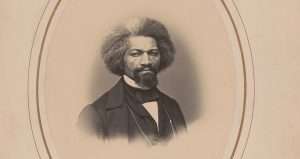
Frederick Douglass (Library of Congress).


Today is Memorial Day, when we honor members of the armed forces who have fallen in battle. Memorial Day originated as Decoration Day, an occasion to honor soldiers who died in the Civil War. Frederick Douglass's 1871 Decoration Day speech, delivered at Arlington National Cemetery, may be the greatest-ever address associated with this occasion. In the process, he also offered valuable thoughts on how we should remember the Civil War. Check it out! Here's an excerpt:

Dark and sad will be the hour to this nation when it forgets to pay grateful homage to its greatest benefactors. The offering we bring to-day is due alike to the patriot soldiers dead and their noble comrades who still live; for, whether living or dead, whether in time or eternity, the loyal soldiers who imperiled all for country and freedom are one and inseparable….

When the dark and vengeful spirit of slavery, always ambitious, preferring to rule in hell than to serve in heaven, fired the Southern heart and stirred all the malign elements of discord, when our great Republic, the hope of freedom and self-government throughout the world, had reached the point of supreme peril, when the Union of these states was torn and rent asunder at the center, and the armies of a gigantic rebellion came forth with broad blades and bloody hands to destroy the very foundations of American society, the unknown braves who flung themselves into the yawning chasm, where cannon roared and bullets whistled, fought and fell. They died for their country.

We are sometimes asked, in the name of patriotism, to forget the merits of this fearful struggle, and to remember with equal admiration those who struck at the nation's life and those who struck to save it, those who fought for slavery and those who fought for liberty and justice.

I am no minister of malice. I would not strike the fallen. I would not repel the repentant; but may my "right hand forget her cunning and my tongue cleave to the roof of my mouth," if I forget the difference between the parties to that terrible, protracted, and bloody conflict….

The essence and significance of our devotions here to-day are not to be found in the fact that the men whose remains fill these graves were brave in battle. If we met simply to show our sense of bravery, we should find enough on both sides to kindle admiration….

But we are not here to applaud manly courage, save as it has been displayed in a noble cause. We must never forget that victory to the rebellion meant death to the republic….  [I]f now we have a united country, no longer cursed by the hell-black system of human bondage…, we are indebted to the unselfish devotion of the noble army who rest in these honored graves all around us.

The Decoration Day speech is just one of several Douglas speeches that deserve to be better-known. I gave a few other examples here.

Free Speech

Savage Romance Libel Allegations

|

From Shanley a/k/a T.S. Joyce v. Hutchings a/k/a Terry Bolryder a/k/a Domino Savage, decided Friday by Judge David Barlow (D. Utah):

Ms. Shanley and Ms. Hutchings both write paranormal romance fiction. Readers of such fiction gather online to discuss books and promote authors. For instance, Ms. Hutchings avers that she has 8,000 followers on Facebook and 1,500 followers on Instagram. Ms. Shanley and Ms. Hutchings interacted in one online community for four months in 2016.

At diverse times, Ms. Hutchings published various negative comments about Ms. Shanley. She accused Ms. Shanley of being a "known homewrecker[,]" "sexually coerc[ing] and blacklist[ing] male models[,]" and engaging in "white supremacy dog whistling." She asked Ms. Shanley to "come answer for all the cheating and husband stealing[.]" Ms. Hutchings called Ms. Shanley a "repeat offender" rapist who "ruined everyone's rep[utation]" and said, "now its [sic] your turn."

In addition to the rape allegations, Ms. Hutchings accused Ms. Shanley of being "an actual child molester" who "raped a kid[,]" including her own child. She offered one thousand dollars if "anyone brings [Ms. Shanley] … here." And she uploaded a picture of a man with a noose around his neck after a post stating, "I'm really mad [Ms. Shanley] … you existing is like a total blight on humanity."

Shanley sued for libel; Hutchings sought summary judgment; and Shanley opposed on the grounds that she hadn't been given adequate discovery:

Read More

The Infamous Vincent Chin Murder in 1982 Didn't Happen the Way it's Often Portrayed

|

I always find it disturbing when an incident that "I know" turns out to have been quite different from how it's consistently reported and what I believed to be true.

Here's the standard media version of the Chin murder, via NPR last year:

Forty years ago, 27-year-old Vincent Chin was enjoying a night out with his friends in Detroit. It was meant to be a celebration ahead of Chin's upcoming marriage, but he didn't make it to the wedding. That night he was beaten to death by two white men who worked in the auto industry and, according to witnesses, were angry over what they perceived as the loss of American jobs to Japanese imports.

The men targeted Chin because he was Asian – not knowing he was Chinese American, not Japanese. The killing galvanized Asian Americans across the entire country to fight for civil rights. It's a battle that continues today.

Here's what I learned about the incident when reading lawprof Robert Chang's book Disoriented: Asian Americans, Law, and the Nation-State while researching my book Classified and then doing a bit more research:

Chin was drinking at a bachelor party at a strip club. He got into a verbal dispute with some white patrons. At trial, one witness, a stripper at the club, testified that the white patrons, auto workers, made racial remarks related to the loss of auto jobs to the Japanese. However, the defendants denied it, and the witness who so testified received a lighter sentence for another matter in exchange for her testimony, raising doubts about her credibility.

As for the violence, Chin threw the first punch in the bar. When they were all kicked out of the club, he yelled to the white men in the parking lot, "Come on you chickenshits, let's fight some more." That should have been the end of the incident.

Instead, the white guys tracked him down at a McDonald's (after telling a black man they would pay him $20 for helping them find "a Chinese guy"—so much for not realizing he was Chinese) and beat him severely. He became unconscious and died.

That's enough for me for a murder conviction, which is what the defendants were charged with. The district attorney, however, agreed to allow them to plead guilty only to manslaughter. Outrageously, in line with the probation office's recommendation, the killers received probation based on their lack of criminal history. This was said to be standard in Wayne County for first-offense convictions for manslaughter; if so, the DA should not have agreed to the manslaughter plea.

The ridiculously lenient sentence galvanized activists, in part because the possible racial angle of the incident was highlighted and exaggerated, and also because the light sentence was blamed on the judge. The judge had been interned in a Japanese POW camp during World War II and was therefore suspected of harboring racial animosity to Asians. Moreover, some of his remarks at sentencing seemed to display undue sympathy for the defendants.

So there was, imho, clear injustice in this case. The killers were let off way too easily, and there was justified outrage about that. But contrary to how the case has been remembered, it's not clear that the altercation itself was racially motivated, and the  notion that Chin was set upon randomly by autoworkers is false.

Immigration

More Evidence that Biden's Private Sponsorship Migrant Parole Policy Reduced Illegal Migration by Making the Legal Kind Easier

A new study by the conservative Manhattan Institute concludes that the expansion of private sponsorship parole to migrants from Cuba, Nicaragua, Haiti and Venezuela has reduced illegal migration across the southern border by about 98,000 per month.

|

Venezuelans fleeing the socialist regime of Nicolas Maduro.


On January 5, the Biden Administration extended the private sponsorship migration system used by the successful Uniting for Ukraine  program to include  up to 30,000 migrants per month from four Latin American countries: Cuba,  Nicaragua, Venezuela,and Haiti ("CNVH").  Migrants from these countries can quickly gain legal entry into the United States and the right to live and work here for up to two years, if they pass a simple background check and have a private sponsor in the US who commits to providing support.

In a March 30 post, I summarized evidence indicating that this program has significantly reduced illegal migration from the CNVH countries, and thereby reduced pressure on the southern border. It does so by offering potential migrants a way to enter legally that is preferable to the illegal route. A new study by Daniel Di Martino, published by the conservative Manhattan Institute, provides extensive new evidence documenting this dynamic. Di Martino's paper isn't the first analysis to reach the same conclusion. In addition to the early evidence referenced in my March post, we also Customs and Border Protection data indicating that  between the announcement of the parole program on January 5 and March 31, average daily encounters outside ports of entry, with migrants from the four countries covered declined by 72%.

But Di Martino's assessment is the most thorough, sophisticated, and up-to-date study we have so far. And it is sponsored by a conservative organization that, to understate the point, isn't generally known for being supportive of either immigration liberalization or the Biden Administration. Here are excerpts from the author's summary of his findings and recommendations:

The Biden administration's parole programs are successfully reducing both illegal immigration and total immigration into the U.S., and they are shifting the composition of immigrants so that they are more self-sufficient and reliant on their existing social networks, rather than dependent on government assistance. Maintaining and improving parole will be even more important now that Title 42 has expired and the U.S. government has lost another tool for reducing illegal immigration.

The parole program for migrants from Venezuela began in October 2022 and expanded to Cuba, Haiti, and Nicaragua in January 2023. Approximately 102,000 people were paroled into the U.S. from Cuba, Haiti, Nicaragua, and Venezuela (CHNV) from October 2022 until April 2023, the most recent numbers available. Through March 2023, the program has prevented the entry of more than 380,000 illegal immigrants into the United States….

The CHNV parole program is expected to admit up to 30,000 immigrants per month, but it has reduced combined illegal immigration by more than 98,000 immigrants per month. (The total is 30,000 admitted per month, for all four countries.) This reduces net migration into the U.S. by approximately 68,000 migrants every month, or up to 820,000 annually…..

To build on the success of these existing parole programs, this report makes the following recommendations:

  • The CHNV program could be improved by exempting parolees from filing a work-permit request form and authorizing them to work incident to status, as with Ukrainian and Afghan parolees.
  • USCIS should begin charging a cost-recovery fee for sponsors filing the required form I-134A to hire more personnel and not delay processing of other legal immigration applications that need its attention.
  • A rolling parole program targeting countries with high rates of illegal immigration to the U.S. could help reduce illegal immigration and perhaps even total immigration into the United States.

Di Martino also compiles evidence indicating that the Uniting for Ukraine has significantly reduced illegal migration across the southern border by Ukrainian citizens.

I agree with Di Martino's main conclusions about pressure on the border, and most of his policy recommendations, particularly expanding the parole system to cover more countries and simplifying the bureaucratic process for securing work permits. As a sponsor in the Uniting for Ukraine program, I can confirm from experience that the latter is a serious annoyance. However, I am not convinced the program will actually reduce total migration into the US in the longterm. If it continues, more people will make use of it over time, thereby potentially increasing migration, overall, at least the legal kind. Because of the 30,000 per month cap, it may take them longer to come. But come they likely will. I, of course, don't regard that as a bad thing.

I also disagree with the recommendation to impose a "cost-recovery fee" for I-134A forms. Social science evidence suggests that even modest bureaucratic obstacles can significantly reduce participation in various programs. Imposing a fee is likely to reduce the number of Americans willing to serve as sponsors, thereby diminishing the benefits of the program. People hate having to do paperwork, and they hate having to pay a fee for the "privilege" of doing it even more. The costs of processing the forms can instead be more than offset by the extra tax revenue produced by parolees who work in the US.

In my view, the really great benefits of Uniting for Ukraine and CNVH are enabling many thousands of people to escape war, violence, poverty and oppression, and the economic benefits of giving them the opportunity to work in a society where they can be more productive and innovative. The latter benefits both the migrants themselves and current American citizens. By comparison, reducing disorder at the border is a secondary advantage, at most. But it's a very politically salient one.

Di Martino's findings are also relevant to currently ongoing litigation in which twenty red-state governments have filed a suit challenging the legality of the CNVH program. As I have previously explained, the relevant statute authorizes the president to use parole to let in migrants "for urgent humanitarian reasons or significant public benefit." Reducing pressure on the southern border qualifies as such a "significant public benefit." Or at least it does if you believe the governors of the plaintiff states, some of whom have  been loudly complaining about illegal border crossings, and claiming they constitute a major crisis.

AI in Court

ChatGPT Coming to Court, by Way of Self-Represented Litigants

|

I posted earlier today about a lawyer's filing unchecked ChatGPT-generated material, complete with hallucinated cases. But even if lawyers manage to avoid that, I'm sure that many self-represented litigants will be using ChatGPT, Bard, and the like, and won't know to properly check the results.

Indeed, a quick CourtListener search pointed out three self-represented filings (1, 2, 3) that expressly noted that they were relying on ChatGPT. That suggests that there are many more that used ChatGPT but didn't mention it. (To my knowledge there's no requirement to disclose such matters.)

Note also that self-represented litigants are quite common: Even setting aside prisoner filings (since I'm not sure how many prisoners have access to ChatGPT), in federal court, "from 2000 to 2019, … 11 percent of non-prisoner civil case filings involved plaintiffs and/or defendants who were self-represented." And I expect this would be even more common in state courts, for instance in divorce and child custody cases, where I'm told self-representation is even more common. (Family court plaintiffs might feel like they need to file for divorce, even though they can't afford a lawyer, and defendants might get sued for divorce or over child custody disputes even though they don't have any money that the plaintiff can recover.) And even not limiting matters to such categories of cases, it appears that "The caseload of most California judges now consists primarily of cases in which at least one party is self-represented."

See also this post from late February for an early query along these lines, in which one commenter did mention that he had used ChatGPT-3 for a state court filing; and see this post from January for the DoNotPay traffic-ticket-litigation story. If you know of any cases involving pro se litigants using ChatGPT and similar programs, please let me know.

"A Partner at a Big Firm … Received Memos with Fake Case Cites from … Two Different Associates"

|

A message I got from Prof. Dennis Crouch (Missouri), in response to my posting A Lawyer's Filing "Is Replete with Citations to Non-Existent Cases"—Thanks, ChatGPT? to an academic discussion list. (The full text was, "I just talked to a partner at a big firm who has received memos with fake case cites from at least two different associates.") Caveat emp…—well, caveat everyone.

More