
6/13/1977: Justice Tom C. Clark dies.

Mostly law professors | Sometimes contrarian | Often libertarian | Always independent | Est. 2002

What's on your mind?
Episode 462 of the Cyberlaw Podcast
It was a disastrous week for cryptocurrency in the United States, as the SEC filed suit against the two biggest exchanges, Binance and Coinbase, on a theory that makes it nearly impossible to run a cryptocurrency exchange in the US that is competitive with overseas exchanges. Nick Weaver lays out the difference between securities "process crimes" and "crime crimes," and how it helps to distinguish the two lawsuits. The SEC action marks the end of an uneasy truce between regulators and the cryptocurrency industry, but not the end of the debate. Both exchanges have the funds for a hundred-million-dollar criminal defense and lobbying campaign. So you can expect to hear more about this issue for years (and years) to come.
I bring up two AI regulation stories. First is Mark Andreessen's post trying to head off AI regulation, which is pretty persuasive until the end, where he says that the risk of bad people using AI for bad things can be addressed by using AI to stop them. Sorry, Mark, it doesn't work that way. We aren't, for example, stopping the crimes that modern encryption makes possible by throwing more crypto at the culprits.
My nominee for the AI Regulation Hall of Fame, though, goes to Japan, which has decided to address the phony issue of AI copyright infringement by declaring that it's a phony issue and there'll be no copyright liability for their AI industry if it trains its models on copyrighted content. That's the right answer, in my view, but it's also a brilliant way of borrowing and subverting the EU's GDPR model, in which aggressively regulating global data transfers turns out to be a pretty good trade barrier. Now Japan proposes to write the global copyright rules for AI, at least as a practical matter. Why? Because Japan's policy effectively gives immunity from copyright claims to any AI company that builds a dataset or trains its models in Japan. The rest of the world can follow suit or watch their industries flock to Japan to train their models in relative regulatory certainty. This has to be the smartest piece of international AI regulation any jurisdiction has come up with so far. (It helps, of course, that copyright claims against AI are mostly rent-seeking by Big Content.)
Kurt Sanger, just back from a NATO cyber conference in Estonia, explains why military cyber defenders are stressing their need for access to the private networks they'll be defending. Whether they'll get it, we agree, is another kettle of fish entirely.
David Kris turns to public-private cooperation issues in another context. The Cyberspace Solarium Commission has another report out. It calls on the government to refresh and rethink the aging orders that regulate how the government deals with the private sector on cyber matters.
Kurt and I consider whether Russia is committing war crimes by DDOSing emergency services in Ukraine at the same time as it's bombing Ukrainian cities. We agree that the evidence isn't there yet.
Nick and I dig into two recent exploits that stand out from the crowd. Barracuda's security appliance has been so badly compromised that the only remedial measure involves a woodchipper. Nick is confident that the tradecraft here suggests a nation-state attacker. I wonder if the remedy is also a way to move Barracuda's customers to the cloud.
The other compromise is an attack on MOVEit Transfer. Flaws in the secure file transfer system have allowed ransomware gang Clop to download so much proprietary data that they have resorted to telling their victims to self-identify and pay the ransom rather than wait for Clop to figure out who they've pwned.
Kurt, David, and I talk about the White House effort to sell section 702 of FISA for its cybersecurity value -- and my effort, with Michael Ellis, to sell 702 (packaged with intelligence reform) to a conservative caucus that is newly skeptical of the intelligence community. David finds himself uncomfortably close to endorsing our efforts.
Finally, in quick updates:
You can subscribe to The Cyberlaw Podcast using iTunes, Google Play, Spotify, Pocket Casts, or our RSS feed. As always, The Cyberlaw Podcast is open to feedback. Be sure to engage with @stewartbaker on Twitter. Send your questions, comments, and suggestions for topics or interviewees to CyberlawPodcast@gmail.com. Remember: If your suggested guest appears on the show, we will send you a highly coveted Cyberlaw Podcast mug! The views expressed in this podcast are those of the speakers and do not reflect the opinions of their institutions, clients, friends, families, or pets.
He probably thinks the Court is about him.
Chief Justice Roberts has evolved over the years. There was a time when he could be viewed as an "institutionalist." In 2017, I analogized Roberts to a bank--depositing and withdrawing capital to advance the conservative "long game."
The institutional theory views the Court as something like a checkbook: the Court can take a big withdrawal once in a while, so long it makes regular deposits. Indeed, Roberts has adopted such a fiduciary approach to judging. Back in 2007, he viewed the Court's three-decade-long pattern of divisive 5-4 decisions as "eroding, to some extent, the capital that [Chief Justice] Marshall built up." Thus, decisions can fall on either side of the ledger: deposits or withdrawals. By depositing "capital" in the narrow decisions—such as WRTL v. FEC, NAMUDNO v. Holder, NFIB v. Sebelius, and King v. Burwell —the Court can withdraw that "capital" in the broad decisions like Citizens United v. FEC, Shelby County v. Holder, and cases yet to come.
But after Trump, Roberts's "long game" was turned upside down, and post-Dobbs, the long game is long gone.
If he is no longer an "institutionalist," what is he? In the Washington Post, Jennifer Rubin offers this description of Chief Justice Roberts.
If political opinion "tester" explains Roberts's past compromises and the shift from Shelby to Milligan, he should be viewed not so much as an institutionalist (who would protect the jurisprudential integrity of the court and insist on abiding by the highest ethical standards) but as an unprincipled politician, trying to prevent his radical colleagues from sinking the court and the Republican Party when he suspects blowback to decisions from the court's right-wing majority.
In that sense, Roberts has become the worst sort of results-oriented judge. Rather than legal consistency, respect for precedent or even a judicial philosophy, he's become the quintessential weather vane. How much can the public tolerate? How far must he let his conservative colleagues drift before the court falls into political oblivion?
I don't quite agree. Chief Justice Roberts sees himself as the Court's savior--the only force that can protect the legacy of John Marshall. John Roberts, and no one else, knows what is best for the Republic. John Roberts, singlehandedly, can ward off incursions from the radical left Court "reformers" and the radical right (including his colleagues). Of course, this is all a figment of Roberts's imagination. Delusions of grandeur, really. He can barely keep his own Court in line. Joan Biskupic's reporting suggests that even his colleagues are annoyed at how much Roberts seems himself as in control.
I don't think Roberts is a weather vane. I think he's just, so, vain. He probably thinks the Court is about him.
I'm at a conference at a public university, and I'm using the WiFi system; I checked the terms of use, and saw that "By clicking 'Accept'" (as I did) I "agree that … [my] use and activity [related to the network, presumably] will conform to reasonable expectations of propriety." OK then!
I think that WiFi access provided by government bodies, such as public universities, government-owned airports, and the like, is a "limited public forum" in which speech restrictions are constitutional only if they are viewpoint-neutral and reasonable; and a "conform to reasonable expectations of propriety" proviso is too vague to be reasonable (see Minnesota Voters Alliance v. Mansky (2018)). One day I might challenge one such policy, but probably not today ….
From Fass v. Benson, decided Wednesday by the Texas Court of Appeals (Dallas), in an opinion by Justice Erin Nowell, joined by Justices Robbie Partida-Kipness and Nancy Kennedy:
Professor Fass is a tenured professor of public policy and affairs at UTD [University of Texas Dallas]. For the past thirty years, he has taught a wide range of graduate and undergraduate courses. Since 1988, he has regularly taught statistics courses for the School of Economics, Political, and Policy Sciences (EPPS)….
In late March 2019, Dean Jennifer Holmes, who served as Head of UTD's School of EPPS, informed Professor Fass he would receive a classroom "peer evaluation" outside of his usual scheduled evaluations. A non-tenured instructor who had not taught undergraduate statistics since 2004 observed Professor Fass's evening class. The next day, Dean Holmes told Professor Fass the evaluator was "very critical" of his teaching. She also told him several of his students from his morning section complained about his class. This was the first time Professor Fass heard about any student complaints. Dean Holmes also discussed with him her concerns about the rate of withdrawals, failures, and drops (WFDs) in his class. UTD administrators had never stated WFDs were relevant to a professor's teaching method and never included them as a metric in performance evaluations.
After the evaluation, Dean Holmes told Professor Fass to alter his approach to student grading by eliminating any further quizzes and relying solely on homework assignments….
Fass refused, and was later removed from teaching; he sued on various grounds, and the court ruled, among other things:
with relevance to both a 1980 precedent and a recent article by Alex Reinert
Last week's Supreme Court decision in Health & Hospital Corp. of Marion County v. Talevski is an interesting case about causes of action to enforce legislation adopted under Congress's spending power, and prompted an especially interesting dissent from Justice Thomas about the basis and nature of the spending power that I commend to students of structural constitutional law. But one other interesting thing about it is that it reaffirmed the validity of a 1980 case called Maine v. Thiboutot.
What is Thiboutot and why is it interesting?
The federal statute for enforcing constitutional rights, 42 U.S.C. 1983, which was passed as Section 1979 of the Revised Statutes of 1874, reads:
Every person who, under color of any statute, ordinance, regulation, custom, or usage, of any State or Territory . . . subjects, or causes to be subjected, any citizen of the United States or other person within the jurisdiction thereof to the deprivation of any rights, privileges, or immunities secured by the Constitution and laws, shall be liable to the party injured in an action at law, suit in equity, or other proper proceeding for redress . . .
While people had long used the statute to enforce federal constitutional rights, the fact that the statute says "rights . . . secured by the Constitution and laws," combined with the Court's increasingly stingy approach to implied causes of action to enforce federal statutes, prompted the question: can Section 1983 also be used to enforce federal statutory rights? In Thiboutot, in an opinion by Justice Brennan the Court said: sure, that's what it says!
What makes this interesting is that while this is indeed what the text says, the text probably reflects a mistake that was not originally intended by Congress. When Congress first passed the statute in 1871, it referred only to constitutional rights. A few years later, Congress added the "and laws" basically by accident.
How did this happen?
(though false allegations about the details of the conduct may be).
From Cooper v. Franklin Templetion Investments, decided Thursday by the Second Circuit (Judges Rosemary S. Pooler, Barrington D. Parker and Alison J. Nathan):
On May 25, 2020, Plaintiff, a white woman, encountered Christian Cooper (no relation), a black man in Central Park, while she was walking her dog and he was birdwatching. Plaintiff alleges that Mr. Cooper confronted her, and his "intentionally aggressive actions" caused her to "fear for her safety and the safety of her dog." She alleges this fear caused her to warn Mr. Cooper that she would tell the police there was "an African-American man threatening [her] life," and then to place a 911 call to that effect. The confrontation, which was recorded on a video that went viral, "became international news as a racial flashpoint." Plaintiff alleges that she was "characterized as a privileged white female 'Karen' caught on video verbally abusing an African American male with no possible reason other than the color of his skin."
Later that same day, Franklin Templeton published the following statement on Twitter regarding the incident: "We take these matters very seriously, and we do not condone racism of any kind. While we are in the process of investigating the situation, the employee involved has been put on administrative leave." Plaintiff alleges that while Franklin Templeton did contact her that day, it did not seek to interview Mr. Cooper about the incident, did not obtain a recording of Plaintiff's 911 call from the police, and did not take various other potential investigative steps. The following afternoon, Franklin Templeton put out another statement on Twitter (the May 26 Statement): "Following our internal review of the incident in Central Park yesterday, we have made the decision to terminate the employee involved, effective immediately. We do not tolerate racism of any kind at Franklin Templeton." As relevant here, Johnson, Franklin Templeton's president and CEO, made two further public statements about the incident. In a June 2, 2020 interview with Bloomberg, in response to questions about Plaintiff's termination, Johnson stated:
I just have to commend [ ] our crisis management team, it was a holiday. Everybody got together. We needed to spend time getting the facts. Sometimes videos can get manipulated and so you have to make sure that you've reviewed all the facts. I think the facts were undisputed in this case, and we were able to make a quick decision.
And in a July 6, 2020 interview with Fortune, Johnson stated: "[Defendants] espouse zero tolerance for racism."
For several months, I've generally congratulated prevailing lawyers in cases I write about, as a mark of acknowledgment of their professional success on behalf of their clients. I've done so without regard to whether I agree with the lawyers' positions as a legal or moral matter; they apparently did a good job as lawyers, and my hat is off to them for that. (To be sure, it's possible that they just had a strong case that few lawyers would lose, or perhaps they did a shoddy job and won despite that, but I was willing to generally infer professional quality from the victory.)
Indeed, I was hoping to model for law student readers the principle that lawyers succeed by serving their clients, entirely apart from broader political questions. When I didn't congratulate the prevailing lawyers, that was generally because (a) I thought the decision as a whole (and not just the part I wrote about) was split enough to not be a victory, (b) the lawyers' names weren't easily obtainable, (c) there were so many lawyers on the winning side that listing them all would have been a chore, or (d) I forgot.
But though I had explained this practice in this post, it seems from comments that quite a few readers interpret congratulating a lawyer as a mark of endorsement of the lawyer's position—which, especially, to nonlawyers, is indeed a plausible interpretation. I've thus tentatively decided that I'd take something of a middle road (especially since this is certainly not a great matter of principle for me one way or another): I would note the names of the prevailing lawyers and indicate that they represent the prevailing party, a public acknowledgment that I hope will be seen as a gesture of professional respect, without saying "congratulations." And I thought I'd mention this expressly, so that readers don't assume that my noting some people when I had congratulated others before says something about my views on the merits. I hope this makes sense, to readers and to the lawyers involved.
6/12/1967: Loving v. Virginia decided.
Justice Scalia would be rolling over in his grave.
On Saturday, I offered some faint praise for Chief Justice Roberts's majority opinion in Allen v. Milligan--truly, faint praise, as I commended the Chief for (probably) writing a sincere decision he actually agrees with. Roberts barely cleared a fairly-low bar--not much to write home about. Now, having finished reading all 112 pages, here comes the criticism. To start, I'll focus on textualism.
In Bostock, Justice Alito coined one of the most-memorable lines since Justice Scalia's passing: he charged Justice Gorsuch with piloting a "pirate ship" under a "textualist flag." Allen, alas, couldn't even be called a pirate ship for textualism. The Chief hoisted a white flag of textualism--it was a complete and total surrender to Gingles v. Thornburg (1986), the worst excesses of William Brennan's anti-textualism. Justice Alito explained in his dissent:
Gingles was decided at a time when the Court's statutory interpretation decisions sometimes paid less attention to the actual text of the statute than to its legislative history, and Gingles falls into that category. The Court quoted §2 but then moved briskly to the Senate Report. Today, our statutory interpretation decisions focus squarely on the statutory text.
Part I.A of Chief Justice Roberts's majority opinion, which Justice Kavanaugh joined in full, disregards nearly everything we have learned about textualism over the past four decades. Roberts doesn't just cite legislative history. He cites pre-legislative history. He quotes, at some length, editorials in the Washington Post and New York Times as evidence of the statute's meaning! Indeed, the Chief quotes the Times, which editorialized that City of Mobile v. Bolden (1980) was "the biggest step backwards in civil rights to come from the Nixon Court." The Nixon Court? Not the Burger Court. The Nixon Court?! I'm old enough to remember when the Roberts implored us that there are not Obama or Trump judges, and that is a mistake to identify a judge by the appointing president. But, apparently, there was a Nixon Court, and Nixon judges. Why on Earth would Roberts have included that line, of all lines? The analysis would have been just the same if that sentence was omitted. And for those counting at home, the moderates Justices Stewart (Eisenhower) and Stevens (Ford) were in the majority. To balance things out, the Chief cites an op-ed by Senator Orrin Hatch, who opposed "mandating racial proportionality" and the Wall Street Journal editorial page.
Next, Roberts moves from pre-legislative-history to actual legislative-history. Roberts traces debates between Senator Hatch, who chaired the Senate Subcommittee and Representative Peter Rodino, who chaired the House Judiciary Committee. Roberts also cites the views of Attorney General William French Smith, though, curiously, does not mention him by name--only "Attorney General." Smith is the only politician who isn't named! Thankfully, this impasse was "resolved" by Senator Bob Dole. And, Roberts relays, the Senate passed Dole's compromise "by an overwhelming margin, 85-8." And, for good measure, we learn that President Reagan signed the Act into law. (I noticed Justice Jackson name-dropped Reagan as well in Talevski).
Why is any of this information relevant to the meaning of the statute? It is not relevant for a textualist decision to focus on the legislative players who drafted a bill. It is not relevant for a textualist decision to indicate the vote-count of a statute, let alone to note the support was "bipartisan." And, Justice Kavanaugh's practice notwithstanding, it is irrelevant which President signed the bill into law. At most, this name-dropping is designed to inject armchair political punditry into the U.S. Reports, and suggest that this benighted bipartisan compromise by long-ago politicians should inform the meaning of the statute. Can we apply this framework to the politicians that enacted the Civil Rights Act of 1964? What did they think about transgender rights? How can Roberts, who joined Bostock, and Kavanaugh, who lambasted Bostock, engage in such anti-textualist reasoning?
The rest of the majority opinion follows his approach. On p. 17, Roberts writes, "We have understood the language of §2 against the background of the hard-fought compromise that Congress struck." On p. 28, Roberts writes, "And neither the text of §2 nor the fraught debate that produced it suggests that 'equal access' to the fundamental right of voting turns on computer simulations." And so on. The careful parsing of the text never actually appears. It all comes back to Bob Dole. Or at least a caricature of Bob Dole.
We're all textualists now, except when the Chief has 5 votes. Justice Scalia would be rolling over in his grave.
Range would be the best § 922(g) case for the Supreme Court to resolve.
Last week the Third Circuit en banc decided Range v. Attorney General, holding that a person convicted of a Pennsylvania fraud offense—a misdemeanor punishable by up to five years' imprisonment—remains among "the people" protected by the Second Amendment, and that the government failed to show that our history and tradition of firearm regulation supported disarming him. Authored by Judge Thomas Hardiman and joined by eight other judges, the court found the prohibition in the federal Gun Control Act disarming persons convicted of crimes punishable by more than one-years' imprisonment (aka "felons"), 18 U.S.C. § 922(g)(1), unconstitutional as applied to the plaintiff.
That decision creates a circuit conflict among cases decided since the Supreme Court's 2022 Bruen decision holding that restrictions on the right to keep and bear arms must be decided on the basis of text and history, not tiers of scrutiny. Last month, in United States v. Jackson, the Eighth Circuit upheld § 922(g)(1) based on the holding that felons as a class lose Second Amendment rights. Defendant Jackson had two prior convictions for sale of a controlled substance when apprehended with a gun after a "shots fired" alert. A motion is pending to file a petition for rehearing by July 14, so the case may not be ripe for Supreme Court review for some time. That means that Range will land on the Court's docket far ahead of Jackson.
The Range en banc decision, although it's an as-applied challenge, is consistent with much of the reasoning in the Fifth Circuit's Rahimi en banc decision, which found the prohibition on gun possession by a person subject to a domestic restraining order facially to violate the Second Amendment. The Biden Administration's Department of Justice is beating on the Supreme Court's door to hear Rahimi, which has bad facts, but it may slow walk Range because it has good facts.
In 1995, Bryan Range pleaded guilty to making a false statement to obtain food stamps. He had been struggling to support his wife and three children on $300 per week. He was sentenced to probation and to pay a fine. The federal disability doesn't apply if a state misdemeanor is punishable by no more than two years imprisonment, but his offense was punishable by up to five years. Yet he did not serve a single day in jail.
The Biden Administration would prefer the next Second Amendment case heard by the Supreme Court to present the party involved in the worst possible light, in the hope that it would be a vehicle for the Court to retreat from Heller and Bruen.
Robert Poole's effort to defend exclusionary zoning falls prey to a combination of logical fallacies and factual error.
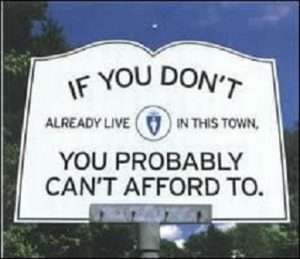
For many years, libertarian economists, housing experts, and legal scholars have been at the forefront of efforts to oppose exclusionary zoning. Regulations restricting the type of housing property owners can build on their land severely constrain property rights and also cause immense economic and social harm by excluding millions of people from areas where they could otherwise find better job and educational opportunities. Libertarian legal scholar Bernard Siegan was a pioneer critic of zoning as far back as the 1970s, and other libertarian-leaning experts have made more recent major contributions to this literature, most notably those of Harvard economist Edward Glaeser. Few ideas are as central to libertarianism as the notion that private property owners have a strong presumptive right to use their land as they see fit, subject only to those restrictions they voluntarily accept.
In a recent Reason article, Robert Poole challenges the standard libertarian view on these issues by offering a defense of single-family zoning. The latter is one of the most severely restrictive types of government-imposed land-use constraints. It bars a vast range of housing options, including duplexes, quads, apartment buildings, and much else. Poole's defense of single-family zoning founders in a morass of logical and factual errors. Here is an excerpt from it:
When zoning laws began to proliferate in the 1920s, they were a newly imposed restriction on what homeowners could do with their properties. In those days, most people lived in long-established communities in cities. Today, after 70 years of suburbanization following World War II, the large majority of homeowners bought their homes in suburbs built in response to market demand for single-family living. Local governments (typically county governments outside the main city) responded to the kind of housing the developers wanted to create to meet the growing single-family market demand.
In effect, postwar single-family zoning represented an agreement under which homebuyers accepted restrictions on other types of uses in their neighborhood in order to be protected from negative externalities that neighbors might create, without the protection of the covenant provided by single-family zoning.
It is simply not true that single-family zoning restrictions were a response to "market demand" that property owners voluntarily agreed to. In reality, these rules were - and are - imposed by government coercion, including on many property owners who would have preferred to build multi-family housing on their land. At best, one can say that these policies met a "demand" that some property owners had for imposing constraints on others.
By that standard, almost any form of government intervention can be defended as a response to "market demand." Protectionism is a response to "market demand" from producers who seek to be free of foreign competition. Price controls are a response to "market demand" for lower prices. Even socialism can be justified as a response to "market demand" from those who prefer a collectivist society.
In his description of the historical origins of single-family zoning, Poole also omits the large role of racism. In many places, such policies were enacted as a seemingly neutral tool for excluding blacks and other racial minorities, after the Supreme Court invalidated explicit racial discrimination in zoning in 1917.
It is true that single-family zoning can sometimes protect homeowners against externalities. For example, some affluent homeowners dislike the aesthetics of mixed-use housing, and others may prefer to live in an area with few or no working or lower-middle class residents. Others simply want to avoid changes to the "character" of their neighborhood. But exclusionary zoning creates far larger negative externalities than it prevents, most notably by excluding millions of people from housing and job opportunities, thereby also greatly reducing economic growth and innovation. Moreover, even many current homeowners in areas with zoning restrictions stand to benefit from their abolition.
Poole also tries to defend single-family zoning restrictions by claiming that they are a kind of "contract":
To abolish single-family zoning is a violation of the contract between a municipality and its single-family homeowners. They selected the neighborhood and the house based on the protections offered by prevailing zoning.
The simple answer to this argument is that no such "contract" exists. A true contract arises through the voluntary agreement of the parties. By contrast, zoning restrictions are imposed by governments on all property owners in a given area, regardless of whether they agree to it or not.
It is true that, after the initial coercive imposition of zoning, some of those who buy property in the area may do so in part because they like the restrictions. But if that qualifies as a "contract" that future government policy is morally bound to respect, the same goes for virtually any other type of coercive government policy that some people have come to rely on.
We could equally say that protectionism is a "contract" between the government and protected industries. After all, many investors and workers may have "selected" that industry "based on the protections offered by prevailing" trade restrictions. Similarly, abolishing racial segregation violated the "contract" between the government and white racists who "selected" segregated neighborhoods "based on the protections offered by prevailing" segregation laws.
Libertarian economist David Henderson offers a similar critique of Poole's argument here. As he points out, "[w]henever government gets rid of restrictive regulations, people who gained from those regulations will lose. But that doesn't mean that the government violated a contract."
There may be some situations where completely abolishing unjust government policies that violate libertarian principles would be wrong, because of reliance interests. The most compelling examples are cases where people rely on welfare programs, without which they might be reduced to severe poverty. If, someday, libertarians succeed in abolishing Social Security, there will be a strong case for exempting the elderly poor who have come to rely on that program, and have no other way to support themselves. But few if any beneficiaries of single-family zoning restrictions are likely to suffer any comparably terrible privation if those restrictions are abolished.
In another part of his article, Poole analogizes single-family zoning to private land-use restrictions, such as private planned communities. This analogy (more often made by left-wing critics of private communities), is badly flawed for reasons I summarized here. The most important distinction is that, unlike zoning, private land-use rules really are contracts that only bind those landowners who have voluntarily consented to them:
The requirement of unanimous consent ensures that [private] restrictions rarely, if ever, violate owners' property rights. It also makes it unlikely that HOAs and other private communities can significantly restrict mobility in the way zoning restrictions do. It is nearly impossible for an HOA with severe restrictions on building to take over a vast area, such as a major metropolitan area or even a good-size suburb. The city of Houston, which has no zoning, but gives relatively free rein to HOAs, is an excellent case in point. The extensive presence of HOAs hasn't prevented Houston from building large amounts of new housing, and featuring far lower housing costs than cities with zoning restrictions. Indeed, the city's openness to consensual private land-use restrictions may even have facilitated new housing construction by allowing those who really want restrictions to create small enclaves for themselves instead of imposing those rules on everyone else.
In his article, Poole rightly praises Houston's policies. But he fails to recognize the fundamental distinction between them and government-mandated single-family zoning.
Poole claims that single-family zoning restrictions do not significantly constrain new housing construction, and that the best way to address the housing crisis is to focus on lifting restrictions on the development of previously undeveloped land. I agree the latter should be abolished. But exclusionary zoning rules are also a major constraint on housing construction. In suggesting otherwise, Poole ignores a vast amount of research compiled by economists and land-use experts across the political spectrum. Recent evidence suggests that the effects are even larger than previously thought.
Allowing more development in currently undeveloped areas is not an adequate substitute for zoning reform. Much of the benefit of the latter comes from increasing the availability of housing in places where there are important job and educational opportunities. Most undeveloped land is relatively further away from such locations, and building more housing there offers fewer benefits than allowing increased construction close to major centers of commercial and social interaction.
Finally, Poole complains that "preemption of local government policy violates basic principles of limited government: that any government action should be carried out at the lowest possible level of government." I always thought that one of the most basic principles of limited government is that private property owners should be allowed to decide for themselves what they can build on their own land. Allowing them to do that actually promotes greater diversity and decentralization of power than leaving that authority in the hands of local government.
Poole's article also contains a number of other errors. For example, it is not true that California "recently [became] the first state to enact legislation that invalidates single-family zoning, as an effort to increase housing supply." Oregon enacted a state-wide ban on single-family zoning in 2019 (exempting only communities with fewer than 10,000 residents). SB 9, the California law Poole refers to, is less far-reaching. It allows owners of property in areas with single-family zoning to build additional housing units, but only if they meet a variety of restrictive criteria. SB 9 is an important step in the right direction, but does not completely abolish single-family zoning.
In sum, Poole's defense of single-family zoning restrictions is at odds with libertarian principles. More importantly, it's based on weak arguments that should be rejected regardless of their ideological valence.
6/11/1993: Church of the Lukumi Babalu Aye v. City of Hialeah decided.
The real banana republic danger is if high officials can commit serious crimes with impunity.

Earlier today, the Justice Department indicted Donald Trump on 37 counts related to his retention of classified documents after leaving office in January 2021. A good many Republicans have reacted by claiming that the indictment is "the stuff of a banana republic" (as Trump's former acting attorney general Mat Whitaker put it) or otherwise reminiscent of authoritarian states. Nothing can be further from the truth. There are several different ways of understanding the "banana republic" critique. But none of them actually apply to this case, though some might be appropriate to the much more dubious previous indictment of Trump on New York state charges.
It is simply not true that prosecuting a former president or other prominent politician is the kind of thing that only banana republics do. Many liberal democracies have prosecuted current or former heads of state and heads of government. Notable examples include France, South Korea, Israel, and Italy. Israeli Prime Minister Benjamin Netanyahu is on trial for corruption right now. A similar fate befell his predecessor Ehud Olmert, who ended up getting convicted and serving a prison sentence.
Giving high officials impunity for criminality is actually a hallmark of authoritarian regimes. The fact that Russian President Vladimir Putin routinely commits war crimes and other violations of law without fear of prosecution is a sign of the degeneration of that country's political system, even if some trappings of constitutional government remain.
Another variation on the banana republic claim is that Trump is being charged for petty offenses, on weak evidence, or on the basis of convoluted legal theories - and prosecutors would not have done such things to an ordinary person who had done the same thing. Some such accusations are plausible in the case of the New York indictment brought by state prosecutor Alvin Bragg, which arguably features both relatively petty offenses and dubious, convoluted legal reasoning.
But the classified document case brought by special counsel Jack Smith is much stronger. The indictment includes extensive evidence that that 1) the files were in fact classified, 2) Trump knew they were (they even have recordings of him saying so!), 3) Trump deliberately tried to withhold them, and 4) the classified information (at least some of it) was actually important (e.g. - war plans). This was not simply a case of him retaining some insignificant records that perhaps should never have been classified in the first place. For that reason, Trump's offense here posed a genuine risk to national security.

And there's no creative legal theory involved. If the charges are true, they qualify as pretty straightforward violations of a variety of federal statutes. If a low-level federal employee had done the same thing, the Justice Department would have thrown the book at him. Especially if that underling (like Trump and Richard Nixon before him) left helpful recordings documenting his criminality.
The evidence is so strong that it's not easy to see how the defense could refute it. But perhaps Trump's lawyers have compelling evidence of their own to refute the charges. If so, let them present it in court. At the very least, the evidence in the indictment is strong enough to justify bringing charges.
In a legal system where there are so many laws that a large majority of adult Americans have probably committed a crime at some point in their lives, there is always the risk that an unpopular person will be unfairly hauled into court for petty reasons. That risk also applies to political opponents of the party in power. But that doesn't seem to be what happened in this case. Moreover, the way to deal with that danger is not to give prominent political leaders impunity for their crimes, but to cut back on dubious criminal laws, and enforce norms of political impartiality on prosecutors.
A final possible variant of the banana republic charge is that, due to political bias, Trump is being charged for an offense that Joe Biden is being allowed to get away with. Biden, too, retained classified documents after leaving office (as vice president under Barack Obama). So far, however, the evidence suggests that Biden did not take them deliberately, and (unlike Trump) he turned them over as soon as it became clear he had them. But Biden is under investigation by a special counsel, too (Former Trump US attorney appointee Robert Hur). If it turns out his conduct was in fact similar to Trump's, then by all means indict him, as well! Hur has every incentive to uncover such evidence, and to not spare Biden if he finds that the latter committed offenses similar to Trump's.
If Hur does find comparable evidence against Biden, it may not be possible to prosecute him while he is still president, given Justice Department policy against indicting a sitting president. Perhaps this policy is wrong (I have reservations about it, myself). But Trump supporters are not well-positioned to complain about it, given they were happy to see it shield Trump himself while he was in office.
Similar points apply to attempts to draw parallels between Trump's conduct and Hillary Clinton's use of an illicit e-mail server when she was Secretary of State. Although reprehensible, her conduct was was less bad than Trump's. Among other differences, she misplaced the relevant classified information at a time when she was still in office (and therefore entitled to have it). Trump, by contrast, took classified documents on his way out the door, when leaving office. Unlike with Trump, there is no evidence Hillary Clinton revealed any classified information to third parties. Moreover, when the server was discovered by authorities, she turned it over to them, instead of trying to stonewall, as Trump did.
Perhaps Clinton should still have been prosecuted; her actions were certainly reprehensible. But it's not a double standard to conclude she should not have been, yet simultaneously support an indictment for Trump's more serious offenses. And if you think Clinton should have been prosecuted (or at least investigated further), much of the blame for the failure to pursue the issue falls on the Trump administration, which could have done so during their four years in office.
While the classified documents indictment seems well-justified, the crimes involved are still less serious than those involved in still-ongoing investigations of Trump for attempting to pressure officials into overturning the 2020 election result in Georgia and for his role in the events leading up to the assault on the Capitol on January 6, 2021 (see pp. 98-118 of the January 6 Committee Report for a discussion of potential charges stemming from the latter). A president seeking to use force and fraud to stay in power after losing an election is truly the stuff of banana republics! And, whatever their other misdeeds, neither Biden nor Hillary Clinton has done anything remotely comparable. There may not be a truly comparable case in all of American history. The best way to avoid becoming a banana republic is to prosecute Trump for those actions, severely punish him if found guilty, and thereby deter future wrongdoing of the same kind.
From Donald Trump v. Mary Trump, decided yesterday by New York trial court judge Robert Reed:
In this lawsuit, Donald J. Trump … seeks to recover against Mary Trump for the publication of her book, "Too Much and Never Enough: How My Family Created the World's Most Dangerous Man." Mary Trump, the complaint alleges, caused her book to be published in open defiance of confidentiality obligations she owed to plaintiff….
Here's the heart of the free speech analysis:
Defendant … contends that enforcing the confidentiality agreement between the parties would violate vital public interests regarding freedom of speech. In a nutshell, defendant's position is that enforcing a waiver of First Amendment rights for the purpose of insulating a public official from unpleasant attacks will "plainly undermine [a] core First Amendment principle." To further bolster this argument, defendant relies on Justice Greenwald's decision denying plaintiff's brother's request for a preliminary injunction to prevent Mary Trump from publishing her book, in which Justice Greenwald held that the applicable confidentiality provision, "viewed in the context of the current Trump family circumstances," would "offend public policy."
Justice Greenwald's decision, however, centered on a prior restraint analysis, and his holding should be confined to that context. The full text of Judge Greenwald's quote is that the applicable confidentiality provision would "offend public policy as it would be a prior restraint on [defendant's] speech." Justice Greenwald further noted that "the First Amendment requires that [a plaintiff] remedy its harms through damages proceeding rather than through suppression of protected speech." Thus, Justice Greenwald's decision actually affirms the notion that the instant action is the proper manner for plaintiff to enforce the settlement agreement without offending defendant's First Amendment rights.
Indeed, in considering the argument that the enforcement of the settlement agreement necessarily violates Mary Trump's First Amendment rights, then-Presiding Justice Scheinkman of the Appellate Division, Second Department had made the following observations:
"While Ms. Trump unquestionably possesses the same First Amendment expressive rights belonging to all Americans, she also possesses the right to enter into contracts, including the right to contract away her First Amendment rights. Parties are free to limit their First Amendment rights by contract. A court may enforce an agreement preventing disclosure of specific information without violating the restricted party's First Amendment rights if the party received consideration in exchange for the restriction. A party may effectively relinquish First Amendment rights by executing a secrecy agreement in which the party receives significant benefits."
From O'Rourke v. Warren, decided yesterday by the Texas Court of Appeals (Austin), Chief Justice Darlene Byrne, joined by Justices Gisela Triana and Edward Smith:
In the underlying proceeding, appellee Kelcy Warren sued appellant Robert Francis O'Rourke for defamation, alleging that O'Rourke legally defamed him by making statements during O'Rourke's gubernatorial campaign that equated Warren's political donations to Governor Greg Abbott with crimes. O'Rourke responded that the statements were not about Warren, and insofar as they mention Warren, were opinions that colloquially used the terms "bribery" and "corruption" consistent with the sharp language used in political campaigns….
The trial court allowed the case to go forward, but the Court of Appeals disagreed:
We hold that an examination of the statements and their context from the position of a reasonable person shows they are non-actionable opinions and fall within the bounds of protected speech….
For more details, see the opinion; here's a brief excerpt:
Or, Sweet Home Alabama.
Recently, I was speaking to a group of law students, and one asked who my favorite writer was on the Supreme Court. I quickly replied, the Chief Justice. Then I paused, and added a caveat--when he is in dissent, because you know he actually believes what he is writing. Roberts is, without question, a brilliant lawyer. But so much of his jurisprudence is motivated by extra-legal concerns. Institutionalism. Legitimacy. Virtue signaling. Long game. And so on. I am skeptical whenever I read anything signed by the Chief.
Did John Roberts actually believe what he wrote in Allen v. Milligan? On the one hand, the majority opinion has all of the ingredients for a John Roberts blue plate special: (i) Roberts votes with the left, (ii) achieves a result liberals like, (iii) promotes stare decisis of decisions liberals like, and (iv) brings along a conservative for the ride. When the Chief touches all four bases, the specifics of his opinion are less important. But, on the other hand, in Allen, Roberts did not just go through the motions. His opinion was rigorous, thorough, and avoided any weak wiggle words. He seems firmly committed to the what he called the "delicate legislative bargain" of 1982--even if it is one he vigorously fought as a wunderkind in the Reagan administration. Plus, he can rely on Thornburg v. Gingles, a four-decade-old precedent, that "effectuates the delicate legislative bargain" of 1982. And Congress has not attempted to disturb the Gingles test in the prior four decades. We continue to be governed by the dead hand of William Brennan.
Perhaps it is possible to reconcile Shelby County with Allen. In Shelby County, Roberts faulted Congress for taking no action to update the coverage formulas over the decades. They simply re-enacted the same maps without regard to demographic changes. Plus, Congress could always enact new maps post-Shelby County. (A decade later, no new maps have been adopted.) By contrast, Congress proactively responded to City of Mobile v. Bolden by reaching a "delicate" compromise in 1982. And unlike static coverage formulas, which disregarded shifts in population, the "effects" test from the 1982 amendment could apply prospectively, regardless of the facts on the ground. Plus, the Chief generally favors stare decisis (hello Dobbs). His barb to Justice Thomas in Footnote 3 was on brand: "That is not such a bad definition of stare decisis." Given this background, Roberts could simply follow Gingles all the way.
I don't think Roberts actually believed in his opinions in the DACA and census cases. I'm still on the fence about NFIB v. Sebelius. But on further reflection, I think Roberts actually had his heart in this VRA case.
Celebrate your independence with a subscription to Reason magazine, your most trusted source of honest, insightful news and analysis.




