
The Volokh Conspiracy

Mostly law professors | Sometimes contrarian | Often libertarian | Always independent | Est. 2002

The Volokh Conspiracy

Organ transplants

An Orthodox Rabbi Makes the Case for Legalizing Organ Markets

Some of the points made by Rabbi Yitzhak Grossman in the course of assessing the issue under Jewish law have broader significance, as well.

|

In a series of two recent pieces published by the Bais Havaad Halacha center, Orthodox Rabbi Yitzhak Grossman, an expert on Jewish commercial law, makes the case for legalizing organ markets. In the first article, he defends organ markets against claims that they violate Jewish religious prohibitions against "charging for the performance of a mitzvah" (a good deed). In the second, he defends them against various public policy objections, most notably that they would lead to exploitation of the poor. Ultimately, the rabbi concludes that "the halachic consensus aligns more closely with the laissez-faire, libertarian stance of allowing payment for organs espoused by Professor Somin than with the current secular legal and ethical consensus that opposes such payment" (he cites here, one of my pieces on organ markets).

I am no expert on Jewish law, and therefore can't say much about that aspect of the matter. But it seems to me that many of the points on which Rabbi Grossman focuses are of interest to more secular people concerned about this issue, as well. It's also significant that he and I reach similar conclusions based on similar reasoning, despite having very different starting points (I am a secularist and an atheist). I think the value of preserving life can potentially be the basis for further common ground on organ markets between the religious and the secular.

The issue of paying for a mitzvah has a clear secular counterpart: fears that legalizing organ markets will somehow deter or devalue altruistic donations. This kind of argument was most famously made by Richard Titmuss in a well-known book attacking payment for blood donations on the grounds that it would "crowd out" free donations. Rabbi Grossman correctly points out that if this kind of reasoning is applied consistently, it would bar paying physicians for their services. After all, they too are doing a mitzvah, and they too could potentially provide services for free instead (or at least only charge enough to recoup costs).

More generally, the Titmuss theory is refuted by studies showing that payment for blood donations does not in fact reduce supply, and may well increase it. When it comes to blood plasma, supply is much greater in countries where payment is permitted than those where it is banned. In the area of organ supply, altruistic donation has not been enough to prevent a massive kidney shortage that leads to the deaths of some 40,000 people per year in the US alone, and consigns many thousands of others to years of suffering on kidney dialysis. Financial incentives are likely to increase organ donations more than blood and plasma donations, because the former is much more costly and uncomfortable for the donor. People are far more reluctant to make uncompensated gifts (especially to unknown strangers) when doing so is very costly.

In response to concerns about the exploitation of the poor, Rabbi Grossman cites religious law indicating that it is often permissible to pay workers to take risks on the job, and asks "Why should offering a poor person payment for his kidney be any more exploitative than offering him a dangerous job in exchange for a paycheck?" I have made similar points in various pieces myself, one of which Grossman quotes. As he notes, I also make a number of additional points against the exploitation argument.

I end on another point that I hope might be common ground between the religious and secular. It seems to me that among the central values of Judaism and other major world religions, are the preservation of life and the alleviation of needless suffering. Legalizing organ markets can achieve these goals on a truly massive scale. To put it in more religious terms, legalizing transactions that can save tens of thousands of lives is itself a huge "mitvzah."

Any argument against legalization must be compelling enough to outweigh this enormous good. If you want to ban life-saving transactions, you have to have an incredibly good reason - one that cannot be addressed by regulations that fall short of a ban. That seems true from the standpoint of any plausible moral theory, whether religious or secular.

Existing justifications for banning organ sales don't even come close to meeting such a heavy burden of proof. In previous writings, I have critiqued many of those arguments, such as concerns that it would be too dangerous for organ donors,  claims that it amounts to to immoral "commodification" of the body, and fears that it would lead to exploitation of the poor (see also here). Even if some of these objections have more validity than I give them credit for, I hope secular and religious observers alike can agree they have to meet a very high standard to justify restrictions that literally kill tens of thousands of people every year.

UPDATE: I have made a few additions to this post.

Free Speech

Amicus Brief Opposing Stop W.O.K.E. Act's Limits on Public University Teaching

|

My students Pareesa Darafshi, Gerardo Valentino Gorospe IV, and Philip Raucci and I just submitted this brief on behalf of the Academic Freedom Alliance in Pernell & Novoa v. Lamb, the Eleventh Circuit case challenging the Stop W.O.K.E. Act. As you'll see, the brief has to deal with Bishop v. Aronov, the Eleventh Circuit precedent that had upheld some restrictions on teaching by a public university professor; the argument is therefore different than what it might have been if we were writing on a clean slate.

Summary of Argument

[I.] The Florida Act bars professors from "espous[ing], promot[ing], or advan­c[ing]," Fla. Stat. § 1000.05(4)(a), a wide range of "concept[s]" that appear in debates at the heart of many university courses. These include discussions of important policy proposals that are constantly in the news, in court, and in legislatures: affirmative action, racial profiling, the participation of transgender athletes in sports, and more.

The Act thus cannot be justified by Bishop v. Aronov, 926 F.2d 1066 (11th Cir. 1991). The Bishop decision upheld a university's restriction on a professor's discussing his personal religious beliefs in a class on exercise physiology; such a restriction, this Court reasoned, "asks only that [the professor] separate his personal and professional beliefs and that he not impart the former to his students during 'instructional time' or under the guise of the courses he teaches." Id. at 1071. Yet the Florida Act covers "professional" views as much as "personal" ones, including when they are directly relevant to the courses rather than being presented "under the guise of [the] courses."

[II.] Nor can the Act be saved on the theory that it bans only "espous[ing]" certain concepts and lets professors "discuss" those concepts "in an objective manner." What is or is not "objective" is often perceived highly subjectively. Even professors who do set forth both (or all) sides of an argument may be accused of deliberately framing one side well and another side badly; spending too much time on one side and not another; trying to spread their own views under the guise of objectivity; or even discussing one side in a positive tone of voice and the other in a way that is seen as critical or sarcastic.

That risk of allegations that classroom speech lacks "objectiv[ity]" is especially high in impromptu oral give-and-take between the professor and students, whether in a seminar, in a Socratic discussion, or in answers to questions. The Act thus tends to chill professors from seriously discussing certain subjects, notwithstanding the supposed savings clause for "objective" discussion.

[III.] The Act affects the First Amendment rights of speakers across the political spectrum, and across a wide range of topics. For instance, a serious discussion of the merits of traditionalist attitudes towards sex roles—attitudes that might no longer be endorsed in many contexts by American law, but that had been part of world history for millennia and are still approved of in many countries and by many religious traditions—might be seen as "advanc[ing]" the view that men "should not attempt to treat [women] without respect to … sex." § 1000.05(4)(a)(4). A discussion of the merits of same-sex sports teams might be seen as "endors[ing]" the views that men "should be discriminated against" (by being excluded from women-only teams) "to achieve diversity, equity, or inclusion" for women athletes. § 1000.05(4)(a)(6). And if the Act is upheld, that will set a precedent for other legislatures banning the expression of still other views, whether pro-capitalist or anti-capitalist, pro-environmentalist or anti-environmentalist, pro-affirmative-action or anti-affirmative-action, and more.

For all these reasons, the Act is unconstitutionally vague and overbroad, and the decision below should be affirmed.

Read More

Refugees

World Refugee Day is a Good Time to Consider Expanding the Ridiculously Narrow Legal Definition of "Refugee"

The definition excludes a vast range of people fleeing horrific violence and oppression.

|

Today is World Refugee Day. It's an appropriate time to remember the millions of refugees around the world.  The refugee situation this year is even worse than usual, exacerbated  by Russia's ongoing war of aggression against Ukraine, and the oppression inflicted by Venezuela's socialist government, each of which has led some 7 million people to flee.

In ordinary language, we use the term "refugee" to refer to anyone fleeing severe violence or oppression. But the legal definition of the term is far narrower, excluding many people fleeing truly horrific conditions. Only those meeting the narrow legal definition are entitled to refuge without threat of deportation under international law and the domestic law of most liberal democracies, including the US.

I wrote about the need to expand the legal definition on this date last year, and the issue is just as urgent today. Here is an excerpt (the original post goes into greater detail,  and addresses a number of potential counterarguments):

The 1951 Refugee Convention (as later amended) bars governments from deporting refugees, defined as people whose "life or freedom would be threatened on account of [their] race, religion, nationality, membership of a particular social group or political opinion." US law has a very similar definition.

This definition excludes vast numbers of people fleeing horrific violence and oppression. For example, it doesn't include the vast majority of North Koreans, subjects of the world's most repressive regime. For the most part, that government's victims are targets of what we might call "equal-opportunity oppression" doled out to almost everyone who lives under the regime's rule, not just to members of specific racial, ethnic, religious or other "social" groups. It doesn't even include people subjected to forced labor, as long as their enslavement wasn't based on any of the above prohibited characteristics…..

Even if terrorists or repressive governments target you personally, you still don't qualify for refugee status unless their motive was one of the criteria listed above…

Ideally, we should expand the definition of "refugee" to cover everyone fleeing violence, war, and repression, regardless of the oppressors' motives for targeting the person in question. If that isn't feasible, for political reasons, legal scholars and other experts have advanced a variety of proposals for incremental expansion of the "refugee" category….

Free Speech

Journal of Free Speech Law: "From Hot News to Link Tax: The Dangers of a Quasi-Property Right in Information," by Paul Matzko

Just published as part of the symposium on Media and Society After Technological Disruption, edited by Profs. Justin "Gus" Hurwitz & Kyle Langvardt.

|

The article is here; here are the Introduction and the start of Part I:

In February 2021, the Australian federal government enacted the "News Media and Digital Platforms Mandatory Bargaining Code," which requires Facebook and Google to pay domestic news outlets for linking to their websites. It was a first-of-its-kind mechanism for redistributing revenue from Big Tech platforms to legacy journalism, and it has attracted global attention from policymakers looking to halt the Internet-fueled decline of the traditional news industry. Thus, the success or failure of what critics call Australia's "link tax" has significant implications for the future of both the World Wide Web and the news industry writ large.

But while the full consequences of Australia's regulatory innovation will not be apparent for several years, there is a precedent from the United States that could shine light on the possible outcomes. In the early twentieth century, U.S. courts created a "hot news" doctrine to bolster the Associated Press newswire service when it faced new competitors and navigated the technological disruption caused by the spread of the telegraph. The intended and unintended consequences of the American hot news doctrine offer a cautionary tale to contemporary policymakers interested in an Australian-style link tax. Both hot news and the link tax are forms of enclosure that turn a category of information into a novel form of property. Doing so has radical implications: rewarding politically connected incumbent firms, punishing insurgent competitors, and producing ideological consensus.

It is not breaking news that newspapers in the twenty-first century have experienced a general decline that has dramatically affected circulation, advertising, and revenue. The rise of the consumer Internet eroded classified advertising, once the single most significant source of newspaper revenue. In Australia, classified revenue fell from $1.5 billion in 2002 to just $0.2 billion by 2018. At the same time, overall Australian newspaper revenue fell by nearly the same margin—from $4.4 billion to $3 billion—suggesting that the migration of classified ads to online clearinghouses like Craigslist was a principal factor in the collapse of the old newspaper financial model.

[I.] Who Should Pay and How?

Read More

Free Speech

Arab "Hate Speech"

|

From the sign code in Arab, Alabama, which regulates privately owned signs on private property:

While trying to maintain content-neutrality, signs that contain vulgar, threatening, hate speech, lewd or indecent content are not permitted.

I believe that should read "while not actually trying to maintain content-neutrality." Indeed, a prohibition on "vulgar" signs is unconstitutionally content-based and vague; a prohibition on "lewd or indecent content" is unconstitutionally content-based and probably vague; a prohibition on "hate speech" is unconstitutionally viewpoint-based (and content-based) and vague. The prohibition on threatening speech, if it's limited to speech that constitutes a "true threat" of illegal conduct, is also content-based but constitutionally permissible (since true threats are excluded from First Amendment protection).

The name of the city is pronounced "AY-rab," if I'm hearing the recording at Arab City Hall correctly.

Legal Institutions, Not Just Legal Doctrines

|

"Legal history regarded as a whole is a history of institutions as well as of doctrines, and it cannot be complete until the influence of each of these two factors in producing the common product is shown in its due proportion. Law can act upon practical affairs only through institutions, and these two sides are indeed so closely connected that it is impossible for any student whose main interest is in one side to give an account of his subject without treating more or less fully of the other."

--George Burton Adams, "The Continuity of English Equity"

Roaming Polansky and the Constitutionality of Qui Tam

Three decades later, the George H.W. Bush SCOTUS strategy finally has three votes.

|

Enough about ICWA! Let's talk about qui tam!

Under the False Claims Act, private citizens can bring suit on behalf of the federal government for a "civil fraud" against the United States. These suits are known as qui tam claims, Latin for "in the name of the King." Qui tam suits raise several significant separation of powers issues. First, how can a private citizen assert an Article III injury, when the federal government suffers the injury? Second, how can a private citizen represent the "unitary" executive branch, as reflected in Article II?

In 1989, William Barr, the Assistant Attorney General for the Office of Legal Counsel, prepared a memorandum opinion for the Attorney General, concluding that private qui tam actions violate Article III standing doctrine and the separation of powers. The precise status of this document is somewhat in dispute, as an "Editor's Note" explains that "This memorandum was not intended to present the official position of the Department of Justice at the time of its writing, but rather was intended to contribute to a discussion within the Department over what position should be adopted." And in 1996, Walter Dellinger, as head of OLC, repudiated Barr's views.

But in the late 1980s and early 1990s, the constitutionality of qui tam suits was really, really important. And, as it turns out, this issue became something of a litmus test in the George H.W. Bush administration. When Justice Brennan retired, there were several candidates on the short list: Edith Jones, Kenneth Starr, Laurence Silberman, and (of course) David Souter. In hindsight, anyone would have been better than Souter, but one of the more qualified nominees--Kenneth Starr was disqualified. Why? Apparently, as Solicitor General, he thought a challenge to the qui tam provision would not work. As a result, he was blacklisted by Barr, as well as Mike Luttig. Yes, that Mike Luttig. Before Luttig was a former conservative judge (really a former-conservative who was a judge), he was a high-flying wunderkind in the Bush administration. Jan Crawford recounts in her book, Supreme Conflict, Barr and Luttig determined that Starr's views on qui tam made him unacceptable. (Jon Adler discussed it here). And, Attorney General Dick Thornburgh threatened to resign if Bush selected Starr. Alas, instead of Starr, we got David Souter.

So how was Souter on the qui tam issue? In 2000, Justice Souter joined a Justice Stevens dissent, finding that litigants had Article III standing to sue a state agency under the federal False Claims Act. Some stellar vetting there by the Bushies. (Runs in the family, apparently.) But that decision, Vermont Agency of Natural Resources v. U.S. ex rel Stevens, left open the Article II question. And, perhaps to Barr and Luttig's credit, the other Bush 41 nominee was solid on this issue.

Fast-forward to June 16, 2023. The Supreme Court decided United States ex rel. Polansky v. Executive Health Resources, Inc. No, not that roaming Polanski. This case involved a Doctor Polansky who alleged that a health firm defrauded the government. The question presented is fairly technical: can the government move to dismiss a qui tam case if it fails to intervene during an early stage known as the "sealing" period. Justice Kagan wrote a delightful majority opinion for eight justices, finding that the government could move to dismiss the complaint, even if it fails to intervene during the "sealing" period. Justice Thomas dissented. He would have found that the government lacks this ability.

I don't have strong thoughts on who has the better of the statutory argument. Rather, I will focus on the constitutional issue. Justice Thomas's dissent urged the Court to consider, in the appropriate case, whether the qui tam provision is consistent with Article II. Indeed, the case for its unconstitutionality is much stronger today than in 1989. After all, Barr could only rely on Morrison, and Justice Scalia's dissent. But now we have Seila Law and a string of other cases endorsing the unitary executive theory in various regards.

Justice Thomas explains:

The FCA's qui tam provisions have long inhabited something of a constitutional twilight zone. There are substantial arguments that the qui tam device is inconsistent with Article II and that private relators may not represent the interests of the United States in litigation. Because "[t]he entire 'executive Power' belongs to the President alone," Seila Law LLC v. Consumer Financial Protection Bureau, (2020), it can only be exercised by the President and those acting under him, see id. (THOMAS, J., concurring in part and dissenting in part). And, as "[a] lawsuit is the ultimate remedy for a breach of the law," the Court has held that "conducting civil litigation . . . for vindicating public rights" of the United States is an "executive functio[n]" that "may be discharged only by persons who are 'Officers of the United States'" under the Appointments Clause, Art. II, §2, cl. 2. Buckley v. Valeo, (1976) (per curiam). A private relator under the FCA, however, is not "appointed as an officer of the United States" under Article II. Cochise Consultancy, Inc. v. United States ex rel. Hunt (2019). It thus appears to follow that Congress cannot authorize a private relator to wield executive authority to represent the United States' interests in civil litigation.

What is the strongest argument in favor the constitutionality of qui tam? Past practice:

The primary counterargument has emphasized the long historical pedigree of qui tam suits, including the fact that the First Congress passed a handful of qui tam statutes.

But Justice Thomas, as usual, favors original meaning over congressional practice:

"Standing alone," however, "historical patterns cannot justify contemporary violations of constitutional guarantees," Marsh v. Chambers, 463 U. S. 783, 790 (1983), even when the practice in question "covers our entire national existence and indeed predates it," Walz v. Tax Comm'n of City of New York, 397 U. S. 664, 678 (1970). Nor is enactment by the First Congress a guarantee of a statute's constitutionality. See Marbury v. Madison, 1 Cranch 137 (1803).

I don't think Marsh does enough here. In Marsh, the existence of prayer by the first Congress supported Nebraska's prayer policy. By contrast, Thomas argues that the qui tam laws by the first Congress undermine a similar law enacted two centuries later. Also, I would be very careful not to endorse Chief Justice Marshall's reasoning in Marbury. There are very good arguments to be made that Marshall did not offer the best reading of the Judiciary Act of 1789.

Ultimately, though Justice Thomas puts little weigh in liquidation. One day earlier, Justice Thomas doubted the relevance of early practice concerning "Indian affairs." Meanwhile, Justice Gorsuch insisted that early practice "liquidated" his understanding of the original meaning. (I can speculate why Justice Gorsuch could not join the Polansky dissent, or even signal his agreement with it).

The question is now squarely teed up for some future cert petition:

In examining these issues, moreover, it may be necessary to consider a question that Stevens left unaddressed: What is the source of Congress' power to effect partial assignments of the United States' damages claims? One candidate might be the Necessary and Proper Clause, Art. I, §8, cl. 18; but, if qui tam suits violate Article II, then it appears unlikely that any assignment effectuated by the FCA's qui tam provisions could be considered "necessary and proper for carrying into Execution" any constitutional power. See Gonzales v. Raich, 545 U. S. 1, 60 (2005)(THOMAS, J., dissenting) ("To act under the Necessary and Proper Clause," "Congress must select a means" not "'prohibited' by the Constitution" or "inconsistent with 'the letter and spirit of the Constitution'" (quoting McCulloch v. Maryland, 4 Wheat. 316, 421 (1819); alteration omitted)).

Are there more votes for cert? Justice Kavanaugh wrote a brief concurrence, joined by Justice Barrett, suggesting this issue can be litigated in the future.

I join the Court's opinion in full. I add only that I agree with JUSTICE THOMAS that "[t]here are substantial arguments that the qui tam device is inconsistent with Article II and that private relators may not represent the interests of the United States in litigation." Post, at 7–8 (dissenting opinion). In my view, the Court should consider the competing arguments on the Article II issue in an appropriate case.

Again, when Kavanaugh swings left, his conservative concurrence says "we'll see." But given Justice Gorsuch's preference for liquidation, I don't see him casting a fourth vote for cert. What about the Chief? Maybe he can finally hunt the white whale from the Reagan years, and strike down the qui tam provision? Nope. He upheld Roe. He upheld the 1982 VRA Amendments. And I suspect he will soon uphold racial preferences. Roberts will now go out of his way to do the opposite of what the Reagan Revolution would predict. Sort of like Luttig.

Speaking of predictions, maybe in three decades, the Trump SCOTUS strategy will come to fruition, and there will be four votes to overrule Chevron!

"Strangers on the Internet" Podcast Episode 34: Exclusive Interview with Jewish Matchmaking's Stuart Chaseman

Why fans love him and Ben Shapiro hates him

|

The thirty-fourth episode (Apple Podcasts link here and Spotify link here) of Strangers on the Internet with co-host and psychologist Michelle Lange features an exclusive interview with Stuart Chaseman, the middle-aged Chicagoan musician and entrepreneur who quickly emerged as the fan favorite of the Netflix show "Jewish Matchmaking." While TikToks declared him a male role model to emulate, conservative pundit Ben Shapiro singled him out for only wanting to date women with liberal values.

What Stuart has to say to Ben Shapiro, how Stuart experienced his own Beatlemania moment at a Jewish-Greek food festival in NYC, why a girlfriend lied to him for two years about her political views, and much more can be found on this podcast episode--along with a sneak peek at Stuart's latest music album!

Stuart Chaseman

How would Justice Barrett have voted in United States v. Lopez?

The limiting principle presented in Lopez would likely not meet her threshold.

|

In Brackeen, Justice Barrett repeatedly faulted counsel for the petitioners for failing to meet their burden. Here, I'd like to focus on one of her criticisms:

We recognize that our case law puts petitioners in a difficult spot. We have often sustained Indian legislation without specifying the source of Congress's power, and we have insisted that Congress's power has limits without saying what they are. Yet petitioners' strategy for dealing with the confusion is not to offer a theory for rationalizing this body of law—that would at least give us something to work with. Instead, they frame their arguments as if the slate were clean. More than two centuries in, it is anything but. [FN4]

[FN 4] Texas floated a theory for the first time at oral argument. It said that, taken together, our plenary power cases fall into three buckets: (1) those allowing Congress to legislate pursuant to an enumerated power, such as the Indian Commerce Clause or the Treaty Clause; (2) those allowing Congress to regulate the tribes as government entities; and (3) those allowing Congress to enact legislation that applies to federal or tribal land. Tr. of Oral Arg. 55. According to Texas, ICWA is unconstitutional because it does not fall within any of these categories. We have never broken down our cases this way. But even if Texas's theory is descriptively accurate, Texas offers no explanation for why Congress's power is limited to these categories.

In my earlier post, I mentioned this passage reminded me of United States v. Lopez (1995). Here, I'd like to expand on that theme.

Lopez presented a constitutional challenge to the Gun-Free School Zones Act. This law made it a federal crime "for any individual knowingly to possess a firearm" within 1,000 feet of a school zone. The law did not purport to regulate any commercial activity. Under the law, the government did not need to show that the firearm had traveled in interstate commerce — the so-called jurisdictional hook. At the time, the federal government had a six-decade winning streak in Commerce Clause challenges. Law students were taught that no limits existed on federal power. But that standard would all change in 1995.

Alfonso Lopez, the Defendant in this case, was a high school senior. He was represented by John R. Carter, a federal public defender from San Antonio, with the assistance of Carter Phillips and Sidley & Austin. (I emailed John Carter more than a decade ago to express my thanks for his service, but never received a reply.) I encourage you to read Lopez's brief. Here is the relevant paragraph:

Even if this Court finds that Congress need not have made formal or informal findings or even have before it concrete evidence of an effect on commerce when passing the Gun-Free School Zones Act, the Act still cannot withstand constitutional scrutiny. Chief Justice Marshall recognized long ago that Congress's power under the Commerce Clause is not unlimited, because "[t]he enumeration presupposes something not enumerated; and that something, if we regard the language or the subject of the sentence, must be the exclusively internal commerce of a State." Gibbons v. Ogden, 9 Wheat. (22 U.S.) at 194. Thus, "the power to regulate commerce, though broad indeed, has limits." Maryland v. Wirtz, 392 U.S. 183, 196 (1968). Because it regulates noneconomic activity without a substantial nexus to interstate commerce, the Gun-Free School Zones Act exceeds those limits.

The brief is well done, but I submit it would not meet Justice Barrett's standard. The respondent here was attempting to draw a line that had never been drawn before. In candor, Lopez did not offer a comprehensive theory to rationalize two centuries of commerce clause doctrine. There is not a straight line from Gibbons to Wickard.

Rather, that theory would only be developed by Chief Justice Rehnquist's majority opinion. He delineated the scope of federal power since the New Deal. The three buckets that Chief Justice Rehnquist identified resemble the three buckets that Texas Solicitor General Judd Stone presented at oral argument. Rehnquist, like Stone, did not expressly explain "why Congress's power is limited to these categories." Rather they were attempting to rationalize non-originalist precedent in the service of originalism. That is, even if the Court had approved erroneous expansions of federal power in the past, those expansions can be cabined under a limiting principle. In Lopez, Chief Justice Rehnquist found that the Court had never approved a federal regulation of non-economic activity. The United States, and legions of law professors, insisted this limiting principle was illusory. But the Supreme Court drew this important line in the sand to prevent the further erosion of the original meaning of the Constitution. As my colleague Randy Barnett, explains, this far, but no farther.

How would Justice Barrett have voted in Lopez? Given her opinion in Brackeen, I think she would have found that the economic/non-economic distinction did not fully account for, and rationalize, all of the Court's cases. Therefore, Justice Barrett would not disturb that line of precedent. She would have deferred to Congress, and upheld the Gun-Free School Zones Act. Or what about NFIB? Did the plaintiffs put forward a comprehensive theory that accounted for all of the Court's cases regarding the line between activity and non-activity? I can show you an army of law professors who would say no.

In many regards, I see Justice Barrett's framework in Brackeen as consistent with her framework in Doe v. Mills: she is erecting barriers to make it harder for litigants to obtain relief. In the abstract, I don't object to neutral principles, like the party presentation rule, as a means to cabin judicial power. But Barrett's novel rules have never been applied before. And they are novel, since she cannot cite any precedent stating that litigants must "offer a theory for rationalizing [a] body of law." If we take Barrett's approach seriously, than landmark decisions like Lopez and NFIB likely would have never happened. And, of course, there is the asymmetry because progressive litigants will not need to clear any of these hurdles. Liberals are graded on a generous curve while conservatives are stuck on a pass/fail basis.

In many cases today, counting to five is much easier on the left than on the right, even with three Trump appointees on an alleged 6-3 conservative court. Governor DeSantis is not wrong.

The Kavanaugh Concurrence When He Swings Left

I'm holding my breath on his predictions in Allen and Brackeen.

|

I have written at some length about the Kavanaugh concurrence. Last term, in Dobbs and Bruen, we saw the Kavanaugh concurrences when he swings right. In both cases, Justice Kavanaugh decided questions that were not presented. In Dobbs, Justice Kavanaugh reached out to decide the right-to-travel issue. And in Bruen, he stated that states can require "mental health records checks" to obtain a carry permit. I won't rehash my criticism of these concurrences.

Recently, we have seen two Kavanaugh concurrences when he swings left in Allen v. Milligan and in Haaland v. Brackeen. Both cases share a common trait: he rules for the liberal side, but writes a short concurrence raising possible ways that conservatives may win in the future.

In Brackeen, Justice Kavanaugh joined Justice Barrett's majority opinion in full. He was MIA in the originalist debate between Justices Gorsuch and Thomas. The majority found that the plaintiffs did not have standing to bring a facial equal protection claim. Rather, Justice Barrett observed in Footnote 10, the "the individual petitioners can challenge ICWA's constitutionality in state court, as the Brackeens have done in their adoption proceedings." Justice Kavanaugh wrote a solo concurring opinion that stretched two paragraphs. He said that the "equal protection is serious" and "raise[s] significant questions under bedrock equal protection principles and this Court's precedents." It's serious and significant! Justice Kavanaugh predicted that "this Court, will be able to address the equal protection issue when it is properly raised by a plaintiff with standing." Will there even be four votes to grant certiorari in such a case? I can count to three: Thomas, Alito, and apparently, Kavanaugh. Will Justice Barrett, who just upheld this momentous social legislation turn around and say it is actually unconstitutional in most applications? I am doubtful, given her exceptionally high bar to disturb precedent. Justice Kavanaugh can write a powerful dissental, saying "this issue is still really serious!"

In Allen, Justice Kavanaugh cast the deciding fifth vote to rule against Alabama. He also wrote a four-page concurrence that clarified how he understands the precedents. But in the penultimate paragraph, he offers a glimmer of hope:

JUSTICE THOMAS notes, however, that even if Congress in 1982 could constitutionally authorize race-based redistricting under §2 for some period of time, the authority to conduct race-based redistricting cannot extend indefinitely into the future. See post, at 44–45 (dissenting opinion). But Alabama did not raise that temporal argument in this Court, and I therefore would not consider it at this time.

Maybe, just maybe, Justice Kavanaugh will adopt a Shelby County-esque framework, such that the 1982 amendments have an expiration date--just like the 25-year clock in Grutter. But you know there will be a Northwest Austin interim decision, that gives Congress a chance to fix the VRA. And maybe, if Congress doesn't update a five-decade-old statute, the Court will lower the boom. By that time, the Court will likely have at least 15 members. Justice Kavanaugh can write a partial dissent for a 9-6 Court. I'm holding my breath the Court will ever reach this issue.

In Dobbs and Bruen, Kavanaugh stated unequivocally how liberals could win in the future. But in Allen and Brackeen, Kavanaugh could only write "we'll see." I've heard this script before. There was a time when Justice Kavanaugh urged the Court to take on the Independent State Legislature Doctrine. But he promptly backed off that theory after the 2020 election. And stay tuned for Moore v. Harper. Justice Kavanuagh's predictions are not worth much. But in the interim, lawyers will spend vast resources litigating the issue, hoping that maybe, just maybe, Justice Kavanaugh can provide a fifth vote. Reminds me of the era when Justice Kennedy was in charge, and we tried to read tea leaves in his concurrences. Don't count on it.

Takings

Federal Circuit Rules Temporary-but-Recurring Flooding of Property by the Government is an Automatic per se Taking

If the government floods private property on a recurring basis, it is automatically required to pay compensation, and owners' claims are not subject to a balancing test.

|

Flooding (AI-generated image)


In its recent decision in Ideker Farms, Inc. v. United States, the US Court of Appeals for the Federal Circuit ruled that temporary, but continuously recurring, flooding of private property by the government qualifies as a per se taking under the Takings Clause of the Fifth Amendment. It thereby automatically requires payment of "just compensation." It is not subject to a balancing test of the kind that applies to other non-continuous flooding cases. The Federal Circuit is the appellate court whose duties include (among other things) hearing appeals of takings cases filed against the federal government. So its takings jurisprudence has great precedential force.

In this case, the US Army Corps of Engineers and the Fish and Wildlife Service had adopted changes to previous practices controlling the flow of the Missouri River, resulting in recurring flooding of land belonging to property owners in the area, including farmers whose crops were damaged or destroyed. The evidence suggests that the agencies will keep engaging in such intermittent flooding indefinitely. Here is the key passage from the court's takings analysis, in an opinion written by Chief Judge Kimberley Moore:

The trial court accepted based on the parties' stipulation that the flooding in this case is permanent, not temporary, in nature. Phase II, 151 Fed. Cl. at 592–93. In short, the Government has not ceased and does not plan to cease flooding Plaintiffs' lands. To the extent Arkansas Game & Fish II's narrow holding and reiteration of the well-established principle that permanent yet intermittent physical invasions are per se takings is not enough, the Supreme Court's decision in Cedar Point, issued after the trial court
decision in this case, makes that abundantly clear. It stated that the "approach in Arkansas Game and Fish Commission reflects nothing more than an application of the traditional trespass-versus-takings distinction to the unique considerations that accompany temporary flooding." 141 S. Ct. at 2078–79….

In contrast to the temporary intermittent flooding at issue in Arkansas Game & Fish II, Cedar Point explained that permanent intermittent flooding is a physical taking subject to a per se rule. Id. at 2071…. The "government likewise effects a physical taking when it occupies property–say by recurrent flooding as a result of building a dam. These sorts of physical appropriations constitute the 'clearest sort of taking,' and we assess them using a simple, per se rule: The government must pay for what it takes." Id….

This is not to say that an analysis of whether a permanent taking or a trespass has occurred might not overlap in part with the Arkansas Game & Fish II analysis of whether a temporary taking or trespass occurred. But sometimes distinguishing between takings and trespasses will be much simpler. This is such a case. Where the government takes a permanent right of access, akin to an easement in gross, even if used only intermittently, it is unquestionably an appropriation of the owner's right to exclude. It is undisputed that the Corps has permanently burdened Plaintiffs' land with a right to access their land with flood waters….  And, as in Cedar Point, where California granted union workers "a formal entitlement to physically invade" the farmers' land, 141 S. Ct. at 2080, here the Government has permanently caused recurring physical occupation of Plaintiffs' land by floodwaters. The fact that the floodwaters come and go during the year, i.e., are intermittent, does not negate the existence of a taking. Those considerations "bear only on the amount of compensation." Id. at 2074.

I think C.J. Moore is right to cite the Supreme Court's ruling in Cedar Point Nursery v. Hassid (2021). If indefinitely recurring mandated access by union organizers is a per se taking, the same goes for indefinitely recurring flooding. If anything, the latter is likely to be far more intrusive and far more disruptive of the property owners' rights.

But I would have taken the point further. Cedar Point did not merely say that indefinitely recurring physical invasions are per se takings. It held that, as a general rule, "a physical appropriation is a taking whether it is permanent or temporary." Even temporary physical invasions qualify as per se takings under this reasoning, without the need for any complex balancing tests. To my mind, the same reasoning applies to temporary deliberate flooding, which - as already noted - is an even more severe physical burden on property rights than most other physical invasions, including the one at issue in Cedar Point.

In fairness, the Federal Circuit didn't need to go that far to decide this particular case. But she also need not have indicated that multifactor balancing tests should continue to apply "[i]n cases that are closer calls than this one." After Cedar Point, that should not be the case, at least not in situations where the government has deliberately authorized or undertaken the physical invasion at issue.

I expect this will not be the last case where courts seek to apply Cedar Point to situations where the government engages in deliberate flooding of private property.

Robert Thomas has a helpful and detailed discussion of various aspects of this decision at the Inverse Condemnation blog.

I wrote about the Supreme Court's ruling in  Arkansas Game and Fish Commission v. United States (2012), which established a multifactor balancing test for most flooding takings cases, in this article, published soon after the decision came down.  I and other commentators predicted that the decision would lead to litigation on how to apply its far-from-clear test. And that has indeed happened in the years since.

A Tale of Two Originalists

Justice Gorsuch v. Justice Thomas in Brackeen.

|

On the Supreme Court, the two most committed originalists are Justices Thomas and Gorsuch. Indeed, when Justice Thomas writes a separate opinion, urging the Court to return to first principles, the member most likely to join him is Justice Gorsuch. Still, these two originalists do not always agree. Perhaps one of the most striking examples of this discordance is Brackeen. Justice Gorsuch wrote a vigorous originalist decision which contended that ICWA was squarely supported by Congress's enumerated powers. And Justice Thomas wrote a vigorous originalist decision which argued that ICWA was beyond Congress's enumerated powers.

In many regards, this debate reminded me of Zivotofsky v. Kerry (2015), where Justices Scalia and Thomas vigorously disagreed about whether the recognition power belonged to Congress or to the President. In that case, there were so many respectful, but pointed back-and-forths between Scalia and Thomas. Here Scalia accused Thomas of favoring King George over George Washington:

Whereas the Court's analysis threatens congressional power over foreign affairs with gradual erosion, the [Thomas] concurrence's approach shatters it in one stroke. The combination of (a) the concurrence's assertion of broad, unenumerated "residual powers" in the President (b) its parsimonious interpretation of Congress's enumerated powers; and (c) its even more parsimonious interpretation of Congress's authority to enact laws "necessary and proper for carrying into Execu- tion" the President's executive powers; produces (d) a presidency more reminiscent of George III than George Washington.

And Thomas called Scalia a legislative supremacist:

JUSTICE SCALIA disapproves of my "assertion of broad, unenumerated 'residual powers' in the President," but offers no response to my interpretation of the words "executive Power" in the Constitution . . .

And his decision about the Constitution's resolution of conflict among the branches could itself be criticized as creating a supreme legislative body more reminiscent of the Parliament in England than the Congress in America.

At the time, I wrote, "These intellectual giants rarely duel like this, but this was a battle worthy of the ages." But if Zivotofsky was a clash of the titans, Brackeen was like two boats passing each other on the River Styx. Justice Gorsuch never cited Justices Thomas, and Justice Thomas never cited Justice Gorsuch.

Without any sort of back-and-forth, readers will have a tough time figuring out which originalist decision is stronger. Indeed, critics of originalism can seize on these two opinions as evidence that originalism is bunk--an indeterminate modality that can reach two diametrically opposite conclusions.

I've now finished reading and thinking about the entire decision. It took me a while. For those who care about originalism, Brackeen is probably the most significant case of the term. I'll put aside the commandeering issue, since neither Justice Gorsuch nor Justice Thomas engages it. Rather, I'll focus on the question of whether ICWA is within Congress's Article I powers. All parties agree that the treaty-making power is irrelevant. And Justices Gorsuch and Thomas both seem to reject the nebulous "plenary" power doctrine, which is not tethered to any constitutional text. ICWA, to the extent it is within Congress's Article I powers, can only be supported by Article I, Section 8, Clause 3:

The Congress shall have Power . . . To regulate Commerce with foreign Nations, and among the several States, and with the Indian Tribes;

In United States v. Lopez (1995), Justice Thomas wrote that the word "commerce" in the Interstate Commerce Clause referred to "trade or exchange—not all economically gainful activity that has some attenuated connection to trade or exchange." And recently, Justice Gorsuch joined Justice Thomas's concurrence in Sackett, which reaffirmed that definition of "commerce" from Lopez. So as best as I can tell, Justice Gorsuch agrees with the methodology Justice Thomas used to reach that definition of "commerce"--namely, original public meaning originalism.

However, Justices Thomas and Gorsuch disagree about the meaning of "commerce" in the Indian Commerce Clause. Justice Gorsuch contends the meaning of "commerce" is broader with regard to Congress's powers to regulate Indian tribes. This analysis, which stretches about two pages, appears in Part II-C-2 of the concurrence. Part III-A-2 of Justice Thomas's dissent provides the counter.

I will walk through several points on which Gorsuch and Thomas disagree.

Read More

Do Law Journals and Law Firms Check for Retractions of Cited Scientific Articles?

|

Law review editors, lawyers, and paralegals are trained to check whether cited legal authorities have been overruled or otherwise abrogated. This is the right thing to do, but it's also the smart thing to do, since it helps avoid embarrassing and credibility-destroying errors. Fortunately, law has long had tools for doing this, from the old process of "Shepardizing" to electronic tools available in Westlaw, Lexis, and elsewhere.

But I'm not sure whether there are similar protocols for checking whether scientific articles or other academic articles have been retracted. My sense is that there are tools for doing this in various fields, but they aren't well-integrated with each other. Does your law journal or law firm have guidance for doing this? It would be good to share this information, especially if (as I suspect) many journals and firms don't actually have systems in place to do this.

Takings

Upcoming Symposium Opportunity on "Rethinking Penn Central"

The Pacific Legal Foundation is sponsoring a symposium on this important issue, which may be of interest to legal scholars and others.

|

The Pacific Legal Foundation is sponsoring a symposium entitled "Rethinking Penn Central," which may be of interest to legal scholars and other academics and policy experts interested in property rights issues. The PLF website has instructions on how to submit a proposal at their website. Here is the description:

Pacific Legal Foundation seeks papers for a research roundtable on the landmark regulatory takings case, Penn Central Transportation Company v. City of New York, to be held in October 2023. We are calling for scholars and practitioners to imagine how courts might best "make clear when [a taking] occurs." We seek papers that propose alternatives or changes to the Penn Central standard.

Research Proposal Submission Details

Please submit a brief proposal that describes your thesis and how your paper will contribute to the legal discussion regarding how to fix or replace the Penn Central regulatory takings test.Proposals should be submitted by July 1 to Ethan Blevins at eblevins@pacificlegal.org. Early proposal submission is encouraged, however, as proposals will be reviewed on a rolling basis, and approvals will allow authors to begin work early.

Honorarium and Other Support

Authors of accepted papers will receive a $2,500 honorarium. Authors will benefit from robust feedback on their research at a workshop in October 2023. Papers will be published as working papers on the PLF website, but not exclusive of other publications.

Note: PLF is also my wife's employer. But she does not have any involvement in organizing this symposium or assessing proposals.

Civil War

Restoring the Name of Fort Bragg is Nothing to Brag About

Ron DeSantis and Mike Pence are wrong to advocate naming a US Army base after an incompetent Confederate general who betrayed the United States to fight for slavery.

|

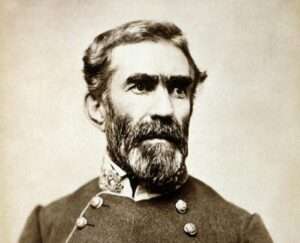
Confederate General Braxton Bragg (1817-76).


The Department of Defense recently changed the name of the Fort Bragg army base in North Carolina to Fort Liberty. In doing so, they shifted from a name honoring an incompetent Confederate general who betrayed the US to fight for slavery, to a name honoring America's most fundamental value. Seems like a no-brainer!

Nonetheless, GOP presidential candidates Ron DeSantis and Mike Pence have condemned the move and vowed to change the name back if they win the presidency. DeSantis called the name change "political correctness run amok." They could hardly be more wrong.

Who was Braxton Bragg? He was a slaveowner and a Confederate general, best known for commanding the largest Confederate army in the west in 1862-63. During his time as commander of the Army of Tennessee, he became known for incompetence, quarreling with key subordinates, and losing major battles. As one historian put it, Bragg "had done as much as any Confederate general to lose the war."

Bragg was deeply racist even by the very low standards of Confederate generals. For example, he opposed raising black troops late in the war, because he did not think blacks could be reliable soldiers. Many other Confederate generals differed, most notably Robert E. Lee (though Lee's support for this last-ditch measure should not be confused with opposition to slavery, an institution he was determined to preserve).

I suppose it could be argued that Bragg deserves recognition because his incompetent leadership made a major (unintentional) contribution to Union victory in the Civil War. That aside, a militarily incompetent traitor who fought for slavery is the last person whom a major US Army base should be named after.

The debate over the renaming of Fort Bragg is tied up with broader controversy over removing Confederate monuments and renaming sites named after Confederate leaders. I previously wrote about that issue here, here, and here. In those posts, I rebutted a variety of arguments against renaming and monument removal, such as claims that the Civil War wasn't really about slavery (the Confederates themselves said that was what they were fighting for!), concerns that removal and renaming amount to "erasure" of history, and slippery slope considerations.

I won't go over that ground again in detail here. But I will reiterate that I have no desire to "erase" Braxton Bragg and other Confederate leaders from history. Much the contrary. I just don't think we should honor them. Similarly, I don't think we should abjure honoring anyone who ever expressed racist sentiments, or even anyone who ever owned slaves. Some historical figures who committed such wrongs also did great good in other ways (most notably, many of the Founding Fathers). But we should not honor people whose role in waging a war for slavery was their only major claim to fame.

If he had not become a prominent Confederate general (even if an incompetent one), hardly anyone today would remember the name of Braxton Bragg. It's long past time we stopped honoring people like that. If recognizing that is "political correctness run amok," then we should let it run amok some more.

Guns

No Right to Lie About Current Indictments on Gun Purchase Form

|

From U.S. v. Holden, decided Friday by the Seventh Circuit (Judge Frank Easterbrook, joined by Judges Diane Wood and Doris Pryor); seems quite correct to me:

"Our legal system provides methods for challenging the Government's right to ask questions—lying is not one of them. A citizen may decline to answer the question, or answer it honestly, but he cannot with impunity knowingly and willfully answer with a falsehood." …

When John Holden sought to buy a firearm in August 2021, he had to complete ATF Form 4473. Among the questions was whether he was then "under indictment or information" for any crime punishable by imprisonment for a year or more. He answered "no," but that answer was false. Holden had been accused of battering a public safety official, in violation of Ind. Code § 35-42-2-1(c)(1), (e)(2).

In August 2022 Holden pleaded guilty to violating 18 U.S.C. § 922(a)(6), which makes it a crime

knowingly to make any false or fictitious oral or written statement … intended or likely to deceive [an] importer, manufacturer, dealer, or collector with respect to any fact material to the lawfulness of the sale or other disposition of [a] firearm or ammunition under the provisions of this chapter[.]

He sought to withdraw the plea in order to contend that 18 U.S.C. § 922(n), which makes it a crime to purchase or receive a firearm while under indictment for a felony, violates the Second Amendment as understood in New York State Rifle & Pistol Association, Inc. v. Bruen. The district judge granted this motion and dismissed the indictment, ruling that § 922(n) is invalid….

Read More

More