8/22/1998: On August 22, 1998, Barry Black led a Ku Klux Klan rally in Carroll County, Virginia. The Supreme Court considered the constitutionality of his prosecution for cross burning in Virginia v. Black (20030.

Mostly law professors | Sometimes contrarian | Often libertarian | Always independent | Est. 2002

8/22/1998: On August 22, 1998, Barry Black led a Ku Klux Klan rally in Carroll County, Virginia. The Supreme Court considered the constitutionality of his prosecution for cross burning in Virginia v. Black (20030.
What's on your mind?
From today's decision in Eknes-Tucker v. Marshall, by Judges Barbara Lagoa, joined by Judge Andrew Brasher and District Judge J.P. Boulee (N.D. Ga.):
[S]ection 4(a)(1)–(3) of Alabama's Vulnerable Child Compassion and Protection Act … states that "no person shall engage in or cause" the prescription or administration of puberty blocking medication or cross-sex hormone treatment to a minor "for the purpose of attempting to alter the appearance of or affirm the minor's perception of his or her gender or sex, if that appearance or perception is inconsistent with the minor's sex." Thus, section 4(a)(1)–(3) makes it a crime in the State of Alabama to take part in providing puberty blockers or cross-sex hormone treatment to a minor for purposes of treating a discordance between the minor's biological sex and sense of gender identity.
Shortly after the Act was signed into law, a group of transgender minors, their parents, and other concerned individuals challenged the Act's constitutionality, claiming that it violates the Due Process Clause and the Equal Protection Clause of the Fourteenth Amendment…. [W]e hold that the district court abused its discretion in issuing [a] preliminary injunction [against the Act] …. The plaintiffs have not presented any authority that supports the existence of a constitutional right to "treat [one's] children with transitioning medications subject to medically accepted standards." Nor have they shown that section 4(a)(1)–(3) classifies on the basis of sex or any other protected characteristic….
So holds a federal court.
From Country Mill Farms, LLC. V. City of East Lansing, decided today by Judge Paul Maloney (W.D. Mich.):
The City of East Lansing requires vendors for its Farmer's Market to comply with the City's public policy against discrimination. Country Mill Farms offers to rent a portion of its property [which is not connected with the Farmer's Market] for weddings. Country Mill Farms, however, will not rent the property for same-sex weddings. Because of this general business practice, the City denied Country Mills Farm's vendor application for the 2017 East Lansing Farmers Market. Country Mill Farms and its owner, Stephen Tennes, sued….
The court noted that "Defendant's 2017 decision to deny Plaintiffs' application substantially burdened Plaintiffs' free exercise of religion":
Defendant relied in the revised 2017 vendor guidelines to deny CMF's application to participate in the ELFM. The stated reason for the denial was the Plaintiffs' decision not to rent the venue for same-sex weddings. Plaintiffs' decision was motivated by religious beliefs. Plaintiffs were forced to choose between their religious beliefs and a government benefit for which CMF was eligible….
The court acknowledged that "neutral and generally applicable" policies don't violate the Free Exercise Clause, but held that the City's policy wasn't neutral and generally applicable because it contained discretionary exemptions:
Not ChatGPT's fault, but an illustration of how some pro se litigants are trying to use the technology.
In Berman v. Matteucci, a pro se prisoner sought to file a belated habeas petition, claiming that he had just learned about a possible legal basis for his appeal using ChatGPT. No, said Judge Michael Mosman (in an opinion released in July, but not posted on Westlaw), because the statute of limitations isn't tolled through newly discovered legal theories:
On December 8, 2010, Petitioner was found guilty except for insanity of one count of Arson in the First Degree, one count of Burglary in the Second Degree, and 18 counts of Reckless Burning. When he did not take a direct appeal, his conviction became final on December 8, 2011 and he had one year from that date in which to timely file this 28 U.S.C. § 2254 habeas corpus case.
In his Petition, Petitioner claims that the statute of limitations should not run from the time that his judgment became final pursuant to 28 U.S.C. § 2244(d)(1)(A), but from April 2023 when he discovered the factual predicate of his claims pursuant to 28 U.S.C. § 2244(d)(1)(D). Because his Petition fails to provide any specifics as to these newly discovered factual predicates, the Court advised Petitioner to elaborate on this allegation when responding to the show cause Order.
In his Response (#10) to the show cause Order, Petitioner states that in April 2023, an artificial intelligence chatbot provided him with insights that helped him discover his claims that the maximum sentencing policy for disabled individuals found guilty except for insanity violates several constitutional provisions. He asserts that prior to April 2023, artificial intelligence technology was not sufficiently advanced to impart this knowledge to him.
Petitioner's understanding of his legal claim is not a "factual predicate" for purposes of 28 U.S.C. § 2244(d)(1)(D), and he need not understand the legal significance of known facts for the AEDPA's one-year statute of limitations to commence. Hasan v. Galaza, 254 F.3d 1150, 1154 n.3 (9th Cir. 2000). His lack of legal knowledge also does not warrant equitable tolling. Rasberry v. Garcia, 448 F.3d 1150, 1154 (9th Cir. 2006). Accordingly, Petitioner has not established that the AEDPA's statute of limitations began running any later than the date his state-court judgment became final on January 7, 2011. Because the AEDPA's one-year statute of limitations expired long before Petitioner filed this case, his Petition for Writ of Habeas Corpus is summarily dismissed, with prejudice, on the basis that it is untimely.
It's an aside in In re: Vital Pharmaceutical by Bankruptcy Judge Peter Russin (released June 16, but I just came across it):
In preparing the introduction for this Memorandum Opinion, the Court prompted ChatGPT to prepare an essay about the evolution of social media and its impact on creating personas and marketing products. Along with the essay it prepared, ChatGPT included the following disclosure: "As an AI language model, I do not have access to the sources used for this essay as it was generated based on the knowledge stored in my database." It went on to say, however, that it "could provide some general sources related to the topic of social media and its impact on creating personas and marketing products." It listed five sources in all. As it turns out, none of the five seem to exist. For some of the sources, the author is a real person; for other sources, the journal is real. But all five of the citations seem made up, which the Court would not have known without having conducted its own research. The Court discarded the information entirely and did its own research the old-fashioned way. Well, not quite old fashioned; it's not like the Court used actual books or anything. But this is an important cautionary tale. Reliance on AI in its present development is fraught with ethical dangers.
Should be a familiar cautionary tale by now, but I thought it was worth noting again. (I was just testing Claude 2 by asking it for cases on pseudonymity in libel litigation, and it hallucinated some up for me, much as other AI programs have been known to do.)
"A law school shall adopt, publish, and adhere to written policies that encourage and support the free expression of ideas" that "[p]rotect the rights of faculty, students, and staff to communicate ideas that may be controversial or unpopular," and "[p]roscribe disruptive conduct that hinders free expression by preventing or substantially interfering with ... classes, meetings, interviews, ceremonies, and public events."
An American Bar Association Strategic Review Committee Memorandum, released Thursday, suggests a proposed new Standard 208 in the ABA's Standards for law schools:
[a] A law school shall adopt, publish, and adhere to written policies that protect academic freedom. A law school's academic freedom policies shall:
[1] Apply to all full and part-time faculty, as well as to all others teaching law school courses;
[2] Apply to conducting research, publishing scholarship, engaging in law school governance, participating in law related public service activities, and exercising teaching responsibilities, including those related to client representation in clinical programs; and
[3] Afford due process, such as notice, hearing, and appeal rights, to assess any claim of a violation of the academic freedom policies.
[b] A law school shall adopt, publish, and adhere to written policies that encourage and support the free expression of ideas. A law school's free expression policies must:
[1] Protect the rights of faculty, students, and staff to communicate ideas that may be controversial or unpopular, including through robust debate, demonstrations, or protests; and
[2] Proscribe disruptive conduct that hinders free expression by preventing or substantially interfering with the carrying out of law school functions or approved activities, such as classes, meetings, interviews, ceremonies, and public events;
[c] Consistent with this Standard, a law school may:
[1] Restrict expression that violates the law, that falsely defames a specific individual, that constitutes a genuine threat or harassment, or that unjustifiably invades substantial privacy or confidentiality interests.
[2] Reasonably regulate the time, place, and manner of expression.
[3] Adopt policies on academic freedom and freedom of expression that reflect the law school's mission, including a religious mission, so long as such policies are not in violation of the law and are clearly disclosed in writing to all faculty, students, and staff prior to their affiliation with the law school.
Interpretation 208-1
Standard 208 applies to both public and private law schools.
Interpretation 208-2
A law school may, when appropriate, differentiate among students, faculty, and staff in its policies on freedom of expression.
Interpretation 208-3
Standard 208(a) does not preclude a law school from identifying the courses that will be taught, requiring courses to cover particular content, or requiring faculty, students, or staff to clarify in appropriate circumstances that their views are not statements by or on behalf of the law school.
Interpretation 208-4
This Standard does not prevent a law school from applying disciplinary action for conduct identified in Standard 208(b)(2).
Interpretation 208-5
Subsection (c) recognizes that law schools may restrict speech consistent with the First Amendment of the United States Constitution.
Interpretation 208-6
Effective legal education and the development of the law require the free, robust, and uninhibited sharing of ideas reflecting a wide range of viewpoints. Becoming an effective advocate or counselor requires learning how to conduct candid and civil discourse in respectful disagreement with others while advancing reasoned and evidence-based arguments. Concerns about civility and mutual respect, however, do not justify barring discussion of ideas because they are controversial or even offensive or disagreeable to some.
Note that the existing ABA Standard 405 briefly discusses academic freedom ("A law school shall have an established and announced policy with respect to academic freedom and tenure of which Appendix 1 herein is an example but is not obligatory"), but this proposal would elaborate on that, and would also add the material on freedom of expression. Thanks to James Creigh for the pointer.

From Thaler v. Perlmutter, decided Friday by Judge Beryl Howell (D.D.C.):
Plaintiff Stephen Thaler owns a computer system he calls the "Creativity Machine," which he claims generated a piece of visual art of its own accord. He sought to register the work for a copyright, listing the computer system as the author and explaining that the copyright should transfer to him as the owner of the machine. {In his application, he identified the author as the Creativity Machine, and explained the work had been "autonomously created by a computer algorithm running on a machine," but that plaintiff sought to claim the copyright of the "computer-generated work" himself "as a work-for-hire to the owner of the Creativity Machine."}The Copyright Office denied the application on the grounds that the work lacked human authorship, a prerequisite for a valid copyright to issue, in the view of the Register of Copyrights. Plaintiff challenged that denial …..
Thaler sought review of the Copyright Office denial, but the court held that Thaler indeed couldn't be protected given his claim that the work was "autonomously created" by the program. Authorship is for humans, the court held (though corporations, government entities, and the like can own copyrights because they were created by the groups' human employees).
Yet the court reserved the question whether the user of an AI program could own the copyright in the output because the user contributed enough to the output in the form of sufficiently detailed prompts and other items that would guide the output:
From D.C. v. Casa Ruby, Inc., decided May 1 by D.C. trial judge Danya A. Dayson, but just posted on Westlaw:
Therefore, specifically, as to each Third-Party board member Defendant, there must be factual allegations sufficient to support an inference or conclusion that the board member either intentionally, rather than negligently, inflicted harm on Casa Ruby, that they voted for or assented to a distribution made in violation of DC Code 29-406.33, that a board member intentionally violated a criminal law or that the board member received some amount of money to which they were not entitled.
{[Footnote accompanying the "they":] In this Order, the pronoun "they" is used as a singular pronoun to refer to a hypothetical person, consistent with prevailing practices in style guides. See, e.g., MLA Handbook § 3.5 (9th ed. 2021) ("[T]hey has gained acceptance as a generic, third-person singular pronoun used to refer to hypothetical or anonymous people."); APA Publication Manual § 4.18 (7th ed. 2020) (advising writers to "use 'they' as a generic third-person singular pronoun to refer to a person whose gender is unknown or irrelevant to the context of the usage."); The Associated Press Stylebook, they, them, their (55th ed. 2020) ("Arguments for using they/them as a singular sometimes arise with an indefinite pronoun (anyone, everyone, someone) or unspecified/unknown gender (a person, the victim, the winner)."); The Chicago Manual of Style ¶ 5.48 (17th ed. 2017) (noting that "because he is no longer universally accepted as a generic pronoun referring to a person of unspecified gender, people commonly (in speech and in formal writing) substitute the third-person-plural pronouns they, them, their, and themselves (or the nonstandard singular themself.))".}
This doesn't speak to the more modern pronoun dispute: the use of "they" to refer to named people, whose gender is known (whether or not they themselves prefer to be labeled "they"). It's also just one judge's opinion; I expect many other judges prefer to avoid this, and many others just use singular "they" without saying anything about it.
As for me, I still urge my students to avoid this, unless they have reason to think the judges who will be reading the brief are fine with it. Here's what I wrote about it two years ago:
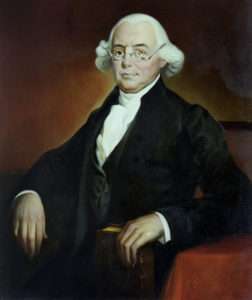
8/21/1798: Justice James Wilson dies.
(UPDATE: I have been rightly taken to task for not noting the earlier court cases in which either whites or non-black Americans were the group getting preferences. I of course am aware of that phenomenon and its significance. I happen to be working on an article about how courts dealt with (or ignored) the issue of racial classification in affirmative action cases, i.e., whether they addressed whether the classifications themselves were 'narrowly tailored' as opposed to other legal and constitutional objections to affirmative action preferences, and my post was created in that context. But my bad for not specifying. Also, to be clear, my point is not to criticize African Americans or any other group that received the preferences. Rather, just to show how the groups deemed entitled to such preferences has changed over time, because I think few people are aware of it and it's interesting.)
Looking at the underlying facts in major cases in the Supreme Court and circuit court cases, we see that Black Americans have always been eligible, the Mexican American classification expanded into all Hispanics, Asian Americans and subgroups thereof were initially eligible but later were considered "over-represented" and therefore at best ineligible for preferences, if not subject to higher standards than white applicants.
Defunis v. Odegaard: Black Americans, Chicanos, American Indians, and Filipino. Minority origin must be "dominant."
Regents of the University of California v. Bakke: Black Americans, Mexican Americans, American Indians, and Asian Americans.
Podberesky v. Kirwan: Black Americans (scholarship rather than admissions).
Hopwood v. Texas: Black Americans and Mexican Americans.
Grutter v. Bollinger: (1) African Americans, Hispanics and Native Americans (according to the defendant)
(2) African Americans, Mexican Americans, Mainland Puerto Ricans, and Native Americans (according to the district court's findings)
Fisher v. University of Texas: African Americans and Hispanics.
SFFA v. Harvard: African Americans, Hispanics, and Native Americans.
We're looking for lateral and entry-level candidates for subjects ranging from Constitutional Law to Intellectual Property
My home institution, SMU Dedman School of Law, is seeking to hire several tenured or tenure-track professors this year. The subject areas include: Constitutional Law; Natural Resources/Energy Law; Bankruptcy, Commercial Law, or International Business Law; Labor and Employment Law; and Intellectual Property. I'm on the hiring committee, which is actively considering candidates.
Here is the formal announcement, including links for applying:
SMU DEDMAN SCHOOL OF LAW is seeking applications from qualified persons for tenure- track faculty positions to begin Fall of 2024. We are seeking candidates with expertise in Constitutional Law; Natural Resources/Energy Law; Bankruptcy, Commercial Law, or International Business Law; Labor and Employment Law; and Intellectual Property. We will consider both experienced and beginning teachers with excellent credentials and scholarly distinction or promise. Candidates must hold a Juris Doctor (J.D.) degree. To ensure full consideration for the positions, applications must be received by October 1, 2023, but the committee will continue to accept applications until the positions are filled.
Applications should be submitted in Interfolio. Once you upload your information for one position, you can easily apply to multiple positions. Below are the Interfolio links to apply:
Constitutional Law (Position #6353)
http://apply.interfolio.com/127528
Natural Resources/Energy Law (Position #52842)
http://apply.interfolio.com/127529
Bankruptcy, Commercial Law, or International Business Law (Position #50369)
http://apply.interfolio.com/127530
Labor and Employment Law (Position #53424)
http://apply.interfolio.com/128119
Intellectual Property (Position #50642)
http://apply.interfolio.com/128121
Southern Methodist University (SMU) will not discriminate in any employment practice, education program, education activity, or admissions on the basis of race, color, religion, national origin, sex, age, disability, genetic information, or veteran status. SMU's commitment to equal opportunity includes nondiscrimination on the basis of sexual orientation and gender identity and expression. The Executive Director for Access and Equity/Title IX Coordinator is designated to handle inquiries regarding the nondiscrimination policies, including the prohibition of sex discrimination under Title IX. The Executive Director/Title IX Coordinator may be reached at the Perkins Administration Building, Room 204, 6425 Boaz Lane, Dallas, TX 75205, 214-768-3601, accessequity@smu.edu. Inquiries regarding the application of Title IX may also be directed to the Assistant Secretary for Civil Rights of the U.S. Department of Education. Hiring is contingent upon the satisfactory completion of a background check.
So a federal court held Thursday.
From Van Loon v. Department of Treasury, decided Thursday by Judge Robert Pitman (W.D. Tex.):
This case is about Tornado Cash—but the parties disagree on how to characterize Tornado Cash. Plaintiffs contend that Tornado Cash is a decentralized, open-source software project comprised of a subset of smart contracts, or "pools," on the Ethereum blockchain. In contrast, the government argues that Tornado Cash is an organization that runs a cryptocurrency mixing service. It is undisputed that the Department of Treasury's Office of Foreign Assets Control added Tornado Cash to the Specially Designated Nationals and Blocked Persons ("SDN") List. Plaintiffs argue that the designation exceeds the Department's statutory authority over foreign nationals' interests in property and violates the Free Speech Clause….
According to the government, cryptocurrency mixing services, known as "mixers" or "tumblers," are designed to obscure the source or owner of particular cryptocurrency units, thereby allowing users to remain anonymous. A mixer customer typically directs mixer software to send a certain number of cryptocurrency units to a specific address that is controlled by the mixer, for a fee. The mixer then takes the sender's cryptocurrency units and pools them together with the cryptocurrency of other users (i.e., "mixes" the cryptocurrency) before delivering the specified number of units to the requested destination. This renders it difficult to determine the link between a sender and recipient wallet account….
The International Emergency Economic Powers Act ("IEEPA") authorizes the President to declare national emergencies "to deal with any unusual and extraordinary threat, which has its source in whole or substantial part outside the United States, to the national security, foreign policy, or economy of the United States." Once a national emergency is declared, IEEPA authorizes the President to:
[R]egulate, direct and compel, nullify, void, prevent or prohibit, any … transfer … of, or dealing in, or exercising any right, power, or privilege with respect to, or transactions involving, any property in which any foreign country or a national thereof has any interest[,] by any person, or with respect to any property, subject to the jurisdiction of the United States[.]
Presidents have historically used this authority to impose economic sanctions on many countries, individuals, and entities, and those who provide support for malicious cyber-enabled activities…. On August 8, 2022, OFAC designated Tornado Cash pursuant to a [Presidential executive order]. The accompanying press release asserted that Tornado Cash "indiscriminately facilitates anonymous transactions by obfuscating their origin, destination, and counterparties, with no attempt to determine their origin." OFAC noted that illicit actors often use mixing services like Tornado Cash to launder funds. The press release claims that Tornado Cash has laundered hundreds of millions of dollars' worth of virtual currency since its creation in 2019, including hundreds of millions of dollars for the Lazarus Group, a North Korean state-sponsored hacking group. [Further factual details omitted. -EV] …
The court held that Tornado Cash was an entity that may be designated under the IEEPA:
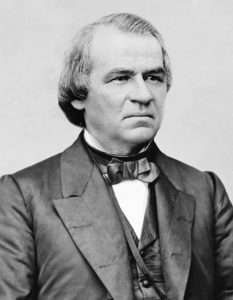
8/20/1866: President Andrew Johnson proclaims an "end to insurrection in the United States."
From Thursday's story in the Sacramento Bee (Sam Stanton) (link added):
More than two years after a Sacramento-area businesswoman was falsely accused of posting racist and hateful comments on the Facebook page for Sacramento's Black Lives Matter chapter, her lawsuit against BLM Sacramento has been settled with the group's founder issuing a public apology….
"On behalf of myself and Black Lives Matter Sacramento, I deeply apologize for my reckless behavior and the harm that we caused Ms. Crowley, her family and her business," Faison said in a 98-second video posted on Facebook.
Faison acknowledged in the video that she should have removed her post about Crowley after Crowley contacted her in 2021 and assured her the messages had not come from her and that she did not hold racist views.
"Nonetheless, I posted on the Facebook website that I had verified Ms. Crowley's identity," Faison said. "I posted Ms. Crowley's city of residence and work and I asked the public to make Ms. Crowley famous.
"Terrible consequences for Ms. Crowley followed, including death threats. Black Lives Matter Sacramento and I were wrong.
"We should have taken the Facebook post down after Ms. Crowley explained to me that she had not sent them."
Here's my post from March 2022 about the federal court decision that allowed the case to go forward:
Langford had been in the news for joining a sorority, which has caused a good deal of controversy at the University of Wyoming.
From Schmidt v. Siedel, decided yesterday by Judge Nancy Freudenthal (D. Wyo.) (see also the coverage in Cowboy State Daily (Clair McFarland), and this post about a pseudonymity issue in a lawsuit stemming from the sorority controversy):
Schmidt is an elder at the Laramie Faith Community Church…. He has reserved a table in the UW Union breezeway on a regular basis for the past 17 years. The UW Union allows campus groups and various outside organizations to utilize breezeway tables to communicate with students. The breezeway tables provide access to a high degree of student pedestrian traffic. Schmidt uses his breezeway table to display various DVDs and books. He also places on his table a Velcro-backed sign with plastic lettering to display different messages.
According to UW Officials, they have over the years warned Schmidt to stay behind his breezeway table and not engage in a confrontational manner towards passersby. The University alleges it has received and documented complaints from students that Schmidt "got in people's faces" while trying to talk to them and chased after students who refused to speak with him. Schmidt states that he was not aware of any student complaints to University staff about him and received no warning from the University regarding student complaints.
In September of 2022, a UW student named Artemis Langford joined a UW sorority. Langford was born a biological male but identifies as female. In October, the UW university newspaper, the Branding Iron, ran a story about Langford joining the sorority, and included quotes from Langford. Other publications, including the Cowboy State Daily, Washington Examiner, and National Review, ran articles about Langford as the first openly transgender student in UW history to join a sorority.
Schmidt disagrees with the propriety of transgender students joining sororities, and on December 2, 2022, he placed a sign at his breezeway table in the Union stating, "God created male and female and Artemis Langford is a male." Various students gathered in front of his table in an attempt to block others, and Langford, from seeing Schmidt's sign. {Artemis Langford is both a UW student and an employee in the Wyoming Union.} These students engaged in tense debate with Schmidt.
Chalk, meme stocks, and a dog in peril.
New on the Short Circuit podcast: Searching for iCloud data, guns, and El Dorado. Read More
Celebrate your independence with a subscription to Reason magazine, your most trusted source of honest, insightful news and analysis.