In Campbell v. Columbia Univ., decided Friday by Judge Vernon S. Broderick (S.D.N.Y.), Campbell, who had been admitted to Columbia's Negotiation and Conflict Resolution program, sued Columbia for intentional infliction of emotional distress, based on Columbia's denying her an "Impact HBCU Fellowship." "After being denied the fellowship, Campbell reported depression and hormonal imbalances that ultimately led to a trip to the emergency room." Campbell also ended up alleging "a far-reaching conspiracy involving collusion between Columbia and numerous figures, including high-level officials in the state government of Pennsylvania. The essence of these claims is that Columbia bribed the governor of Pennsylvania and a range of other officials to target Campbell and interfere with this lawsuit."
The court granted Columbia's motion to dismiss:
Taking this record together and construing it liberally [because plaintiff is representing herself] reveals two causes of action. The first cause of action is the intentional infliction of emotional distress claim, based on Columbia's failure to award Campbell a scholarship through the Impact HBCU Fellowship, or any other grant or work study-based support to allow her to attend Columbia. Campbell alleges that this occurred because "Columbia University wanted [her] to die." She further alleges that she "suffered from continual blood loss, anemia, anxiety, depression, shakes, shills, vomiting, body aches, nightmares, [and] hot flashes, due to her trauma of not being selected for the fellowship, being denied financial aid, and being ignored by [Columbia personnel]."
Taking all of these as true for the purposes of Columbia's motion to dismiss, Campbell does not plead a claim for intentional infliction of emotional distress. The four elements of a claim of intentional infliction of emotional distress are "(1) extreme and outrageous conduct, (2) intent to cause severe emotional distress, (3) a causal connection between the conduct and the injury, and (4) severe emotional distress." Columbia challenges only the first two elements (extreme and outrageous conduct and intent to cause the same), and so does not suggest, taking Campbell's allegations as true, that she has failed to allege causation or severe emotional distress.
An unincorporated association, the Concerned Jewish Parents and Teachers of Los Angeles, along with six individuals using the pseudonyms Jane or John Doe ("Doe plaintiffs") initiated this action …. [Their] claims revolve around the Liberated Ethnic Studies Model Curriculum ("LESMC"), which plaintiffs allege is taught in Los Angeles public schools. According to plaintiffs, the LESMC "denounces capitalism, the nuclear family, and the territorial integrity of the lower 48 states of the United States[,]" and is designed "to expunge the idea of Zionism, and the legitimacy of the existence of the State of Israel, from the public square[.]" … With the instant Motion, the Doe plaintiffs seek leave to proceed anonymously….
A party's "use of fictitious names runs afoul of the public's common law right of access to judicial proceedings … and Rule 10(a)'s command that the title of every complaint 'include the names of all the parties[.]'" Nonetheless, the Ninth Circuit has "permitted parties to proceed anonymously when special circumstances justify secrecy." In particular, courts may "allow parties to use pseudonyms in the 'unusual case' when nondisclosure of the party's identity 'is necessary … to protect a person from harassment, injury, ridicule or personal embarrassment.'" See also Roe v. Skillz, Inc. (9th Cir. 2021) ("[T]his Court has made clear that use of a pseudonym should only be permitted occasionally and in 'unusual' cases."). Given the "presumption that parties' identities are public information, anonymity is only proper under special circumstances when the party's need for anonymity outweighs prejudice to the opposing party and the public's interest in knowing the party's identity." …
As an initial matter, the Doe plaintiffs have not established that they personally fear harm of any kind. None of them filed any declarations in support of the Motion. Nor does the Declaration of Lori Lowenthal Marcus, counsel for plaintiffs, provide any basis, let alone an admissible basis, for the court to credit the Doe plaintiffs' purported fears. The Marcus Decl. states that "[e]ach of the persons who is an individual Plaintiff in this case … is willing to serve as a plaintiff only if they are allowed to proceed anonymously[,]"and recounts three examples of non-plaintiffs who are alleged to have suffered harm as a result of their beliefs. But a desire to proceed anonymously is not tantamount to a fear of severe harm; nor will the court presume the existence of such a fear simply from a party's desire to use a pseudonym. Similarly, plaintiffs offer no basis for the court to impute the alleged experiences of non-plaintiffs to the Doe plaintiffs.
In Hansen v. Volkov, decided Monday by the California Court of Appeal, in an opinion by Justice Dennis Perluss, joined by Justices John Segal and Gonzalo Martinez, the parties were opposing counsel in a divorce case:
Following an incident at Hansen's office relating to the canceled deposition of Volkov's client, … Hansen obtained a three-year civil harassment restraining order pursuant to Code of Civil Procedure section 527.6, protecting her, as well as her paralegal and office receptionist, from further harassment by Volkov and authorizing Volkov in connection with his representation of [his client] to contact Hansen only by United States mail or email and only for purposes of service of legal papers.
The alleged harassment consisted of "litigation-related emails and his appearance at Hansen's office for his client's deposition," and the appellate court held this wasn't enough to justify the order. First, as to the emails:
… [T]he trial court expressly found the multiple emails sent by Volkov after Hansen had notified him that [the] deposition was canceled were "argumentative and self-serving and entirely unnecessary." Perhaps they were, and maybe also seriously annoying. But they did not contain any threats of violence (credible or otherwise). As such, Volkov's emails were constitutionally protected litigation activity…. [UPDATE 10/4/23: I should have also included this sentence:] [L]itigation activities, including filing and prosecution of a lawsuit by an attorney representing a client, constitute acts in furtherance of a person's right of petition or free speech ….
Because the emails were constitutionally protected, it was error for the court to conclude they were properly considered part of a course of conduct of harassment. (§ 527.6, subd. (b)(1) ["[c]onstitutionally protected activity is not included within the meaning of 'course of conduct'"]; see Thomas v. Quintero (Cal. App. 2005) [even if petitioner had been seriously alarmed, annoyed or harassed by respondent's conduct—a public demonstration at petitioner's church protesting petitioner's eviction of respondent—there was no showing that respondent's injurious actions were part of a "course of conduct" within the meaning of section 527.6 because the conduct constituted a form of protected speech].)
After the fall of the Second Temple in the first century, Judaism gradually became a lawyerocracy, a society ruled by lawyers. Jews call these lawyers "rabbis," but think about the training rabbis traditionally receive–it's primarily many years of law school, learning the Talmud and other sources of Jewish law until one becomes sufficiently expert to be a legal advisor and judge.
Jewish lawyerocracy helped keep the Jewish people united during their dispersion. One could travel from one Jewish community to a far-flung one hundreds of miles away, and be assured that others would accept you as a fellow Jew, and that the laws and prayers would be quite similar.
But lawyerocracy also caused problems. For one thing, lawyers are trained to see every problem as a legal problem, and to therefore to address problems with more and more law. Thus, from relatively modest beginnings, halacha [Jewish law] gradually took over every aspect of daily life.
To be sure, the rabbis developed doctrines to mitigate over-legalization, such as the precept that laws that a community has longed ceased to follow are no longer laws. But such precepts were rarely followed in practice. Instead, law was law, custom became law, and new laws were created to help ensure that the existing laws weren't violated. For many Jews, law became an onerous burden rather than a path to connecting with G-d.
Another problem was that rabbis, i.e., lawyers, often became the community's leaders and rulers. From Sa'adia Gaon serving as Exilarch in the Eastern Holy Roman Empire to the Council of the Four Lands in eighteenth century Eastern Europe, rabbis frequently held secular power as well as religious authority. And as Lord Acton noted, power corrupts, and absolute power corrupts absolutely.
Over the centuries, the power accrued by the rabbis was subject to explicit and implicit criticism by various dissenting movements and individuals. The Karaites believed the rabbis had strayed too far from the written Torah. Kabbalists implicitly found Jewish legalism inadequate to explain the precarious state of the Jewish people, and the chaotic state of the world. Various messianic movements sought immediate redemption, with overthrowing the yoke of the law often high on their agendas. Early Hasidism revolted against the notion that being learned in the Talmud, something unattainable for many poor, rural Jews, was a higher value than a spiritual connection to G-d. The Reform movement sought to reorient Judaism around ethical monotheism and prophetic values, correctly predicting that the lawyerocracy would largely fail to win Jews' allegiance once they integrated into Christian societies. Socialist Jews held public Yom Kippur feasts to mock pious adherence to the law at the expense of material concerns.
And of course, Zionism was itself a dramatic revolt against the authority of the rabbis, insisting that Jews take responsibility for their own fates and restore Jewish sovereignty in Eretz Yisrael. Zionists utterly rejected the accepted view of the lawyerocracy that Jews needed to wait for the Messiah to be redeemed, and should obediently obey the law in the meantime.
Thus, the irony. Zionism, especially in its dominant secular variety, was the culmination of centuries of percolating distrust of the notion that the law is Jews' salvation. And yet the notion that law matters above all, and lawyers can be entrusted with the fate of the Jewish people, obviously has persisted in the cultural DNA of Israeli Jews.
The Israeli Supreme Court has accrued to itself more power than any other Supreme Court in the world. Even more striking, the attorney general has power to by herself undermine almost any Israeli law or policy, a power that is shocking to those of us used to the American concept of separation of powers. And both the Supreme Court and the Attorney General have seized these powers based on only the flimsiest of rationales.
Hence, the irony referred to in the title of this blog post. Secular, left-leaning Zionists have seen their power erode for decades. The peace process is on life support. State-run industries have been replaced by economic liberalization. Rabbinical authority governs family and conversion law with ever-increasing stringency. Religious Zionists have gradually replaced secular kibbutzniks in the military elite. Shockingly illiberal parties are now routinely serving in government.
None of those developments managed to galvanize the Zionist left. Instead, relatively minor proposed limits to the authority of the attorney general and the supreme court, which would still have powers unheard of in most of the democratic world, has led to months of mass demonstrations and general social turmoil.
Don't get me wrong. I think some of the proposed reforms are sensible, but many are unwise. Israel could have developed a system of checks and balances that did not rely so heavily on the judiciary, but it did not. Therefore, significant legal reform needs to be accompanied by other reforms that create new checks on the Knesset and incumbent governments.
That said, though, the irony is palpable. The faith that the Zionist left has in the judiciary and the attorney general is faith in a modern form of lawyerocracy. Veneration of the law and the lawyers who interpret and enforce it have more than a bit in common with traditional Jewish veneration of halacha and leading rabbis. It's ultimately unsurprising that Israelis, the descendants of people who lived under lawyerocarcy for centuries, would naturally look to lawyers to guide society.
So as an American Jewish law professor, and a fellow secularish Zionist, allow me to point out the obvious. The rule of law is important. Fetishization of the law, and faith in lawyers, be they learned graduates of yeshivas or secularists with degree from Hebrew University and Oxford, is problematic.
Despite being a young, successful "Startup Nation," Israel faces many challenges, including its own internal demons and divisions. Law and lawyers have an important role to play. But Jewish history teaches us that there is such a thing as giving lawyers too much power, and faith in the wisdom of lawyers is often misplaced. In short, whatever problems you think Israel faces, don't expect lawyers, even those serving on the Israeli Supreme Court, to ultimately save the day.
Here's a paragraph from a soon-to-be published chapter on the "equity will not" doctrines--doctrines like equity will not enjoin a crime, equity will not enjoin a criminal proceeding, equity will not punish, equity will not enjoin a libel, and equity will not protect a political right.
Equity has always been controversial. In the United States, it was controversial at the Founding, at the time of the labor injunctions, at the time of the civil rights structural injunctions, and now at the time of national injunctions. Precisely because of its extraordinary powers, and its greater reliance on discretionary considerations, equity has tended to be the most pro- and the most anti-Bickelian part of the common law systems. Equity is where American judges are most likely to overshoot, risking blowback from political actors and institutions, and it is also where those judges have tended to use the readily available brakes to avoid overshooting.
MSNBC recently aired a debate between Prof. Michael McConnell (Stanford) and myself on the question of whether Donald Trump can be disqualified from holding public office in the future, under Section 3 of the 14th Amendment. We appeared on the Mehdi Hasan show. Here is the video:
Our debate begins about 4-5 minutes in.
Thanks to Mehdi Hasan for inviting us, and to Prof. McConnell for his thoughtful contribution.
I covered many of the issues we discussed in greater detail in a Lawfare article, and in this VC post. The Lawfare article was, in part, a response to this post by McConnell.
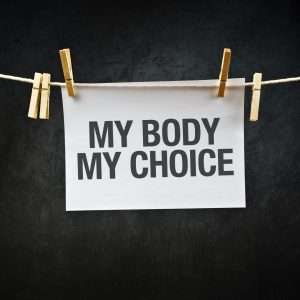
I recently did a podcast on the "My Body, My Choice" principle, as part of the University of Virginia "Taboo Trades" podcast series, run by UVA law Professor Kim Krawiec. I took questions on a variety of topics from Prof. Krawiec and a group of UVA law students. They raised many insightful points. Listeners can judge my answers for themselves. The podcast audio is available here.
Here is the description:
On this episode, George Mason Law's Ilya Somin joins me and UVA Law students Joseph Camano ('24) and Dennis Ting ('24) to discuss the full implications of "My Body, My Choice." Somin argues that the principle has implications that go far beyond abortion (including paying kidney donors, and abolishing the draft and mandatory jury service) and that both liberals and conservatives are inconsistent in their application.
Prof. Krawiec helpfully included a list of links to relevant writings by the two of us, that address issues raised in the podcast:
I particularly recommend Krawiec's excellent article (coauthored with Philip J. Cook) arguing that, if we are willing to pay people to play dangerous sports, such as football, we should also legalize organ markets. I have made similar points myself, but not in as much depth and detail.
There is an ongoing debate over whether Donald Trump should be disqualifed from holding public office in the future, under Section 3 of the 14th Amendment, which states that "No person" can hold any state or federal office if they had previously been "a member of Congress, or… an officer of the United States" or a state official, and then "engaged in insurrection or rebellion against the same, or given aid or comfort to the enemies thereof." Whatever other issues the Trump case raises, it seems obvious that the presidency is an "office…under the United States," and therefore that Trump can be disqualified, so long as he met the other requirements of Section 3. However, a number of prominent commentators and legal scholars claim otherwise, including former attorney general Michael Mukasey, Josh Blackman and Seth Barrett Tillman, and - most recently - Steve Calabresi.
Advocates of the claim that Trump is exempt from Section 3 don't deny that the presidency is an "office." They can't because the Constitution refers to it as such multiple times! Rather, they claim it is not an office "of the United States."
While these critics have impressive credentials, their argument is badly flawed. It has no basis in the original meaning of Section 3, and it leads to absurd conclusions.
The absurdity is clear. If the presidency is not covered by Section 3, that means a president who engaged in insurrection or aided the "enemies of the United States" is not disqualified from future office-holding even though almost any other federal official who did the same thing would be. Surely an insurrectionist who held the highest office in the land is much more of a menace to the republic than one who was merely a low-level federal bureaucrat. It makes no sense to disqualify the latter, but not the former. Indeed, it might be more logical to penalize insurrectionists who held high office more severely than those who held lower ones.
Similar absurdity arises if we apply this theory to the Impeachment Clause of Article I, which states that "Judgment in Cases of Impeachment shall not extend further than to removal from Office, and disqualification to hold and enjoy any Office of honor, Trust or Profit under the United States" (emphasis added). As Blackman and Tillman have previously argued, their theory leads to the conclusion that the Senate can bar an impeached and convicted office-holder from lower federal executive offices, but not the presidency. Again, this is absurd. If such a person cannot be safely trusted to be a low-level bureaucrat, he surely cannot be trusted with the vastly greater power of the presidency.
Some try to square this circle by arguing the presidency is exempted because it is an elected office. But Section 3 specifically bars members of Congress, who are also elected. Given the Founding Fathers' deep suspicion of pure democracy, it is unlikely they would exempt the presidency from post-impeachment disqualification for that reason. And such reasoning is even less likely on the part of the framers of the Fourteenth Amendment. A big part of the reason for enacting Section 3 in the first place was the fear that southern white voters in ex-Confederate states would be motivated to elect ex-Confederate insurrectionists.
Both Section 3 and post-impeachment disqualification are limitations on democracy, intended to prevent voters from choosing candidates who are a threat to the constitutional order, and ultimately to liberal democracy itself. In this respect, they are similar to other democracy-protecting limitations on democracy included in the Constitution and in the laws of other liberal democratic states.
Given the absurd consequences of the idea that the president is exempt from Section 3, proponents of that theory bear a very heavy burden of proof. Longstanding rules of legal interpretation - and common sense - disfavor absurd results, at least if there is a defensible non-absurd interpretation.
And here there pretty obviously is: the president is an "officer" no less than other executive branch officials, and therefore can be disqualified under Section 3. Similarly, impeached and convicted officers - including the president - can be barred by the Senate from holding the presidency in the future (as well as other offices).
This approach is also supported by the original meaning of Section 3. As Steve Calabresi admits, and Mark Graber shows in detail (here and here), the congressional drafters of the 14th Amendment routinely spoke of the presidency as an officer of or "under" the United States and gave no indication it was somehow exempt. Will Baude and Michael Stokes Paulsen provide additional evidence to this effect in their important article on Trump and Section 3, which jump-started this entire debate.
Standard originalist theory holds that the relevant original meaning is that understood at the time the provision in question was enacted. Even if, as Calabresi and others argue, the understanding of "under" was different in 1787, at the time the original Constitution was enacted, that cannot trump (or Trump!) contemporaneous evidence from the time of the enactment of Section 3 eighty years later.
Language usage changes over time, and the relevant usage (at least for originalists) is that at the time of enactment, not some earlier period. For example, the Guarantee Clause of Article IV refers to protecting states against "domestic violence." In the usage of the time that means protecting them against internal rebellion, not the kind of abuse in the household that "domestic violence" refers to today. But if, in 2023, we were to enact a constitutional amendment requiring states to combat "domestic violence," we would use the modern definition, unless there were strong evidence that the framers and ratifiers thought they were enacting the archaic one.
Perhaps things are different if the term "officer of the United States" is a legal term of art. Sometimes legal language assigns different meanings to words than ordinary language. But there is no evidence that, in 1868, "officer of the United States" was such a generally understood legal term of art. The drafters of the Amendment - many of them lawyers themselves - certainly did not see it that way.
If they did intend to exclude an insurrectionist president from the scope of Section 3, such a momentous - and ridiculous - distinction would surely have been noted and debated. The absence of any such debate is further indication that no such exception was made. It's a proverbial dog that didn't bark.
If we believe, as many originalists do, that constitutional text should be interpreted as understood by ordinary readers, rather than legal experts, the case against exclusion is even more overwhelming. No reasonable ordinary person would assume that the presidency is not an "office" included in the text of Section 3, or that an insurrectionist president should be treated more leniently than a low-level flunky who did the same thing.
Defenders of the exclusion theory mostly rely on inferences from the text of the 1787 Constitution to make their case. For reasons already noted, those inferences can't trump the text and original meaning of 1868. But even on their own terms, they are inadequate.
Calabresi summarizes one such inference:
The Commission Clause of Article II, Section 3 imposes a duty on the President: "he "shall" i.e. must "Commission all the Officers of the United States." (emphasis added). This is done by the President signing a document called a commission formally appointing executive and judicial branch officials to their offices. No President has ever, either before or after, the ratification of the Fourteenth Amendment commissioned himself. Why? Because the President is not technically "an officer of the United States."
My answer is that the President does indeed "commission" himself. He does so by taking the oath of office required by the Constitution. Without that, he cannot take office, just like lower-level officers cannot do so without a commission issued by the president. The forms are different. But the substance is similar. Alternatively, we can plausibly interpret the Commission Clause as only applying to those officers whose positions are not already otherwise authorized by the Constitution. This strains the text; but it is less absurd than excluding the president from disqualification.
Calabresi also cites the Appointments Clause of Article II:
[T]he Appointments Clause of Article II: "[The President] shall nominate, and by and with the Advice and Consent of the Senate, shall appoint Ambassadors, other public Ministers and Consuls, Judges of the supreme Court, and all other Officers of the United States, whose Appointments are not herein otherwise provided for, and which shall be established by Law:". Here again the phrase: "Officer of the United States" is used to describe appointed persons and not elected persons like the Members of Congress or the President. The Appointments Clause thus bolsters the implication of the Commissions Clause. Presidents are not, technically, Officers of the United States" as that phrase is used as a legal term of art in the Constitution.
Here, we have an even more obvious response. The clause only covers those officers "whose Appointments are not herein otherwise provided for" (emphasis added). That of the president, of course, is provided for in the constitutional provisions under which he is chosen by the electoral college.
I don' think election and appointment are mutually exclusive terms here. Rather, election is one mechanism by which a person can be appointed. That's especially true if the election in question was not (as under the original Constitution) intended to be by the people as a whole, but by a small group of elites - the electoral college (chosen by state legislatures in ways that at that time were not required to be democratic). The Framers (wrongly, it turned out) expected the electors to exercise discretion rather than simply defer to the voters in their states.
"Appointment" by means of a vote conducted by a small elite group is a concept that makes linguistic sense. Indeed, we academics routinely use the term in that way when we refer to the "appointment" of new faculty members by a vote of the current faculty.
Finally, there is the Impeachment Clause:
It provides that "The President, Vice President and all civil Officers of the United States, shall be removed from Office on Impeachment for, and Conviction of, Treason, Bribery, or other high Crimes and Misdemeanors." Note that the President and Vice President are mentioned –alone and separately from – "all civil Officers of the United States."
Here again there is a compelling and simple response. The president and vice president are not purely "civil" officers. The president is also a military officer: the Constitution makes him commander-in-chief of the armed forces! The VP is less clearly military, but he succeeds to the military authority of the president if the latter dies, resigns, or is removed from office. Thus, he has a military role, as well. Separately listing the president and VP precludes claims that their mixed civil-military status exempts them from impeachment.
I don't claim my interpretations of these three provisions are incontestable. There is some textual ambiguity in all of them. But, textually, they are at least as plausible as the exclusionist alternative. And they should be preferred to the latter because they avoid ridiculous and absurd results. On top of that, they are more consistent with the original understanding of Section 3, and with the way a reasonable ordinary reader would read that provision.
Not everyone is an originalist, of course. I won't here go into the living constitution case against excluding the president, because it is fairly obvious: doing so excludes the holder of the very office that is likely to be most dangerous to the republic if it falls into the hands of an insurrectionist or an abettor thereof.
Finally, I fully recognize there are other objections to excluding Trump under Section 3 (e.g. - claims that he did not actually engage in or aid an insurrection). There are also pragmatic slippery slope concerns, some of which I addressed here. Some of these arguments are more weighty than the presidential exclusion theory. But we should at least clear the deck of the latter.
UPDATE: In the original version of this post, I erred in focusing on the phrase "office…under the United States" as opposed to "officer of the United States." I apologize for the mistake, which I have now corrected. But all the same points apply.
As readers of the blog may know, Hamline University declined to renew Erica López Prater's instructor contract because she displayed Islamic Art containing images of Mohammed in her World Art class, and some students objected. López Prater sued, and on Friday Judge Katherine M. Menendez (D. Minn.) allowed her religious discrimination claim to go forward (López Prater v. Trustees of the Hamline Univ. of Minn.):
Ms. López Prater alleges two theories of religious discrimination: 1) discrimination because she is not Muslim, and 2) discrimination because she failed to conform to certain religious beliefs of others (i.e., that it is improper to view images of the Prophet Muhammad)…. Although the Court appreciates that Ms. López Prater alleges unusual and somewhat indirect theories for religious discrimination, it does not believe that novelty in this context equates to failure to state a claim. Given the lens applicable at this stage, where a plaintiffs' allegations are taken as true, dismissal is not appropriate.
Ms. López Prater may have difficulty proving her case at later stages, especially because demonstrating that Hamline would have treated her differently if she was Muslim seems very hard to establish. But the sole question before the Court at this stage is whether her allegations plausibly state a claim for relief, and Hamline bears the burden of dismissal….
Ms. López Prater maintains that Hamline would not have labeled the act of showing the images "Islamophobic" if she were Muslim. She also points to the temporal proximity between the uproar over her showing the images and Hamline's decision not to renew her contract as suggesting a discriminatory motive. Exactly two weeks after Ms. López Prater met with Dean Kostihova and was told that there was a large outcry within the Muslim Student Association and Muslim staff were threatening to resign, she was notified by the department head that the spring semester class she had been scheduled to teach was being cancelled and that her contract would not be renewed. Ms. López Prater responded to that email, suggesting that the change must be related to her showing images of the Prophet Muhammad in class. The department head did not deny this suggestion. The continued description of her conduct as "Islamophobic" by members of Hamline's administration suggests that it was a problem that Ms. López Prater did not conform to the belief that one should not view images of the Prophet Muhammad for any reason.
In a hotly contested election, the voters of Wisconsin flipped control of the state supreme court from the Republicans to the Democrats. The election of Janet Protasiewicz gave the liberal wing on the officially nonpartisan court a 4-3 majority. Protasiewicz won by a sizable margin in a contest widely understood to be about the future of abortion rights and legislative apportionment in the state.
Over the summer, Republicans in Wisconsin began to talk about impeaching the newly elected justice before she could sit on a case involving the current legislative maps. Republicans are demanding that the justice recuse herself from the apportionment case given her campaign statements about the existing maps and her receipt of large campaign donations from the Democratic Party. A failure to recuse would constitute the impeachable offense in the state proceedings.
Republicans have a large majority in the Assembly (the lower chamber), and just enough members in the state Senate to convict, if the GOP senators all stick together. The more interesting possibility is that the Assembly might impeach the justice and the Senate might delay a trial -- or fail to hold a trial at all. When Nancy Pelosi slow-walked the impeachment of President Donald Trump, there were no legal consequences. Not so in Wisconsin. In Wisconsin, like in many states, an impeached judge is immediately suspended from exercising the power of the office until the conclusion of an impeachment trial. The Republicans in the Wisconsin Assembly could prevent Protasiewicz from ruling on cases without ever testing whether Republicans could hold together through a senate trial and without forcing Senate Republicans to cast what is likely to be a politically difficult vote.
An impeachment purely for the sake of suspension would be an extreme case of constitutional hardball, and if Republicans in Wisconsin can get away with it partisans in other states are surely likely to think seriously about trying it themselves.
A Democratic attorney has filed suit in state court seeking an injunction against any possible impeachment.
Meanwhile, Assembly Speaker Robin Vos seems to be trying to slow down the impeachment train. He announced that he is appointing a panel of three former supreme court justices to write a report on the scope of the legislature's impeachment power. An extraordinary move that if nothing else puts off a decision on the impeachment question for the "next few weeks."
Extraordinary developments that will bear close watching.
In a prior blog post, I argued that Donald Trump should be kept off the ballot for the 2024 presidential election because of the Insurrection Clause of Section 3 of the Fourteenth Amendment. I have now changed my mind and have concluded that since Trump was not "an officer of the United States" on January 6, 2021, the Insurrection Clause does not apply to Trump.
I am also much more doubtful than I was a week ago of the correctness of the University of Pennsylvania Law Review law review article by William Baude and Michael Paulsen, The Sweep and Force of Section Three, which argues that former President Trump is disqualified from running again for President. A draft law review article taking issue with Baude and Paulsen, co-written by Josh Blackman and Seth Barrett Tilman, entitled Sweeping and Forcing the President into Section 3: A Response to William Baude and Michael Stokes Paulsen makes a good case that what happened on January 6, 2021 was not an "insurrection" and that the Baude/Paulsen reading of Section 3 of the Fourteenth Amendment is wrong. I think Josh Blackman and Seth Tillman are more likely right than not. At a minimum, this is a very muddled area of constitutional law, and it would set a bad precedent for American politics to not list a former president's name on election ballots given the confused state of the law surrounding Section 3 of the Fourteenth Amendment.
Let me, however, be very clear about one thing. I am a Never Trumper. I will vote for any Republican in the primaries over Trump or, if necessary for the Democratic Party's nominee for President over Donald Trump. I am a Never Trumper because of the former President's behavior on January 6, 2021 when he stirred up a crowd, started a riot on Capitol Hill to disrupt the counting of electoral votes, and then declined to call off the riot either with a Tweet or by calling out the National Guard. Instead, Trump watched the riot unfold on television approvingly as the rioters called out "Hang, Mike Pence." At the time, he was still the nation's Law Enforcement Officer in Chief with a constitutional obligation to "take Care that the Laws be faithfully executed." Trump's failure to stop the riot and the efforts he knew of to hang his own Vice President was nothing less than a High Crime and Misdemeanor.
As a result of Trump's behavior that day, I wrote an op-ed supporting his second impeachment for the commission of a High Crime and Misdemeanor. I urged that Trump be disqualified from ever holding any federal office again. The Senate foolishly failed to convict and disqualify Trump, and so now he is running for re-election. Let me make it crystal clear that I will vote for any Republican and for any law-abiding Democrat, including certainly Joe Biden, in 2024, if Trump is the Republican nominee for president.
Trump is loathsome, but because of a technicality in the drafting of the Disqualification Clause of Section 3 of the Fourteenth Amendment, the Clause does not apply to Trump. The Disqualification Clause applies to four categories of people who have previously taken an oath to uphold the Constitution and have given "aid or comfort" to an "insurrection": 1) officers of the United States; 2) members of Congress; 3) members of state legislatures; and 4) state "executive or judicial officers." On January 6, 2021, Trump was obviously not: 1) a member of Congress; 2) a member of a state legislature; or 3) a state executive or judicial official. That leaves only the question of whether former President Trump was "an officer of the United States."
This is a harder question than it may appear because the term "officer of the United States" seems colloquially to apply to the president. The presidency is an "office," and former president George Washington called himself an officer of the United States. The Senate in debating Section 3 of the 14th Amendment was of the view that the president is an officer of the United States. In my foolish youth, I once argued mistakenly in print that the President is an "Officer of the United States." See Steven G. Calabresi, The Political Question of Presidential Succession, 48 Stanford Law Review 155-175 (1995). Thirty-three years of academic research and writing on the presidency has persuaded me that the words "officer of the United States" are a legal term of art, which does not apply to the President.
The Commission Clause of Article II, Section 3 imposes a duty on the President: "he "shall" i.e. must "Commission all the Officers of the United States." (emphasis added). This is done by the President signing a document called a commission formally appointing executive and judicial branch officials to their offices. No President has ever, either before or after, the ratification of the Fourteenth Amendment commissioned himself. Why? Because the President is not technically "an officer of the United States."
Traditionally, the King in Great Britain commissioned all of that country's executive and judicial officers who were distinguished from Members of Parliament. See Generally Steven G. Calabresi & Joan L. Larsen, One Person, One Office: Separation of Powers or Separation of Personnel?, 79 Cornell Law Review 1045-1157 (1994). To the Framer's ears, officers were always executive or judicial while Members of Parliament were elected to the House of Commons or inherited a seat in the House of Lords. Under the Constitution, the King is replaced by the President who has some but by no means all of the British King's powers and duties. It is the President -- who is elected, like members of Congress, -- who the Constitution empowers to commission officers of the United States. And, Presidents never commission themselves even though "shall" means "must" and "all" means "all" in the Commission Clause, just as Professor Akhil Reed Amar argues very powerfully and intratextually those words have that same meaning in Article III of the Constitution. "A Neo-Federalist View of Article III: Separating the Two Tiers of Federal Jurisdiction, 65 Boston University Law Review 205 (1985). I drank the Kool-Aid on "shall" meaning "must" and "all" meaning "all" from Professor Amar in my very first law review article. Steven G. Calabresi, The Structural Constitution: Unitary Executive, Plural Judiciary, 105 Harvard Law Review 1153-1216 (1992) (with Kevin H. Rhodes). If "shall" means "must" and "all" means all in Article III, which I think it does, then those same words mean the same thing for intratextual reasons in the Commission Clause. Forty-six Presidents of the United States have construed the Commissions Clause as not obligating them to commission themselves because presidents are not technically "officers of the United States" all of whom are appointed not elected.
Which brings us to the Appointments Clause of Article II: "[The President] shall nominate, and by and with the Advice and Consent of the Senate, shall appoint Ambassadors, other public Ministers and Consuls, Judges of the supreme Court, and all other Officers of the United States, whose Appointments are not herein otherwise provided for, and which shall be established by Law:". Here again the phrase: "Officer of the United States" is used to describe appointed persons and not elected persons like the Members of Congress or the President. The Appointments Clause thus bolsters the implication of the Commissions Clause. Presidents are not, technically, Officers of the United States" as that phrase is used as a legal term of art in the Constitution.
Finally, consider Article II, Section 4. It provides that "The President, Vice President and all civil Officers of the United States, shall be removed from Office on Impeachment for, and Conviction of, Treason, Bribery, or other high Crimes and Misdemeanors." Note that the President and Vice President are mentioned –alone and separately from – "all civil Officers of the United States." That is in part to make clear that the President is impeachable, unlike the King of Great Britain, but it is also because the President and Vice President being elected like Members of Congress, are not technically "Officers of the United States."
Members of Congress are, as Professor Amar has argued elsewhere, ineligible to be put in the line of succession to the presidency because they are not appointed Officers of the United States in the event of a dual vacancy in the presidency and the vice-presidency. Vikram D. Amar & Akhil Amar, Is the Presidential Succession Law Constitutional?, 48 Stanford Law Review 113 (1995). The Presidential Succession Clause empowers Congress in the event of a vacancy in both the presidency and the vice presidency "to declare[] what Officer shall then act as President." The word "officer", read in the context of Article II, where the Clause appears, means "appointed Officer of the United States" and not elected Member of Congress or elected Speaker of the House of Representatives. The Amar brothers thus reach the correct conclusion that it is unconstitutional to put Members of Congress in the line of succession to the presidency. For one thing, doing that would allow for a change of party in the presidency in the event of a dual vacancy in both the presidency and the vice presidency. Are not the Amar brothers right that Secretary of State Antony Blinken is a more plausible successor to President Biden and Vice President Harris than is Speaker of the House of Representatives Kevin McCarthy?
At this point, I think I have clearly shown that the term "Officer of the United States" is a legal term of art in the Constitution whose meaning differs from the colloquial sense in which George Washington called himself an Officer of the United State or which members of the Senate relied on when they enacted Section 3, of the 14th Amendment. Is it possible that "Officer of the United States" means something different in the 14th Amendment than it meant in the original Constitution? The answer is "no" because the phrase is a legal term of art, and the drafters of Section 3 had the burden of specifying clearly that they meant for the President to be disqualified from office as well as appointed "Officers of the United States." When a draftsman uses a legal term of art like Bill of Attainder, Ex Post Facto Law, or Officer of the United States, a court should assume that it must engage in intratextualism, see Akhil Reed Amar, Intratextualism,112 Harvard Law Review 747 (1999). A Clause appearing in Section 3 of the 14th Amendment presumptively means the same thing there that it means in the Commissions Clause of Article II, Section 3; in the Appointments Clause of Article II, Section 2; and in the Impeachment Clause of Article II, Section 4. Q.E.D.
So, Trump's name should appear on election ballots in the 2024 presidential election, but I strongly urge my fellow Americans to vote against Trump, almost no matter what else is the alternative.
[UPDATE from Eugene Volokh: Because of some technical problems, Steve Calabresi couldn't post this item himself, so it was originally posted for him by Jim Lindgren; I've since revised it to go under Steve's byline, but it was of course Steve's material all along.]
The state legislature recently passed significant new laws constraining exclusionary zoning, thereby making it easier for property owners to build much-needed new housing on their land.
The state of California recently enacted a number of new laws constraining exclusionary zoning, thereby making it easier for property owners to build new housing on their land. The LA Times summarizes them:
California lawmakers approved legislation on Monday to expand a housing law that has led to the construction of thousands of new homes, despite initial opposition from labor unions and environmental groups.
Senate Bill 423 would extend by a decade a state housing law set to expire in 2026 that lets developers skip much of the bureaucratic process often blamed for blocking construction of multifamily projects, though only in cities that have fallen behind on state-mandated housing goals. The legislation now heads to Gov. Gavin Newsom, who has until Oct. 14 to sign or veto hundreds of bills….
"Enacting SB 4 and 423 will add powerful tools to our arsenal in combating the housing crisis," Wiener said in a statement after the votes. "Californians overwhelmingly want to see these homes built, which is why both bills passed by a wide margin with bipartisan support."
As the article notes, to get SB 423 passed, Sen. Wiener had to agree to increased labor regulations on projects authorized by the law. That, unfortunately, may reduce the amount of construction that occurs, and make it more expensive. Still, the two bills are notable steps in the right direction. Wiener deserves great credit for his longstanding and ongoing efforts to promote YIMBY ("Yes in My Backyard") zoning reform in America's most populous state.
California has some of the most severe zoning restrictions in the nation. Its size and economic importance make reform their especially important. In addition, policies enacted there often have an example effect on other states, particularly liberal "blue" jurisdictions.
Before the start of the Fall semester, I noted that an assistant professor in the Department of Near Eastern Studies at Princeton University was mired in a controversy over a book that she had assigned for an upcoming class. The university was receiving demands that the book be banned from the class, and in some cases that the professor be fired for good measure. The book, The Right to Maim, was characterized as antisemitic in its criticism of the Israeli military. The controversy is detailed in my post here.
The semester has now begun, and to my knowledge the class is being taught with The Right to Maim still on the syllabus. The university administration had refrained from issuing a public statement on the controversy, until now.
President Chris Eisgruber included a brief reaffirmation of the importance of academic freedom in his address to the faculty at the start of the new academic year. That statement was cast in general terms, and it can be found here.
Democratic Congressman Josh Gottheimer has now released his own public letter to the university "calling on them to take action in response to their universities' inclusion of antisemitic, anti-Israel, and hate-filled classroom curriculum and upcoming guest speakers," in the words of the Representative's press release. The letter itself is a bit more nuanced and refrains from directly demanding that the university pull the book out of the classroom. The letter can be found here.
President Eisgruber has now released a public letter in response to Representative Gottheimer. In it, he observes
Princeton's commitments to inclusivity coexist with equally vigorous commitments to free speech and academic freedom. Though people today sometimes seek to drive a wedge between free speech and equality, they are both fundamental to America's constitutional tradition and they are essential to the aims of a great university. We can achieve our mission, as a polity or a university, only if people of all backgrounds feel welcome, respected, and free to express their opinions. At Princeton, and at other great colleges and universities, we promote inclusivity and belonging in many ways, but never by censoring speech, syllabi, or courses.