

12/5/1933: The 21st Amendment is ratified.
The Volokh Conspiracy
Mostly law professors | Sometimes contrarian | Often libertarian | Always independent | Est. 2002

Monday Open Thread
What's on your mind?
Final Post on Moore v. United States
First, the government and the Wall Street Journal are trying to persuade the Supreme Court to decide this case extremely narrowly after very publicly calling into question the ownership by private homeowners and stockholders of the unrealized gains on their assets thus limiting the ability of owners to borrow against those gains. This is completely unfair because word that this case was pending in the Supreme Court caused those assets to be less highly valued than would otherwise be the case. Justice should be done to all the millions of homeowners and owners of small amounts of stock who never knew that the federal government claimed a power to tax unrealized capital gains or to impose a direct wealth tax. The Supreme Court owes 330,000,000 Americans a clear affirmation of their right not to have unrealized capital gains or wealth directly taxed.
Second, the Constitution requires the rule of apportionment for all "direct taxes" and not merely for "land taxes", which are a subset of the general term "direct tax." A direct tax is a tax that falls straight on an individual and not on a transaction. A wealth tax is such a tax. Taxes which fall on transactions include: tariffs, sales taxes, income taxes, inheritance taxes, gift taxes, and value added taxes. Transactional taxes are indirect and need only be uniform among the states.
Third, the best evidence that wealth taxes are direct taxes are Chief Justice John Marshall's statement to the Virginia Ratifying Convention and Chief Justice Oliver Ellsworth's statement to the Connecticut Ratifying Convention to that effect. Even Alexander Hamilton, himself, said in his brief for the United States in Hylton v. United States, 3 U.S. (3 Dall.) 171 (1796) that:
"The following are presumed to be the only direct taxes.
Capitation or poll taxes.
Taxes on lands and buildings.
General assessments, whether on the whole property of individuals, or on their whole real or personal estate; all else must of necessity be considered as indirect taxes."
In other words, even Alexander Hamilton himself said that wealth taxes were direct taxes in Hylton. Now to be fair, it is true that Hamilton sometimes said that direct taxes were only capitations or land taxes, but Hamilton was also the most nationalist member of the Philadelphia Constitutional Convention. He favored a President and a Senate that served for life; the abolition of the states; and the federal appointment of "territorial" governors. Alexander Hamilton was the most nationalist of the Framers at Philadelphia, and even he admitted that a wealth tax was a direct tax in his brief in Hylton v. United States.
In any event, the history of the Philadelphia Convention was deliberately kept secret so that the Constitution's meaning to the 13 State Ratifying Conventions would be the controlling original public meaning. What happened at Philadelphia was indicative ONLY of the original intent of Framers such as Justice Patterson. It was NOT indicative of the original public meaning of the phrase "direct tax" at all. Originalists long ago eschewed arguments from original intent in favor of arguments about the original public meaning of words. General constitutional language like "direct taxes", "commerce among the States", laws that are "necessary and proper", "freedom of speech and of the press", and "privileges or immunities of citizens of the United States" are always construed expansively because it is after all "a constitution, which we are expounding." Of necessity, "it lacks the prolixity of a legal code."
How Originalist Is the Supreme Court?
More than you might think—and it’s getting better all the time.
At last month's Federalist Society National Lawyers' Convention, which had the theme of "Originalism on the Ground," I got to speak on a panel addressing the question "How Originalist Is the Supreme Court?" My answer was an optimistic one: "more than you might think—and it's getting better all the time." As I argued,
Despite occasional denunciations from its perceived critics on the bench, originalism remains still the coin of the realm of legal argument. As Judge Posner (no friend to originalism) wrote decades ago, originalism was and is the orthodox mode of legal justification.
And despite occasional betrayals from the perceived friends of originalism on the bench, they too are doing better than one might think. But to see this we need to recognize three distinctions:
- The distinction between a rule, and its applications;
- The difference between pursuing the original law, and merely the original meaning;
- And the difference between originalism as a standard or as a method of interpretation—as a destination, or as a route.
When we draw these distinctions, we can see that originalism is in fact central to the practice of American courts, including the Supreme Court—and that they're no worse at it than at anything else they do.
Like the person who's a vegetarian not because they love animals, but because they hate plants, I take this view not because I'm an optimist about originalism, but because I'm a pessimist about everything else done by our courts.
For the rest (and a video of the event), see below!
Court Rejects Attempt to Block Media from Reporting Name of Pseudonymous Litigant
The court required the university defendants to keep plaintiff's identity confidential (common in pseudonymous Title IX cases), but refused to extend this to media, students, and others.
In Doe v. U.N.C. Sys., decided Tuesday by Chief Judge Martin Reidinger (W.D.N.C.), the court allowed plaintiff to proceed pseudonymously (in a case challenging a Title-IX-based expulsion), and ordered the university to keep Doe's name and records confidential (and thus barred it from responding to a state public records request).
[1. T]he Plaintiff has presented evidence in the form of his Verified Complaint that UNC-CH's investigatory and adjudicatory processes were procedurally flawed, and that he was found responsible for sexual misconduct based on insufficient and unreliable evidence. Moreover, the Plaintiff has presented evidence suggesting that the investigation involved significant procedural irregularities, some of which violated UNC-CH's own Title IX policy. While these procedural deficiencies "may appear insignificant in isolation, taken together they warrant concern that Doe was denied a full and fair hearing." The Plaintiff further has presented evidence that UNC-CH lacked sufficient evidence to find him responsible for sexual misconduct, and that the evidence that UNC-CH did have was unreliable. This evidence, when coupled with procedural irregularities, cast significant doubt on the accuracy of UNC-CH's determination that the Plaintiff engaged in sexual misconduct. The Defendants have not produced any evidence at this stage to the contrary….
[2.] As to … [evidence of] circumstances suggesting gender bias motivated the erroneous outcome[,] the Plaintiff's Verified Complaint establishes that UNC-CH has faced significant public pressure over its handling of sexual misconduct complaints, has been found to have violated Title IX by the Department of Education, and has responded by changing its policies and creating new staff positions. This evidence tends to show that UNC-CH was aware of, and responding to, public pressure regarding its handling of sexual misconduct. Additionally, the Plaintiff has presented evidence that the actions of Defendants Enlow and Hall, in investigating and adjudicating the complaints, evidenced gender bias. This evidence is sufficient for a factfinder to determine that UNC-CH reached an erroneous outcome in the Plaintiff's matter because of gender bias. Accordingly, this Court concludes that the Plaintiff's evidence is sufficient to show a likelihood of success on the merits of at least a portion of his Title IX claim.
[T]he Plaintiff contends that the premature disclosure of his name and disciplinary record would be "devastating and incurable[,]" as it would forever link him to acts of sexual misconduct that he claims he did not commit. This association would undoubtedly damage the Plaintiff's reputation in the community and hamper his job prospects. Indeed, as this Court noted in its order allowing the Plaintiff to proceed pseudonymously, "the mere accusation of [sexual misconduct], if disclosed, can invite harassment and ridicule." This Court cannot remedy these harms after litigation with a monetary award. As such, Plaintiff has established that he is likely to suffer irreparable harm absent injunctive relief.
But the court refused to extend the injunction to students, the media, and others:
Plaintiff Sues Defendant, Alleging Defendant's "Niche Is Cancel Culture"
From Couture v. Noshirvan, decided Thursday by Judge Sheri Polster Chappell (M.D. Fla.):
This case stems from a dozen TikTok videos…. [According to the Complaint,] Defendant Noshirvan is a TikTok creator. He makes money through TikTok gifts, tips, and subscription fees. His niche is cancel culture. Noshirvan finds a video of someone messing up. He then edits and reposts the video. In the edited video, Noshirvan overlays himself doxing the person depicted in the video—that is, he provides the person's name, contact information, employer, and other personal information. He targets the person as an antagonist, in need of accountability. Many of his millions of followers then harass the person. People pay Noshirvan for this doxing service.
That's what happened here. Someone recorded Plaintiff Jennifer Couture during an argument. And someone then provided that video to Noshirvan and paid his fee. Noshirvan went to work. He edited the video and reposted his version targeting Couture. Many of his followers berated Couture by text and phone call. They found her family, the schools her children attended, and employers and contacted them. Over the next several months, Noshirvan posted twelve videos about Couture. He encouraged his followers to report Couture to Southwest Florida Crimestoppers. And he falsely reported to the Florida Department of Children and Families that Couture had harmed her child.
Noshirvan did not target only Couture. He also targeted Garramone Plastic Surgery (her employer and family). Garramone similarly received calls, texts, emails, and negative online reviews. Garramone responded to a negative review by stating that it was not from a former or current patient. Noshirvan then accused Garramone of slander and questioned why Garramone took out a PPP loan. Noshirvan's videos forced Garramone to terminate contracts with surgeons who worried about reputational harm. Patients canceled scheduled procedures.
Garramone sued Noshirvan for, among other things, tortious interference with business relations; the court rejected these claims, but left open room for plaintiffs to amend their complaint:
#TheyLied Case Filed by Elected Official Over Allegations of Sexual Assault Can Go Forward
From Anderson v. Senthilnathan (Colo. Ct. App.), decided Sept. 28, in an opinion by Judge Katharine Lum, joined by Judges Jerry Jones and Steve Bernard:
At various times in 2021, while Anderson served as an elected Director on the Board of Education for Denver Public Schools (DPS), [Defendants] BLM [Black Lives Matter 5280, a chapter of the national Black Lives Matter] and [BLM co-founder] Brown, Brooks-Fleming, and Senthilnathan published separate statements alleging that Anderson had sexually assaulted one or more people. Each of the defendants was familiar with Anderson through participation in community politics.
An investigation [by ILG Legal Services] commissioned by DPS was unable to substantiate the allegations of sexual assault raised by Brooks-Fleming and by a third party who had allegedly reported her assault to BLM. The results of the investigation were released before Senthilnathan made her statements.
Anderson sued for defamation and related claims, and the court held that Anderson had sufficiently alleged falsehood and actual malice as to defendants Brooks-Fleming and Senthilnathan that the case could go forward:
[The ILG] report revealed inconsistencies in Brooks-Fleming's own account of the events underlying her allegations that Anderson committed sexual assault or other sexual misconduct against sixty-two DPS students.
ILG interviewed Brooks-Fleming one day after she gave her testimony and follow-up statement. According to the ILG report, Brooks-Fleming claimed that the first two sexual assault victims, both of whom had injuries, came to her in August and September of 2020. Yet, in October 2020, Brooks-Fleming praised Anderson on social media as a "brave and worthy role model." And while Brooks-Fleming claimed that by the end of October 2020, she received sixty-two reports of sexual assault and sexual misconduct by Anderson, she invited Anderson to speak at a political event for DPS in November 2020. Then, five days after Brooks-Fleming's testimony and follow-up statement, she posted the following to social media: "I NEVER SAID HUS [sic] NAME I NEVER SAID HIS NAME I NEVER SAID HIS NAME — TOLD YALL I WAS ON HIS SIDE [three skull emojis]."
The report also detailed how Brooks-Fleming then changed "a number of details" in her chronology in a written statement provided after her initial interview. According to the revised chronology, Brooks-Fleming "received most of the allegations after she publicly praised [Anderson] and asked him to speak at an event to benefit homeless youth." The ILG report noted that the discrepancies in the timeline were not minor and indicated a "serious disassociation between [Brooks-Fleming's] actions and her allegations."
Today in Supreme Court History: December 4, 1933
12/4/1933: Nebbia v. New York argued.
Moore v. United States: Income must be realized
A key issue in Moore v. United States is whether income has to be realized to be taxable. An amicus brief in the case was filed by Professors of linguistics who did a 1913 search of the use of the words "income" and "derived" from the Sixteenth Amendment and found that overwhelmingly Americans thought income has to be realized to be taxable. The online dictionary of etymology concurs as follows:
Online Etymological Dictionary:
income (n.)
- 1300, "entrance, arrival," literally "a coming in;" see in(adv.) + come(v.). Perhaps a noun use of the late Old English verb incuman "come in, enter." Meaning "money made through business or labor" (i.e., "that which 'comes in' as payment for work or business") first recorded c. 1600. Compare German einkommen "income," Swedish inkomst. Income tax is from 1790, introduced in Britain during the Napoleonic wars, re-introduced 1842; in U.S. levied by the federal government 1861-72, authorized on a national level in 1913.
also from c. 1300
The United States should lose this case. Income literally has to "come in" before it is taxable both as the word was used in 1913 and based on its etymology.
Chief Justice Roberts' Chance to Redeem Himself!
In 2012, Chief Justice Roberts disappointed conservative and libertarian Supreme Court watchers by upholding the Affordable Care Act's mandate that everyone buy health insurance as a direct tax. The Chief Justice wrote an excellent opinion -- one of his best -- on why the Commerce and Necessary and Proper Clauses do not allow Congress to mandate that private citizens enter the health career market and buy unwanted health insurance. But, he held correctly that the health insurance mandate could be view as a direct tax, and he upheld the constitutionality of the mandate on that ground.
It turns out that Chief Justice Roberts was right that the health insurance mandate was a direct tax because it was owed if one had income of $43,000 a year or more. In short, it was. an income tax, which does not require apportionment according to the census of enumeration because the Sixteenth Amendment excepts income taxes from the rule of apportionment. It turns out that Chief Justice Roberts was the only one of the nine justices to get NFIB v. Sebelius, 567 U.S. 519 (2012)completely right!
There is, however, dicta in his opinion saying that the only direct taxes for which apportionment is required are capitations and land taxes. That is wrong for the reasons I spelled out in my post on the Volokh Conspiracy last night responding to Professors Akhil Reed Amar and Vikram Amar. But, it is is harmless error in dicta because the Sixteenth Amendment itself authorizes the insurance mandate tax!
Chief Justice Roberts has a chance to redeem himself with right of center legal pundits in Moore v. United States by holding that a wealth tax or a tax on unrealized capital gains is a direct tax, which requires apportionment unlike the health care mandate, which is directly authorized by the Sixteenth Amendment!
Today in Supreme Court History: December 3, 1996
12/3/1996: Printz v. U.S. argued.
The Amar Brief in Moore Should Not Be Embraced: Part 2
Oral Argument in Moore v. United States will be held on Tuesday. Must taxes on unrealized gains (crucial for a future wealth tax) be apportioned equally among the states?
In an earlier post on the Volokh Conspiracy, I described Professors Akhil Reed Amar's and Vikram David Amar's disagreement with an amicus brief that former Attorney General Edwin Meese III, Professor Gary Lawson, and I filed in Moore v. United States. An issue in that case is whether a wealth tax is a "direct tax", which has to be apportioned among the states according to their respective populations. The Amar brothers claim that the only things that are direct taxes are capitation (head) taxes and land taxes. They say falsely that on their side they have George Washington, Alexander Hamilton, the three Supreme Court justices who wrote opinions in the 1796 case, Hylton v. United States, 3 U.S. 171, Abraham Lincoln, and Chief Justice John Roberts. I completely and totally disagree.
First, all that George Washington did or said that is relevant to this case is that he asked Alexander Hamilton to defend in the Supreme Court a federal tax statute that said it imposed a duty, which is an indirect tax, on the use of carriages, which in the 1790's were luxury goods subject to duties in England and Massachusetts. Washington expressed no opinion whatsoever on the line between direct and indirect taxes.
Second, Alexander Hamilton himself said in his brief for the United States in Hylton v. United States, 3 U.S. (3 Dall.) 171 (1796) that:
"The following are presumed to be the only direct taxes.
Capitation or poll taxes.
Taxes on lands and buildings.
General assessments, whether on the whole property of individuals, or on their whole real or personal estate; all else must of necessity be considered as indirect taxes."
In other words, Alexander Hamilton himself said that wealth taxes were direct taxes in Hylton. Now to be fair to the Amar brothers, it is true that on other occasions Hamilton said direct taxes were only capitations or land taxes, but Hamilton was the most nationalist member of the Philadelphia Constitutional Convention. He favored a President and a Senate that served for life terms; the abolition of the states; and the federal appointment of "territorial" governors. Alexander Hamilton was without a doubt the most nationalist of the Framers at Philadelphia, and even he admitted that a wealth tax was a direct tax in his brief in Hylton v. United States.
Third, the Amar brothers left out of their brief the following very relevant statement by Justice Samuel Chase:
Montana TikTok Ban Likely Violates First Amendment, Intrudes on Federal Foreign Affairs Power
Judge Donald Molloy's opinion Thursday in Alario v. Knudsen (D. Mont.) preliminarily enjoined Montana's ban on TikTok, which the state had defended largely on the theory that TikTok was owned by a Chinese corporation and "gathers significant information from its users, accessing data against their will to share with the People's Republic of China," which facilitates "corporate and international espionage in Montana." The court held that the ban was likely unconstitutional even if it was viewed as content-neutral and thus subject to the "intermediate scrutiny" applicable to content-neutral speech restrictions:
To pass intermediate scrutiny, a law must both "advance[ ] important governmental interests unrelated to the suppression of free speech[,] not burden substantially more speech than necessary to further those interests," and "leave open ample alternative channels for communication of the information." …
[T]he law's foreign policy purpose is not an important Montana state interest…. SB 419 explicitly bans TikTok because of its direct connection to a specific foreign nation…. As is explained in more detail below, Montana does not have constitutional authority in the field of foreign affairs.
The State attempts to persuade that its actual interest in passing this bill is consumer protection. However, it has yet to provide any evidence to support that argument…. [And e]ven accepting the State's argument that its stated government interest is consumer protection, the law still must be narrowly tailored to that interest….
First, SB 419 "burden[s] substantially more speech than is necessary." This is apparent on the law's face. SB 419 completely bans TikTok in Montana. It does not limit the application in a targeted way with the purpose of attacking the perceived Chinese problem. At the October 12 hearing, the State argued that the law is narrowly tailored because it is the only way the Legislature could have stopped the purportedly improper behavior it wanted to prevent. In its brief, the State cites a March 2023 article from Reuters reporting on a group of 45 United States attorneys general who moved to file in a Tennessee state court as amici curiae to argue that TikTok has deceptively and improperly ignored requests to produce internal company documents in response to state investigations. The State suggests that any legislation less stringent than an all-out ban would not be properly tailored when the company has already displayed a public willingness to disobey state regulatory requests. However, it is unclear how this single investigation into TikTok warrants a complete ban on the application.
In the same legislative session as SB 419, the Legislature also passed SB 384, a sweeping data privacy law called the Montana Data Privacy Act that purports to protect Montanans against unsafe data collection practices from social media companies in the state. To be clear, courts may not "sift[ ] through all the available or imagined alternative means of regulating [an issue] in order to determine whether the [state's] solution was the least intrusive means of achieving the desired end." But the State may not "regulate expression in such a manner that a substantial portion of the burden on speech does not serve to advance its goals." Banning TikTok outright to support a factually unsupported interest is a clear example of a regulation that burdens more speech than is necessary….
No Sealing in Case Seeking to Enforce $17M Arbitration Award Related to Medicare Prescription Drug Benefits
From Judge Naomi Reice Buchwald's opinion Thursday in Caremark, L.L.C. v. N.Y. Cancer & Blood Specialists, Inc.:
Petitioners Caremark, L.L.C., … SilverScript Insurance Company, and Aetna, Inc. seek to file their petition to vacate an arbitration award under seal; or, in the alternative, partially under seal; or, in the second alternative, with some redactions….
Respondent New York Cancer & Blood Specialists ("respondent" or "NYCBS") is a community cancer center with locations in New York City and Long Island. Caremark is a Pharmacy Benefit Manager ("PBM"), which creates and manages pharmacy networks and prescription drug benefits on behalf of Medicare Part D plan sponsors…. NYCBS commenced arbitration proceedings against petitioners to recover fees that petitioners allegedly improperly imposed on NYCBS…. [T]he arbitration panel ruled in favor of NYCBS on several claims and awarded it approximately $17,000,000 in damages as well as attorneys' fees and interest…. [P]etitioners filed a petition to vacate the arbitration award….
[T]here is a "general presumption in favor of public access to judicial documents." … [T]he documents petitioners filed in support of their motion to vacate are "judicial documents" because they are undoubtedly "relevant to the performance of the judicial function and useful in the judicial process." … [T]hese judicial documents are entitled to a strong presumption of access given that they "directly affect" the Court's adjudication of the petition to vacate…. [And] against this strong presumption of public access, petitioners have failed to "articulate a compelling countervailing rationale for filing the documents under seal."
Fifth Circuit Rules Against Texas in Case Where State Claimed Immigration and Drug Smuggling Qualify as "Invasion"
The ruling is mostly based on statutory issues, but also covers the "invasion" question.

Yesterday, the US Court of Appeals for the 5th Circuit ruled against Texas in United States v. Abbott, a case where the federal government is suing the state of Texas for installing floating buoy barriers in the Rio Grande River to block migration and drug smuggling, creating a safety hazard and possibly impeding navigation. The Biden Administration claims this violates the Rivers and Harbors Act of 1899. Texas argues otherwise, but but also cites one of the "invasion" provisions of the Constitution as justification for the state's actions. Texas relies on Article I, Section 10, Clause 3 of the Constitution, which provides, "[n]o state shall, without the Consent of Congress, . . . engage in war, unless actually invaded, or in such imminent Danger as will not admit of delay." Texas contends that illegal migration and drug smuggling qualify as "invasion," and therefore the Constitution gives the state the power to take military action in response, even if doing so might violate a federal statute, and even if there is no congressional authorization for war.
In previous writings about this case, and the broader issues raised by claims that immigration and drug smuggling qualify as "invasion," I have explained why such contentions are badly wrong as a matter of text and original meaning, and why accepting them would set a dangerous precedent empowering states to engage in war without congressional authorization, and the federal government to suspend the writ of habeas corpus at virtually any time it wants.
In August, a federal district court ruled against Texas on both the statutory and constitutional issues, and entered a preliminary injunction against Texas. Yesterday, the Fifth Circuit affirmed, in a divided 2-1 ruling.
The majority opinion by Judge Dana Douglas focused almost entirely on the statutory issue. However, it does also note that it upholds the district court's ruling that the federal government is likely to prevail on the merits (one of the criteria for upholding a preliminary injunction), and this applies to the district court's ruling on the "invasion" argument, as well as the statutory one.
In a dissenting opinion, Judge Don Willett argues that the majority got the statutory issue wrong, mainly because the part of the river in question is not "navigable," and therefore the relevant statute doesn't apply to it. He also argues that the government failed to prove that it would suffer "irreparable harm" if the injunction was denied, or that the balance of equities and the public interest require an injunction. However, he also noted that "Texas has not offered concrete evidence that the barrier has saved lives or reduced illegal crossings and drug trafficking." Significantly, Judge Willett did not endorse Texas's invasion argument.
I won't opine on the statutory issue. Both the majority and Judge Willett make some good points there. My interest is focused on the "invasion" theory, which has enormous significance that goes beyond this specific case. I am happy that, so far, none of the judges who have considered the case endorsed it. For those keeping track, the district judge is a Reagan appointee, the two judges in the Fifth Circuit majority are Democratic appointees, and Judge Willett is a libertarian-leaning conservative appointed by Trump.
Texas will likely try to get the Supreme Court to hear the case. If the Court takes it, I hope they too will reject the "invasion" theory, regardless of what they do on the statutory question.
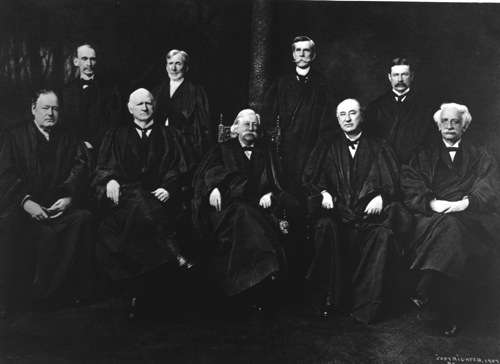
Today in Supreme Court History: December 2, 1907
Short Circuit: A Roundup of Recent Federal Court Decisions
Retaliating against a harbormaster, retaliating against a prisoner, and official-act immunity.
Please enjoy the latest edition of Short Circuit, a weekly feature written by a bunch of people at the Institute for Justice.
New on the Short Circuit podcast: private rights of action to enforce voting rights and a failed attempt to get Donald Trump kicked off the ballot in New Hampshire on insurrection grounds.
Sandra Day O'Connor, RIP
She was the first woman Supreme Court justice, and played a key role in changing the Court's jurisprudence for the better on several issues.
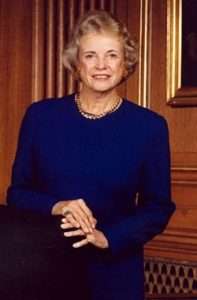
Retired Supreme Court Justice Sandra Day O'Connor passed away today at the age of 93. O'Connor is best known for being the first female Supreme Court justice and for her role as a moderate swing voter on the Court, on such issues as abortion and affirmative action. But she also played a key role in strengthening judicial protection for federalism and property rights.
O'Connor was appointed to the Court in 1981, as a result of President Ronald Reagan's 1980 campaign promise to select a female justice. Her elevation broke a centuries-old glass ceiling and was a crucial milestone for gender equality in the legal profession.
O'Connor's jurisprudence may be best known for her casting a crucial vote to preserve (in modified form) Roe v. Wade and abortion rights; the modified Roe framework lasted for thirty years until overturned by a more conservative Court majority in 2022. But she also did much to increase judicial protection for property rights and especially federalism.
In a series of rulings in the 1990s and early 2000s, O'Connor was a crucial figure in the Rehnquist Court's "federalism revolution," which did much to revive judicial enforcement of structural limits on federal government power, after a long period when judicial review in this field was extremely weak. Most notably, O'Connor wrote the Court's majority opinion in New York v. United States (1992), which established the rule that the Tenth Amendment bars federal "commandeering" of state governments.
In New York and other opinions, Justice O'Connor emphasized the important point that the purpose of federalism limits on national power is not just to protect state governments, but also to protect ordinary people against the dangers of excessive centralization of power and homogenization of policy. O'Connor's efforts in this field did much to change the Court's jurisprudence for the better, helping to bury the idea that the judiciary has little or no role to play in enforcing structural limits on federal power.
The New York decision, like most of the Rehnquist Court's other pro-federalism rulings, was initially seen as benefiting conservative causes. But in recent years, the anti-commandeering rule and other federalism precedents have been effectively used to protect liberal state and local governments, as well, most notably sanctuary cities.
Justice O'Connor also cast key votes pushing forward the Rehnquist Court's efforts to strengthen protection for property rights under the Takings Clause of the Fifth Amendment. This, too, was a useful step in the right direction, breaking with the unjustified judicial neglect of property rights in the New Deal era.
Fittingly, in her last year on the Court - 2005 - O'Connor wrote forceful dissents in Gonzales v. Raich - (a terrible federalism decision holding that Congress' power to regulate interstate commerce authorizes a ban on the possession of marijuana that never crossed state lines or was sold in any commercial transaction) - and Kelo v. City of New London (a terrible property rights ruling in which a narrow 5-4 majority held that private "economic development" qualifies as a "public use" allowing the use of eminent domain). O'Connor's compelling dissent in Kelo helped break the seeming consensus in favor of a very broad definition of "public use" and played an important role in generating the powerful reaction against the Court's decision by state courts and legislatures. If, as is very possible, the Court eventually overrules or limits Kelo, O'Connor will deserve a substantial share of the credit.
In the field of affirmative action, O'Connor wrote two crucial 5-4 majority opinions restricting affirmative action in government contract (the Croson and Adarand cases), but also was the author of the 5-4 majority opinion in Grutter v. Bollinger (2003), upholding the use of racial preferences to promote "diversity" in higher education. It is not easy to reconcile her reasoning in the contracting cases with what she did in Grutter. In my view, she got it right in the former cases, but went wrong in the latter. If anything, the compensatory justice rationale for racial preferences that O'Connor rejected in the contracting cases is more compelling than the deeply problematic "diversity" theory. The Supreme Court has, of course, recently severely cut back on Grutter in SFFA v. Harvard, though the justices arguably stopped short of overruling it completely.
Justice O'Connor can be criticized for never clearly articulating an overarching judicial philosophy, such as Justice Scalia's commitment to originalism, or Stephen Breyer's to a version of living constitutionalism intended to promote democratic values. She drew on a range of different interpretive methods and rarely acknowledged potential tensions between them. On the other hand, her instincts and positions on most important issues were generally good ones. And she was an incisive and compelling writer. I hope and expect that she will be remembered not just for being the first female justice, but also for changing the Court's jurisprudence for the better in several key areas.
The above only covers a few key parts of O'Connor's legacy. There is much more that I cannot hope to do justice to in a relatively short post.
An interesting aspect of O'Connor's life is that she dated future Chief Justice William Rehnquist when the two were law students at Stanford in the 1950s, and eventually rejected his marriage proposal. By choosing John O'Connor (another fellow law student) over Rehnquist, the young Sandra Day (as she was then called) unwittingly helped ensure she could one day be appointed to the Supreme Court. When Reagan chose her in 1981, Rehnquist was already on the Court (appointed by Richard Nixon). It probably would have been politically impossible for the president to appoint the wife of a current justice, given likely charges of nepotism and favoritism. The lesson for ambitious young lawyers and law students who aspire to become Supreme Court justices, is that you should try to avoid marrying anyone likely to be appointed to the Court themselves!
I extend condolences to any of Justice O'Connor's friends, relatives, and former colleagues who may happen to see this post.
UPDATE: I have made minor additions to this post.




