The Volokh Conspiracy

Mostly law professors | Sometimes contrarian | Often libertarian | Always independent | Est. 2002

The Volokh Conspiracy

14th Amendment

The Objection That It Is Too Soon To Adjudicate Trump's Qualifications

|

[Note:  This is the eighth in a series of essays responding to objections that have been made to enforcing Section Three of the Constitution. The first seven essays can be found here, here, here, here, here, here and here.]

Another quasi-jurisdictional objection that has been made to the state ballot access litigation in particular is the argument that it is too soon to decide whether Donald Trump is eligible to the Presidency. Though it is not always labeled this way, this amounts to a sort of "ripeness" argument – that the Section Three question is simply not ripe for decision at this stage and in this posture. The timing argument was made at length in an early amicus brief by Senator Steve Daines and the National Republican Senatorial Committee, and has since been picked up in part by Trump's merits brief.

The core of the argument is that Trump cannot be excluded from a state ballot (whether in the primary or general election): (A) because Section Three only prohibits "hold[ing] . . . office," not running for office, and (B) because Congress has the power, by a two-thirds vote of both houses, to remove the Section Three disability, it is possible that by the time of office-holding (or even later), Donald Trump might become eligible to hold office, even if he is currently ineligible to hold office because of having engaged in insurrection. (Indeed, Trump's reply brief argues (at 22-23) that the clock should be held open "between now and January 20, 2029"!)

But this objection misunderstands the nature of ballot access as well as the nature of Section Three.

To start off, it is true that Section Three does not of its own force regulate ballot access. It applies to "hold[ing] . . .  office," not running for office. But so what? As we discuss at length in our original manuscript, The Sweep and Force of Section Three, Section Three simply provides a rule of decision that governs anybody whose official duties call upon them to make decisions about eligibility. That can include election officials responsible for creating, distributing, and counting ballots, if state law so provides. And according to the Colorado Supreme Court, the authoritative expositor of Colorado law, Colorado's legislature has provided for the exclusion from the presidential primary ballot of those who are not eligible to serve as President. In other words, Section Three makes clear that Trump cannot hold the office of President. And state law provides that those who cannot hold the office of President should not be on the ballot as presidential candidates.

This state authority is well-established. Article II of the Constitution says that presidential electors shall be appointed "in such Manner as the Legislature thereof may direct." And cases have uncontroversially held, for example, that a state may lawfully a exclude a 27-year-old from the presidential primary ballot, and may lawfully exclude a non-natural-born citizen from the general presidential election ballot. Insurrectionists disqualified by Section Three are no different.

Proponents of this argument claim that Section Three is different because of the amnesty clause: "But Congress may by a vote of two-thirds of each House, remove such disability." This is alleged to make it uncertain whether Trump or anybody else covered by Section Three will still be disqualified in November or January. But what difference does it make? Trump, and others covered by Section Three are disqualified now. (Congress can chose to "remove such disability" only because that disability already exists – here and now.)

Similarly, in theory the 27-year-old and the non-natural-born citizen candidates might also become eligible, if Congress were to propose and the states were to ratify a constitutional amendment. But it has never been seriously suggested that we should not enforce these legal requirements now because they might change in the future. Indeed, in Trump's reply brief he concedes (in n.36) that these questions "obviously must be assessed under the Constitution as it currently exists." Under the Constitution as it currently exists, Trump is not eligible to "hold any office, civil or military, under the United States, or under any State." Now is as good a time as any to say so.

With respect, what seems to have given this argument "legs," in our view, is not so much its dubious legal merits as its supposed political expediency. The argument is seen to offer the Court an "off ramp" that would allow it to reverse the Colorado Supreme Court, ruling in favor of Trump, but without accepting any of his various (unacceptable) arguments about Section Three. Somehow, this is thought to be a politically preferable alternative to a straightforward affirmance or reversal on the merits.

Our specialty is law, not politics, but the political merits of this approach are hard for us to understand. If the Court rules that it is too soon to adjudicate Trump's qualifications for the office he seeks, when will it be time? In November, when most presidential election votes are cast? In December, when the electors meet? In January when the electoral votes are counted in joint session? On Inauguration Day?  Each of these options seems riskier and riskier.  Far from a convenient "off ramp" (or leisurely rest stop), it looks to us like a formula for a chain-reaction massive multi-car pileup. It would seem safer to us to keep one's eyes on the road.

Law students quickly learn that procrastinating their seminar papers until the day before the due date does not make them any easier to write. And it does nobody any favors for a major contested election to proceed under a cloud of uncertainty. Donald Trump wants to be the President of the United States in 2025. Others believe that Section Three of the Constitution forbids him from holding that office. There is no logical or legal reason not to determine and decide who is right – before the heat of the general election campaign, if possible – rather than waiting for some imagined future day when the questions will somehow become easier or go away.
Donald Trump

Jack Goldsmith on Why SCOTUS Should Review the D.C. Circuit's Decision on Presidential Immunity

The case raises an issue of high importance and the opinion may contain some loose reasoning.

|

I have a generally favorable view of the U.S. Court of Appeals decision in United States v. Trump, concluding that Donald Trump does not have absolute immunity from prosecution for his actions seeking to overturn the 2020 presidential election results.

The 57-page opinion is careful and thorough, and was produced on a short timeline. The panel released the opinion a scant 28 days from oral argument and was unanimous. It also reached the correct result (a point on which my co-blogger Keith Whittington agrees).

Harvard law professor Jack Goldsmith agrees that the court reached the correct conclusion, but believes the case nonetheless merits Supreme Court review. He makes the case over at the Lawfare blog. His essay begins:

I agree with the D.C. Circuit's conclusion in United States v. Trump that former president Trump is not immune from prosecution for criminal acts committed in office. Nonetheless, I think the Supreme Court should review the case. The main reason to grant certiorari is simply that, as Supreme Court Rule 10 states, "a United States court of appeals has decided an important question of federal law"—a former president's immunity from prosecution—"that has not been, but should be, settled by [the Supreme] Court." An additional but less obvious reason why the D.C. Circuit decision is important is that it contains loose reasoning that will have a potentially large collateral impact on the construction of criminal statutes to burden the Article II authorities of sitting presidents.

We will see whether the Supreme Court agrees.

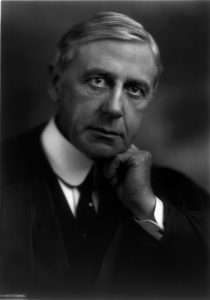
Tillman in the Times: "A Legal Outsider, an Offbeat Theory and the Fate of the 2024 Election"

"When the Supreme Court considers whether Donald J. Trump is barred from appearing on Colorado’s ballot, a professor’s scholarship, long relegated to the fringes, will take center stage."

|

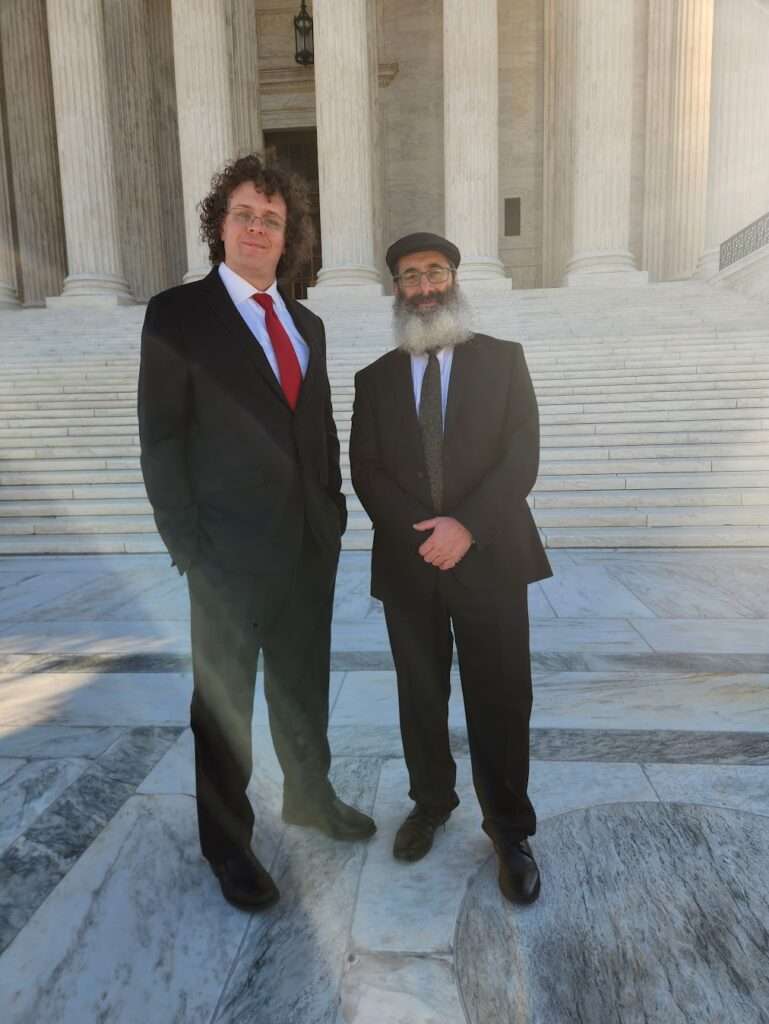
Tomorrow, the Supreme Court will hear oral argument in Trump v. Anderson. Both Seth Barrett Tillman and I will be attending. Today, the New York Times published a profile of Seth, and his important work that has led us to this moment. The article is titled, "A Legal Outsider, an Offbeat Theory and the Fate of the 2024 Election."

Here is the introduction:

In the world of American legal scholarship, Seth Barrett Tillman is an outsider in more ways than one. An associate professor at a university in Ireland, he has put forward unusual interpretations of the meaning of the U.S. Constitution that for years have largely gone ignored — if not outright dismissed as crackpot.

But at 60, Professor Tillman is enjoying some level of vindication. When the U.S. Supreme Court considers on Thursday whether former President Donald J. Trump is barred from Colorado's primary ballot, a seemingly counterintuitive theory that Professor Tillman has championed for more than 15 years will take center stage and could shape the presidential election.

The Constitution uses various terms to refer to government officers or offices. The conventional view is that they all share the same meaning. But by his account, each is distinct — and that, crucially for the case before the court, the particular phrase "officer of the United States" refers only to appointed positions, not the presidency.

If a majority of the court accepts Professor Tillman's rationale, then Mr. Trump would be allowed to appear on the ballot. At issue is the meaning of Section 3 of the 14th Amendment, adopted after the Civil War, which bars people from holding office if they participated in an insurrection after having sworn to uphold the Constitution as an "officer of the United States."

Professor Tillman, heavily bearded with black-rimmed glasses and a bookish demeanor, flew to the United States this week to watch the arguments. With Josh Blackman, who teaches at South Texas College of Law Houston, Professor Tillman submitted a friend-of-the-court brief and asked to participate in arguments, but the court declined.

The article quotes, among others, Akhil Amar, Mike Luttig, and Will Baude. I think Charlie Savage of the Times really captured Seth's essence. It has been the honor of a lifetime to work so closely with Seth. I've learned more from him than anyone else.

We'll see what tomorrow brings.

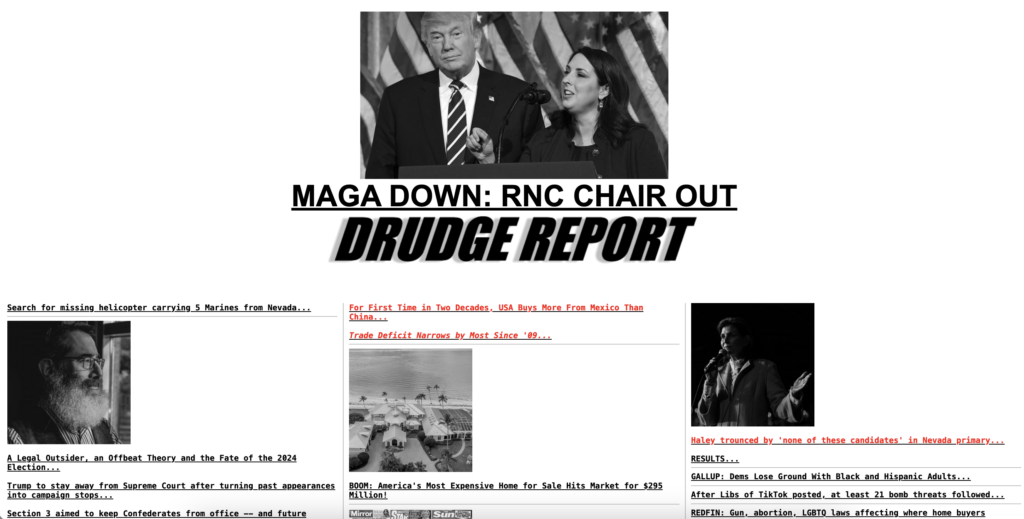
Update: Seth's article made it to the top, left-hand column of the Drudge Report.

Campus Free Speech

A Call for Institutional Neutrality

An open letter released today from the AFA, HxA, and FIRE

|

Today the Academic Freedom Alliance, Heterodox Academy, and the Foundation for Individual Rights and Expression released a joint open letter calling for universities to adopt a policy of institutional neutrality. From the letter:

A useful maxim to guide decision makers is "if an academic institution is not required to adopt a position in order to fulfill its mission of intellectual freedom or operational capacity, it is required not to adopt a position." (See, e.g., Princeton Principles for a Campus Culture of Free Inquiry.)

For a neutrality principle to work, it must be publicly announced and adhered to on a consistent and faithful basis. Making an exception inexorably leads to pressure to make others and to allegations of bias.

Critically, institutional neutrality applies only to leaders and units of the institution. This is true not only for the central administration, but also for the units of the university, such as schools, departments, centers, and programs. It does not apply to faculty members and students (i.e., the "critics"), either individually or as members of voluntary, non-institutional associations.

Read the whole thing here.

I recently discussed institutional neutrality for a webinar sponsored by Heterodox Academy, which can be found here. My most recent written piece on the topic was in the Chronicle of Higher Education and can be found here.

14th Amendment

Section Three Is Not A "Political Question"

|

[Note:  This is the seventh in a series of essays responding to objections that have been made to enforcing Section Three of the Constitution. The first six essays can be found here, here, here, here, here, and here.]

Are questions of the proper legal interpretation and application of Section Three of the Fourteenth Amendment nonjusticiable "political questions" – that is, questions that federal courts lack legal power to decide?

The simple answer is no.

Read More

Free Speech

ABA Adopts New Academic Freedom / Freedom of Expression Requirement for Law School Accreditation

|

This apparently just happened; here's the full American Bar Association standard (and see this ABA Journal article):

Standard 208: Academic Freedom and Freedom of Expression

[a] A law school shall adopt, publish, and adhere to written policies that protect academic freedom. A law school's academic freedom policies shall:

[1]​ Apply to all full and part-time faculty, as well as to all others teaching in law school courses;

[2] Apply to conducting research, publishing scholarship, engaging in law school governance, participating in law related public service activities, curating library collections and providing information services, and exercising teaching responsibilities, including those related to client representation in clinical programs; and

[3] Afford due process, such as notice, hearing, and appeal rights, to assess any claim of a violation of the academic freedom policies.

[b]​ A law school shall adopt, publish, and adhere to written policies that encourage and support the free expression of ideas. A law school's free expression policies must:

Read More

Free Speech

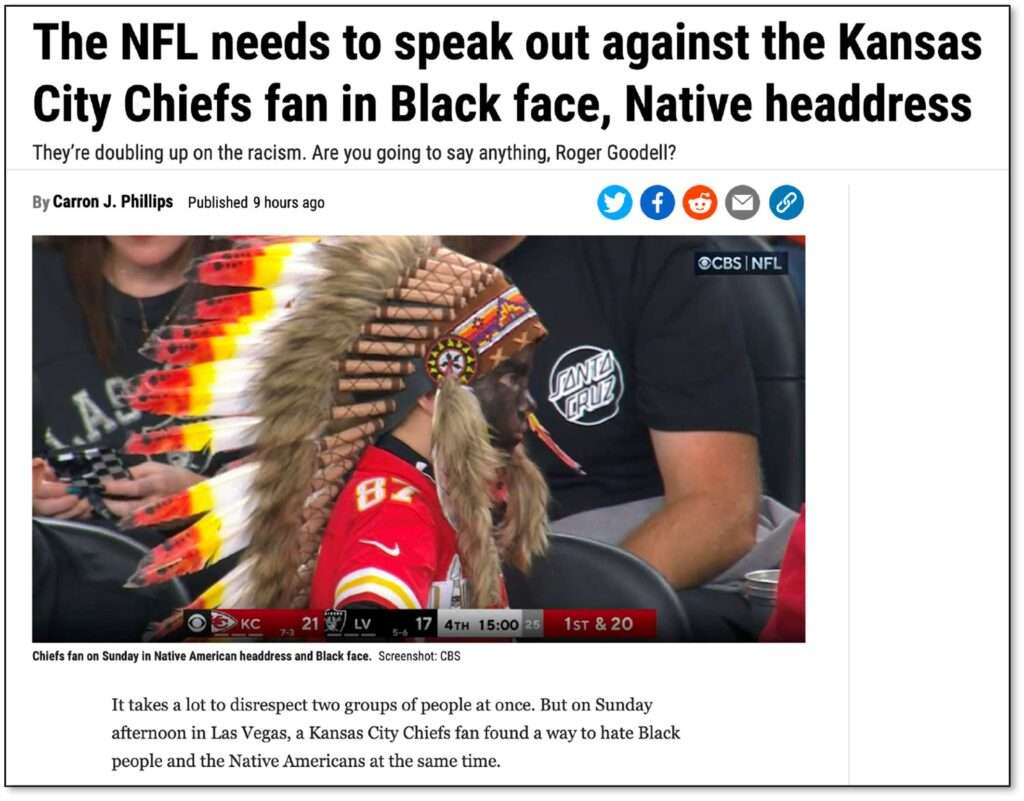
Young Kansas City Chiefs Fan Sues Deadspin Over Racism Allegations

|

From the Complaint filed today in Armenta v. G/O Media Inc. (Del. Super. Ct.):

Nine-year-old H.A. loves the Kansas City Chiefs—and he loves his family's Chumash-Indian heritage. On November 26, 2023, H.A. displayed that love by attending the Chiefs-Raiders NFL football game wearing a Chiefs jersey and necklace, his face painted half-red and half-black, and a costume headdress— just as Chiefs fans and other avid sports fans have done for decades.

During the CBS television broadcast, H.A. was shown for three seconds, where the audience can clearly see his red-and-black face paint. Immediately thereafter, CBS panned to a Raiders fan in black-and-white face paint. Together, they represented fervent fans with their faces painted for game-day battle, each wearing their team's respective colors and costume garb ….

Those few seconds provided just the opportunity for Deadspin Senior Writer Carron Phillips to, on behalf of himself and his employer Deadspin, maliciously and wantonly attack a nine-year-old boy and his parents for Phillips' own race-drenched political agenda. By selectively capturing from the CBS broadcast an image of H.A. showing only the one side of his face with black paint on it—an effort that took laser-focused precision to accomplish given how quickly the boy appeared on screen—Phillips and Deadspin deliberately omitted the half of H.A.'s face with red paint on it.

Armed with this misleadingly-edited photo, Phillips wrote an article, published by Deadspin, entitled "The NFL needs to speak out against the Kansas City Chiefs fan in Black face, Native headdress" ("the Article").

The Article falsely alleged that H.A. had "found a way to hate Black people and the Native Americans at the same time." It alleged that H.A.'s parents, Shannon and Raul, "taught" H.A. "racism and hate" at home. It intentionally painted a picture of the Armenta Family as anti-Black, anti-Native American bigots who proudly engaged in the worst kind of racist conduct motivated by their family's hatred for Black and Native Americans.

Read More

Prof. Michael McConnell: "'Narrow' or 'Sweeping'—What Does Originalist Evidence Have to Say?"

|

I'm delighted to pass along this item from Prof. McConnell (Stanford), one of the leading American originalist scholars:

I most often agree with my good friends and casebook co-authors Will Baude and Michael Paulsen on matters of constitutional interpretation. But not about the attempted disqualification of Donald Trump for running for President. My friends published the opening salvo in the current debate with their 120-plus page article arguing for a "sweeping" interpretation of Section Three of the Fourteenth Amendment. The word "sweep" is in the title of their article, and "sweeping" was repeated over a dozen times. At every point when they faced an interpretive ambiguity, they opted for the most expansive interpretation.

I responded with a brief post on this site arguing against such a sweeping interpretation, on the basis of both democratic theory and originalist evidence. I later elaborated on those themes in an essay in Public Discourse, citing evidence that the Amendment was interpreted narrowly in the several years it was actually enforced.

A few days ago, Baude and Paulsen published a new post in which they suggest that my advocacy of a "narrow" interpretation violates the originalist norm that constitutional provisions "should not be interpreted with a thumb on the scales in favor of either a 'narrow' reading or an 'expansive' reading," but simply given the reading most plausible in light of its terms and original understanding.

Read More

Free Speech

Court Upholds Disbarment of Lawyer for In-Court Misconduct, Including Lawyers' Allegations of Anti-Female, Anti-Disabled, and Pro-Jewish Bias

|

An excerpt from today's Appellate Court of Connecticut decision in Ambrose v. Ambrose, written by Judge Alexandra Davis DiPentima and joined by Chief Judge William Bright and Judge Bethany Alvord:

The primary issue in this writ of error challenging the disbarment of an attorney is whether her due process rights were violated by the procedure used by the first defendant in error, Hon. Thomas G. Moukawsher. The plaintiff in error, Nickola J. Cunha, who is the former attorney for a party in the underlying dissolution action, challenges in this writ of error the order of Judge Moukawsher disbarring her from the practice of law. [Apparently such one-judge disbarment orders are generally authorized under Connecticut law, though my sense is that they are unauthorized or at least uncommon in many other states. -EV]

In 2019, the plaintiff, Christopher Ambrose, commenced a dissolution action against the defendant, Karen Ambrose, who was represented by Cunha. Trial in the dissolution action began in March, 2021. As explained by the second defendant in error, Hon. Gerard I. Adelman, judge trial referee, in the April 26, 2022 memorandum of decision dissolving the marriage and explaining the delay in doing so, "the defendant began to simply not appear for the trial and [Cunha] began to make derogatory comments about the court and its proceedings. Accordingly, the court referred the complaints to the Regional Family Trial Docket's presiding judge, [Moukawsher, J.], for a hearing."

At a November 22, 2021 hearing concerning the referred matters, Judge Moukawsher noted that there was no pending motion to disqualify to decide. After the defendant, through Cunha, filed a motion to disqualify Judge Adelman from the proceedings on the ground of bias, on December 1, 2021, a hearing was held on the motion to disqualify. At that hearing, Judge Moukawsher asked Cunha to indicate specific parts of the transcripts of the dissolution proceedings that explained her claims of bias.

Cunha stated that the record in its totality would show that Judge Adelman was biased against women who claim abuse, individuals with disabilities, and anyone not of the Jewish faith. In support of these claims, she provided only examples of Judge Adelman's rulings adverse to her client. Judge Moukawsher repeatedly requested that Cunha provide evidence to support her claims of bias rather than simply relying on the issuance of adverse rulings and stated at one point, "You're a lawyer. You know I need to have evidence. You can't just assert things." Judge Moukawsher further stated at one point that, "it can't be just simply you don't like his rulings …."

Read More

Free Speech

Expelled White Student's Suit Against Howard Law School Largely Dismissed, but Can Go Forward on Some Claims

|

A short excerpt from today's long decision by Judge Trevor McFadden (D.D.C.) in Newman v. Howard Univ. School of Law (for more, read the whole thing):

Howard University School of Law expelled Michael Newman. It claims that it did so because he repeatedly sent disruptive emails to his classmates against school policy. Newman tells a different story. He claims that his expulsion was the culmination of two years of racist vitriol and abuse that he suffered at the hands of Howard students and administrators….

[T]he Court dismisses most of Newman's antidiscrimination claims for failure to adequately plead the existence of a material adverse action caused by his race. And it will dismiss most of his contract-based claims for want of a binding contract. Last, it will dismiss most of his remaining tort claims. That said, several of Newman's claims survive: all those directed against unnamed third parties, and several adequately pleaded claims directed against Howard and its employees.

The court rejects Newman's claim that the school violated some of its own policies, because it concludes the policies didn't form a binding contract. But it allows Newman's "breach of contract claim based on his scholarship agreement" (and related claim for "breach of the implied duty of good faith and fair dealing") to go forward:

Read More

Donald Trump

Former Presidents Do Not Enjoy Blanket Criminal Immunity

So says the DC Circuit Court

|

The D.C. Circuit Court's opinion in US v. Donald Trump on whether the former president enjoys a blanket immunity from criminal prosecution for his actions while president is now out.  It can be found here.

It is a comprehensive opinion, and I think a correct one. Given my own scholarly interests, I was particularly anxious about how the court might handle the claim that an officer who has been acquitted in an impeachment trial cannot be criminally prosecuted, but I think the panel handled that issue correctly.

Read More

Legalese

The Doctrine of Hotchpot

|

What is this, under American law? (It has sometimes been referred to as "hotch-potch," but is not to be confused with "hodgepodge," the Wisconsin Court of Appeals tells us.)

Serious threats, unserious responses

Episode 490 of the Cyberlaw Podcast

|

It was a week of serious cybersecurity incidents and unimpressive responses. As Melanie Teplinsky reminds us, the U.S. government has been agitated for months about China's apparent strategic decision to hold U.S. infrastructure hostage to cyberattack in a crisis. Now the government has struck back at Volt Typhoon, the Chinese threat actor pursuing that strategy. It claimed recently to have disrupted a Volt Typhoon botnet by taking over a batch of compromised routers. Andrew Adams explains how the court-ordered takeover was managed. It was a lot of work, and there is reason to doubt the effectiveness of the effort. The compromised routers can be re-compromised if they are turned off and on again. And the only ones that were uncompromised by the U.S. seizure are those inside the U.S., leaving open the possibility of DDOS attacks from abroad. Finally, DDOS attacks on our critical infrastructure shouldn't exactly be an existential threat. All things considered, I argue that there's a serious disconnect between the government's hair-on-fire talk about Volt Typhoon and its business-as-usual response.

Speaking of cyberattacks we could be overestimating, Taiwan just had an election that China cared a lot about. According to one detailed report, the Chinese threw a lot of cyber at Taiwanese voters -- and failed to make much of an impression. Richard Stiennon and I mix it up over whether the Chinese will do better trying to influence the 2024 outcome here.

While we're covering humdrum responses to cyberattacks, Melanie explains U.S. sanctions on Iranian military hackers for their hack of U.S. water systems that were more or less fish in a barrel.

For comic relief, Richard lays out the latest drama around the EU AI Act, now being amended in a series of backroom deals and off-the-books promises. I predict that the effort to pile pet-rock provisions on top of anti-American protectionism will end, not in a GDPR-style triumph for Europe but in a continent-wide AI desert. The EU market is now small enough for AI companies to bypass Europe entirely at the first sign of toxic regulation.

The U.S. is not the only player whose response to cyberintrusions is looking inadequate this week. Richard explains Microsoft's recent disclosure of a Midnight Blizzard attack on the company and a number of its customers. The company's obscure explanation of how its technology contributed to the attack and, worse, its effort to turn the disaster into an upsell opportunity earned Microsoft a patented Alex Stamos spanking.

Andrew explains the recent Justice Department charges against three people who facilitated the big $400m FTX hack that coincided with the exchange's collapse. Does that mean the hack wasn't an inside job? Not so fast, Andrew cautions. The government hasn't recovered the $400m, and it isn't claiming the three SIM-swappers it has charged are the only conspirators.

Melanie explains why we've seen a sudden surge in state privacy legislation. It turns out that industry has stopped fighting the idea of state privacy laws and is now selling a light-touch model law that omits things like a private right of action.

I give a lick and a promise to a "privacy" regulation now being pursued by CFPB for consumer financial information. I put privacy in quotes, because it's really an effort to create a whole new market for personal data, one that will assure better data management while undermining the competitive advantage of big data holdings. Bruce Schneier likes the idea. So do I, in principle, but it means a massive re-engineering of a big industry by technocrats who may not be quite as smart as they think they are. Bruce, if you want to come on the podcast to explain and debate  the whole thing, send me email!

Spies are notoriously nasty, and often petty, but one of the nastiest and pettiest, Joshua Schulte, was sentenced to 40 years in prison last week. Andrew has the details.

There may be some good news on the ransomware front. More victims are refusing to pay. Melanie, Richard, and I explore ways to keep that trend going. I urge consideration of a tax on ransom payments.

I also flag a few new tech regulatory measures likely to come down the pike in the next few months. The FCC will likely use the TCPA to declare the use of AI-generated voices in robocalls illegal. And Amazon is likely to find itself held liable for the safety of products sold by third parties on the Amazon platform.

Finally, a few quick hits:

Download 490th Episode (mp3)

You can subscribe to The Cyberlaw Podcast using iTunes, Google Play, Spotify, Pocket Casts, or our RSS feed. As always, The Cyberlaw Podcast is open to feedback. Be sure to engage with @stewartbaker on Twitter. Send your questions, comments, and suggestions for topics or interviewees to CyberlawPodcast@gmail.com. Remember: If your suggested guest appears on the show, we will send you a highly coveted Cyberlaw Podcast mug! The views expressed in this podcast are those of the speakers and do not reflect the opinions of their institutions, clients, friends, families, or pets

14th Amendment

The Use and Misuse of Section Three's "Legislative History": Part II

|

[Note:  This is the sixth in a series of essays responding to objections that have been made to enforcing Section Three of the Constitution. The first five essays can be found here, here, here, here, and here.]

Earlier today we began discussing the use and misuse of constitutional legislative history in interpreting Section Three of the Fourteenth Amendment.  We first set out some important general principles about the proper role, and limitations, of the use of legislative history as potentially probative, second-best evidence of constitutional textual meaning.  Next, we discussed at length some serious mischaracterizations of portions of the legislative history of Section Three set forth in recent draft scholarship and essays by Professor Kurt Lash.  In particular, Lash misportrays statements by Representative Thaddeus Stevens and by Senator Lyman Trumbull as if they denied that Section Three of the Fourteenth Amendment is a self-executing constitutional command, when they did not. We also despaired that this mistaken account has been adopted by others. This highlights one major concern about the use of constitutional legislative history:  its capacity, if not done faithfully and carefully, to mislead and distort.  This should be a general caution about its use, and one that we think has proven unfortunately true in Lash's discussion of the self-execution issue.

Today we take up some problems with Lash's use of constitutional legislative history, even where accurately recounted, in the course of legal analysis of the Constitution's text. Here, our point is not that the excavation and presentation of the legislative history itself is flawed. Rather, the legal analysis and conclusions thought to flow from that legislative history are unsound.  Lash in our view makes several types of missteps in this regard, and the errors tend to compound one another.

Read More

Climate Change

DOJ Files Petition for Writ of Mandamus to End Juliana Climate Litigation

The Justice Department is wasting no time seeking to put this zombie litigation out of its misery, and the plaintiffs are not happy about it.

|

The Department of Justice is wasting no time in seeking to put a swift end to the Juliana "Kids Climate Case."

Last month, DOJ filed a motion for a stay in the district court so that the federal government could file a writ of mandamus to dismiss the case before having to engage in meaningful trial preparations. The district court has not ruled on the motion (though the plaintiffs have filed a brief in opposition). Nonetheless, on Friday the Justice Department filed its petition for a writ of mandamus with the U.S. Court of Appeals for the Ninth Circuit.

I doubt Judge Aiken will grant the Justice Department's motion (especially now) but I suspect the Ninth Circuit may look more favorably on the Justice Department's petition--and if they do not, this case could easily wind up back on the Supreme Court's docket.

Read More

14th Amendment

The Use and Misuse of Section Three's "Legislative History:" Part I

|

[Note:  This is the fifth in a series of essays responding to objections that have been made to enforcing Section Three of the Constitution. The first four essays can be found here, here, here, and here.]

The appropriate role of "legislative history" in constitutional interpretation is a subject of ongoing debate.  For originalists – those committed to interpreting and applying the Constitution according to the best evidence of the objective, original public meaning of the words, phrases, and structural logic of the Constitution, taken in context, and accounting for specialized usages or terms of art – the question should be put this way:  what light do the debates or drafting history of a provision, contained in (hopefully reliable) reports shed on the objective meaning of the language of the provision as embodied in the final, adopted constitutional text? (In the case of the original Constitution, some of the most crucial proceedings were "secret" – not publicly reported or available to the ratifying public at the time. This raises special problems which are not present in the case of constitutional amendments which were openly debated on the floor of Congress.) 

Our shared view is that such constitutional legislative history is potentially probative, second-best evidence of original, objective textual meaning. But it is important to always keep in mind that the search is for the objective meaning of the text – the actual language adopted as law – not for the "intent" or "purpose" or "understanding" of some particular person or any collectivity of persons. It is what the people involved wrote down in words, and voted to adopt, that counts – not what they might or might not have "had in mind." So while evidence of the intention or purpose of individuals involved in the drafting process might be relevant to ascertaining the meaning of the text, discovering their intent or purpose is not the ultimate goal.  Legislative history is a potential means to an end: the ultimate goal of getting the objective, original meaning of the words of the text right.

All of this results in several implications or admonitions. First, constitutional legislative history, or imputed "purposes" ostensibly found there, can never properly displace the actual textual meaning.  As we note in The Sweep and Force of Section Three (at 7-11), the language ultimately adopted sometimes overshoots or undershoots (whether deliberately or not) the drafters' supposed intentions or purposes. Second, one must be precise and careful about drawing textual inferences from legislative history – careful not to overweight individual pieces of evidence or idiosyncratic views, and precise in specifying what those views show about the actual text at issue. Third, ambiguity in the legislative history is not ambiguity in the text. The drafters of a position may well have different views, and enact a text to reflect the victory of one side or a compromise between them, or simply because something has to get done. Those involved in the drafting may well deliberately spin or unintentionally misunderstand the details of those choices. But again, it is the single, unified, text and its objective, original meaning that becomes law in our system, not the political machinations that produced it.

In The Sweep and Force of Section Three, we hew closely to these limitations on the use of constitutional legislative history.  On the occasions where we note relevant evidence from drafting history or specific debates, we carefully qualify our observations about the relevant legislative history. Legislative history does not establish textual meaning.  It serves as potentially probative, second-best evidence that can assist in understanding the meaning of the language contained in the text.  It must be handled with care.

* * *

With that preface, we turn to the constitutional legislative history of Section Three itself.  Over the past months since our article was posted, the ensuing debate has included some instructive – but also some rather dubious – uses of constitutional legislative history.  In particular, we must take issue with some serious flaws contained in Professor Kurt Lash's recent writings on this topic, which he has presented in a draft law-review article, titled "The Meaning and Ambiguity of Section Three of the Fourteenth Amendment," and, in a more telescoped form, as an online essay at the Law and Liberty website, titled "The Fourteenth Amendment's Ambiguous Section Three."  Kurt is a friend of ours and we do not wish to sound overly harsh.  But these writings contain serious problems both of history – concerning what the "legislative history" does and does not say – and of law – concerning the way constitutional legislative history is used in legal analysis of the constitutional text. 

We will start by focusing on the former problem here, and take up the latter problem more fully in a subsequent essay. There is a serious problem with Lash's presentation of the legislative history of Section Three itself.  With respect, some of what Lash says the legislative history shows is simply wrong. At best, Lash's presentation is misleading; at worst, it is a serious misrepresentation of what was said.

Read More

More