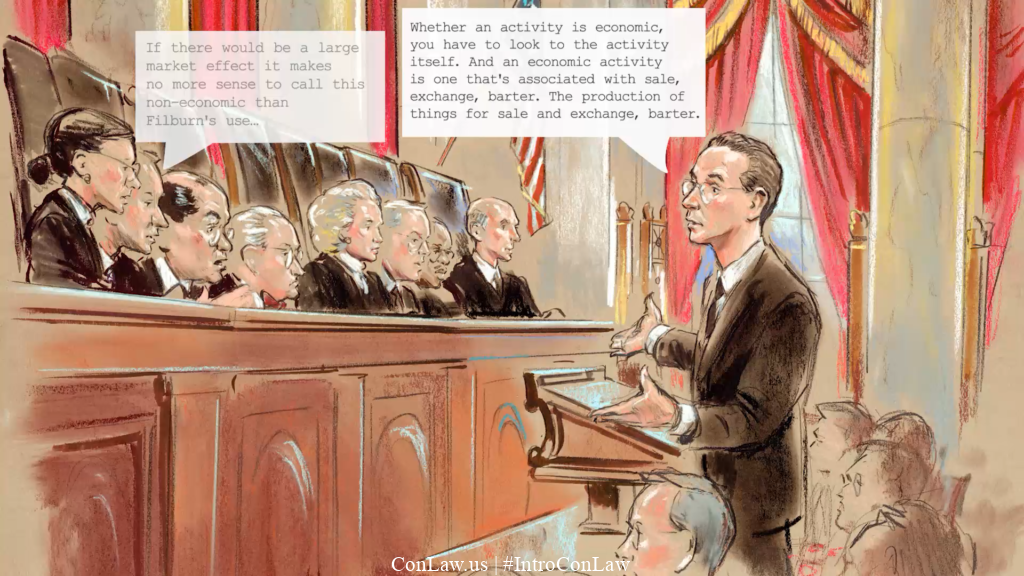
12/2/1907: Ex Parte Young argued.

Mostly law professors | Sometimes contrarian | Often libertarian | Always independent | Est. 2002

The more things change, the more things stay the same.
Today, President Biden issued a pardon to his son, Hunter Biden. In many regards, President Biden's pardon of his son resembles President Trump's pardon of Sheriff Joe Arpaio. The headline from the New York Times says it all: "In Pardoning His Son, Biden Echoes Some of Trump's Complaints."
First, President Biden issued this pardon after Hunter was convicted, but before he was sentenced. Biden has short-circuited the judicial process, taken the case out of the hand of the district court judge, and foreclosed any opportunity for appellate review. It is worth noting that both Roger Clinton and Charles Kushner were pardoned long after they had served their sentences. Back in August 2017, President Trump pardoned Joe Arpaio after he was convicted before he was sentenced. At the time, I wrote that the pardon was "premature," as the "preemptive pardon short-circuited the judicial process." There was outrage at the time to Trump's actions. It is enough to copy a paragraph from the Wikipedia page on the pardon:
In response to the pardon, The Washington Post said it was "a controversial decision, one that Trump critics labeled as an example of the president's illiberal, rule-of-law violating, authoritarian impulses." Harvard Law School professor Charles Fried, the former solicitor general for Ronald Reagan, said Trump's use of authority was specifically "to undermine the only weapon that a judge has in this kind of ultimate confrontation." Another Harvard Law School professor, Noah Feldman, said the pardon "would express presidential contempt for the Constitution." According to The New York Times, legal experts found the fact that Trump "used his constitutional power to block a federal judge's effort to enforce the Constitution" to be the "most troubling aspect of the pardon"
Hunter should hope that the District Courts in Delaware and California promptly dismiss the case, and the Trump DOJ does not have an opportunity to continue litigating the matter. But there is adverse precedent. After the pardon of Arpaio, the district judge actually held proceedings about how to deal with the pardon. Lawyers even argued that the court should not accept the pardon! Ultimately, the district court accepted the pardon, thus preventing the sentencing, but did not vacate the final judgment. The Ninth Circuit affirmed. Thus, at least in the California case, though Hunter was pardoned, under the Arpaio precedent, the conviction will stand.
Second, Trump's pardon of Arpaio was criticized because he bypassed the DOJ Pardon Attorney. He unilaterally decided to issue the pardon. Hunter would have never qualified for a pardon set forth by the DOJ Pardon Attorney. Chalk up another victory for the unitary executive.
Third, Trump was widely criticized for issuing a pardon to advance his personal interests. Arpaio was a big supporter of candidate and President Trump. The pardon was largely viewed as payback for a loyal supporter. Biden is in a similar position, though it is in many regards worse. This is not merely a political ally. It is his flesh and blood. Biden wrote, "I hope Americans will understand why a father and a President would come to this decision." Oh yes, we understand this decision quite well. Biden assured the public many times that he would not pardon his son. This promise was no doubt part of his appeal for the 2024 election. Biden ran for President (briefly) on the platform that he was honest, could be trusted, and would not put his personal concerns before the country. Historians can now judge whether Biden kept these promises.
Fourth, President Trump lobbied Attorney General Sessions to drop the Arpaio prosecution. These communications were viewed by critics as a breach of the "independence" between the Department of Justice and the President. Sessions declined to accede to Trump's requests. In 2024, Politico reported that Biden told "confidants that Garland should not have eventually empowered a special counsel to look into his son, believing that he again was caving to outside pressure." Sounds familiar? Biden said much the same in his pardon statement: "The charges in his cases came about only after several of my political opponents in Congress instigated them to attack me and oppose my election." It was Merrick Garland, Biden's Attorney General, who appointed the special counsel, not Republicans in Congress.
I don't see how Garland continues to serve. The President publicly declared that he has lost faith in his Attorney General. I would not be surprised to see Garland resign shortly. What a tragic figure, Garland is. He was nominated for the Supreme Court, never received a hearing, stepped down from the D.C. Circuit to become Attorney General, pledged to restore the rule of law, spent his entire administration enmeshed with special counsels and January 6 prosecutions, and all of those convictions have been, or will be pardoned. If Attorney General Meese was the most influential Attorney General in American history, where would Garland rank?
Fifth, Trump's pardon was viewed as an attack on Judge Susan Bolton. Adam Liptak wrote in the Times, "It was the first act of outright defiance against the judiciary by a president who has not been shy about criticizing federal judges who ruled against his businesses and policies." President Biden's statement managed to criticize the federal judge in Delaware who presided over Hunter's trial: "a carefully negotiated plea deal, agreed to by the Department of Justice, unraveled in the court room – with a number of my political opponents in Congress taking credit for bringing political pressure on the process. " This statement is flat-out false. The plea deal unraveled after it became clear the prosecution and defense did not agree how the plea agreement would be interpreted. Biden has no basis to insinuate that the District Court judge, who was supported by both Delaware senators, was politicized. Would Biden call Judge Norieka, who was appointed by President Trump, a "Trump Judge"? Cue Chief Justice Roberts.
Sixth, Trump's pardon of Arpaio concerned his conviction, and "any other offenses under Chapter 21 of Title 18, United States Code that might arise, or be charged, in connection with Melendres v. Arpaio . . . in the United States District Court for the District of Arizona." In other words, this pardon would prevent a prosecutor from bringing future charges related to that case. Biden's pardon of his son was far, far broader:
For those offenses against the United States which he has committed or may have committed or taken part in during the period from January 1, 2014 through December 1, 2024, including but not limited to all offenses charged or prosecuted (including any that have resulted in convictions) by Special Counsel David C. Weiss in Docket No. 1:23-cr-00061-MN in the United States District Court for the District of Delaware and Docket No. 2:23-CR-00599-MCS-1 in the United States District Court for the Central District of California.
This pardon immunizes Hunter from prosecution for any conduct he committed between January 1, 2014. If Hunter shot someone on Fifth Avenue during that period, he could not be tried for murder in federal court. I haven't studied pardons closely, but I am skeptical there has ever been such a broad, prophylactic pardon over the course of a decade. Even President Ford's pardon of Richard Nixon was limited to offenses "committed or may have committed or taken part in during the period from January 20, 1969 through August 9,1974." And President Andrew Johnson's 1868 pardon and amnesty of former confederates was limited to the offenses of insurrection, rebellion, and treason, during the four-year long Civil War. (Johnson's pardon had the effect of cutting short the pending appeal to the Supreme Court of the criminal prosecution of Jefferson Davis.) Finally, there is a longstanding debate about whether a pardon can be issued without enumerating a specific offense. Professor Phillip Kurland raised this issue after Ford pardoned Nixon. He said, "It is certainly not clear that the power to pardon an individual may properly, i.e. constitutionally, be invoked prior to indictment and conviction."'
Seventh, Trump's pardon was part of a long-term campaign to charge that the DOJ was politicized. Here, Biden said "I also believe raw politics has infected this process and it led to a miscarriage of justice." Again, this is Biden's Attorney General. Biden's remarks about the politicization of his own DOJ provide more credence to what Trump has said, and what he will do after January 20.
***
The more things change, the more things stay the same. For what it's worth, this pardon does not prevent Hunter from facing charges in state court. Nor does it prevent the Department of Justice from prosecuting Joe Biden over his documents case. Remember, Ron Hur only declined to prosecute Biden for his "poor memory." If Biden had continued to serve as President, I think that is an admission that he is competent to stand trial. I also think that the statute of limitations would be tolled while Trump is in office. (The proceedings in New York with Justice Merchan will speak to this issue.)
The AP (Jamey Keaten) reports:
Researchers and religious leaders on Wednesday released findings from a two-month experiment through art in a Catholic chapel in Switzerland, where an avatar of "Jesus" on a computer screen — tucked into a confessional — took questions by visitors on faith, morality and modern-day woes, and offered responses based on Scripture….
[S]ome 900 conversations from visitors — some came more than once — were transcribed anonymously. Those behind the project said it was largely a success: Visitors often came out moved or deep in thought, and found it easy to use….
"What was really interesting (was) to see that the people really talked with him in a serious way. They didn't come to make jokes," said chapel theologian Marco Schmid, who spearheaded the project….
Schmid was quick to point out that the "AI Jesus" — billed as a "Jesus-like" persona — was an artistic experiment to get people thinking about the intersection between the digital and the divine, not substitute for human interaction or sacramental confessions with a priest, nor was it intended to save pastoral resources.
"For the people it was clear that it was a computer … It was clear it was not a confession," Schmid said. "He wasn't programmed to give absolutions or prayers…." …
"For us, it was also clear it was just a limited time that we will expose this Jesus," he said …. "We are discussing … how we could revive him again,"
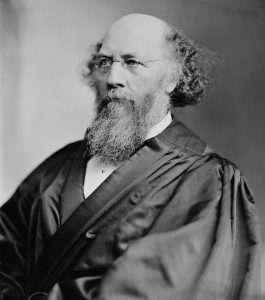
12/1/1897: Justice Stephen Field resigns.
From today's decision by Judge Fernando M. Olguin (C.D. Cal.) in Concerned Jewish Parents & Teachers of L.A. v. Liberated Ethnic Studies Model Curriculum Consortium:
The Concerned Jewish Parents and Teachers of Los Angeles …, "an unincorporated association comprised of Jewish, Zionist Los Angeles teachers who teach in the [Los Angeles Unified School District] and Jewish, Zionist parents of children who are students in the LAUSD," initiated this action on May 12, 2022….
As an initial matter, the court notes that plaintiffs' [Complaint] is difficult to understand and contains a morass of largely irrelevant—and sometimes contradictory—allegations, few of which state with any degree of clarity precisely what plaintiffs believe defendants have done or, more importantly, how plaintiffs have been harmed. Indeed, so confusing are the allegations that plaintiffs spend approximately a third of their Omnibus Memorandum of Points and Authorities in Opposition to Defendants' Motions, endeavoring to explain exactly what they contend their [Complaint] alleges—and, at times, attempting to walk back certain allegations or add new ones. The lack of clarity is particularly troubling given that this is plaintiffs' fourth iteration of their complaint….
In any event, plaintiffs' claims appear to revolve around the Liberated Ethnic Studies Model Curriculum ("LESMC" or "challenged curriculum"), a set of teaching materials developed by an independent non-profit organization that has not been adopted by LAUSD. Plaintiffs allege that as of 2020, LAUSD has required high school students to take an ethnic studies class and "integrate ethnic studies into PreK-8 curricula." Plaintiffs claim that the UTLA and Consortium defendants—the non-District defendants—have advocated for implementation of the challenged curriculum and "are inserting, or attempting to insert" these materials into LAUSD schools….
According to plaintiffs, the challenged curriculum "denounces capitalism, the nuclear family, and the territorial integrity of the lower 48 states of the United States[,]"and is designed "to expunge the idea of Zionism, and the legitimacy of the existence of the State of Israel, from the public square[.]" Plaintiffs allege there is "rank discrimination embedded in the LESMC," because the challenged curriculum, among other things, "includes statements that the existence of the State of Israel is based on ethnic cleansing and land theft, apartheid and genocide" and that "Zionism is distinct from Judaism." Because the challenged curriculum contains anti-Zionist material, plaintiffs allege that the curriculum is antisemitic….
The court rejects plaintiffs' claims on various grounds, which it discusses in too much detail to render here. But here's a good big-picture summary of a key part of the court's concerns:
From Hill v. DePaul Univ., which was decided in September by the Illinois Appellate Court (Justice Martin, joined by Justices Rochford and Hoffman) but which I missed at the time:
Jason Hill is a tenured professor of philosophy at DePaul University in Chicago. Professor Hill authored an article, which he describes as an "op-ed," that appeared in the online publication The Federalist in April 2019 titled "The Moral Case for Israel Annexing the West Bank – and Beyond." The article noted that Benjamin Netanyahu had been recently elected to a fifth term as Israeli prime minister, having campaigned on a promise to "annex Jewish settlements in occupied Palestinian territories." Professor Hill wrote that the election victory "will, hopefully, see the enactment of Netanyahu's promise." He went on to argue that "Israel has the moral right to annex all of the West Bank *** for a plethora of reasons." The article contains the following subheadings: (1) "Israel's Mistake Was Allowing the Palestinian Pretense," (2) "The Palestinian Authority is a Terrible Government," (3) "Israel Has Every Right to Defeat Terrorists," and (4) "Why Palestinians Have No Moral Authority." Among Professor Hill's opinions, he wrote:
"Not all cultures are indeed equal. Some are abysmally inferior and regressive *** a strong argument can and ought to be made to strip Palestinians of their right to vote—period *** They constitute a national security threat to Israel because a core feature of their identify is a commitment to destroying Israel as a Jewish state *** only a policy of radical containment or expulsion remains a viable option."
A note printed below the article stated, "Jason D. Hill is honors distinguished professor of philosophy at DePaul University in Chicago."
Two weeks following the publication of Professor Hill's article, Dr. Paeth [President of DePaul's Faculty Council] drafted a resolution titled "Faculty Council Resolution on Academic Freedom and Responsibility," which contained statements critical of Professor Hill's article while also acknowledging Professor Hill's academic freedom to publish it. A copy of the draft resolution appeared by hyperlink in conjunction with an article in DePaul's online student newspaper The DePaulia on April 30, 2019. The next day, Dr. Paeth presented the resolution to the Faculty Council for consideration. Following discussion, the Faculty Council voted 21 to 10 to approve the resolution with amendments that removed some language from the original draft. An article regarding the approved resolution appeared in The DePaulia on May 6, 2019. The article provided a link to the original draft resolution that did not reflect the amendments approved by the Faculty Council.
The preamble of the resolution asserts that Professor Hill's article (1) "misrepresents the history of the Israeli-Palestinian conflict," (2) "distorts the facts about the current state of Israeli-Palestinian relations," (3) "promotes racisms toward Arabs generally and Palestinians in particular," and (4) "advocates for war crimes and ethnic cleansing against the Palestinian populations of the West Bank and the Gaza Strip." It goes on to state that the Faculty Council "affirms Professor Hill's right to publish and express his opinions consistent with the Faculty Handbook, the AAUP [American Association of University Professors] Statement on Academic Freedom and Tenure, and the Guiding Principles on Speech and Expression" and "affirms that Professor Hill's article failed to exercise adequate concern for accuracy, restraint, or respect for the opinions of others, as per the AAUP guidelines." The resolution continues, stating that the Council:
From Ruth v. Carter, decided Tuesday by the Nevada Supreme Court:
Appellant Shannon Ruth sued respondent Nickolas Carter for sexual battery, intentional infliction of emotional distress, and negligent infliction of emotional distress, alleging that Carter sexually assaulted Ruth following a Backstreet Boys concert in 2001, and that Carter had also sexually assaulted several other women. Carter asserted counterclaims for defamation [and related torts] …. Carter's counterclaims were based on statements by Ruth that generally alleged that Carter sexually assaulted Ruth and that Carter is a "serial" rapist and abuser of "multiple people."
Ruth moved to dismiss Carter's counterclaims under Nevada's anti-SLAPP statutes, which require a two-prong analysis:
First, the district court must determine whether the defendant has established, by a preponderance of the evidence, that the plaintiff's "claim is based upon a good faith communication in furtherance of the right to petition or the right to free speech in direct connection with an issue of public concern." If the defendant satisfies the first prong, the burden shifts to the plaintiff under the second prong to show "with prima facie evidence a probability of prevailing on the claim." Only a claim that satisfies both prongs of the anti-SLAPP statute—i.e., a claim based on a good faith communication and that lacks minimal merit—is subject to dismissal. Because Ruth filed the anti-SLAPP motion to dismiss Carter's counterclaims, Carter is the plaintiff and Ruth is the defendant for purposes of the anti-SLAPP analysis.
The court concluded that Ruth's statements accusing Carter of assaulting her weren't subject to dismissal under the anti-SLAPP statute (so that Carter's defamation case as to those matters can go forward):
The [key] issue is whether Ruth established, by a preponderance of the evidence, that the communications were made in good faith—that the communications were "truthful or made without knowledge of [their] falsehood." Rather than looking to the individual words, we ask "'whether a preponderance of the evidence demonstrates that the gist of the story, or the portion of the story that carries the sting of the [statement], is true." …
Ruth provided an affidavit stating that "[t]he allegations in [Ruth's] Complaint in this action are true and correct to [Ruth's] own knowledge and experience." … [W]hen, as here, there is contradictory evidence in the record, we must consider that evidence in determining whether the defendant demonstrated good faith.
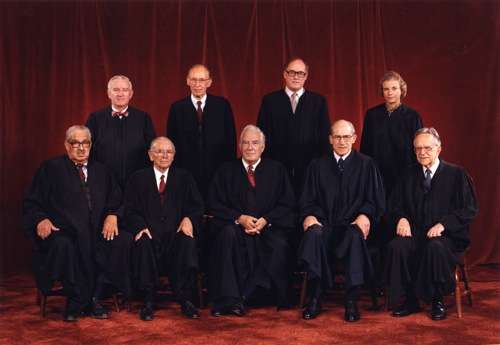
11/30/1981: Harlow v. Fitzgerald argued.
From today's opinion in U.S. v. King County, written by Judge Daniel Bress and joined by Judges Michael Hawkins and Richard Clifton:
For some years, United States Immigration and Customs Enforcement (ICE) chartered flights out of Washington's King County International Airport, also known as Boeing Field, to transport removable aliens from this country elsewhere. At Boeing Field, fixed base operators, or FBOs, lease space from the airport and provide flights with essential services, such as fueling and landing stairs. In 2019, based on its stated disagreement with federal immigration policies, King County promulgated Executive Order PFC-7-1-EO, which directed county officials to ensure that future leases at Boeing Field prohibit FBOs from servicing ICE charter flights. Shortly after the County issued the Executive Order, all three FBOs operating at Boeing Field announced that they would no longer service ICE.
The Ninth Circuit held that King County's actions unconstitutionally violated the "intergovernmental immunity doctrine":
In recognition of the federal government's independence from state control [under the Supremacy Clause], the intergovernmental immunity doctrine prohibits states from "interfering with or controlling the operations of the Federal Government." It does so by proscribing "state laws that either 'regulate the United States directly or discriminate against the Federal Government or those with whom it deals' (e.g., contractors)." … The Executive Order violates the intergovernmental immunity doctrine in two related ways.
First, the Executive Order improperly regulates the way in which the federal government transports noncitizen detainees by preventing ICE from using private FBO contractors at Boeing Field. It is of course true that "[p]rivate contractors do not stand on the same footing as the federal government, so states can impose many laws on federal contractors that they could not apply to the federal government itself." That said, "any state regulation that purports to override the federal government's decisions about who will carry out federal functions runs afoul of the Supremacy Clause."
Our en banc decision in Geo Group, Inc. v. Newsom (9th Cir. 2022) is highly instructive and guides our analysis. At issue in Geo Group was a California law prohibiting the operation of private detention facilities within the state. Because ICE in California "relies almost exclusively on privately operated detention facilities," California's law "g[a]ve California the power to control ICE's immigration detention operations in the state by preventing ICE from hiring the personnel of its choice." This state of affairs amounted to "a 'virtual power of review over the federal determination' of appropriate places of detention" and impermissibly "breach[ed] the core promise of the Supremacy Clause."
BB guns, late deliveries, and a defaulting guard.
Please enjoy the latest edition of Short Circuit, a weekly feature written by a bunch of people at the Institute for Justice. Read More
From the motion for preliminary injunction in Peter v. Lopez (D. Haw.), filed Wednesday:
Plaintiff is a long-term resident of Hawaii who legally lives in the United States pursuant to the Compact of Free Association ("COFA") the United States has with various islands nations located in the Pacific. "The Compact grants [citizens of the Federated States of Micronesia] and citizens of other compact states [Palau and the Marshall Islands] liberal opportunities to work and reside in the United States." COFA aliens "admitted to the United States under the Compacts may reside, work, and study in the United States. They do not have the status of lawful permanent residents (also known as Green Card holders) under the Immigration and Nationality Act (INA)."
Hawaii Revised Statutes § 134-2 generally bans gun ownership by non-citizens (with some exceptions), which covers COFA aliens among others:
In Fotoudis v. City & County of Honolulu (D. Haw. 2014), this Court enjoined H.R.S. § 134-2's prohibition on noncitizen's owning firearms as applied to permanent resident aliens i.e. green card holders. After the Fotoudis ruling, Hawaii maintained a ban on other noncitizen residents of Hawaii. This included U.S. Nationals from the U.S. Territory of America Samoa until a lawsuit was filed. Shortly after the filing of that lawsuit, the State entered into a stipulated injunction which compelled Hawaii to allow U.S. Nationals to own firearms. See Alanoa Nickel v. Connors (D. Haw. 2020) (stipulated injunction as to State of Hawaii's ban on U.S. Nationals owning firearms). Since then, Hawaii has updated H.R.S. § 134-2 to include U.S. Nationals and green card holders as being among those authorized to own firearms. However, Hawaii maintains a flat ban on firearm ownership for other lawfully present aliens including COFA aliens.
Plaintiffs argue the Hawaii ban violates the Second Amendment, and violates the Equal Protection Clause, which generally forbids states (though not the federal government) from discriminating against noncitizens in various ways. An excerpt from the equal protection section:
A Public Service Announcement, especially for the lawyers among our readers.
[I first posted a version of this post in 2020, but I've seen the problem enough since to think it was worth mentioning again.]
I have often run across documents written by lawyers that looked redacted—but all the supposedly secret information in them could be extracted with literally three keystrokes (ctrl-A, ctrl-C, ctrl-V). One was a court filing that was filed pursuant to a court order authorizing the redaction; but the material so carefully marked secret proved not to be secret at all.
Another carefully tried to hide the real name of a litigant whom the lawyer was trying to keep pseudonymous; but the name was one copy-and-paste away from being visible. What's more, when the documents were posted online in searchable spaces, search engines indexed the supposedly hidden material, so searching for the real name would find the document in which the lawyer had been trying to redact the name.
For at least one of the documents, I know what improper redaction mechanism was used: The lawyer used Google Docs to highlight passages using black highlighter, and then saved the document as a PDF. That looked blacked out on the screen; but the underlying text still remained in the PDF document—as far as the software was concerned, the text wasn't removed but was just set in a different color. (Something similar would happen with Microsoft Word.)
Skip love, health, liberty, for believers the grace of God, and the like: They are surely the most important, but they're also pretty obvious. Tell us what material things you most appreciate. They can be big things, such as the unimaginably vast amount of books, music, and video that all of us can have at a moment's notice. (True, 99+% of that is bad, or at least of no interest to us, but it's usually not hard to find the good stuff.) Or they can be tiny things, such as your favorite food. Whatever you'd like, post about it in the comments.
And try to keep the focus on what you're thankful for, not what you loathe or why you think the other commenters are wrong.
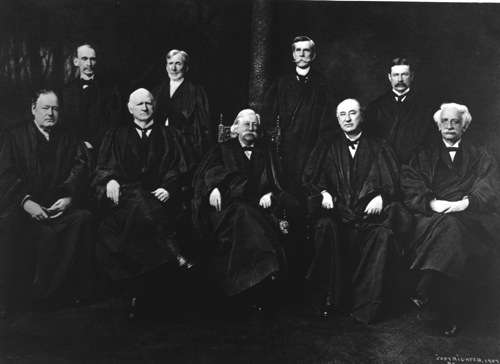
11/28/1872: Justice Samuel Nelson resigns.
What's on your mind?
So holds Judge Evelyn Padin (D.N.J.) in today's Mendham Methodist Church v. Morris County. The court applies recent Supreme Court cases, such as Carson v. Makin (2022) and Espinoza v. Montana Department of Revenue (2020), which hold that "a State violates the Free Exercise Clause when it excludes religious observers from otherwise available public benefits." And it in the process rejects the New Jersey Supreme Court's decision in Freedom From Religious Foundation v. Morris County Board of Chosen Freeholders (N.J. 2018), which interpreted the New Jersey Constitution as mandating such exclusion; FFRF, the court holds, is inconsistent with the more recent Espinoza and Carson cases.
This oversimplifies matters in some measure, but it should offer a good general summary. For more, see the full opinion. Mark M. Roselli of Roselli Griegel Lozier & Lazzaro, PC represents plaintiffs.
From the declaration filed today by the expert witness in Kohls v. Ellison (D. Minn.), a case challenging the Minnesota restriction on AI deepfakes in election campaigns:
[1.] I am writing to acknowledge three citation errors in my expert declaration, which was filed in this case on November 1, 2024 (ECF No. 23). I wrote and reviewed the substance of the declaration, and I stand firmly behind each of the claims made in it, all of which are supported by the most recent scholarly research in the field and reflect my opinion as an expert regarding the impact of AI technology on misinformation and its societal effects. Attached as Exhibit 1 is a redline version of the corrected expert declaration, and attached as Exhibit 2 is a redline version of the corrected list of academic and other references cited in the expert declaration.
[2.] The first citation error appears in paragraph 19 and cites to a nonexistent 2023 article by De keersmaecker & Roets. The correct citation for the proposition is to Hancock & Bailenson (2021), cited in paragraph 17(iv). The second citation error appears in paragraph 21, a citation to a nonexistent 2023 article by Hwang et al., and is identified by the Plaintiffs in their motion to exclude my declaration. The correct citation for that proposition is to Vaccari & Chadwick (2020), which appears in paragraph 20. The third citation error appears in Exhibit C to the declaration (ECF No. 23-1, at 39): the citation to Goldstein et al. lists the first author correctly, but the remaining authors are incorrect. The correct authors are Goldstein, J., Sastry, G., Musser, M., DiResta, R., Gentzel, M., and Sedova, K. I discovered the errors in paragraph 19 and Exhibit C when Plaintiffs brought the error in paragraph 21 to the Court's attention, and I re-reviewed my declaration.
[3.] I apologize to the Court for these three citation errors, and I explain how they came to be below. I did not intend to mislead the Court or counsel. I express my sincere regret for any confusion this may have caused. That said, I stand firmly behind all of the substantive points in the declaration. Both of the correct citations were already cited in the original declaration and should have been included in paragraphs 19 and 21. The substantive points are all supported by the scientific evidence and correcting these errors does not in any way alter my original conclusions.
Celebrate your independence with a subscription to Reason magazine, your most trusted source of honest, insightful news and analysis.