The Volokh Conspiracy

Mostly law professors | Sometimes contrarian | Often libertarian | Always independent | Est. 2002

The Volokh Conspiracy

Free Speech

Can People Suing Sean Combs / P. Diddy for Sexual Assault Proceed as John / Jane Does? Depends on Which Manhattan Federal Judge They Draw

|

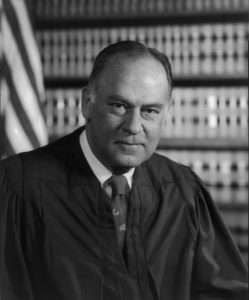
From Doe v. Combs, decided yesterday by Judge Lewis Kaplan (S.D.N.Y.):

Plaintiff "John Doe" claims that Sean Combs, a well-known rapper and record producer, sexually assaulted him, and that several businesses owned or controlled by Combs enabled him to do so. The question before the Court is whether the plaintiff should be permitted to litigate this case without revealing his identity. For the following reasons, the plaintiff's motion to proceed anonymously is denied….

"Federal court proceedings and records presumptively are public absent a showing of exceptional circumstances." Accordingly, "[t]he title of [a] complaint must name all the parties." This rule "serves the vital purpose of facilitating public scrutiny of judicial proceedings and therefore cannot be set aside lightly." … An exception is appropriate "only where the litigant seeking to proceed anonymously has a substantial privacy interest that outweighs any prejudice to the opposing party and 'the customary and constitutionally-embedded presumption of openness in judicial proceedings.'"

The plaintiff alleges that Combs violently raped him in the presence of multiple strangers. Undoubtedly, this is a highly sensitive and personal claim, and the plaintiff's privacy interest is compelling. The first factor thus favors the plaintiff's use of a pseudonym. However, "allegations of sexual assault, by themselves, are not sufficient to entitle a plaintiff to proceed under a pseudonym." …

Read More

Why United Does Not Allow You To Use In-Flight Screen As Extended Display

The limitation is not technology, but confidentiality.

|

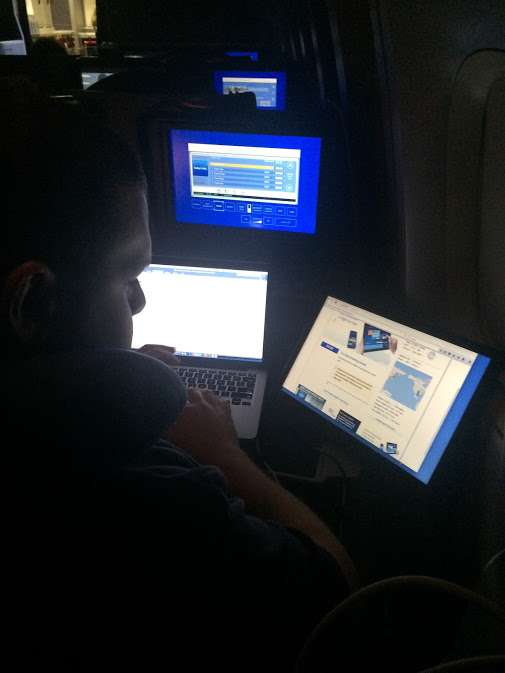
For more than a decade, I have traveled with an extra monitor. It is a life-saver for productivity on the go. Plus, if you keep an HDMI cable, you can use the in-hotel TV as a third display (assuming the inputs are easily accessible). When I am upgraded to business class on an international flight, I have enough room to use both my laptop and external monitor.

Then again, on a flight to Japan, a divine wind caused severe turbulence, and my monitor fell off the top of the seat, and cracked. I didn't do that again.Yet, I've always wanted more screens. I called United many years ago and asked if I could connect my computer to the inflight entertainment screen. There are inputs, and with the right adapters, I could make it work. After some hold, I was told the answer was no, without much explanation. And I thought it would be a bad idea to connect without permission, so I haven't done so.

In recent years, United has installed 4K screens with bluetooth functionality. It should not be difficult to set up wireless screencasting from a device directly to the screen. But that is still not an option. Why?

Finally, I've found out the reason, via The Points Guy:

As more travelers bring their own tablets and laptops on board, I've always wondered why airlines don't offer a screencasting feature on the entertainment screens. After all, it's a lot easier to get work done with some additional screen real estate.

Turns out, United can already technically enable screencasting today, Green said, but a major issue will likely mean that flyers will never see this functionality.

"We've had a lot of pushback from our corporate partners that say they don't necessarily want their staff using publicly available screens," Green said.

It's not that United would have access to any data; it's that they don't want nosy passengers snooping in on their neighbors.

Fascinating. Companies are worried that employees on travel will inadvertently disclose their confidential information on a display, which others can see.

This concern is valid. In the past, I have routinely seen people work on confidential information. I've seen judges write opinions. I've also seen lawyers review documents marked "confidential." And so on. Now, my vision is not as good as it was, so it is difficult for me to read text from more than a row away. But when a person is sitting next to me, I can easily see their screen. Some people have screen protectors on their laptops, but if they were to screencast, that benefit would vanish.

Do I worry about people seeing my screen? Not really. Almost everything I write is intended for public consumption. Maybe my neighbor might see a draft line that I intend to remove, but that risk is low. As for my emails and messages, I generally assume everything I write will one day be blasted on the front page of the New York Times, so I choose my words carefully. (There is not much difference between the messages I write and the blog posts I publish.)

I hope United does reconsider this option at some point. Having one more screen in economy would make my productive increase even more.

Update: A reader writes in with an obvious comment that did not occur to me:

The obvious reason not to let people put things on the screens you own in public is that invariably people will put porn on them, and then you'll have other people complaining that the united screen system is showing porn.

They don't say this because no corporate PR hack is going to talk about porn when it's not necessary. But it's definitely the real reason, and it's one they will not and should not budge on.

AI in Court

Federal Public Defender Submits Brief with Nonexistent Citation, Apparently Refuses to Admit This to the Judge at a Hearing

It's not the hallucination, it's the coverup.

|

A short excerpt from the nearly 10,000-word opinion in U.S. v. Hayes, decided last week by Magistrate Judge Chi Soo Kim (E.D. Cal.):

The Court finds that Mr. Francisco submitted a fictitious or non-existent case and quotation in his written motion to unseal filed on November 21, 2024; knowingly made inaccurate and misleading statements in his written reply filed on December 5, 2024 to the government's opposition that expressly raised the fictitious case and quotation; and knowingly made inaccurate and misleading statements at the December 9, 2024 hearing.

The Court further finds that Mr. Francisco's inaccurate and misleading statements were not inadvertent as claimed, but knowing and made in bad faith. Despite being provided multiple opportunities to candidly acknowledge and correct his errors as required under his duty of candor to the court, Mr. Francisco unfortunately failed to do so….

In his motion to unseal, Mr. Francisco cited eight cases, six of which were cited in near string citation form. The primary case upon which Mr. Francisco relied—analyzing, quoting, describing the district court's analysis, and addressing in two different places in the motion—was "United States v. Harris, 761 F. Supp. 409, 414 (D.D.C. 1991)."

Unfortunately, "United States v. Harris, 761 F. Supp. 409, 414 (D.D.C. 1991)" is not a real case. The citation has all the markings of a hallucinated case created by generative artificial intelligence (AI) tools such as ChatGPT and Google Bard that have been widely discussed by courts grappling with fictitious legal citations and reported by national news outlets. Similar to other fictitious case citations created by generative AI tools, the fictitious "United States v. Harris" case looks like a real case with a case name; a citation to the Federal Supplement, which is the reporter that publishes opinions from federal district courts; identification of a district court; and the year for the decision….

Unlike other cases where counsel and litigants have admitted, sometimes reluctantly, that the fictitious citations and quotations were created by generative AI, Mr. Francisco states that he "did not use and ha[s] never used AI (artificial intelligence) to draft any of my motions." Instead, Mr. Francisco states that he "hastily" drafted the portion of his motion discussing the legislative history of 18 U.S.C. § 3509(d), which includes the fictitious case and quotation. Regarding his citation to the fictitious United States v. Harris case, he states: "I am baffled to say where it came from, first in a case name which does not exist, second from a district and year which does not match the citation volume and page, and third, which never even addresses the Motion's issues. It was an inadvertent drafting error I cannot begin to explain."

Read More

New Essay at Civitas: "Trump Must Pick Judges Who Have Publicly Demonstrated Their Courage"

"The most important predictor of behavior on the bench is judicial courage."

|

Today, the Civitas Institute published my new essay, titled "Trump Must Pick Judges Who Have Publicly Demonstrated Their Courage."

Here is the introduction:

One of the defining legacies of President Trump's first term is the judiciary. He appointed three Supreme Court justices, fifty-four judges to the courts of appeals, and 174 judges to the federal district courts. It is unlikely that Trump will top those numbers in his second term. There are fewer pending vacancies, and fewer judges will be eligible to step down. For these reasons and more, Trump must make every lifetime appointment count. Trump's first batch of picks checked all conventional boxes: they were smart, well-credentialed, and impactful. Trump's three appointees to the Supreme Court have already joined landmark decisions concerning abortion, the Second Amendment, and religious liberty. Moreover, a recent study demonstrates that the Trump lower court nominees have dwarfed the influence of Obama judges, and I suspect there will be an even more significant disparity for Biden judges.

Yet, not all Trump judges are made from the same stuff. While they may share similar judicial philosophy–it is easy enough to profess fidelity to originalism at a confirmation hearing–they do not all put it to the same use. In generations past, scholars and critics charged that some judges were "judicial activists" while others engaged in "judicial restraint." These terms are largely meaningless and fail to account for how judges rule in many cases. Instead, a different metric is a far greater predictor of behavior on the bench: judicial courage. Will a judge's decisions be affected, in any way, by how legal elites will respond? Stated differently, does the judge have a fear of being booed? Any judicial nominee would deny having such a fragile disposition. But there is only one way to prove it: a record of publicly demonstrating courage in the face of criticism by legal elites. If they haven't done it before becoming a judge, they will not do it after becoming a judge. Courage is like a muscle: it must be exercised. Every future Trump nominee should be able to show such steadfastness by word and deed.

And this paragraph will be relevant for FedSoc members:

Third, we should judge a judge by the company he keeps, or in Latin, noscitur a sociis. A recent book demonstrates that judges are likely "to follow the lead of the elite social networks that they are a part of" and "take cues primarily from the people who are closest to them and whose approval they care most about." The people a candidate seeks praise from before the appointment will be those the judge seeks praise from after the appointment. Social circles usually freeze upon confirmation. It is not enough to simply list an affiliation with the Federalist Society on a resume. (Then again, John Roberts denied being a member, while Professor Barrett let her membership lapse for much of her career and never attended the national convention.) The better question is what the candidate has accomplished with that platform. Ask not what FedSoc has done for you; ask what you have done for Fedsoc. Moreover, there should be serious doubts about any candidate who volunteers his time to groups like the American Bar Association, which has been overtly hostile to conservatives.


Free Speech

Trump Executive Order on "Ending Federal Censorship": Free Speech, Private Power, and Government Power Following Murthy v. Missouri

|

Monday, President Trump issued an Executive Order, "Restoring Freedom of Speech and Ending Federal Censorship"; it reads, in relevant part:

Section 1. Purpose. The First Amendment to the United States Constitution, an amendment essential to the success of our Republic, enshrines the right of the American people to speak freely in the public square without Government interference. Over the last 4 years, the previous administration trampled free speech rights by censoring Americans' speech on online platforms, often by exerting substantial coercive pressure on third parties, such as social media companies, to moderate, deplatform, or otherwise suppress speech that the Federal Government did not approve. Under the guise of combatting "misinformation," "disinformation," and "malinformation," the Federal Government infringed on the constitutionally protected speech rights of American citizens across the United States in a manner that advanced the Government's preferred narrative about significant matters of public debate. Government censorship of speech is intolerable in a free society.

Sec. 2. Policy. It is the policy of the United States to: (a) secure the right of the American people to engage in constitutionally protected speech;

(b) ensure that no Federal Government officer, employee, or agent engages in or facilitates any conduct that would unconstitutionally abridge the free speech of any American citizen;

(c) ensure that no taxpayer resources are used to engage in or facilitate any conduct that would unconstitutionally abridge the free speech of any American citizen; and

(d) identify and take appropriate action to correct past misconduct by the Federal Government related to censorship of protected speech.

Read More

Property

Choice of Law in Takings Cases After Tyler v. Hennepin County (IV)

Two modest defenses of Tyler’s choice of law strategy.

|

Yesterday, I finished covering the law and doctrine from my forthcoming article about the Supreme Court case Tyler v. Hennepin County, Minnesota. As I showed on Monday, the U.S. Supreme Court held that surplus equity constitutes "private property" sufficient to support claims under the Takings Clause. As I showed on Tuesday, in the course of reaching that holding, Chief Justice Roberts made a little clearer and more orderly the principles the Court relies on when it makes choice of law decisions in takings litigation. Roberts announced that the Court was following a strategy for takings similar to the strategy it applies for other federal constitutional rights. That general strategy is associated with Indiana ex rel. Anderson v. Brand-start by measuring the right under state law, but measure it with independent sources if the most relevant state laws seem likely to convert the Takings Clause into a dead letter. As I showed yesterday, however, Tyler and earlier takings choice of law cases depart slightly from the Brand strategy. In Tyler, not only did the Court take a second look at the law of Minnesota (consistent with Brand), it also consulted early English and American general law on the question whether surplus equity has been treated as a property right.

To this point, I've tried to explain how Tyler follows and how it departs from different lines of doctrine. And also to this point, I've reserved judgment on whether the Tyler strategy is convincing normatively. I think the Tyler strategy makes a considerable amount of sense, at least when applied in the contexts in which the Court has applied it. Today, I'll explain why-and, why I don't find any of the other strategies likely to be better in the same contexts.

I'm going to make two separate arguments on behalf of the Tyler strategy. One argument relies on originalism. Assume that there are convincing arguments to interpret the Constitution in light of its original meaning. (I know, I know, arguments for originalism are bound to be controversial and contestable. But every justification for any constitutional-interpretation theory is fraught, and I'm persuaded by some of the cases for originalism.)

It is not easy to work out what "private property" meant originally at the Founding. (The problems get even worse if one thinks, as Justice Thomas and I do, that what I've been calling "Takings Clause law" in this series is actually grounded in the Privileges or Immunities Clause of the Fourteenth Amendment.) The sources that early American lawyers knew best and followed most took for granted that property exists, without spelling out exactly what it is. At the same time, competent lawyers do pretty well at sorting different legal entitlements into rights of "property," "contract" and so on without precise working definitions. So the Tyler strategy seems promising. Ordinarily, federal courts can and will just follow state property law. But when state law seems unreliable-or, threatening to some legal entitlement that might constitute constitutional "private property"-courts can cross-check it against early general law.

Read More

Law & Government

Prof. Robert Leider on the arguments in Barnes v. Felix

|

Professor Robert Leider, who writes in both constitutional law and criminal law, passed along these comments on the Supreme Court's recent oral argument in an excessive force case and I thought readers might be interested in them:

For scholars of both criminal law and federal courts, the Supreme Court's oral argument yesterday in Barnes v. Felix will be noteworthy.  The Supreme Court appears dangerously close to sleepwalking into a major revision of police self-defense law.  For federal courts scholars, meanwhile, yesterday's oral argument stood as a painful reminder of how the Court has corrupted certiorari review by detaching itself from deciding actual cases.

Read More

Can The President Unilaterally Declare An Invasion?

Or can only Congress declare an invasion, like Congress has the sole power to declare war?

|

In my post on the invasion executive order, I wrote "I think it pretty clear that the President can declare an invasion." A reader opined that because Congress has the power to declare war, the President cannot unilaterally declare an invasion. Relatedly, a reporter asked me if a President has ever before declared an invasion.

I think the general consensus view is that for the President to use military power abroad as part of a war, Congress must declare war. (There is some debate about whether a declaration is needed for something less than a war, such as "hostilities," but I'll table that issue for now.) I also think the general consensus view is that the President does not need a declaration of war to repel an invasion. That is, if the United States is under attack, the President can act to secure the homeland before seeking authorization from Congress. And if the President can repel an invasion, then he necessarily has the power to declare when such an invasion is occurring.

Thankfully, the United States has suffered very few invasions. Our conflicts generally have been fought abroad. A few of the more prominent invasions would be the War of 1812 and Pearl Harbor. In both conflicts, Congress issued declarations of war against Great Britain and Japan, respectively. On short notice, I could not find anything from President Madison that is relevant for the War of 1812. But I find relevant President Franklin D. Roosevelt's "Day of Infamy" speech, delivered on December 8, 1841. This speech asked that Congress declare war between the United States and Japan. Yet, FDR had already determined that Japan invaded the United States. He spoke to the invasion directly:

"No matter how long it may take us to overcome this premeditated invasion, the American people in their righteous might will win through to absolute victory."

Read More

Free Speech

Free Speech and Private Power: Restraints on Government Officials Moderating Online Content Following Lindke

|

[I am serializing my short Harvard Law Review Forum essay titled "Free Speech and Private Power", responding to the Harvard Law Review's publication of Evelyn Douek & Genevieve Lakier's excellent new article, Lochner.com? I actually agree with much of what Douek & Lakier say, but offer a somewhat different perspective on the matter, mostly asking what the Court's recent cases mean going forward, rather than trying to critique them.]

[This post is about Lindke v. Freed, which (to oversimplify) held that a public official's blocking commenters from the official's social media page based on their viewpoints constitutes "state action" and thus potentially violates the First Amendment "only if the official (1) possessed actual authority to speak on the State's behalf, and (2) purported to exercise that authority when he spoke on social media. The appearance and function of the social-media activity are relevant at the second step, but they cannot make up for a lack of state authority at the first."]

Lindke, like Murthy [v. Missouri], asked the Court to draw a line between public power, which is constrained by the First Amendment, and private power, which is not. But in Lindke, a government official was indubitably acting: The question was whether the official was acting as an official or as a private citizen.

Here I think I disagree in some measure with Douek and Lakier's analysis, though more as a matter of emphasis: I appreciate their critiques of the Lindke opinion, but think that on balance the opinion makes sense, because the "space of privacy for government officials when they use[] social media to publicize their work and promote their political agenda" is indeed worth preserving.

Before being anything else, after all, officials are people. They often act the way other people act, and are entitled to considerable latitude in doing so. Thus, for instance, even when the Establishment Clause was seen as generally restricting governmental endorsement of religion, individual officials remained free to go to church and avow their own faith, in their individual capacities—and even to include religious references in their public speeches. Indeed, attempts to protect the state from undue capture by the church were themselves struck down on First Amendment grounds when they interfered with officials' ability to be both public servants and clergy members. Likewise, equal protection principles limit government officials' power to discriminate based on sex when choosing government employees, but presumably not when choosing, say, roommates, where such discrimination may itself be constitutionally protected.

Read More

Property

Choice of Law in Takings Cases After Tyler v. Hennepin County (III)

The Court’s departures from standard choice of law principles (or, takings doctrine for federal courts gurus).

|

Let me sum up what I've shown so far in this series about my forthcoming article about the Supreme Court case Tyler v. Hennepin County, Minnesota. As I showed on Monday, the U.S. Supreme Court held that surplus equity constitutes "private property" sufficient to support claims under the Takings Clause. To reach that holding, Chief Justice Roberts (author of the Court's opinion in Tyler) consulted legal sources that seem odd to property lawyers. Takings cases like Webb's Fabulous Pharmacies v. Beckwith seem to hold that, "[b]ecause the Constitution protects rather than creates property interests, the existence of a property interest is determined to reference to existing rules or understandings that seem from an independent source such as state law." But Roberts did not look solely at state law; he also consulted a wide range of sources from early English and American law. As I showed yesterday, however, Roberts was not free-lancing; he was following choice of law principles familiar from federal constitutional law and federal courts doctrine. When state actors seem to be converting a federal constitutional right into a "dead letter," the Court held in Indiana ex rel. Anderson v. Brand, federal courts can look past the most relevant sources of state law and measure a plaintiff's federal constitutional rights independently.

In Tyler, the Court followed Brand's principle in part. In Brand, to measure Anderson's contractual rights, the Court looked past the Indiana judicial opinions about her tenure and studied Indiana statutes about teacher tenure and Indiana contracts case law. In Tyler, Minnesota private creditors don't get to keep surplus equity after foreclosures, the Court noted, and Minnesota state agencies don't get to keep the equity in foreclosed-on property besides real estate.

But in Tyler the Court followed the Brand principle only in part. The Court consulted many legal sources besides Minnesota sources, from early English and American practice, and from its own case law. And even if the Court had followed Brand in every respect, Tyler could not have revolutionized choice of law doctrine in federal takings litigation. Tyler broke some new ground, but it didn't and couldn't displace earlier precedents on different choice of law takings problems.

Read More

Trump's Executive Order Banning Affirmative Action and DEI Preferences

|

This is radical stuff, at least relative to the status quo in the government for decades:

01/21/25
EXECUTIVE ORDER
ENDING ILLEGAL DISCRIMINATION AND
RESTORING MERIT-BASED OPPORTUNITY
By the authority vested in me as President by the Constitution and the laws of the United States of America, it is hereby ordered:

Section 1. Purpose. Longstanding Federal civil-rights laws protect individual Americans from discrimination based on race, color, religion, sex, or national origin. These civil-rights protections serve as a bedrock supporting equality of opportunity for all Americans. As President, I have a solemn duty to ensure that these laws are enforced for the benefit of all Americans.

Yet today, roughly 60 years after the passage of the Civil Rights Act of 1964, critical and influential institutions of American society, including the Federal Government, major corporations, financial institutions, the medical industry, large commercial airlines, law enforcement agencies, and institutions of higher education have adopted and actively use dangerous, demeaning, and immoral race- and sex-based preferences under the guise of so-called "diversity, equity, and inclusion" (DEI) or "diversity, equity, inclusion, and accessibility" (DEIA) that can violate the civil-rights laws of this Nation.

Illegal DEI and DEIA policies not only violate the text and spirit of our longstanding Federal civil-rights laws, they also undermine our national unity, as they deny, discredit, and undermine the traditional American values of hard work, excellence, and individual achievement in favor of an unlawful, corrosive, and pernicious identity-based spoils system. Hardworking Americans who deserve a shot at the American Dream should not be stigmatized, demeaned, or shut out of opportunities because of their race or sex.

These illegal DEI and DEIA policies also threaten the safety of American men, women, and children across the Nation by diminishing the importance of individual merit, aptitude, hard work, and determination when selecting people for jobs and services in key sectors of American society, including all levels of government, and the medical, aviation, and law-enforcement communities. Yet in case after tragic case, the American people have witnessed first-hand the disastrous consequences of illegal, pernicious discrimination that has prioritized how people were born instead of what they were capable of doing.

The Federal Government is charged with enforcing our civil-rights laws. The purpose of this order is to ensure that it does so by ending illegal preferences and discrimination.

Sec. 2. Policy. It is the policy of the United States to protect the civil rights of all Americans and to promote individual initiative, excellence, and hard work. I therefore order all executive departments and agencies (agencies) to terminate all discriminatory and illegal preferences, mandates, policies, programs, activities, guidance, regulations, enforcement actions, consent orders, and requirements. I further order all agencies to enforce our longstanding civil-rights laws and to combat illegal private-sector DEI preferences, mandates, policies, programs, and activities.

Sec. 3. Terminating Illegal Discrimination in the Federal Government. (a) The following executive actions are hereby revoked:
(i) Executive Order 12898 of February 11, 1994 (Federal Actions to Address Environmental Justice in Minority Populations and Low-Income Populations);
(ii) Executive Order 13583 of August 18, 2011 (Establishing a Coordinated Government-wide Initiative to Promote Diversity and Inclusion in the Federal Workforce);
(iii) Executive Order 13672 of July 21, 2014 (Further Amendments to Executive Order 11478, Equal Employment Opportunity in the Federal Government, and Executive Order 11246, Equal Employment Opportunity); and
(iv) The Presidential Memorandum of October 5, 2016 (Promoting Diversity and Inclusion in the National Security Workforce).
(b) The Federal contracting process shall be streamlined to enhance speed and efficiency, reduce costs, and require Federal contractors and subcontractors to comply with our civil-rights laws. Accordingly:
(i) Executive Order 11246 of September 24, 1965 (Equal Employment Opportunity), is hereby revoked. For 90 days from the date of this order, Federal contractors may continue to comply with the regulatory scheme in effect on January 20, 2025.
(ii) The Office of Federal Contract Compliance Programs within the Department of Labor shall immediately cease:
(A) Promoting "diversity";
(B) Holding Federal contractors and subcontractors responsible for taking "affirmative action"; and
(C) Allowing or encouraging Federal contractors and subcontractors to engage in workforce balancing based on race, color, sex, sexual preference, religion, or national origin.
(iii) In accordance with Executive Order 13279 of December 12, 2002 (Equal Protection of the Laws for Faith-Based and Community Organizations), the employment, procurement, and contracting practices of Federal contractors and subcontractors shall not consider race, color, sex, sexual preference, religion, or national origin in ways that violate the Nation's civil rights laws.
(iv) The head of each agency shall include in every contract or grant award:
(A) A term requiring the contractual counterparty or grant recipient to agree that its compliance in all respects with all applicable Federal anti-discrimination laws is material to the government's payment decisions for purposes of section 3729(b)(4) of title 31, United States Code; and
(B) A term requiring such counterparty or recipient to certify that it does not operate any programs promoting DEI that violate any applicable Federal anti-discrimination laws.
(c) The Director of the Office of Management and Budget (OMB), with the assistance of the Attorney General as requested, shall:
(i) Review and revise, as appropriate, all Government-wide processes, directives, and guidance;
(ii) Excise references to DEI and DEIA principles, under whatever name they may appear, from Federal acquisition, contracting, grants, and financial assistance procedures to streamline those procedures, improve speed and efficiency, lower costs, and comply with civil-rights laws; and
(iii) Terminate all "diversity," "equity," "equitable decision-making," "equitable deployment of financial and technical assistance," "advancing equity," and like mandates, requirements, programs, or activities, as appropriate. Read More


DHS Will Enforce Expedited Removal To "Full Scope Of Its Statutory Authority"

DHS will subject to expedited removal aliens "who are apprehended anywhere in the United States more than 100 air miles from a U.S. international land border, and who have been continuously present in the United States for less than two years"

|

On Tuesday evening, DHS announced that it would expand expedited removal to the full extent authorized by statute. Expedited removal empowers the government to remove an alien with far fewer processes and protections. Now, expedited removal would apply regardless of where the alien is apprehended.

The order provides:

I designate for expedited removal the following categories of aliens not currently designated: (1) Aliens who did not arrive by sea, who are apprehended anywhere in the United States more than 100 air miles from a U.S. international land border, and who have been continuously present in the United States for less than two years; and (2) aliens who did not arrive by sea, who are apprehended within 100 air miles from a U.S. international land border, and who have been continuously present in the United States for at least 14 days but for less than two years. Each alien placed in expedited removal under this designation bears the affirmative burden to show to the satisfaction of an immigration officer that the alien has been present in the United States continuously for the relevant period. This designation does not apply to aliens who arrive at U.S. ports of entry, because those aliens are already subject to expedited removal. Nor does this designation apply to or otherwise affect aliens who satisfy the expedited removal criteria set forth in any of the previous designations.

I wrote about expedited removal in this post from 2017. Trump was thwarted in enacting this sort of policy in his first administration, but it seems he is doing so right away in the second administration.

Get ready for litigation about whether this policy violates the Suspension Clause. Peter Margulies wrote about this issue in 2020.

SCOTUS GVRs Capital Case After 13 Reschedules And 10 Relists

It seems to have taken some time to corral Justice Barrett's vote in a case involving evidence and sex-based slurs.

|

Andrew v. White, a capital case has been floating around a year. On January 22, 2024, the cert petition was filed. And on January 21, 2025, the Supreme Court GVR'd the case. The per curiam begins

An Oklahoma jury convicted Brenda Andrew of murdering her husband, Rob Andrew, and sentenced her to death. The State spent significant time at trial introducing evidence about Andrew's sex life and about her failings as a mother and wife, much of which it later conceded was irrelevant. In a federal habeas petition, Andrew argued that this evidence had been so prejudicial as to violate the Due Process Clause. The Court of Appeals rejected that claim because, it thought, no holding of this Court established a general rule that the erroneous admission of prejudicial evidence could violate due process. That was wrong. By thetime of Andrew's trial, this Court had made clear that when "evidence is introduced that is so unduly prejudicial that itrenders the trial fundamentally unfair, the Due Process Clause of the Fourteenth Amendment provides a mechanism for relief." Payne v. Tennessee, 501 U. S. 808, 825 (1991).

John Elwood offered this summary of the history at Petitions to Watch:

(Rescheduled before the March 28, April 5, April 12, April 19, April 26, May 9, May 16, May 23, May 30, June 6, June 13, June 20, and July 1 conferences; relisted after the Sept. 30, Oct. 11, Oct. 18, Nov. 1, Nov. 8, Nov. 15, Nov. 22, Dec. 6, Dec. 13 and Jan. 10 conferences.)

Can that be right? 13 reschedules and ten relists? That is a lot of arm-twisting and cajoling to get a GVR. One of my proposals for bilateral judicial reform is that the Justices would have to resolve a cert petition within 90 days after it is filed. As they say, grant or get off the pot.

For certain, Justices Thomas and Gorsuch dissented from the order. And I doubt Justice Kavanaugh would note a dissent from this fact pattern, in particular. Justice Alito concurred in the judgment  If I had to guess, it took the liberals some time to persuade Justice Barrett to go along with a GVR. The entire case is about evidence. In particular, evidentiary issues concerning slurs against women. See Footnote 1:

Similarly, the dissent asserts thatAndrew falsely accuses the prosecution of calling her a "slut puppy" in closing argument. Post, at 7, n. 3 (opinion of THOMAS, J.). Whether the prosecution quoted something it believed Andrew once said to suggest to the jury that Andrew herself was a "slut puppy," or simply to recite an alleged abusive phone call, is a question of fact for the Tenth Circuit to resolve.

Note to practitioners: if you want Justice Barrett's vote, make the case about evidence.

Just yesterday I noted that Justice Barrett may be the weakest link among conservatives in capital cases. This case is another data point.

This is one reversal of the Oklahoma Court of Criminal Appeals. Let's see what happens in Glossip.

President Trump's Invasion Executive Order

|

President Trump's order concerning an invasion at the southern border is the most full-throated endorsement of Article II powers I've seen in some time.

First, the opinion cites U.S. ex rel. Knauff v. Shaughnessy (1950), which recognized that "The exclusion of aliens is a fundamental act of sovereignty . . . [that] is inherent in the executive power to control the foreign affairs of the nation." During the travel ban litigation, several litigants suggested that this case was no longer good law. But Trump is invoking it, head-on.

Second, Trump explains one of the grand bargains behind the Constitution:

In joining the Union, the States agreed to surrender much of their sovereignty and join the Union in exchange for the Federal Government's promise in Article IV, Section 4 of the U.S. Constitution, to "protect each of [the States] against Invasion."

This provision is part of the seldom-studied guarantee clause.

The United States shall guarantee to every State in this Union a Republican Form of Government, and shall protect each of them against Invasion; and on Application of the Legislature, or of the Executive (when the Legislature cannot be convened) against domestic Violence.

It is widely understood under Luther v. Borden that a determination under the Guarantee Clause is a political question. Then again, in 2021, none of the Justices could remember the name of the case, and Tara Grove has challenged that conventional wisdom. If a finding of an invasion is a political question, there is little for the judiciary to do to second guess that finding--that includes Judge Ezra, who I suspect will be a lot less busy over the next four years.

Third, Trump concludes that the federal government has failed this obligation.

I have determined that the current state of the southern border reveals that the Federal Government has failed in fulfilling this obligation to the States and hereby declare that an invasion is ongoing at the southern border, which requires the Federal Government to take measures to fulfill its obligation to the States.

This finding is significant. Texas has argued there is an invasion, which activates certain powers in Article I, Section 10, Clause 3. Specifically, a state can "engage in War, [when] actually invaded." And Trump has made a declaration of invasion. I am skeptical that the courts can second-guess this finding. Judge Ho addressed this point in United States v. Abbot:

Courts have no business deciding which national security threats are sufficiently serious to warrant a military response, and which are not. Supreme Court precedent and longstanding Executive Branch practice confirm that, when a President decides to use military force, that's a nonjusticiable political question not susceptible to judicial reversal. I see no principled basis for treating such authority differently when it's invoked by a Governor rather than by a President. If anything, a State's authority to "engage in War" in response to invasion "without the Consent of Congress" is even more textually explicit than the President's.

Whatever role the Governor has to declare an invasion, I think it pretty clear that the President can declare an invasion. And this determination would seem to be a political question.

Fourth, Trump argues that the INA does not "occupy the field," and the President retains inherent authority to exclude and remove invading aliens:

The INA does not, however, occupy the Federal Government's field of authority to protect the sovereignty of the United States, particularly in times of emergency when entire provisions of the INA are rendered ineffective by operational constraints, such as when there is an ongoing invasion into the States. The President's inherent powers to control the borders of the United States, including those deriving from his authority to control the foreign affairs of the United States, necessarily include the ability to prevent the physical entry of aliens involved in an invasion into the United States, and to rapidly repatriate them to an alternative location. Only through such measures can the President guarantee the right of each State to be protected against invasion.

And Trump uses this power to block entry of all invaders at the southern border:

By the power vested in me by the Constitution and the laws of the United States, I have determined that the current situation at the southern border qualifies as an invasion under Article IV, Section 4 of the Constitution of the United States.  Accordingly, I am issuing this Proclamation based on my express and inherent powers in Article II of the Constitution of the United States, and in faithful execution of the immigration laws passed by the Congress, and suspending the physical entry of aliens involved in an invasion into the United States across the southern border until I determine that the invasion has concluded.

Fifth, Trump is making an Article II override argument. Specifically, separate and apart from Section 1182(f), the President has inherent power to deny entry to invaders, and repatriate them elsewhere. Trump uses this argument to override other statutory protections:

Sec. 2. Imposition of Restrictions on Entry for Aliens Invading the United States. I hereby proclaim, pursuant to sections 212(f) and 215(a) of the INA, 8 U.S.C. 1182(f) and 1185(a), that aliens engaged in the invasion across the southern border of the United States on or after the date of this proclamation are restricted from invoking provisions of the INA that would permit their continued presence in the United States, including, but not limited to, section 208 of the INA, 8 U.S.C. 1158, until I issue a finding that the invasion at the southern border has ceased.

Section 1158 concerns asylum. Yes, Trump is arguing his Article II power overrides congressional asylum protections, some of which may in fact implement treaties. This provision is like an exam fact pattern to test the Supremacy Clause.

Sixth, Trump also delegates his full constitutional authority to the Secretary of Homeland Security to stop the invasion:

Sec. 4.  Constitutional Suspension of Physical Entry.  Under the authorities provided to me under Article II of the Constitution of the United States, including my control over foreign affairs, and to effectuate the guarantee of protection against invasion required by Article IV, Section 4, I hereby suspend the physical entry of any alien engaged in the invasion across the southern border of the United States, and direct the Secretary of Homeland Security, in coordination with the Secretary of State and the Attorney General, to take appropriate actions as may be necessary to achieve the objectives of this proclamation, until I issue a finding that the invasion at the southern border has ceased.

This is a sweeping delegation of authority from the President to his cabinet.

Specifically, the Secretary can "repel, repatriate, or remove" aliens, as provided for by Article II of the Constitution:

Sec. 5.  Operational Actions to Repel the Invasion.  The Secretary of Homeland Security, in coordination with the Secretary of State and the Attorney General, shall take all appropriate action to repel, repatriate, or remove any alien engaged in the invasion across the southern border of the United States on or after the date of this order, whether as an exercise of the suspension power in section 212(f) and 215(a) of the INA, 8 U.S.C. 1182(f) and 1185(a), or as an exercise of my delegated authority under the Constitution of the United States, until I issue a finding that the invasion at the southern border has ceased.

Unlike some of the other orders, which go into effect in the future, the invasion order is effective immediate. I have not seen a challenge, yet.

The birthright citizenship order has been getting the most attention. But the invasion order arises in the area of most constitutional uncertainty. There just isn't much law to go on here, and the courts will flounder trying to decide these issues.

More