
2/13/16: Justice Antonin Scalia died.
Today in Supreme Court History

Mostly law professors | Sometimes contrarian | Often libertarian | Always independent | Est. 2002
Today in Supreme Court History
2/13/16: Justice Antonin Scalia died.
What's on your mind?
So holds the Florida Court of Appeal, rejecting the members' claim that they aren't subject to personal jurisdiction in Florida. The majority doesn't discuss the substantive merits of the case.
From Alexander v. Trump, decided today by Florida Court of Appeal Justices Jeffrey Kuntz, Burton Conner, and Ed Artau:
President Donald J. Trump, a Florida resident, sued nineteen individual members of the Pulitzer Prize Board, an unincorporated association, for defamation and conspiracy. Trump alleged that he sent letters on his personal letterhead to members of the Pulitzer Prize Board. The letters demanded the Pulitzer Prize Board take action to strip The Washington Post and The New York Times of the Pulitzer Prize awarded in 2018 for articles on purported Russian interference in the 2016 presidential election and alleged connections to Trump.
After Trump sent the letters, the Pulitzer Prize Board met remotely and concluded "no passage or headlines, contentions or assertions in any of the winning submissions were discredited by facts that emerged subsequent to the conferral of the prizes." The Board then issued the following statement on its website, with links to the original articles:
A Statement from the Pulitzer Prize Board
The Pulitzer Prize Board has an established, formal process by which complaints against winning entries are carefully reviewed. In the last three years, the Pulitzer Board has received inquiries, including from former President Donald Trump, about submissions from The New York Times and The Washington Post on Russian interference in the U.S. election and its connections to the Trump campaign--submissions that jointly won the 2018 National Reporting prize.
These inquiries prompted the Pulitzer Board to commission two independent reviews of the work submitted by those organizations to our National Reporting competition. Both reviews were conducted by individuals with no connection to the institutions whose work was under examination, nor any connection to each other. The separate reviews converged in their conclusions: that no passages or headlines, contentions or assertions in any of the winning submissions were discredited by facts that emerged subsequent to the conferral of the prizes.
The 2018 Pulitzer Prizes in National Reporting stand.
From a message just circulated by the UCLA Chancellor:
Dear Bruin Community:
At UCLA, there is always room for discourse and for passionate debate of different points of view. In fact, they are vital to institutions of higher learning. Discourse helps us question our ideas and see new perspectives, and it ultimately leads to growth. Rigorous, healthy dialogue is central to everything we do to advance knowledge.
What there should never be room for is violence.
No one should ever fear for their safety. Without the basic feeling of safety, humans cannot learn, teach, work and live — much less thrive and flourish. This is true no matter what group you are a member of — or which identities you hold. There is no place for violence in our Bruin community.
That is why I am personally letting you know that the UCLA Office of Student Conduct has issued an interim suspension today to two registered student organizations, Students for Justice in Palestine (SJP) and Graduate Students for Justice in Palestine (GSJP), based on its review of initial reports about the groups' involvement in an incident last week at the home of UC Regent Jay Sures.
As has been reported publicly, both in the press and in social media posts by the groups themselves:
• On February 5, 2025, individuals affiliated with the student groups harassed Mr. Sures and members of his family outside his home.
• Individuals surrounded the vehicle of a Sures family member and prevented that family member's free movement.
• Individuals pounded on drums, chanting and holding signs with threatening messages such as "Jonathan Sures you will pay, until you see your final day."
• Individuals vandalized the Sures home by applying red-colored handprints to the outer walls of the home and hung banners on the property's hedges.
"Lily accused Gunther of 'Gaslighting' (underscoring omitted) by denying he suffered from steroid-induced rages during their marriage and denying Lily's contributions to Gunther's career success."
From Shia v. Shia, decided Jan. 27 by the California Court of Appeal (Justice Helen Bendix, joined by Justices Gregory Weingart & Michelle Kim):
Lily Shia appeals from an order denying a domestic violence restraining order against respondent Gunther Shia, her ex-husband. Both parties are self-represented on appeal. Lily fails to show the family law court erred by declining to consider many of Lily's allegations of abuse on the basis that they already had been litigated and decided in Gunther's favor. We further hold Lily's remaining allegations are not supported by substantial evidence or were not properly before the family law court….
The decision is long and involves lots of allegations, but here's the one that struck me:
From Espinoza v. CGJC Holdings LLC, decided today by Judge Denise Cote (S.D.N.Y.):
The following facts are taken from the pleadings. They are assumed to be true for the purposes of this motion.
Espinoza worked for approximately one year as a phone server at Joe and Pat's Pizzeria and Restaurant …, which is owned by CGJC Holdings. The individual defendants in this action … are all co-owners and managers of the Restaurant.
Defendants allege that they chose to terminate Espinoza's employment at the Restaurant after Espinoza posted the following statement as a "story" on her Instagram social media page on October 22, 2020 (the "October 2020 Post"):
[I]f you thinking about coming to eat at my job, dont [because] my manager told me he's voting for trump dont give racists your money !!!
Defendants further allege that the October 2020 Post was publicly available to "thousands" of people, that the Restaurant was the "only employer" Espinoza identified in her public profile at the time, and that it was "widely known" that the individual defendants were owners or managers of the Restaurant.
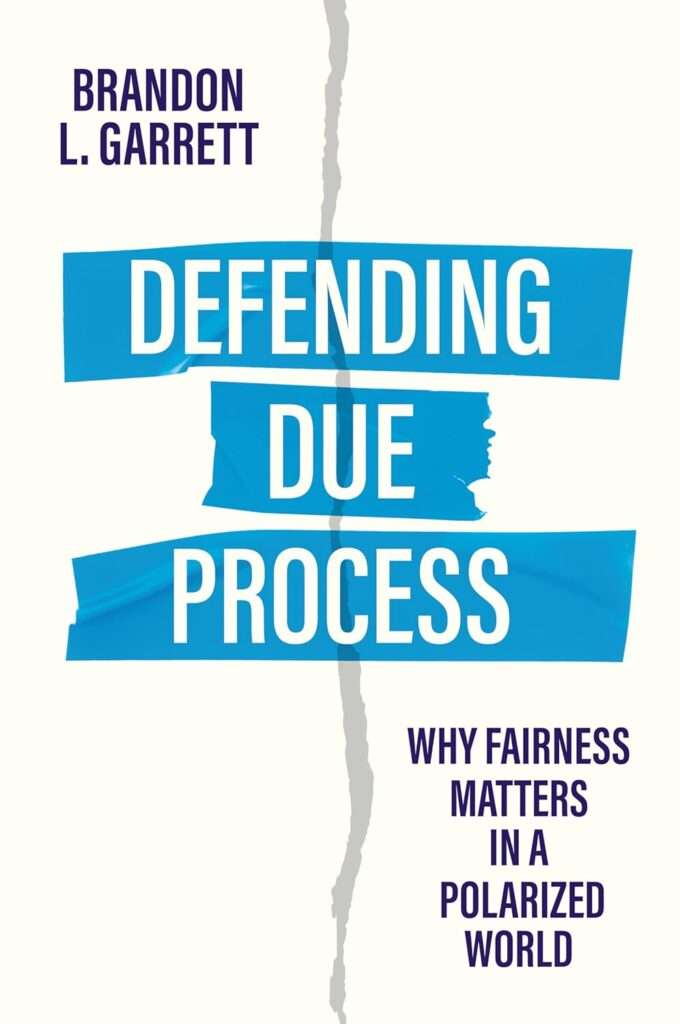
How should we weight the costs and benefits when we conduct due process balancing?
In 2016, Maranda ODonnell was arrested in Harris County, Texas, which includes the city of Houston, for driving with a suspended license to her mother's house in order to pick up her 4-year-old daughter. ODonnell's bail was set according to a fixed written schedule that the judicial officers had to follow in Harris County, Texas at the time. Like hundreds of thousands of others, she did not have a public defender. ODonnell lived "paycheck to paycheck," said she was "worried about whether [her] job will still be there when I get out," and simply could not afford to "buy [her] release from jail." At a brief hearing, the hearing officer set cash bail at $2,500 more than she could afford—and she was jailed.
ODonnell joined a federal civil rights lawsuit challenging these bail practices as an unfair due process violation. In 2017, federal judge Lee Rosenthal found the practices unconstitutional, relying on a detailed set of factual findings, and concluded that Harris County's misdemeanor bail policy violated the Due Process Clause. In 2019, the parties entered a Consent Decree, the first of its kind in the country, which required that most people arrested for misdemeanors be promptly released without having to pay for their freedom, and that more due process, including discovery and public defenders, be provided at bail hearings.
Since March 2020, I have served as the court-appointed monitor for the settlement, along with my colleagues and friends, law professor Sandra Guerra Thompson from the University of Houston Law Center, economics professor Songman Kang from Sungkyunkwan University in Seoul, Korea, and political scientist Dottie Carmichael from Texas A&M University. As monitors, we closely studied the bail reforms in Harris County.
What we learned surprised us. We knew that ending the cash bail system would free tens of thousands of people each year who would otherwise have ended up in jail. Before the consent decree, 90 percent of people arrested for misdemeanors had secured bonds imposed, which had to be paid before being released, and almost all were higher than $500. Afterwards, nearly 90 percent of misdemeanor arrestees were released on bond, mostly for $100 or less. We knew that liberty would benefit from this Consent Decree.
In the years of our work studying these reforms, however, we also consistently found that these reforms also powerfully benefited public safety. Every year since the reforms took effect, both misdemeanor arrests and rearrests have both declined. We recently summarized these findings in a law review article, and I discuss them more briefly in my new book.
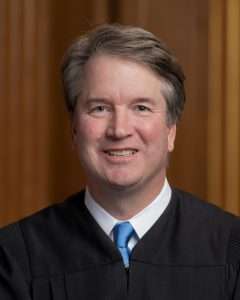
2/12/1965: Justice Brett Kavanaugh's birthday.
Judge Bibas, sitting by designation in the District of Delaware, revises his prior summary judgment opinion.
There is a long-running dispute between Thompson-Reuters and Ross. TR alleges that Ross used the Westlaw headnotes to train a competing AI product. In 2023, Judge Bibas largely ruled against TR. But on the eve of trial, the case was stayed. Today, Judge Bibas issued a revised opinion. In short, he changed his mind.
The opinion begins:
A smart man knows when he is right; a wise man knows when he is wrong. Wisdom does not always find me, so I try to embrace it when it does––even if it comes late, as it did here. I thus revise my 2023 summary judgment opinion and order in this case.
Felix Frankfurter wrote in a dissent, "Wisdom too often never comes, and so one ought not to reject it merely because it comes late." However, Frankfurter almost certainly did not make this quote up. Sir Arthur Conan Doyle wrote in a Holmes short story, "but it is better to learn wisdom late than never to learn it at all." And I'm certain others said it before him. Judge Bibas channels that higher power.
Bibas explains his new thinking on headnotes:
A headnote is a short, key point of law chiseled out of a lengthy judicial opinion. The text of judicial opinions is not copyrightable. Banks v. Manchester, 128 U.S. 244, 253–54 (1888). And even if it were, Thomson Reuters would not get that copyright because it did not write the opinions. But a headnote can introduce creativity by distilling, synthesizing, or explaining part of an opinion, and thus be copyrightable. That is why I have changed my mind.
Kudos to Judge Bibas. People should always be open to revising their thinking. And even better, they should explain why they changed their minds. This opinion demonstrates that virtue.
Prosecutorial discretion comes full circle.
In June 2012, the Obama Administration announced the policy that became known as DACA. Several days later, Justice Scalia lambasted that policy while announcing his Arizona v. United States dissent. He charged that it "has come to pass and is with us today . . . a federal government that does not want to enforce the immigration laws as written." Over the next several years, President Obama routinely suspended enforcement of various mandates under the Affordable Care Act.
I often sounded a lonely note that these actions were unlawful, and set a dangerous precedent. Yet, the constant refrain was that the President had discretion, and these actions were within the law. I replied that this power of non-enforcement was far more dangerous in the hands of a conservative president. After all, progressives tend to like more law, while conservatives favor less law.
And so it has come to pass. President Trump signed an executive order pausing enforcement of prosecutions under the Foreign Corrupt Practices Act (FCPA):
For a period of 180 days following the date of this order, the Attorney General shall review guidelines and policies governing investigations and enforcement actions under the FCPA. During the review period, the Attorney General shall:
(i) cease initiation of any new FCPA investigations or enforcement actions, unless the Attorney General determines that an individual exception should be made;
To be clear, this is not a total suspension of the law. The Attorney General retains the discretion to make exceptions to the Presidents order. Though as a practical matter, I would be surprised if any new FCPA actions are initiated over the next six months.
What is the justification to halt enforcement of this law? Trump alludes to his Article II power over foreign affairs.
Purpose and Policy. Since its enactment in 1977, the Foreign Corrupt Practices Act (15 U.S.C. 78dd-1 et seq.) (FCPA) has been systematically, and to a steadily increasing degree, stretched beyond proper bounds and abused in a manner that harms the interests of the United States. Current FCPA enforcement impedes the United States' foreign policy objectives and therefore implicates the President's Article II authority over foreign affairs.
The President's foreign policy authority is inextricably linked with the global economic competitiveness of American companies. American national security depends in substantial part on the United States and its companies gaining strategic business advantages whether in critical minerals, deep-water ports, or other key infrastructure or assets.
But overexpansive and unpredictable FCPA enforcement against American citizens and businesses — by our own Government — for routine business practices in other nations not only wastes limited prosecutorial resources that could be dedicated to preserving American freedoms, but actively harms American economic competitiveness and, therefore, national security.
It is therefore the policy of my Administration to preserve the Presidential authority to conduct foreign affairs and advance American economic and national security by eliminating excessive barriers to American commerce abroad.
During all of the debates over DACA and ACA, President Obama never invoked any sort of Article II power. To the extent he was relying on discretion, it had to be granted by statute. Here, Trump connects his opposition to FCPA prosecutions with his approach to foreign affairs.
DACA, ACA, FCPA. Prosecutorial discretion comes full circle.
The administration may be moving in that direction. If it does so and gets away with it, the consequences are likely to be dire.
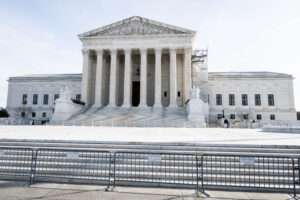
The new Trump administration may be heading in the direction of disobeying court orders that go against it. If they do so and get away with it, there are likely to be dire consequences for our constitutional system. An administration not bound by court orders is ultimately not bound by the Constitution and the laws, either.
Evidence indicates that the Trump administration is in violation of court orders in as many as three separate cases. A federal court in Rhode Island has ruled that they violated its previous order barring Trump's funding freeze on federal grants. There are also indications that the administration has violated court orders against policies freezing federal grants from the National Institute of Health and FEMA.
At the same time, top administration officials including VP J.D. Vance have implied that the administration has the power to violate court orders.Vance says that "[j]udges aren't allowed to control the executive's legitimate power." Top Trump adviser Stephen Miller asserts there is no "line in the Constitution where it says a lone unelected district judge can assume decision-making control over the entire executive branch." This despite the fact that Miller himself – along with other conservatives – supported similar lawsuits and judicial injunctions issued by "lone" district judges against Biden Administration policies, such as student loan forgiveness.
As yet, it is not completely clear that the administration plans to systematically defy court orders that go against it. Violations that have occurred so far might be a result of incompetence or disorganization. And it is possible to parse Vance's statement in a way that avoids endorsing defiance of judicial rulings. But the combination of multiple violations and statements by high officials apparently condoning such behavior is ominous, to say the least. If Vance and other administration officials don't really mean to endorse defiance of judicial rulings, they could easily say so.
Federal court decisions blocking implementation of illegal administration policies are a fundamental element of our system of judicial review. Article III of the Constitution states that "The Judicial Power shall extend to all Cases, in Law and Equity, arising under this Constitution, the Laws of the United States, and Treaties made, or which shall be made, under their Authority." That obviously includes cases challenging the legality of policies adopted by the executive branch. And, just as obviously, courts cannot exercise that authority effectively if the executive (or anyone else) is free to disregard rulings they don't like.
Some defenders of Trump's actions cite Biden's policies on student loan forgiveness as a kind of precedent. Biden did boast that the Supreme Court's (correct) ruling in Biden v. Missouri "didn't stop me" from forgiving student loans. Nonetheless, when the Court ruled that he didn't have the authority to engage in massive loan forgiveness under the 2003 HEROES Act, Biden obeyed the ruling. He did then try to engage in large-scale loan forgiveness under another statute, the Higher Education Act. But when courts predictably ruled Biden couldn't do a massive loan forgiveness plan under the HEA, either, Biden obeyed those rulings, as well.
Biden's actions in the student loan saga were reprehensible and illegal, and I said so at the time. But he did not disobey any court orders, as Trump may now do.
If the president is able to defy or ignore court orders against him, then the executive branch would be effectively free of legal constraints on its actions - including those of the Constitution. It could violate constitutional rights, usurp the authority of Congress (as Trump is trying to do with his wide-ranging assault on the spending power), and more. In that scenario, we would no longer have a constitutionally constrained federal government, except perhaps in name only.
We aren't there yet. But to prevent it, courts, key political actors - preferably in both parties - and the public must make clear that executive defiance of judicial rulings is unacceptable and intolerable. Trump can be forced to back down from this extremely dangerous precipice. Whether enough of us have the will to make him do so remains to be seen.
UPDATE: Trump has now said he will obey court orders. It's good he said that. But, given the pattern of events described above, and Trump's extensive history of lying, we should not just take him at his word. Rather, it's important to deter defiance by continuing to bring as much political pressure to bear as possible.
Everyone take a deep breath.
President Trump gave a press conference today from the Oval Office. A reporter asked "If a judge does block one of your policies, will you abide by that ruling?"
Trump replied, without hesitation, "I always abide by the court, but then I'll have to appeal it." You can see it at the video around the 17:30 mark.
"I always abide by the courts," Trump says. pic.twitter.com/QVha7a6fl7
— Jennifer Jacobs (@JenniferJJacobs) February 11, 2025
Everyone needs to take a deep, deep breath. There is no constitutional crisis.
And to be clear, none of the temporary restraining orders run against the President. The injunctions run against appointed officers in the executive branch. It is impossible for Trump to ignore any of these pending orders because they do not actually bind him. Have we learned anything from Seth Barrett Tillman's work on Ex Parte Merryman? See Ed Whelan's post today.
So what are people actually afraid of? They're afraid that Trump will order his subordinates to disobey a court order. I've seen no evidence of that. At most, it is difficult for the government to comply with the torrent of nationwide TROs. If the court finds there are willful efforts to not comply that may be different. Instead, I think they will find the government struggling to keep up with the litigation front.
From the tentative ruling in Doe v. Substack, Inc. released last week; I'm told it was largely adopted in the hearing at Feb. 4, with a minor modification noted below (for more on the current state of a challenge to Cal. Penal Code § 851.92(c), brought by the Foundation for Individual Rights and Expression on behalf of the First Amendment Coalition and me, see here):
Plaintiff Maury Blackman … was arrested in December 2021 for domestic violence at a time when he was the CEO of Premise Data, a private company. As is customary, police officers prepared a report ("Incident Report") describing the incident and their encounters with Blackman and another person present. No charges were ultimately pursued against Blackman arising from the incident and the Superior Court entered an order sealing the arrest and related records under Penal Code sections 851.91 and 851.92 on February 15, 2022.
In September 2023, after the sealing order, [Jack] Poulson published a blog post reporting the arrest and relating what was described in the Incident Report. Poulson later reported on his blog that Blackman was terminated in part because of the incident. Poulson had previously published other blog posts about Premise Data, including concerning (according to those posts) its contracts with U.S. Special Operations Forces for intelligence collection, its contracts with the United States Department of Defense, and Blackman's security clearance.
Poulson's post about the arrest appeared on his newsletter, published by Substack. He also posted a redacted version of the Incident Report on an eponymous website owned by Tech Inquiry. The Tech Inquiry website is a source of articles and data about surveillance, weapons companies, and public contracts. Poulson is the founder and executive director of Tech Inquiry….
Blackman unsuccessfully attempted to have Poulson's posts removed based on the sealing order. Blackman has submitted a declaration describing financial and nonfinancial injuries from Poulson's blog posts. All of the claims asserted in the complaint relate to the blog posts and the effect of their publication on Blackman. The San Francisco Chronicle has covered Blackman's lawsuit.
Blackman sued, and the defendants moved to have the complaint dismissed under the state "anti-SLAPP" statute. Under that statute, a defendant must show that its speech was "in connection with a public issue" (to oversimplify), and the court concluded the defendants' speech qualified:
including the right to videorecord, given that state law (unlike federal law) provides for such videorecording for the mainstream media; so holds the Ohio Chief Justice.
A short excerpt from Ohio Supreme Court Chief Justice Sharon Kennedy's long opinion in In re Disqualification of Wollscheid, decided Oct. 31, 2024, but just posted on Westlaw last week:
Cody Henderson, the defendant in the underlying criminal case, has filed an affidavit of disqualification pursuant to [Ohio state law] seeking to disqualify Judge Susan R. Wollscheid of the Washington Court House Municipal Court from presiding over the case….
On June 17, 2024, Henderson was arrested for menacing, a violation of R.C. 2903.22(A)(1)(a). The alleged victim of the offense was a sheriff's deputy, Lieutenant John M. Warnecke….
Judge Wollscheid's actions interfering with Henderson's rights to self-representation and to a speedy trial [details in the opinion -EV], while appearing to be improper, do not by themselves provide a basis to disqualify her from the underlying case. But although it is well established that adverse rulings do not on their own require the disqualification of a judge, "it has also been recognized that 'a judge could be disqualified if his or her adverse rulings were accompanied by words or conduct that call into question the manner in which the proceedings are being conducted.'" And this case is not just about Judge Wollscheid's treatment of Henderson's constitutional rights. An additional issue is the judge's denial of media access to the underlying proceeding.
After Henderson's arraignment, Caden Reed and Ethan Womack, both representing Omniversal Media L.L.C., submitted media-access requests {for "[a]udio/video recording outside," to "[a]udio/video record," and to "[p]hotograph the courtroom"} pursuant to Sup.R. 12. Henderson claims that Judge Wollscheid's denial of those requests without first holding a hearing is proof of the judge's bias and prejudice against him and creates the appearance of impropriety requiring the judge's disqualification from the underlying criminal case.
His cause of death was cerebral hemorrhage.
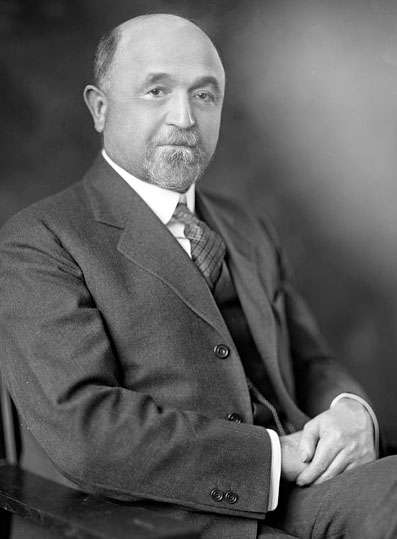
Why is the case called Humphrey's Executor v. United States? Because William E. Humphrey died while the case was being litigated. His estate continued the case, seeking Humphrey's backpay. Chief Justice Sutherland's majority opinion states:
"William E. Humphrey, the decedent, on December 10, 1931, was nominated by President Hoover to succeed himself as a member of the Federal Trade Commission, and was confirmed by the United States Senate."
While teaching this case in 2017, I joked that President Roosevelt removed William Humphrey from the FTC, and from the land of the living. That's one way to make sure the courts do not reinstate him!
A person watching the lecture on YouTube heard the joke, and checked up on it. Humphrey's obituary did not state a cause of death. But my viewer requested a copy of the death certificate from the D.C. Department of Health. In fact, Humphrey's executioner was cerebral hemorrhaging and arteriosclerosis. He died in his home. Humphrey was not assassinated.
There is one legal curiosity here: the certificate lists his occupation as "Retired." That's one way to put getting fired.
I've had this document in my archives for nearly eight years. With Humphrey's Executor on the chopping block, now seems like the right time to publish it.

From Judge Trevor McFadden's opinion last week in Sedita v. U.S. (D.D.C.):
"Where was the Judge whom he had never seen? Where was the High Court, to which he had never penetrated?" Franz Kafka, The Trial. Like Kafka's Joseph K., Plaintiff Giuseppe Sedita alleges he has been adjudged by a muddled and garbled governmental process that flouts his rights and offers no effectual remedy when he complains. Three times, he has been given the run-around when trying to buy a firearm. Each time, the Government has refused to greenlight his gun purchase. And each time, Sedita has walked away empty-handed. Although Sedita has repeatedly tried to set the record straight through the Government's administrative process, remedy has eluded him; the Government has rebuffed Sedita's attempts to clear himself through silence and nonresponsive form letters….
Sedita sued, claiming this violated his Second Amendment rights, and the court allowed the claim to go forward. The court began by holding that buying a gun "is covered by the clear prescription of the Second Amendment" (since keeping and bearing requires a pathway to buying), and goes on to reason thus:
[T]he Federal Officers [then] bear the burden of "demonstrat[ing] that the regulation is consistent with this Nation's historical tradition of firearm regulation." Bruen footnote nine acknowledges that "definite" and "objective" background checks fall comfortably within that tradition. But when a particular licensing regime diverges from that tradition—perhaps by becoming "abusive"—it infringes on the Second Amendment.
"Following Bruen, the Supreme Court has not explained what constitutes 'abusive ends' in the context of firearm regulations, aside from its discussion of 'shall issue' licensing regimes." … In the context of Sedita's challenge, the Court finds a seemingly permissible background check regime could become abusive if riddled with inaccuracies but bereft of an effective method to correct those inaccuracies, leading to perpetual and inevitable delays on firearm purchases. At the very least, the Federal Officers present no evidence of this nation's historical tradition suggesting otherwise.
Do we agree with Blackstone that it is better that ten guilty persons escape than one innocent suffer?
Sir William Blackstone famously said that it is "better that ten guilty persons escape, than that one innocent suffer." The maxim expressed by that English jurist was perhaps no more popular in 1765 than it is today.
In a jibe clearly directed at Blackstone and others of a similar mind, English jurist and philosopher Jeremy Bentham made light of writers call it better to save "several guilty men, than to condemn a single innocent man," and others who, "to make the maxim more striking, fixed on the number ten." Others "made this ten a hundred," and still others "made it a thousand." Such "candidates for the prize of humanity" go so far as to say that "nobody ought to be punished, lest an innocent man be punished."
If you were sitting as a juror in a criminal trial in the United States, a judge would instruct you, not on Blackstone's maxim, but on a due process-informed standard that embodies the same view: that the "defendant is presumed innocent of the charges" and that this presumption "is not overcome unless you are convinced beyond a reasonable doubt that the defendant is guilty as charged." That standard of proof reflects Blackstone's view of due process. In 1970, Justice John Marshall Harlan II in the Court's In re Winship ruling that set such a high standard of proof in U.S. criminal trials, explained: "I view the requirement of proof beyond a reasonable doubt in a criminal case as bottomed on a fundamental value determination of our society that it is far worse to convict an innocent man than to let a guilty man go free."
Do people agree with Blackstone's maxim? In a series of studies, Gregory Mitchell and I have sought to explore whether people are more on the side of Blackstone or Bentham, due process or crime control, concerning themselves more with the punished innocent or the unpunished guilty. We describe that body of research in a law review article. We posed, among others, the following simple question:
2/11/1803: Marbury v. Madison is argued.
Celebrate your independence with a subscription to Reason magazine, your most trusted source of honest, insightful news and analysis.




