The Missouri Commission on Retirement, Removal, and Discipline of Judges charged Judge Matthew Thornhill with misconduct:
That Respondent engaged in a course of conduct in which he was involved in political activity not related to the law, legal system, or the administration of justice and/or was related to his own political campaign from the bench in the courtroom while conducting the business of the court and/or around the courthouse in one or more of the following ways:
That on occasion Respondent would mention his political affiliation and/or his preferred candidates in contested political elections with litigants, witnesses, and/or attorneys while conducting court business from the bench in the courtroom.
That on occasion, Respondent would comment from the bench in the courtroom to litigants, witnesses, and/or attorneys about where his "Thornhill for Judge" signs were located.
That on occasion, Respondent would remark from the bench in the courtroom to litigants, witnesses, and/or attorneys that they live in, "Thornhill for Judge Country."
That on one occasion, while considering the petition, Respondent asked the petitioner if the union for which the petitioner worked has, "[w]armed up to Thornhill for judge."
That on occasion, Respondent would, from the bench in the courtroom, ask litigants. witnesses, and/or attorneys where they lived and if they had seen his campaign signs.
I'll admit a guilty pleasure. I enjoy watching police dash-cam and body-cam videos on YouTube. More often than not, these videos begin during routine traffic stops but quickly escalate. Once the suspects feels cornered, they will usually take flight. Sometimes they will jump out of the vehicle and flee on foot. Other times, they will take the car out of park, put it into drive, and slam the accelerator. In rare cases, the driver will start driving while the police officer is next to the car, or even leaning into the window. Officers have been seriously injured. These two videos came up with a quick search.
Different law enforcement agencies have different policies with regard to the use of force. As I recall, some police departments allow officers to open fire on a vehicle that is being used as a deadly weapon. Other departments only permit high speed chases. Other departments will just allow the vehicle to drive away.
This background brings me to the shooting yesterday in Minneapolis. I've watch the video from the New York Times over and over again.
The commentators focus on the fact that the driver's wheel was turned to the right, suggesting that she was trying to drive away from the ICE agents. When given a lawful order to stop, it is usually not advised to drive away from law enforcement. But let's put that bit aside for now.
The entire incident lasted a few seconds. Is there any reason to think the agent saw which way the wheels were facing before he opened fire? I am doubtful. I had to watch the video with a frame-by-frame breakdown to figure out the chronology, and direction of the wheels. Think about it this way. The agent would have to simultaneously keep his eyes focused on the wheels (low) and the driver (high). Is it even possible to see both?
To use a sports analogy, it is extremely difficult for a First Base umpire to simultaneously look at both the base (low) and the glove (high). The New York Timesdiscussed this tough job:
Instead, the call is most often made with the two significant elements of the play — the ball in the fielder's glove and the runner's foot on the base — at some distance from each other, far enough apart that the umpire cannot keep both in his line of vision. From the earliest days of their training, umpires are taught how to cope with this: on most infield ground balls, establish a position 15 to 18 feet from the first-base bag and at a right angle to the perceived path of a true throw.
For many plays, where it its not possible to see both, the umpires will watch the bag to see when the reader touches, and listen for the pop when the ball reaches the glove. And even then, well-trained umpires routinely make errors with close plays at first--especially in a noisy stadium where you can't hear the pop. Instant replay exists now to remedy those errors.
The ICE agent in this case likely could not see both the direction of the wheels and the driver. He was only standing a few inches away. He lacked the distance and vantage point to observe both. And we know he was looking at the driver based on where he aimed his gun.
Now the agent likely saw the driver shift the car into drive. For sure, the driver did not keep her hands off the wheel, and would have had to reach for the gear-shift. Indeed, you can see the reverse lights in the back turn off shortly before the officer drew his weapon.
If the agent sees a car a few inches away from him shift into drive, is it reasonable to think he might be a target? In the past, ICE agents have been hit with cars. Would this background be relevant?
Also, much has been made of the fact that the officer did not actually get hit. As I watch the video, he quickly jumped out of the way to avoid contact. This is akin to a baseball pitcher who throws at a batter, but the batter jumps away to avoid contact. Pitchers can still be ejected when there is an intent to plunk the batter that proves unsuccessful.
I realize how volatile this situation is, but we should resist Zaprudering the video, especially where a decision had to be made with imperfect knowledge in a split second.
In two previous blog posts, I argued that every President from 1881 to 1921 had successfully defended the President's power to remove at will all officers exercising executive power and that no independent agencies in the modern sense of the term had been created between 1881 and 1921. In this blog post, I will argue that every President from 1921 to 1933 also successfully defended presidential removal power at will over all executive officers and that no independent agencies in the modern sense of the term were created between 1921 and 1933 prior to Humphrey's Executor v. United States (1935). My argument grows out of my co-authored book with Professor Christopher Yoo, who deserves all the credit and none of the blame for anything in this blog post. Steven G. Calabresi & Christopher S. Yoo, The Unitary Executive: Presidential Power from Washington to Bush (Yale University Press 2008).
Warren G. Harding served as President of the United States from 1921 to 1923. As President, Harding vigorously asserted his power over the entities that became independent after the decision in Humphrey's Executor v. United States (1935). As Christopher Yoo and I wrote, "Harding communicated his administration's policy agenda to members of the Interstate Commerce Commission (ICC) and the Shipping Board requiring commissioners to submit their undated resignations before receiving their appointments, ignoring the statutory provisions [that might have been read as limiting presidential removal power], and threatening to remove Shipping Board members who disagreed with his policies. Even more important were his efforts to reconstitute … agencies with commissioners more in tune with his pro-business orientation. Harding made a number of transformative appointments to the ICC, the Federal Reserve Board, the U.S. Tariff Commission, and the Federal Trade Commission that effectively brought the regulatory policy of the Progressive Era to an end." Calabresi & Yoo, at 262.
Harding endorsed an executive branch reorganization proposal that "recommended that the independent agencies be consolidated into the executive department." Id. Although this plan failed, Harding succeeded in creating a Bureau of the Budget—a plan initiated by Taft and then supported by Woodrow Wilson. "Under the Budget and Accounting Act of 1921, 'the Bureau of the Budget was part of the executive branch, reporting to the president. The budget director was not to take instruction from cabinet officers but only from the president, which gave the director the authority to plan a responsible budget without constant interference.' The impact on the president's ability to control his administration was palpable and immediate. Under the leadership of the very able Charles Dawes, the Bureau of the Budget was able to save more than one billion dollars during its first year of operation. Even more important, the bureau allowed the president to exert far more control over federal spending than ever before." Id. at 262-263. The Bureau of the Budget, which began as a part of the Treasury Department under Harding was moved to the White House by President Franklin D. Roosevelt and was then renamed the Office of Management and Budget (OMB) under President Richard M. Nixon. It has been one of the principal tools by which modern presidents control the unitary executive branch.
The order had apparently been issued just based on the father’s statement, right after he learned of the death, that the mother (his wife) “would shoot herself.”
From In the Matter of L.M.P., decided Tuesday by N.J. intermediate appellate judges Ronald Susswein, Mark Chase, and Lorraine Augostini:
Petitioner L.M.P. and her husband E.S. are a married couple residing in Bayonne. On July 9, 2024, Bayonne police officers arrived at the couple's home to inform them of the untimely death of their only son. L.M.P. and E.S. became distraught upon hearing this tragic news.
E.S. made several pertinent statements to police during the interaction. According to reporting Officer Krzeminski, E.S. told the officers that there was a "gun upstairs," stated that his wife would shoot herself, asked Officer Krzeminski to take out his firearm and shoot him, and asked the officer to remove the gun from the residence because he was going to "eat the gun." E.S. was taken to Bayonne Medical Center for a psychological evaluation. L.M.P. remained quiet throughout the encounter with police and later testified that she "went into severe shock."
During the police visit to the home, L.M.P. voluntarily surrendered the firearm, which was brought to Bayonne Police Headquarters. A Petition for Temporary Extreme Risk Protective Order (TERPO) was filed on behalf of the Bayonne Police Department against L.M.P. The petition alleged that L.M.P. posed an immediate and present danger of causing bodily injury to herself or others and asked the court to grant a TERPO to prohibit her from owning, possessing, or acquiring firearms. The trial court granted the TERPO on the same day.
A FERPO hearing was held [two months later]…. L.M.P. … testified at the [Final Extreme Risk Protective Order (FERPO)] hearing. The following is the totality of her testimony:
So, the only thing I would like to say is that it was a very unfortunate day for my husband and I. And I went into severe shock from the second they gave us the news. I didn't say anything. I didn't threaten anybody. I have no mental health issues. I could tell you that I have worked at my place of employment for over ten years. I've been in the same line of business for over [twenty-five] years. I've been an upstanding citizen. So, the gun that was pulled from me is owned by me and registered by me. So, that's all I have to say.
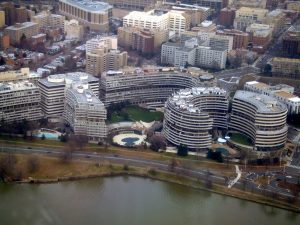
1/8/1973: Trial begins for seven men accused of illegal entry into Democratic headquarters at Watergate hotel. The break-in would give rise to U.S. v. Nixon.
Donald Trump announced today he plans to ban the purchase of single-family homes by large institutional investors. As with many Trump actions, this is not something the president actually has the authority to do. Real estate transactions and property ownership are generally subject to state, not federal authority. And any federal intervention - if constitutional at all - must at least be authorized by Congress.
In addition, barring large investors from the market is unlikely to mitigate the housing crisis, and could easily make things worse. There is no truth to claims that large investors are somehow monopolizing the market and thereby increasing prices. Large institutional investors (those who own 100 or more homes) own only about 3% of single-family homes nationwide. That's nowhere near enough to attain any kind of monopoly power, even if we assume (implausibly) that the large investors are colluding with each other. The fact that large investors account for a higher percentage of recent sales doesn't change that reality. Even if they were to increase their share of the housing stock several-fold, that still wouldn't be nearly enough to create any kind of monopoly.
For more on the reasons why large investors are not the cause of high housing prices, see my Cato Institute colleague Norbert Michel's 2021 testimony before the House of Representatives, on this subject.
Barring institutional investors may well actually make the housing situation worse, at the margin. Large investors may often be better-positioned to refurbish and modernize homes than small investors or individual homeowners. The big ones can more easily exploit economies of scale. In addition, where allowed to do so, large investors may be more likely to convert single-family structures to multifamily housing. Increasing the stock of the latter is essential for reducing prices and increasing housing for the working and lower-middle classes - the people most severely impacted by housing shortages. Even single-family rentals can still benefit less affluent people, since they can more easily afford to rent than to buy.
Large investors are easy to demonize. It is true, as Trump says, that "People live in homes, not corporations." Left-wing critics of large investors say similar things. But, obviously, corporations don't buy houses in order to live in them themselves, or to keep them empty. They buy them to make money. And the way to do that is to rent them out or resell to willing buyers after increasing their value. Either way, people in need of housing benefit.
Big investors don't create those benefits out of altruism. They do it to make a profit. But, to paraphrase Adam Smith's famous statement about butchers, brewers and bakers: "It is not from the benevolence of the builder, the developer, and the investor, that we expect our housing, but from their regard to their own interest."
Instead of attacking large investors and promoting other snake oil policies like rent control, tariffs, and deportations, politicians would do better to target the real cause of housing shortages: exclusionary zoning and other regulatory barriers that make it difficult or impossible to build new housing in response to demand, throughout much of the country. For an overview of these issues, see my recent Washington Examiner article on "Foot Voting, Housing, and Affordability."
My latest article, Title VI Hostile Environment Law in the Shadow of Antisemitic Violence, forthcoming in the Journal of Free Speech Law, is now available to download. The article is forty pages long, but its basic contribution comes down to this: discussion by judges and commentators of hostile environment complaints filed by Jewish students have largely ignored the fact that Jewish students across the US have faced violence, threats, and intimidation since October 7, in a national environment in which Jews more generally have faced a similarly threatening environment, including several murders. This article, in contrast, analyzes the relevant Title VI issues, including the freedom of speech of protestors, in light of that environment, and concludes that rather than focusing on whether speech protected by the First Amendment should have been suppressed because of unprotected antisemitic acts, courts and commentators should consider whether protected speech that endorses violence is part of a threatening context that required universities to crack down (as many did not) on unprotected actions that contributed to a threatening environment such as vandalism, threats, illicit encampments, classroom disruptions, and so on.
Here is the formal abstract:
Following Hamas's October 7, 2023 attack on Israel, American universities have faced a wave of Title VI complaints alleging deliberate indifference to antisemitic harassment of Jewish students. Many of these claims arise in the context of anti-Israel campus protests featuring rhetoric that, while deeply offensive and often perceived as endorsing violence, is ordinarily protected by the First Amendment. Courts and commentators have increasingly concluded that such protected speech cannot form any part of a cognizable hostile-environment claim. This Article argues that this conclusion rests on a fundamental misstatement of both Title VI doctrine and the nature of the claims being advanced.
The Article contends that Jewish students' post–October 7 claims do not seek to impose liability for protected political expression. Rather, they allege that universities have failed to address unprotected antisemitic conduct—including physical assaults, threats, intimidation, vandalism, unlawful encampments, and selective nonenforcement of neutral conduct rules—that materially interferes with access to education. Within this framework, protected speech plays a limited but legitimate role: not as actionable harassment, but as contextual evidence bearing on whether a university's inaction in the face of unprotected conduct reasonably gives rise to fear of violence and intimidation.
Drawing on extensive documentation of antisemitic assaults and threats on campuses and in the surrounding society, the Article argues that the "reasonable person" standard governing hostile-environment claims must be applied in light of contemporary conditions. When violent rhetoric coincides with lawless behavior and administrative indifference, Jewish students' fear for their physical safety cannot be dismissed as hypersensitivity to ideas. Properly understood, Title VI permits—indeed, requires—universities to enforce neutral conduct rules to mitigate hostile environments without suppressing protected speech. Courts therefore err when they dismiss such claims at the pleading stage by conflating demands for physical security with demands for ideological conformity.
Below is my list of speaking engagements for the Spring 2026 semester. Unless otherwise noted, all events are free and open to the public—and in person. The listed times are those in the time zone where the event is being held.
I will likely add additional events and information to this post, as they are scheduled, and update details on existing ones. In the meantime if your university, think tank, research institute or other similar organization would like to invite me to speak (either virtually or in person) on any topic within my expertise, I am open for business!
Jan. 30, 1:30-3:00 PM, Scalia Law School, George Mason University, Arlington, VA: "State Constitutional Law and Exclusionary Zoning," Panel on "Euclidean Zoning Criticisms and Judicial Review Going Forward," Pacific Legal Foundation Symposium on"Euclid Turns 100: Rethinking an Antiquated Case and Reimagining Euclidean Zoning for the Century Ahead." The program for this event is available here.
Feb. 3, 12-1:30 PM (tentative time), Faculty Seminar, American University Washington College of Law, Washington, DC: "Immigration is Not Invasion." This event may be limited to American University students and faculty.
Feb. 5, Time TBA, Cato University, Cato Institute, Washington, DC: "Constitutional Constraints on Executive Emergency Powers." This event is likely limited to participants in the Cato University program.
Feb. 27, 9:30-10:45 AM, University of Pennsylvania Carey School of Law, panel on spending and taxation, conference on the 250th Anniversary of the Declaration of Independence, Philadelphia, PA: "Tariffs, Taxation, and the Principles of the Declaration of Independence" (tentative title). The other panelists will be include Irwin Kramer (American University), Molly Reynolds (Brookings Institute), Laura Dove (American Enterprise Institute), and Jane Madders (Fordham University, serving as moderator). Sponsored by the University of Pennsylvania Journal of Constitutional Law and the National Constitution Center.
Mar. 4, Scalia Law School, George Mason University, Arlington, VA, 4:30-5:30 PM: "An Unconstitutional War: Why the Attack on Iran Requires Congressional Authorization." Sponsored by the American Constitution Society and the Muslim Law Students Association.
Mar. 6, 9-10:30 AM, 2026 National Conference of Constitutional Law Scholars, Westin La Paloma, Tucson, AZ (sponsored by the University of Arizona): "Immigration is Not Invasion." I will also be serving as a Distinguished Commentator at this conference. See here for more information about the event.
Mar. 11, Time TBA, Villanova University, Charles Widger School of Law, Villanova, PA: "Trump, Tariffs, and the Constitution" (tentative title). Sponsored by the VIllanova Federalist Society.
Mar. 13, 2-4:30 PM, Symposium on the Free Speech Rights of Non-Citizens, Center for Academic Freedom and Free Speech, Yale Law School, New Haven, CT: "How Speech-Based Immigration Restrictions Threaten Academic Freedom." Panel 2; other panelists include Janis Jin (Yale Law School), Michael Kagan (UNLV William S. Boyd School of Law), Jennifer Koh (Pepperdine Caruso School of Law), and Gregory Magarian (Washington University, St. Louis). Moderated by Keith Whittington (Yale). See here for the symposium schedule.
Mar. 19, 12-1 PM, Seattle University School of Law, Seattle, WA: "Immigration is Not Invasion." Moderated by Seattle University School of Law Dean Anthony Varona. and Prof. Andrew Siegel. More information on this event here.
Mar. 24, 12-1 PM, Georgetown University Law Center, Washington, DC: "The Constitutional Case Against Exclusionary Zoning" (sponsored by the Georgetown Federalist Society and the the Georgetown Law Conservative and Libertarian Student Association).
Mar. 24, 5:15-6:30 PM, Scalia Law School, George Mason University, Arlington, VA: "The Constitutional Case Against Trump's Tariffs." Scalia-Ginsburg Colloquy. Debate with Prof. Chad Squitieri (Catholic University). Moderated by Jason Willick (Washington Post).
Mar. 26, 3:45-5:00 PM, McGeorge School of Law, University of the Pacific, 3200 5th Ave., Sacramento, CA: "Democracy and Political Ignorance: Why Smaller Government is Smarter" (sponsored by the McGeorge Federalist Society).
April 2, 11:45AM-1:00 PM, University of Chicago Booth School of Business, Chicago Booth Harper Center, 5807 S. Woodlawn Ave, Classroom C03, Chicago, IL: "The Case for Open Borders Immigration." Sponsored by the Adam Smith Society.
April 3, 12:15-1:15 PM, Chicago Forum, University of Chicago Law School, 5737 S. University Avenue, Chicago, IL: "Federalism, Immigration, and the Constitution."
April 15, 4-5 PM, Scalia Law School, George Mason University, Rm. 221 Arlington, VA: "Assessing the Tariff Decision: The Supreme Court's Ruling and its Implications." Sponsored by the George Mason University American Constitution Society, and by the GMU Business Law Society.
April 16, 12-1:30 PM, Columbia Law School, Hamilton Hall, Rm. 603, New York, NY: "The Grasping Hand: Kelo v. City of New London and the Limits of Eminent Domain" (tentative title). Debate with Prof. Thomas Merrill.
April 21, 3:45-4:30 PM, Scalia Law School, George Mason University, Arlington, VA 22201: "In Defense of Sanctuary Cities," Panel on "Lines of Resistance: Sanctuary Jurisdictions and Federal Power." Sponsored by the Civil Rights Law Journal.
April 21, 5-6:30 PM (Pacific time), McCoy Family Center for Ethics in Society, Stanford University, Stanford, CA (virtual event): "Birthright Citizenship and the Constitution," panel on "Birthright Citizenship in Context."
April 22, 11:00 AM-12:30 PM, Center for the Study of Islam and Democracy, Washington DC (address TBA): "Religious Freedom, Sharia Law, and the Constitution," panel on "What is Sharia Law, and is it a Threat to Our Democracy?". Other panelists include Prof. Khaled Abou El Fadl (UCLA School of Law), Prof. Mohammad H. Fadel (University of Toronto, law faculty), and Prof. Paul L. Heck (Georgetown). More information on this event, including registration for in-person attendance here. Registration to watch online here. Co-sponsored by the Muslim Public Affairs Council.
April 24, 7:40-8:30 PM, LibertyCon Europe 2026 (sponsored by European Students for Liberty), Madrid, Spain: "The Nationalist Threat to Economic Liberty." Panel on "Economic Freedom: Challenges and Perspectives." Registration and other information about this conference here. I think this event is only open to registered participants in the conference, and invited speakers.
April 26, 4:30-5:15 PM, LibertyCon Europe 2026 (sponsored by European Students for Liberty), Madrid, Spain: "Free Trade: Liberation from Trump's 'Liberation Day' Tariffs." Registration and other information about this conference here. I think this event is only open to registered participants in the conference, and invited speakers. But registration is easy.
May 12, 11::00 AM-1 PM, Unitelma Sapienza University of Rome, Rome, Italy: "Threats to Liberal Democracy in the United States - And How to Counter Them." This is primarily an online event. You can watch it here. More information about this event here (albeit in Italian).
May 14-15, Common Core of European Administrative Law (COCEAL), Workshop on Welfare Rights, Bocconi University, Milan, Italy: "Constitutional Welfare Rights in the United States." This is an ongoing workshop continuing over two days. I am afraid it is open only to invited participants.
May 18, 6-7 PM, Bruno Leoni Institute, Residenza Vignale, 2 Via Enrico Toti, Milan, Italy: "The Legal Battle Against Trump's Tariffs." This event, sponsored by Italy's leading libertarian/classical liberal think tank, is open to the public. Registration and other information about this event here.
May 20, 2-3 PM, Cato Institute, Washington, DC (virtual event): "Slavery and Birthright Citizenship," Panel on "Trump v. Barbara: Birthright Citizenship at the Supreme Court." Registration and other information here.
In a previous blog post, I argued that every President from 1881 to 1901 had successfully defended the President's power to remove at will all officers exercising executive power and that no independent agencies in the modern sense of the term had been created during the last twenty years of the 19th Century. In this blog post, I will argue that every President from 1901 to 1921 also successfully defended presidential removal power at will over all executive officers and that no independent agencies in the modern sense of the term were created between 1901 and 1921 during the Progressive Era. My argument grows out of my co-authored book with Professor Christopher Yoo, who deserves all the credit and none of the blame for anything in this blog post. Steven G. Calabresi & Christopher S. Yoo, The Unitary Executive: Presidential Power from Washington to Bush (Yale University Press 2008).
Theodore Roosevelt served as president from 1901 to 1909, and he had a breathtakingly large view of presidential power, which he called "The Stewardship Theory." Id. at 239-240. Teddy Roosevelt thought the President could do anything at all that was not specifically prohibited by the Constitution or statutory law. He called this the Jackson-Lincoln view of presidential power. Teddy Roosevelt believed that Andrew Jackson, Abraham Lincoln, and Alexander Hamilton had correctly described the scope of presidential power. He personalized the office of the presidency in a charismatic way that had never been done before, and he appealed to the people over the heads of both Houses of Congress. Teddy Roosevelt was immensely popular.
Teddy Roosevelt contrasted his Stewardship Theory of the presidency with what he called William Howard Taft's James Buchanan Theory of the presidency. Taft thought the president could only act pursuant to statutory and/or constitutional authorization. As a matter of constitutional law, Taft was clearly right, and Teddy Roosevelt had a dangerous and unconstitutionally broad conception of presidential power. He withdrew hundreds of millions of acres of western land from public entry without having any statutory authority to do so. Teddy Roosevelt wielded the removal power with zeal, as Christopher Yoo and I show in our book, maintaining strict control over all his cabinet members.
In his eighth annual message to Congress Teddy Roosevelt proposed:
After a student posted a viral video of an argument with a Texas A&M instructor about the content of an English class, Texas politicians went ballistic. Soon the instructor was suspended and the university president was fired. Last month, the university regents adopted a policy banning courses that "advocate race or gender ideology" and requiring university approval for any exemptions for materials that serve "a necessary educational purpose."
And thus we arrive at the first academic semester after the donnybrook and with the new policy in place. The results are not terribly surprising, though some are already complaining about "malicious compliance" (best defined as following the rule faithfully but in ways that expose the rule as badly drafted or just plain dumb).
Brian Leiter has the details (including the syllabus and the university correspondence) of Texas A&M philosophy professor Martin Peterson, who was to teach his usual introductory class on "Contemporary Moral Issues" this spring. His syllabus includes two days on "race and gender ideology." He emphasizes in his email to the university that he does not "advocate" for any position in the class, and it is worth noting that the chapter of the text he assigns for that section is actually titled "Equality and Discrimination" and includes excerpts from authors like Iris Marion Young and Kwame Anthony Appiah. For good measure, he also included additional excerpts from Plato's Symposium in that section of the class.
The department chair reported to him that the "College leadership team" had decided that the section, including the Plato readings, would have to be excised from the class. If Peterson did not do so, he would be reassigned to teach a different class. Censoring Plato was probably not exactly what the regents had in mind (though Victorianism does seem to be making a comeback in some circles), but such a result was all too predictable when viral videos and political backlash determine the boundaries of what can be taught in university classrooms and risk-averse administrators are charged with making sure that no professor bumps into those boundaries.
There'll be plenty of material for a second edition of You Can't Teach That! at least.
At the outset, the Court must address the troubling accusations made by Kettering and the EBG Defendants: that Collier and Scott fabricated support for their arguments…. [T]he volume, extent, and repetitive nature of fabrications by Scott [a self-represented lawyer] and Hewitt [Collier's lawyer] are without parallel in the undersigned's tenure as a trial judge.
Kettering and the EBG Defendants brought these cases to the attention of the Court—and to the attention of Scott and Hewitt—not in passing, but in a footnote that occupied more than one-third of one page, single-spaced and two full pages in the EBG Defendants' Reply. Yet, neither Scott nor Hewitt has acknowledged the misrepresentations, much less attempted to explain why they subsequently inserted them into multiple filings….
[These] are not mere scrivener's errors or the confusing of the holding of a case with dictum. They are not even engaging in such misreading of the decision that they fail to recognize that the case stands for a proposition diametrically opposed to the one they are asserting. Rather, Scott and Hewitt have cited at least twelve cases that either do not exist or are so far afield from the subject matter of the captioned case that they should have reasonably realized that they had no place in a Court filing, in this or in any other case. Incredibly, even after being put on notice by Kettering that three cases cited in Collier and Scott's Motion did not state what Collier and Scott represented that they did, Collier and Scott cited those very same cases for the very same propositions of law in their later Reply.
Texas "may consider, in the future, returning to greater reliance on a multistate accrediting entity other than the ABA should a suitable entity become available."
In September, the Supreme Court of Texas signaled that it would remove the American Bar Association as the "final say" on accreditation. After a comment period, SCOTX adopted its draft proposal without any revisions. In the short term, any school that is currently ABA-accredited will be accredited by SCOTX. Texas will soon adopt a new standard:
In Misc. Dkt. No. 25-9070, the Court advised that it intends to provide stability, certainty, and flexibility to currently approved law schools by guaranteeing ongoing approval to schools that satisfy a set of simple, objective, and ideologically neutral criteria using metrics no more onerous than those currently required by the ABA.
To be sure, schools can voluntarily maintain ABA accreditation. At least in the short term, I suspect most schools (including my own) will not change the status quo. But once the question of portability is worked out, schools may be more amenable to innovation. Indeed, SCOTX signaled that a multi-state accrediting entity other than the ABA may be in the works:
may consider, in the future, returning to greater reliance on a multistate accrediting entity other than the ABA should a suitable entity become available.
Cheers to the Supreme Court of Texas for taking this important step. And jeers to the ABA, an organization that regrettably squandered its good will and reputation.
If the ABA does not arrest its progressive lurch, the organization risks its own obsolescence. Model Rules will not be adopted. Evaluations of judicial nominees will be ignored. The accreditation monopoly will cease. And so on. A decline in membership will be the least of the ABA's problems. The ABA can either adapt to a new political reality or fade away like the guilds of yore.
A short excerpt from the Ninth Circuit's order yesterday in Mirabelli v. Bonta (Chief Judge Mary Murguia, joined by Judges Andrew Hurwitz and Salvador Mendoza):
Plaintiff-Appellees are four parents and four Escondido Union School District ("EUSD") teachers who challenge a host of California state laws that Plaintiffs refer to as "the State's Parental Exclusion Policies." According to Plaintiffs, these challenged laws are described in the California Department of Education's 2016 "Legal Advisory regarding application of California's antidiscrimination statutes to transgender youth in schools" and its accompanying FAQs. The challenged policies allegedly violate teachers' and parents' constitutional rights by requiring teachers to hide a student's gender nonconformity and social transition, including from the student's parents, unless the student consents to disclosure of that information….
The district court certified the class of all California public school employees and parents of children attending public school who object to the challenged state laws under Rule 23(b)(2). On December 22, 2025, the district court granted permanent injunctive relief to all its members. The district court found that various California laws violate parents' substantive due process and free exercise rights to be informed "after a student says or dresses in a way that suggests a non-conforming gender identity." The district court also concluded that public school employees have free speech and free exercise rights to provide information about a student's gender expression to the student's parents.
Based on these conclusions, the court entered an injunction that bars State Appellants from "implementing or enforcing" "the Privacy Provision of the California Constitution … [and] any other provision of California law" that would "permit or require any employee in the California state-wide education system [to] mislead[] [a] parent or guardian … about their child's gender presentation at school." The injunction prohibits State Appellants from "permit[ting] or requir[ing] any employee in the California state-wide education system to use a name or pronoun to refer to [a] child that [does] not match the child's legal name and natal pronouns, where a child's parent or legal guardian has communicated their objection to such use." The injunction directs the State to include a notice in educator training materials that: "Parents and guardians have a federal constitutional right to be informed if their public school student child expresses gender incongruence." …
After considering the record at this preliminary stage, we conclude that the State Appellants have shown that "there is a substantial case for [a stay] on the merits." …
From Judge Annemarie Carney Axon (N.D. Ala.) yesterday in White v. Google:
Plaintiff … asserts state law claims for slander and libel because each defendant uses the word "Englishman." … Mr. White alleges he is the only true "Englishman" because he is the only person that truly knows English. [The Complaint actually says, "nose English the right and real way." -EV] Accordingly, no other person or entity may use the word "Englishman." Walmart uses the word "Englishman" online because the word is in the title of several products that it sells. Google search results also contain the word. And Mr. Sumner's [Sting's] song, "Englishman in New York," repeats the word several times….
During the oral argument in Trump v. Slaughter, Justice Amy Coney Barrett asked counsel for respondent Slaughter how long independent agencies had existed for and counsel suggested to her, incorrectly, that they dated back to the last twenty years of the 19th Century. In fact, as I will show in a series of posts on this blog, no truly independent agency ever existed prior to the decision in Humphrey's Executor v. United States in 1935. My full account of the history of presidential resistance to the creation of independent agencies during this period appears in: Steven G. Calabresi & Christopher S. Yoo, The Unitary Executive: Presidential Power from Washington to Bush (Yale University Press 2008). This blog post will discuss presidential removal power from 1881 to 1901. Subsequent posts will examine presidential removal power from 1901 to 2009. None of these posts could have been written by me without consulting and quoting from the excellent work done by my book co-author, Professor Christopher S. Yoo. He gets all the credit, and I take all the blame for whatever is said below.
In recounting our actual practice from 1881 to 1999, I do not mean to endorse the view that this practice is constitutionally relevant to deciding Trump v. Slaughter. I believe that President Trump should win this case because of the original public meaning of the text of the Constitution. I recognize, however, that only two of the nine justices on the current Supreme Court follow exclusively the original public meaning of the Constitution's text. All the other seven justices on today's Supreme Court think, to various degrees, that arguments from practice are sometimes relevant to the question of whether Humphrey's Executor (1935) should be overruled. Since I have co-published the book with Christopher Yoo cited above on our actual practice, and since the issue is now pending before the Supreme Court, I want to explain why the arguments from presidential practice that Christopher Yoo helped me to write about 18 years ago support overruling Humphrey's Executor (1935).
It is important to review in tedious detail the actual history of presidential assertions of executive power from 1881 to 1901 because many academics who have not seriously examined the subject wrongly believe that the passage of the Pendleton Civil Service Act and the creation of the Interstate Commerce Commission in the 1880's introduced new and severe limits on the President's removal power. These same academics also deny that the Executive Power Vesting Clause of Article II includes an inherent removal power. This is simply wrong. I will therefore work painfully through every presidential administration from 1881 to 1901 to show that the Gilded Age presidents all believed in the theory of the unitary executive and unlimited and inherent presidential power to remove all Senate confirmed officers at will, except for Article III judges who have tenure during good behaviour.
Sign up here to receive all of the new Volokh Conspiracy posts in a daily e-mail.
The All-Argentina Issue is Here
New from Reason: a look into what Javier Milei
has accomplished and what it will take to make the most of Argentina’s window for real change. Out now
for subscribers.