

The Volokh Conspiracy
Mostly law professors | Sometimes contrarian | Often libertarian | Always independent
Today in Supreme Court History: January 8, 1973
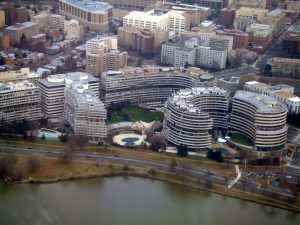
1/8/1973: Trial begins for seven men accused of illegal entry into Democratic headquarters at Watergate hotel. The break-in would give rise to U.S. v. Nixon.

Editor's Note: We invite comments and request that they be civil and on-topic. We do not moderate or assume any responsibility for comments, which are owned by the readers who post them. Comments do not represent the views of Reason.com or Reason Foundation. We reserve the right to delete any comment for any reason at any time. Comments may only be edited within 5 minutes of posting. Report abuses.
Please to post comments
If this had happened now, Trump would have pardoned the plumbers while MAGA would be insisting that it was a Democratic false flag operation.
The Roberts Court would slow-walk it (the decision was accelerated and decided in a matter of months).
If it didn't give the president a win, such a conclusive defeat is unlikely. The president would likely be able to serve the rest of their term.
As our former correspondent notes, multiple opinions were decided OTD included one of some particular note:
The Paquete Habana, 175 U.S. 677 (decided January 8, 1900): Fishing vessel was not a “prize of war” (its crew did not even know there was a war going on when it was seized in 1898 off the coast of Cuba) and therefore owner and crew awarded value of it and its contents (lots of fish in tanks); the opinion is a long, long historical survey of admiralty jurisdiction and prize law. (This is an important case in international human rights litigation, establishing that United States courts will apply customary international law unless Congress says otherwise.)
The opinion was written by Justice Gray, known for his scholarly opinions. The most well-known, I suppose, involves birthright citizenship. The book The Supreme Court Footnote
A Surprising History by Peter Charles Hoffer discusses another.
[I read the book. I would give it a mixed verdict.]
His half-brother was John Chipman Gray, not the "Mr. Chips" of the famous book and film.
"The Supreme Court Footnote A Surprising History"
Move over, James Patterson, and see what a *real* bestseller looks like!


