
From Bork to Willett
Is the conservative legal movement going libertarian?


Gorsuch advances another property rights theory of the Fourth Amendment that Alito rejects.
Can public sector unions force recalcitrant workers to pay dues, or does that violate the First Amendment?
The Supreme Court issues three opinions, for a grand total of four so far this term.

If you hear "papers, please" on a Greyhound, thank the Supreme Court.
I'm all for carefully reading the words of the Constitution, and applying the distinctions that it draws -- but we need to make sure we're understanding just what those distinctions are.
Will Baude and I have cosigned a new amicus brief on this in Janus v. AFSCME.
The Supreme Court agrees to hear challenges to Travel Ban 3.0
A very interesting analysis of the Supreme Court's new Internet tax case (South Dakota v. Wayfair, Inc.), by Notre Dame Prof. Randy Kozel.
The Supreme Court is releasing opinions at the slowest rate in over a century.
Williamson v. Lee Optical of Oklahoma, Inc. should be overruled.
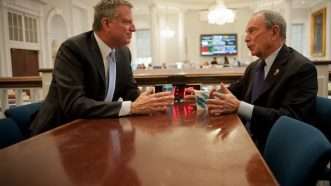
Another day, another shady land grab scheme by New York officials.
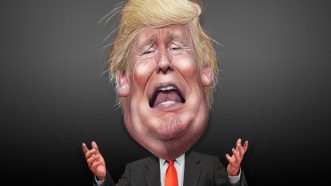
When it comes to "opening up" the First Amendment, the president's bark is worse than his bite.

Justices hear challenge to Virginia court's expansion of warrantless vehicle searches.
Some would call it the second coming of Marbury v. Madison.
The awful precedents that helped empower Attorney General Jeff Sessions
The Supreme Court is asked to review an expansive interpretation of the Fish & Wildlife Service's authority to designate critical habitat for listed species.
Why illegally obtained evidence is generally inadmissible in court.
While the Trump Administration supports Supreme Court review, it's not clear there's enough in the case to interest the justices.

Two states attempt to dictate how farmers outside their boundaries treat their animals.
Oral arguments in Carpenter v. U.S. reveal a division between two conservative justices.
Willett confirmed to a seat on the 5th Circuit by 50-47 vote.
If Anthony Kennedy would like to see his successor confirmed by the Senate, he might decide June 2018 is a good time to go.
Eugene Volokh runs the most important legal blog in the country. Here's his take on gay wedding cakes, free speech, and President Trump's judicial appointments.

The Supreme Court ruled in 2004 that Americans get due process when accused of terrorism, and yet...
Lower courts are split on whether sex-based protections cover orientation.
Why the Trump administration lost in federal court.
How to think about gay wedding cakes, Fourth Amendment rights, and whether the federal government can ban sports betting. Plus: How will Neil Gorsuch vote?
Senate Judiciary Committee votes 11-9 to advance Willett's nomination to the Senate floor.
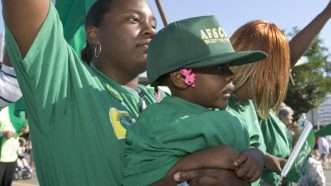
DOJ argues workers are being forced to subsidize political positions with which they may disagree.
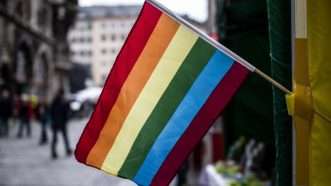
This is a clear-cut case of unconstitutional compelled speech with an easy verdict.
New Jersey's governor says states have a right to legalize sports betting but not marijuana.

Masterpiece is the first such case to make it to the justices.
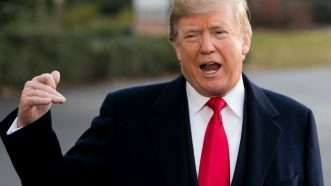
But legal challenges to the ban are still ongoing.
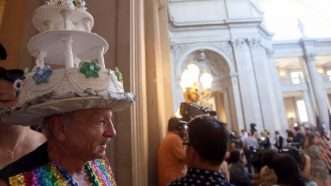
Public accommodation laws clash with freedom of religion and compelled speech.
The Supreme Court hears oral arguments in Christie v. N.C.A.A.

The point seems to elude The New York Times.
What's at stake next week in Christie v. N.C.A.A.
"Most Americans, I think, still want to avoid Big Brother."
The chief justice is a legal conservative who sometimes practices judicial deference.
What's at issue today in Carpenter v. United States.
A cellphone tracking case gives SCOTUS a chance to reconsider a doctrine that threatens everyone's privacy.
Bennis v. Michigan should be overruled.
The president's executive order is unconstitutional under the 10th Amendment and the separation of powers.
The 5th Circuit nominee faces the Senate Judiciary Committee.
Celebrate your independence with a subscription to Reason magazine, your most trusted source of honest, insightful news and analysis.




