
Two Cheers for Chief Justice Roberts on the Unitary Executive
Trump v. Slaughter is a big win; Trump v. Cook is embarrassing given the posture of the case as explained in the dissents.

Trump v. Slaughter is a big win; Trump v. Cook is embarrassing given the posture of the case as explained in the dissents.
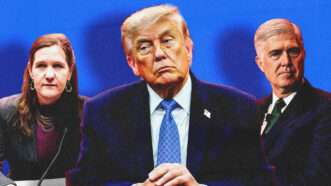
The Supreme Court has "no shortage of tools" to enforce the separation of powers, Justice Neil Gorsuch notes. "The only real question is whether we will use them."
Understanding Trump v. Barbara.
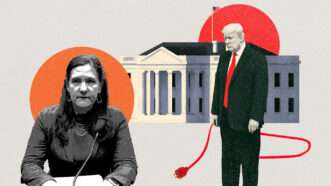
The Supreme Court extended presidential control over federal agencies. What could go wrong?

If the laws requiring such agencies to be independent are unconstitutional, it may be that very existence of those agencies is also now illegal.
Tensions between today's two major presidential removal power decisions.
In a pair of decisions on Monday, the Supreme Court ruled that presidents have full authority to fire heads of executive branch agencies—but that the Fed is different.
As expected, the Supreme Court overturns Humphrey's Executor, but reaffirms the independence of the Federal Reserve.
War making in "the power of a single man" is not what the Founders intended.

Extensive evidence indicates that the decision to end Temporary Protected Status for Haitian migrants was motivated by unconstitutional racial and ethnic discrimination. The Court's ruling on statutory issues also has flaws.
Understanding the 6–3 decision in Mullin v. Doe.

Is the D.C. Circuit willing to allow "conservative" panel decisions on hot-button issues to stand? And is en banc review more than a way to ensure further review at One First Street?
The proposal was nixed only after White House Staff Secretary Will Scharf explained why it was legally dubious.
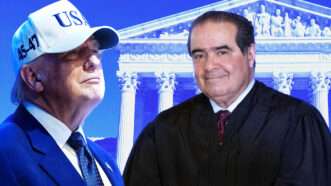
How a four-decade-old dissent may now help the president fire independent federal agency heads at will
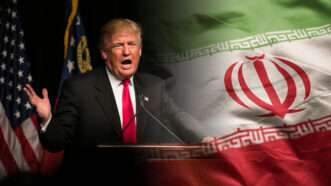
Trump's failure to secure constitutionally required congressional authorization for his war with Iran helped ensure the US lacked the staying power necessary to prevail.
A guest post by Georgetown legal scholar Peter E. Harrell.
The ruling is flawed on both substantive and procedural grounds.
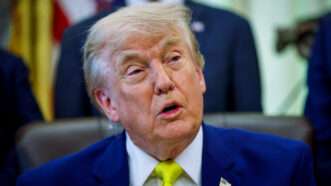
The president has repeatedly argued that courts have no business deciding whether his actions are legal.
U.S. District Judge Leo Sorokin struck down the fee, saying it exceeds the president's statutory authority and violates the separation of powers.
It's the latest example of Justice Department attorneys claiming broad and unreviewable powers for the president.
The ruling relies in part on the Supreme Court's decision in the tariff case.
They appear to be yet another illegal power grab, one that should be challenged in court.
Donald Trump wants to give it a little more control. Bernie Sanders wants to give it a lot.
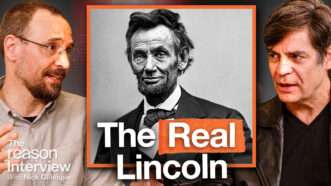
Damon Root discusses the path to emancipation, the struggle to secure freedom after the Civil War, and the constitutional changes that remade America.
Presidents use a web of private influence to garner support for foreign invasions.

They claim the injunction requiring refunds cannot be universal, and can only apply to those businesses who filed lawsuits seeking recovery.
Congress can only stop Trump’s actions in Iran by passing a concurrent resolution of both Houses over Trump’s veto, or by declining to fund the war in next year’s budget.
I gave the talk earlier this week.
The decision means the injunction blocking collection of the tariffs will not be blocked while litigation continues.

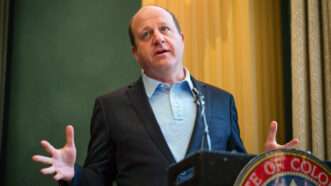
Colorado's governor agreed with a state appeals court that the former Mesa County clerk had been punished for her wacky beliefs about the 2020 election as well as her illegal conduct.
Videos of my presentation and interview on this topic at a major Italian university.

Nominees include stories on America's gerontocracy, the war on chocolate, how Texas beat California on housing, and more.
The 2-1 decision concludes Trump's massive new tariffs are illegal because there is no "balance of payments deficit" of the kind needed to authorize them.

The fiscal objection is serious. But the deeper problem is that the proposal misunderstands the saving behavior of the households it aims to help.
From immigration and guns to executive power, transgender athletes, and mail-in ballots, these are the Supreme Court cases to watch out for in May and June.

Angst, guilt, and more self-awareness than you might expect
Congress hasn't voted to declare war since 1942, yet the legislative branch constantly refuses to rein in presidents.
It limits executive power grabs in this field, as well as others.
Legally, Trump must either cease operations or ask Congress for approval. He did neither, and Congress just went on recess.

Cole Tomas Allen's actions just don't make sense, even in his own words, or in a time of political polarization.
Conservative legal commentator Gregg Nunziata outlines reasons why conservatives should reject broad views of executive power.

"The New Deal made investment in America a risky project," says economist Donald J. Boudreaux, author of The Triumph of Economic Freedom.
Democrats can't muster the votes to impeach and remove Trump, or even to stop an illegal war. The 25th Amendment would be even more difficult.
Plus: ship seizures, the best free bread in America, and more...
The vibe shift that really matters—a reduction in the size, scope, and spending of government—hasn't happened, and America is worse off for it.
Celebrate your independence with a subscription to Reason magazine, your most trusted source of honest, insightful news and analysis.




