
Will Florida Teens With Sexually Transmitted Diseases Have To Tell Their Parents Before They Can Get Treatment?
These bills would require exactly that—and a lot more.


These bills would require exactly that—and a lot more.
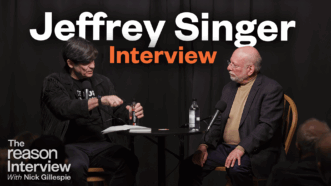
Longtime surgeon and Cato Institute fellow Jeffrey Singer argues that government overreach in health care undermines patient autonomy.
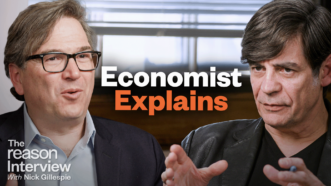
Former Obama administration economic adviser Jason Furman explains why both major parties have abandoned economic reality in favor of political fantasy.

As young adults swap cigarettes and vapes for oral nicotine products, policymakers should recognize this shift as harm reduction instead of cracking down on personal choice.

While not as good as full legalization of organ markets, the act could save lives by giving kidney donors a $50,000 tax credit.

The justices unanimously overturned a 5th Circuit decision that deemed the agency's treatment of e-liquids "arbitrary and capricious."

RFK Jr. should accept the ruling and instruct the agency to immediately halt all efforts to regulate laboratory-developed and in vitro tests.

Innovation, basic research, and economic growth do not rely on federal science funding.

The ballot proposition would effectively require health insurers to cover all treatments at any price.


Perhaps young people have become resentful of the government's massive transfer of wealth from kids to the elderly.

Authors James Fadiman and Jordan Gruber discuss their new book Microdosing for Health, Healing, and Enhanced Performance.

There's no strong evidence that cellphones cause cancer. There also isn't strong evidence that cellphones cause teen depression.

Such a regulation would override consumer choice for scientifically shaky reasons.

Is shutting down the CDC's HIV prevention division a good idea?
Studies have continuously shown that migrants create more jobs than they destroy.

The new, coarser world will likely be with us for years to come.

Plus: How NYC botched weed legalization, tuberculosis programs paused, "everything's computer!" and more...

Five years after Donald Trump declared a national COVID-19 emergency, here's what the research says.

Five years after Donald Trump declared a national COVID emergency, here's what the research says.

The government experiment in socially engineering the country into less energy use raised costs.


Reform could replace an unsustainable boondoggle with lower costs, more freedom, and better care.

Trump's nominee for NIH director once stirred major controversy for criticizing lockdowns, mask mandates, and school closures. Yesterday, Senate Democrats didn't even raise the issue.

Entitlements are a much bigger expense, but that doesn't mean the waste doesn't matter.
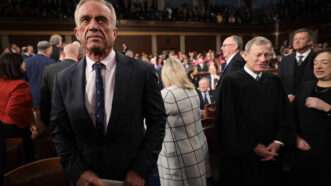
A proposed bill in 2021 would have put the HHS secretary in charge of censoring COVID-19 contrarianism on social media.

HHS, like all government programs, has plenty of silly and wasteful line items in its budget; there's no need to just make things up.

New York's proposed ban on nicotine pouches ignores science, consumer choice, and the lessons of prohibition.

A popular narrative says Europeans are better off because of increased regulation. Reality paints a different picture.

RFK, Jr.'s Health and Human Service has inexplicably cancelled two vaccine-related advisory meetings since he took the helm of the agency.

He also can't get a birth certificate or Social Security number for his daughter.

Combine moral zealotry with increasingly blurred lines between political speech and violence long enough, and the outcome is predictable.


It tries to offset as much as $4.8 trillion—mostly for tax cut extensions—with only $1.5 trillion in supposed spending reductions.


A new study claims addiction is on the rise because internet searches for gambling terms are increasing.

Despite severe risks and without a crime committed, a Minnesota judge authorized doctors to forcibly administer electroconvulsive therapy—while barring key witnesses from the hearing.
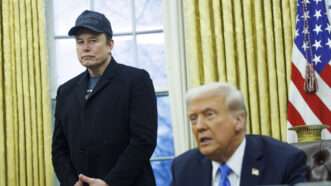
Even if the Department of Government Efficiency eliminates all improper payments and fraud, we'll still be facing a debt explosion—which requires structural reform.

The pretend department’s downgraded mission reflects the gap between Trump’s promise of "smaller government" and the reality of what can be achieved without new legislation.

It's a good sign that the president is calling on critics of the federal government's lack of transparency to staff his administration.

Prosecutors claim the case is about coercion. So why isn’t that the charge they are bringing?
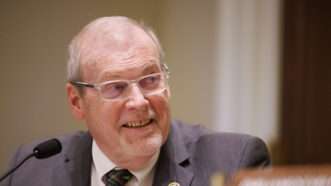
The bill would permanently schedule fentanyl-related substances as Schedule I drugs—and impede therapeutic research.

There remains many open questions about whether the agency's funding played a role in the creation of COVID-19 in a Wuhan laboratory.
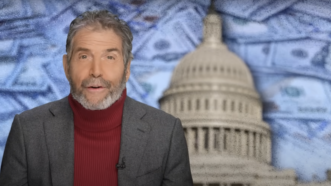
Eliminating the deficit requires cutting the biggest spending—defense, Medicare, Social Security. So far, Trump says he won't touch those.

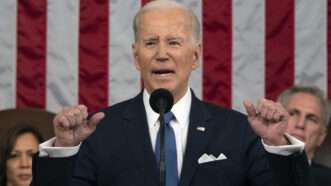
Drug warriors deserve blame rather than credit for their role in recent overdose trends.

The past three administrations have tried to limit gain-of-function research. The second Trump administration might be the first one to be successful at doing so.

Two new meta-analyses make a case for individualistic approaches to puberty blockers and hormone treatments, driven by patients, parents, and doctors rather than the state.
Celebrate your independence with a subscription to Reason magazine, your most trusted source of honest, insightful news and analysis.




