
Review: A Drug Reformer Makes the Case for Harm Reduction
The Harm Reduction Gap argues for individual autonomy and meeting drug users where they're at.


The Harm Reduction Gap argues for individual autonomy and meeting drug users where they're at.

The majority and the dissenters agree that the drug was "central" to "the opioid crisis," even though there is little evidence to support that thesis.

In between insanities, the erratic Republican was considerably more right about COVID-19 policy in September 2020 than the smug Democrat or the scoldy journalist.

The candidate who grasps the gravity of this situation and proposes concrete steps to address it will demonstrate the leadership our nation now desperately needs. The stakes couldn't be higher.
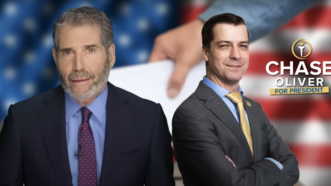
The candidate makes the case against the two-party system.

A widely cited study commits so many egregious statistical errors that it's a poster child for junk science.

"It’s not like public health is infallible," the Stanford professor and Great Barrington Declaration author tells Reason's Nick Gillespie.


Plus: A listener asks if there are any libertarian solutions to rising obesity rates.

The agency's inscrutable approach to harm-reducing nicotine products sacrifices consumer choice and public health on the altar of youth protection.

Two years after the Dobbs decision, Americans are increasingly concerned with how abortion bans affect women with wanted pregnancies.

No, but a Stanford psychologist says people under age 21 should be banned from buying some nonalcoholic drinks to protect kids from "drinking culture."

Thanks to clever inventions and investments from venture capitalists, the average American can head to CVS and purchase kits to test for drug use, sexually transmitted diseases, AIDs, diabetes, blood pressure and cholesterol.

As the DEA relentlessly tightens regulations on pain meds, the FDA refuses to approve a safer alternative already being used in similar countries.

The co-founder of Whole Foods discusses his new memoir, The Whole Story: Adventures in Love, Life, and Capitalism as he launches his new holistic health venture, Love.Life.
We could grow our way out of our debt burden if politicians would limit spending increases to just below America's average yearly economic growth. But they won't even do that.

Sen. Rand Paul explains why FOIA litigation shouldn’t have been necessary to find this out.
An early article from what will eventually be several on Information as Medicine.

Plus: Ex-NSA chief joins forces with OpenAI, conscription squads hunt Ukrainian draft-dodgers, and more...

But will the government ever face repercussions for its role in the Adderall shortage?
Policies that increase the use of traditional cigarettes are unlikely to improve public health.

New research and paternalistic legislators could threaten our last in-flight comfort.

Reasonable options include gradually raising the minimum retirement age, adjusting benefits to reflect longer life expectancies, and implementing fair means-testing to ensure benefits flow where they're actually needed.


It's the contraception mandate in reverse, with no exception for religious employers.

Bhattacharya explains the stakes of Murthy v. Missouri, the politicization of medical research, and his RFK Jr. endorsement.

At yesterday's congressional hearing, the former NIAID director played word games and shifted blame in an effort to dismiss credible claims that his agency funded work that caused the pandemic.

Proposed legislation mandates folic acid in masa flour, sparking fears among traditional tortilla makers about costs and cultural impact.

Why aren't politicians on both sides more worried than they seem to be?

So many problems would have disappeared if we had treated them like a normal product.

A government scientist is the latest official whose attempts to evade the Freedom of Information Act have landed him in hot water.

Artificial intelligence is helping humans get medical care, organize their finances, and plan vacations.

Morgan Spurlock's death and legacy are a reminder that skepticism is a necessary part of any balanced diet.

A new lawsuit argues the state's requirement that doctors must be licensed in California to do remote consultations with patients there is unconstitutional.

All three inmates were mentally ill and became dehydrated despite ready access to water.

Plus, an AI-generated version of the same article

The former New York Times reporter explores the collective madness that washed over us in 2020, tracing the path from #MeToo to “Intifada Revolution!”

The war on drugs meets abortion...

There's an easy way to lower the cost of next-generation weight-loss drugs.

Price controls lead to the misallocation of resources, shortages, diminished product quality, and black markets.

Federal officials say EcoHealth Alliance failed to properly report on its gain-of-function research at the Wuhan Institute of Virology and to monitor safety conditions there.

The same survey found that thousands of women are still getting telemedicine abortions, even if they live in states where the procedure is illegal.


With help from artificial intelligence, doctors can focus on patients.

Social Security is expected to hit insolvency in 2035, while the portion of Medicare that pays for hospital visits and other medical care will be insolvent by 2036.

New red tape will result in fewer safe and effective diagnostic tests.

In lieu of the planned debate with Brent Orrell, Gene Epstein and Tom Woods discuss the prudence of COVID-related restrictions.

There are no good sides in today's Supreme Court case concerning the EMTALA and abortion.


New from Reason: a look into what Javier Milei has accomplished and what it will take to make the most of Argentina’s window for real change. Out now for subscribers.

