
New York Lawmakers Threaten To Ban Insurance for Fossil Fuel Projects
The bill would banish insurance companies from the state if they invest in companies profiting from oil and gas.

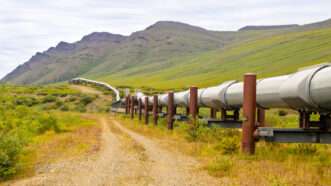
The bill would banish insurance companies from the state if they invest in companies profiting from oil and gas.

The feds’ focus on large-scale crops hinders the resurgence of heritage grains and results in less food diversity.
The president has tried to shift blame for inflation, interest rate hikes, and an overall decimation of consumers' purchasing power.

They're coming for new bags after old bag-ban failed.

Youngkin's administration says the state will adhere to federal emissions standards beginning in 2025.
Green groups dropped their suits after the various challenges to the SEC's climate disclosure rule were consolidated in a fairly conservative circuit.

Plus: A single-issue voter asks the editors for some voting advice in the 2024 presidential election.

While the private sector builds hundreds of public chargers, the government spends billions of dollars for just a handful of charging stations.

Louisiana lawmakers approved a bill to end the testing requirement for florists. Going forward, only a fee will be required.
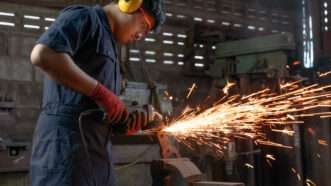
Despite both presidential candidates touting protectionist trade policy, tariffs do little to address the underlying factors that make it difficult for U.S. manufacturers to compete in the global marketplace.

Breakthrough Institute co-founder Ted Nordhaus on climate science and climate change anxiety.

More philosophical and more Shakespearean than Fury Road, it's another ambitious action extravaganza.
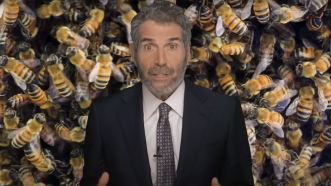
About 20 years ago, many American bees did die. Then that steadily diminished—but hysteria in the press continued.

Cyber intrusions, arson, bombings, and other mayhem feature in the conflict between West and East.

Why do environmentalist ideologues oppose research on a possible emergency backup system to cool the climate?

A flawed scientific model continues to hinder the nuclear power industry and shape policy, holding us all back.

Bad for consumers, bad for American industry, bad for his administration's own environmental goals, and bad for an increasingly irrational executive branch.

These new regulations will drive up housing costs even further.
The district court recognizes that the plaintiffs lack standing, but grants them leave to amend.

Nominated stories include journalism on messy nutrition research, pickleball, government theft, homelessness, and more.
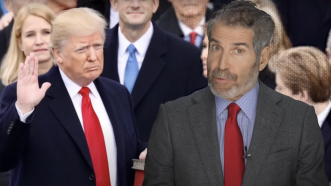
Total spending under Trump nearly doubled. New programs filled Washington with more bureaucrats.

Florida’s protectionist ban on the nascent industry sacrifices conservative principles in the name of a culture war that politicizes everything.
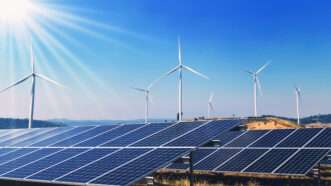
The Show Me State has plenty of room to rein in laws on taking private property, but instead, lawmakers are focusing only on one very narrow use case.
A recent panel discussion on whether state and local suits against fossil fuel producers are preempted by federal law (and my arguments for why the answer is "no, they are not").
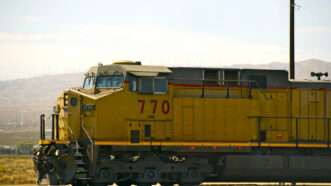
No technology exists today to enable railroads to comply with the state's diktat, which villainizes a mode of transportation that is actually quite energy efficient.
A unanimous panel orders dismissal of Juliana v. United States, bringing this zombie litigation to a close.

If businesses don't serve customers well, they go out of business. Government, on the other hand, is a monopoly.
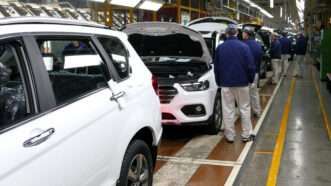
Electric vehicles are not a bad thing, especially in heavily polluted China. But the market should drive demand, not central planners.
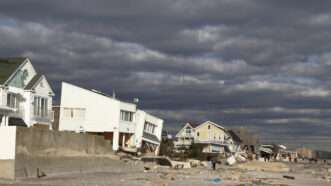
Weather and climate disaster losses as a percentage of U.S. GDP have not increased between 1990 and 2019, a new study finds.
Science can detect increasingly small particles of plastic in our air and water. That doesn't mean it's bad for you.

Science can detect increasingly small particles of plastic in our air and water. That doesn't mean it's bad for you.
A district court concludes that the Department of Transportation lacks the authority to force states to try and reduce greenhouse gas emissions associated with highway use.
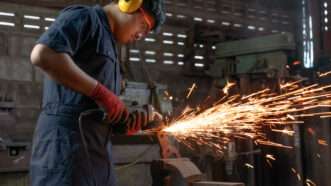
These handouts will flow to businesses—often big and rich—for projects they would likely have taken on anyway.
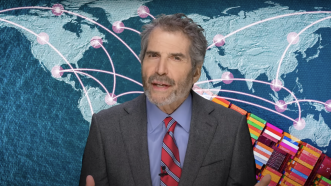
Free trade brings us more stuff at lower prices.

Activists oppose research on how to safely deploy an emergency cooling system for the planet.

Protests in the country come from an understandable place. But their demands are divorced from certain unfortunate economic realities.

While drafted with good intentions, the rule prioritizes electric vehicles that run on batteries, even as hybrids see strong sales growth.

Plus: Kamala Harris' abortion clinic visit, Karl Marx's hypocrisy, CDC data struggles, and more...

The new reporting rules will force companies to disclose whether they are prioritizing climate change concerns.
The company will now build everything in its existing Illinois factory, pausing construction on the Georgia plant until "later."
In California, which has a slew of renewable energy regulations, the cost of electricity increased three times faster than in the rest of the U.S.—and the state still doesn't even get reliable energy.
Abundant, emissions-free energy was once the promise of a nuclear-powered future. What happened?

The sequel is about ecology, politics, economics, imperialism, and much more. But mostly it's about worms.

Plus: Putin threatens nukes, D.C. mulls a crackdown on theft, Bloomberg blames right-wingers, and more...

While a disappointment to green-tech supporters, Apple's decision reflects the growing uncertainty in the E.V. market.


Plus: Moscow subway stations, climate activists souping and glueing, Rachel Dolezal's plight, and more...


New from Reason: a look into what Javier Milei has accomplished and what it will take to make the most of Argentina’s window for real change. Out now for subscribers.

