
Trump Makes Canada Free Again
Canada’s retaliation against Trump’s tariffs is wiping American alcohol off store shelves—and fueling an unexpected push to deregulate its own restrictive liquor laws.


Canada’s retaliation against Trump’s tariffs is wiping American alcohol off store shelves—and fueling an unexpected push to deregulate its own restrictive liquor laws.

Musk's fans and critics will keep debating whether DOGE is revolutionizing government or wrecking important institutions.

Passengers suing the TSA for First Amendment violations have had a rough time in court.
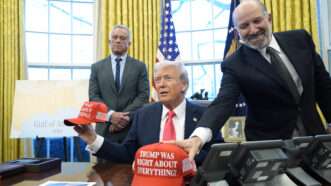
There is no "royal we" in the marketplace.

Tariffs on steel and aluminum imports inflate the cost of electric vehicles.


We rely on Canadian energy and lumber, and Canadians rely on our products. It's the proverbial win-win.
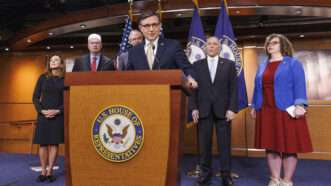

The cost-cutting initiative's calculation of "estimated savings" is mostly mysterious, and the parts we know about are riddled with errors.

It would make American consumers poorer and hurt American businesses without any promise of benefits.
The cowardice of Congress will continue fueling the growth of executive power.
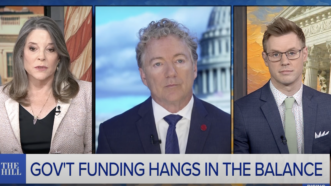
"I really haven't had anybody come up to me and say, 'Please, please, put tariffs on me,'" says Sen. Rand Paul (R–Ky.).

The U.S. can defend itself at a lot less expense.

A quick lesson about concentrated benefits and diffused costs
Plus: A listener asks the editors to discuss the pros and cons of homeownership.

The Austrian economist's principled thought once served as a check on the intellectual right.

The Department of Homeland Security unilaterally tore up a collective bargaining agreement it had signed with unionized TSA screeners in May 2024.
What did we learn from yet another escalation in the North American trade war? Not to do it again.
Plus: The Trump administration's American dream revisionism, 50 theses on DOGE, what people get wrong about extreme MAGA, and more...

It's also a reminder of the disarray that ensues from strikes put on by state employees, who hold monopolies on public goods.

Entitlements are a much bigger expense, but that doesn't mean the waste doesn't matter.
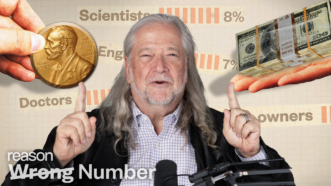
A recent study claiming inequality of opportunity in the sciences commits statistical and conceptual errors that make its findings meaningless.
Plus: Columbia's Hamas apologists, Musk's lawsuit against OpenAI, and more...
The president's assertion is divorced from reality, and so are the "estimated savings" touted by Elon Musk.
It's great to have presidents talking about the need for a balanced budget, but Republicans are backing a plan that will increase borrowing.
A popular narrative says Europeans are better off because of increased regulation. Reality paints a different picture.

Handouts to corporations distort the market, breed corruption, and politicize the economy.
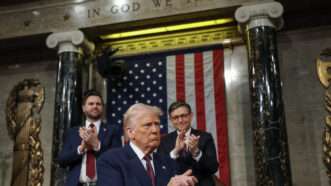
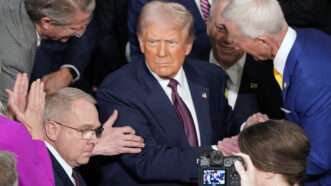
The tariffs Trump has already imposed on Canada, Mexico, and China will cost an estimated $142 billion this year—and he says more are on the way.
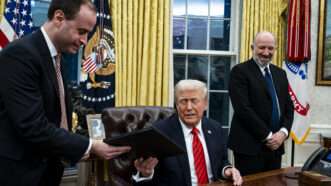
If tariffs are a poor method of collecting revenue or strengthening trade, they're even less effective at stopping the flow of illegal drugs.
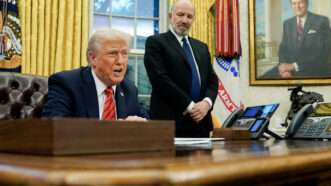
The Trump administration’s trade war leaves everyone worse off.

D.C.'s bureaucracy violates independent drivers' economic liberty.

State laws banning caged eggs are cutting off millions from cheaper options.

Means-test Social Security, raise the retirement age, and let us invest our own money.

President Donald Trump's pardon of the Silk Road creator is a rare moment of reprieve in an era of relentless government expansion.
Washington Post columnist Dana Milbank provides a helpful summary, with a little help from me.

If the Consumer Product Safety Commission doesn't have enough data to enact a rule, it shouldn't be making informal recommendations either.

And an increasingly unpopular one. Will Trump pay attention to the polls, if not the economists?

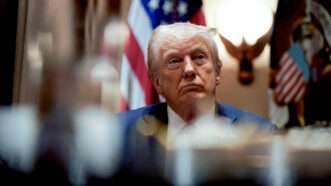
At the current rate of inflation, the dollar will lose 33 cents of purchasing power within a decade.
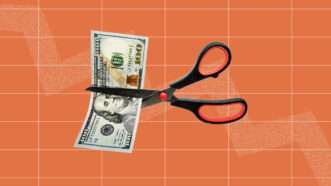
Cuts to government spending mean fewer bonds, lower borrowing costs, and potentially a break for borrowers.
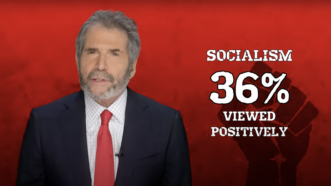
Socialism promises many things and claims to prioritize people over profits. But what people actually get is different.

The presidential adviser's lack of formal authority complicates his cost-cutting mission.

The law is wasteful and protectionist. Now, a new lawsuit argues that it is unconstitutional too.

"If the Republican budget passes, the deficit gets worse, not better," says Rep. Thomas Massie. He's right.
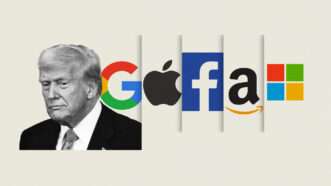
If Trump wants to encourage domestic investment, his antitrust appointees should ditch their Big Tech prejudice.
Celebrate your independence with a subscription to Reason magazine, your most trusted source of honest, insightful news and analysis.




