
The Stop Comstock Act Doesn't Go Far Enough
Upcoming legislation would repeal parts of the 1873 law that could be used to target abortion, but the Comstock Act's reach is much more broad than that.


Upcoming legislation would repeal parts of the 1873 law that could be used to target abortion, but the Comstock Act's reach is much more broad than that.
In this, the court agrees with the Florida Attorney General and the Governor’s office, and disagrees with the challengers who are trying to get the statute struck down on First Amendment grounds.
Two public university professors were disciplined for posting fliers saying a colleague was racist, and that a student group (Turning Point USA) was a racist "national hate group" with "ties to white supremacy."

The justices ruled that "objective evidence" of retaliation does not require "very specific comparator evidence."
The Cato Institute's Ian Vasquez recently organized a conference in Argentina featuring President Javier Milei. He gives an update on the presidency.

A handful of Republican lawmakers worked with Democrats to repeal an 1864 law banning most abortions.
The government alleges that Nikhil Gupta was involved in a "plot, directed by an employee of the Indian government, to target and assassinate a U.S. citizen for his support of the Sikh separatist movement in India."

The decision clears the way for a jury to consider Megan and Adam McMurry's constitutional claims against the officers who snatched their daughter.
So holds a federal court, also concluding that earlier sexual discussions could likewise justify restriction in the open public comment period (treated by the law as a “limited public forum,” in which reasonable and viewpoint-neutral restrictions are constitutional).
X's child porn detection system doesn’t violate an Illinois biometric privacy law, the judge ruled.

Numerous federal appeals courts have ruled that filming police is protected under the First Amendment, but police continue to illegally arrest people for it.
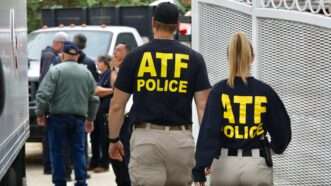
Vague rules and an unjustified raid led to Bryan Malinowski’s brutal death at the hands of federal agents.

The case hinged on the ATF’s statutory authority, not the Second Amendment.
An early article from what will eventually be several on Information as Medicine.
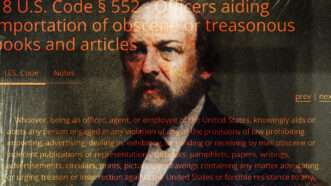
Issuing a posthumous pardon for Bennett would reaffirm our nation’s commitment to free expression and intellectual freedom.

Plus: A listener asks the editors about the Selective Service.
A California trial court so ruled, and the California Court of Appeal just upheld that decision.
One of several interesting questions that arises in a case involving regulations of pregnancy centers that seek to help pregnant women without offering abortions or abortion counseling.
A Harvard Dean suggests universities can and should limit controversial speech.

The Selective Service should be abolished, not made more efficient and equitable.
The plaintiffs are challenging the state's widespread surveillance, which it collects through over 600 cameras.

Six justices agreed that federal regulators had misconstrued the statutory definition of a machine gun.

Phoenix police are trained that "deescalation" means overwhelming and immediate force, whether or not it's necessary.
The underlying methodological debate might also bear on free speech disputes more broadly.
"Young proffered CNN messages and emails that showed internal concern about the completeness and veracity of the reporting—the story is 'a mess,' 'incomplete,' not 'fleshed out for digital,' 'the story is 80% emotion, 20% obscured fact,' and 'full of holes like Swiss cheese.'"
The case involved a public records request to identify the "six or seven pretty big legal conservative heavyweights" whom Gov. DeSantis labeled as "trusted advisors for his judicial appointments to the Florida Supreme Court."

Plus: Hunter Biden is guilty of crimes that shouldn't be crimes, North Dakota's voters take on gerontocracy, and more...
The court concludes the pastor's posts were about the activists' organization (Oklahomans for Equality) and not about them personally; it thus avoided having to decide whether the First Amendment would have protected the speech if it was indeed about the activists personally.

The president's son, who faces up to 25 years in prison for conduct that violated no one's rights, can still challenge his prosecution on Second Amendment grounds.


The court ruled that it is unconstitutional for officials to remove library books with the "intent to deprive patrons of access to ideas with which they disagree."

The plaintiffs hope to "help Republicans and conservatives see why this ban is inconsistent with the free speech values they say they care about."
An article from the Defamation: Philosophical and Legal Perspectives symposium, sponsored by the Center for Legal Philosophy at UC Irvine.

Officials suspend efforts to force X to suppress the world’s access to video of a crime.

A new law will make it much harder to film law enforcement officers in their public duties. Does that violate the First Amendment?

A WIRED investigation reveals the extent to which residents of Chula Vista are subjected to surveillance from the sky.

The transit authority was sued after rejecting an ad that directed viewers to go to a website "to find out about the faith of our founders."


New from Reason: a look into what Javier Milei has accomplished and what it will take to make the most of Argentina’s window for real change. Out now for subscribers.

