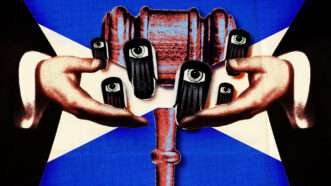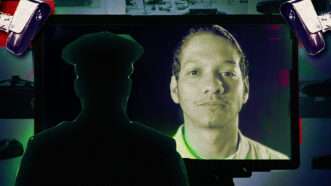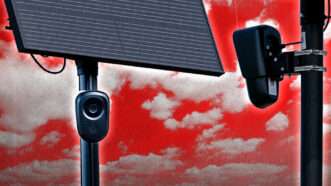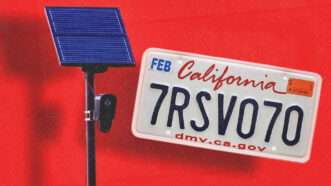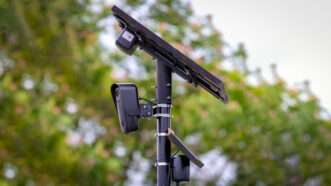
Flock's Gunfire Alerts Raise a New Fourth Amendment Question
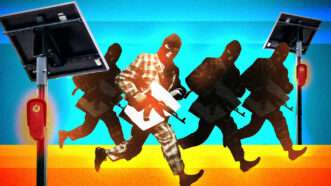
Gun owners should be paying attention to how police use gunfire microphones in conjunction with license plate cameras.
Being on a construction site "does not open the floodgates to warrantless government intrusion," a federal judge ruled in a lawsuit filed by a construction worker who has been detained three times by ICE.
Cops keep carving out tech exceptions to the Fourth Amendment—and courts are giving them their blessing.
Flock has been promoting a recent study of its cameras' impacts on car theft. But the paper didn't demonstrate a causal effect.
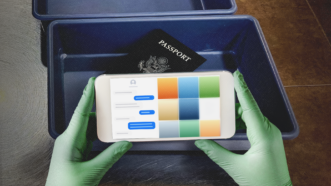
A federal appeals court says it's legal for federal agents to scroll through your phone and take pictures of its contents without a warrant or suspicion of criminal activity.
thus deepening a circuit split. (Note that strip searches are generally allowed when and if the arrestee is placed in the general population of the jail.)
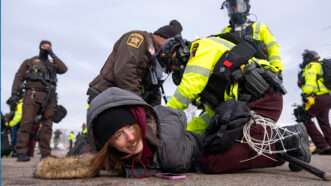
The Fifth Circuit Court of Appeals ruled that Taylor Rogers didn't show that it was clearly established that it was excessive force to be held down on a pile of fire ants while handcuffed.
Recent comments by Greg Abbott and Ron DeSantis reflect a bipartisan backlash against warrantless surveillance.

The habitually dishonest department uncritically accepted a story that was immediately contradicted by video footage and physical evidence.
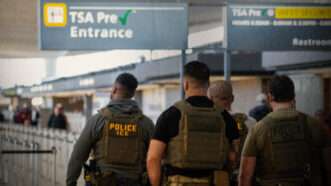
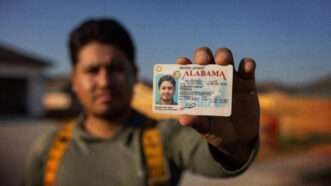
Despite carrying a REAL ID, Leo Garcia Venegas has been repeatedly detained by immigration agents. Now he’s suing to block immigration raids targeting Latinos on private construction sites.
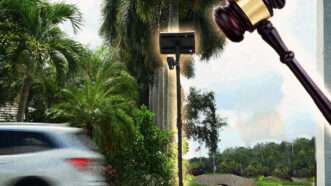
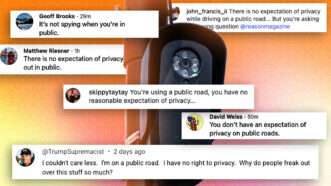
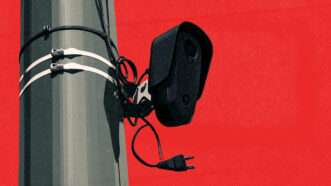
Criticism from Trump allies and recent survey results show that resistance to widespread deployment of automated license plate readers spans the political spectrum.
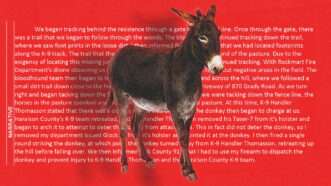
In an incident report, the officer who shot the donkey wrote that he had to shoot the donkey to save himself and a K-9 team from injury.
A federal lawsuit claims the Waukesha County Sheriff’s Office used the Flock cameras without a legitimate government purpose and in retaliation against the vet for exercising his First Amendment right.
Americans are starting to recognize the dangers of pervasive surveillance by automated license plate readers.
What the simultaneous revolts against Flock and data centers can tell us about the power and risks of populism
Civil liberties advocates warn that Americans’ privacy and surveillance concerns won’t be solved without strong legal protections.
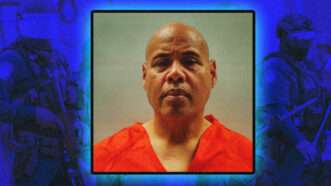
In a federal lawsuit, Byron Prophet argues that police supervisors "turned a blind eye" for years as Gerald Goines framed innocent people.
Benn Jordan wants the snoopers to be “a little unsettled.”
The U.S. government responded in ways that are so integrated into daily life that we no longer recognize them.
While the settlement is a good thing, it's unfortunately still the case that at airports, the Bill of Rights is more of a list of suggestions.
CBP claims dictatorial powers over Americans coming home. A big part of that is hiding information.
How many warrantless cellphone searches does it take to change border policy?
The company’s attempts to protect Americans’ privacy “will do nothing to protect innocent people from warrantless mass surveillance,” says an Institute for Justice attorney.
An apparent surge of ICE arrests in airport terminals has created viral videos and questions over ICE's authority to board planes without judicial warrants.
Robby Soave and Amber Duke attack The Free Press' latest attempt to defend Flock cameras.
Michael Soyfer, an attorney at the Institute for Justice, calls it “just the tip of the iceberg.”
The Kansas Justice Institute argues that Wichita's "warrantless ALPR dragnet surveillance program" violates the state constitution's privacy protections.
Constitutional limits on federal authority should not be partisan matters.
Will they be held responsible for the illegal search and the damage to his property?
The Secret Service asserted a nonexistent "emergency" to track Comey's cellphone, and the FBI's evidence falls far short of proving his seashell picture was a crime.
The government is charging Samuel Tunick for telling them a code that would erase all the data on his phone—after they tried to take it on false pretenses.
Although Flock Safety’s auditing tools have helped catch the bad actors, more is needed to protect Americans’ privacy.
The justices said the "open fields" doctrine, a sweeping exception to constitutional privacy protections, does not apply in the Keystone State.
They can also search it without a warrant if you're flying abroad. Yes, even if you're an American citizen.
Newly published dashcam footage shows a sheriff’s deputy driving recklessly to pull over an actress he’d met while working on the set of the TV show Bad Monkey.
Cops stopped a semitruck because of a drug tip, then tried to dress the illegal search up as a routine inspection.
The decision rebukes the DOJ for demanding "private and sensitive" information about Georgia election workers "with no legitimate law enforcement purpose."
Neil Gorsuch proposes an alternative to a Fourth Amendment standard that has proven to be an unreliable safeguard against government snooping.
The officer's avowed reasons for killing Dennis Tuttle and Rhogena Nicholas were contradicted by the physical evidence.
The justice criticizes the Court’s endorsement of coercive plea bargaining and its embrace of dubious Fourth Amendment doctrines.
The justice argues that the "reasonable expectation of privacy" test and the third-party doctrine are indefensible in theory and unworkable in practice.
Understanding Chatrie v. United States.
The case is mostly about photography restrictions and false arrest, but the defendants also allegedly "discussed playing Disney music during public meetings to prevent Flash—through copyright restrictions—from monetizing his recordings."
The family's attorney says it's the largest settlement for a dog shooting case in Colorado history.
In a unanimous opinion, the court ruled that it is unconstitutional for officers to stop and frisk someone based solely on suspicion that the person is carrying a gun.
Celebrate your independence with a subscription to Reason magazine, your most trusted source of honest, insightful news and analysis.