The Volokh Conspiracy

Mostly law professors | Sometimes contrarian | Often libertarian | Always independent | Est. 2002

The Volokh Conspiracy

Free Speech

Not Judge Judy, Juror Judi—But "Stupid Mistake" Isn't "Actual Malice" for Libel Purposes

|

From Scheindlin v. Accelerate 360, LLC, decided today by Judge Kyle Dudek (M.D. Fla.):

For many decades, Plaintiff Judy Sheindlin—known to millions of daytime television viewers simply as Judge Judy—has cultivated a public reputation as a tough-on-crime, no-nonsense arbitrator. The defendants in this case, A360 Media, LLC and Accelerate360, LLC (collectively "A360"), operate in a very different sphere: they publish and distribute celebrity news and tabloids, including the National Enquirer and In Touch Weekly.

In April 2024, their worlds collided. A360 published articles claiming that Sheindlin had appeared in a true-crime docuseries to advocate for the resentencing of Lyle and Erik Menendez, the notorious brothers convicted of murdering their parents. The articles reported that Scheindlin felt the brothers had been railroaded. And they quoted her as claiming the trial was "rigged."

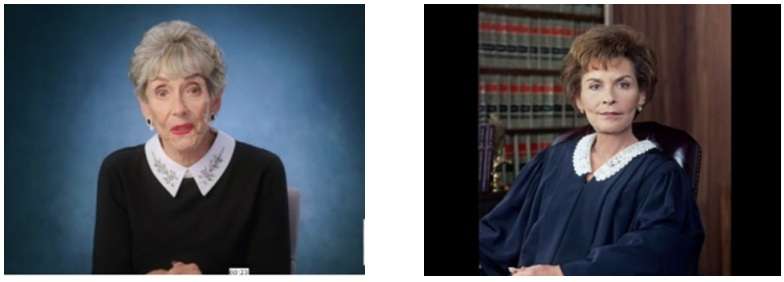
It turns out none of this was true. An A360 reporter had watched a clip from the docuseries and mistakenly identified a different older woman—an alternate juror named Judi Zamos—for the famous television judge. Predictably, Sheindlin was not pleased. She filed this defamation lawsuit, alleging that the false reports subjected her to public ridicule and tarnished her carefully curated brand.

A360 now seeks summary judgment. It readily admits the stories were wrong, but argues that the misidentification was an honest, if unfortunate, mistake. Because of this, A360 contends that Sheindlin cannot clear the high constitutional hurdle of proving actual malice—a strict requirement for public figures suing for defamation. Furthermore, A360 argues that Sheindlin cannot prove she suffered any actual, compensable damages under Florida law.

Because the First Amendment requires a showing of actual malice rather than mere negligence, and because Sheindlin has failed to produce evidence meeting that heavy burden, her defamation claim must fail. A360's motion for summary judgment is thus GRANTED….

Here's the court "side-by-side comparison of the two" women's images:

Read More

Trump Tweets About Standing!

Judge Leon should check the President's social media!

|

A few days ago, the D.C. Circuit sent the East Wing case back down to Judge Leon. In my view, the plaintiffs clearly have no standing. Judge Rao's separate opinion cogently explains why.

Judge Leon, undeterred, ruled against Trump again! The White House can continue with "underground" construction but not "aboveground" construction! I suppose Judge Leon is an expert in construction, as he seems to think these two levels can be separated! His new order had fewer exclamation points, but he still declined to address standing. Should this case get to SCOTUS, it will be very easy for the proceduralists to smack down this ruling on standing grounds.

Indeed, even President Trump gets the standing analysis. In a series of social media posts, Trump explains why the plaintiffs in this case lacks standing. I never know how much of Trump's tweets are his and how much come from his lawyers. But at a minimum, these postings (which seem to have been made aboard Air Force One) suggest Trump understands the jurisdictional issues.

Here, Trump points out (correctly) that the only possible plaintiff with an injury is a woman who walks her dog near the White House:

The person who filed the meritless and lawless suit on the desperately needed White House Ballroom, being built as a GIFT to America (without Tax Dollars!), a woman walking her dog, has absolutely NO STANDING to bring such a monumentally important case against our Country. The Trump Hating Judge's opinion is radically different from his first opinion, that was issued weeks ago, while still being unlawful and ambiguous, which never even addressed her COMPLETE lack of Standing. Every Political "Pundit" has said this case is meritless, even a JOKE, but it's not a joke to me, or the people of America. Too much hard work, time, and money spent in order that a Judge can claim that he ruled against "DONALD TRUMP," something which I have gotten very used to, BUT WILL NOT ACCEPT! President DJT

Here Trump points out (correctly) that Judge Leon once again does not even mention standing:

The out of control Trump Hating, Washington, D.C. District Court Judge, who doesn't want to accept a $400 Million Dollar GIFT of one of the most beautiful Ballrooms anywhere in the World, desperately needed by the White House and its future Presidents (Due to time constraints, I will barely get to use it!), wants me to build the "underground" portion of the Ballroom, without the "above ground" portion, but the underground doesn't work, isn't necessary, and would indeed be useless, without the above ground sections. The underground portion is wedded to, and serves, the upper portion, including the Bomb Shelters, a State of the Art Hospital and Medical Facilities, Protective Partitioning, Top Secret Military Installations, Structures, and Equipment, Protective Missile Resistant Steel, Columns, Roofs, and Beams, Drone Proof Ceilings and Roofs, Military Grade Venting, and Bullet, Ballistic, and Blast Proof Glass. It's all tied together as one big, expensive, and very complex unit, which is vital for National Security and Military Operations of the United States of America! The Judge's decision, which doesn't even discuss the vital subject of STANDING, of which the plaintiff has none, severely jeopardizes the lives and welfare of the people who work, and will be working, at the White House — including all future Presidents of the United States, and their families. President DONALD J. TRUMP

During oral argument, Judge Leon apparently refused to discuss standing, and told the lawyer from DOJ to take up standing with the Court of Appeals.

This post goes more to the merits, and explains the underground construction cannot be separated from the aboveground construction. Standing comes in at the end.

The White House doesn't have a Ballroom (No Taxpayer Money!), which Presidents have desperately wanted and desired for over 150 years, but a Trump Hating, Washington, D.C. District Court Judge, a man who has gone out of his way to undermine National Security, and to make sure that this Great Gift to America gets delayed, or doesn't get built, is attempting to prevent future Presidents and World Leaders from having a safe and secure large scale Meeting Place, or Ballroom, one with Bomb Shelters, a State of the Art Hospital and Medical Facilities, Protective Partitioning, Top Secret Military Installations, Structures, and Equipment, Protective Missile Resistant Steel, Columns, Roofs, and Beams, Drone Proof Ceilings and Roofs, Military Grade Venting, and Bullet, Ballistic, and Blast Proof Glass —which all means that no future President, living in the White House without this Ballroom, can ever be Safe and Secure at Events, Future Inaugurations, or Global Summits. This Magnificent Space will allow them to carry out their vital duties as the Leader of our Nation. Furthermore, the Ballroom, which is being constructed on budget and ahead of schedule, is needed now. Almost all material necessary for its construction is being built and/or on its way to the site, ready for installation and erection. Much of it has already been paid for, costing Hundreds of Millions of Dollars. If somebody, especially one with no standing, had a complaint — Why wasn't it filed many months earlier, long before Construction was started? The Public Record was open for all to see. Everybody knew that it was planned, and going to be built. This highly political Judge, and his illegal overreach, is out of control, and costing our Nation greatly. This is a mockery to our Court System! The Ballroom is deeply important to our National Security, and no Judge can be allowed to stop this Historic and Militarily Imperative Project. Thank you for your attention to this matter! President DONALD J. TRUMP

Finally, Trump thinks that Judge Leon works for Chief Judge Boasberg, who was MANDAMUSED.

A Trump Hating Judge, for the first time in History, wants Congress to pay Hundreds of Millions of Dollars for a Glorious Ballroom, instead of accepting Donations from Great American Companies and Citizens. This is a first — In other words, he wants Tax Payers to pay for the Ballroom, instead of Donors and Patriots! The Ballroom is FREE to our Country, A GIFT, and vital for our National Security. This Judge, who works for another Judge who was just MANDAMUSED for the unfair and biased way he treats me, should be ashamed of himself! President DONALD J. TRUMP

Know who can't get mandamused? The President. Say what you will about Trump, but he gets procedure.


The Slowing of Fourth Amendment Law, and Now Advisory Opinions: A Comment on Chatrie v. United States

The second in a series.

|

On April 27th, the Supreme Court will hear oral argument in Chatrie v. United States, on the Fourth Amendment implications of geofencing. I have already posted the amicus brief I wrote for the Court in the case, and I am writing a series of posts in anticipation of the argument. This is the second post in the series.

In this second post, I want to focus on how the Court hasn't handed down a case on the Fourth Amendment and new technology in a long time, and that it is now doing so in what amounts to  an advisory opinion.  These two things are related, I think. And for those of us interested in how Fourth Amendment law develops, they're related in an important way.

First, consider the timing.  Chatrie comes after a surprisingly long gap in Supreme Court attention to how the Fourth Amendment should apply to new technologies.  It has been 8 years since the Court's 2018 ruling in Carpenter v. United States on the Fourth Amendment implications of cell-site location information.  That's a relatively long gap. After City of Ontario v. Quon in 2010 on pagers, United States v. Jones in 2012 on GPS devices, Riley v. California in 2014 on searching cell phones incident to arrest, the Microsoft warrant case in 2018, and Carpenter that same year, it had become a staple of the Justices' speeches that Court was going to have to take a lot of cases on the Fourth Amendment and digital technologies in the future.

Instead, for eight years, we get bupkes.

Next, ponder the advisory-opinion aspect of the case.  The cert petition in the case asked the Court to take on two issues: Was the Fourth Amendment violated, and does the exclusionary rule apply?  In the proceedings below, the fifteen judges on the en banc Fourth Circuit were hopelessly divided on the Fourth Amendment issues—but only one of the fifteen Judges thought the exclusionary rule applied. Instead of taking both issues, the Supreme Court granted cert limited to the first issue.

Think about that. Even if the Court holds that Chatrie's Fourth Amendment rights were violated, it won't make any difference to Chatrie. The lower court has already held that there is no remedy, and that is a retrospective question unaffected by what the Supreme Court might rule on the merits in coming months.  Going forward, the Court gets to hand down what is in a practical sense an advisory opinion on how the Fourth Amendment applies to geofencing.  Many people care a great deal about what that practically-speaking-advisory-opinion will say, of course.  But the actual individual involved, Chatrie, won't get relief.

What is going on?  I think these two points are directly linked.

Read More

Who Owns The President's Papers?

Yes, there is a Domestic Emoluments Clause issue.

|

The Office of Legal Counsel concluded that the Presidential Records Act (PRA) is unconstitutional. In Civitas Outlook, I explained why I thought this opinion was consistent with recent Supreme Court precedents, including Trump v. Mazars.

Others, unsurprisingly, disagree. Christopher Fonzone, who headed OLC during the Biden Administration, writes that the PRA is constitutional. Here, I want to focus on one aspect of Fonzone's analysis: who owns the President's papers?

Fonzone writes:

First and foremost, the Property Clause. Article IV of the Constitution expressly grants Congress the "Power to dispose of and make all needful Rules and Regulations respecting" U.S. property. Since the Constitution and Congress create and fund all of the offices in the White House, those offices are unquestionably government offices. As OLC recognized in the 1978 testimony concerning the constitutionality of the PRA, "[i]t is well established that the work product of government employees prepared at the direction of their employer or in the course of their duties is government property." Thus, Congress may "extend this principle" to require the preservation of "records prepared or received by the President in the course of his duties" and "no substantial separation of powers problems would, in our view, be raised." (As I discuss below, the April 1, 2026 OLC opinion includes no discussion of the Property Clause.)

The Carter Administration may have reached this conclusion, but (thankfully) one executive branch cannot bind another executive branch--especially one that was "especially pleased" to acquiesce to so many congressional constraints on presidential power.

Fonzone does not mention that the Supreme Court expressly left this issue open in Nixon v. Administrator of General Services (1977):

We see no reason to engage in the debate whether appellant [President Nixon] has legal title to the materials. . . .

The litigation over Nixon's records did not end in 1978. There was extensive caselaw that stretched decades. In 1992, the D.C. Circuit stated that the papers did belong to Nixon:

Read More

Tariffs

Trump Administration Presents Update on its Tariff Refund Plan

The plan is not completely terrible. But many importers may still have difficulty getting the refund money owed to them.

|

NA

After the Supreme Court struck down Donald Trump's massive International Emergency Economic Powers Act (IEEPA) tariffs in a case I helped litigate along with the Liberty Justice Center and others, litigation continued over tariff refunds owed to the many businesses that paid illegally collected tariffs under IEEPA - a total of some $166 billion. In March, Judge Richard K. Eaton of the US Court of International Trade - the judge assigned to oversee the refund process - ordered the administration to grant refunds to to all those businesses that were forced to pay the tariffs - including those that had not filed lawsuits seeking refunds. This week, on April 14, in response to Judge Eaton's court order, the US Customs and Border Protection agency (CBP) submitted a required update on the status of their refund plan. The Hill has a helpful summary:

Roughly 330,000 importers who paid a combined $166 billion as part of President Trump's emergency tariffs are waiting on refunds after the Supreme Court in February struck down the levies in a blockbuster 6-3 decision.

CBP, the federal agency in charge of collecting tariffs, has warned the immense scale of the refund effort requires time. Officials have been working to launch the first phase of the new system on April 20, though the agency previously suggested importers may need to wait an additional 45 days afterwards to actually receive their funds.

Lord said the system will be able to process electronic refunds for about 82 percent of the affected tariff entries. That accounts for about $127 billion in deposits. More than 56,000 importers have already signed up, and the number continues to grow as the system nears its launch.

Others won't be able to use that automated process. Some entries that haven't gone through a formal close-out step called "liquidation" and are subject to antidumping orders must instead go through a manual, administrative process that requires additional steps, Lord noted.

CBP says that applies to about $2.9 billion worth of tariff deposits that need refunding.

This seems less bad than the worst-case scenario in which the administration could simply stonewall most victims of the illegal tariffs, through some combination of malice and bureaucratic incompetence. It is also significant that the administration has - so far, at least - not tried to appeal Judge Eaton's order. In my earlier post on this subject, I indicated they might at least appeal the universal nature of the order, which could potentially be attacked based on the Supreme Court's 2025 ruling Trump v. CASA, Inc. (though I also indicated that I believe Judge Eaton correctly distinguished CASA).

But, as the Hill article notes, the process may still be time-consuming and difficult for many businesses. That is particularly true for smaller importers that have less bureaucratic capacity than bigger firms. Meanwhile, the longer the process drags on, the more interest payments we taxpayers will be on the hook for, a point Judge Eaton rightly stressed in his March ruling.

And, as I pointed out in my previous post, even the most complete possible tariff refund system will not fully compensate many harms inflicted by the illegal tariffs on both businesses and consumers. Among other things, they cannot compensate businesses for lost sales, disruptions in supplier relationships, lost investments, and more. Consumers, of course, will not be compensated for having to pay higher prices.

For these reasons, as also noted in my earlier post, courts made a mistake when they stayed the Court of International Trade injunction against the tariffs issued when we won our initial trial court victory in May 2025. As I noted at the time:

One factor courts consider in assessing a motion to stay is which side is likely to ultimately prevail on the merits….

Another key factor is which side is likely to suffer "irreparable harm" if they lose on the stay issue. We argue that our clients - and thousands of other businesses - will suffer great irreparable harm if a stay is imposed. They will lose sales due to higher prices, good will can be lost, relationships with suppliers and investors will be disrupted, and more. Those harms can't be made up merely by refunding tariff payments months from now, after the appellate process concludes.

All of the noncompensable harms we warned against came true. And, in addition, the administration has been slow to enact an effective tariff refund system, thereby further exacerbating the harm, and leaving taxpayers on the hook for rapidly growing interest payments.

I hope courts learn from this experience. When and if they strike down Trump's newest massive illegal tariffs - those imposed under Section 122 of the Trade Act of 1974 -  they should know not to stay any injunction issued against them. Judges should not blindly accept administration assurances that any harms will be promptly remedied by refunds issued after the fact.

NOTE: As I have previously noted, I am no longer a member of the V.O.S. Selections legal team, because my role ended after the Supreme Court issued its decision. Thus, I am not involved in the refund phase of this litigation.

"Cabotage": It's Not "Sabotage" with the "S" Switched to Russian

|

Just learned this largely legalese word today; it means, according to Black's Law Dictionary,

1. The carrying on of trade along a country's coast; the transport of goods or passengers from one port or place to another in the same country….

2. The privilege of carrying traffic between two ports in the same country.

3. The right of a foreign airline to carry passengers and cargo between airports in the same country.

Black's also offers this quote:

Read More

"Can Speech Policy Protect Public Health?" in Print in Utah Law Review

Constitutionality of health-related speech meets public choice and social media

|

My coauthors Cassandra RobertsonZoe Robinson, and I just published an article entitled "Can Speech Policy Protect Public Health?" in the Utah Law Review. Here is the abstract:

Government speech shapes public health outcomes, yet political incentives often lead officials to either remain silent about emerging threats or subordinate scientific evidence to partisan goals. This Article examines how three factors interact to influence public health: the constitutional status of health-related speech, the political economy of public health policymaking, and the modern information environment. Drawing on insights from public choice theory, we demonstrate how misaligned incentives lead political actors to avoid communicating about health risks or spread misinformation that serves their short-term interests at the expense of population health. The conventional tools of public health policy were developed when official sources could effectively shape public understanding, but today's fragmented information landscape demands new approaches to health communication. 

This Article analyzes both the constitutional framework governing health-related speech and the practical dynamics that complicate effective public health messaging. We propose specific mechanisms to combat harmful misinformation while creating stronger incentives for accurate government communication about health threats. Throughout, we move beyond binary debates about censorship versus free speech to develop approaches that reflect the complex relationship between information flows, political incentives, and public health outcomes. The history of public health challenges—from the AIDS crisis of the 1980s to today's emerging strains of avian influenza—shows how institutional responses often falter. Understanding these dynamics can help shape better responses to current and future health crises. 

Politics

$5K Sanctions for "Egregious, Repeated, and Ongoing" AI Hallucinations in Self-Represented Litigant's Filings

|

From last week's decision by Judge Virginia Kendall (N.D. Ill.) in Obi v. Cook County:

The Court strikes Plaintiff's motion [to alter or amend the judgment dismissing her complaint] for violating Local Rule 7.1 and sanctions her $5,000 for violating Rule 11.

Plaintiff's motion is 10.5 pages single-spaced and her core argument runs six straight pages in a single paragraph. 10.5 single-spaced pages is 21 pages double-spaced. Plaintiff's reply briefs are 23 pages single-spaced (46 pages double-spaced) and 13 pages single-spaced (26 pages double-spaced). Plaintiff never sought leave to file such voluminous papers. The lack of table of contents is also problematic because, as discussed below, many of Plaintiff's citations are fictious. Plaintiff violated Local Rule 7.1. "Neither a motion nor brief in support … shall exceed 15 pages without prior approval of the court." Any brief that exceeds 15 pages "must have a table of contents with the pages noted and a table of cases." "Any brief … that does not comply with this rule shall be … subject to being stricken by the court." The Court "strictly enforce[s]" this rule. The Court therefore strikes Plaintiff's motion and replies.

Normally the Court, recognizing Plaintiff's pro se status, would offer leeway and consider Plaintiff's briefs despite violating Local Rule 7.1. Plaintiff's egregious, repeated, and ongoing Rule 11 violations, however, foreclose any such possibility. Plaintiff generated each brief using AI. Plaintiff's motion is riddled with AI hallucinations, made up cases, quotes, and statements of law and fact. [Citing filing] (identifying 13 hallucinated cases, quotes, and statements of law)….

This is not the first time Plaintiff has done this. In a prior filing, Plaintiff's brief contained at least 17 instances of fake cases, quotes, and statements of law and fact from AI hallucinations. The Court then gave Plaintiff grace—Plaintiff has exhausted that leniency. Plaintiff's replies suffer from similar Rule 11 violations….

Read More

Free Speech

Depends on What the Meaning of "Miss" Is: The Miss America Gender Identity Controversy

|

The Florida AG sent a letter to the Miss America organization objecting to its policies that appeared to allow contestants who had "fully completed sex reassignment surgery via vaginoplasty (from male to female) with supporting medical documentation and records." (The Miss America organization claims this was intended all along to cover only women born with XX chromosomes but with an intersex condition, who had gotten the condition surgically altered; it has since changed the policy language to so indicate.)

Now beauty pageants, like theatrical productions, have a First Amendment right to choose who competes in them, including based on sex, gender identity, marital status (Miss), citizenship status (America), age, race or ethnicity (as is the case with some such competitions, though not Miss America itself), and more. Green v. Miss United States of America (9th Cir. 2022) so recognized, in upholding a pageant's requirement that participants be "natural born females":

As with theater, cinema, or the Super Bowl halftime show, beauty pageants combine speech with live performances such as music and dancing to express a message. And while the content of that message varies from pageant to pageant, it is commonly understood that beauty pageants are generally designed to express the "ideal vision of American womanhood." In doing so, pageants "provide communities with the opportunity to articulate the norms of appropriate femininity both for themselves and for spectators alike."

Equally important to this case is understanding the method by which the Pageant expresses its view of womanhood. Given a pageant's competitive and performative structure, it is clear that who competes and succeeds in a pageant is how the pageant speaks. Put differently, the Pageant's message cannot be divorced from the Pageant's selection and evaluation of contestants. This interdependent dynamic between medium and message is well-established and well-protected in our caselaw….

Read More

Free Speech

"I Swear, if You Don't Drop Out of Miss Pennsylvania, I Will Come to Your Home and Set It on Fire"

"I don't even care if you or your mom are inside. I actually hope you are. You both deserve to die. I am going to kill you, Robyn. I don't understand why you don't get that. I will burn you. You will die."

|

A short excerpt from Judge Julia Munley's long decision last month in Vespico v. Kass-Gerji (M.D. Pa.) (note that the quote from the title and the subtitle is from the court opinion, which in turn cites a transcript of an anti-stalking order hearing):

Each June, the Miss Pennsylvania competition is held in York at the Appell Center for the Performing Arts. The winner goes on to represent the Commonwealth in the Miss America pageant. Leading up to the 2024 competition, what may have started as a backstage rivalry escalated into something uglier.

According to Defendant Robyn Kass-Gerji, it was the plaintiff, Victoria Vespico, whose conduct went beyond the pale. Kass-Gerji claims she was subjected to months of harassing text messages and threats against her life. According to Kass-Gerji, Vespico also threatened to kill her mother, her boyfriend, and her dog.

Vespico tells a very different story. She insists that she never sent a single message and paints Kass-Gerji as the true aggressor. That is, Vespico describes Kass-Gerji as someone willing to fabricate evidence, file a fraudulent petition for a protection order, and lie under oath.

Days before the contestants took the stage at the Miss Pennsylvania pageant, a hearing was convened—not before a pageant director, but a judge of the Superior Court of the District of Columbia. The subject matter was credibility, not congeniality.

Read More

Free Speech

Claim That U Texas Engaged in Viewpoint Discrimination in Forbidding 2024 Palestine Solidarity Committee Protest Can Go Forward

|

From yesterday's longish decision by Judge Robert Pitman (W.D. Tex.) in Qaddumi v. Davis:

Qaddumi challenges his suspension (and the ongoing disciplinary record resulting from it) from UT as a violation of his First Amendment rights. The parties cite record evidence of the following facts. Qaddumi was involved in planning a protest, to include a "walk out of class," "guest speaker," and two "teach-in[s]," against ongoing violence in Gaza in April 2024 as a member of the Palestine Solidarity Committee ("PSC"). The planned protest activities were peaceful in nature.

UT, however, preemptively ordered the protest cancelled the night before it was scheduled to occur.  UT alleges that it understood PSC to have the same plans for its protest as those organized at other universities by Students for Justice in Palestine ("SJP"), a separate national group, of which PSC is not a chapter. UT says it observed indicators that PSC aimed to set up tents and stay overnight in the outdoor areas of campus, in violation of UT rules. UT cites statements made in PSC's social media posts about intending to "occupy" campus, and the fact that at other universities around the country, SJP protesters had set up encampments causing, in UT's view, substantial disruption to those campuses.

More specifically, then-UT Austin President Jay Hartzell instructed UT staff members to email PSC leadership directing them to cancel the protest. PSC responded to the email, noting that their demonstration would comply with UT rules and would not involve an overnight encampment. Also, on April 23, 2024, the Texas Department of Public Safety, when considering its response to the event, conducted an analysis of the planned protest and found that there were "no indicators of planned or potential disruptive activity or credible threats at this time."

Read More

More