

2/26/1869: The 15th Amendment is submitted to the states.
The Volokh Conspiracy
Mostly law professors | Sometimes contrarian | Often libertarian | Always independent | Est. 2002
A Fight and a Promise
An interesting opinion in a case involving a form of legal insurance (from the National Association for Legal Gun Defense) for self-defense cases.
From Nat'l Ass'n for Legal Gun Defense, LLC v. Hensley, decided Thursday by the Texas Court of Appeals, in an opinion by Chief Justice Bonnie Sudderth, joined by Justices Dabney Bassel and Dana Womack:
Appellant National Association for Legal Gun Defense, LLC (NALGD), complains of the trial court's judgment for Appellee Glenn Hensley in a dispute over whether NALGD was obligated to pay Hensley's attorney's fees under a self-defense liability coverage agreement between the parties. In its sole issue, NALGD challenges the trial court's judgment by arguing that the agreement was inapplicable because (1) Hensley was not acting in self-defense and (2) Hensley did not protect himself with a covered weapon. We affirm….
NALGD is a membership organization that promises to cover the legal fees of any member who faces criminal or civil action related to an incident wherein that member used a weapon in self-defense. Hensley became a member of NALGD in 2014 after he became involved in "First Amendment audits"—organized gatherings of photographers and others who videotape from public spaces for the purpose of educating people of their right to do so. At one such audit in California on December 7, 2017, Hensley was involved in an altercation with a Church of Scientology security guard. The altercation led to Hensley's arrest, initially for the California offense of grand theft person, which was later upgraded to the more serious offense of felony robbery. [The case apparently was ultimately plea bargained to a misdemeanor. -EV]
Interesting Public Records vs. Academic Freedom Case Related to Animal Research
UPDATE: As predicted, PETA has moved to intervene. FURTHER UPDATE: The court has indeed allowed PETA to intervene.
From Sullivan v. Univ. of Washington, decided yesterday by Judge Richard Jones (W.D. Wash.):
The Institutional Animal Care and Use Committee ("IACUC") at the University of Washington monitors animal research conducted at the university. The committee "approves and monitors all proposed projects that include vertebrates or cephalopods" to "ensur[e] that animals receive the care, treatment and respect they deserve as critical components of biomedical research to find cures for diseases and conditions that afflict both humans and animals."
The IACUC hosts monthly public meetings, where members of the public may speak. Some members of the public hope to end the University of Washington's animal research outright. Their comments vary, from referring to researchers as "sadistic" to comparing the university and IACUC to Auschwitz and Nazis. On other occasions, "individuals associated with animal research" at the university have even received "harassing emails, letters and voice messages, some including threatening language." See also Dkt. # 4 ¶¶ 6-7 (picketing outside of researcher's private home, kidnapping of pets), Dkt. # 5 ¶¶ 7-8 (calling animal researchers "vile [expletive] humans" and saying "I'm going to do what is necessary to stop animal research").
Given the hostility, IACUC members are anonymous, currently "identified only by initials online and in [the committee's] publicly posted meeting minutes." Yet opponents of animal research seek to obtain certain documents from the university that would end that anonymity.
Short Circuit: A Roundup of Recent Federal Court Decisions
Diet speech, judicial speech, and petition-related speech.
Please enjoy the latest edition of Short Circuit, a weekly feature from the Institute for Justice.
Friends, civil forfeiture is a plague on honest folks in many a jurisdiction around the country. But Indiana may be the rottenest, thanks to a unique feature of state law that allows counties to deputize private-sector lawyers to act as prosecutors—and pocket a cut of whatever they forfeit. Indeed, nearly half of the state's 92 counties employ such for-profit prosecutors. Head on over to Bloomberg Law to read about IJ's class action challenge to the law.
- Man, who has a felony record and thus cannot possess a firearm, shoots himself in the leg. Haverhill, Mass. police get a warrant to search his home and find guns. But wait! The warrant referenced the second floor, and the man lives on the third. Suppress the evidence? First Circuit: Nope. The warrant may have referenced the second floor, but it wasn't exactly "an exemplar of grammatical precision." Officers could have thought they had the go-ahead to search the third.
- Pennsylvania has a law that requires that petition circulators who gather signatures to place candidates on the ballot be Pennsylvania residents who are members of the same political party as the candidate. Two out-of-state petition circulators from the 2020 election sue, alleging First Amendment violations. District court: The law is unconstitutional, as applied to you, and only for the 2020 election. Third Circuit: We can expand that to the both of you for future elections … but nobody else!
- Coast Guard lieutenant is arrested on drug and gun charges. Further investigation of his computer reveals he is a white nationalist who had penned a manifesto in which he discussed his dreams of "a way to kill almost every last person on the earth." His browser history also reveals an obsession with the manifestos of mass killers, the manufacture of explosives, precision long-distance shooting, and the whereabouts of various federal officials. Fourth Circuit: More than enough evidence to conclude that his illegal arsenal was acquired with the intent of promoting an act of terrorism, justifying a sentencing enhancement.
- In this Fourth Circuit case, the court considers whether a criminal defendant who entered a conditional guilty plea may challenge the district court's denial of a suppression motion (he can, over a dissent). But the most important lesson from the case is that, when approached by Richmond, Va. police who said "Yo! Let me talk to you real quick," the defendant said "Nah" and kept walking, which is the correct response.
- Ten years ago, West Virginia property owners brought a trespass action against a pipeline company. Seven years ago, a jury found in their favor. And, finally, just this week, the Fourth Circuit ruled that they are entitled to . . . a remand to see if they can present any evidence of damages.
- In 2021, South Carolina enacted a "fetal heartbeat" law, which effectively bans abortions after the sixth week of pregnancy. Abortion providers sue. District court: The law is unconstitutional under Supreme Court precedent. Gov't: Of course this law is unconstitutional, but the providers lacked standing. Fourth Circuit: The Supreme Court has said abortion providers have standing, so they have standing. (For severability junkies, there's also some stuff about severability in there too. Bon appétit!)
- Allegation: Texas prison officials imposed a harsher disciplinary sentence on prisoner who'd previously filed a grievance against one of the officials on the disciplinary committee. District court: Officials' motion for summary judgment granted. Fifth Circuit (2016): Reversed. District court: Officials' motion for summary judgment granted, again. Fifth Circuit (2022): Reversed in part. The district court must consider all of the prisoner's arguments, and he may well be entitled to punitive damages.
- Former Chief Magistrate Judge in Detroit allegedly warned fellow state-court judges that their practices violated state and federal law and, later, that the ACLU was considering filing a lawsuit. The ACLU sues, and the judge is fired. First Amendment retaliation? Sixth Circuit: Nope. Her speech was made in her official, not personal, capacity, so no claim.
- In which the Sixth Circuit gently reminds Saginaw County, Mich. (and 26 other Michigan counties) that sovereign immunity is restricted to, well, sovereigns. So no getting out of a class action alleging that the counties have a habit of foreclosing on, for instance, homes worth $50k because of a delinquent $3k tax bill and then keeping the surplus.
- In which a Chicago police officer guesses the address of a suspected felon-in-possession (based off an informant's imprecise information), gets a search warrant for the wrong address, ends up searching the correct address, causes the target to spend four months in jail, but ultimately has the evidence suppressed because the warrant sought to search somewhere else. Seventh Circuit: There's evidence that you needed to do better, officer. Some of the claims about this are going to trial.
- In which Chicago police officers misunderstand the address of a suspected drug dealer, get a search warrant for an ambiguous address, end up searching the wrong address, then destroy footage that might have explained what happened. Seventh Circuit: There's no evidence you did wrong, officers. None of the claims about this are going to trial.
- What do you call it when someone gives you advice about your diet? Annoying? Intrusive? If you're this Eleventh Circuit panel, you call it the "professional conduct of dieticians" outside the protection of the First Amendment. (This is an IJ case.)
As you've probably gathered, IJ doesn't take too kindly to barriers to work. But did you know that even state governments think a lot of them are nonsense? For our latest report, Too Many Licenses?, IJ collected nearly 500 government studies of proposed licenses, known as "sunrise reviews." No surprise: The vast majority of proposals were backed by groups with an interest in fencing out competition. Perhaps a surprise: The vast majority of government reviews saw through this and said "no thanks" to licensing. The lesson? With or without sunrise reviews, legislators everywhere should greet licensing with healthy skepticism. Curious readers can find the report here. Curiouser readers can learn what sunrise reviews say about 200+ occupations in our sunrise archive here.
"Overbroad Injunctions Against Speech (Especially in Libel and Harassment Cases)" Now in @HarvardJLPP
I'd blogged about it when I was still working on it, but now it's out, here. The Introduction:
Donna is publicly criticizing Paul. So Paul sues her, and gets an injunction such as this: "[Defendant] is permanently enjoined from publishing … any statements whatsoever with regard to the plaintiff."
It's hard to reconcile such an injunction (whether entered in a libel case or as a "personal protective order") with First Amendment precedents. The injunction isn't limited to speech within a First Amendment exception, such as libel or true threats. It is far from "narrowly tailored," which is often set forth as a requirement for the rare content–based anti–speech injunctions that are indeed permitted. Yet I have found over 200 such injunctions (almost all in the last ten years)—some as broad as that one, and others narrower but still overbroad—entered either in libel cases or in cases involving petitions to stop harassment or cyberstalking. And these 200 are likely just the tip of the iceberg, since such injunctions rarely lead to appeals, and thus are rarely made visible in searchable Internet databases.
Leondra Kruger to the D.C. Circuit?
A consolation prize for the short-list-runner-up?
Assuming that Judge Ketanji Brown Jackson is confirmed, there will be yet another D.C. Circuit vacancy. Would President Biden nominate Justice Leondra Kruger of the California Supreme Court? Presumably, that confirmation would put her in a much stronger position to fill the next Supreme Court vacancy. In hindsight, Kruger may have gotten burned by twice-declining the Solicitor General nomination. Moving to the swamp could put her in a better stead with the administration.
Andrew Koppelman (Northwestern) and Me, Moderated by Judge Stephanos Bibas, on "Freedom of Thought on Campus"
I much enjoyed this Federalist Society discussion (sponsored by the Georgetown Law Student Chapter and by the Free Speech & Election Law Practice Group) and hope you do, too! Here's their summary:
Is open discussion and debate essential to the function of the university?
Many universities, including Georgetown, have adopted strong policies on academic freedom, affirming that deliberation or debate may not be suppressed because ideas put forth might be offensive, unwise, immoral or ill conceived.
But when controversy arises on campus, concrete complaints about offensive speech can displace these abstract principles of academic freedom.
What does an environment conducive to learning require? What kinds of limits should govern the ideas that students are exposed to by their teachers and classmates? Should students be exposed to ideas or opinions that are offensive? Should students have recourse to administrative action when faced with an offensive opinion? What kind of harm does offense entail?
On the other hand, when administrators step in to punish offending speech, does that decision come with consequences? And who bears the resulting harm attendant on limiting who can speak or what opinions can be expressed? Who measures what kind of opinions or statements are harmful or not?
Will Justice Ketanji Brown Jackson Push The Supreme Court To The Right?
Justice Breyer was adept at getting the Chief Justice to moderate. What about Justice Jackson?
Shortly after Justice Breyer announced his retirement, I suggested that President Biden should pick a new "Roberts whisperer"—a jurist willing to work hand-in-hand with their colleagues to temper the court's conservatism. Perversely for Biden, a more-liberal nominee will make the court more conservative. A more middle-of-the-road justice can keep the court closer to the center.
Will Justice Jackson be that bridge-builder?
Justice Leandra Kruger's surrogates suggested to David Lat that Justice Jackson could not fill that role:
If this were a 5-4 Court in favor of liberals, Judge Jackson would be a fine choice. She would be a powerful voice on the left—à la Justice Sonia Sotomayor, whom many progressives regard as "the conscience of the Court"—and by staking out the far left, she might tug the entire Court leftward and make the other liberals look more moderate.
But we don't have a 6-3 or even 5-4 Court in favor of the liberals. Instead, we have a 6-3 Court dominated by conservatives. And this calls for an entirely different type of justice, with an entirely different ideological bent.
When you're in the minority to that degree, you don't want an ideological bomb-thrower; you want a bridge-builder. You don't want a hard-core liberal or progressive; she doesn't have the votes to advance her views anyway, and her left-wing views might just alienate her more conservative colleagues.
Instead, you want a judge who understands conservatives and has respect from conservatives. You want a judge who can occasionally persuade a conservative or two to join a moderate or even liberal position, through the strength of her reasoning, the power of her writing, and the charm of her personality. Based on her track record at the California Supreme Court, where she has demonstrated her talent for building consensus and coalitions, Justice Kruger is the one that you want.6
You want a judge who understands the subtle strategic aspects of serving on a sizable appellate court. On occasion, and especially when the court is dominated by the other side, this might require "damage control"—e.g., cobbling together a narrow majority for a position that you don't love, but one that's better than the alternative. This is also something that Justice Kruger understands, since for the first five years of her seven years on the California Supreme Court, Republican appointees outnumbered Democratic ones, 4-3.
Is it possible that Judge Jackson and Judge Childs might excel at this as well? Sure. But Justice Kruger has already demonstrated this ability—you don't need to speculate—and she has far more experience and practice at it. Serving on a seven-member appellate court of last resort, where her side has been outnumbered for most of her tenure, has allowed Justice Kruger to develop the precise skill set she would need at SCOTUS in the year 2022.
Judge Jackson, who has been an appellate judge for less than a year, and Judge Childs, who has never been an appellate judge, haven't had the opportunity to develop these skills in the same way. And the Supreme Court—at least for a liberal justice at this critical point in our nation's history, with abortion, gun control, and affirmative action on the line—is no place for learning on the job.
Justice Breyer was adept at getting the Chief Justice to moderate. What about Justice Jackson?
Justice Ketanji Brown Jackson (Updated)
News reports indicate President Biden has made his choice to replace Justice Stephen Breyer
Multiple news outlets are reporting that President Biden has decided to nominate Judge Ketanji Brown Jackson to replace Justice Stephen Breyer on the U.S. Supreme Court. Judge Jackson is currently a judge on the U.S. Court of Appeals for the D.C. Circuit and previously clerked for Justice Breyer. If confirmed, Judge Jackson will be the tenth Supreme Court justice to have previously clerked on the Court, and the third justice nominated to replace the justice for whom they clerked (the prior two being Chief Justice Roberts (Rehnquist) and Justice Kavanagh (Kennedy).
Nominating Judge Jackson fulfills President Biden's campaign pledge to nominate the first Black woman to the U.S. Supreme Court, and Justice Jackson is almost certain to join the progressive wing of the Court. There is also no question that Judge Jackson is qualified to serve on the Court. Her qualifications and experience compare favorably with many prior Supreme Court nominees. While she is not the sort of nominee that most Republicans would prefer, we do not have a Republican President, and elections have consequences.
Judge Jackson's nomination and confirmation would diversify the Court in more ways than one. She would be only the second justice currently sitting with experience as a trial court judge, and the only sitting justice to have worked as a public defender. She also served on the U.S. Sentencing Commission. In other respects, such as educational background, she would not diversify the Court at all. Like the Chief Justice and Justices Kagan, Gorsuch, and Breyer, Jackson attended Harvard Law School. (Four other justices -- Alito, Kavanaugh, Thomas, Sotomayor -- attended Yale.) Update: As Jamal Greene notes, some of Judge Jackson's educational background would help diversify the Court as "she would be one of only three justices on the Court to have attended a public (or non Catholic) high school, and one of only two, with Alito, to have attended a non-magnet public school."
Once Jackson is nominated, the confirmation process will kick into high gear, with all of its attendant jousting and theater. Her supporters will attempt to bullet-proof her from criticism, partisan opponents will try to paint her as outside of the mainstream, and White House attorneys will coach her to say little of import. Barring something truly unexpected, however, she will be confirmed, perhaps even with slim bipartisan support, and October Term 2022 will open with Justice Jackson on the Court.
Update: I blogged about (And was somewhat critical) of Judge Jackson's first published opinion as a judge on the D.C. Circuit in this post.
[Note: Revised to clarify that, if confirmed, Judge Jackson would be one of only two currently sitting justices to have served as a trial court judge.]
The Roots of Wokeness
Title VII damage remedies as potential drivers of attitudes toward identity politics and free expression.
My most recent working draft for an article is entitled The Roots of Wokeness: Title VII Damage Remedies as Potential Drivers of Attitudes Toward Identity Politics and Free Expression. Here is the abstract:
How might things be different if Title VII's remedial provisions had not been expanded by the Civil Rights Act of 1991 to allow for the recovery of compensatory and punitive damages, including damages for emotional distress? History doesn't disclose its alternatives, but one possibility to consider is this: While the more generous remedies likely had many effects, both good and ill, ultimately two of the most lasting and consequential effects may have been to encourage the growth of identity politics and to weaken support for American norms of free expression—at least as those norms apply to statements that relate to race, sex, or national origin. We all know that culture affects law. But, one way or another, law affects culture, too.
The article discusses how the original Title VII, passed as part of the Civil Rights Act of 1964, limited successful plaintiffs to recovery for lost wages and/or injunctive relief (both of which were considered equitable remedies and hence not subject to jury trial). It also provided an unusual benefit: recovery for attorneys' fees. Given that individuals who might otherwise be interested in bringing a racial or sexual harassment complaint often had no desire for an injunction and hadn't lost any wages, these limitations had the effect of keeping the number of harassment lawsuits small.
The Civil Rights Act of 1991 expanded Title VII remedies to include limited punitive damages and recovery for emotional distress (common law remedies that required a right to a jury trial). Members of Congress intended these more generous remedies to be useful to plaintiffs in harassment cases. And given that the number of EEOC harassment complaints skyrocketed, they obviously were useful. But I wonder if those Members of Congress anticipated how their changes to the law would combine with the already existing attorneys' fees remedy, the vaguely defined standard for harassment and in particular its cumulative nature, and the rule prohibiting retaliation against complainants. Taken together, these factors create a powerful incentive—perhaps more powerful than was intended—for employers to come down hard on anything relating to race, sex, or national origin that might cause offense.
In addition, since employer liability often turned on whether the employer exercised reasonable care to prevent racial and sexual harassment, internal harassment prevention bureaucracies and training courses have become de rigueur—even in cases in which the employer thinks they aren't helping to eliminate harassment.
The demand for training courses has created an industry, and the businesses that make up that industry are keen to encourage both employers and employees to believe that even the smallest "micro-aggressions" must be avoided.
Over the course of three decades, all of this has had an effect on workplace culture and on culture in general. On the one hand, on-the-job harassment may be less common. But Americans—especially younger Americans—are more likely to see everyday issues through lens of race, sex, and national origin and more likely to be skeptical of the value of free expression. And so are their employers.
The article will be published in the Texas Review of Law & Politics.
Today in Supreme Court History: February 25, 1841
2/25/1841: Justice Phillip Barbour dies.
A Third Justice Jackson?
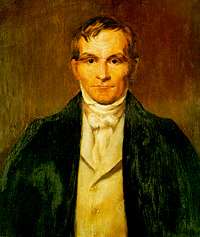
Justice Howell Edmunds Jackson, Justice Robert Houghwout Jackson, and Justice Ketanji Brown Jackson?
According to several reports, President Biden has made his selection to replace Justice Breyer. If Biden picks Judge Ketanji Brown Jackson, she would be the third member of the Supreme Court with the last name Jackson. Everyone knows Justice Robert Houghwout Jackson, who served from 1941 through 1954. But most people do not know Justice Howell Edmunds Jackson. He was appointed by President Benjamin Harrison, and served from 1893 through 1895.
There are nine other pairings with two Justices that share the same last name.
- Chief Justice John Marshall (1801-1835) and Justice Thurgood Marshall (1967-1991)
- Justice John Rutledge (1790-1791) and Justice Wiley Rutledge (1943-1949)
- Justice Thomas Johnson (1792-1793) and Justice William Johnson (1804-1834)
- Justice Samuel Chase (1796-1811) and Chief Justice Salmon Chase (1864-1873)
- Justice John Marshall Harlan I (1877-1911) and Justice John Marshall Harlan II (1955-1971)
- Justice Lucius Quint C. Lamar (1888-1893) and Justice Joseph Rucker Lamar (1911-1916) - (they were cousins)
- Justice Edward Douglas White (1894-1910) and Justice Byron White (1962-1993)
- Justice John Hessin Clarke (1916-1922) and Justice Tom C. Clark (1945-1967) - (close enough on the spelling)
- Justice Owen Josephus Roberts (1930-1945) and Chief Justice John C. Roberts (2005-any day now)
Thursday Open Thread
What's on your mind?
Another Pseudonymous / Sealed Police Officer Lawsuit
The case is Doe v. Town of Lisbon (D.N.H.), which stemmed from police officer Doe's being fired—wrongly so, he claims—and being placed on the "Exculpatory Evidence Schedule" (also known in New Hampshire as the "Laurie List"), in which his disciplinary record would be disclosed by prosecutors to defense lawyers whenever he testifies. Such placement naturally damages a person's job prospects as a police officer in any department (at least in New Hampshire but I expect elsewhere as well).
Now I can't speak to whether Doe was indeed wrongly fired, but I don't think that this is a case where pseudonymity is legally authorized; generally speaking, people suing over allegedly wrongful firings have to sue in their own names, even though this might well further publicize what they are claiming to be false allegations against them. (See generally Appendix 7 of my The Law of Pseudonymous Litigation draft.) That requirement of open litigation strikes me as especially apt when important government officials such as police officers are suing. Yet the case was apparently sealed outright in state court; the court granted a motion that argued that,
The Plaintiff is concerned that publicly having his name as plaintiff will undercut any relief obtained in this matter, and will further jeopardize his ability to obtain future employment in the criminal justice and policing field—even if he is fully vindicated in this matter.
When determining whether to seal a case, "the burden of proof rests with the party seeking closure … to demonstrate with specificity that there is some overriding consideration or special circumstance, that is, a sufficiently compelling interest, which outweighs the public's right of access to those records." In re Keene Sentinel, 136 N.H. 121, 128 (1992) (citation omitted).
The plaintiffs' interest in having this lawsuit be filed under seal, while his Constitutional rights are vindicated, is a compelling interest that outweighs the right of the public's right of access to this litigation's docket.
And while there has been no motion to seal the federal court case (the defendants had removed the case from state to federal court), the federal case is apparently being litigated pseudonymously. I may end up moving to intervene and oppose pseudonymity, as I did in the Ohio police officer plaintiff case; in any event, I thought I'd note that such attempts at pseudonymity seem to be happening in various places (see also here).
The Academic Freedom Podcast #13 on Texas and Tenure
A conversation with Matthew Finkin on the relationship between tenure and academic freedom
A new episode of The Academic Freedom Podcast from the Academic Freedom Alliance is now available. Subscribe through your favorite platform so you don't miss an episode.
In this episode I talk with Matthew Finkin about Texas Lt. Governor Dan Patrick's call for abolishing tenure at state universities. Last week Patrick declared that he would make it a top priority in the next legislative session to ban the teaching of "critical race theory" at Texas universities, to terminate any faculty member who does so, and to abolish tenure at public universities. The Academic Freedom Alliance released a public statement responding to that announcement.
Finkin is an expert on employment law and academic freedom. He now holds the Swanlund Endowed Chair at the College of Law at the University of Illinois and began his career as a staff attorney at the American Association of University Professors. He is the author of The Case for Tenure and co-author of For the Common Good: Principles of American Academic Freedom. In the podcast, we discuss the history and rationale for tenure for faculty at American universities, the relationship between tenure protections and academic freedom, and threats to tenure and academic freedom at state universities from right-wing politicians and at private universities from left-wing professors.
Today in Supreme Court History: February 24, 1930
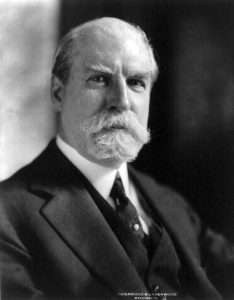
2/24/1930: Chief Justice Charles Evans Hughes takes oath.
Law, Justice, and the Russia-Ukraine Conflict
Neither side is ideal. But both law and justice are far more on Ukraine's side than Vladimir Putin's.
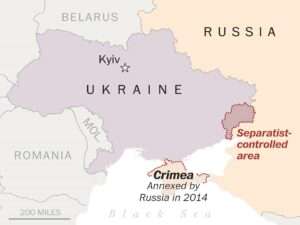
Russian President Vladimir Putin has sent additional troops into areas of eastern Ukraine controlled by pro-Russian separatists, and may well be starting a large-scale invasion of the rest of the country. The conflict between Russia and Ukraine has its share of complexities. But the bottom line is clear: while neither government is a paragon of virtue, Putin's regime is overwhelmingly in the wrong, from the standpoint of both law and justice.
The law is simple. There are few, if any, more fundamental violations of international law than seizing other nations' territory by force for the purpose of annexing it or ruling through a puppet regime. The United Nations Charter specifically forbids "the threat or use of force against the territorial integrity or political independence of any State." That description fits Russia's assault on Ukraine to a T.
The charge of waging wars of aggression was also one of the main accusations brought against the Nazi defendants in the Nuremberg trials; the Nuremberg tribunal ruled that starting a war of aggression is "the supreme international crime." Putin's rationales for seizing Crimea in 2014 and later the Donbass region of Eastern Ukraine are very similar to those Hitler offered for his attacks on Poland and Czechoslovakia: the supposed need to protect co-ethnic populations facing largely trumped-up threats (ethnic German minorities in Poland and the Sudetenland in Hitler's case; Russian-speaking populations in Ukraine in Putin's case).
It's important to recognize that Putin isn't just now breaking this vital international law. He already did it twice. First, when he sent troops to seize Crimea in 2014, and then again when he used his forces to back the occupation of the Donbass region by separatist forces. In the case of the Donbass, Russia claimed - until recently - that their forces were not involved. But this claim was obviously false, as even a Russian judicial ruling admitted in a careless moment. Russian forces have obviously taken part in the fighting that has killed some 14,000 people since 2014. Without Russian backing, the separatist forces would long since have been crushed, and probably would never have seized so much territory to begin with. And, over the last few days, Russia has moved its forces into the Donbass openly.
If Putin now tries to take more of Ukraine, it will just be an expansion of his government's already grossly illegal aggression. The best historical analogy would be Hitler's shift from taking the Sudetenland (the part of Czechoslovakia with a large German population) in 1938 to occupying all of Czechoslovakia in 1939.
So much for the legal issue. Still, illegal activity might sometimes be defensible if it promotes justice and human rights. Sometimes, it is right to disobey the law, especially if doing so promotes justice and protects human rights.
In this case, however, Russia's aggression has had the exact opposite effect. Far from protecting human rights, it has done the reverse: replacing a flawed but relatively liberal government, with a vastly more oppressive authoritarian regime. In Crimea, the first territory seized by Putin's forces, the introduction of Russian rule has led to massive human rights violations, including persecution of dissent, and repression of the Crimean Tatar minority (which has a long history of previous victimization by both czarist and Soviet Russian rulers).
As for the claim that Russia's seizure of Crimea was justified by the referendum held there under the control of Russian forces, that referendum was a blatant travesty compromised by fraud and coercion, as determined by a May 2014 investigation undertaken by the Russian government's own Presidential Council on Civil Society and Human Rights (then still one of the few Russian government agencies with a modicum of independence from the Kremlin). For reasons I described here, even an honest and fair majority vote would not be enough to justify rule by a regime as oppressive as Putin's. But, regardless, there was no such fair vote in Crimea.
The story is much the same in the Donbass. There too, Russian rule has resulted in large-scale repression and human rights violations. And it is worth noting that available survey data suggests that most of the region's people oppose Russian rule, which is one reason why it has only been possible to maintain by force.
Amnesty International - an organization that, too put it mildly, isn't known for favoritism towards the US and its allies - recently summarized the human rights situation in Crimea and the Donbass:
Territories in eastern Ukraine controlled by Russia-backed separatists remained beyond the reach of many civil society and humanitarian actors. Suppression of all forms of dissent persisted, including through arrest, interrogation and torture and other ill-treatment by the de facto authorities, and imprisonment in often inhumane conditions….
A severe crackdown on human rights work and all dissent continued [in Crimea], as did restrictions on the media…..
The occupying Russian authorities continued to target human rights defenders, including members of Crimean Solidarity, a grassroots self-help group of ethnic Crimean Tatars. Dozens of its members faced politically motivated criminal proceedings, mostly on allegations of purported membership of Hizb-ut-Tahrir, an Islamist movement banned as "terrorist" in Russia but legal in Ukraine. Arbitrary intrusive house searches, unofficial interrogation by Russian security forces, and intimidation were also widely used as reprisals against ethnic Crimean Tatars.
Amnesty's report also outlines numerous flaws and injustices in areas under Ukrainian rule, as well. Nonetheless, it concludes that "[m]edia remained pluralistic and largely free, although harassment of outlets in connection with their editorial policies, and intimidation and violence against journalists, were regularly reported." That's a sharp contrast with Russian-occupied Ukraine, and indeed with Russia itself.
Unlike Russia, Ukraine also has free elections, and opposition political parties and media operate freely. The opposition prevailed in the 2019 elections, and defeated President Petro Poroshenko accepted the result and ceded power to the winning candidate (current Ukrainian President Volodymyr Zelensky) - a scenario which is almost unimaginable in Putin's Russia. Ukraine's treatment of ethnic and religious minorities, while far from ideal, is also far superior to Russia, with its repression of "foreign" churches. Although homophobia is far from unknown in Ukraine, it has nothing comparable to the Russian government's large-scale persecution of gays and lesbians.
The Ukrainian government is far from ideal. It has its own violations of liberal democratic norms, and the legal system and government bureaucracy suffer from massive corruption (as is true in Russia, as well). But, despite its very real flaws, Ukrainian rule is vastly preferable, on any plausible moral grounds, to Putin's.
In sum, Russian rule in occupied Ukraine has been authoritarian and brutally oppressive. That should not be surprising, since much the same is true in Russia itself. Should Putin's forces occupy more of Ukraine, we can expect similar repressive policies to be instituted in whatever new territories are taken.
Putin's claims that his assaults on Ukraine are justified by the supposed threat posed to Russia by NATO expansion are just as specious as his other rationales for aggression. In reality, there is no real prospect of Ukraine joining NATO, because several key NATO allies have consistently opposed it. More generally, NATO expansion has never been a meaningful threat to Russia, because it was coupled with a major drawdown of US and allied forces in Europe in the post-Cold War era. If the NATO powers genuinely sought to threaten Russia, they would have been building up their forces in the region, not scaling them back. The only "threat" NATO poses is to Russia's ability to attack its neighbors. There is not and has never been any prospect of NATO launching a war of aggression against Russia itself.
Ironically, Ukrainian interest in joining NATO is actually the result of Russian attacks rather than the cause. Before Russia's attacks in 2014, only a relatively small minority of Ukrainians wanted to become part of NATO (with 30% or fewer supported joining the alliance). Support has gradually arisen since then (becoming a majority stance in 2021), largely because of Russia's ongoing aggression.
Putin's real motive is likely a combination of fear of the example effect of contiguous liberal democracies in nations culturally similar to Russia, and his desire to rebuild the Russian Empire and undermine Western liberalism. Regardless, there is no justification for Russia's attacks on Ukraine from 2014 to the present, and still less for the massive escalation of them that may be occurring now.
I have deliberately avoided the obvious argument that Putin's aggression is unjust because the Ukrainians are a distinct "people" with a right to autonomy based on ethnic self-determination. That isn't because I buy Putin's ridiculous claims that Russians and Ukrainians are essentially the same, and therefore must be united. It's because I reject, on principle, the theory that groups have a right to rule particular territories based on ties of race, ethnicity, or culture. I outlined the reasons why in Chapter 5 of my book Free to Move: Foot Voting, Migration, and Political Freedom (see also this article). But if you hold a more conventional view of the right to ethnic self-determination, then Ukrainians have as good a claim to it as anyone.
None of this, by itself, determines how the US and its allies should react to Russia's actions. While there are good reasons to avoid direct military conflict with Russia, that still leaves a wide range of other options. I will not try to consider their relative merits here. In this post, I have sought only to assess the legal and moral aspects of the horrible conflict unfolding before us.
Climate Change Returns to the Supreme Court: Previewing West Virginia v. EPA (Updated)
The most important environmental case of the 2021-22 term will be heard next week.
On Monday, February 28, the Supreme Court will hear oral argument in West Virginia v. Environmental Protection Agency. In this case, the justices will consider the scope of the EPA's authority to regulate greenhouse gas emissions from the power sector. The Court's decision could have broad implications for climate policy, environmental law, and regulatory policy more generally.
On Thursday, February 24, the Coleman P. Burke Center for Environmental Law at the Case Western Reserve University School of Law will host a free, online webinar previewing the case, featuring Professor Lisa Heinzerling of the Georgetown Unviersity Law Center and Professor James Coleman of the SMU Dedman School of Law. Details and registration info are here.
I have also written several blog posts on this litigation, and will blog about the oral argument on Monday. My posts on this case are listed below.
- Could the Supreme Court Revive the Trump Administration's ACE Rule? - Oct. 7, 2021
- Supreme Court Agrees to Hear Case Challenging EPA Authority to Regulate Greenhouse Gases (Updated) - Oct. 29, 2021
- Does the Supreme Court Have Jurisdiction to Hear West Virginia v. EPA? - Feb. 2, 2022
- Standing in West Virginia v. EPA Revisited - Feb. 21, 2022
In addition to the above, this book chapter -- A "Step Zero" for Delegations -- suggests an approach the Supreme Court may take to the major questions doctrine in this case. Relatedly, the following two posts discuss issues raised in the OSHA's vax-or-test standard that may foreshadow how the Court could approach these questions in West Virginia v. EPA.
- COVID-19, Major Questions, and Pouring New Wine from Old Bottles - Jan. 10, 2022
- Why the Supreme Court's Decision in NFIB v. OSHA May Be Even Worse News for Climate Regulation than You Thought - Jan. 24, 2022
UPDATE: The above-mentioned webinar may now be viewed here.
UPDATE: Here is my post on the WVA v. EPA oral argument: "Supreme Court Digs into Statutory Details More than Standing or Nondelegation in West Virginia v. EPA."




