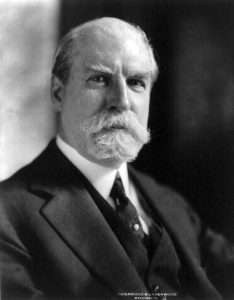
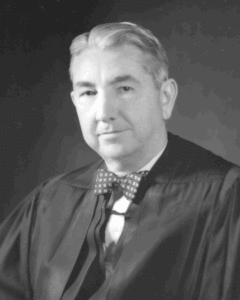
6/13/1977: Justice Tom C. Clark dies.

Mostly law professors | Sometimes contrarian | Often libertarian | Always independent | Est. 2002

Maksim Pokrovsky, a prominent Russian musician who is now working in New York, has just released this song; it has been out for 15 hours on YouTube, and so far has been viewed 825K views. My sense is that Pokrovsky is fairly prominent, as the frontman of Nogu Svelo! (literally, "Leg Cramp!"), which has been around for over 30 years.
Since the start of the war in Febturary, he has put out several anti-war songs recently, mostly satirical and often quite witty (and vulgar): "We Don't Need the War!," "Backward, Russia!," "The Letter Ziu" (my favorite of the four), and "Generation Zed" (opening line: "Russians, we shat everything away"). This one, though, called just "Ukraine," has a different tone; I liked its mix of the impassioned political outrage and the everyday (the wartime everyday)—"I hope the patrol won't waste their bullets on us / I hope we have enough diesel fuel"—so I thought I'd pass it along. I have to say the video does not work for me at all (everyone's a critic), but whether or not you agree with me on that, I hope you enjoy the words. Note that "the Third Rome" refers to the historical Russian concept, originating around 1500, that Moscow is the heir of Rome and Constantinople.
Here are the English lyrics, very slightly adapted from the translation that comes with the YouTube video:
I'm delighted to report that Prof. Nathan Chapman (Georgia) will be guest-blogging this week about his forthcoming article, The Fair Notice Rationale for Qualified Immunity; here's the Abstract:
After many well-publicized cases of police wrongdoing, a growing number of courts, scholars, and politicians have demanded the abolition of qualified immunity. The doctrine requires courts to dismiss damages actions against officials for violating the plaintiff's constitutional rights unless a reasonable officer would have known that the right was "clearly established." Scholars argue that the doctrine impedes deterrence of rights violations and forecloses compensation and vindication for victims.
One line of attack has relied on empirical evidence to challenge what scholars take to be the main justification for qualified immunity, that it prevents the threat of constitutional liability from over-deterring effective law enforcement. Yet the Supreme Court has always offered another rationale for the doctrine: it would be unfair to hold officers liable without sufficient notice that their conduct was unconstitutional. Unlike the over-deterrence rationale, scholars have almost entirely ignored the fair notice rationale for qualified immunity.
What kind of a showing of possible "harassment" or "reprisals" must backers of such ballot measures make to keep petition signatures (and financial contributions) from becoming public records?
If the Court indeed holds that the Constitution doesn't protect abortion rights, the debate will move to state legislation (as well as to state constitutional decisionmaking). And I expect that some of that legislation will be through the initiative and referendum process.
My sense from the surveys is that there is a good deal of support even in many majority-Republican states for protecting abortion rights at least in the first trimester—and that in some of them, the voters are more pro-abortion-rights than the state Legislature. Such mismatches between statewide public sentiment and results in the Legislature often do happen, for a variety of reasons; nor do they necessarily reflect anything nefarious: Different modes of legislation aggregate public preferences in different ways. But in any event, such mismatches are a classic example of where initiatives and referenda can make a difference (as we've seen, for instance, with anti-race-preferences initiatives in various states).
To give just one example, consider Utah. The Legislature there recently banned abortions with exceptions for rape, incest, and the woman's health. But the public appears closely divided on abortion rights generally, with one poll reporting that 47% of Utahns say abortion should be legal in most or all cases, and 51% say it should be illegal—doubtless within the margin of error, and potentially within the margin of political compromise and perhaps political persuasion.
I likewise expect that there is a good deal of support even in many majority-Democrat states for restricting abortions at least starting with the second trimester—and that in some of them, the voters are more pro-restriction than the state Legislature.
Many states, though, make initiative and referendum signatures matters of public record. Doe v. Reed (2010) held that such disclosure rules are facially constitutional, because they can help "preserv[e] the integrity of the electoral process by combating fraud, detecting invalid signatures, and fostering government transparency and accountability." (Justice Scalia would have reached the same result, but by concluding that a petition signature is a legislative act that had historically been viewed as public, and thus wasn't subject to the First Amendment.)
But Doe v. Reed also held that proponents of such initiatives and referenda can file as-applied challenges, and get an exemption from the disclosure requirement if they can show "a reasonable probability that the compelled disclosure [of personal information] will subject them to threats, harassment, or reprisals from either Government officials or private parties." And that appears to include nonviolent private reprisals, such as firing from a job (presumably including legal firing, in states that don't ban employment discrimination based on such political activity). To my knowledge, though, courts haven't resolved exactly what counts as "harassment[] or reprisals," and how much of that needs to be shown.
6/12/1967: Loving v. Virginia decided.
The court's view appears to be that, the more public interest in a case, the less the public is entitled to know.
The public generally has a right to access court records, including in civil cases—a right that is intended to "protect[] the public's ability to oversee and monitor the workings of the Judicial Branch." And this right extends to knowing the names of the parties:
[L]awsuits are public events and the public has a legitimate interest in knowing the facts involved in them. Among the facts is the identity of the parties. We think that as a matter of policy the identity of the parties to a lawsuit should not be concealed except in the unusual case.
"The Court is a public institution and the public has a right to look over our shoulders and see who is seeking relief in public court." (All quotes are from various federal court opinions on the subject; for citations and more, see here.)
Such access to parties' names is of course also important so that reporters, researchers, activists, and others can investigate the backstory behind a case, and behind the credibility of the parties. (Have they brought similar claims before? Is there reason to especially trust or doubt their assertions? What can their acquaintances and coworkers report about the supposed underlying incidents?) The richest news stories about lawsuits, of course, come not from just covering the filed documents, but by exploring this sort of backstory. And because the right here is a right of the public, the defendant's agreeing to a plaintiff's pseudonymous request (which is what happened in this case) isn't enough to defeat the right.
This having been said, courts do sometimes allow pseudonymous litigation. It's particularly common in purely legal challenges (e.g., Roe v. Wade), where the identity of the party is largely beside the point; and it also sometimes arises when a lawsuit is over matters "of the utmost intimacy," such as abortion, transgender status, and the like.
This brings us to Trooper 1 v. N.Y. State Police, decided Thursday by Magistrate Judge Taryn Merkl (E.D.N.Y.):
Under American libel law, accurately repeating a defamatory allegation is itself defamatory, though with various exceptions. Texas law creates a huge exception, almost large enough to swallow the rule—Tex. Civ. Prac. & Rem. Code § 73.005(b) provides that
In an action brought against a newspaper or other periodical or broadcaster, the defense [of truth] applies to an accurate reporting of allegations made by a third party regarding a matter of public concern….
Here's an illustration, from Gallaher v. Denton Media Co., decided Thursday by the Texas Court of Appeals (Fort Worth), by Justice Elizabeth Kerr, joined by Justices Mike Wallach and Brian Walker; I think it likely would have come out the same way in other states, under the "fair report" privilege, which applies to accurate reporting of contents of government documents—but the court's logic would have applied even had the report not been a government document:
[Todd] Gallaher is a political consultant who was selected in December 2018 to join the staff of Denton County commissioner Dianne Edmondson as her chief administrator. His hiring was subject to a vote of approval by the Denton County Commissioner's Court. At a December 18, 2018 meeting—after the outgoing county judge voiced opposition to hiring Gallaher—the commissioners voted against approving him for the position…. {Gallaher's hire was eventually approved on January 1, 2019.} …
Gallaher sued over several articles published about him by the Denton Record Chronicle, which included the allegation that
[T]he Newspaper had obtained a document from the Texas Attorney General's office (OAG) showing that Gallaher had been "prosecuted for a charge of misrepresentation of identity in a 2008 primary election" for which he was "given a year of pre-trial diversion and sentenced to 60 hours of community service." …
The document was apparently a spreadsheet, of which there were two versions (a 6-page version and an 11-page version). Gallaher sued, claiming (among other things) that it was false to say "that he was 'charged,' 'prosecuted,' and 'sentenced' for his involvement in a 'political scheme' related to his alleged actions during the 2008 primary elections" and "that he was 'put on leave' for these alleged actions." The Court of Appeals rejected his claim:
Gallaher's chief allegation was that the Newspaper defamed him by publishing multiple statements in the December 29, January 1, and March 9 articles that he was "charged," "prosecuted," and "sentenced to 60 hours of community service" for his involvement in an alleged "political scheme." …
Gallaher maintains that a fact issue existed surrounding the Newspaper's truth defense because he "never violated the Texas Election Code Statute, never was arrested, never was charged, and never was prosecuted" and was, in fact, "exonerated" of any such wrongdoing. In support, he points us to three pieces of summary-judgment evidence: (1) [a] July 10, 2008 OAG memo, which opined generally that "campaign communications" do not include email communications for purposes of enforcing Section 255.005 of the election code [and thus couldn't have covered Gallagher's 2008 conduct; for more details on this, see the opinion -EV]; (2) the copy of the criminal-history search from the Texas Department of Public Safety website purportedly showing that a search for "Gallaher, Todd" returned no results; and (3) the variation in the disclaimers on the 11-and 13-page spreadsheets. In essence, Gallaher argues that this evidence raised a fact issue about whether he was actually prosecuted and formally charged rather than merely investigated for misconduct related to the 2008 elections….
From U.S. v. Cannon, decided Wednesday by the Third Circuit (Judges Cheryl Krause, Luis Restrepo, and Brooks Smith):
As a [statutorily required] condition of his bond, a Magistrate Judge ordered that Cameron Cannon {"must not violate federal, state, or local law while on release" [Condition 1]} …. That includes the use and possession of marijuana, a Schedule I controlled substance.
Nonetheless, Mr. Cannon continued to use marijuana for medical purposes on the recommendation of his physician, leading the District Court to revoke his bond. Cannon appeals that decision on the grounds that a different condition of his release {that Cannon "not use or unlawfully possess a narcotic drug or other controlled substances defined in 21 U.S.C. § 802, unless prescribed by a licensed medical practitioner" [Condition 7(m)]} permitted the use of controlled substances with a doctor's prescription.
Whether courts may excuse medical marijuana use in bond revocation hearings is an issue that has confused defendants and divided courts in the Third Circuit. But it is beyond dispute that the use and possession of marijuana—even where sanctioned by a State—remains a violation of federal law. So we will affirm the District Court's revocation of Cannon's bond and deny his motion for release….
6/11/1993: Church of the Lukumi Babalu Aye v. City of Hialeah decided.
From Judge John Badalamenti (M.D. Fla.) today in Doe v. Austin:
Plaintiffs in this case are thirty-nine individuals who are currently employed by federal executive agencies or federal contractors and have chosen to not receive a COVID-19 vaccination. Pursuant to Executive Orders 14042 and 14043 (the "Vaccination Mandates"), Plaintiffs are required to receive the COVID-19 vaccination. Because of their status as unvaccinated persons, Plaintiffs claim that they face termination as federal employees or removal from federal government contracts. Plaintiffs therefore request that the Court declare the Vaccination Mandates unlawful and issue a nationwide injunction enjoining enforcement of those Executive Orders.
Before the Court is Plaintiffs' Motion to Proceed Under Pseudonym ("Motion") in this action. Rather than reaching the merits of the Motion with the scant evidence provided by Plaintiffs––two affidavits filed along with a Reply Brief––the Court ordered that all 39 Plaintiffs to submit affidavits in support of the motion to proceed under pseudonym. The purpose of this order was to enable the Court to conduct the requisite legal analysis––based on record evidence––to rule on Plaintiffs' Motion….
In response to the Court's order, Plaintiffs' counsel advised that one plaintiff decided to not proceed forth with this lawsuit, and 22 of the remaining 38 plaintiffs no longer desired to proceed under pseudonyms. Defendants, the heads of the federal executive agencies that employ or contract with the Plaintiffs, have responded in opposition to Plaintiffs' Motion. Plaintiffs have replied, and Defendants have filed a sur-reply. After careful review of the evidentiary record, motions, and pleadings, the Court finds for the reasons below that Plaintiffs' Motion is DENIED. The case shall proceed forth with Plaintiffs' true names in this public forum….
[A] party may proceed under pseudonym by establishing "a substantial privacy right which outweighs the customary and constitutionally-embedded presumption of openness in judicial proceedings.'" Performing this balancing test requires the court to consider whether the party seeking anonymity "(1) is challenging government activity; (2) would be compelled, absent anonymity, to disclose information of the utmost intimacy; or (3) would be compelled, absent anonymity, to admit an intent to engage in illegal conduct and thus risk criminal prosecution." …
Rubber stamps, pole cameras, and personal vendettas.
Please enjoy the latest edition of Short Circuit, a weekly feature from the Institute for Justice.
This week, the Supreme Court ruled that Customs and Border Protection officers have de facto absolute immunity from constitutional claims for damages. But the ruling leaves the door open ever so slightly to Fourth Amendment claims against federal officers doing domestic policing unrelated to the border or national security. The fate of a pair of pending IJ cert petitions will shed more light on that. They involve an officer who fabricated a sex-trafficking scheme and had our wholly innocent, then-teenage client imprisoned for several years and another officer who went rogue, tried to shoot our client in the head, and used his authority to have our client detained. Click here to read our just-filed supplemental brief.
Friends, the right to criticize the government is one of our most fundamental rights. So a pox on East Cleveland, Ohio officials for abusing their authority and retaliating against 74-year-old William Fambrough, an activist and frequent critic of the mayor, police chief, and city law director. Last year, police officers enforced a never-used ordinance and impounded William's van, part of a series of incidents (that also included multiple police visits to his home) meant to chill his political speech. William used the van to canvass in support of a challenger to the mayor, and the towing caused so much damage that the van was inoperable in the weeks before the election (which the mayor ultimately won). So a pox, we say, and also a lawsuit: This week, IJ filed suit against the city and the officials who ordered and carried out the violation of William's rights. Cleveland.com has the story. Click here to find the complaint.
From Justice Jackson's majority opinion in W. Va. State Bd. of Educ. v. Barnette (1943):
As first and moderate methods to attain unity have failed, those bent on its accomplishment must resort to an ever-increasing severity…. Those who begin coercive elimination of dissent soon find themselves exterminating dissenters…. [T]he First Amendment to our Constitution was designed to avoid these ends by avoiding these beginnings.
[This month, I'm serializing my 2003 Harvard Law Review article, The Mechanisms of the Slippery Slope.]
There are many possible multi-peaked preferences slippery slopes besides the cost-lowering slippery slope; one example is the enforcement need slippery slope.
Imagine marijuana is legal, and the question is whether to ban it. Some prefer to keep it legal (0), others want to ban it but enforce the law lightly (A), and others want to ban it and enforce the law harshly, with intrusive searches and strict penalties (B).
But say also that some people would prefer 0 best of all (they'd rather keep marijuana legal), but once marijuana is outlawed they would think that position B (strict enforcement) is better than A (lenient enforcement). "Laws should be enforced," they might argue, "because not enforcing them only teaches people that law is meaningless and that they can violate all sorts of laws with impunity." {See, e.g., Henry F. Pringle, The Life and Times of William Howard Taft (1964) (describing Taft as being opposed to Prohibition before it was enacted, "on the ground that temperance by national law would be difficult or impossible to enforce," but then being willing, as "a passionate zealot for enforcement of laws," to uphold a variety of harsh enforcement mechanisms, such as warrantless wiretaps and prosecutions both by state and federal authorities for the same crime).} Obviously, if they thought the law was extremely bad, they would have preferred that it be flouted with impunity rather than strictly enforced. But let's assume they think the law is only slightly unwise, whereas leaving such a law unenforced is very unwise. We again see a multi-peaked preference—people like A least, preferring either extreme over the middle.
Let's assume, as before, that it takes at least a 55% supermajority to shift from the status quo, and let's assume—again, as a stylized hypothetical, though I hope a plausible one—that the group breakdown is as follows:
| Group | Most prefers | Next preference | Most dislikes | 0→A | A→B | 0→B | Attitude | Voting strength |
| 1 | 0 | A | B | "Restrict marijuana as little as possible" | 10% | |||
| 2 | 0 | B | A | + | "Restricting marijuana is bad, but contempt for the law is even worse" | 20% | ||
| 3 | A | 0 | B | + | "A little restriction is good, but hard-core enforcement is very bad" | 20% | ||
| 4 | A | B | 0 | + | + | "A little restriction is good, and having no restriction is very bad" | 10% | |
| 5 | B | 0 | A | + | + | "Marijuana is bad, but contempt for the law is even worse" | 10% | |
| 6 | B | A | 0 | + | + | + | "Marijuana is bad; do as much as you can to stop it" | 30% |
Given these preferences, a proposal to shift from position 0 (legal marijuana) to B (a sternly enforced marijuana ban) would fail: it would get the votes of groups 4, 5, and 6—only 50%. But a proposed 0→A shift (to a weakly enforced ban) would succeed, with a 60% supermajority coming from groups 3, 4, and 6. Once A is enacted, a proposed A→B shift would also succeed, with the votes of groups 2, 5, and 6, also 60%. And then shifting from B back to 0 would be impossible, since such a proposal would only get the votes of groups 1, 2, and 3, just 50%.
In the long term, disarmament often leads to mass murder by government.
My forthcoming article in the Gonzaga Journal of International Law examines the comparative risks of too little gun control and too much gun control. Here's the abstract:
What are the relative risks of a nation having too many guns compared to the risks of the nation having too few guns? Comparing and contrasting Europe and the United States during the twentieth century, the article finds that the United States might have suffered up to three-quarters of million excess firearms homicide over the course of the century—based on certain assumptions made to maximize the highest possible figure. In contrast, during the twentieth century Europe suffered 87 million excess homicides against civilians by mass-murdering tyrannical governments. The article suggests that Americans should not be complacent that they have some perpetual immunity to being subjected to tyranny. The historical record shows that governments planning mass murder work assiduously to disarm their intended victims. While victim resistance cannot necessarily overthrow a tyrannical regime, resistance does save many lives.
Part I describes tensions in some treaties, declarations, and other legal documents from the United Nations and the European Union. On the one hand, they recognize the legitimacy of resistance to tyranny and genocide; on the other hand, the UN and EU gun control programs seem to make armed resistance nearly impossible.
Part II contrasts homicide data for the United States and Europe during the twentieth century. First, data about homicides from ordinary crimes are examined. Based on certain (incorrect) assumptions that bias the figure upward, if the U.S. had the same gun homicide rate as Europe's, there might have been 745,000 fewer deaths in America during the twentieth century.
Next, Part II looks more broadly at homicide, to include homicides perpetrated by governments, such as communist or fascist regimes. In Europe in the twentieth century, states murdered about 87.1 million people. Globally, governments murdered well over 200 million people. The figure does not include combat deaths from wars.
As Part III explains, totalitarian governments are the most likely to perpetrate mass murder. The Part argues against the complacent belief that any nation, including the United States, is immune from the dangers of being taken over by a murderous government. The historical record indicates that risks are very broad. Globally, only eight nations maintained democratic self-government for the entire twentieth century. The refusal of many Republicans in 2020 and many Democrats in 2016 to accept the presidential election results is one of many signs that American democracy is presently in peril.
Part IV shows that governments intent on mass murder prioritize victim disarmament because they consider it to be a serious impediment to mass murder and tyrannical rule.
Finally, Part V examines the efficacy of citizen arms against mass murdering governments. Citizen arms are most effective as deterrents. However, even without changing the regime, armed resistance can accomplish much and save many lives, as the twentieth century shows. Examples include Jewish resistance to the Nazis, Armenian and Assyrian resistance to the Ottoman Empire, Tibetan resistance to Chinese Communist invasion, and the Nuban resistance to the Sudanese regime.
The Conclusion suggests that the UN and EU should adopt a more balanced gun control policy, recognizing the value of citizen arms in protecting the public from tyranny and mass murder.
The article does not argue for or against particular gun control laws, other than gun registration; as the article shows, gun registration often facilitates gun confiscation.
From Doe v. Truist Financial Corp., decided Tuesday by Judge Victoria Marie Calvert (N.D. Ga.):
Plaintiff was an employee of Defendant Truist Financial Corp. which provided short term disability benefits to its employees through the Truist Financial Corporation Employee Benefit Plan. Plaintiff ceased working on April 22, 2021 due to severe anxiety which manifested in psychological and emotional distress and panic attacks. Plaintiff was denied short term disability benefits by the Plan's administrator, Defendant Hartford Life and Accident Insurance Company, a determination which she challenges here.
Plaintiff seeks to proceed anonymously because she is concerned that this suit, regarding whether she "is totally disabled from her position as a Wealth Advisor," "could mar her vocational and social future" in the event that she overcomes her "severe mental problems." …
Federal Rule of Civil Procedure 10(a) requires that a complaint "include the names of all parties." The Eleventh Circuit has found that this requirement "serves more than administrative convenience …. It protects the public's legitimate interest in knowing all of the facts involved, including the identities of the parties." "This creates a strong presumption in favor of parties proceeding in their own names," and courts permit plaintiffs to proceed under an anonymous or fictitious name only in "exceptional cases." …
[T]he Court recognizes "[c]ourts have permitted plaintiffs to proceed anonymously in cases involving mental illness." However, alleging the existence of a mental illness alone is not sufficient to meet the relevant standard; "[t]he ultimate test for permitting a plaintiff to proceed anonymously is whether the plaintiff has a substantial privacy right which outweighs the "customary and constitutionally-embedded presumption of openness in judicial proceedings."
What's on your mind?
From State v. Geri, decided today by the Arizona Court of Appeals, in an opinion by Presiding Judge Cynthia J. Bailey joined by Judges Peter B. Swann and D. Steven Williams:
Shortly after getting in line at a donut shop in Scottsdale, R. glanced behind her, after noticing her four-year-old child was upset. She saw a white male with a red shirt, red shorts and "a fanny pack" standing in line a few feet behind them. Geri's accessory of choice was not, as it turned out, a fanny pack. Rather, Geri was standing with his "genital area completely exposed." After realizing Geri's state of undress and seeing the shock and confusion on her child's face, R. confronted Geri and asked him why his genitals were uncovered in public. Geri responded that R. "can't tell [him] how to dress." R. took her child away from Geri and hid within the store.
Geri then left the donut shop and began walking along Hayden Road, with "his genitals [] out and his [boxer shorts] actually tucked underneath his testicles." A police officer responded to reports of a man exposing himself and arrested Geri.
Geri was charged with one count of misdemeanor indecent exposure to victim R., and one count of felony indecent exposure to R.'s minor child. R. testified that she and her child were visibly offended by the display. Geri represented himself at trial, testifying that he did, in fact, expose himself to R. and her child, and had walked "with [his] penis out" from roughly the intersection of Scottsdale Road and Thomas Road to the donut shop.
Celebrate your independence with a subscription to Reason magazine, your most trusted source of honest, insightful news and analysis.