The Volokh Conspiracy

Mostly law professors | Sometimes contrarian | Often libertarian | Always independent | Est. 2002

The Volokh Conspiracy

Criminal Law

Do Criminal Trials with Mask-Wearing Witnesses Violate the Defendant's Right to Confront Witnesses?

|

No, said the Alabama intermediate appellate court last year (though apparently without a published majority opinion), and last Friday the Alabama Supreme Court declined to hear the case, also without a published opinion, in Ex Parte Rodriguez. But Chief Justice Parker, joined by Justices Bolin, Sellers, and Stewart, dissented—here's an excerpt:

"[E]ven in a pandemic, the Constitution cannot be put away and forgotten." Indeed, it is in times of greatest crisis that the rights in the Constitution require the most vigilant defense.

I therefore dissent from this Court's denial of certiorari review of an important constitutional question: whether requiring criminal-trial witnesses to wear masks covering their noses and mouths while testifying violates the Confrontation Clause of the Sixth Amendment to the United States Constitution. "We have a duty to defend the Constitution, and even a public health emergency does not absolve us of that responsibility." …

This criminal case was tried in the summer of 2021. A week before trial, Rodriguez moved for an order requiring witnesses to wear clear face shields, rather than masks, while testifying. The circuit court granted the motion. The day before trial, however, the court sua sponte reversed course and required all witnesses to wear masks, asserting that they were necessary because of a then-spreading variant of the COVID-19 virus. The day of trial, Rodriguez again moved to require only face shields, but the court denied that motion. Rodriguez was convicted. The Court of Criminal Appeals affirmed by a vote of 3 to 2, holding in an unpublished memorandum that Rodriguez's constitutional right to confront witnesses had not been violated….

All constitutional analysis should begin with the constitutional text. "In all criminal prosecutions, the accused shall enjoy the right … to be confronted with the witnesses against him." …. As the United States Supreme Court has emphasized, in applying the Sixth Amendment's Confrontation Clause, we must ground our understanding in how the right of confrontation was understood at the time of the founding. The right is a "reference to the right of confrontation at common law."

The common-law right to confront one's accusers face to face goes back to the Roman Empire and ancient Israel [through Blackstone and Sir Matthew Hale]. [Details omitted. -EV] … [T]he common-law right of confrontation encompassed a right of "examination," in which the jury has an opportunity to examine the witness's countenance and behavior to weigh truthfulness.

Read More

Free Speech

"Three Women Sentenced to Probation for Interrupting Oral Arguments at the U.S. Supreme Court"

|

From a Justice Department press release Tuesday:

Two Virginia women and an Arizona woman, who verbally interrupted oral arguments inside the United States Supreme Court, each pleaded guilty January 13, 2023, to a single count of Speeches and Objectionable Language in the Supreme Court Building. The defendants were sentenced to one-year terms of probation with stay-away orders from the U.S. Supreme Court.

According to court documents, on November 2, 2022, the Supreme Court held oral arguments the matter of Bittner v. United States. Emily Archer Paterson, 45, of McLean, VA, Nicole Elizabeth Enfield, 44, of Alexandria, VA, and Rolande Baker, 71, of Tucson, AZ, attended the argument. The women spread out in the courtroom, each sitting in a different area. Once arguments began, defendant Paterson stood up and loudly spoke out against the Court's decision in Dobbs v. Jackson Women's Health Organization. Ms. Paterson's conduct caused the attorney arguing before the Court to stop speaking so that Ms. Paterson could be escorted out of the room. After arguments resumed, Ms. Baker stood up and interrupted the Court in a similar manner. Following her removal, arguments resumed. Finally, Ms. Enfield stood up, causing a third interruption in the case at bar. Each defendant's conduct required the attorney before the Court to stop his argument so the defendant speaking could be removed from the courtroom.

"The government must be able to conduct its business." said U.S. Attorney Matthew M. Graves. "Interrupting Supreme Court proceedings, even non-violently and briefly, is not First-Amendment protected activity: it is a crime and must be treated as such."

Read More

Free Speech

The Vote-by-Tweet Memes Prosecution Can Go Forward, Court Rules

|

Here's the opening of what I wrote about the case in Tablet Magazine two years ago [UPDATE: just to be clear, it's just the opening; I go into a lot more detail in the article itself]:

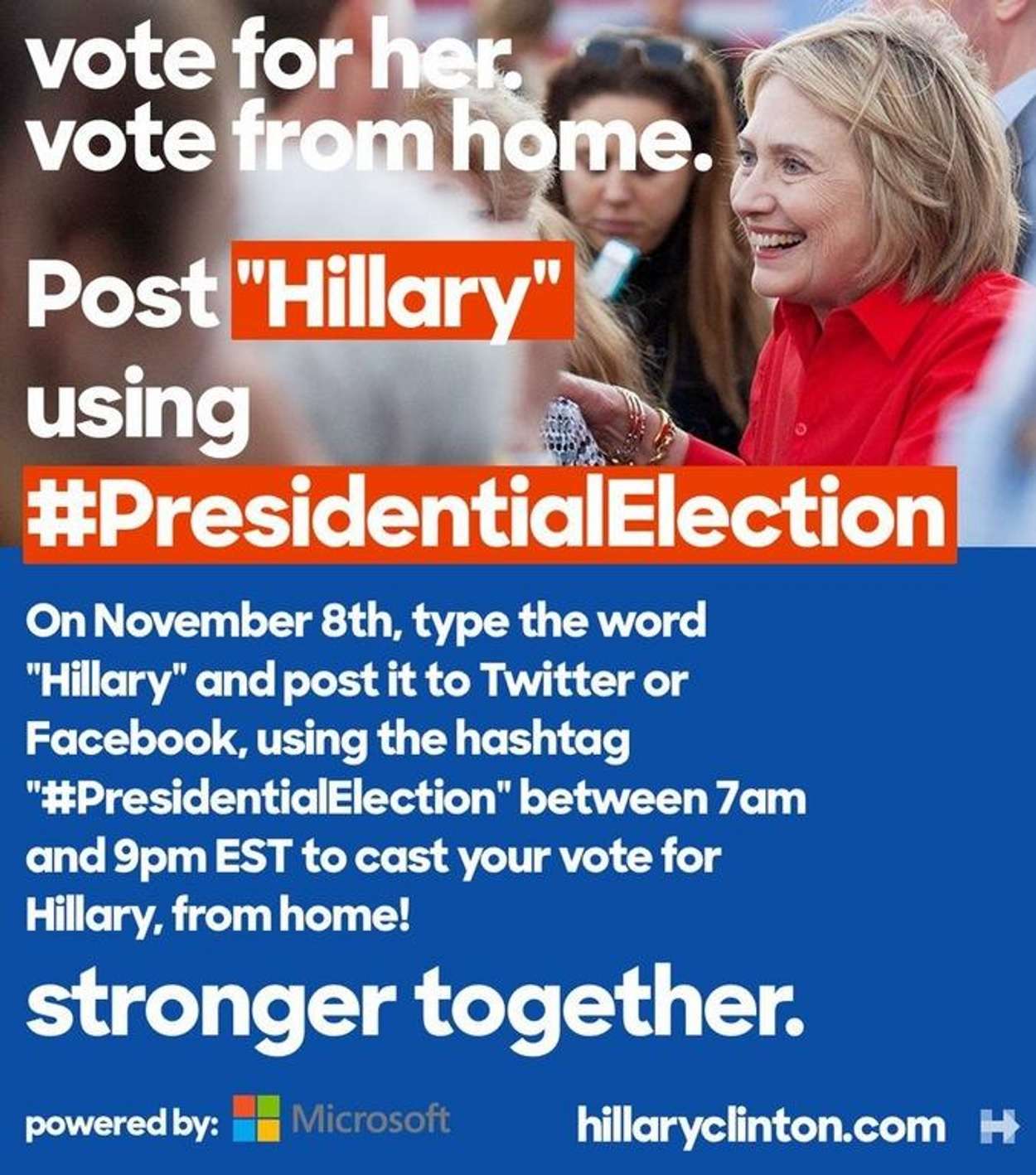
In 2016, a Florida man named Douglass Mackey (using the online alias "Ricky Vaughn") allegedly conspired to distribute a meme aimed at deceiving pro-Hillary voters.

Four years later, Mackey is now being prosecuted (as to this and as to other memes) for violating 18 U.S.C. § 241, a federal law that punishes conspiracies "to injure, oppress, threaten, or intimidate any person … in the free exercise or enjoyment of any right or privilege secured to him by the Constitution"—namely, the right to vote. Lying to voters in a way that keeps them from voting, the theory goes, is a crime.

Is this sort of prosecution constitutional? After all, people often lie in political campaigns. Candidates do it, activists do it, political operatives do it. Can election lies simply be outlawed?

Surprisingly, the Supreme Court has never resolved the question. It hasn't resolved the big-picture question: When can the government punish lies? It hasn't resolved the medium-size question: Can the government punish lies in election campaigns? And it hasn't resolved the particular question: Can the government punish lies about the mechanisms of voting, and in particular about how to vote?

And here's the order from Judge Nicholas Garaufis (E.D.N.Y.) yesterday:

Read More

Free Speech

No Sealing or Pseudonymization of Opinion Related to Lawyer Discipline

The lawyer's "personal interest in avoiding the 'reputational harm' that she might suffer if the public were made aware of the 'very serious allegations here'" "cannot meet the 'weighty' standard for overriding the presumptions of open records and public access."

|

From yesterday's decision in In re Demetriades, decided yesterday by the Second Circuit, in an opinion by Judge Richard Sullivan joined by Judges Robert Sack and Michael Park:

Tara A. Demetriades appeals from orders of the Committee on Grievances of the Board of Judges of the United States District Court for the Eastern District of New York (the "Committee") finding her liable for violating various provisions of the New York Rules of Professional Conduct and imposing sanctions for these violations, including a six-month suspension from practicing law in the Eastern District. On appeal, Demetriades argues that the Committee (1) deprived her of due process by "failing to afford her with reasonable notice of the charges and an adequate opportunity to defend against the charges," (2) "failed to substantiate each and every element of the charges by clear and convincing evidence," and (3) imposed a "punishment [that] was excessive in light of the fact there was no harm to the public."

She has also requested that we maintain her appeal under seal, arguing that public disclosure of her identity would cause her reputational harm. For the reasons explained below, we reject each of these arguments. Accordingly, we affirm the orders of the Committee and order that the docket in this appeal, and all its contents, be unsealed….

Read More

Free Speech

No "Accusation of Racism" Exception from Principle That Parody Isn't Defamation

|

From Corso Ventures LLC v. Paye, decided Tuesday by the Ohio Court of Appeals (Judge Betsy Luper Schuster, joined by Judges William Klatt and Jullia Dorrian (affirming the decision I blogged about here):

Jordan … publishes the website DelawareOhioNews.com. Jordan writes articles and other content published on the website, often using the pen name Ricardo Paye. Jordan characterizes the website as a "satirical website" that publishes fictional stories to "poke fun" at issues of local or national interest. The website contains an "about us" section that states:

Delaware Ohio News is an online news and content source dedicated to Delaware, Ohio. Founded in the year 1808, we strive to be Delaware's premier news source, second only to the illustrious Delaware Gazette. Although we were the first Delaware, Ohio newspaper, they remain the lords of Delaware news media. That's why we're suicidal and on so many drugs.

With all of that said, everything on this website is made up. Do not rely on anything said here.

Don't believe us? Read our Legal Statements.

The Legal Statement section of the website contains the following statement:

All stories herein are parodies (satire, fiction, fake, not real) of people and/or actual events. All names are made up (unless used in a parody of public figures) and any similarity is purely coincidental.

DelawareOhioNews.com is not affiliated with Ohio Wesleyan University or any other publication.

DelawareOhioNews.com is intended for use by those age 18 and older. If you think your child can handle this humor, it is up to you. We are not role models.

In January 2020, Jordan saw a story on the local news that Short North Food Hall, a restaurant in Columbus, had established a dress code prohibiting certain articles of clothing and accessories. Jordan described the dress code as prohibiting numerous articles of clothing associated with Black culture. The news report identified Corso Ventures as the parent company of Short North Food Hall and stated that Christopher Corso owned the restaurant. In response to the local news report, Jordan wrote and published three articles on his website with the following titles: "Corso Ventures' Newest Bar, Nigghers, Coming to Short North This Fall,'"Short North Food Hall Literally Just Googled 'How to Keep Black People Out of Bars,'" and "White Wednesdays at Short North Food Hall." Those articles appeared on the website surrounded by other headlines that Jordan characterizes as satirical, including "Socially Distanced July 4th Parade Will be 86 Miles Long, Last 40 Hours," "Health Department: Please Cover Your Dog's Anus to Prevent Spread of Coronavirus," "VA Patients to Share Prosthetics After Kasich Denies Funds," and "Ohio Gov. John Kasich Legalizes Exhumation of Confederate Soldiers Statewide." …

Plaintiffs sued for libel, but the appellate court (agreeing with the trial court) held defendant's speech was a parody as a matter of law, and thus wasn't the sort of factual assertion that could be adjudged defamatory:

Read More

Does the New York Constitution Require A Senate Vote For A Judicial Nominee?

Barack Obama, Merrick Garland, Kathy Hochul, and Hector LaSalle walk into a bar.

|

Think back to February 2016. Shortly after Justice Scalia's passing, Senate Republicans immediately coalesced on a strategy: any nominee by President Obama would not get a floor vote, let alone a confirmation hearing. Almost just as quickly, a constitutional argument formed out of the ether: the Senate had an obligation to vote on a President's nomination to the Supreme Court. I was an early critic of this view. The Harvard Law School Federalist Society Chapter invited me to debate this topic. Alas, no one on that august faculty was willing to debate me. So I debated myself. I articulated the views that Tribe and others advanced, as charitably as I could, then responded to those views. Seven years later, I had thought this argument would recede into history. It was not to be.

In New York there is a conflict between the executive and legislative branches. Governor Kathy Hochul nominated Hector LaSalle to serve as Chief Judge of the New York Court of Appeals (the highest court in the state). Progressives in the state charge that LaSalle is too moderate, or even (gasp!) conservative. I have zero interest in the politics of this internecine battle in a deep blue state. But there is a constitutional angle.

LaSalle might have enough votes to be approved on the Senate floor--especially if Republicans back the nominee. But it is not clear he has enough votes to get out of the judiciary committee. Aha! Governor Hochul has argued that the state Constitution requires the full Senate to vote on her nominee. The committee vote is irrelevant.

"He'll have his hearings; he'll answer questions; and then as required by the Constitution, the full Senate must decide because the Constitution says it's on the advice and consent of the Senate."

Garland redux! Or more precisely, this argument echoes the position raised in Walter Nixon v. United States. In that case, a Senate committee heard evidence in an impeachment proceeding. Then the full Senate convicted Judge Walter Nixon (not the former President). Nixon argued that the full Senate must hear all of the evidence, and that role could not be delegated to the committee. The Supreme Court found this issue was a non-justiciable political question, so the merits were never resolved. Still, I am skeptical that Nixon was right about the United States Constitution. The Senate, pursuant to the Rules of Proceeding Clause, has broad discretion over how to structure its affairs. I think it would be appropriate for a Senate to create a committee to gather evidence. The Senate could likewise decide that only a nominee that passes through committee can be presented for a floor vote. There is no obligation for the Senate to take a vote on a nominee.

Likewise, I think Governor Hochul has an uphill battle. Article VI, Section 2(e) of the New York Constitution provides:

The governor shall appoint, with the advice and consent of the senate, from among those recommended by the judicial nominating commission, a person to fill the office of chief judge or associate judge, as the case may be, whenever a vacancy occurs in the court of appeals;

I have zero expertise in the New York Constitution, but I struggle to see how this text requires the Senate to take any action on a nominee. Then again, during the Garland Saga, constitutional law professors argued that the phrase "advice and consent"imposes an obligation on the United States Senate.

Politico quotes the chair of the New York Senate Judiciary Committee, who rejected this argument:

Hoylman-Sigal, on Tuesday: "The Constitution does not require a floor vote, because in addition to the Constitution, we have Senate rules, and certainly it's within the Senate's prerogative to decide how to proceed with its own votes, in committee and otherwise."

Based on a quick read, Article III, Section 9 includes something similar to the Rules of Proceeding Clause in the federal constitution:

§9. A majority of each house shall constitute a quorum to do business. Each house shall determine the rules of its own proceedings, and be the judge of the elections, returns and qualifications of its own members; shall choose its own officers; and the senate shall choose a temporary president and the assembly shall choose a speaker.

If this provision is analogous to the federal standard, it would seem that the state Senate can establish its own rules. Requiring a committee vote before a floor would be well within that discretion. At least one law professor agrees:

"I go with the Senate on this one," said Richard Briffault, a professor at Columbia University and an expert on state constitutional law. "The Constitution doesn't specify any particular procedure the Senate is supposed to use, so that means, in my view, the Senate can use whatever procedure it wants."

Does the United States Constitution impose a duty on the Senate to vote on a nominee? Does the New York Constitution? Everyone, switch sides!

In times like these, I'm reminded of a memorable image Adriane Vermeule presented:

The second possible future I call the Merchant/Ivory Ballroom Scene. Think of the moment in any movie adaptation of a Jane Austen novel when two lines of dancers switch to opposite sides of the ballroom. Then the dance goes on as before. The structure of the dance at the group level is preserved; none of the rules of the dance change; but the participants end up facing in opposite directions.

So, Barack Obama, Merrick Garland, Kathy Hochul, and Hector LaSalle walk into a bar…

Update: The Senate Judiciary Committee rejected LaSalle by a 10-9 vote.

The 19-member committee voted 10 to 9 against moving Justice LaSalle to a full vote on the Senate floor. All 10 who voted against the judge were Democrats; two Democrats voted in favor of Justice LaSalle, while one Democrat and all six Republicans voted in favor "without recommendation."


Tulane Student Who Wrote Antisemitic Article Allegedy Driven Off Campus

|

Tulane University has the highest percentage of Jewish students (around 40%) of any secular university in the country. Tulane student Sarah Me wrote a truly idiotic and reprehensible piece for an off-campus conservative publication defending Kanye West's recent antisemitic remarks. I don't see any good reason to give her asinine defense further play, but if you really want to read it, you can find it here.

Students making asinine defenses of antisemites, or indeed making antisemitic comments themselves, such as NYU law students talking about the "Zionist grip on the media" and the "Islamophobic, Zionist-funded US and Western media," is unfortunately not news. But what happened next should be.

Ma's commentary apparently was met with death threats.

Ma met with Tulane's Associate Vice President and Dean of Students, Erica Woodley, who advised Ma to leave campus for at least a couple of weeks because Tulane's administration does not believe she is safe on campus," the Dissident reported. "According to Ma, Dean Woodley told her that Tulane could 'probably' keep her safe on campus but 'probably not' directly off campus. Ma is arranging with her professors to complete the semester online."

Assuming these allegations are true, the proper response here would have been for Tulane to (1) do everything in its power to keep Ma safe; and (2) do everything in its power to investigate the threats, and if found to be genuine, find and prosecute the perpetrators. Instead, Tulane is "investigating" the student herself even though, as FIRE reports, her offensive comments are fully protected by Tulane's own policies.

Will Classified Prove to be "2022's Most Consequential American Book?"

|

Forgive me for bit of own-horn tooting, but it's not every day that someone as prominent and respected as George Will calls a relative obscure academic's work "potentially 2022's most consequential American book."

In other news about Classified, I was a guest on Michael Shermer's podcast. Shermer, as readers may know, is the long-time editor of Skeptic magazine, and I'm a long-time fan.

Glenn Reynolds interviewed me for his new Substack.

C-Span's Book TV is broadcasting a talk I gave at the Cato Institute, with distinguished commenters.

I was a guest on Larry Bernstein's (no relation) "What Happens in the Next Six Minutes" podcast. Unlike many podcasts, Larry edits his carefully for length and clarity.

I wrote a short piece for Brandeis University's alumni magazine summarizing the book's thesis.

Sheldon Richman wrote a nice review praising the book for "ripping away the veil of this horrendous and ridiculous system [of racial classification."]

Richard Epstein, writing for the Claremont Review of Books (paywall), notes Classified's "basic and incontrovertible point is that the standard five-fold classification of white, black, Hispanic, Asian, or American Indians (Native Americans) is utterly useless for deciding who should get preferences in education, business, or anywhere else given a large, heterogeneous population that must be sorted into distinct, but internally disjointed groups."

And finally, Tal Fortgang in Commentary (paywall): "Though it promises an 'untold story' of racial classification in America, Bernstein's Classified delivers something much more valuable: a series of simple questions under whose scrutiny race-based classifications in American law collapse. By the end of the book, which is neither long nor densely packed with legal analysis, the notion that contemporary racial classifications have any logic, consistency, or semblance of fairness has been rendered laughable."

The Sun Also Sets, on Section 702

Episode 437 of the Cyberlaw Podcast

|

The Cyberlaw Podcast kicks off 2023 by staring directly into the sun(set) of Section 702 authorization. The entire panel, including guest host Brian Fleming (Stewart having been "upgraded" to an undisclosed location) and guests Michael Ellis  and David Kris, debates where things could be headed this year as the clock is officially ticking on FISA Section 702 reauthorization. Although there is agreement that a straight reauthorization is unlikely in today's political environment, the ultimate landing spot for Section 702 is very much in doubt, and a game of chicken will likely precede any potential deal. (Baker and Ellis have contributed to the debate, arguing that renewal should be the occasion for legislating against the partisan misuse of intelligence authorities.) That, and everything else, seems to be in play, as this reauthorization battle could result in meaningful reform or a complete car crash come this time next year.

Sticking with Congress, Michael also reacts to President Biden's recent bipartisan call to action regarding "Big Tech" and ponders where Republicans and Democrats could potentially find agreement on an issue everyone seems to agree on (for very different reasons). The panel also discusses the timing of the call and debates whether it is intended to incentivize the Republican-controlled House to act rather than simply increase oversight on the tech industry.

David then introduces a fascinating story about the bold recent action by the Security and Exchange Commission (SEC) to bring suit against Covington & Burling LLP to enforce an administrative subpoena seeking disclosure of the firm's clients implicated in a 2020 cyberattack by Chinese state-sponsored group, Hafnium. David posits that the SEC knows exactly what it is doing by taking such aggressive action in the face of strong resistance, and the panel discusses whether the SEC may have already won by this bold use of its authority in the U.S. cybersecurity enforcement landscape.

Brian then turns to the crypto regulatory and enforcement space to discuss Coinbase's recent settlement with New York's Department of Financial Services. Rather than signal another crack in the foundation of the once high-flying crypto industry, Brian offers that this may just be routine growing pains for a maturing industry that is more like the traditional banking sector, from a regulatory and compliance standpoint, than it may have wanted to believe.

Then, in the China portion of the episode, Michael discusses the latest news on the establishment of "reverse" Committee on Foreign Investment in the United States (CFIUS)  review. He thinks it may still be some time before this tool gets finalized (even as the substantive scope appears to be shrinking). Next, Brian discusses a recent D.C. Circuit decision which upheld the Federal Communication Commission's decision to rescind the license of China Telecom at the recommendation of the executive branch agencies known as Team Telecom (Department of Justice, Department of Defense, and Department of Homeland Security). This important, first-of-its-kind decision reinforces the role of Team Telecom as an important national security gatekeeper for U.S. telecommunications infrastructure.

Finally, David highlights an interesting recent story about an FBI search of an apparent Chinese police outpost in New York and ponders what it would mean to negotiate with and be educated by undeclared Chinese law enforcement agents in a foreign country.

In a few updates and quick hits:

  • Brian updates listeners on the U.S. government's continuing efforts to win multilateral support from key allies for tough new semiconductor export controls targeting China.
  • Michael picks up the thread on the Twitter Files release and offers his quick take on what it says about ReleaseTheMemo.
  • And, last but not least, Brian discusses the unsurprising (according the Stewart) decision by the Supreme Court of the United States to allow WhatsApp's spyware suit against NSO Group to continue.

Download 437th Episode (mp3)

You can subscribe to The Cyberlaw Podcast using iTunes, Google Play, Spotify, Pocket Casts, or our RSS feed. As always, The Cyberlaw Podcast is open to feedback. Be sure to engage with @stewartbaker on Twitter. Send your questions, comments, and suggestions for topics or interviewees to CyberlawPodcast@steptoe.com. Remember: If your suggested guest appears on the show, we will send you a highly coveted Cyberlaw Podcast mug! The views expressed in this podcast are those of the speakers and do not reflect the opinions of their institutions, clients, friends, families, or pets.


Politics

No Pseudonymity in #TheyLied Libel Case Alleging False Claims of Sexual Assault at College

|

From Doe v. Doe, decided Jan. 5 by Judge James Dever III (E.D.N.C.):

Essentially, plaintiff's complaint concerns defendant's alleged "false claims" of sexual assault made to Tulane University … and unidentified third parties in order to "defame, humiliate, harass, and punish Plaintiff John Doe." Plaintiff also identifies another student, using the pseudonym "Sue Roe," who allegedly conspired with the defendant to defame plaintiff and misuse Tulane's Title IX investigation process to "further a malicious vendetta against John Doe." Outside of John Doe, Jane Doe, and Sue Roe, the complaint identifies almost every other individual with initials….

A civil complaint generally must set forth the "name[s] [of| all the parties." Fed. R. Civ. P. 10(a). "[I]n exceptional circumstances, compelling concerns relating to personal privacy or confidentiality may warrant some degree of anonymity in judicial proceedings, including use of a pseudonym." … [But] because the use of pseudonyms in litigation undermines the public's right of access to judicial proceedings, "when a party seeks to litigate under a pseudonym, a district court has an independent obligation to ensure that extraordinary circumstances support such a request by balancing the party's stated interest in anonymity against the public's interest in openness and any prejudice that anonymity would pose to the opposing party." …

Read More

Free Speech

Hamline Adjunct Fired for Showing Muhammad Images Sues + Hamline Statement Seems to Backtrack

|

The Pioneer Press (Josh Verges) reports [UPDATE: see also the Complaint]:

The adjunct professor accused of Islamophobia for showing artwork in class that depicted the Prophet Muhammad filed a lawsuit against Hamline University on Tuesday as Hamline's president conceded the school mishandled the controversy.

Professor Erika Lopez Prater is suing the school in Ramsey County District Court for defamation, breach of contract and religious discrimination, among other claims….

David Everett, associate vice president of inclusive excellence, sent a Nov. 7 email to all employees and students saying an incident had taken place in an online class that was "undeniably inconsiderate, disrespectful and Islamophobic."

Separately, Dean of Students Patti Kersten called Lopez Prater's decision to show the artwork "an act of intolerance," according to The Oracle, the student newspaper that first reported on the controversy.

And, in a Dec. 9 email to staff, Everett and President Fayneese Miller said that "respect for the observant Muslim students in that classroom should have superseded academic freedom." …

[The complaint argued that the school discriminated against Lopez Prater] by imposing the Muslim student's "interpretation of Islam on all Hamline employees and students." …

The article also quotes a statement released today by Hamline President Fayneese Miller and Board of Trustees Chair Ellen Watters, which said:

Read More

Elections

Mail-In Voting Doesn't Violate Arizona Constitution's "Secrecy in Voting" Requirement

|

From Arizona Republican Party v. Fontes, decided today by the Arizona Court of Appeals (opinion by Judge Cynthia J. Bailey, joined by Presiding Judge Samuel A. Thumma and Vice Chief Judge David B. Gass):

The Arizona Republican Party ("AZGOP") and its chairwoman Kelli Ward … filed this case against the Arizona Secretary of State … and election officials in each of Arizona's fifteen counties …, alleging Arizona's mail-in voting laws violate Article 7, Section 1 of the Arizona Constitution ("the Secrecy Clause"). The Secrecy Clause states, "All elections by the people shall be by ballot, or by such other method as may be prescribed by law; Provided that secrecy in voting shall be preserved." …

[Plaintiffs] conced[e] that voting in person before election day may be constitutional, and argued instead that mail-in voting violates the Secrecy Clause only because it takes place without the requirements that "(1) an official be present when absentee voters cast their ballots … and (2) that the official then watch[es] the voter enclose and seal the ballot in an envelope." …

Read More

Third Circuit Proposes Moving E-Filing Deadline to 5 pm Eastern

|

Federal Rule of Appellate Procedure 26(a) sets midnight as the deadline for electronic filings, but allows each circuit to change that deadline. Here's the Third Circuit's proposed change, for which comments are due Feb. 18:

Documents received by the Clerk by 5:00 p.m. Eastern Time will be filed as of the day of receipt and documents received after 5:00 p.m. will be filed as of the next day the clerk's office is open, regardless of the means of transmission (electronic filing or otherwise).  Documents received by 5:00 p.m. Eastern Time on the last day for filing will be considered timely filed, unless a different time is set by a statute, local rule, or court order. Documents received after 5:00 p.m. Eastern Time will be considered untimely filed. For documents filed electronically, the electronic transmission must be completed by 5:00 p.m. Eastern Time on the last day for the filing to be considered timely filed.

And the proposed change comes with an explanation:

Comments: FRAP 26(a)(4) defines the end of the last day of filing in the court of appeals as "midnight in the time zone of the circuit clerk's principal office" for electronic filing and "when the Clerk's office is scheduled to close" for other means of transmission of documents to the clerk's office. This rule applies "[u]nless a different time is set by statute, local rule, or court order." L.A.R. 26.1 relies upon this authority to create a uniform end of the last day for filing irrespective of the means of transmission.

I'm worried that this will set a trap for the unwary; of course, lawyers should be wary, but mistakes sometimes happen, so departures from the FRAP in the directions of making deadlines or other rules stricter strike me as unwise. On the other hand, Ted Frank argues:

Read More

Second Amendment

Should "Loopholing" Be Protected By Qualified Immunity?

an argument about post-Bruen gun legislation from Robert Leider.

|

Over at his generally gun-related blog, Standing His Ground, Professor Robert Leider has two interesting blog posts about state reactions to the Supreme Court's decision in Bruen: some states are enacting or considering policies to broadly restrict the carrying of firearms in many public situations, notwithstanding Second Amendment doctrine.

In one post, Pretextually Eliminating the Right to Bear Arms through Gerrymandered Property Rules, Leider argues that some of these regimes are unconstitutional because of crucial exceptions that render them pretextual:

. . . [T]hese laws do not switch the property default rule for gun carrying by politically favored groups (e.g., retired and off-duty police).  This shows that they are not actually making a generally applicable default rule that a person may not bring a gun onto another person's property without express consent.  Instead, these laws target gun carry by one group only:  civilians without prior law enforcement experience. . . . When asked where a gun permit holder could carry his firearm under the new law, Gov. Kathy Hochul (D-NY) forthrightly answered "probably some streets."

Because these laws are clearly a pretext, they are not a valid regulation of the right to bear arms.

In a second post (Should State Officials Receive Qualified Immunity for Creatively Resisting Bruen?), Leider confronts the even more interesting (to me) question of remedy:

[S]tates are counting on an asymmetry of legal liability.  While gun owners face felony convictions for violating state laws, these states are betting that their employees will face much more lenient consequences.  Although 42 U.S.C. § 1983 purports to give a tort cause of action for depriving someone of his constitutional rights, the Supreme Court has narrowed its effective application through qualified immunity.  Qualified immunity shields government officials from civil liability "insofar as their conduct does not violate clearly established statutory or constitutional rights of which a reasonable person would have known."  Qualified immunity "provides ample protection to all but the plainly incompetent or those who knowingly violate the law."

Leider argues that even if you accept the doctrine of qualified immunity, that it should not apply to deliberate "loopholing" behavior like this:

This loopholing behavior has none of the usual traits for which the Supreme Court permits qualified immunity.  Most qualified immunity cases involve state actors engaged in legitimate policing, who make reasonable or negligent mistakes about the law.  These mistakes, moreover, are often made by police in the heat of the moment, in difficult circumstances (e.g., while potentially under the threat of force).  The Supreme Court has tried to shield officers from such liability for fear that it will chill them from vigorously performing their duties.  In contrast, these states, through their combined regulations on sensitive places and private property, are intentionally trying to subvert Bruen's specific holding.  These policies, moreover, are not split-second judgments made in the heat of the moment; states have pursued these laws after extensive deliberation.  The Supreme Court has never said that qualified immunity protects state actors who intentionally seek to violate a recognized constitutional right simply because the legal artifice they employ has not been the subject of a prior court decision.

Of course, the doctrine of qualified immunity has been broadly criticized (by me among many others). But it is the doctrine. And if one looks at some of the best defenses of the doctrine, by folks like Scott Keller and Nathan Chapman, it is not at all clear that it extends to this kind of loopholing.

Anyway, for more, read both of Professor Leider's posts (1, 2).

Two Cheers for "What About …?"

|

People often condemn "whataboutism": "responding to an accusation or difficult question by making a counteraccusation or raising a different issue." And there's much to that condemnation is some situations. If my favorite politician Walter is exposed for having taken bribes, and my response is, "What about the politician Christopher on the other side who also took bribes?," the answer is that it doesn't matter: My guy Walter is still corrupt. Even if the argument exposes the media for covering one politician's bribetaking more than the others (or exposes others for their hypocrisy), Walter nonetheless remains corrupt.

But that makes particular sense when the accusation really is of clear misbehavior. Let's say the underlying question is quite contested: Say, for instance, that Judge Walter is faulted because the judge's spouse is involved in controversial politics, or because the judge was hobnobbing with politicians, or because the judge spoke to an ideological group. That's not against any clear defined rule: The Code of Conduct for federal judges, for instance, forbids "political activity" by judges, but doesn't define the term (other than prohibiting some specific kinds of such activity), and has an exception for various "law-related pursuits and civic, charitable, educational, religious, social, financial, fiduciary, and governmental activities," so long as they do not "detract from the dignity of the judge's office, interfere with the performance of the judge's official duties, reflect adversely on the judge's impartiality, lead to frequent disqualification, or violate [certain particular] limitations."

Read More

More