California, like Texas, is a big state. And there are many districts and divisions in which the California Attorney General can file suit. Perhaps the most logical choice would be the Sacramento Division of the Eastern District of California? That's where the state capitol is located after all. At least based on my recollection, during the Trump years, the California Attorney General did not choose this venue. Why could this possibly be? Well there are six district judges in that duty station: three were appointed by President Obama, and three were appointed by the Presidents Bush. 50/50 is lousy odds. But you know who did file suit against California in Sacramento? The United States Attorney General, who challenged California's sanctuary laws in the state capitol. He was willing to take his chances there. Anything is better than the city by the bay.
Based on my recollection, the California Attorney General would routinely file strategic cases in the San Francisco division of the Northern District of California. And, wouldn't you know it, 100% of the judges in that division were appointed by Democratic presidents. All of them. Presidents Trump and George W. Bush had zero nominees to the San Francisco division. And given that these judges had to survive the blue slip process led by Senator Dianne Feinstein, I doubt these judges were closet conservatives. For example, one of President George H.W. Bush's nominees to the San Francisco division was none other than Judge Vaughn Walker, who presided over the Prop 8 case. Indeed, I suspect that many of the Reagan, Bush 41, and Bush 43 district court appointees in California were in fact moderates-leaning-liberal, in order to get the blue slip. It's a miracle that St. Benitez made it through in San Diego. Alas, he is always under attack, as his Second Amendment opinions are automatically en banc'd by circuit rule (or something like that).
For the California Attorney General, there is no need to judge shop or forum shop. Just leave your heart, and nationwide injunction, in San Francisco.
There are other examples, of course. The New York Attorney General could file strategic suits in Albany, the state capital. But it routinely files in the Southern District of New York. By contrast, conservative litigants challenge COVID restrictions and gun control laws in Albany. There is a 50/50 shot at drawing a Republican-appointed judge. The Maryland Attorney General could have sued Trump over the Emoluments Clause in the Baltimore division of the District of Maryland, but he chose the Greenbelt division. Lo and behold, all the judges in Greenbelt are Democratic appointees. In New Jersey, the Attorney General recently tried to transfer a Second Amendment from a Trump appointee to a more favorable judge. Don't forget liberal judge shopping in Texas to the Austin and Laredo divisions. And so on.
All litigants carefully choose their forums, including state Attorneys General. I find this debate over forum-shopping nearly as exhausting as counting how many times the Supreme Court takes action on the emergency docket. Sing it Tony.
The new right-wing Israeli government headed by Prime Minister Benjamin Netanyahu has put forward reform proposals that, if enacted, would largely destroy judicial review, and concentrate more power in the hands of ruling politicians. Critics have denounced the reforms as anti-democratic. For example, Aharon Barak, the famed former Chief Justice of the Israeli Supreme Court, warns that the government's plan will "strangle democracy." In reality, the plan would actually enhance democracy, in the sense of increasing the power of the elected representatives of political majorities. The real danger it poses is not that of too little democracy, but too much - thereby setting the stage for a dangerous tyranny of the majority. As Attorney General Gali Baharav-Miara (another opponent of the proposal), puts it, the enactment of these reforms "would give [the] government unrestrained power."
As Brookings Institution scholar Benjamin Wittes - a critic of the government's plan - explains, the plan includes 1) an "override" system under which the Knesset (the Israeli parliament) can easily override judicial decisions by a simple majority vote, 2) puts judicial selection almost entirely under the control of the incumbent government, whereas currently it is in large part controlled by the judges themselves, 3) eliminates the "reasonableness" standard of judicial review of government action, making what little judicial review remains much more deferential, and 4) neutering much of the power of the attorney general (who is traditionally independent of the government of the day).
The net effect of these proposals would be to empower the government of the day to do as it wishes with little or no constraint from the judiciary or anyone else. As Wittes emphasizes, in Israel there is no system of federalism or separation of powers of the kind that exists in the US and many other democracies. In the absence of meaningful judicial review, government power would be almost entirely concentrated in the hands of whoever can get 61 seats in the 120-seat Knesset.
If you want to empower democratic majorities, it's hard to beat that system! The majority would be able to do almost anything it wants.
But it's deeply problematic if you want to protect minority rights against overbearing majorities. This is a particular menace in a highly diverse and deeply divided society like Israel. Netanyahu's new coalition includes theocratic and ultra-nationalist parties that seek to oppress the country's large Arab minority, and in some ways also more secular Jews. Itamar Ben-Gvir, the new government's minister of security, has a long history of anti-Arab bigotry. Some of the other members of the new coalition government are even worse.
Over the last thirty or so years, the Israeli Supreme Court has issued numerous decisions protecting the rights of ethnic and religious minorities, as well as civil liberties, and property rights, in what would otherwise be an overwhelmingly majoritarian system. But the Court's power has always been somewhat anomalous, given that Israel has no written constitution. The Court's authority is based on a series of Basic Laws enacted by the Knesset that, over time, have come to be seen as elevated above ordinary legislation, and amendable only by special new legislation. In principle, however, the system could always be upended by new legislation enacted by a bare majority. And the new Israeli government seems intent on breaking the political norms that have blocked such action up till now.
In addition to threatening minorities, the new government seeks to neuter the judiciary and the attorney general in order to protect criminality in its own ranks. Netanyahu himself is under indictment for corruption, and the weakening of the courts and attorney general might help him avoid conviction. Shas Party leader Aryeh Deri, the new government's proposed interior minister and health minister, has been blocked from assuming those positions by the Supreme Court, because of a conviction for tax offenses, arising from a plea bargain agreement in which he apparently promised to stay out of public office. If the Court gets neutered, Deri will likely be able to take over these positions unimpeded.
Persecuting minorities and empowering corrupt politicians are very bad, but not necessarily anti-democratic. Indeed, protecting minorities and limiting the influence of corrupt demagogues are classic rationales for limiting the power of democratic majorities.
The new government's judicial reforms might end up having an anti-democratic effect if they facilitate laws impeding political participation, for example by restricting the freedom of speech and freedom of association of the opposition. That's certainly a potential danger. So far, however, the coalition has not put forward such an agenda.
Legal theorists have long recognized that judicial review - while in many ways a constraint on democracy - can also help protect democracy when it blocks governments from suppressing opposition or rigging the electoral system in favor of incumbents. In the short to medium term however, the main threat posed by the Israeli reforms is tyranny of the majority - not the destruction of democracy.
In recent political discourse, there is an increasing tendency to use "anti-democratic" as simply a synonym for "bad," and "democracy" as a synonym for "good." In that sense, the Israeli reforms might be anti-democratic, after all. But for reasons I summarized here, this usage impedes rather than facilitates analysis:
The conflation of what is "democratic" with what is right and just has a number of unfortunate consequences. First, it promotes intellectual confusion. Second, and more importantly, it essentially defines away the possibility that democracy – understood, more reasonably, as a majoritarian political process – should be constrained in order to protect other values, and counter various predictable pathologies of democratic government, such as widespread voter ignorance and oppression of minority groups.
All too often there are trade-offs between democracy and other values, such as liberty, equality, and justice. We shouldn't let terminological confusion blind us to that reality.
This point applies to Israel, as well as the United States.
While I oppose the new government's reforms, I do think the situation highlights the precariousness of Israeli judicial review, and the danger of relying on it too much, as a protector of civil liberties and minority rights. Israelis who seek to protect liberal values would do well to promote other institutional constraints on the powers of the Knesset majority, such as federalism and a system of separation of powers. Federalism, in particular, is an option that might work well for Israel, a nation with a range of different communities with divergent cultures and local majorities. Under federalism, the relatively small size of the country (resulting in low moving costs) could also empower those dissatisfied with local conditions to "vote with their feet." Foot voting is itself a powerful mode of political choice and an additional protection for minorities.
Federalism is far from a panacea for tyranny of the majority. But neither is judicial review. In both cases, much also depends on how the system in question is structured. Ideally, government power should be limited by a variety of interlocking institutional constraints, not by putting all our eggs into a single basket, such as a court system whose power rests on vulnerable foundations. Israel's present situation highlights the risks of the latter strategy. But the problem of constraining majoritarian abuses is one faced by virtually all democracies.
After I graduated law school, I clerked in the Johnstown Division of the Western District of Pennsylvania for two years. Until fairly recently, that Division had a single federal judge. (The judge for whom I clerked assumed senior status, but still hears cases, along with a new active judge.) Since the single-judge division is in the news, I thought I would share my experiences.
You might ask, where the heck is Johnstown? This city, perhaps most famous for the devastating floods, sits half-way between Pittsburgh and State College. It is about a 90-minute drive to either city. The population is approximately 20,000, and dropping.
Why is there a federal court there? For decades, Johnstown was represented by Representative Jack Murtha, who was known as the "King of Pork." He was able to secure federal funding for a massive airport in Johnstown that could land 747s. The President would often touch down there on Air Force One! Otherwise, there were 1 or 2 flights a day on propeller jets. From what I've heard, Murtha used his earmarking prowess to establish a federal court in Johnstown. But there wasn't even a dedicated federal building. The facility was installed in a former department store. All of the rooms were internal. Indeed, none of our offices had windows. And the holding cell was on the opposite side of chambers. We could hear the prisoners banging against the walls in our office.
Now, in keeping with the theme of pork, the federal court brought lots of other jobs to the area. If there is a federal judge, there must also be a U.S. Attorneys office (we had two AUSAs on site), a federal probation office, marshals to transport the prisoners, a part-time federal magistrate, a clerk's office, court security staff, court reporter, and many others. I do not think there was a dedicated public defender in the building--they had to drive from Pittsburgh.(Given all the people who rely on a single federal judge, I can understand why a federal judge in Utica, New York, insisted his successor be placed in that district--otherwise, all of the staff would lose their jobs.)
At the time, I didn't give much thought to the types of cases that were filed in our division. In my two years there, we had maybe one or two cases that could be deemed medium-profile. Nothing high profile. No one sought a nationwide injunction in our quaint courtroom. But there was an effect of being the only show in town. We became very, very familiar with repeat players. We would see the same two AUSAs on a daily basis. The same cadre of federal public defenders, and local defense attorneys, would routinely make appearances. Over time, you get to know the lawyers' proclivities--both positive and negative. And then there were the repeat filers. Many plaintiffs would file complaints over and over again.
Today, perhaps, it has become common to let attorneys participate in proceedings electronically. But a decade ago, telephonic conferences were the exception, rather than the rule. Lawyers and parties were generally expected to make appearances in person. For those parties who lived in Johnstown, or a surrounding area, the in-person appearance was very beneficial. Traveling to-and-from Pittsburgh on a regular basis would have burdensome. For out-of-town attorneys, however, it was a pain. I remember one trial involving a large Wall Street firm. I doubt the lawyers were pleased with accommodations at the local Holiday Inn (the best hotel in the downtown area).
Beyond the lawyers and the parties, a local court in these remote areas serves other important functions. First, it allows people in the community to serve on federal grand and petit juries. Again, it would not be feasible to commute 90 minutes each way to and from Pittsburgh. I think this is an important civic function that our local division enabled. Second, we often had naturalization ceremonies for new citizens. I've been to massive ceremonies in Houston, where hundreds of new citizens take the oath. But in Johnstown, we had maybe a dozen people who lived in the community. And the courtroom was packed with family and friends. These were intimate, and often emotional occasions. My judge would always give the new citizens American flags. I insisted on giving them pocket Constitutions as well. Third, for sentencing hearings, it is meaningful to have the defendant's family and friends present. I remember one sentencing hearing where the defendant's young children were all present. At other hearings, employers, priests, and friends can speak to the defendant's character. At some level, this kind of support makes a difference. If the hearings were held in far-flung areas, it would be hard to bring this level of support. Indeed, the Vicinage Clause of the Sixth Amendment reflects the importance of locality for criminal proceedings: the accused shall be entitled to "impartial jury of the State and district wherein the crime shall have been committed, which district shall have been previously ascertained by law."
Congress has long had the power to ascertain districts by law. And the creation of single-judge divisions was not some sort of nefarious ploy to empower evil judges to stymie national agendas. These single-judge divisions were established to let smaller communities, that cannot justify the cost of multiple judges, have access to justice. Judges don't pick their cases; lawyers pick their forums.
Of course, Congress could modify the assignment of cases to single-judge divisions. Or the courts can, by local rule, modify the assignment of cases to single-judge divisions. For example, a certain percentage of cases filed in a single-judge division would be assigned, at random, to other judges in the district. To be sure, these changes can make it harder to forum shop. But let's be clear about the logistical realities. If you are reassigning cases to remote courts, then judges and their staff will have to commute to those areas on a regular basis to hold trials, accept guilty please, sentence defendants, and so on. Circuit riding, meeting District schlepping.
For those curious, the reason why Judge Reed O'Connor was assigned to the Wichita Falls division of the Northern District of Texas was because no other full-time judge was stationed there. So, in an act of generosity, Judge O'Connor signed up to take the ninety-minute drive from Ft. Worth to Wichita Falls. For those curious, the single-judge divisions in Lubbock and Amarillo are about five hours from Dallas. And in the Southern District of Texas, the single-judge division in Victoria is about a two-hour drive from Houston. And Brownsville is a five-hour drive. Perhaps more of the judges in Dallas and Houston would be willing to make these long drives in the interest of justice, or whatever. But I'm skeptical. Judges keep very busy schedules, and these trips are time-consuming. Texas really is a big state. Indeed, there was a time when the Supreme Court held that the amount of driving time needed to cross Texas was an undue burden on a constitutional right! I suppose judges ensconced in cushy metropolises can Zoom in to podunk divisions. But a judiciary-in-absentia would not serve the needs of those in the community.
I find it troubling when a Chief Judge singles out one of her colleagues in a single judge division for special treatment. This move reflects a form of retaliation against litigants who are complying with federal law and local rules to choose the forum of their choice. Moreover, this reassignment reflects a form of retaliation against a judge on the basis of his rulings. Usually, the Court of Appeals, and the Supreme Court, sit in judgment of a district court judge, not whomever currently occupies the chief judge seat.
To keep things fair, any rule applied to one judge, should be applied to all judges in a district. If single-judge divisions are so bad, then all single-judge divisions should have cases reassigned. And if Congress legislates, this sort of rule should be applied across the country, and not just in Texas. Even better, perhaps Judges from the coasts could sojourn to the heartland to spread justice from sea-to-shining-sea. They can start by traveling down to the border to process the never-ending backlog of illegal re-entry cases. Brownsville is lovely this time of year.
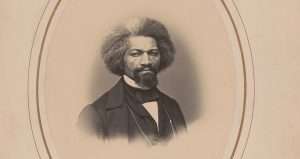
Douglass is best-known for his role in the abolitionist movement that helped end slavery. But much of his thought is also relevant to contemporary issues.
February is Black History Month. And there are few more prominent figures in black American history than Frederick Douglass. Today, he is primarily remembered for his role in the abolitionist movement, and for his inspiring and compelling autobiography, which recounts his escape from slavery and subsequent life. But Douglass was also a wide-ranging thinker who wrote about numerous issues. Many of his writings and speeches, including lesser-known ones, are strikingly relevant to modern controversies. In this post, I cover a few notable examples.
While Douglass is best-known for arguing for racial equality within the United States, he also argued, in his 1869 "Composite Nation" speech (a critique of then-growing calls for restricting Chinese immigration), that the same principles forbid immigration restrictions, particularly those motivated by a desire to keep out particular racial, ethnic, or cultural groups:
I submit that this question of Chinese immigration should be settled upon higher principles than those of a cold and selfish expediency.
There are such things in the world as human rights. They rest upon no conventional foundation, but are external, universal, and indestructible. Among these, is the right of locomotion; the right of migration; the right which belongs to no particular race, but belongs alike to all and to all alike. It is the right you assert by staying here, and your fathers asserted by coming here. It is this great right that I assert for the Chinese and Japanese, and for all other varieties of men equally with yourselves, now and forever. I know of no rights of race superior to the rights of humanity, and when there is a supposed conflict between human and national rights, it is safe to go to the side of humanity.
Douglass' 1871 Decoration Day speech is highly relevant to longstanding debates over how Americans should remember the Civil War. To this day, there are those who argue that the Confederate cause was justified, or at least that - for the sake of national unity - we shouldn't denigrate it. Douglass had little patience for such ideas:
We are sometimes asked, in the name of patriotism, to forget the merits of this fearful struggle, and to remember with equal admiration those who struck at the nation's life and those who struck to save it, those who fought for slavery and those who fought for liberty and justice.
I am no minister of malice. I would not strike the fallen. I would not repel the repentant; but may my "right hand forget her cunning and my tongue cleave to the roof of my mouth," if I forget the difference between the parties to that terrible, protracted, and bloody conflict….
The essence and significance of our devotions here to-day are not to be found in the fact that the men whose remains fill these graves were brave in battle. If we met simply to show our sense of bravery, we should find enough on both sides to kindle admiration….
But we are not here to applaud manly courage, save as it has been displayed in a noble cause. We must never forget that victory to the rebellion meant death to the republic…. If today we have a country not boiling in an agony of blood… if now we have a united country, no longer cursed by the hell-black system of human bondage…. , we are indebted to the unselfish devotion of the noble army who rest in these honored graves all around us.
This has obvious relevance to modern controversies, such as the debate over taking down Confederate monuments, and the more general issue of how we should think about the slavery and the Civil War. As I have pointed out previously, condemning the Confederacy and celebrating its defeat does not require us to excuse or justify everything done by the Union side in the war (nor did Douglass make any such claim).
One of Douglass' most famous works was his 1852 July 4 speech, "What to the Slave is the Fourth of July?" This is today mainly remembered for its blistering condemnation of American slavery and hypocrisy about liberty. But it's worth emphasizing that it also praises the ideals of the American Founding, and even the founders themselves, as in this passage:
The signers of the Declaration of Independence were brave men. They were great men too — great enough to give fame to a great age. It does not often happen to a nation to raise, at one time, such a number of truly great men. The point from which I am compelled to view them is not, certainly, the most favorable; and yet I cannot contemplate their great deeds with less than admiration. They were statesmen, patriots and heroes, and for the good they did, and the principles they contended for, I will unite with you to honor their memory.
They loved their country better than their own private interests; and, though this is not the highest form of human excellence, all will concede that it is a rare virtue, and that when it is exhibited, it ought to command respect. He who will, intelligently, lay down his life for his country, is a man whom it is not in human nature to despise. Your fathers staked their lives, their fortunes, and their sacred honor, on the cause of their country. In their admiration of liberty, they lost sight of all other interests.
They were peace men; but they preferred revolution to peaceful submission to bondage. They were quiet men; but they did not shrink from agitating against oppression. They showed forbearance; but that they knew its limits. They believed in order; but not in the order of tyranny. With them, nothing was "settled" that was not right. With them, justice, liberty and humanity were "final;" not slavery and oppression. You may well cherish the memory of such men.
Both Douglass' denunciation of slavery and hypocrisy and his praise of the American Revolution and Declaration of Independence are relevant to current debates about how we should teach and think about American history. The former is a rebuke to those on the right who seek to minimize or ignore America's wrongs. The latter to those on the left who claim its liberal ideals are insignificant compared to those wrongs, or even contributors to them.
While Douglass was a trenchant critic of the racial bigotry and oppression of his day, he also warned against responding to it with "pride of race" - what we today might call identity politics:
Do we not know that every argument we make, and every pretension we set up in favor of race pride, is giving the enemy a stick to break our own heads?… We cannot afford to draw the color-line in politics, trade, education, manners, religion, fashion, or civilization. Especially we cannot afford to draw the color-line in politics.
In the last speech of his life, "The Blessings of Liberty and Education," he counseled relying on universal principles instead:
We hear, since emancipation, much said by our modern colored leaders in commendation of race pride, race love, race effort, race superiority, race men, and the like. One man is praised for being a race man and another is condemned for not being a race man. In all this talk of race, the motive may be good, but the method is bad. It is an effort to cast out Satan by Beelzebub….. The evils which are now crushing the negro to earth have their root and sap, their force and mainspring, in this narrow spirit of race and color, and the negro has no more right to excuse and foster it than have men of any other race. I recognize and adopt no narrow basis for my thoughts, feelings, or modes of action. I would place myself, and I would place you, my young friends, upon grounds vastly higher and broader than any founded upon race or color…. We are not recommended to love or hate any particular variety of the human family more than any other….
Hence, at the risk of being deficient in the quality of love and loyalty to race and color, I confess that in my advocacy of the colored man's cause, whether in the name of education or freedom, I have had more to say of manhood and of what is comprehended in manhood and in womanhood, than of the mere accident of race and color; and, if this is disloyalty to race and color, I am guilty. I insist upon it that the lesson which colored people, not less than white people, ought now to learn, is, that there is no moral or intellectual quality in the color of a man's cuticle; that color, in itself, is neither good nor bad; that to be black or white is neither a proper source of pride or of shame.
Douglass' views on the US Constitution also have great potential relevance for our time. He started out as an adherent of the view - advanced by the great abolitionist William Lloyd Garrison - that the Constitution was irredeemably pro-slavery. But he gradually shifted to the almost completely opposite view that the Constitution - even before the enactment of the Thirteenth Amendment - was actually anti-slavery.
Along with other abolitionist constitutionalists, he reached that conclusion by elevating text and natural right principles over what modern legal theorists call "original expected applications" (how contemporaries thought the Constitution would be applied).
This approach poses a challenge to many on the left who reject textualism and originalism in part because they believe these methodologies inevitably lead to racist results. But it also challenges many conservative versions of originalism, that give original expected applications more weight.
My co-blogger Randy Barnett insightfully explores some of the implications of abolitionist constitutionalism in an important 2011 article. The subject has attracted interest from other modern scholars, as well. But modern constitutional theory could benefit from much greater engagement with this body of work.
Unlike in the case of Douglass's views on immigration, the Civil War, the American Revolution, and racial pride, I am only partly persuaded by his take on the Constitution. I fear the pre-Civil War Constitution was more heavily tainted by compromises with slavery than Douglass was willing to admit (though not as much so as claimed by Garrisonians, nineteenth century defenders of slavery, and many modern left-wing critics of originalism). But abolitionist constitutionalism nonetheless deserves our serious consideration and respect.
The above does little more than scratch the surface of Frederick Douglass's relevance to modern debates. There is much, much more, where that came from. But I hope I have at least said enough to convince readers to take a closer look at these and other aspects of his writings. They pose significant challenges to right and left, alike.
In reading even the greatest thinkers of earlier eras, we commonly find ideas that are parochial, anachronistic, obviously invalidated by later developments, or just simply irrelevant to modern concerns. Douglass's work isn't completely free of such problems. But the extent to which he avoided them is remarkable.
Please enjoy the latest edition of Short Circuit, a weekly feature written by a bunch of people at the Institute for Justice.
Alaska's sparse population creates unique educational challenges. To address these, the state created "correspondence programs," in which a student's public school uses the post office or float planes to deliver lessons and then pick up and grade assignments. In 1997 and again in 2014, the law was broadened to allow parents more freedom to design their children's curriculum and receive reimbursement for certain educational expenses, including tuition at nonpublic schools. But now the program is under attack, and IJ has teamed up with a group of Alaska families who benefit from the program to defend it in court. Read More
I have been following from a distance a controversy over the alleged conduct of Prof. Lara Sheehi, who teaches a mandatory DEI class to psychology grad students at George Washington University. The key allegations amount to her denigrating, bullying, and otherwise mistreating students who are Israeli, Jewish, and/or pro-Israel. Professors who should know better claim that she's being targeting for her pro-Palestinian views. The allegations suggest otherwise, and also raise the question as to why a professor would be bringing her views of the Palestinian-Israeli conflict into a psychology DEI class to begin with… Note that even those of us, like blogfather Eugene and me, who are quite skeptical of hostile environment law based on speech in general, draw a clear line at hostile speech by faculty that is individually targeted at specific students.
In any event, Scholars for Peace in the Middle East has put out an open letter on the controversy, and I thought it was quite good (though as you might expect I have a few quibbles, so I'm not adopting the entire letter as my own perspective), so I'm sharing it.
Open letter to George Washington University (GWU) regarding allegations of antisemitism
We, the undersigned, are mental health clinicians and educators, practitioners of psychotherapy and psychoanalysis, and scholars of antisemitism from several disciplines. We are a diverse group, including those from the political left, right, and center; Jews and non-Jews, and those with varied views on Zionism.
We are deeply concerned about allegations regarding Dr. Lara Sheehi, the newly elected President and former Secretary of the Society for Psychoanalysis and Psychoanalytic Psychology (Division 39 of the American Psychological Association) and chair of the American Psychoanalytic Association's Teachers' Academy. Dr. Sheehi teaches a required Diversity course for graduate students in psychology at The George Washington University. A formal complaint has been made on behalf of several of her Jewish and Israeli students describing a series of failures on her and the University's part to treat all students equally and with respect. (We urge the reader to review the entire StandWithUs complaint to grasp the magnitude of the accusations.) These allegations are alarming and, if true, expose an egregious abuse of the trust customarily placed in educators and constitute a clear violation of Title VI, which prohibits discrimination on the basis of national origin and other characteristics in institutions receiving government support.
Since this complaint appeared, several letters in defense of Dr. Sheehi have circulated, and gained wide support, claiming that concerns about her teaching and her online presence – which is rife with profanity and hateful rhetoric against Zionism and Israelis – are the result of a right-wing Zionist conspiracy. It is shocking to reflect that those signatories signed letters that did not even consider the possibility that the students' allegations might be true, nor demand they be given respectful consideration. Would this be the case if the students were not Jewish or Israeli? Imagine the scandal that would erupt if a group of students from another background – Black students, Muslim students, or LGBT students – alleged that their professor excluded and shamed them based on their religion, ethnicity, national origin, or sexual orientation in a required course on diversity. The calls for such a professor's resignation or removal would be swift and severe. And while these remain allegations at present, Dr. Sheehi's tweets and online interviews regarding Israelis render the allegations quite plausible, with more than enough reason to warrant careful scrutiny. (Her deleted twitter account included statements such as the following: "Israelis are so f***ing racist," "Zionists are unhinged," "you can't be a Zionist and also a feminist" "F*** Zionism, Zionists…" "F*** every person who is not yet an anti-Zionist," and "Zionists are so far up their own a****".)
Therefore, compelling Jewish and Israeli students to take a course with Dr. Sheehi while these complaints are being investigated is highly inappropriate. As precedent, consider the case of Professor Amy Wax, a University of Pennsylvania law professor who made hostile remarks about Black students in a required course and was then removed from this teaching role.
Letters written in support of Dr. Sheehi have claimed that she is being "silenced" because of her views on the Israeli-Palestinian conflict. Let us clarify that this is simply not the case. She remains free to express her political and academic views, which are not relevant here. Her classroom conduct is. If the complaints against her are supported by the facts, then her willingness to bully, belittle, and retaliate against students of a particular religious and ethnic background and national origin are highly unprofessional. That being so, we are dismayed by the totally inadequate response to the students' concerns displayed by the faculty in GWU's psychology program and by the administrators at higher levels of leadership. In a time when considerable resources are poured into promoting diversity, equity, and inclusion, singling out Jews and Israelis as undeserving of those protections is nothing short of antisemitic. Moreover, it is ironic to see Jewish Voice for Peace criticizing StandWithUs, the organization that filed the complaint on behalf of the GWU students, for "…conflating some Jewish students' emotional discomfort with targeted harassment…." This is especially disingenuous when diversity, equity, and inclusion efforts argue that impact supersedes intent in matters of racism and discrimination. The particular politics of StandWithUs as an organization have no bearing on the issue of whether the students' allegations should be taken seriously.
Unfortunately, the many letters circulating in support of Dr. Sheehi deflect from the important matter and claim that concerns about her alleged classroom conduct are simply attempts to restrict her academic freedom, encourage threats to her safety, advocate for "doxxing," and/or come from a right-wing "playbook." These claims are baseless. Indeed:
We deplore any threats to Dr. Sheehi's safety (or those close to her) in the strongest possible terms.
We vigorously oppose any attempt to "dox" Dr. Sheehi, or to publish private information about her in a malicious effort to damage her reputation ahead of the US Department of Education's Office of Civil Rights investigation. The allegations against her are worrisome enough as they stand. There is no need for these reprehensible tactics.
We strongly support academic freedom, though many of us disagree with Dr. Sheehi's framing of the Israeli-Palestinian conflict.We deny that concerns raised about Dr. Sheehi come only from the right wing or from a Jewish conspiracy of powerful individuals and will not dwell on the tired antisemitic trope that this argument represents. The concerns about her conduct and her suitability for specific educational and leadership roles comes from across the political spectrum.
We acknowledge that the allegations in the StandWithUs complaint are, as yet, allegations. We urge the Department of Education and GWU to promptly and dispassionately conduct their own investigations by carefully evaluating the testimony of the Jewish and Israeli students in light of substantial corroborating evidence.
The fact that some extremists are subjecting Dr. Sheehi to doxxing and death threats, while deeply unfortunate, should not be used to silence legitimate concerns about her suitability for teaching or leadership roles. Dr. Sheehi is amply entitled to her opinions, her academic freedom, and, above all, her personal safety. But as a teacher of a diverse group of students and leader of a diverse organization, she must not allow her political views to prejudice her interactions with students, patients, or colleagues. [emphasis added by DB]
We hope that this expression of concern dispels the egregious misconceptions present in the various letters of support Dr. Sheehi has received thus far. We choose to speak out because cases like these involving Jewish and Israeli students being bullied, belittled, and excluded are increasingly commonplace on campuses across the United States and seldom get the scrutiny and impartial treatment they deserve. They not only feed a global resurgence of antisemitism but fuel a dangerous turn in the mental health field where activism is entering the consulting room, where "anti-discrimination" efforts covertly condone discrimination, and where frankly unprofessional and unethical behavior masquerades under the guise of academic freedom.
In conclusion, we call upon GWU to relieve Dr. Sheehi of teaching roles in required courses until this matter is adjudicated. In light of the online material available, if the allegations against Dr. Sheehi are corroborated in part or in whole, this may also cast doubt upon her suitability to train psychotherapists in general.
From Lon Fuller, "The Principles of Social Order":
My final conclusion is that, like many other precious human goals, the rule of law may best be achieved by not aiming at it directly. What is perhaps most needed is not an immediate expansion of international law, but an expansion of international community, multiplying and strengthening the bonds of reciprocity among nations. When this has occurred -- or rather as this occurs -- the law can act as a kind of midwife -- or, to change the figure, the law can act as a gardener who prunes an imperfectly growing tree in order to help the tree realize its own capacity for perfection. This can occur only when all concerned genuinely want the tree to grow and to grow properly. Our task is to make them want this.
I'm a huge Lon Fuller fan; if you are unfamiliar with his work, I would start with "The Morality of Law," which is, in my opinion, one of the truly great works of legal theory. The above quotation, from an essay on international law, packs a lot of interesting ideas into a short and rather brilliantly-phrased paragraph: that many "precious human goals" can best be achieved by a kind of misdirection, or averted vision; that the law is like a gardener pruning a tree "to help the tree realize its own capacity for perfection"; and that "our task" is to help "all concerned" to "genuinely want" it to reach that state.
Judge James Ho concurs, adding "I write separately to point out that our Founders firmly believed in the fundamental role of government in protecting citizens against violence, as well as the individual right to keep and bear arms—and that these two principles are not inconsistent but entirely compatible with one another."
From U.S. v. Rahimi, decided today by the Fifth Circuit, in an opinion by Judge Cory Wilson, joined by Judges Edith Jones and James Ho:
The question presented in this case is not whether prohibiting the possession of firearms by someone subject to a domestic violence restraining order is a laudable policy goal. The question is whether 18 U.S.C. § 922(g)(8), a specific statute that does so, is constitutional under the Second Amendment of the United States Constitution. In the light of N.Y. State Rifle & Pistol Ass'n, Inc. v. Bruen (2022), it is not.
The court rejected the view that, under Heller and Bruen, legislatures can disarm anyone who isn't a "law-abiding, responsible citizen[]":
There is some debate on this issue. Compare Kanter v. Barr (7th Cir. 2019) (Barrett, J. dissenting), abrogated by Bruen, 142 S. Ct. 2111, with Binderup v. Att'y Gen. (3d Cir. 2016) (en banc) (Hardiman, J., concurring in part and concurring in the judgments). As summarized by now-Justice Barrett, "one [approach] uses history and tradition to identify the scope of the right, and the other uses that same body of evidence to identify the scope of the legislature's power to take it away." The Government's argument that Rahimi falls outside the community covered by the Second Amendment rests on the first approach. But it runs headlong into Heller and Bruen, which we read to espouse the second one.
Unpacking the issue, the Government's argument fails because (1) it is inconsistent with Heller, Bruen, and the text of the Second Amendment, (2) it inexplicably treats Second Amendment rights differently than other individually held rights, and (3) it has no limiting principles….
Jennifer Frey, a philosopher at the University of South Carolina, had a very interesting tweet in response to the Ron DeSantis higher education reforms unveiled yesterday.
I guess some people think Florida will be in Republican hands forever. I'm gonna go out on a limb and question that. People who cheer on state control of universities might be singing a different tune when power switches hands unexpectedly.
I'm very sympathetic to this form of argument in general when it comes to free speech debates, but in this case I don't think conservatives will find it very persuasive. It is worth unpacking why.
In short, we are further down the game tree than Frey assumes that we are. Read More
Some very interesting observations and queries, much worth checking out. An excerpt:
Should law students be able to protest anonymously? I view school as a period of experimentation and exploration, and one reason I have argued against holding college writings against judicial nominees is because of the chilling effect it would have. Students would be much less willing to experiment, explore, and write and say controversial things—all valuable parts of the educational process—if they felt that their words and deeds would come back to haunt them, years later.
When I was in charge at Above the Law, we had a policy of generally not naming law students involved in controversies; instead, we would come up with (often cute) pseudonyms for them (e.g., Johnny Applethief). We did this because we didn't think it fair for a law-school controversy—often a pretty silly law-school controversy—to dominate a student's so-called "Google footprint," i.e., what comes up when the student is the subject of a Google search.
One of the reforms that Yale Law instituted in the wake of last year's protest debacle was a ban on surreptitious recording. In announcing the ban, Dean Heather Gerken pointed out that it "mirrors policies that the University of Chicago and other peer institutions have put in place to encourage the free expression of ideas." And although the ban received criticism (from both the left and the right), one can see the logic of it. Students would be much less willing to participate in discussion, especially to voice a controversial opinion or to play "devil's advocate," if an out-of-context snippet of their remarks could make its way to Twitter or TikTok.
So that's the pro-anonymity case. There's a case to be made against anonymity, which Professor Nancy Rapoport makes in this blog post (discussing a situation in which anonymous law students filed complaints against a professor—complaints a university investigation concluded were unfounded):
Plaintiff, a Republican political operative, had sued the ACU president for allegedly groping him:
In his time involved with the Republican Party, plaintiff "has served political campaigns and political committees as a field coordinator, field director, grassroots director, and political director, among others." While working for one of these campaigns as a political staffer, plaintiff alleges that, "[o]n October 19, 2022, a high-profile person in conservative and Republican Party politics committed a sexual battery upon [him] in Georgia." This sexual battery incident became more public on January 6, 2023, when the Daily Beast ran an article detailing the sexual battery incident, without naming plaintiff, and "[o]ther media outlets picked up the story, and the incident became widely known" [link -EV]. Although the Daily Beast and the other media outlets did not identify plaintiff's name as the victim, plaintiff asserts that "many in the political and journalism communities were aware of his identity."
was aware of plaintiff's identity and began attacking plaintiff on Twitter in the wake of the Daily Beast story. Specifically, defendant allegedly made false statements about the type of work that plaintiff did for the campaigns he worked on, and she accused plaintiff of being "fired from multiple campaigns for lying and unethical behavior" and for being a "habitual liar." Because of these allegedly false and defamatory statements, plaintiff claims he "suffered damages, including … embarrassment, humiliation, distress, and reputational harm."
Plaintiff then sued Wren for libel, and Chief Judge Beryl Howell (D.D.C.) in Doe v. Wren(1) allowed him to go forward pseudonymously, and (2) "prohibited [Wren] from publicly disclosing plaintiff's identity or any personal identifying information that could lead to the identification of plaintiff by nonparties, except for the purposes of investigating the allegations contained in the Complaint and for preparing an answer or other dispositive motion in response." Here's the justification Chief Judge Howell gave for pseudonymity (all the quotes above and below are from the opinion):
The Supreme Court has a pretty interesting, and potentially very important, "dormant commerce clause" case before it this term - National Pork Producers Council v. Ross. Dormant commerce clause doctrine is a tangled, internally-contradictory mess, and this case gives the Court an opportunity to clarify - or to even more thoroughly mess up - some important principles governing state power in a national marketplace.
The relevant facts (taken here from the opinion below) are straightforward:
California (through Proposition 12, passed by the voters in 2018) bans the sale of uncooked pork products if the seller knows (or should know) that the meat came from a breeding pig that was confined "in a cruel manner." The law defines that to include, among other things, providing less than 24 square feet of living space - roughly the size of two bath towels - per breeding pig. California accounts for around 13% of total pork consumption in the U.S.; virtually all of the pork sold in California (>99%) comes from producers in other States. At present, only around 4% of U.S. pork producers meet California's space requirements for breeding pigs.
The Pork Producers Council (PPC) challenge this law on ground that it violates the Dormant Commerce Clause. They concede that the law does not fall under the DCC's prohibition against State laws that "discriminate" against out-of-state producers in favor of in-state producers; Prop 12, they acknowledge, treats in-state and out-of-state pork producers and sellers alike.
They rely instead on two of the other strands of DCC doctrine:
First and foremost, that the CA law "impermissibly regulates extraterritorial conduct" outside of California's borders by compelling out-of-state producers, as a practical matter, to change their operations (at considerable cost) so as to comply with California standards.
Second, that it imposes "excessive burdens on interstate commerce without advancing any legitimate local interest." California's "philosophical preferences about conduct occurring almost entirely outside California," and its "desire to prevent what California considers animal cruelty that is occurring entirely outside the State's borders," cannot justify the burdens imposed on pork producers nationwide.
[Quotations above are from the PPC's brief, available here ]
The "extra-territoriality" claim is especially important and potentially far-reaching. All sides agree that California may not actually compel pork producers in Iowa or Arizona - in the sense of imposing a legal obligation on them enforceable by means of a fine or other punishment - to adopt California's pig-breeding standards, just as it may not compel businesses in Iowa or Arizona to abide by California's minimum wage rules, or California's business licensure rules, or California's public accommodation law, and so forth.
While this principle of territorial allocation of state authority is clear enough, it has proven a little tricky to pinpoint exactly where, in the Constitution (or elsewhere? the "common law of nations"?), this prohibition is articulated; as Prof. Douglas Laycock once put it*, the prohibition against extra-territorial exercises of state coercive power was "so obvious that the Founders neglected to state it." Much ink has been spilled over the question whether such action violates the Dormant Commerce Clause, or the Due Process Clause, or both, and the Court may take this opportunity to weigh in on that question. But wherever it comes from, the principle itself seems quite firmly established.
*See Douglas Laycock, Equal Citizens of Equal and Territorial States: The Constitutional Foundations of Choice of Law, 92 Colum. L. Rev. 249, 251 (1992)
At the same time, it is likewise true, generally speaking, that California may constitutionally impose its particular local standards - regarding product labelling, or product safety, etc. - on goods and services brought in from out-of-state and used or sold in California. Such laws may, as a practical matter, have extra-territorial effects; out-of-state businesses may have to alter their practices, possibly significantly, with regard to goods destined for sale in California, changing their method of manufacture or their packaging or labelling. But they are under no legal obligation to make those changes unless and until they choose to avail themselves of the California market and ship their goods there.
In the case at hand, California's position is: That's all we're doing - applying our local standards to goods that are sold in California. We're not compelling pork producers in Iowa or Arizona or in any other State to adopt our particular standards. Pork producers in Iowa are under no obligation whatsoever to change their pig-breeding practices because of Proposition 12; they need do so only if they wish to avail themselves of selling their pork in California.
The PPC, needless to say, sees things differently. This is not, they say, run-of-the-mill state regulation of in-state sales:
"Though Proposition 12 applies to sales of pork meat in California, its practical effects are almost entirely extraterritorial. There are very few sow farms in California. The State imports 99.87% of the pork it consumes. Proposition 12 therefore governs the housing conditions of sows located almost exclusively outside of California, [and] the practical effect of the regulation is to control conduct beyond the boundaries of the State."
Moreover, they claim, Proposition 12 does - "as a practical matter" - compel out-of-state breeders to comply with its standards, because of the structure of the pork market in the U.S.:
"Proposition 12's extraterritorial effects are not limited to the 13% of U.S. pork production [sold] in California. A market pig progresses through multiple farms outside of California as it is raised, and then is processed into many different cuts of meat that are sold across the country. If any part of a pig is sold in California, the sow it came from must be Proposition 12-compliant. And sow farmers cannot say with certainty that no meat from any of their pigs will be sold in California, after those pigs pass through nursery and finishing farms, a packer-slaughter plant, then distributors, before their meat reaches consumers. As a practical matter, all or most [sow] farmers will be forced to comply with California requirements." [emphasis added]
In other words, because pig farmers can't tell if some piece of Elsie the Sow might end up in California, they'll have to give her 24 square feet of space, lest they find themselves violating California law when her feet end up in sausage destined for San Francisco.
That's a pretty interesting variation on the extra-territoriality theme. I don't think the Court will buy it, though I could be wrong. That kind of "compulsion" is entirely a function of the particular configuration, at this particular point in time, of the pork market, and California is neither responsible for that nor need it adjust its regulatory affairs to take it into account. The Dormant Commerce Clause does not and should not be read to give any industry protection for the particular manner in which it has chosen to configure its nationwide distribution schemes. That configuration can change in response to market and regulatory pressures; if enough pig breeders don't want to alter their practices to bring themselves into compliance with Proposition 12, the pork distribution market will surely respond; there is no inherent reason why distributors can't offer "California-free" contracts, promising that none of products in their product stream will be shipped to California retailers, and that will solve the "compulsion" dilemma.
While I am reasonably confident that the Court will not go along with PPC's claim that Proposition 12 violates the "extra-territoriality" prong of the Dormant Commerce Clause, I'm not at all sure how it will handle their alternative claim - that the law imposes "excessive burdens on interstate commerce without advancing any legitimatelocal interest." California's interest here, they assert, is just a "philosophical preference," a "desire to prevent what California considers animal cruelty that is occurring entirely outside the State's borders." Even if California would have the right to apply a law directed at health and safety against pork imported from out-of-state - a certificate that the pigs were trichinosis-free, say - Proposition 12 has no health and safety rationale, and therefore cannot outweigh or justify the burdens imposed on pork producers nationwide.
I'm scratching my head over that one; I'm not even sure where the Court might look to answer the question as to whether prevention of cruelty to animals is, or is not, a "legitimate" public purpose.