Friday Open Thread
What's on your mind?

Mostly law professors | Sometimes contrarian | Often libertarian | Always independent | Est. 2002

What's on your mind?
The order also covered the man's family and public officials, as well as the lawyers in the case.
From Thursday's decision in Spencer v. State, written by Justice Courtney Hudson and joined by Justices Rhonda Wood, Shawn Womack, Cody Hiland, and Nicholas Bronni:
On November 27, 2024, Spencer was charged by felony information with second-degree murder … for the shooting death of sixty-seven-year-old Michael Fosler…. The circumstances of the shooting were as follows. In July 2024, Fosler had been charged with numerous sexual offenses against Spencer's teenage daughter, and he was released on bond. On the night of the shooting, Spencer awoke to his dog barking and realized that his daughter was gone. Spencer found a "hoodie" on a stuffed animal placed in her bed. As a result, he left in his truck to search for her. Spencer located Fosler's truck—with his daughter inside—and he forced Fosler's truck off the highway. After an altercation, Spencer called 911 to report that he had shot Fosler. Fosler died at the scene.
On December 4, 2024, the State filed a motion for gag order alleging that Spencer's arrest had garnered media coverage throughout the state and the nation. Attached to the motion was a press release from Spencer's attorneys, Erin Cassinelli and Michael Kaiser, criticizing the decision to charge Spencer criminally as "targeting [a] heroic father." The State also pointed to a television interview in which defense counsel allegedly stated that they felt confident that the community would side with Spencer "because every one of them would have done the same thing for their child or their neighbor's child or member of their family." The State argued that a gag order was necessary to preserve the integrity of the jury pool and to ensure the right of a fair trial for both the State and the defendant.
The trial court ordered:
It is the Order of this Court that no party to this action, nor any attorney or agency connected with this case, directly or indirectly, nor any judicial employee or officer of this Court, nor any public official now holding office, including but not limited to law enforcement officials, nor any agent, deputy or employee of any such persons, nor any person subpoenaed to testify at the trial of the case[,] [n]either shall the defendant nor his family shall do any of the following:
This question can be informed by more than anecdote and intuition.
Do lower court judges time their decisions to take senior status or retire, and thus create a vacancy for a President to fill, based upon who they think might replace them? It is an interesting (and timely) question--and one that can be informed by more than anecdote and intuition.
Back in 1995, James F. Spriggs, II and Paul J. Wahlbeck published a paper looking at lower court retirement decisions between 1893 and 1991, "Calling It Quits: Strategic Retirement on the Federal Courts of Appeals, 1893-1991." Perhaps unsurprisingly, they found that retirement rates increased significantly among judges appointed by a President of the same party as the current occupant of the White House. Other studies, including "Judges as Party Animals: Retirement Timing by Federal Judges and Party Control of Judicial Appointments" by Ross M. Stolzenberg and James Lindgren have reached similar conclusions.
More recently, John Deschler and Maya Sen looked at whether ideology, distinct from partisan affiliation, influences judges' decisions to leave active status. Their paper, "The Role of Judge Ideology in Strategic Retirements in U.S. Federal Courts," published last year, suggests it does. Here's the abstract:
The widely recognized phenomenon of federal judges retiring strategically has key implications for the composition of the judiciary, particularly given polarization between the two U.S. political parties. Using fine-grained measures of judicial ideology, we examine how ideology shapes such strategic retirements. First, we show that since Reagan's election, Democratic appointees to lower federal courts have been more likely to retire strategically than Republican ones. Second, we find that more ideologically conservative Republican appointees are more likely to strategically retire than are moderate Republican appointees but only suggestive evidence of a similar pattern among more liberal Democratic appointees. Third, as explanation, we find that moderate Republican appointees appear to "wait out" retiring strategically under more conservative recent presidents, such as Donald Trump, opting instead to retire under Democrats such as Joe Biden. Taken together, our results offer a key insight: ideology, and not just party, can be an important factor in driving strategic retirement.
Setting aside whether Trump should be characterized as more "conservative" than other Republican presidents, and whether the Trump effect found here is properly characterized as a function of "ideology," the study does seem to find a Trump effect on judges' decisions to create vacancies.
Why might this matter? One reason it might matter is that judges who are wavering may be more likely to retire if they fell more confident in the sort of nominee who would replace them. At this moment there are 22 circuit court judges who were appointed by Republican Presidents who are eligible for senior status but have not yet announced any intention to step down, as well as 42 district court judges.
This suggests that if the White House wants to maximize the administration's influence on the judiciary, it should seek to appoint the sort of judges that are likely to instill confidence in judges who are eligible to take senior status, particularly in the beginning. (In other words, it should seek to nominate judges of the caliber that it nominated during the first term.) And if it fails to do so, it may discover that it ends up with fewer vacancies to fill.
Trump's first judicial appointment of the second term would seem to fit the bill here. The second appellate nomination, Emil Bove, has been more polarizing. So the jury is out on whether Trump's judicial nominations will, on the margin, encourage more sitting judges to create vacancies for President Trump to fill.
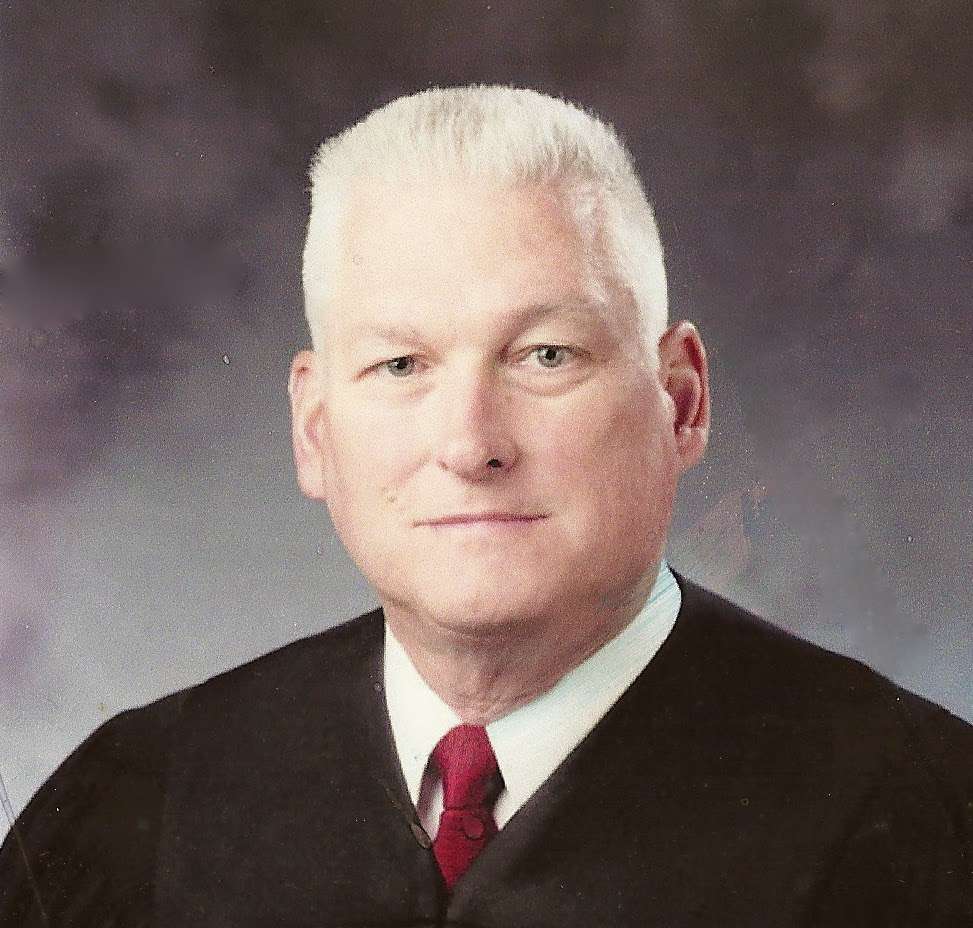
I had the honor of clerking for Judge Kim R. Gibson in the Western District of Pennsylvania from 2009-2011. This was the most formative experience of my career. In that brief time, I learned so much about the law, being a lawyer, and life. Judge Gibson passed away today at the age of 77. My co-clerk Adele and I were fortunate enough to visit the Judge a few weeks ago, and it was a moment I will always treasure.
The Western District of Pennsylvania shared this obituary of Judge Gibson, which I am happy to pass on:
Judge Kim Gibson has passed away in Somerset, PA. Kim had turned 77 yesterday.
Kim devoted his entire adult life to serving his country and his neighbors. Born in Trenton, NJ, Kim entered the United States Military Academy at West Point in 1966, graduating with his Bachelor of Science degree in 1970. Upon being commissioned a Second Lieutenant in the United States Army, Kim took one of the hardest paths possible, completing both Airborne and Ranger training before serving as an Armor Officer, on active duty in that assignment until 1975. Kim's service in the Army on active and Reserve duty extended for 26 years, and he retired as a Colonel in the Judge Advocate General Corps in 1996.
Kim attended the Dickinson School of Law, graduating magna cum laude in 1975, where he served as an editor of the Dickinson Law Review. He was a graduate of the Judge Advocate General School at the University of Virginia, and remained on active duty in the Army JAG Corps until 1978. He was recalled to active duty during Operation Desert Storm in 1991.
While Kim was in solo practice in Somerset PA, he served as the Public Defender, as the Solicitor for the Somerset School District, as counsel to the Office of Children and Youth Services and as the Solicitor for Somerset County. In 1997, he was elected by the voters of Somerset County to the Court of Common Pleas, serving in that role until joining the federal bench in September, 2003. While a state court judge, Kim established a Juvenile Drug Court, one of the first in the Commonwealth. Kim came to our Court upon his nomination by President George W. Bush, and served as a District Judge beginning in 2003. He moved to senior status in 2016, but that shift was more theoretical than actual, as he continued to handle a full and active case load until his final illness. While a Judge of our Court, Kim was called upon by Chief Justice John G. Roberts, Jr. to serve as a member of the Judicial Conference's Court Administration and Case Management Committee, the committee that sits at the crossroads of all of the work of the federal courts. Kim was an Adjunct Professor of Law at the Penn State Dickinson School of Law, and a member of its Board of Counselors. As a leader of the bench and Bar, Kim was a valued mentor to many, especially to our own Judges Stephanie Haines and Chris Brown, and to the scores of young people he coached in Little Leagues Baseball.
Kim's service to the Nation extended even beyond his first career in the Armed Forces and then his second as a practicing lawyer representing the public's interests, and then his third career on the bench. Kim was called to serve as the co-chair of the Flight 93 Memorial Task Force, a commission established by an Act of Congress, on which he was responsible for leading a diverse group of family members, public officials, community leaders and others in developing and the constructing the Memorial and national park site that commemorate the bravery and patriotism of the passengers and crew of United Flight 93 on September 11, 2001 as they brought down that airliner near Shanksville, PA before its hijackers could reach their intended target in the Nation's Capital, thereby saving innumerable lives. The Flight 93 Memorial will be yet another perpetual testament to Kim's life of service to all of the rest of us.
Each of us will have our own favorite and most cherished memory of Kim. His life and career were marked with service and thoughtfulness, always. His mentorship extended to his dozens of law clerks, almost all having the opportunity to work with Kim for a single year, right from law school, as he felt so strongly about providing those opportunities to as many law students as he could. His courtesy to lawyers and especially litigants and the public set the standard for any judge, and his gentle chuckle and good cheer, coupled with his constant courtesy and consideration for others were his hallmarks. We in the Court, his neighbors in Somerset County, his friends and colleagues across the country, and the public that he served with unwavering dedication, will miss him dearly.
On May 30, 2017, exactly eight years ago today, Judge Gibson held a ceremony when he took senior status. This was a special day for the judge, as many of his former law clerks attended. I recorded his remarks, and took some photos.
Book burning, hit pieces, and marijuana's historical pedigree.
Please enjoy the latest edition of Short Circuit, a weekly feature written by a bunch of people at the Institute for Justice.
Call for papers: Scholars, next year IJ's Center for Judicial Engagement is going to celebrate and confer upon "The Other Declarations of 1776." Accordingly, we invite papers on the history, meaning, and impact of state declarations of rights from 1776. It's going to be a blast. Please send us proposals. Click here for more.
Recently, Prof. Samuel Bray opined that it would be "folly" to incorporate the Seventh Amendment's civil-jury right against the states—an argument occasioned by IJ's latest cert petition. As you might expect, we politely disagree. IJ's own Jared McClain, one of the petition's authors, has therefore penned a neutron bomb of a response.
Check out the latest episode of Unpublished Opinions, IJ's roundtable podcast. Wherein Patrick Jaicomo reflects on his recent SCOTUS argument and Anya Bidwell can't get enough of Fanny Burney.
Yesterday, I mused on whether the President may ignore geographic constraints when selecting circuit court nominees. The impetus behind that post, of course, was Emil Bove's nomination to Justice Alito's old seat on the Third Circuit, even though Bove has no clear geographic connection to New Jersey. At the end of my post, I offered some praise of Bove, at least based on my interaction with him during the Special Counsel litigation.
Yet, there is strong opposition to Bove on the right. On May 19, Ed Whelan described Bove as a "DOJ Henchman." Whelan closed with an admonition: "Picking Bove would send the opposite message, and it might well deter some sitting judges from stepping down from active service to create more vacancies that Trump could fill." Whelan's subtle message was that Trump should pick someone else, or else he will get fewer vacancies. This statement was as much predictive as it was suggestive--he was signaling to the Bush I and II judges they should not give up their seats to Trump. Jon Adler expressed a similar message on X, saying that fewer judges may take senior status if the "caliber" of Trump's nominees are weaker.
Whether the White House wants to acknowledge it or not, the caliber of its early judicial nominations will affect the number of vacancies it gets to fill. This is why the Bove nomination was a risky pick (even apart from the merits). https://t.co/HV6uD7gsf9
— Jonathan H. Adler (@jadler1969) May 29, 2025
On the other hand, Mike Fragoso--who is now Whelan's colleague at EPPC--suggests that many of the Republican judges who are eligible are refusing to take senior status, independent of Bove. I tend to agree with Fragoso. Judges have very idiosyncratic views on taking senior status. Maybe at the margins, someone interested in stepping down will not, but I am skeptical.
By my count there are 21 senior-eligible Republican court of appeals judges. Do I wish more of them would go senior? Of course. But I've wanted that for a while: 17 of the 21 were eligible in 2020. These judges themselves are the reason they won't go senior, not Emil Bove.
— Mike Fragoso (@mike_frags) May 30, 2025
Perhaps during a prior time, Whelan's post would have been enough to stop the nomination. But here, Whelan's post seems not to have had any effect on Trump's decision making. Indeed, senior officials in DOJ rejected Whelan's argument.
With Bove nominated, Whelan has now leveled up the discourse with a lengthy post critical of Bove. It reads like the sort of commentary that Whelan has provided about countless Democratic nominees. At the end, Whelan concludes "Republican senators who have the foresight and sense to prevent this scenario should defeat Bove's nomination." Again, this sentence is as much predictive as suggestive: he is telling Republican senators to block Bove's nomination as part of a line of defense against Trump picking future similar nominees. I have no idea how influential Whelan's post will be with Republican Senators, given that Trump has lined up solidly behind Bove.
Further, we can't separate these issues from President Trump's post last night that criticized the Federalist Society, and Leonard Leo in particular, for their advice on judicial nominees in during the first administration. And on the horizon is the specter that the three Trump Justices will soon have to resolve the legality of the tariff plan, which is the centerpiece of the President's entire economic agenda. The Gold Clause Cases comes to mind as an analogy. Let's see what kind of blue plate special the Chief tries to whip up.
As I've written before, there is a storm brewing that most people--inside and outside the judiciary--do not quite yet see. People might think they are pumping the brakes, when in fact they are slamming their feet on the accelerator. They think they are dousing the flames with water, when if fact they are spraying kerosene. They think they are averting crisis, when in fact they are driving towards it.
In the past, the most vigorous clashes over judges happened between the left and the right. I think the next round of wars will be on the right. The left can sit back and enjoy the fireworks.
Update: I thought of another analogy. A generation ago, a President nominated his lawyer to a federal judgeship. Conservatives screamed that this nominee was utterly unqualified for the person. The President flinched, withdrew the nominee, and appointed someone that was more palatable. That playbook may have worked in 2005, but it will not work in 2025. I can tell that Emile Bove is not Harriet Miers, and Donald Trump is not George W. Bush.
A reminder that the Executive Branch retains substantial discretionary authority over immigration policy and will prevail in court when that authority is properly exercised.
Today, in Noem v. Doe, the Supreme Court granted the Trump Administration's application for a stay of a district court order that barred the Department of Homeland Security from revoking "parole" status for an estimated 500,000 noncitizens from Cuba, Haiti, Nicaragua, and Venezuela under the so-called "CHNV" program. Justice Jackson dissented, joined by Justice Sotomayor.
The Court's order in Noem v. Doe should not be surprising. As even Justice Jackson acknowledged in her dissent, the decision to offer noncitizens parole "is discretionary by statute."
The language of 8 U.S.C. §1182(d)(2)(A) is quite clear:
The Secretary of Homeland Security may, . . . in his discretion parole into the United States temporarily under such conditions as he may prescribe only on a case-by-case basis for urgent humanitarian reasons or significant public benefit any alien applying for admission to the United States, but such parole of such alien shall not be regarded as an admission of the alien and when the purposes of such parole shall, in the opinion of the Secretary of Homeland Security, have been served the alien shall forthwith return or be returned to the custody from which he was paroled and thereafter his case shall continue to be dealt with in the same manner as that of any other applicant for admission to the United States.
While it is certainly disruptive to revoke a noncitizen's parole status, it is something the Secretary clearly has the power to do. Unlike in the Alien Enemies Act cases, there is little question about the scope of the Administration's authority or the way it is being exercised. Further it is not clear that such discretionary choices are even subject to judicial review.
Justice Jackson objected to the stay on the grounds that granting a stay should reflect "more--much more" than the likelihood that one party will prevail. While leaving hte district court's injunction in place would prevent the DHS Secretary from exercising her discretion, and inhibit the administration's ability to pursue its immigration and foreign-policy objectives through power expressly delegated by Congress, she believes the Court should have shown greater solicitude for the effects of revoking parole on the program's beneficiaries. "Even if the Government is likely to win on the merits, in our legal system, success takes time and the stay standards require more than anticipated victory." Yet under this approach, one administration could effectively tie the hands of its successor by granting parole or other status to large groups of noncitizens, without regard for what Congress enacted. Immigration law is not, and should not be, this sort of one-way ratchet.
Today's order is a reminder that the President retains ample authority to direct immigration policy and undo the policies of his predecessors. All that is necessary is exercising those authorities forthrightly. (And if one does not like that a single President can exercise authority in this way, that is a question to take to Congress.)
[This is an excerpt from my 1995 Yale Law Journal article "Cheap Speech and What It Will Do," written for a symposium called "Emerging Media Technology and the First Amendment.) Thirty years later, I thought I'd serialize the piece here, to see what I may have gotten right—and what I got wrong.]
"[T]hough the perceived defects of [television] are many … they can be more or less subsumed in two words: vast wasteland." Newton Minow, then chairman of the FCC, coined this pejorative in 1961, and it has (justly) stuck.
But if your local bookstore let you buy, at any given hour, only five books—each chosen for maximum appeal to 250 million people—you'd think of publishing as a vast wasteland, too. This would be true even if the store had fifty books, or maybe even 500 books to match the touted 500-channel cable system of the future. There'd be a greater chance that you'd get what you want, but still you'd often be dissatisfied.
The problem with TV isn't lack of material. Plenty of excellent television has been created in the medium's almost fifty years. Add to that the many great movies that have been made, and there's enough for each of us to watch for hours every day and still only get the stuff we enjoy.
The problem is that broadcasting can't get you what you want when you want it. It can only get you what millions of people prefer, and it can only give it to you at the time chosen by the broadcaster, not the time chosen by you. Five hundred channels may help, because they may make room for material that appeals to only, say, a few hundred thousand people; but that will still be inadequate.
What people would like, I believe, is to choose from home—at any time convenient to them—any TV show or movie they want, just as they choose a book in a bookstore, only more conveniently and less expensively (or even free, since the medium might still be advertiser-supported). Some people might still want someone else to decide; they might, for instance, ask for a random comedy, or a random comedy praised by a given reviewer. They might even ask for the latest episode of a particular new show, just as they do on TV today, though at a time that's convenient for them. But they'll be the ones who choose, or choose to leave the choice to someone else.
Back Briefly from Hiatus: Episode 502 of the Cyberlaw Podcast
The Cyberlaw Podcast is back from hiatus – briefly! I've used the hiatus well, skiing the Canadian Ski Marathon, trekking through Patagonia, and having a heart valve repaired (all good now!). So when I saw (and disagreed with ) Orin Kerr's new book, I figured it was time for episode 502 of the Cyberlaw Podcast. Orin and I spend the episode digging into his book, The Digital Fourth Amendment: Privacy and Policing in Our Online World.
The book is part theory, part casebook, part policy roadmap—and somehow still manages to be readable, even for non-lawyers. Orin's goal? To make sense of how the Fourth Amendment should apply in a world of smartphones, cloud storage, government-preserved Facebook accounts, and surveillance everywhere.
The core notion of the book is "equilibrium adjustment"—the idea that courts have always tweaked Fourth Amendment rules to preserve a balance between law enforcement power and personal privacy, even as technology shifts the terrain. From Prohibition-era wiretaps to the modern smartphone, that balancing act has never stopped. Orin walks us through how this theory applies to search warrants for digital devices, plain view exceptions in the age of limitless data, and the surprisingly murky question of whether copying your files counts as a seizure. It's very persuasive, I say, if you ignore Congress's contribution to equilibrium. In some cases, the courts are simply discovering principles in the Fourth Amendment that Congress put in statute decades earlier. Worse, courts (and Orin) have too often privileged their idea of equilibrium over the equilibrium chosen by Congress, ignoring or implicitly declaring unconstitutional compromises between privacy and law enforcement that are every bit as defensible as the courts'.
One example is preservation orders—those quiet government requests that tell internet providers to make a copy of your account just in case. Orin argues that's a Fourth Amendment search and needs a warrant, even if no one looks at the data yet. But preservation orders without a warrant are authorized by Congress; ignoring Congress's work should require more than a vague notion of equilibrium rebalancing, or so I argue. Orin is unpersuaded.
We also revisit Carpenter v. United States, the 2018 Supreme Court decision on location tracking, and talk about what it does—and doesn't—mean for the third-party doctrine. Orin's take is refreshingly narrow: Carpenter didn't blow up the doctrine, but it did acknowledge that some records, even held by third parties, are just too revealing to ignore. I argue that Carpenter is the judiciary's Vietnam war – it has committed troops to an unwinnable effort to replace the third party rule with a doomed series of touchy-feely ad hoc rulings. That said, Orin's version of the decision, which deserves to be called the Kerr-penter doctrine, is more limited and more defensible than most of the legal (and judicial) interpretations over the last several years.
Finally, we talk border searches, network surveillance, and whether the Supreme Court has any idea where to go next. (Spoiler: probably not.)
Prof. Michael McConnell at the Stanford Law School, a leading constitutional law scholar (and former Tenth Circuit judge), passed this along, and I'm delighted to be able to post it:
Two courts now have ruled that President Trump did not have authority to impose new tariffs on foreign imports under the International Economic Emergency Powers Act of 1977 (IEEPA). The government has already announced an appeal. The Federal Circuit granted an administrative stay and ordered briefing by June 9. The tariff litigation is shaping up as the biggest separation of powers controversy since Steel Seizure.
A few comments (with the caveat that I was co-author and signatory on an amicus brief in support of the challengers):
[1.] The two courts both concluded that the President has no power under IEEPA to impose tariffs in response to balance of trade problems, and one court ruled, additionally, that President Trump lacked power to imposed tariffs in response to fentanyl trafficking. (For the remainder of this post I will discuss only the former holding.) It is important to stress that the decisions were not based on any criticism of the President's reasons for imposing the tariffs, but went to the existence of a power to do so.
The Court of International Trade (CIT) emphasized the relation between IEEPA and the Trade Act of 1974, holding that the specific procedures and substantive limitations contained in the latter supersede any more general emergency authority under the former. The District Court for the District of Columbia (Judge Contreras) emphasized that IEEPA's delegation of power to "regulate" imports does not include a power to tax imports. The two lines of argument are entirely compatible, but not identical.
The courts differed as to which court has jurisdiction. Both arguments are reasonable, though both cannot be correct. This does not matter for resolution of this controversy, however, because the two courts came to the same conclusion on the merits. Both cases are headed for the Supreme Court. Regardless of which trial court had jurisdiction, the Supreme Court will make the final decision.
[2.] Based on the arguments as they now stand, there is a high probability the decisions will be affirmed, in my opinion. There are no jurisdictional or procedural obstacles to a decision on the merits, as have plagued some of the Trump executive order cases. In its application to the Federal Circuit for a stay, Justice Department lawyers claimed that the CIT decision is "rife with legal errors," but has not said what they are. Perhaps the government will come up with persuasive arguments in its briefs in the Federal Circuit on June 9. As of now, however, the essential points in the courts' analysis are largely unrefuted. IEEPA grants various emergency economic powers, but makes no mention of tariffs, and has never before been used to impose tariffs. Interpreting it as a broad power to impose tariffs whenever the President declares an "emergency" would implicitly repeal the several statutes in which Congress did grant tariff authority, subject to procedural, substantive, and temporal limits not satisfied here.
It explains how the ruling is a win for separation of powers and the rule of law.
The Atlantic has just published my new article about our win in the tariff case before the US Court of International Trade. It is entitled "A Victory for the Separation of Powers." Here is an excerpt:
Wednesday's unanimous ruling against President Donald Trump's expansive "Liberation Day" tariffs by the United States Court of International Trade wasn't merely a victory for the businesses and consumers opposed to the policy. The decision was much more than that: a victory for the constitutional system of separation of powers—and, even more broadly, for the rule of law in America.
The decision came in a case filed by the Liberty Justice Center and me on behalf of five American businesses harmed by the tariffs, and it also covers a similar case filed by 12 states led by Oregon. Our suit challenged Trump's attempted use of the International Emergency Economic Powers Act of 1977 to impose 10 percent Liberation Day tariffs on imports from almost every nation in the world, plus additional "reciprocal" tariffs on many more countries. We argue that the IEEPA doesn't grant Trump the virtually unlimited tariff authority he claims, and that, if it did, it would be unconstitutional. Earlier, the president also used IEEPA to impose 25 percent tariffs on Canada and Mexico, plus additional tariffs on China, under the pretext that they would somehow curtail importation of fentanyl into the United States. (Our case challenged only the Liberation Day tariffs, while the Oregon case also targeted the fentanyl ones.) In combination, the IEEPA tariffs kicked off the biggest trade war since the Great Depression. The Tax Foundation estimated that Trump's IEEPA tariffs would have imposed some $1.4 trillion to $2.2 trillion in tax increases on Americans over the next decade. They also would have severely slowed economic growth, inflicted grave harm on many businesses—including our clients, who depend on imports—and raised prices on consumers.
Fortunately, the court ruled that Trump does not have the "unbounded authority" he claims "to impose unlimited tariffs on goods from nearly every country." The British overthrew King Charles I in part because he tried to impose "ship money" taxes without legislative authorization. The president of the United States is no king, and he does not have the power to impose taxes in the form of tariffs whenever he feels like it. The court's decision upholds this fundamental principle of the Anglo-American constitutional tradition.
The article addresses a variety of issues raised by the decision, the potential future course of this litigation, and yesterday's separate ruling against the tariffs by federal district court Judge Rudolph Contreras of the District of DC.
The Wall Street Journal, CBC, and Time published good articles on the story behind the case filed by the Liberty Justice Center and myself.
Since our win in the tariff case before the US Court of International Trade a couple days ago, there have been several informative media articles about the history of the case, and how the Liberty Justice Center and I decided to undertake it, and found our clients. In this post, I compile links to what I think are the most interesting ones.
Ruth Simon and James Fanelli of the Wall Street Journal have an article entitled "How a Small Wine Importer Took On Trump's Tariffs" (paywalled) It tells the story of our lead plaintiff Victor Schwartz of VOS Selections. Also, it describes how the idea for the lawsuit originated with a post right here on the Volokh Conspiracy blog, which led Jeff Schwab of the Liberty Justice Center to reach out to me in hopes of pursuing the issue. We eventually agreed I would put up another post seeking potential clients for the case, which is how we found Victor and other potential clients. As the article describes we deliberately sought small businesses that directly import products from countries subject to the "Liberation Day" tariffs.
Mark Gollom tells the same story in a bit less detail in an article for the Canadian CBC news site. Unlike the Wall Street Journal article, this one isn't paywalled!
Finally, Callum Sutherland of Time has an article profiling all five of our clients: VOS Selections, FishUSA, Microkits, Terry Precision Cycling, and Genova Pipe. Between them, they represent a a wide range of industries, from toys to wine to cycling apparel for women; a veritable cross-section of the many small businesses imperiled by Trump's trade war. We are proud to represent them!
Some of the more informative interviews I have done about our win in the case against Trump's tariffs, in lawsuit filed by the Liberty Justice Center and myself.
Over the last two days, since our victory in the tariff case before the US Court of International Trade, I have done more media interviews than in any other comparable period in my entire life. That's not because I've become a celebrity or a great media personality (I'm not), but because of the significance of the issue. Because of the enormous magnitude of Trump's trade war, it affects people all over the world. In this post, I include links to a few of the more informative interviews.
First, a podcast with Greg Sargent of the New Republic, where we discuss the case and the likely path ahead in some detail. It is about twenty minutes long.
Here's a five minute TV interview on CNN, where I discuss the ruling and its significance:
Next is an interview I did with ABC Australia's "Planet America" program. The segment with me runs from about 6:45 to 13:40 (a little under seven minutes). This was done just a few hours after the ruling was announced.
And, finally, a shorter segment from the Canadian TV network CTV:
A conversation with Eugene Volokh on the First Amendment issues of the Trump administration's actions
A new episode of the Academic Freedom Podcast has been released. The podcast is sponsored by the Academic Freedom Alliance and the Center for Academic Freedom and Free Speech at Yale Law School.
This episode features a conversation with co-blogger Eugene Volokh, the Thomas M. Siebel Senior Fellow at the Hoover Institution. He blogged about the Harvard situation here.
On May 22, the Department of Homeland Security announced that Harvard University has lost its certification to participate in the Student and Exchange Visitor Program. As a consequence, international students enrolled at Harvard University will no longer be given student visas. Harvard quickly filed suit, and received a temporary restraining order from the federal district court in Massachusetts.
On the podcast we discuss what the Trump administration is doing with international students at Harvard, the implications for the university and other universities that might find themselves in the crosshairs of the administration, and the First Amendment questions raised by the latest step by the administration to bring Harvard to heel.
But he declines to conclude that another judge, against whom a complaint was lodged over participation in such a boycott, violated the rules.
From In re Complaint of John Doe (8th Cir. Jud. Council), by Chief Judge Steven Colloton:
This is a judicial complaint against a district judge who has participated in a hiring boycott against graduates of Columbia University in an effort to influence the university's administration. The subject judge was one of thirteen federal judges who signed a letter in May 2024 to the president of the university.
The letter asserted that "[s]ince the October 7 terrorist attacks by Hamas, Columbia University has become ground zero for the explosion of student disruptions, anti-semitism, and hatred for diverse viewpoints on campuses across the Nation." The letter stated that the signatories, as "judges who hire law clerks every year to serve in the federal judiciary," had "lost confidence in Columbia as an institution of higher education." The letter then set forth three "steps" that the university would take if it "were serious about reclaiming its once-distinguished reputation," to wit: (1) "Serious consequences for students and faculty who have participated in campus disruptions and violated established rules," (2) "Neutrality and nondiscrimination in the protection of freedom of speech and the enforcement of rules of campus conduct," and (3) "Viewpoint diversity on the faculty and across the administration—including the admissions office." {Under Rule 24(a) of the Rules for Judicial-Conduct and Judicial-Disability Proceedings, the names of the complainant and the subject judge are not disclosed.}
The letter informed the university president that "[c]onsidering recent events, and absent extraordinary change, we will not hire anyone who joins the Columbia University community—whether as undergraduates or law students—beginning with the entering class of 2024." An essay published around the same time by one of the judges characterized the effort as a boycott aimed at the university, and explained that "[t]he purpose of any boycott is to change the behavior of the target."
The judicial complaint alleges that the action of the subject judge in joining the boycott is "prejudicial to the effective and expeditious administration of the business of the courts," and is therefore cognizable misconduct under Rule 4(a). In particular, the complaint asserts that the judge (1) used his office "to obtain special treatment for friends" and to engage "in partisan political activity" and to make "inappropriate partisan statements," see Rule 4(a)(1)(A), (D); (2) engaged in "abusive behavior in that his statements demonstrate that he presently is and will be treating litigants, attorneys, judicial employees, or others in a demonstrably egregious and hostile manner," see Rule 4(a)(2)(B), (3) "used the 'Columbia University community' as a proxy to discriminate against various races, religions, and national origins that may share in the views of his targeted community," see Rule 4(a)(3), and (4) engaged in conduct outside the performance of his official duties and was "reasonably likely to have a prejudicial effect on the administration of the business of the courts, including a substantial and widespread lowering of public confidence in the courts among reasonable people." See Rule 4(a)(7).
[This is an excerpt from my 1995 Yale Law Journal article "Cheap Speech and What It Will Do," written for a symposium called "Emerging Media Technology and the First Amendment.) Thirty years later, I thought I'd serialize the piece here, to see what I may have gotten right—and what I got wrong.]
Opinion Articles: With opinion articles as with music, we'll soon have many more options than most consumers will want to slog through. There's something valuable-as well as limiting-in the fact that your daily paper offers four op-ed pieces rather than forty thousand.
But as I noted in the music discussion, information overload isn't a new phenomenon. There are far more books than any consumer can personally browse, and yet we're quite happy with this, and don't clamor for less selection. We generally prefer to go to bigger bookstores rather than smaller ones, even though smaller ones have done some extra preselection for us.
True, we partly rely on the screening done by publishers, who'll at least have rejected the total garbage, but we also rely on reviewers, word-of-mouth, our familiarity with particular writers and artists, the possibility of browsing, and advertising. These mechanisms will still exist for the new media, even if publisher selection doesn't. People will still read reviews and hear about good items from friends. People will also be familiar with existing popular columnists and existing organizations that are starting newsletters.
Moreover, electronic distribution can make possible new selection devices. One particularly useful new service—similar to the custom-mix radio I discussed above—would be a subscription that delivers a different column every day, perhaps selected by general topic or political perspective. Thus, together with my daily William F. Buckley, Libertarian Report, and Column Left/Column Right on the First Amendment, I could also download a different center-to-right-wing column every day, and twice a week random (but well-regarded) columns from all points on the spectrum.
From Derewal v. Vance, decided today by Judge Jia Cobb (D.D.C.):
Turning to the complaint itself, Derewal alleges that the "25th Amendment must be invoked due to this constitutional crisis of our lifetime from senior's SSA improperly withheld to our eco-damage and not honoring the role of POTUS," and that "J.D. Vance, in his official-capacity, must call for 25th Amendment vote of Cabinet and enforcement." She requests that this Court enjoin the constitutional crisis "by calling for 25th Amendment vote and enforcement," and provide "any additional relief that th[e] Court deems just and proper." …
[T]o the extent that Derewal's sought-after relief is an injunction removing the President from office under the Twenty-Fifth Amendment, the Court has no power to issue such an order. See Ballard v. Ohio Elections (S.D. Ohio 2025) (dismissing pro se complaint requesting that the court "invoke the Twenty-Fifth Amendment of the United States Constitution to forcibly remove the current President from office" because "neither the Twenty-Fifth Amendment nor any federal statute gives the Court such a broad power"). The Twenty-Fifth Amendment vests the Vice President and "a majority of … the principal officers of the executive departments"—not this Court—with the discretion to initiate any attempt to remove a sitting President….
Celebrate your independence with a subscription to Reason magazine, your most trusted source of honest, insightful news and analysis.