

6/23/1987: South Dakota v. Dole is decided.
The Volokh Conspiracy
Mostly law professors | Sometimes contrarian | Often libertarian | Always independent | Est. 2002

Grading The Controversial Florida Seminar Paper
Earlier today I wrote about the New York Times expose concerning the grading of a student seminar paper at the University of Florida. I've now had a chance to read the paper.
First, from a technical perspective, the paper is very well done. The writing is easy to understand. The footnotes are expertly bluebooked. The sentences are bit too long for my taste, but many law professors like long sentences with many clauses. I don't have the rubric, but I would imagine the student would receive full credit, or near-full-credit for these technical elements.
Second, the author also presents a fairly detailed analysis of modern originalist scholarship. He accurately describes the views of McGinnis and Rappaport, Randy Barnett, and Adrien Vermeule. The author brings in discussion of the Federalist Papers, records from the Constitutional Convention, and early congressional debates over slavery. Again, I don't have the rubric, but I would imagine the student would receive full credit, or near-full-credit for the literature/background information section.
Third, I'll turn to the substance. The basic argument is that under what the author describes as National Constitutionalism, the Constitution should be understood to protect the sovereignty of "the People." And, following Verdugo-Urquidez and Heller, "the People" are Americans, and not aliens. But the author doesn't stop there. Citing records from the early republic, he concludes that the founding generation sought to discourage immigration from non-White countries. He quotes Professors Gabriel Chin and Paul Finkelman who wrote, "whether or not they supported slavery, a majority of [the Founders] unambiguously conceived of the United States as a White country." (I'm not sure anyone would disagree with this point.)
This analysis leads the author to three conclusions. First, the author would read Article IV, Section 4 to permit the states to play a role to prevent the "invasion" of migrants. (This section more-or-less tracks Judge Ho's concurrence, and arguments advanced by the Trump DOJ.) Second, the author would allow the courts to strictly scrutinize immigration policies that would "dissolve the people and elect another." Third, the author would subject discrimination against aliens to mere rational basis review. He would also overrule Plyler v. Doe and Wong Kim Ark. The author recognizes that his positions are in tension with the Fourteenth and Fifteenth Amendments. But he cites the longstanding debates about whether these amendments were properly ratified, and whether they are substantively unconstitutional. If these amendments were not ratified, then we are left with the Constitution without the Reconstruction Amendments.
Here is my assessment. The article is laid out backwards. At the very end, the author contends that the Fourteenth and Fifteenth Amendments may have never been properly ratified. And his conception of National Constitutionalism is premised on those two amendments never changing the constitutional order. Or alternatively, he contends that the Fourteenth and Fifteenth Amendment should have no bearing on how immigration policy is understood. But if these points are wrong, then many of his points would not follow.
Were I to have advised the student on the paper, I would have had him reverse the entire theme. At the outset, the author would have the reader assume--at least for purposes of a thought experiment--that the Reconstruction Amendments were never ratified. Then, the reader would imagine that Congress adopted twentieth-century style open immigration laws. Would those laws violate the original Constitution? If the federal government failed to stop the flow of migrants, would the states then have the power under Article IV to repel the invasion? Could courts declare those laws as unconstitutional?
The author does repeatedly refer to a preference for White people, and blocking non-White immigrants. At least in this paper, the Author frames this preference in terms of how the Framers would have understood immigration--I think he accurately describes that history. Now, with the benefit of hindsight, we know that the author was in fact also articulating his own policy preferences. But based on the paper, the author was presenting this thesis as a matter of scholarship.
Where does this leave us? Is this the best student note I've ever read? No. Was it executed well from a technical perspective? Yes. Was it thoroughly researched? Yes. Did it present a coherent thesis based on history? Yes. Was it well organized? Not really. The article under-developed the core obstacle--the ratification of the Reconstruction Amendments--and doesn't explain how the Supreme Court would overrule certain landmark precedents. But these sorts of shortcomings are typical of law student papers. What would I give the paper, having never met the student or heard his presentation? Probably a B+ or maybe an A- if I was feeling generous. Then again, I didn't read any of the other papers in the class, so it is tough to compare. And remember, under the syllabus, the final paper is worth only 65% of the final score, so we do not know what other elements the student contributed. A final grade of A or A+ is well within the bounds of reasonable grading.
Trump's Iran Air Strikes and the Constitution
The strikes violate both the Constitution and the 1973 War Powers Act. Whether they are good policy is a more difficult question. This could turn out to be a rare instance where one of Trump's illegal actions has beneficial results.

Yesterday, US warplanes struck three Iranian nuclear sites. President Trump did not make any effort to get advance congressional authorization for this action, or even to consult with Congress. It is, therefore, a violation of both the Constitution and the 1973 War Powers Act. But it is possible this will turn out to be a rare instance where one of Trump's illegal actions has beneficial consequences.
Michael Ramsey, prominent conservative legal scholar and war powers expert has an excellent explanation of why Trump's air strikes violate the Constitution:
My longstanding view, developed in a series of articles, is that the Constitution's original meaning requires Congress to approve any material initiation of military hostilities by the United States. As explained at length in Textualism and War Powers, that conclusion rests principally on two points:
(1) the original meaning of "declare" war includes both formal announcements of the initiation of a state of war and the use of military force in a way that creates a state of war. In the eighteenth-century sense, war could be "declared" by words or by actions (and indeed, wars in the eighteenth century and earlier were often not begun with formal announcements but simply by launching military action -- a point noted by Hamilton in The Federalist).
As a result, the Constitution's assignment to Congress of the power to "declare" war gave Congress power over the decision to go to war, whether through formal announcement or by the use of force. A wide range of leading members of the founding generation -- including Washington, Hamilton, Madison, and James Wilson -- described Congress' power to declare war as exclusive (that is, that it was a power of Congress and therefore not a power of the President).
(2) the original meaning of "war" broadly included most uses of sovereign military force, including ones with limited scope and objectives. An early Supreme Court case, Bas v. Tingy, recognized that there could be general war or limited war -- both of which came within Congress' war power. The Bas case involved the so-called "Quasi-War" between the U.S. and France in the late 1790s, which consisted only of naval engagements. Notably, essentially everyone at the time -- including advocates of presidential power such as Hamilton and President John Adams -- thought the U.S. actions in the Quasi-War needed to be authorized by Congress (which they were).
Applied to the U.S. airstrikes on Iran, this reading seems to require congressional approval. The U.S. strikes constitute war in the original constitutional sense of the term: they are a use of force against a foreign sovereign adversary to compel an outcome. Although their objectives may be limited to forcing Iran to end its nuclear program, such a limited military objective still constitutes a war (albeit a limited war). And initiation of war, whether general or limited, and whether done by formal announcement or simply by the use of force, requires Congress' approval under the Constitution's declare war clause.
As Ramsey notes, there is an argument that relatively small-scale military actions don't qualify as wars and therefore are exempt from the requirement of congressional authorization. Even if that argument is correct in some situations, it doesn't apply here. The objective of these strikes - dismantling Iran's nuclear program, and the potential scale of the fighting (Iran is a major regional power and has substantial retaliatory capabilities) differentiates this situation from very narrow one-off strikes, such as Ronald Reagan's 1986 air strike against Libya.
Ramsey also has a compelling response to the argument that this action is legally justified by Iran's earlier support of terrorist attacks.
Unlike many of Trump's egregious abuses of emergency powers, this action is far from unprecedented. Previous presidents have also violated the Constitution in this way. Most notably, as Ramsey points out, Barack Obama, in 2011, waged a lengthy air campaign against Libya, intended to help overthrow that country's dictator, Moammar Gaddafi. For those keeping score, I condemned Obama's action and repeatedly criticized him for violating the Constitution and the War Powers Act (see also here). But Obama's illegal actions don't justify Trump's (and vice versa).
Ramsey's analysis is based on originalism. He suggests there might be a "living constitution" case for justifying such actions, based on "the speed of modern warfare and the exigencies of terrorism and potential nuclear attack." I disagree. Modern warfare is indeed faster than that of the eighteenth century. But Congress can move faster, too. Under modern conditions, Congress can be swiftly convened even if it is not in session (which, today, it almost always is). In this instance, Trump had ample opportunity to seek congressional authorization. He just chose not to.
In addition to violating the Constitution, the air strikes also violate the War Powers Act. Section 3 of that legislation requires that "[t]he President in every possible instance shall consult with Congress before introducing United States Armed Forces into hostilities or into situations where imminent involvement in hostilities is clearly indicated by the circumstances." There was no such advance consultation here, even though it was obviously "possible" to do it (US strikes against Iran have been under consideration since Israel began its air campaign on June 13, if not before).
The War Powers Act also requires withdrawal of US forces from "hostilities" after 90 days, unless Congress has authorized further involvement. Obama ultimately violated this requirement in the Libya conflict; we'll see if Trump ends up doing so here.
Legal scholars and commentators have to be open to the possibility that an illegal action might nonetheless have beneficial results. Like Michael Ramsey, I acknowledge that could be the case here.
If the US air strikes (combined with earlier and ongoing Israeli actions) really do severely damage Iran's nuclear program, that would be a good thing. If they succeed in overthrowing Iran's brutal regime, that would be better still. Since coming to power in 1979, Iran's theocratic dictatorship has sponsored numerous terrorist attacks (including some against the US), supported brutal terrorist groups around the Middle East (including Hamas, Hezbollah, and the Houthis), and brutally oppressed its own people, including by repressing women and minority ethnic and religious groups. Almost any plausible alternative government would be better. There is no contradiction between recognizing all of that, while also condemning Trump's many abuses of power and authoritarian tendencies.
I left the field of security studies many years ago, and therefore must be cognizant of the limits of my expertise. Thus, I will not try to give any definitive assessment of the policy merits of this campaign. I will limit myself to just a few tentative points.
First, war is inherently dynamic. What the great German military theorist Carl von Clausewitz called "friction" is ubiquitous, making prediction difficult. As he also put it, in On War, "everything in war is very simple, but the simplest thing is difficult." Much depends on how Iran reacts to these strikes, and how the US and Israel respond in turn.
Second, I have little faith in this administration's ability to conduct any prolonged conflict competently. Among other things, Pete Hegseth is not a competent secretary of defense, and Tulsi Gabbard is not a competent head of the intelligence community. Trump himself is notorious for his ignorance and poor judgment. That doesn't guarantee a bad outcome. But it certainly reduces the odds of success.
Finally, even if the military action here turns out to be successful, waging another war without proper congressional authorization is still a dangerous precedent. There is good reason for that constitutional requirement, and we eroded it at our peril. See my 2021 Washington Post article on this subject, for some of the reasons why:
The constitutional requirement of congressional authorization is more than just a legal technicality. Not only does it prevent dubious conflicts begun at the behest of a single man; it also increases the chances of success if we do enter a conflict. If the president is required to get congressional authorization for war, he will be forced to build up a broad political consensus behind his decision; that increases the likelihood that we will stay the course until victory is achieved, as opposed to bailing out when difficulties arise.
If such a consensus is absent, it is usually best to avoid the conflict entirely. The failure of Obama's 2011 military intervention in Libya, — he called the lack of planning for the aftermath of that conflict his "worst mistake" as president — was partly caused by his decision to forgo building the necessary political consensus for congressional authorization.
Although U.S. airstrikes against Libya lasted for some seven months, and helped bring about the overthrow of the regime of Libyan dictator Moammar Gaddafi, the Obama administration claimed there was no need for congressional authorization for its actions, on the dubious ground that it did not involve a genuine war, or even "armed hostilities" under the War Powers Act. Subsequently, the country descended into chaos and ISIS-aligned groups and other dangerous organizations took over substantial parts of its territory; the United States largely walked away.
The New York Times Launches An Unfair Attack On Judge Badalamenti
The paper of record tars the reputation a former federal defender as part of a broader attack on originalism.
Yesterday, Richard Fausset of the New York Times published an article "A White Nationalist Wrote a Law School Paper Promoting Racist Views. It Won Him an Award." This article represents the worst of modern-day advocacy journalism. Fausset obviously has no idea how law school seminars are graded, and made no effort to learn. Moreover, it is pretty clear here that there is an ongoing disciplinary proceeding against the student, so no one at the law school is able to comment. Fausset uses that silence to further sully the reputation of everyone involved.
I'll start with a personal disclosure. The course in question was co-taught by Judge John Badalamenti. You may not know Judge Badalamenti, but you are probably familiar with a case he argued: Yates v. United States (2014). Yes, Badalamenti, as a federal public defender, successfully argued the fish case before the Supreme Court. I've known Badalamenti since then, and have chatted with him over the years. Last fall, I spoke at the originalism conference he organized, which hosted the entire Florida Supreme Court, several members of the Eleventh Circuit, and scholars from across the ideological spectrum. I include these facts to show the high regard that Badalamenti is held in by his community.
In the Fall of 2024, Judge Badalamenti taught a seminar at the University of Florida, titled ADVANCED CONSTITUTIONAL INTERPRETATION: ORIGINALISM AND ITS FOES. The syllabus is available online. (It is not clear if Fausset ever bothered checking it.) The syllabus explains how grades are assigned:
Grades will be based 25% on class participation, 10% on reflection papers, and 65% on final papers.
The paper in question was certainly a large chunk of the final grade, but was not the only factor. As I understand the policy at the University of Florida, the awarding of a "book prize" is not discretionary. It is automatically given to the student with the highest score. And in a small seminar with roughly a dozen students, this book prize is not particularly significant. It is not like a law school wide prize. Howard Wasserman, who teaches at nearby Florida International University, explained:
To people unfamiliar with law school, the phrase "book award" sounds more prestigious than it is. Yes, Judge Badalamenti recognized merit in the paper and Damsky can put the honor on his c.v. (assuming he graduates law school). But this is not akin to a college- or university-wide honor in a paper competition.
The fact that a student received a high grade in a small seminar is not worthy of a New York Times expose. Aren't there actual problems to write about?
On the merits, the argument that the Constitution, as originally written, favors white people stretches back to the founding, and was articulated by William Lloyd Garrison and others. I, for one, favor the Frederick Douglass and Lysander Spooner approach, but there is a scholarly debate in this area.
The entire premise of the NY Times article is that Judge Badalamenti gave a distinguished prize to an avowed white supremacist. But the timeline undermines the narrative. Again, the class concluded in December 2024. But the student's relevant social media posts did not arise until February 2025, and the most egregious statements were made in March 2025. Does Fausset bother explaining whether Badalementi was even aware of the student's comments during the class? No, it is all left to insinuation.
Faussett writes that Badalementi "has earned praise from both liberals and conservatives over the course of his career." The linked article includes this passage:
The federal judge in Florida overseeing a conservative group's lawsuit against Target's LGBTQ+ Pride marketing is a Trump appointee and a member of the Federalist Society, which champions individual liberty and traditional values.
These facts describing US District Judge John Badalamenti, presented against a highly politicized backdrop, suggest a particular political leaning that could influence the way he will rule in the case. What people may not know is that the 49-year-old jurist has liberal supporters, came from a humble upbringing and considers political motivations incompatible with his role as a judge. But defying expectations and challenging assumptions is nothing new for him.
. . . .
The diagnosis shortly after becoming a federal judge was devastating to hear, Badalamenti said. But he found a friend and mentor in another former public defender and US district judge at the time, who later joined the Supreme Court: Justice Ketanji Brown Jackson.
"She mentored me through these difficult times and continues to be a tremendous friend and source of positivity," Badalamenti said in a follow-up email.
Jackson, whom President Joe Biden appointed to the Supreme Court in 2022, declined to comment through a spokesperson, but the representative confirmed the justice's friendship with Badalamenti.
Yes, Judge Badalementi is friends with KBJ. And as a federal defender, he spent his career defending people of color. A quick google search shows that he is on the board of Gentlemen's Quest. This group helps high risk high school students gain entry to college. A quick review suggests that Judge Badalamenti is the only white person on the board. Moreover, the Senate Judiciary Committee questionnaire states that he "served as a volunteer mentor for inner city middle school students in the Tampa community." This is not a white supremacist. Did Fausset even ask Chat GPT about Badalamenti?
These hits on conservatives are so predictable and unfortunate. They slander a good judge who spent his career fighting for the rights of all people, all in service of an attack on originalism. Look at Fausett's biography:
I write about conservative culture and gun issues, as well as the ongoing election interference case against former President Trump and some of his allies in Fulton County, Ga.
Fausset was asked to investigate only one side of the spectrum. This is not journalism. As Rush would say, these are activists with bylines.
Update: I attempted to grade the paper here.
The Court Might Favor Standing For Business Interests, But Blue States Beat Red States
Justices Jackson and Kavanaugh both miss the obvious distinction.
Diamond Alternative Energy v. EPA presented the question of whether fuel manufacturers had standing to challenge regulations of fossil-fuel vehicles. Justice Kavanaugh, writing for seven members, found that the fuel company had standing. Justice Jackson, in dissent, found that the plaintiffs lacked standing.
Jackson's dissent repeats the familiar refrain that the Supreme Court is pro-business, and is more likely to find standing for businesses backed by the Chamber of Commerce than for civil rights plaintiffs. Jackson writes:
Standing is a constitutional doctrine meant to promote judicial restraint. By design, it "'prevent[s] the judicial process from being used to usurp the powers of the political branches'" and "helps safeguard the Judiciary's proper—and properly limited—role in our constitutional system." United States v. Texas, 599 U. S. 670, 675–676 (2023). But standing doctrine cannot serve that important purpose if the Judiciary fails to apply it evenhandedly. When courts adjust standing requirements to let certain litigants challenge the actions of the political branches but preclude suits by others with similar injuries, standing doctrine cannot perform its constraining function. Over time, such selectivity begets judicial overreach and erodes public trust in the impartiality of judicial decisionmaking. . . .
Jackson continues that the Court "rests its decision on a theory of standing that the Court has refused to apply in cases brought by less powerful plaintiffs." She concludes that "[t]his case gives fodder to the unfortunate perception that moneyed interests enjoy an easier road to relief in this Court than ordinary citizens."
Justice Kavanaugh responds to Justice Jackson in a paragraph with a long string cite:
JUSTICE JACKSON separately argues that the Court does not apply standing doctrine "evenhandedly." Post, at 1 (dissenting opinion). A review of standing cases over the last few years disproves that suggestion. See, e.g., Alliance for Hippocratic Medicine, 602 U. S., at 374; United States v. Texas, 599 U. S., at 674; Haaland v. Brackeen, 599 U. S. 255, 291–292 (2023); Reed v. Goertz, 598 U. S. 230, 234 (2023); TransUnion LLC v. Ramirez, 594 U. S. 413, 417– 418 (2021); California v. Texas, 593 U. S. 659, 666 (2021); Uzuegbunam, 592 U. S., at 282–283; Thole v. U. S. Bank N. A., 590 U. S. 538, 541–542 (2020); Department of Commerce, 588 U. S., at 766–768.
Kavanaugh offers no actual analysis on this point. He simply lists a series of standing cases from the past five years that "disprove" Jackson's point that the Court is likely to find standing for "moneyed interests." Kavanaugh acts as if this point is self-evident. But there is a problem. The string cite doesn't actually make his case--or at least not without some substantial explanation.
Of the nine cases cited, only two are business cases. TransUnion found that only certain plaintiffs had standing to sue TransUnion. And Thole found that participants in a benefit plan lacked standing to sue the bank. These cases, which generally favor big business, do not rebut Justice Jackson's point.
Two of the case involve civil rights cases. Uzuegbunam found that a student had standing to challenge a University's censorship of his speech. And Reed found that a prisoner had standing to challenge a DNA testing statute. These cases sort of address Justice Jackson's point, but not directly.
The other cases concern ideological strategic litigation brought by states or public interest groups. First, Alliance for Hippocratic Medicine (2024) found that a non-profit lacked standing to challenge the FDA's approval of mifepristone. Second, United States v. Texas (2023) found that Texas lacked standing to challenge a Biden-era immigration policy. Third, Haaland v. Brackeen (2023) found that Texas (and private plaintiffs) lacked standing to challenge the enforcement of the Indian Child Welfare Act. Fourth, California v. Texas (2021) found that Texas (and private plaintiffs) lacked standing to challenge the constitutionality of the Affordable Care Act after the penalty was reduced to $0. Fifth, in Department of Commerce (2019), New York had standing to challenge the inclusion of the citizenship question on the census. There is a sixth case that Justice Kavanaugh inexplicably did not cite: Murthy v. Missouri (2024) held that Missouri lacked standing to challenge the Biden Administration's "jawboning" of social media companies.
What do these six cases have in common? Red states lack standing, but blue states do have standing. It's really that simple--or at least that is the perception here in Texas. To show the Court is being "evenhanded," Kavanaugh lists how often conservative litigants lose on an otherwise conservative court.
Early in Kavanaugh's tenure, I objected when he made a point about how President Clinton signed a "strict" immigration bill. I wrote:
I have no doubt that Kavanaugh's intent here was as innocuous as in Rimini. But the implication was very different: The Court was not being "strict" toward immigrants; a bipartisan Congress and Clinton were being "strict" toward immigrants. In other words, don't blame us for interpreting the law in a tough fashion—even a Democrat was fine with it.
As several Kavanaugh clerks promptly told me, it has long been Kavanaugh's practice to reference the name of the President who signed the bill. There is definitely a Schoolhouse Rock virtue here. But I also think it conveys a substantive point. Indeed, I often stress that President Clinton signed both DOMA and RFRA to stress the bipartisan nature of those laws.
In Diamond Alternative Energy, Justice Kavanaugh lists all the times that the Court ruled against conservatives to show how it is being "even-handed." I recently wrote that "If [Chief Justice] Roberts views himself as an umpire, his strike zone will ensure that the red team and the blue team usually play a close game, and neither side wins by a large margin." Kavanaugh, regrettably, suggests he is keeping score as well. Kavanaugh has similarly praised the Nixon appointees for ruling against the President who appointed them in United States v. Nixon. Why is that fact relevant unless the standard presumption is that a Nixon appointee should rule in favor of President Nixon? Is this how Kavanaugh thinks of things? I suggested as much after reading Gorsuch and Kavanaugh's perplexing decisions in the tax return cases.
In any event, when Justice Kavanaugh says these cases "disprove" Justice Jackson's argument, he is tacitly acknowledging how the Court refuses to grant standing to red cases, even as it finds standing for moneyed interests. Both Jackson and Kavanaugh miss the obvious distinction. Here, we have another manifestation of Originalism, Inc.
By the way, I did not know this factoid, which I learned in Justice Jackson's dissent: "Cass Gilbert, who designed the Supreme Court building, also designed the Chamber of Commerce's headquarters in Washington, D. C., and the New York Life building in Manhattan, among other major commercial offices."
Will The Court GVR The Skrmetti Parental Rights Petition In Light Of Mahmoud?
The substantive due process question remains.
On Wednesday, the Court decided United States v. Skrmetti. This petition, brought by the Biden DOJ, only presented the question whether Tennessee's law violated the Equal Protection Clause. DOJ did not petition on the substantive due process issue. Indeed, under 42 U.S.C. § 2000h-2, the Attorney General only has the authority to intervene in an equal protection case.
Whenever an action has been commenced in any court of the United States seeking relief from the denial of equal protection of the laws under the fourteenth amendment to the Constitution on account of race, color, religion, sex or national origin, the Attorney General for or in the name of the United States may intervene in such action upon timely application if the Attorney General certifies that the case is of general public importance. In such action the United States shall be entitled to the same relief as if it had instituted the action.
The ACLU, which represented the plaintiffs, petitioned on both due process and equal protection in the case known as L.W. v. Skrmetti. The ACLU's petition remains pending, even though counsel for the ACLU was permitted to argue.
What happens next? Mahmoud v. Taylor is awaiting a decision. If Mahmoud addresses the due process clause with regard to parental rights, the Court might GVR the ACLU's Skrmetti petition.
In other words, Skrmetti may be far from over.
Today in Supreme Court History: June 22, 1992
6/22/1992: R.A.V. v. City of St. Paul is decided.
Conservative and Libertarian Public Interest Group Letter Opposing "Big Beautiful Bill" Provision that Undermines Access to Justice [Updated]
The provision requires litigants seeking preliminary injunctions against illegal government actions to post potentially enormous bonds.
In a previous post, I criticized a dangerous provision of the Senate version of Trump's "Big Beautiful Bill" that would radically undermine judicial protection for constitutional rights by requiring litigants seeking preliminary injunctions against illegal federal government actions to post potentially enormous bonds. There, I highlighted a critique by Arizona Supreme Court Justice Clint Bolick, who was previously a prominent libertarian public interest litigation.
Yesterday, a coalition of major, mostly libertarian and conservative, - public interest group leaders submitted a letter to the Senate opposing this provision and urging Congress to reject it. Signatories include leaders of the Firearms Policy Coalition (which organized the letter), the Institute for Justice, FIRE, the Goldwater Institute, the Liberty Justice Center, and more. Here is an excerpt from the letter:
We write as a coalition of organizations who rely on the federal judiciary to uphold constitutionally protected rights and serve as a check on unlawful government action. We are gravely concerned about a proposed provision in the Senate Judiciary Committee's language of the reconciliation package (Subtitle B, Section 203 of H.R. 1, the One Big Beautiful Bill Act) that, if enacted, would mandate that courts require security in order to issue a temporary restraining order or preliminary injunction against the federal government, effectively shutting down access to justice for most Americans. As it stands today, this provision would require a bond that covers the "costs and damages" sustained by the government if it were to ultimately prevail in the case. We're talking upwards of millions, if not billions, of dollars that could be required upfront, effectively shutting off people's ability to enjoin the federal government from causing irreparable harm….
This is not a partisan issue—it's a direct threat to constitutional accountability. If enacted, this provision could seriously impair meritorious public interest litigation across the board, no matter the issue or ideology. The substance of a claim wouldn't matter. What would matter is whether the plaintiff can afford to pay. Access to justice would hinge on wealth, not merit, leaving Americans of all political stripes without recourse when their rights are violated.
The courts use temporary restraining orders and preliminary injunctions to prevent unconstitutional or illegal policies from taking effect while a case is being litigated. This is often the only way to avoid immediate and irreversible harm, censorship of protected speech, illegal regulations that destroy livelihoods, or restrictions that prevent the peaceable exercise of constitutionally protected freedoms. These injunctions are only granted when a court determines the plaintiff is likely to prevail and that the harm without relief would be serious.
But under this provision, a plaintiff's ability to obtain that critical protection would depend not on the merits of their case, but on their ability to pay a potentially astronomical bond up front….
This is not legal reform. This is a financial blockade on constitutional accountability. It rigs the system in favor of unchecked federal power, and it sends a chilling message: unless you're wealthy, don't bother trying to protect your rights.
If this provision is enacted, it won't matter what political party is in power: its impact will be felt by everyone. Whether the issue is freedom of speech, religious liberty, due process, or any other fundamental freedom, this kind of legal barrier puts them all at risk in a "heads I win, tails you lose" framework—with the federal government on top.
No government should be allowed to insulate itself from judicial review by making it prohibitively expensive for Americans to petition the government for redress and seek to protect their rights through restraining orders and preliminary injunctions, often the last line of defense before suffering irreparable harm.
I agree completely! I would add that this provision creates a perverse incentive for government officials to actually increase the scale of their illegal policies. The larger the scale, the higher the potential costs "suffered" by the government if it is unable to immediately implement them. Challenging the illegal detention of a thousand people will probably require a bigger bond than challenging that of one or a few. Challenging the illegal seizure of a large amount of property would require a larger bond than challenging that of a small amount. And so on.
In my earlier post, I made a few additional points that bear repetition here:
Right now, Republicans are seeking to enact these restrictions in order to block injunctions constraining a GOP administration's policies. But, as Bolick notes [the coalition letter makes this point, as well], under a more left-wing administration the same tool can easily be turned against rights conservatives value. Consider a left-wing president who targets gun rights or religious liberty rights, or tries to censor speech DEI activists consider offensive.
Ultimately, it is more important to ensure the vast powers of the federal government cannot be used to undermine the Constitution and take away our rights than to ensure an administration can swiftly implement all its preferred policies. And if a rogue district court does impose an injunction improperly, higher courts can quickly stay or overturn it, as has happened a number of times in recent months.
If this Senate provision gets enacted, there is a chance courts might invalidate it as an unconstitutional assault on the power of judicial review - which it is. But it would be better if Congress does not go down this dangerous road in the first place.
It may be that this provision will be ruled out of order, because it violates the "Byrd Rule," which restricts the range of policies that can be enacted through reconciliation bills, bypassing the Senate filibuster. If not, Congress should strip this unjust and dangerous policy from the bill.
NOTE: As regular readers know, I have longtime associations with some of the groups that signed the coalition letter. for example, the Institute for Justice and I have worked together on various property rights issues, and I was a summer clerk there when I was a law student. Currently, the Liberty Justice Center and I are working together on the tariff case, where I am co-counsel along with several LJC attorneys.
UPDATE: In the initial version of this post, I forgot to include a link to the coalition letter. I apologize for that oversight, which has now been fixed.
Today in Supreme Court History: June 21, 1989
6/21/1989: Texas v. Johnson is decided.
Chief Justice Roberts and Justice Gorsuch Walk Back Bostock
Justice Sotomayor is right. The majority cannot just wish away Bostock.
A lot can happen in five years. June 2020, or Blue June as I called it, was one of the most depressing periods in recent Supreme Court history. After Justice Kennedy retired, Chief Justice Roberts became the new swing vote, and swung to the left in nearly every case. Perhaps the most confounding decision was Bostock. Justice Gorsuch, joined by Chief Justice Roberts, ruled that the Civil Rights Act of 1964 all along prohibited discrimination against gays, lesbians, and transgender people.
The decision was profoundly wrong. Yet, I think Bostock can be understood, at least in part, as a reflection of the zeitgeist. June 2020 was close to peak woke. The pandemic combined with #MeToo and the George Floyd "racial reckoning" created a perform storm for progressivism. All of the trend lines seemed to be moving towards the acceptance of what is often described as transgender ideology--the argument that biological sex and gender identity were distinct, and that irreversible medical treatment should be provided to minors to conform biological sex sex to gender identity.
But over the past five years, those trend lines reversed. This reversal was due, in part, to new medical information about how puberty blockers and cross-sex hormones affect minors. It was also due to revelations that public schools were secretly transitioning children without their parents' consent. And perhaps most critically, people became no longer afraid to criticize the orthodoxy. The left's most powerful tool was censorship--on social media in particular. But boycotts against Target and Bud Light, as well as demonstrations about biological males competing in female sports, shifted the Overton Window on what could be discussed. (I worry that Justice Barrett would see these movements as "animus.")
Supporting these shifts were state legislatures that passed laws restricting providing medical treatment to minors, and barring transgender athletes from sports. Were these laws clearly constitutional under United States v. Virginia? I'll just say that Justice Sotomayor's dissent was more persuasive than I expected. Were these laws consistent with the "because of" analysis under Bostock? Again, I think the dissent made the case more persuasively than I expected. Chief Justice Roberts gave us yet another Houdini opinion: focus on the exceptions for the medical treatment, and ignore the necessary role that biological sex plays in the regime. The man is a master of misdirection. Don't be fooled. I think the Sixth Circuit and Justice Alito got it right.
So what changed between 2020 and 2025? In particular, what can explain the votes of Chief Justice Roberts and Justice Gorsuch. In fairness, I'm not sure the Chief ever fully bought Gorsuch's position. As the sixth member, he had a free vote, and he could cast it to help create the appearance of bipartisanship. I would like to give Roberts the benefit of the doubt, but he surrendered the presumption of regularity after NFIB.
What about Justice Gorsuch? It is difficult to describe how much anger Gorsuch received within conservative circles for Bostock. That decision gave Adrien Vermeule the perfect opportunity to advance common good constitutionalism. Bostock also opened a window for the James Wilson Institute to promote the study of natural law. For many people (not me) Bostock was the first hint that something was wrong with the Trump appointees. At a Federalist Society Convention, Gorsuch joked that he doesn't care what we think about his decisions. But that isn't true. One doesn't become a Supreme Court justice unless one deeply cares what members of his community think. Noscitur a sociis. Judge a judge by the company he keeps.
I remain convinced that the full court press placed on the conservative Justices helped grease the skids for Dobbs. And I think that pressure had an effect on Justice Gorsuch as well.
For example, during oral argument in Skrmetti, Justice Gorsuch did not say a word. He did not open his mouth once. Even as the word "Bostock" was uttered more than twenty times, Gorsuch said nothing. He gave the Wall Street Journal editorial page nothing to scrutinize.
What about during the opinion hand down? Mark Walsh offered this account:
As she discusses her view that the majority is trying to distinguish "away" Bostock v. Clayton County, the 2020 decision that said Title VII covered sexual orientation and gender identity in employment, Justice Neil Gorsuch, the author of Bostock but a member of today's majority, turns just to his left and looks at her intently, with his hand to his head.
The sound of silence.
(I am grateful that SCOTUSBlog-Dispatch is re-investing in this valuable feature.)
In Skrmetti, Roberts and Gorsuch walked back Bostock. That much is clear. Will it be overruled? Justice Alito said he would sail under that pirate flag as a matter of statutory stare decisis.
I dissented in Bostock, but I accept the decision as a precedent that is entitled to the staunch protection we give statutory interpretation decisions
But it will not be extended a single league further.
Court Rejects Sealing and TRO in EverQuest Lawsuit
From Daybreak Game Co. v. Takahashi, decided Wednesday by Judge Cynthia Bashant (S.D. Cal.):
Per the Complaint, Daybreak owns the intellectual property to EverQuest, including trademarks and copyrights associated with the EverQuest franchise. EverQuest is a "massively multiplayer online role-playing game" that has achieved a measure of commercial success. Daybreak alleges that Defendants Kristopher Takahashi and Alexander Taylor, as well as yet to be identified Defendants Does 1-20, collaborate to "create, develop, distribute, and promote an unauthorized and illegal EverQuest emulator called 'The Heroes' Journey'" ("THJ"). Defendants Takahashi and Taylor are the respective lead producer and developer of THJ and play primary roles in promoting it through interviews and communications in online forums such as Discord. By operating the emulator, Daybreak alleges that Defendants engage in "systematic and deliberate copyright and trademark infringement." …
The court denied Daybreak's attempt to seal the case:
Daybreak moves to temporarily seal this case in its entirety, asserting that sealing is necessary "to prevent Defendants from learning of the proceedings prior to the service of and execution of any temporary restraining order." Accordingly, Daybreak requests that the Court seal the Complaint, the TRO Application, the Ex Parte Motion for Leave to Exceed Page Limits, and the Motion to Seal.
Machine Gun History
Law and technological development
While legal scholarship on firearms has grown tremendously since I first started writing on the issue in the late 1980s, one topic that has never been addressed in detail in any law journal is machine guns. My new article in the Wyoming Law Review, Machine Gun History and Bibliography, aims to fill the gap.
The article appears in a symposium issue of the Wyoming Law Review, based on papers presented at a 2024 conference held by the law school's Firearms Research Center, where I am a senior fellow. This was the first law school symposium ever on the National Firearms Act of 1934, one of the two foundational federal gun control statutes.
Of the five other articles in the symposium issue, one of my favorites is The Tradition of Short-Barreled Rifle Use and Regulation in America, by Joseph G.S. Greenlee. While this is not the first article about NFA regulation of short-barreled rifles (SBRs), it is the first to examine in depth the history of SBRs, which before the 1934 NFA imposed a $200 tax on them, were quite common. And they're common today too; as of May 2024, there were 870,286 registered in the National Firearms Registration and Transfer Record, which is maintained by the Bureau of Alcohol, Tobacco, Firearms, and Explosives. (ATF, Firearms Commerce in the United States, Statistical Update 2024, p. 12.)
My other favorite in the symposium is Stephen Halbrook's The Power to Tax, The Second Amendment, and the Search for Which "Gangster' Weapons" to Tax. In brief, the NFA bill as introduced also included handguns, but they were removed from the bill at the insistence of the National Rifle Association and the National Guard Association, which at the time were very closely allied. The inclusion of SBRs and short-barreled shotguns (SBSs) was simply an effort to prevent evasion of the draft restrictions on handguns. Once handguns were deleted from the NFA bill, there was no longer any reason for the bill to include SBRs or SBSs. No testimony or congressional statement claimed that either of these firearms types were a particular crime problem.
My own article, on machine guns, does not delve into legislative history, nor does it make any arguments pro or con about special laws for machine guns. Rather, the articles aims to be useful to courts, lawyers, and scholars in two ways: First, the article explains the statutes, regulations, and other important legal texts for American machine gun law. Second the article provides a history of the development of machine guns and their impact on warfare, including a comprehensive bibliography of books for each machine gun type. The Article begins with the 1862 Gatling gun and continues through the present.
Here is the abstract:
This Article provides an introductory history of machine guns and books about them. First, the Article describes federal machine gun laws and regulations, and related legal resources. Then the Article presents the historical development of machine guns from 1862 to the present, covering the various types of machine guns: heavy, medium, light, general purpose, submachine gun, machine pistol, and assault rifle.
The first machine gun to achieve broad commercial success was the Gatling gun, invented during the American Civil War. Although the Gatling had little effect on that war, shortly thereafter the Gatling gun and other manual machine guns started to change warfare. Later, heavy machine guns such as the automatic Maxim gun, and its successor, the Vickers gun, dominated battlefields. Towards the end of World War I, the heavy machine gun was dethroned from its supremacy by the widespread adoption of new, portable light machine guns, which could be used to suppress an enemy machine gun nest while other troops advanced.
In the subsequent two decades, especially during World War II, machine guns that were easily portable by a single soldier became much more common, such as the Thompson submachine gun widely used by American and British forces. During the Cold War, the assault rifle, no bigger than an ordinary rifle, became increasingly important. Most influential, almost always for ill, was the Soviet Union's AK-47 and its progeny. The American counterpart, the M16, proved much less effective in battle, at first due to technical problems, and everlastingly because of its puny bullet.
Improvements in metallurgy, manufacturing, and design have improved the quality of infantry machine guns. But a soldier with a machine gun on a battlefield in the third decade of the twenty-first century will likely be using a machine gun of a broad type that was already in widespread use by the 1950s.
Besides the machine guns named in the abstract, some of the other machine guns covered in the article include the Lewis Gun, the execrable French Chauchat, Browning Automatic Rifles, Browning Machine Guns, the Finnish Suomi, the British Bren Gun, Sten Guns, Grease Guns, the many German and Soviet innovations of WWII, plus Cold War and subsequent machine guns from companies such as Belgium's Fabrique Nationale and Germany's Heckler & Koch, the American M14 and others, and lastly the modern machine pistols from Uzi, MAC, and Heckler & Koch. The Article concentrates on infantry arms, with only passing attention to aircraft-mounted machine guns.
Finally, I would like to thank the staff of the Wyoming Law Review for an outstanding job on editing and cite-checking. With over 120 published journal articles, I have been through the cite-check process many times, and the Wyoming process was among the very best. Their rigor much improved the precision of the article, and the editors had a strong knowledge of firearms.
Short Circuit: An inexhaustive weekly compendium of rulings from the federal courts of appeal
Hapless lawyers, police auditors, and Welsh laws.
Please enjoy the latest edition of Short Circuit, a weekly feature written by a bunch of people at the Institute for Justice.
New case: Officials in James Island, S.C. say they are using eminent domain to take IJ-client Kyle Taylor's property to build a park. But it's a ruse! The land is ill-suited to be a park; that's just something the town made up after caving to NIMBYs who don't want anything built. Indeed, Kyle's plans are fully compliant with the zoning, and he's spent years jumping through every hoop the planning commission threw at him. The taking is pretextual, which the Fifth Amendment forbids. Boo hiss.
New on the Bound By Oath podcast: The Fifth Amendment says that the gov't must pay just compensation when it takes private property, a command that, regrettably, is often treated as a mere suggestion. On this episode, we take a look at a variety of gambits and flim-flammeries that let the gov't take property without paying for it.
New on the Short Circuit podcast: IJ's school choice leader Michael Bindas discusses a qualified immunity case about a police shooting. (Which, believe us, is actually relevant to school choice.)
- Independent journalist runs a YouTube channel, "Long Island Audit," where he posts his encounters with police. He's arrested for trying to record in an NYPD stationhouse lobby. District court: No preliminary injunction on his First Amendment claim, but supplemental state law claims are likely to succeed. Second Circuit: Perhaps, but the state statutes are kind of unclear and new. Certified question to the New York Court of Appeals!
- Qualified immunity is the Veg-O-Matic of modern constitutional law—It slices! It dices! It kicks plaintiffs out of court!—but it doesn't, the Third Circuit reminds us, change the basic rule that a plaintiff's complaint need only contain a short, plain statement of facts, not allege enough facts to show a right was "clearly established."
Read More
The Ninth Circuit's Flawed Decision Upholding Trump's Federalization of the California National Guard
The ruling gets several important issues right - and one big one wrong.
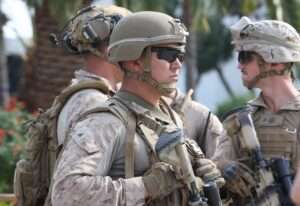
Yesterday, the US Court of Appeals for the Ninth Circuit issued a decision overturning a trial court ruling that had invalidated President Trump's federalization of 4000 troops of the California National Guard. The Ninth Circuit gets several important issues right, but ends up getting the bottom line wrong.
Trump federalized the National Guard in response to protests and unrest caused by ICE deportation operations. The statute Trump relied on, 10 U.S.C. Section 12406, can only be used to federalize state forces in one of the following situations:
1) the United States, or any of the Commonwealths or possessions, is invaded or is in danger of invasion by a foreign nation;
(2) there is a rebellion or danger of a rebellion against the authority of the Government of the United States; or
(3) the President is unable with the regular forces to execute the laws of the United States
All parties agree there is no "invasion" by a foreign power. District Court Judge Charles Breyer correctly ruled the very limited violence in LA was nowhere near the type or scale needed to qualify as a "rebellion," and also that mere impediments to law enforcement don't qualify as an "inability" to "execute the laws" with "regular forces." Otherwise, as I pointed out in my analysis of his ruling, an "inability" to enforce the laws would exist in virtually every city at any time, since there are always many lawbreakers whom "regular forces" are unable to detect and detain. Judge Breyer also ruled, correctly, that the determination about whether the prerequisites for invoking the statute exist is not a "political question" exempt from judicial review.
Interestingly, the per curiam Ninth Circuit ruling actually endorses much of the above. Like Judge Breyer, the appellate court rejects the administration's position that the criteria for invocation are a political question immune from judicial review. Indeed, the Ninth Circuit actually goes further than Breyer, concluding that the political questions doctrine doesn't apply to statutory issues at all, only certain constitutional ones. I am not sure this is correct, as a general matter. But I do agree that the president does not have unconstrained authority to invoke extraordinary emergency powers purely based on his say-so.
The Ninth Circuit does not address whether there is a "rebellion" in Los Angeles, basing their ruling purely on the supposed "inability" to execute federal law with "regular forces." On that score, they, much like Judge Breyer, recognize that this provision is only triggered by extreme situations:
[W]e do not think that any minimal interference with the execution of laws is, by itself, enough to justify invoking § 12406(3). The statutory context confirms that. Subsections one and two of the statute discuss unusual and extreme exigencies—invasions and rebellions—that threaten the normal operations of civil government. If we were to adopt the federal government's reading of subsection three, it would swallow subsections one and two, because any invasion or rebellion renders the President unable to exercise some federal laws.
As Judge Breyer explained in his detailed opinion, there was no such "unusual and extreme exigency" in LA on June 7. ICE and other federal law enforcement agencies continued to operate - including by detaining numerous supposedly illegal migrants - despite a few violent incidents in which no one was killed or even - apparently - seriously injured.
The Ninth Circuit also emphasizes that the courts can overturn invocations of the act made in "bad faith" for pretextual reasons.
The evidence the Ninth Circuit cites as justifying federalization seems skimpy, at best:
There is evidence that the day before, protesters threw objects at ICE vehicles trying to complete a law enforcement operation, "pinned down" several FPS officers defending federal property by throwing "concrete chunks, bottles of liquid, and other objects," and used "large rolling commercial dumpsters as a battering ram" in an attempt to breach the parking garage of a federal building. Plaintiffs' own submissions state that some protesters threw objects, including Molotov cocktails, and vandalized property. According to the declarations submitted by Defendants, those activities significantly impeded the ability of federal officers to execute the laws.
Such actions are reprehensible and should be prosecuted in court. But they fall far short of an "unusual and extreme exigency."As Elizabeth Goitein, a leading expert on presidential emergency powers and the domestic use of the military, points out, "[t]he [govenment's] declarations do not provide a single example of a case in which an attempted ICE raid was thwarted or a planned raid was canceled."
Moreover, allowing these kinds of low-level violence and impediments to law enforcement to justify invocation Section 10,246 violates the Ninth Circuit's own strictures against interpreting Subsection 10,246(3) so broadly as to "swallow subsections one and two." Virtually Any invasion or rebellion necessarily involves much greater violence than this, and much greater consequent interference with federal law enforcement. The only way to avoid the redundancy is to limit Subsection 3 to large-scale civil disorder that does not amount to a "rebellion" or "invasion," but does cause a major breakdown in law enforcement. By contrast, some invasions and rebellions, because of their short duration or limited geographic focus (e.g. - the enemy invades a very lightly populated area where there is relatively little crime), may create only modest obstacles to law enforcement, and those come under one of the first two subsections without triggering the third.
Why, then, does the Ninth Circuit rule in favor of Trump? Largely because they apply "a highly deferential standard of review" to presidential determinations here. The court admits that "the text of the statute does not make the President the sole judge of
whether one or more of the statutory preconditions exist," and that "if we were considering the text of § 12406 alone, we might conclude that the President's determination is subject to review like certain other factual findings that are preconditions for executive action under a statute." They nonetheless opt for broad deference because "a line of cases beginning with Martin v. Mott, 25 U.S. (12 Wheat.) 19 (1827), interpreting those delegations, strongly suggest that our review of the President's determinations in this context is especially deferential."
Martin was an 1827 case interpreting a predecessor statute to Section 12406, in which the Supreme Court held that "the authority to decide whether the exigency has arisen, belongs exclusively to the President, and that his decision is conclusive upon all other persons." This strikes me as terrible reasoning, essentially allowing the president to assert extraordinary emergency powers based on his unsupported say-so. If he truly has unreviewable authority to determine whether the relevant "exigency" exists, he could declare that, e.g., illegal marijuana possession qualifies as "rebellion" (or as an inability to enforce the laws with regular forces, so long as many violators aren't caught), and federalize the Guard throughout the nation, indefinitely.
If Martin were a binding precedent indistiguishable from the present case, the Ninth Circuit would have to apply it. But the Ninth Circuit judges themselves note multiple plausible reasons to make distinctions. Among other things, Martin 1) addressed a predecessor statute enacted many decades earlier (Section 10246 was enacted in 1903), 2) it dealt with an obvious genuine "invasion" - the War of 1812, 3) "the Court relied in part on the nature of a foreign invasion and the need for military subordinates to follow orders" [Martin involved a case of a New York militiamen who refused orders to help repel British attacks during the War of 1812], and 4) recent precedents, including the Supreme Court's own approach to similar language in the Alien Enemies Act (authorizing detention and expulsion of non-citizens in the event of "invasion"), are far less deferential. Even if none of these points is individually sufficient to justify reading Martin narrowly, they are surely enough in combination.
In addition, the Ninth Circuit should have paid greater heed to its own stricture that deference should not be applied to presidential determinations made in "bad faith." There is considerable evidence of such bad faith here. Trump has a long history of advocating the use of the military against political opponents, and generally praising political violence against them. More recently, high-ranking administration officials have openly stated that the goal of deploying the military in LA is to usurp the authority of the state and local governments. For example, DHS Secretary Kristi Noem has said that "[w]e are staying here to liberate this city from the socialist and burdensome leadership that this governor and this mayor have placed into this city."
At the very least, if courts (wrongly) reject other reasons for invalidating Trump's federalization of the Guard, they should closely investigate the evidence of bad faith here, instead of just presuming good faith, as the Ninth Circuit judges did. Bad faith, even if present, might not by itself justify striking down the President's actions. Sometimes government officials do the right thing (or at least the legal thing) for the wrong reason. But extensive evidence of bad faith is sufficient reason to deny deference that might otherwise be appropriate.
Finally, I think the Ninth Circuit flubbed the statutory requirement that "federalization orders must be issued "through the governor of the respective State … from which State … such troops may be called." The judges were wrong to conclude this requirement is met by issuing the orders to the state's Adjutant General, a subordinate official who is the commander of state military forces. It seems clear that "through the governor" means "through the governor," not through a subordinate of his. That said, there is legitimate dispute over whether that provision is purely ministerial or whether it requires the governor to consent to the orders.
Overall, the Ninth Circuit decision makes some good points, and gets several important issues right. Sadly, they then largely ruined their own good work by engaging in excessive deference.
As the decision notes, they do not address some important issues still before the trial court, most notably whether the president's use of the military in LA violates the Posse Comitatus Act (which bars the use of the military for civilian law enforcement in most circumstances).
More can be said. But this post is already too long, and I will stop here.
Elizabeth Goitein, mentioned above, has additional analysis and criticism of the Ninth Circuit ruling in an insightful Twitter/X thread.
Ninth Circuit Strikes Down California "One-Gun-a-Month" Law
From today's opinion in Nguyen v. Bonta, written by Judge Danielle Forrest and joined by Judges John Owens and Bridget Bade:
[The] "core Second Amendment right … 'wouldn't mean much' without the ability to acquire arms." Thus, we have "consistently held that the Second Amendment … 'protects ancillary rights necessary to the realization of the core right to possess a firearm for self-defense.'" While we have not defined "the precise scope" of protected ancillary rights, we have held "that the plain text of the Second Amendment only prohibits meaningful constraints on the right to acquire firearms."
To demonstrate this principle, we discuss two of our prior cases. Teixeira concerned a zoning ordinance that made it "virtually impossible to open a [new] gun store in unincorporated [areas of] Alameda County." We nonetheless concluded that the ordinance was permissible because "there were ten gun stores in Alameda County" and buyers could purchase firearms at a sporting goods store located "approximately 600 feet away from the proposed site of [the plaintiff's] planned store." We stated that "the Second Amendment does not elevate convenience and preference over all other considerations."
Similarly, B&L Productions concerned a California law banning firearm sales on state property. We explained that while "a ban on all sales of a certain type of gun or ammunition in a region generally implicates the Second Amendment, … a minor constraint on the precise locations within a geographic area where one can acquire firearms does not." And we upheld the challenged law because "[m]erely eliminating one environment where individuals may purchase guns does not constitute a meaningful constraint on Second Amendment rights when they can acquire the same firearms down the street."
The laws we considered in Teixeira and B&L Productions are plainly distinguishable from the one-gun-a-month law here. Limiting where firearms may be sold, when there are other reasonably available options, is a significantly lesser interference with an individual's ability to acquire (and therefore possess) firearms than banning the purchase of more than one firearm in a 30-day period.
Ninth Circuit: TRO Against President's Federalizing California National Guard Was Likely Improper
The court stays the injunction pending appeal, and in the process concludes the defendants "are likely to succeed on the merits of their appeal."
From yesterday's decision by Judges Mark Bennett, Eric Miller, and Jennifer Sung in Newsom v. Trump, granting a stay of the district court's injunction pending appeal:
[U]nder longstanding precedent interpreting the statutory predecessor to 10 U.S.C. § 12406 [which authorizes the President to federalize the National Guard], our review of that decision must be highly deferential. Affording the President that deference, we conclude that it is likely that the President lawfully exercised his statutory authority under § 12406(3), which authorizes federalization of the National Guard when "the President is unable with the regular forces to execute the laws of the United States."
Additionally, the Secretary of Defense's transmittal of the order to the Adjutant General of the California National Guard—who is authorized under California law to "issue all orders in the name of the Governor," Cal. Mil. & Vet. Code § 163—likely satisfied the statute's procedural requirement that federalization orders be issued "through" the Governor….
The court rejected the defendants' argument that the President's decision "is not justiciable under the political question doctrine," and thus left entirely to the President (with review only through the political process). But the court concluded that "The history of Congress's statutory delegations of its calling forth power, and a line of cases beginning with Martin v. Mott (1827), interpreting those delegations, strongly suggest that our review of the President's determinations in this context is especially deferential." The court acknowledged that this deference is not unlimited:
Martin does not compel us to accept the federal government's position that the President could federalize the National Guard based on no evidence whatsoever, and that courts would be unable to review a decision that was obviously absurd or made in bad faith. In Martin, the Court addressed the argument that "the power confided to the President is a limited power" that "can be exercised only in the cases pointed out in the statute," and the Court explained that "[w]hen the President exercises an authority confided to him by law, the presumption is that it is exercised in pursuance of law." As the Court noted in Martin, a "public officer is presumed to act in obedience to his duty" only "until the contrary is shown."
Moreover, discussing Martin, the Supreme Court has observed that "[t]he nature of the power also necessarily implies that there is a permitted range of honest judgment as to the measures to be taken in meeting force with force, in suppressing violence and restoring order," and that "[s]uch measures, conceived in good faith, in the face of the emergency and directly related to the quelling of the disorder or the prevention of its continuance, fall within the discretion of the Executive in the exercise of his authority to maintain peace." Consistent with Martin, courts may at least review the President's determination to ensure that it reflects a colorable assessment of the facts and law within a "range of honest judgment."
But it concluded that in this case, the President acted within his authority, under the statutory provision authorizing the President to federalize the Guard when "the President is unable with the regular forces to execute the laws of the United States." (The court concludes there's no need to decide whether the President could have also acted under a related provision, which allows federalizing the Guard in cases of "rebellion.")
The Promise and Pitfalls of Justice Barrett's Skrmetti Concurrence
Justice Barrett rehabilitates Footnote 4, gives credence to Justice Kennedy's animus jurisprudence, and all but says that gays who were affected by a "legacy of de jure discrimination" are a suspect class.
I really, really wanted to like Justice Barrett's concurrence in Skrmetti. Indeed, my initial reaction was optimistic. But after spending forty-eight hours with the opinion, Skrmetti reinforced all of my concerns about Justice Barrett: she is still a scholar trying to approach the law like a law review article, and advance theories without awareness of the practical consequences. To rebut the predictable response, Justice Thomas erred by joining this opinion. Maybe he did so to give his embattled colleague some cover. (I speculated CT did so in 2021.) But I think Thomas will come to regret this vote.
Let's walk through it.
First, Justice Barrett has built her reputation on not deciding issues that are not necessary to decide. Restraint is the name of the game. If so, why did she write this concurrence? The Roberts majority opinion settled the issued on narrow grounds. (And Justice Alito thinks those grounds were contrived.) Barrett does not explain why she addressed whether "transgender status constitutes a suspect class." And if she is willing to resolve this question that is not presented, why did she decline to resolve countless other questions that she thought were not presented? We have no answer. Maybe she will tell us why in her book.
Second, Part I of the opinion provides a readable digest of the Court's Equal Protection Clause jurisprudence. This is Professor Barrett at her best. She is very good at explaining doctrine. Part II explains why transgender people are not a suspect class. This section is largely right, until the penultimate sentence:
To be sure, an individual law "'inexplicable by anything but animus'" is unconstitutional. Trump v. Hawaii, 585 U. S. 667, 706 (2018).
Trump v. Hawaii was decided on the final day of Justice Kennedy's tenure. Animus was a constant theme throughout his cases, including Romer, Lawrence, Windsor, and Obergefell. I was confident that the discussion of animus in Hawaii was done at the insistence of Justice Kennedy to secure his fifth vote. In Skrmetti, Chief Justice Roberts's majority opinion mentions animus only in passing. Yet Justice Barrett made this the key limitation on her decision.
Here, ACB is reanimating perhaps the worst facet of Justice Kennedy's jurisprudence. What does animus mean? As Windsor and Obergefell would explain, animus includes moral disapproval: disapproval based on the morality of gays and lesbians was evidence of animus. And look at the language: "inexplicable by anything but animus." There does not need to be evidence of actual animus. Rather, it is enough that animus is the only possible explanation based on the consequences--this is some sort of disparate impact analysis. Courts can discern animus from the ether. Hawaii used the concept of animus in an unusual Establishment Clause context. But Barrett has now imported that standard back into the Equal Protection Clause.
Why would she do this? I have been celebrating how Justice Kennedy's jurisprudence was (rightly) consigned to the ash heap of history. As Randy and I edit the next edition of the casebook, we are trimming all of the Kennedy decisions. But now Justice Barrett has brought "animus" back to life. Does she realize what she did here? Or was this just a law professor trying to draw analogies and make sense of doctrine? I just don't think she sees these things. Or worse, if she does see these things, and does it anyway, then we should be really worried.
Third, Justice Barrett attempts to develop a theory to understand Footnote Four of Carolene Products. Why do this? Footnote Four was a creation of the New Deal Court that had no bearing in the text or history of the Constitution. Worse still, it was not even adopted by a five-member majority. And you don't have to take my word for it. Here is how Justice Scalia described Footnote Four in Schuette v. Coalition to Defend Affirmative Action (2014)--a concurrence that Justice Thomas joined:
Friday Open Thread
What's on your mind?




