

The Volokh Conspiracy
Mostly law professors | Sometimes contrarian | Often libertarian | Always independent
Voter Ignorance and the Problem of Confusion Caused by Candidates With Similar Names [Updated]
Voter confusion caused by candidates with similar names - as in the current Alaska Senate race - is part of the much larger problem of political ignorance.
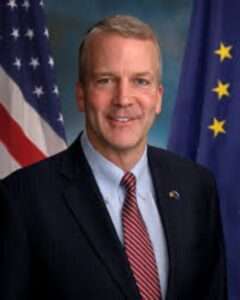
As Cornell law Professor Michael Dorf explains in an interesting recent blog post, the currently ongoing Senate election in Alaska includes two candidates with almost identical names, one of whom may well be in the race to siphon off votes from the other:
In today's Senate primary election, Alaska voters will have many choices, including two named Dan Sullivan. One is the incumbent Republican. The other is a retired schoolteacher from Petersburg, Alaska with the same name. Republicans claim that the man I'll call Teacher Dan is running for the sole (or at least main) purpose of siphoning votes off from the incumbent and thus potentially handing victory to the Democratic challenger in a tight race. That's a plausible allegation given the jungle primary format. The top four finishers in today's primary advance to the general election. If two of those candidates are named Dan Sullivan, that could be enough to tip the outcome in favor of Democratic challenger and current House member Mary Peltola.
Is Teacher Dan in it only (or mostly) to siphon votes from Incumbent Dan? A NY Times story today reaches an uncertain verdict. Teacher Dan vociferously denies that he's running as a spoiler/siphoner, professing a desire to turn the Republican Party away from MAGAism and back towards its traditional norms and positions. However, the same story also indicates that Teacher Dan's views, as expressed through activism and donations, are pretty mainstream liberal Democratic….
The names are not quite completely identical. The incumbent senator is Dan S. Sullivan, and "Teacher Dan" (as Dorf calls him) is Dan J. Sullivan. But the similarity is great.
As Dorf notes, if "Teacher Dan's" campaign succeeds in exploiting voter confusion about the two men's names, there is an obvious sense in which it is undermining effective voter choice. I agree, even though - like Dorf - I would ultimately prefer that Democrat Mary Peltola win this race, as her positions are much less bad than those of most Republicans in the current Trump-dominated version of the GOP.
As Dorf notes, this is far from the first time that voters may get confused by candidates with similar names. In addition to cases he indicates, there is the example of the 2003 California gubernatorial recall election, where little-known candidate George Schwartzman finished ninth out of 135 candidates, beating several better-known ones, likely because voters were confused by the fact that his name is similar to that of famous actor Arnold Schwarzenegger. Schwarzenegger still won easily. But in a close election, the nearly 11,000 votes that Schwartzman got might have proved decisive.
Dorf points out that if "Teacher Dan" really is in the race primarily to siphon off votes through confusion, it is not clear whether his actions are illegal. While such exploitation of confusion is morally reprehensible, I am not sure it is a good idea to prosecute candidates who do this. They are indeed trying to deceive voters. But the same is true of many other candidates who routinely lie about and distort issues of all kinds.
Donald Trump is a particularly egregious example, going all the way back to his first campaign in 2016, and more recently with his lies about the 2020 election and other issues. But more conventional politicians also often resort to lies and deception, even if not to the same degree. President Obama, for example, famously lied when he claimed that, under the Affordable Care Act, "if you like your health care plan, you can keep it." That deception won the 2013 Politifact Lie of the Year award. But it still helped Obama get reelected in 2012. I am not sure exploiting voter confusion about names is any worse than exploiting their ignorance about policy issues like crime, immigration, and health care.
Trying to prevent such exploitation through criminal and civil liability is likely to violate the First Amendment. In addition, it would likely end up giving incumbent political leaders broad power to curb speech and control electoral campaigns that they cannot be trusted with.
Ultimately, both exploitation of voter confusion about names and other deceptions used in campaigns seek to exploit widespread voter ignorance. Because of the combination of "rational ignorance" (lack of incentive to seek out political information) and "rational irrationality" (lack of incentive to engage in unbiased evaluation), most voters know little about government and public policy, and often do a poor job of evaluating the information they do know. This makes them vulnerable to deception and manipulation, and incentivizes politicians to lie and otherwise distort the truth.
Voter confusion about candidates with similar names is just another example of this broader problem. Voters who follow politics closely and pay careful attention to their ballots should have little trouble distinguishing between the two Dan Sullivans. Indeed, they would likely know about this issue ahead of time thanks to all the media coverage it has gotten, and would thereby watch out for it when at the polls. The same goes for the difference between Schwarzenegger and Schwartzman, and other such situations. But, due to the incentive structure of voting, most people do not pay such close attention and are not especially careful in filling out ballots. Thus, many might be confused by candidates with similar names.
There is no easy solution to the problem of voter ignorance. But I assess a range of possible options in my 2023 article on "Top-Down and Bottom-Up Solutions to the Problem of Political Ignorance, and in my earlier book Democracy and Political Ignorance. I believe the best approach is to make fewer decisions at the ballot box and more by "voting with your feet," where incentives to seek out information and evaluate it wisely are much better. But I recognize that any effective approach will take time, and there may be no one fix that is sufficient by itself. We may need to pursue multiple strategies. In the meantime, voters are likely to continue to be ignorant and confused about a variety of issues, and politicians and interest groups are likely to keep on exploiting that.
UPDATE: I have made minor additions to this post.
UPDATE #2: At the Election Law Blog, prominent election law scholar Rick Hasen notes that the Justice Department is investigating Dan J. Sullivan, and argues that an prosecution here would raise serious First Amendment concerns, and likely be unconstitutional:
If J. ultimately is charged with violating the Ku Klux Klan Act (18 U.S.C. s 241), which punishes a conspiracy to "injure, oppress, threaten, or intimidate any person in any State. . . in the free exercise or enjoyment of any right or privilege secured to him by the Constitution or laws of the United States," I think J. would have a very strong First Amendment defense (and likely for the wire fraud claims too, but I don't know enough about what the basis for those charges might be)….
[T]his is not a case about tricking someone about the mechanics of the election not to vote. Nor is it a case of impersonation: J. is really named "Daniel Sullivan." It is not even a case about J. telling a campaign lie….
This is a case about someone running for office with impure motives who is lucky enough to have a name that could confuse some voters….
I don't see how the government could criminalize his running for office for having impure motives. And if it could do so, then it could be a crime every time that the Republican Party backs a Green Party candidate, or Democrats support a MAGA candidate in a primary in the hopes that the candidate would be weaker against a Democrat in the general election. This stuff happens all the time.
It would be quite dangerous for the state to start criminally prosecuting people for their political beliefs and secret motives. Are we going to put people on trial and probe their political allegiances?
I largely agree with Hasen's analysis on this point. "Teacher Dan's" behavior may be reprehensible, as is that of many politicians who use lies and deception exploit voter ignorance. But it probably cannot be prosecuted.




