
Georgia Independent Bookstore Sues Jail Over Policy Banning Book Shipments
Officials claim the policy is intended to prevent people from smuggling in contraband, but it allows shipments from Amazon and Barnes & Noble.


Officials claim the policy is intended to prevent people from smuggling in contraband, but it allows shipments from Amazon and Barnes & Noble.

DARE to Say No details the history of an anti-drug campaign that left an indelible mark on America.

It only took a generation to go from ration cards to exporting electronics.

In Fragile Neighborhoods, author Seth Kaplan applies his Fixing Fragile States observations domestically.

Mind-altering drugs have long been seen as tools for both liberation and control.
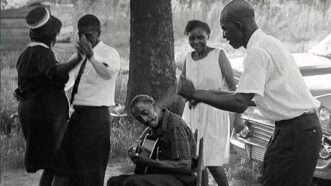
Arhoolie Records founder Chris Strachwitz's photos document blues, country, and Cajun music.

Social media influencer Caroline Calloway might not be a reliable narrator, but Scammer is an honest memoir nevertheless.
Your Face Belongs to Us documents how facial recognition might threaten our freedom.

A City on Mars is a counterbalance to the growing optimism over space exploration.
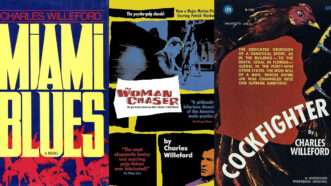
“Just tell the truth, and they’ll accuse you of writing black humor.”

In today's innovative economy, there's no excuse for sending a gift card. The staff at Reason is here with some inspiration.

Libertarians will read Ditch of Dreams as a story about bureaucracy and environmentalism run amok.

The Sullivan Institute trapped members and broke up families.

Richard M. Weaver seemed to question whether liberal order was compatible with human flourishing. By the end of his life, he saw individual liberty as more than incidental to the good society.

Aside from narrowly defined exceptions, false speech is protected by the First Amendment.

In her new book From Rage to Reason, Emily Horowitz explains what's wrong with the sex offense registry.
Amity Shlaes anthologizes Franklin D. Roosevelt’s critical contemporaries.
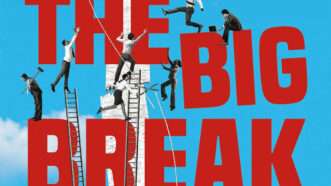
Washington Post reporter Ben Terris offers a fair treatment to both conservative and liberal activists in the Trump era.
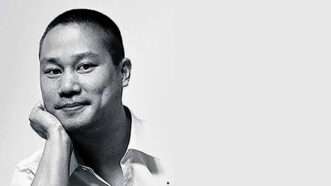
A new book handles the ill-fated CEO's story with respect.

Geoffrey Swenson’s book Contending Orders tackles Afghanistan and Timor-Leste.

The author, whose libertarian leanings are evident, makes readers consider the impact of the choices they make in the voting booth.
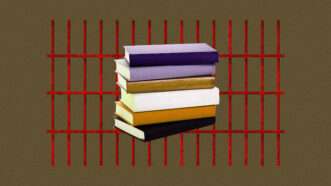
The lawsuit claims the ban has no "legitimate penological justification"

Pioneers of Capitalism chronicles centuries of bottom-up economic evolution in the Netherlands.
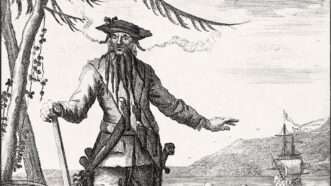
Pirate Enlightenment documents an interracial experiment in stateless self-governance.
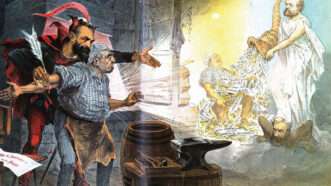
The 19th century reformer's influence on 20th century progressives, conservatives, and libertarians
Author Kaitlyn Tiffany offers a history of fandoms.
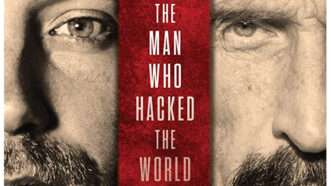
Author Alex Cody Foster went deep with McAfee for months in an ill-fated attempt to ghostwrite his memoir.
Author Leigh Goodmark's end goals of abolishing prisons and defunding police are hard to swallow.
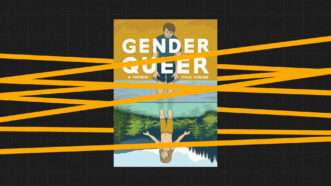
One of America's richest art forms suffers for seeming realer than other literature. But the war against "graphic imagery" is really a war against certain truths.

The book's 12 thematic chapters are dense and rich—like flan, but good.

Plus: "Sensitivity readers" rewrite Agatha Christie, a Little Free Library battle, and more...

His most popular book, The Enormous Room, was recently reprinted for its 100th anniversary.
A new novel by Reason contributor Kat Rosenfield
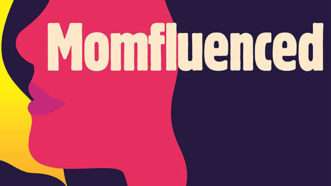
Momfluenced bemoans unrealistic expectations set on American mothers but then establishes new ones.
In Meme Wars, so-called "disinformation" experts call for the suppression of more ideas and speakers to protect democracy.

The authors of Superabundance make a strong case that more people and industrialization mean a richer, more prosperous world.

A new entrant in the anti-neoliberalism genre fails to land any blows.
These superb books recount events from the viewpoints of both soldier and statesman, providing a greater understanding of the why and how of the Civil War.
Jacob Grier and Brett Adams help aspiring home bartenders build a bar via a carefully sequenced collection of about two dozen bottles.
Praising violence as a response to speech we don't like is a hallmark not of admirable Americanism but of oppressive regimes like Hitler’s.
Samantha Cole's book is marred by vague animosity toward tech companies.
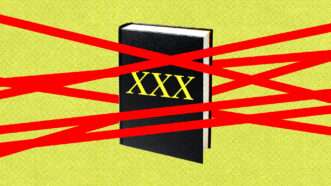
"If you don't like a book, don't read it. The First Amendment's guarantee of the freedom of speech and the right to access information has created a beautiful marketplace of ideas in our country," said one ACLU representative opposing the bill.

Nearly a century after author Arthur Conan Doyle's death, the character is finally free.

"The most valuable thing taken away while in prison is time," says the author of Corrections in Ink.

Sebastian Mallaby's The Power Law explores how venture capital and public policy helped shape modern technology.

The mysteries of the mind are harder to unravel than psychiatrists pretend.

RIP to a prolific and colorful Reason contributor and author.

The new book Inventor of the Future prefers to show him as a credit hog.
Celebrate your independence with a subscription to Reason magazine, your most trusted source of honest, insightful news and analysis.




