
U.S. Troops Finally Leave Iraq. When Are They Leaving the Rest of the Middle East?
Ending over 20 years of intervention is a step in the right direction, but tens of thousands of soldiers remain in the war-torn region.

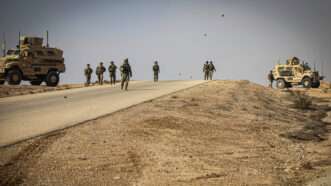
Ending over 20 years of intervention is a step in the right direction, but tens of thousands of soldiers remain in the war-torn region.
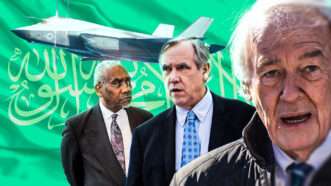
The Trump administration has rejected jumping straight into Yemen, for now. But Congress may be laying the ground for U.S. involvement.

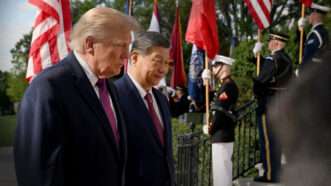
China does present some real national security challenges. But the Trump administration's policies have made it harder to address those, all while damaging American prosperity.

The arch has yet to receive final approval—and Trump’s newly announced military use was not part of the original federal review.

Crossing the Red Line peels back the curtain on the bureaucratic machinery behind U.S. involvement in Gaza and beyond.

Militaries are leaning on AI software for surveillance and targeting.

The Kentucky congressman says he will force a vote on removing Hegseth, who is accused of "abusing the power of his office to ignore congressional war powers resolutions, to kidnap foreign leaders, and to intimidate critics of the Trump administration."

With the conflict over Hormuz dragging on, the administration is betting on a strategy that failed at the beginning of the war.
If you oppose the draft, you should oppose the measures that would make it easier to implement too.

Robby Soave and Amber Duke break down the latest developments in the Iran war.

Trump threatened the Center for American Progress with a defamation lawsuit, while Jason Watson faces a court martial for offending the president.

The United States' shift toward aggressive interventionism was well underway before the 2001 attacks.

A judge ruled the Pentagon's supply chain risk designation of Anthropic was an unlawful, “arbitrary,” and “capricious” decision made to punish Anthropic.

Large warships could prove to be expensive drone sponges without a clear mission.
The president openly admires world leaders who exercise absolute power.

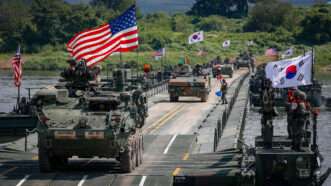
The U.S. military is downsizing exercises in South Korea and pulling its last aircraft carrier out of the Pacific.

Abelardo de la Espriella campaigned on shooting down drug planes and boats in Colombia. Twenty-five years of U.S.-funded counternarcotics suggests it won't matter

German energy company RWE decided "there is no path forward to permit these projects in the U.S. for the foreseeable future."

Federal ownership of private companies has become routine. And it is happening on the right, even as conservatives point fingers at the left for its socialism.

Reuters and the U.N. accuse an operator with extensive U.S. government links of helping a Sudanese rebel group.

We’re locked in a cycle: The president threatens to resume the war, he claims Iran backed down, and then he gets frustrated with Iran again.
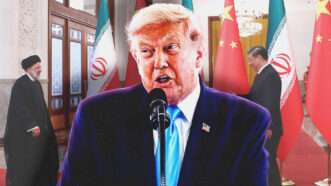
Plus: Baby bust affects college enrollment, migrants flood into Spain, I'm writing a book, and more...

Plus: City Without Children, Reihan Salam victorious, Kevin Warsh's new strategy, and more...

The Trump administration official contradicted himself as he tried to explain away bad news from the Iran war.

Plus: Troy Jackson's race, City Without Children, the DEA and cocaine, the FDA and peptides, and more...
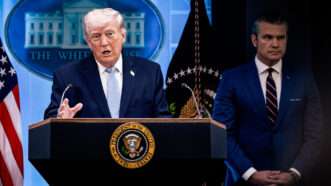
However the government chooses to list war casualties, it doesn't change the fact that Americans are dead because of the administration's choices.

Plus: Permits for prayer, a rise in gambling, AOC's world, and more...

The U.S.-Iranian peace memorandum has broken down, and violence is slowly ramping back up to a full-on war. Four Americans paid the price this weekend.

Brazil’s gangs show why the “narcoterrorist” label is tempting, misleading, and unlikely to stop drugs.

The only federal agency that has never passed an audit could soon get another $60 billion, even as it buries reports on the spiraling costs of its programs.

Plus: fixing Rikers Island, the Democrats' Maine scramble, India's affirmative action, and more...

A Tomahawk missile struck an Iranian school and reportedly killed over 100 children in February.


Newly declassified files reveal that J. Edgar Hoover wanted to prosecute the NSA’s future scholar in residence for collecting cryptography manuals.

The death certificate blames an adverse drug reaction and meth. His family calls that impossible.

Plus: A federal flip-flop on AI innovation, the beauty of America as seen through World Cup tourists' eyes, and more...


After burning through interceptors in the Iran war, the U.S. faces a dire math problem: Enemies can build drones faster than America can build missiles.

The annual G7 summit comes at a pivotal time in U.S.-European relations, as the continent grapples with an American foreign policy that demands greater European autonomy.

The proposal was nixed only after White House Staff Secretary Will Scharf explained why it was legally dubious.

The history of ceasefires is plagued by continued violence, ranging from "moderate shooting" to full-scale offensives.

The U.S. and Iran have moved to the next stage of the peace process. Hawks on all sides are terrified that it will succeed.

Plus: Anthropic vs. the government, Knicks win, bread and circuses, and more...

Plus: SpaceX's initial public offering, L.A. taking S.F.'s place, matchmaking reinvented, and more...

The president has repeatedly argued that courts have no business deciding whether his actions are legal.
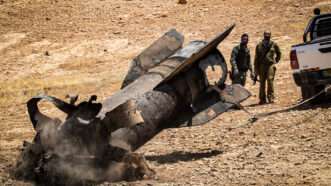
The White House keeps insisting that peace is around the corner. Meanwhile, Israel, Iran, and the United States keep shooting at each other.

Plus: L.A. mayoral race updates, stabbing at Penn, Jon Ossoff thirst, and more...
Celebrate your independence with a subscription to Reason magazine, your most trusted source of honest, insightful news and analysis.




