
He Wants To Label Food 'Low FODMAP.' The Government Won't Let Him.
Lots of Americans have an intolerance to FODMAPs—the sugars prevalent in garlic, onion, and many other foods.

Lots of Americans have an intolerance to FODMAPs—the sugars prevalent in garlic, onion, and many other foods.

Servicing debt grows more expensive as the deadline to curb the spending spree gets closer.
A new Friedman biography ably explores the economist's ideas but sidesteps the libertarian movement he was central to.
Plus: Getting babies out of Gaza, lobster roll economics, gerontocracy update, and more...


Bryn Green wants to start a sugaring business, but the state’s occupational licensing regime requires her to spend thousands on irrelevant training. Now she's suing.

While the partnership between Hyundai and Amazon is a good first step, states should get rid of laws that mandate franchise dealerships.

American Federation of Teachers President Randi Weingarten misses a pretty big reason why families are leaving traditional public schools.
A new GAO report details federal prosecutors' attempts to put the horse back in the barn.

The Copenhagen Consensus has long championed a cost-benefit approach for addressing the world's most critical environmental problems.
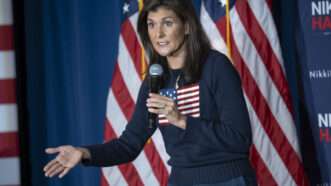
Republican Presidential Nomination
Plus: Hospital raid, Eric Adams' fondness for Erdogan, open carry at the makeup counter, and more...
A new joint employer rule from the NLRB threatens to fundamentally change the business relationship between a franchise and its parent company.

Moody's calculates that interest payments on the national debt will consume over a quarter of federal tax revenue by 2033, up from just 9 percent last year.

A new Reason documentary explores why, for some, bitcoin is the 'real Green New Deal.'

There is no solid evidence that P2P meth is more dangerous than pseudoephedrine-derived meth and no reason to think it would be.

A new Friedman biography ably explores the economist's ideas but sidesteps the libertarian movement he was central to.

A discussion with economist, podcaster, and Shalem College President Russ Roberts in the wake of the October 7 terrorist attacks in Israel
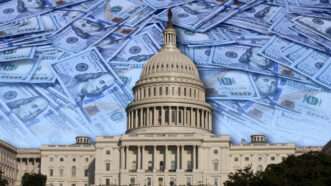
In the last 50 years, when the budget process has been in place, Congress has managed only four times to pass a budget on time.

Join Reason on YouTube and Facebook at 1p.m. Eastern for a discussion with economist, podcaster, and Shalem College president Russ Roberts.
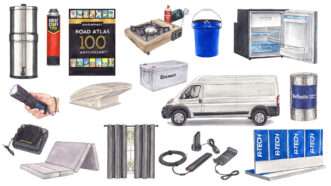
How do you build a bedroom, a kitchen, a bathroom, and a workspace in a van?
David Friedman's anarchism doesn't have the answer for everything. That's the point.

Lina Khan says this number is crucial to understanding Amazon's monopoly power, but she's either confused or lying about what it means.

A plan to have the state take control of Maine's two private electric utility firms has divided the political left.

"The United States has about 20 years for corrective action after which no amount of future tax increases or spending cuts could avoid the government defaulting on its debt."
Years ago, when interest rates were low, calls for the federal government to exercise fiscal restraint were dismissed. That was unwise.

Q&A with the author of the book Elon Musk calls "an excellent explanation of why capitalism is not just successful, but morally right."

Entitlement reform has long been considered a third rail in American politics, but that perspective might be changing.
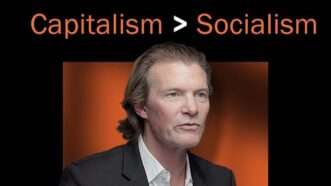
A Q&A with Johan Norberg, author of the book Elon Musk calls "an excellent explanation of why capitalism is not just successful, but morally right."

A new report from the GAO highlights how America's system of sugar subsidies and tariffs costs consumers about $3.5 billion every year.
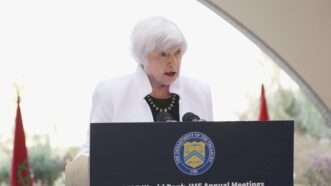
Plus: President Joe Biden’s weird economy and Rep. Mike Johnson as the unlikely new speaker of the House of Representatives.
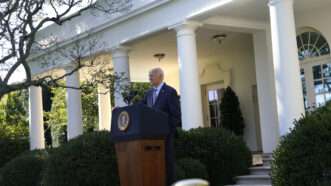
Congress is being asked to borrow more money to fund broadband access and other pet projects. Only about $9 billion would be spent on natural disaster recovery efforts.
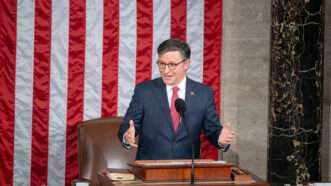
A debt commission won't solve any of the federal government's fiscal problems, but it's the first step towards taking them seriously.

Over the last several years, they have worked nonstop to ease the tax burden of their high-income constituents.
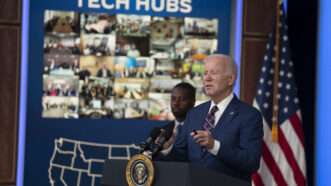
Presidential administrations from both parties keep trying to make "place-based" economic development work.

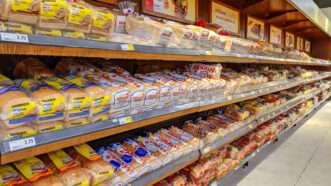
The folly of government-run grocery stores is sadly not a historical relic like the USSR.

The world's largest union of pilots says this requirement is necessary for safety and not unduly burdensome, but its data are misleadingly cherry-picked.

Since departees tend to be high earners, their absence threatens to wreck the state's swollen budget.
Higher rates lead to more debt, and more debt begets higher rates, and on and on. Get the picture?
Being able to take risks and having the freedom to try out wild ideas is the only process that leads to successful innovation.

The pop singer's new concert film inadvertently makes the case for big businesses with sweeping market power.

Few doubt the right of Guatemalans to protest. The challenge arises when protests exact a heavy toll on the well-being of its citizens.

The attack was in part the product of Israel's terrible 2011 decision to trade 1000 Hamas and other terrorist prisoners for a captured soldier. I and other critics predicted the terrible consequences at the time.

Just 24 percent of self-identified Trump voters and 34 percent of self-identified Biden voters say they support a public handout for the Milwaukee Brewers' 22-year-old stadium.

The Dirty Jobs host on “essential” work, college, and the skills gap
Especially because the once-dismissed possibility of rising rates is now a reality.

Newsom vetoed both reforms, which he deemed excessively permissive.
The Federal Reserve's higher interest rates were supposed to trigger changes to fiscal policy. So far, that hasn't happened.
Celebrate your independence with a subscription to Reason magazine, your most trusted source of honest, insightful news and analysis.




