

Civil Liberties
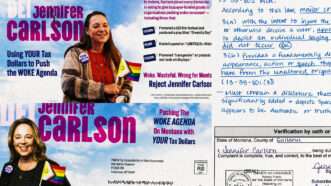
Montana's Anti-Deepfakes Law Just Hit a First Amendment Roadblock
A federal judge found that the state's restrictions on AI-generated political speech likely violate the First Amendment.
The Shaky Evidence That Flock Cameras Reduce Crime Rates
Flock has been promoting a recent study of its cameras' impacts on car theft. But the paper didn't demonstrate a causal effect.
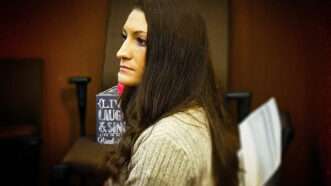
Lindsay Clancy's Holdout Juror Did What Jurors Are Supposed To Do
Just as a holdout may be a bulwark against wrongful conviction, a unanimous verdict is difficult to obtain by design.

Court Upholds Suspicionless Cellphone Searches at the Border
A federal appeals court says it's legal for federal agents to scroll through your phone and take pictures of its contents without a warrant or suspicion of criminal activity.
UC Ban on "Intentional or Repeated Use of a Name or Pronoun Inconsistent with the Individual's Gender Identity" …
likely violates First Amendment, federal judge holds (and issues a preliminary injunction).
Hate Speech and the Marketplace of Ideas in Postwar America
After the Second World War, the nation grappled with tensions between protecting free speech and eliminating hate speech.
Influencer Haley Kalil's Remarks About Ex-Husband Matt Kalil's Penis Size Were "Newsworthy," and Thus Not Tortious
Because her comments came in describing her marriage and her divorce, she "was discussing her life, not Matt's, and the law generally protects a person's speech about herself, even though such speech inevitably reveals details about others."

Memphis Task Force Caught on Video Arresting Activist Already Suing It for First Amendment Retaliation
The ACLU says Hunter Demster's arrest shows a continuing campaign of intimidation and retaliation by the Memphis Safe Task Force.
ICE's Missing Miscarriage Data Leave Questions About Pregnancy Care in Detention
The Trump administration has reached record-breaking levels of immigration arrests amid accusations of medical neglect, including among pregnant women.
Strip Searches Generally Aren't Allowed as Searches Incident to Arrest, Third Circuit Holds,
thus deepening a circuit split. (Note that strip searches are generally allowed when and if the arrestee is placed in the general population of the jail.)
Free Speech Unmuted: Spoiler Alert: Can You Get Sued For Revealing A Plot Point?
A deepish dive into how copyright law and the First Amendment interact.
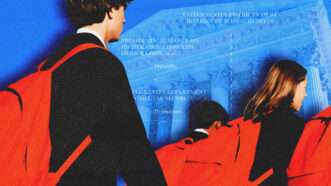
The Justification for New Time Limits on Student Visas 'Borders on the Absurd,' a Federal Judge Says
Although the impact of the DHS rule "is likely to be catastrophic," a George W. Bush appointee writes, the government's rationale is "exceptionally weak."
Defamation via Songs and AI-Generated Video? U Tenn Coach's Claim Can Go Forward
"[D]efendant purportedly posted more than 20 videos ... attacking plaintiff's character with 'blatantly false allegations of wrongdoing' and 'highly offensive and demeaning fake [AI] videos.'"
Firing of Employee for Kirk-Murder-Related Post Wasn't a Clear First Amendment Violation,
so the individual defendants are entitled to qualified immunity, a court rules (citing cases where employees were fired for right-wing speech that many had likewise found offensive).
Doxing Suit over Post Criticizing Government Employee's Kirk-Murder-Related Post …
rejected on First Amendment grounds.
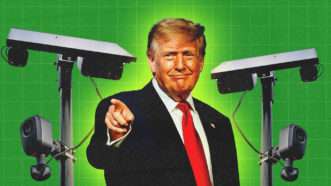
Trump Backs Flock Cameras, Continuing His Long-Time Support for Unchecked Police Power
Trump says he supports the cameras simply because law enforcement does, no matter that they can be misused or abused.
The Anti-Nazi Law
In the 1930s, New Jersey passed the most sweeping hate speech law in American history. [UPDATE: Originally erroneously posted under Eugene Volokh's byline; this post is from guest-blogger Samantha Barbas.]
Journal of Free Speech Law: "Gags and Grievance: The Labor Origins of Whistleblowing," by Sarah Milov
Part of a Knight First Amendment Institute Symposium on Managing Government Employee Speech in a Democracy, which the Journal is publishing.
"Mo Money Mo Problems": No Pseudonymity for Maine Lottery Winner Suing Over Alleged Violation of Non-Disclosure Agreement
"[O]ur precedent makes paramount the principle of transparency as a bulwark of the effectiveness of our judicial system and the public's trust in it."
Journal of Free Speech Law: "Forced Unanimity and the First Amendment," by Frank LoMonte
Part of a Knight First Amendment Institute Symposium on Managing Government Employee Speech in a Democracy, which the Journal is publishing.
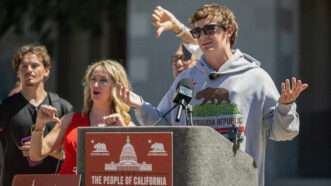
The 'Stop Nick Shirley Act': Yet Another Anti-Doxxing Law That Chills Free Speech
A lawsuit argues that a recently passed law to protect immigration service providers in California is "overbroad and vague."
Police Department May Decline to Release Names of Officers Trained by ICE
"[T]he Department submitted credible evidence that threats, doxxing, and other forms of harassment have been directed toward law enforcement charged with enforcing existing federal immigration laws."
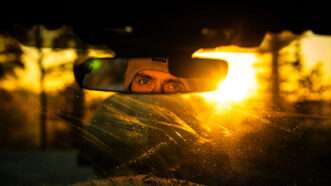
European Cars Are Spying on Their Drivers. The Same Tech Could Be Coming to the U.S.
New cars in the E.U. must now have cameras that track drivers' eyes and flag distractions.
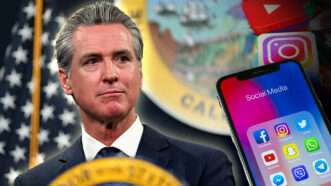
This California Social Media Law is a Privacy and Free Speech 'Nightmare'
California Gov. Gavin Newsom signed more than a dozen online safety and tech regulation bills into law this week.

How a Street Brawl Led to a 5th Circuit Case That Casts Doubt on the Constitutionality of Many Federal Laws
Challenging his conviction for illegal gun possession, Curtis Squire argues that the Commerce Clause cannot justify bans on intrastate, noncommercial conduct.
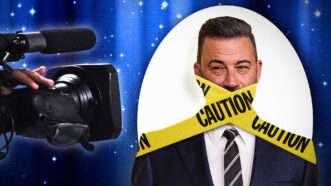
Jimmy Kimmel Didn't Air Talarico Interview Over Fear of FCC 'Equal Time' Threats
For the second time this year, Talarico appeared on a late-night show only to be bumped in response to federal threats.
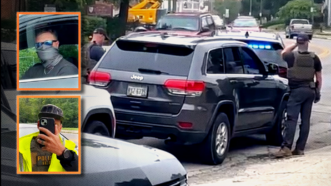
A Judge Ordered ICE Agents To Stop Retaliating Against an Ohio Videographer. ICE Moved the Agents Out of Town.
After an ICE watcher in Springfield won a temporary injunction against ICE in a First Amendment lawsuit, the agency moved the officers accused of harassing him out of town.
Journal of Free Speech Law: "The Government Speech Doctrine Goes to School," by Heidi Kitrosser
Part of a Knight First Amendment Institute Symposium on Managing Government Employee Speech in a Democracy, which the Journal is publishing.
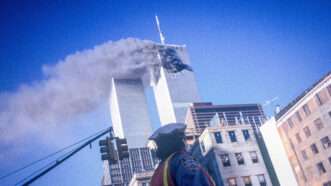
How 9/11 Remade American Immigration
Twenty-five years after the attacks, control and distrust rule the institutions that process foreigners who travel or immigrate to the United States.
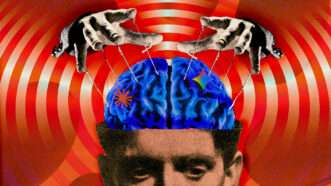
AI Doom Is Misguided, Not a Psyop
The pro-AI side must avoid succumbing to paranoia and bad faith.
"The Why of Public Access to Judicial Records in Civil Cases"
An excellent article by media lawyers Steve Zansberg and Michael Beylkin.

How the War on Terror Turned 9/11 Into a Permanently Open Wound
The government ensured that there would be no end to the public's fears—and no real justice for bin Laden's victims.




