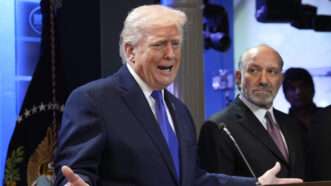
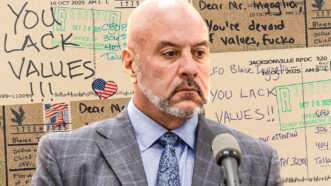
Trump's Responses to Kimmel and Comey Highlight His Contempt for Freedom of Speech
The president is not shy about using government power to punish people for saying things that offend him.
The case defies more than half a century of rulings on the “true threat” exception to the First Amendment.
European leaders' warnings of a democratic apocalypse failed to materialize in 2024.
Jay Near was a hateful man whose litigation set a vital precedent for free speech.
So holds an Oregon appellate court.
The term “hate speech” gets thrown around a lot, but it’s legally protected in the U.S.
So reasons a Florida appellate court, though other courts in other states seem to take a different view.
Jane and I lay out the structure of American defamation law, using the recent lawsuits brought by FBI Director Kash Patel as a launching point. Special bonus: Almost no discussion of New York Times v. Sullivan (an important case but one that listeners have doubtless heard much about elsewhere).
Financial censorship should worry us all, suggests Rainey Reitman in Transaction Denied.
"[S]tatements made to third parties can be 'directed at' the victim," and thus criminal harassment if they're repeated and likely to cause serious annoyance or distress, "when they are designed to provoke an adverse consequence against the victim."
When he returned to the White House, Trump vowed to protect free speech from the government. The FCC's latest move against ABC and Disney looks like the opposite.
The panel (by a 2-1 vote) stayed a district court order that, among other things, blocked the newly established escort requirement.
But the judge suspends his decision pending appeal, so that the appellate court has "time to consider and decide the merits of this case, absent unnecessary procedural deadlines."
To justify punishing a legislator for his speech, a FIRE brief notes, Defense Secretary Pete Hegseth relies on a Supreme Court precedent that is clearly inapposite.
and thus presumptively a First Amendment violation (though here the presumption was rebutted by national security interests).
The order came in a peculiar context—a civil lawsuit over the custody of a child born in Afghanistan—but its logic extends further.
The wild things are in the nightclubs.
Despite not mentioning abortion in his sermon, Clive Johnston is being charged for trying to "influence" people not to go through with the procedure.
"Plaintiff is allegedly the target of hurtful, angry, offensive, humiliating, racial, and gender-based hate made in online posts by Defendant's followers. As tempting as it might be to force some civility into the matter by staunching Defendant's speech against Plaintiff through an injunction, doing so would ignore the protections of the First Amendment."
No pseudonymity for teacher challenging removal of pride flags from classroom, because his identity had already been disclosed through public records requests.
Silencing "Fighting Bob" details how the government targeted anti-war critics like Sen. Robert La Follette.
Celebrate your independence with a subscription to Reason magazine, your most trusted source of honest, insightful news and analysis.