
Free Speech
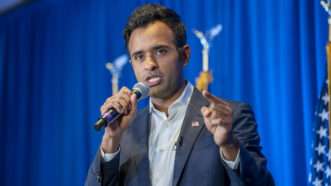
Vivek Ramaswamy Is Right To Oppose the Blacklisting of Harvard Students
Being against cancel culture requires consistency.

Supreme Court Will Hear This Texas Woman's Challenge to a Politically Motivated Arrest
Sylvia Gonzalez, an anti-establishment politician, spent a day in jail for allegedly concealing a petition that she organized.
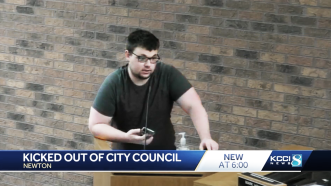
Iowa Man Files Lawsuit After Being Arrested Twice for Criticizing the Police at a Public Meeting
"Ironically, the actions of the police department have only proven my point," Noah Petersen said after being handcuffed, arrested, and jailed for his speech.
Journal of Free Speech Law: "Taxing Nudity: Discriminatory Taxes, Secondary Effects, and Tiers of Scrutiny," by Prof. Alexander Volokh (Emory)
(That's Sasha Volokh, who occasionally blogs here.)
May Private Employers Fire (or Refuse to Hire) Employees Because of Their Praise of Hamas (or Praise of Israel)?
It depends on the state (or sometimes even county and city) where the employer is located.
California Quietly Repeals Restrictions on Doctors' COVID-19 Advice
Several federal judges had expressed skepticism about the constitutionality of penalizing physicians for departing from a government-defined "consensus."
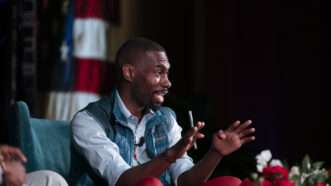
Holding Protest Leaders Liable for Others' Violence Threatens First Amendment Rights
A lawsuit against a Black Lives Matter activist could have a chilling impact on constitutionally protected activity.
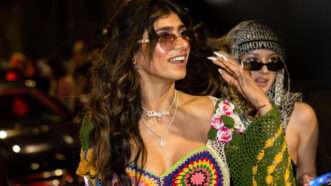
Mia Khalifa, a Victim of Cancel Culture?
Playboy fired the former porn star after she tweeted in defense of Hamas.
California Trial Court Allows First Amendment Claim Against L.A. Department of Public Health …
to go forward based partly on allegations that "DPH caused the suspension of [Alliance of Los Angeles County Parents'] Twitter Account."
"Large Libel Model" Lawsuit Against OpenAI Headed Back to Georgia Court
OpenAI tried to remove Mark Walters' lawsuit to federal court, but has now withdrawn that attempt.
Criticisms of Obamas (Including Racist Ones), Plus Other Speech, Didn't Qualify as Race-Based Workplace Harassment
So holds an Eleventh Circuit panel; Judge Andrew Brasher's concurring opinion that notes the potential First Amendment problems with imposing liability for such speech.

Aella: Is Porn Too Pervasive?
The former OnlyFans star and outspoken libertarian defender of sex workers considers the acceleration of government crackdowns on online porn, the sexual revolution, and sex work.
Amicus Briefs in Volokh v. James, the Second Circuit Case Related to Social Media "Hate Speech" Policies
"For the most part, the American Civil Liberties Union, Young Americans for Freedom, and the Babylon Bee don't see eye to eye."
#TheyLied Plaintiff Suing for Defamation Over Sexual Misconduct Accusations Can't Use Subpoena to Unmask Pro-Defendant GoFundMe Organizers
"The subpoena is ... a classic ‘fishing expedition’ in constitutionally protected waters.”
Records of Library Removal Requests, Like Other Library User Records, Are Exempt from State Public Records Law
The case stemmed from user challenges asking that a public library remove Gender Queer: A Memoir, or at least keep children from getting it.
No California Bar Discipline for Lawyer Who Tweeted "They Should Be Shooting the Looters" and "Shoot the Protesters"
"Respondent presented this court with a credible and reasonable interpretation of the meaning behind her words, i.e., that she posted the above-noted tweets as an expression of her anger, fear, and frustration with the violence taking place around her and in disagreement with some of the sentiments she saw being expressed by others on Twitter."
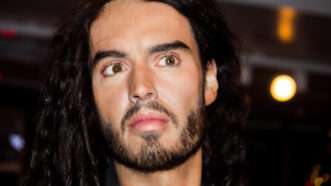
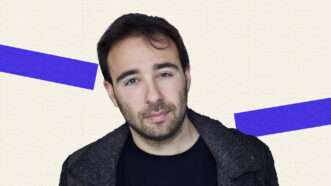
Yascha Mounk: Avoiding The Identity Trap
How to battle identity politics and defend liberal values of universalism, free speech, and open inquiry
Is There Too Much Porn?
Join Reason on YouTube and Facebook at 1 p.m. Eastern this Thursday for a discussion with Aella about the escalating government crackdown on online porn, the sexual revolution, and sex work.
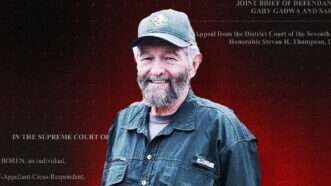
Idaho Man Sued For Defamation After Speaking Out Against Local Airstrip
Critics have argued the legal action is a meritless SLAPP suit.
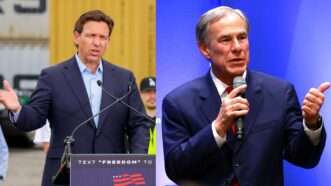
Defenders of the Florida and Texas Social Media Laws Contradict Themselves
If Facebook et al. are pushing a "radical leftist narrative," why don’t they have a constitutional right to do that?
Supreme Court Will Consider Cases Challenging Florida and Texas Social Media Laws
The laws require major social media platforms to host content they disapprove of for substantive reasons.
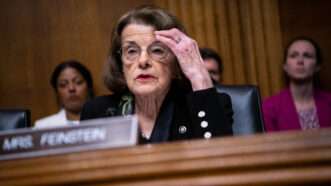
On Guns, Drugs, and National Security, Dianne Feinstein Was Consistently Authoritarian
The late California senator always seemed to err on the side of more government power and less individual freedom.
Government Employee / Political Candidate's Advertising Gun Raffle for Election Campaign May Be Protected by the First Amendment
"Defendants' argument, which attempts to draw an ill-defined connection between a lawful gun raffle hosted on social media, and obviously tragic and unlawful mass shootings at schools, remains predicated upon numerous, dubious inferences ...—if not upon rank speculation."
"Odd," "Unnerv[ing]," "Disturbing," Comments, Post, and Letter to Politician Weren't "True Threats"
"[E]ccentricity and being off-putting is not a criminal offense," even when the speaker mentions the listener's children and other personal details.
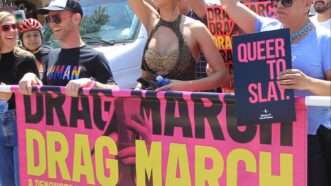
Federal Judge Rules Texas Anti-Drag Law Violates the First Amendment
The judge ruled that the law was unconstitutionally overbroad, vague, and viewpoint discrimination.
