

She Spent 7 Months in Legal Hell After Cops Used Flock Surveillance To Identify the Wrong Car
From wrongful arrests to officers stalking exes, license plate cameras keep exposing police failures.
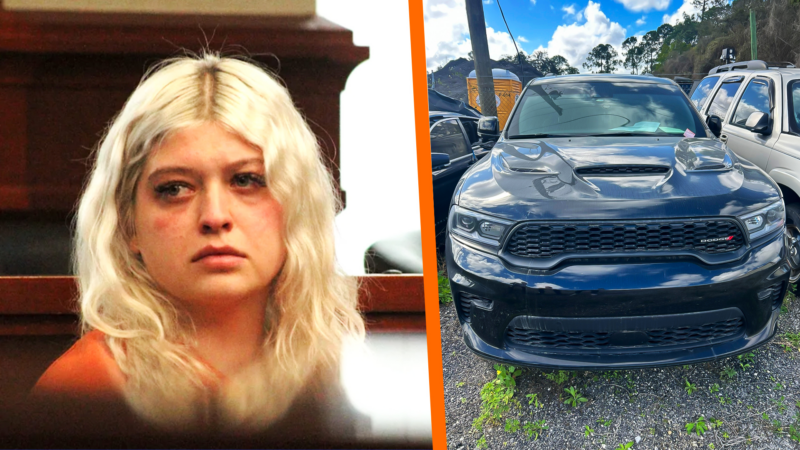
On October 4, 2025, Joaquin Deno attended his granddaughter's birthday party in Sanford, Florida. At the end of the night, he headed to his daughter's house.
Eight miles down Interstate 4, a speeding car swerved across multiple lanes at over 100 mph. It swiped Deno's motorcycle, then hit a Ford Focus, causing a pileup, before driving away. Deno died at the scene, as did a county official and his wife.
Witnesses said the speeding car was a Dodge Durango. Police found that a Flock camera—a type of automated license plate reader (ALPR)—had spotted a Durango nearby at the time, and they arrested the owner, 23-year-old Lindsey Isaacs.
But Isaacs wasn't involved in the crash, and officers had enough information at the time to exclude her as a suspect. Yet she still spent two weeks in jail and faced the threat of life behind bars for months because police didn't use basic scrutiny to be sure their cameras implicated the right person.
Much has been written about Flock cameras making mistakes—including cases in which innocent people were detained at gunpoint because a camera mistook a 2 for a 7, or misread the state on a license plate.
But it's worse than just imperfect software: All too often, police pull people over, arrest them, and even jail them based on camera misidentifications that officers could have caught with basic scrutiny. There are also numerous examples of officers with access to Flock's database using it to stalk and surveil people in their personal lives.
While this technology has legitimate police uses, it's worth asking whether the police can be trusted with it.
License Plates Are Now Mandatory Tracking Beacons
"The first license plate reader was invented in 1976, but the devices became common tools for law enforcement over the last 20 years or so," reports The Marshall Project. "Fundamentally, they are cameras that capture point-in-time images of license plates on public roads and store those sightings in a searchable database."
"ALPR technology can also detect and capture additional, related information, including vehicle type and color, global positioning system (GPS) location data, and date and time," adds a Congressional Research Service report.
Often mounted on freestanding poles along public roads, ALPRs can record thousands of tags per minute. Investigators can get alerts when vehicles are spotted or search the database for past sightings.
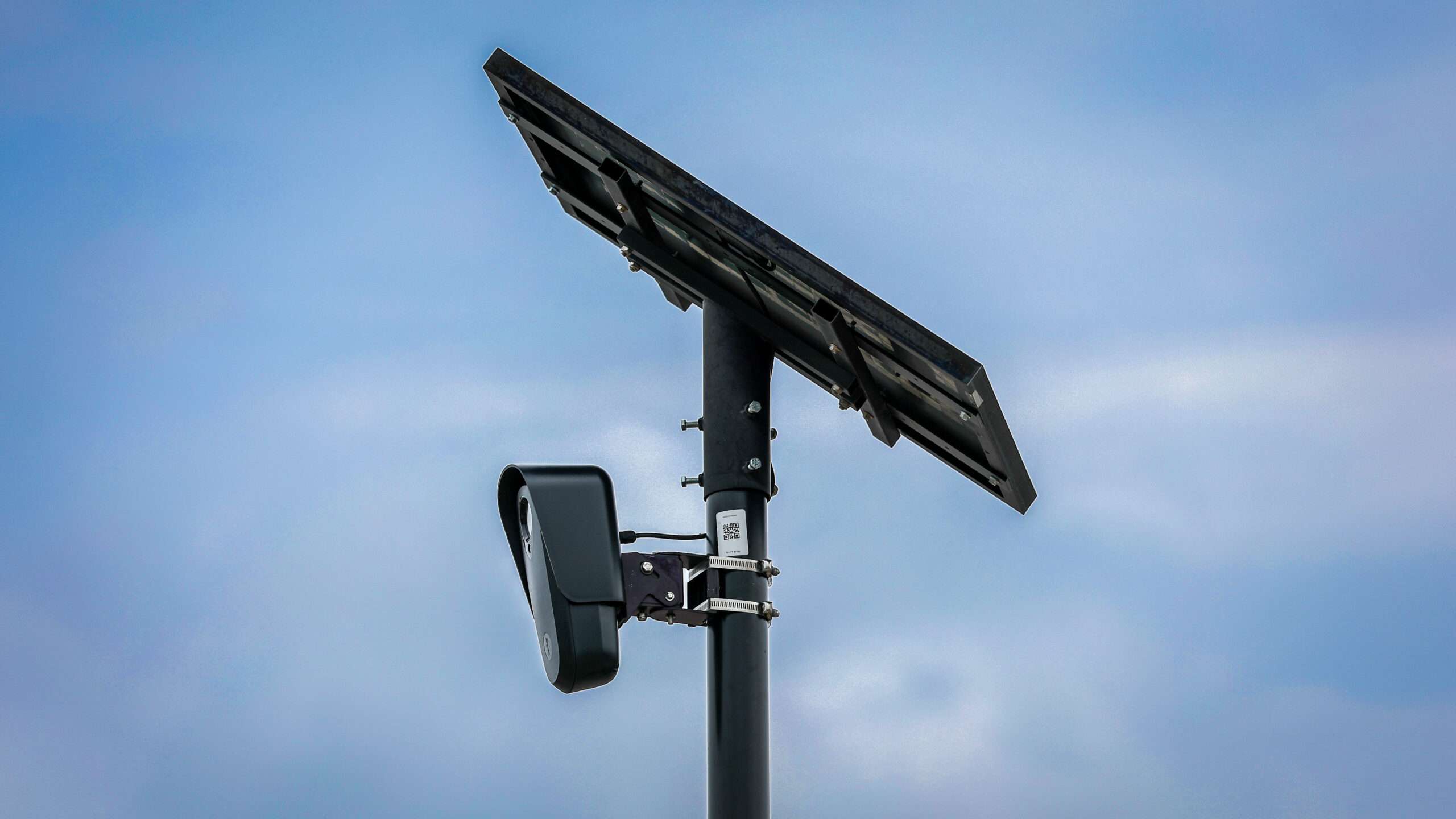
Even when used appropriately, that level of surveillance is troubling. "What makes ALPR[s] so powerful is that drivers are required by law to install license plates on their vehicles," explains the Electronic Frontier Foundation. "In essence, our license plates have become tracking beacons."
The problem has only grown over time. "Tens of thousands of LPRs are being used by law enforcement agencies all over the country," Ars Technica wrote in 2012. "But the system's unchecked and largely unmonitored use raises significant privacy concerns." That same year, internal emails obtained by the American Civil Liberties Union revealed the FBI had paused camera purchases because the Office of General Counsel was "wrestling with LPR privacy issues." (The author of that email expected the issue to clear up soon, noting, "The program is still growing and we enjoy tremendous field support.")
There are now ALPRs taking photos of cars all over the country, every second, and in nearly every major American city. Flock Safety, by far the largest ALPR supplier, touts "more than 120,000 cameras across 49 states" that capture "more than 20 billion vehicle reads each month." Flock says its cameras read plate characters with 96 percent accuracy—but with six or seven characters in each license plate, that translates to a much lower accuracy rate for identifying a specific car. It's not unreasonable to conclude that Flock misreads billions of license plates every month. Consider this real-world example: The police department in Roseville, California, found that 71 percent of its Flock alerts were incorrect.
But even when ALPRs provide accurate readings, their scope is shockingly broad, as is their potential for misuse or abuse.
"It's much bigger than a camera owned by a police department taking pictures of the license plate," says Cris van Pelt, founder of haveibeenflocked.com, which lets users see if their plate has been searched. "It's a national network. It doesn't matter how small your town is, you're probably running a million searches in a month, from everywhere. A lot of people are just not aware of how networked and interconnected all of this is."
Investigators used Flock to find Lindsey Isaacs, but plenty of shoddy police work went along with it.
Lindsey Isaacs' 7 Months in Legal Hell
For weeks after the deadly crash, the Florida Highway Patrol (FHP) told the public that troopers had located the Durango in a parking lot and were still looking for the driver.
But police had found Isaacs right away. The "parking lot" where they found her car was the one outside her apartment, where, according to a search warrant application, an FHP investigator observed "damage…consistent with" the crash.
The FHP seized the Durango within hours of the accident but then just kept it impounded. Police did not arrest Isaacs until six months later, after she sued seeking the car's return. (The court then dismissed her request, since the car was now evidence.)
Isaacs faced eight felony counts, including three counts of vehicular homicide. Conviction would mean life in prison.
"I was terrified," Isaacs tells Reason. "I didn't know if I was going to get hurt in there or how I was going to get treated, where I was going to be, how long I would be in there."
"I didn't want to be alive," she recalls. "It was a nightmare."
Isaacs was originally held without bond, and she spent 13 days in jail before the state granted her release on $250,000 bail. Only after her arrest did investigators for "crash reconstruction and investigative support" take over the case.
Immediately, the case fell apart: Isaacs' Durango, purchased two months before the accident, still looked new, with no sign of the "damage" the investigator reported. The Ford Focus, meanwhile, was heavily damaged, with "red or maroon paint transfer"—not a match for Isaacs' black car. One witness to the accident said the driver's airbag went off, which Isaacs' had not. A 911 caller also reported a partial license plate number that did not match Isaacs' tag.
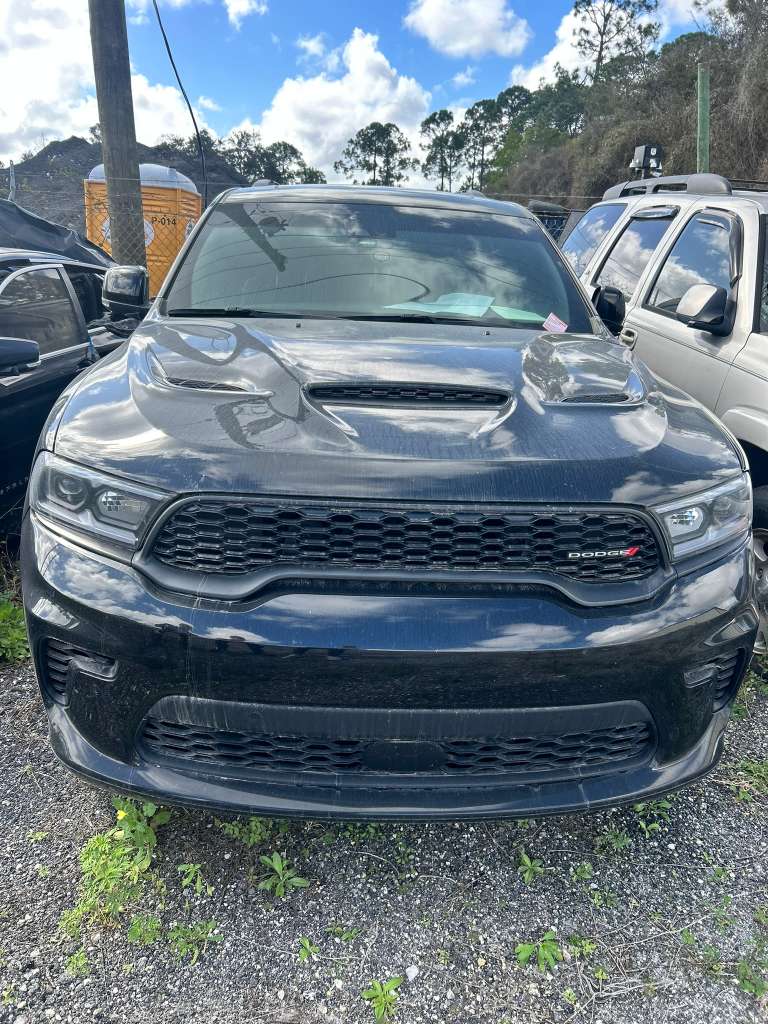
All of this information was available on the day of the accident. Instead, investigators simply searched Flock's cameras for a Dodge Durango and seemingly went with the first one they found, ignoring or not pursuing contradictory evidence and claiming "damage" on a car that had none.
Seven months after the accident, prosecutors would dismiss charges against Isaacs when police arrested Alisa Montalvo, a Deno family friend who had been at the birthday party. When investigators searched Montalvo's car—a red Durango—they found "significant evidence of concealment and damage consistent with this crash." The paint and window tint on the driver's side doors didn't match the rest of the car, one airbag had been removed, and another was "stufed [sic] back into the seat."
Isaacs' arrest was a particularly egregious case, but ultimately, the Flock camera performed as it was asked to; officers' carelessness caused the trouble. Unfortunately, it's far from the first time.
Police Incompetence, Not Flock Mistakes, Is Getting Law-Abiding Citizens in Trouble
In June, Joel Feder and his wife were running weekend errands in their Minneapolis suburb in a brand-new $155,000 Range Rover. As he shifted into reverse to leave a parking space, the car started making noise.
"We maybe backed up two feet," he tells Reason. "All of a sudden, all the sensors go off like [I'm] about to run over something."
Four police cars had converged, pinning them in. Officers, with hands on their guns, ordered them out of the car and patted them for weapons. They said the Range Rover was reported stolen in Los Angeles; Flock spotted it in town two days earlier, and police raced over when the cameras caught it at the department store.
When an officer asked Feder if the car was his, he hesitated: "It's complicated," he replied.
In fact, the car was not his, but it also wasn't stolen: Feder is a journalist who reviews cars for the automotive website The Drive. He had documentation showing the Range Rover was legally in his possession, but that still didn't explain why it was reported stolen.
It turned out the Los Angeles officer who took the stolen vehicle report had only keyed in part of the plate number. Those numbers were also on Feder's tag—along with, presumably, many others across the country—so Flock flagged it. (Worse, the original car wasn't even stolen: The dealer simply lost the license plate and had to report it as a precaution.)
Incidentally, Feder recognized what was happening because The Drive had reported on ALPRs, and he had just interviewed security expert Matt Hurewitz about their privacy implications. "I think broadly, privacy only becomes a consumer concern when something bad happens and they get caught up in it," Hurewitz cautioned.
The Institute for Justice (I.J.) has identified "at least 27 such cases since 2018, with the majority of those happening since 2023." While some resulted from cameras misreading plates, most stemmed from police incompetence.
Chrisanna Elser, a Denver financial planner, received a court summons in September 2025. The officer said she was on camera stealing a package off a front porch. What ensued was a Kafkaesque scene in which Elser insisted it wasn't her, and the officer said he had indisputable proof but refused to show her unless she admitted she stole the package.
In fact, the "evidence" consisted of Flock spotting her truck in town around the time of the theft, and doorbell camera footage of a woman stealing a package and running away. Police only dropped the charge once Elser provided her cellphone tracking data, camera footage from her truck, and video placing her elsewhere at the time of the theft.
In each of these cases, plus numerous others, the cameras did not make the mistake; officers either keyed in a number incorrectly or spent too little effort confirming their first hunch. But they pale in comparison to intentional officer misconduct.
Officers Are Using Flock To Stalk Their Exes
Earlier this year, Milwaukee police officer Josue Ayala resigned after he was charged with attempted misconduct in public office. Over a two-month period, prosecutors say Ayala searched his girlfriend's license plate 124 times, and her ex-boyfriend's plate 55 times, in the Flock database. Each time, Ayala wrote "investigation" as the reason for the search.
"This case is exactly why Flock builds our technology to include immutable, transparent audit trails, so rare cases of potential abuse can be detected, investigated, and addressed," Flock said in a statement provided to local news.
But Flock's safeguards didn't catch Ayala. The ex-boyfriend searched his own plate on haveibeenflocked.com and discovered Ayala had searched it "on numerous occasions," according to court records.
Officers have been caught using ALPRs to stalk or surveil intimate partners at least 39 times in recent years, most of which have occurred since 2024, according to I.J. How many more abuse the system and aren't caught?
Michael Steffman, chief of police in Braselton, Georgia, stalked his ex-girlfriend by searching both her and her daughter's tags hundreds of times. In October 2023, Lee Nygaard resigned as the police chief in Sedgwick, Kansas, amid an investigation into misconduct: From June to October that year, Nygaard searched his ex-girlfriend's plate 164 times—more than once per day, on average—and her new boyfriend's plate 64 times in the Flock database. When conducting the searches, Nygaard listed reasons such as "missing child" and "narcotics investigation," but according to a state revocation order, he later admitted "his feelings and jealousy" were the real reasons.
"It's good that people are finding out that these incidents are happening, because I think for a long time that has been completely inaccessible," van Pelt, haveibeenflocked.com's creator, tells Reason. "Dollars to donuts, this has happened many, many times before with other tools. It just hasn't been transparent in any way."
Indeed, 404 Media reported that an internal memo from a Houston-area police intelligence task force said haveibeenflocked.com "poses a significant officer safety risk," and officers should "be as vague as permissible" when listing reasons for their searches—for example, by simply writing "investigation."
Cops Say Flock Fights Crime. Critics Say It's a Surveillance Dragnet.
Clearly, Flock misuse and abuse takes a toll on its targets. "Every day I do some sort of therapy, whether it's physical activity or with a therapist," Isaacs says. "I have a wonderful family, wonderful attorneys….I wouldn't be here without them." She is suing the FHP over her experience.
Flock's defenders say the system is being used to catch more criminals and reduce crime rates. In an interview with Feder, Flock CEO Garrett Langley said "any level of abuse is unacceptable." But, he added, "over a million cases were solved last year with this technology, and the level of abuse is incredibly low relative to that." Flock also claims its cameras helped locate "more than 10,000 missing persons" in 2025, "totaling more than 27 per day."
Flock says its cameras "are not mass surveillance tools" and "do not and cannot track vehicles, much less individual people." Rafael A. Mangual of the Manhattan Institute similarly dismisses "the notion that local governments are using these cameras to compile long-term logs of Americans' movements."
"I think those talking points are just pure nonsense," says Michael Soyfer, an I.J. attorney. "Cars don't commit crimes, people commit crimes. That's why the cameras are taking pictures of cars and noting the time, location, all of that."
Even if Flock cameras and ALPRs don't literally "track" vehicles, they capture enough information that the distinction becomes meaningless. "The coverage is extensive enough that you can connect the dots and spot patterns in people's movements or even spot when people are going to intensely private, sensitive places," Soyfer adds, "because many cameras are near sensitive places like immigration lawyers' offices, gun stores, places of worship, [and] reproductive health care facilities."
In recent years, departments have shared Flock information with other states and federal agencies. Police in Illinois conducted thousands of searches seemingly on behalf of federal immigration authorities, while Sacramento shared ALPR data with other states, including those that criminalize abortion—even though both places forbid such sharing.
Illinois Cops Gave ICE Access to More Than 5,000 Surveillance Cameras Nationwide
Flock cameras and ALPRs clearly have issues where privacy and civil liberties are concerned. There seem to be only two solutions: better guardrails or fewer cameras.
Last year, I.J. launched the Plate Privacy Project. So far, it has challenged ALPRs in court and proposed model legislation on their use, which, among other things, requires officers to get a warrant to access any data more than 24 hours old.
The Los Angeles Police Department recently dropped its Flock contract when an audit found that in just two months, officers pulled over 161 cars incorrectly flagged as stolen. Other police departments in California, Oregon, and Ohio have also dropped or suspended use of Flock.
Some people have taken matters into their own hands, destroying, sabotaging, and even stealing Flock cameras in their cities. Short of that, citizens can be diligent about the surveillance they're subjected to on a daily basis. Websites such as DeFlock and Atlas of Surveillance let users see what forms of surveillance are in use around them. Haveibeenflocked.com lets users search police data, but it only contains what agencies have seen fit to release in response to specific records requests.
Are legal guardrails enough, or should the cameras come down altogether? "We have a substantial amount of safeguards and guardrails already in place," van Pelt says. "At every single level, every single safeguard that we already have is being ignored and it's failing. I don't know that adding more is going to help."




