The Volokh Conspiracy

Mostly law professors | Sometimes contrarian | Often libertarian | Always independent | Est. 2002

The Volokh Conspiracy

The Question I Would Ask KBJ: "How would you change the Supreme Court confirmation process?"

"Jackson’s experience gives her a perspective into every facet of the process: selection by the president, preparation before the so-called murder boards, meeting with senators and enduring the hearings."

|

Politico Magazine asked several scholars what question they would pose to Judge Jackson. I tried something different:

"How would you change the Supreme Court confirmation process?"

The Supreme Court confirmation process is broken. Nearly three decades ago, then-Professor Elena Kagan described the routine as "a vapid and hollow charade." And to no one's surprise, Kagan and all other Supreme Court nominees refused to answer any questions that could have jeopardized their prospects. Now, it is Judge Jackson's turn to play charades. Yet, she is uniquely suited to address a critical question: How should the Supreme Court confirmation process be changed? Jackson has already gone through judicial confirmation hearings before and is about to run the gauntlet again. Jackson's experience gives her a perspective into every facet of the process: selection by the president, preparation before the so-called murder boards, meeting with senators and enduring the hearings.

I'm fairly certain that Jackson will have thoughts on how the process could be improved. But more importantly, three follow-up questions will reveal how she understands law and politics. First, what should the president look for in a potential Supreme Court justice? Not this president — a president in general. Jackson may explain, indirectly at least, why she thinks she was selected. Second, what specific questions should senators ask a Supreme Court nominee about her record? Certainly Jackson thinks some questions are in bounds. And those questions would shed light on which aspects of Jackson's jurisprudence are fair game for the political process. Third, how should senators decide whether to vote for a nominee? Perhaps she thinks senators should vote for any nominee who meets some minimum qualifications. But she may think something more may factor into the decision — whatever that is, senators should probe further.

If phrased properly, Jackson will find it difficult to dodge these questions. No rules of judicial ethics prevent her from commenting on the confirmation process in the abstract. And through this approach, senators can gain insights into how Jackson understands the seat that she will likely fill for decades.

I look forward to watching the hearings.

Haltura: The Word a Russian Hearing About the Russian Army's Logistics Problems Would Have on His Mind

|

"Халтура," pronounced roughly "hahl-TOO-rah" (accent on the second syllable), means "slipshod, careless work," perhaps sometimes with the subtext of "slipshod, careless work as an institutional way of life." (It also means "moonlighting," but that's a separate matter.)

Well, to be precise, a real Russian would probably have many other words on his mind, too, of varying degrees of vulgarity. But a Russian speaker like me, who left the Russosphere when he was seven, and was raised in an intelligentsia family where the other words just weren't said ….

Ukraine War Music

Black Sun: A Letter to a Brother

The most moving (perhaps because the most intimate) song that I've heard about the war.

|

From Valery Panyushkin, a Russian writer, posted on YouTube Thursday. It's beautiful and heartbreaking, and I very much regret that so little of its power comes through without the rhyme and meter of the language.

Still, here is a highly imperfect translation (adapted from one by Arik Kruglyak). Even if it doesn't work for you, please forward the YouTube link to any Russian speakers you know; I hope they were as affected by it as I was.

Will this letter some day arrive
To Kiev from Moscow?
Will the brother's letter reach his brother
Or at least his widow?
How are you in the basement? How are you, my dear?
They lit the black sun above us and they call the light darkness.

Read More

"*Every* bond between Ukrainians & Russians - familial, cultural, historical - is being broken."

From British journalist Neil Hauer; unsurprising, but still worth reading, I think.

|

From Hauer's Twitter thread:

Something I've noticed over the past week or so here: almost every Ukrainian I spoke to has made it clear that they blame not only Putin, but the average Russian as much (or more) for this war. The view is: we overthrew our corrupt government, and they accept their murderous one.

The amount of animosity from the average Ukrainian towards the average Russian is already huge and growing more with every single new airstrike, every new civilian death. The effects of this war will last for generations.

And I'm saying this from Kharkiv [in the Eastern Ukraine, which is more Russian-speaking than much of the rest of the country -EV]. I think I saw more virulently anti-Russian views here than anywhere else in the country. The sense of betrayal here, of 'how could they possibly do this to *us*', is incredible.

The people we watched crawl out of the rubble today told us their relatives in Moscow didn't believe them. Videos of their destroyed home were met with 'it's a fake' or 'Nazis did it.' *Every* bond between Ukrainians & Russians - familial, cultural, historical - is being broken.

For two poems on this, from 2014 (and consider how much worse things are now), see "Together we christened our children" and "We will never be brothers."

Free Speech

David Lat's "Open Letter to Yale Law Dean Heather Gerken"

|

See here; worth reading the whole thing, but here's an excerpt:

There's been a problem with the intellectual climate at Yale Law School for several years now. Some of it flows from the fact that progressive students ("Progressives") view those who disagree with them—definitely conservatives, and even some moderates—as bad people ("Bad People").

Progressives are free to think that their opponents are Bad People. They can exclude them from social gatherings. They can make Bad People feel unwelcome in affinity groups (already happening at YLS, with members of certain affinity groups being forced to choose between affinity-group and FedSoc membership). They can make fun of Bad People with satirical fliers.

But it's your job, as the Dean of Yale Law School, to tell Progressives that in an academic community based on free expression, there are limits to how much they can act on the view that their opponents are Bad People. Progressives can't shut down duly organized events because they disagree with the speakers. They can't weaponize anti-discrimination policies to punish the protected speech of their opponents. They can't make up and spread lies about professors with unpopular views (or the students who dare to associate with those professors). It's your job, as the Dean of Yale Law School, to remind Progressives of all this—even if they complain, call you "complicit," or say you're a Bad Person too….

It won't be fun in the short term, but over the long term, standing up to the Progressives is in both their interest and your interest. It's in their interest because if and when they become lawyers, they will have to deal with difficult situations and differences of opinion. By sheltering them from difficult situations and differences of opinion in law school, you're doing them no favors when it comes to their legal education and professional development. In the short term, they might dislike or even hate you for it—but over the long term, they will (or at least should) be grateful.

Standing up to the Progressives is in your interest as well. I'm guessing that you, like many law school deans, aspire to serve as a university president someday. A good university president is like the proverbial iron fist in a velvet glove: charming and likable on the outside, strong and firm on the inside. No one, even your critics, questions your ability to be the velvet glove—and a presidential search committee won't either. But you have not (yet) displayed your ability to be the iron fist. Now's your chance.

Another Amusing Dig

You decide how true it is.

|

Thanks to Prof. Glenn Reynolds (InstaPundit) for the pointer.

Free Speech

"The End, at Least Temporarily, of Privately Owned Ukrainian [TV] Outlets"

|

Reuters reported yesterday:

Ukrainian President Volodymyr Zelenskiy has signed a decree that combines all national TV channels into one platform, citing the importance of a "unified information policy" under martial law, his office said in a statement on Sunday.

Deadline (Bruce Haring) wrote:

The move means the end, at least temporarily, of privately owned Ukrainian media outlets in that country. Zelensky claimed the measure is needed to combat alleged Russian misinformation and "tell the truth about the war."

Free Speech

Twitter Suspends Satire Site Babylon Bee for Tweet, "The Babylon Bee's Man of the Year is Rachel Levine"

The tweet was apparently aimed at mocking Time Magazine for calling Rachel Levine its "Woman of the Year."

|

Rachel Levine is an admiral in the U.S. Public Health Service Commissioned Corps, and is male-to-female transgender; Twitter apparently takes the view that referring to Levine as a man—whether or not within satire or ideological criticism—violates its rules "against hateful conduct," which ban "promot[ing] violence against, threaten[ing], or harass[ing] other people on the basis of," among other things, gender identity. (Twitter's policy states that "This includes targeted misgendering or deadnaming of transgender individuals.")

The ban is apparently for 12 hours but only if the tweet is deleted; the Babylon Bee's CEO is refusing to delete the tweet:

For more, see Newsweek (Gerrard Kaonga) and the New York Post (Ariel Zilber), among other outlets.

Of course, Twitter is a private company and thus not constrained by the First Amendment. (Whether or not it could and should be constrained by state or federal statutes is a separate question, but as of now no federal statutes restraining Twitter's discretion on this have been enacted, and the few state statutes that have been enacted are being challenged and have been preliminarily blocked by courts.) But given that the Supreme Court has referred to these sorts of social media platforms as "the modern public square," I think it's worth monitoring what constraints those platforms impose on the expression of various views, whether in satire or otherwise.

Free Speech

Who Decides What Is Taught in Government-Run K-12 Schools?

|

Various states have enacted laws limiting the teaching of "critical race theory" by various government institutions. Florida has recently limited "classroom instruction by school personnel or third parties on sexual orientation or gender identity … in kindergarten through grade 3 or in a manner that is not age appropriate or developmentally appropriate for students in accordance with state standards."

Keith Whittington has written about some of these laws as applied to universities; I'll speak about that in a separate post. But I thought I'd talk more about the big picture, and particularly K-12 teaching at government-run schools (though similar arguments arise as to internal training by government offices and the like).

[A.] Let me start with three hypotheticals, just to put the matter into broader perspective.

[1.] A state tells public schools (and therefore teachers) that they can't teach "critical race theory," defined for instance as "the theory that racism is not merely the product of learned individual bias or prejudice, but that racism is systemically embedded in American society and the American legal system to facilitate racial inequality." (I'm quoting here a North Dakota statute enacted recently.)

[2.] There's a movement to teach students Coastal Elites Theory, a theory that various coastal elites (in national government, higher education, Wall Street, Hollywood, and other such institutions) have been wrongfully exploiting Heartland Americans in what some label "flyover country." This has gone on, the theory goes, from the 1700s to now; "heartland" Americans have resisted it at various times throughout (note the echoes here, for instance, of complaints about New York financiers in Alexander Hamilton's day), but the oppression continues.

Read More

Ketanji Brown Jackson

Some Questions Senators Should ask Ketanji Brown Jackson

George Will and the Washington Post editorial board suggest some good ones. I add a few of my own.

|

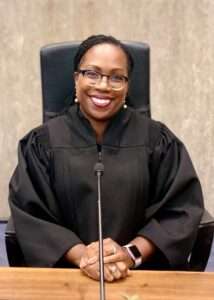
Ketanji Brown Jackson.


This week, the Senate will be holding confirmation hearings for Judge Ketanji Brown Jackson, President Biden's nominee for the Supreme Court. Most of the questions senators ask during judicial confirmation hearings are mediocre, at best. All too many are just grandstanding or playing to the party's base. But conservative columnist George Will and the Washington Post editorial board have both come up with some great questions the Senate would do well to ask Judge Jackson.

Here are some excerpts from Will's column on the subject:

Article I "vested" legislative power in Congress, making Congress the mandatory location of this power. So, presumably there are some congressional grants of discretion to executive agencies that are unconstitutional delegations of legislative power. Is the separation of powers compatible with Congress's constantly giving administrative state entities vast powers to write rules regulating private conduct? Should courts or Congress decide whether Congress violates the non-delegation doctrine?…

The judicially created "qualified immunity" doctrine enables law enforcement and other government officials to avoid accountability for civil rights violations if there is no "clearly established law" forbidding what an official did. This means that even minor factual differences between the case at issue and prior cases effectively immunizes the officer from accountability. Are you open to rethinking qualified immunity?….

In 2004, the U.S. Court of Appeals for the 10th Circuit upheld an Oklahoma law forcing online casket retailers to have (expensive, time-consuming) funeral licenses. The court acknowledged that the law punished one faction (online retailers) to enrich another (funeral directors) but breezily said "dishing out special economic benefits" is "the national pastime" of state and local governments. Should there be some judicial supervision of such practices? Should courts take cognizance of obvious rent-seeking (wielding the law for private economic gain by abridging the liberty of competitors) motives?

Here are some from the Post editorial board's column:

The court's commitment to stare decisis — the principle that the court should only overturn precedent in exceptional circumstances — is increasingly in doubt. When does Judge Jackson believe it is appropriate for justices to nullify previous majorities' judgments? Originalism is ascendant on the court's conservative wing. What are Judge Jackson's views on this philosophy, and how should the court properly interpret the Framers' words?

If past confirmation hearings are any guide, Judge Jackson will strive to say little, particularly about substantive issues that the court might consider. But she should be able to address questions about the court's structure and rules. How does she feel about allowing cameras in the chamber, a long-overdue change? Some Democrats favor packing the court with more than nine justices; this is a bad idea that would hasten the court's politicization. By contrast, establishing an orderly term-limit system for justices might reduce some of the heat. The justice Judge Jackson has been tapped to replace, Stephen G. Breyer, has endorsed this change. What does she think?

I doubt most of these question (with the likely exception of the one about court-packing, which Republicans will probably bring up) will actually get asked. But we can hope.

I have a few additions of my own to  Will's and the Post's lists:

1. One of the most important legal issues of our time is whether constitutional constraints that apply to other exercises of government power should also apply with the same force to immigration restrictions. The text and original meaning of the Constitution make no distinction between constitutional standards that apply to immigration and those that apply to other policies. Yet courts often read such distinctions into the Constitution, nonetheless.  Do you believe immigration policy should be subject to the same level of judicial review as other federal policies, or should it get little or no scrutiny? Why?

2. Over the last two years, many lawsuits have been filed challenging restrictions on liberty enacted in response to the Covid-19 pandemic. Do you believe "public health" policies should get special deference from the judiciary, or should they get "regular" judicial review of the sort applied to other government policies?

3. Many recent cases involving allegations of unconstitutional discrimination on the basis of race, religion, and other suspect classifications have featured claims that facially neutral policies must be struck down because they were actuated by discriminatory motives. The Trump travel ban case is a famous example. But there are plenty of others, brought by litigants from both the right and the left. How should courts assess such claims? What kinds of evidence should they consider in determining whether the government acted on the basis of illegal motivations?

Question 1 is adapted from a suggestion I made as part of a symposium of proposed questions for the Barrett confirmation hearings. Sadly, it wasn't used by the Senate then. But it remains just as relevant today.

Judicial Nominations

Why Supreme Court Confirmation Hearings Serve Useful Purposes

The process has many flaws. But we're still better off with the hearings than we would be without them.

|

Judge Ketanji Brown Jackson. (H2rty, CC BY-SA 4.0 , via Wikimedia Commons)


On Monday, the Senate will begin holding confirmation hearings for President Biden's Supreme Court nominee, Judge Ketanji Brown Jackson. Modern confirmation hearings have many flaws, and there is no shortage of critics decrying recent hearings as useless, ridiculous,  a "circus," or even "verging on the absurd." Many of the criticisms are valid. For example, it's true that many of the questions and statements made by the senators are grandstanding, rather than serious examinations of the nominee's views and qualifications.

Nonetheless, I believe confirmation hearings serve a useful purpose. I explained why in an October 2020 post written at the time the Senate was considering the nomination of Amy Coney Barrett. Most of what I said remains valid today:

[T]he hearings serve useful purposes, despite their severe flaws.  Requiring the nominee to run this gauntlet deters the nomination of cronies and hacks who aren't knowledgeable and smart enough to avoid looking like idiots on national TV, as well as those who lack basic knowledge of constitutional law issues. As [Adam] White puts it, " the process deters palpably unqualified nominations. Presidents know they cannot nominate a judge who cannot convey a basic understanding of the law in response to senators' questions."

The confirmation process also creates opportunities for opposing party senators (and others) to dig for possible ethical and other flaws in the nominee's background. This too helps deter some of the worst potential nominees….

I have significant disagreements with, and reservations about, all of the justices confirmed during my professional lifetime. But all are highly capable jurists, and none have turned out to be simply crude minions of whichever president or party secured their appointment. In the cases of Neil Gorsuch and Sonia Sotomayor, they have even turned out to be significantly better in some respects than I expected at the time….

In addition, the use of outside expert witnesses for and against the nominee allows those witnesses (and the senators) to call attention to important legal issues that otherwise might not get as much air time normally. I saw a small example of this myself, when I testified at then-Judge Sonia Sotomayor's confirmation hearing in 2009, becoming perhaps the first witness at such a hearing to focus on constitutional property rights issues. That I was the person testifying mattered very little. But it was notable that these important questions (eminent domain and asset forfeiture) got some national attention they might not otherwise have received. More recent confirmation hearings have featured insightful testimony on issues such as executive power, and the strengths and weaknesses of originalism and living constitutionalism.

Only a small minority of voters are likely to watch those parts of the hearings that feature outside witnesses (as opposed to the nominee herself). But that minority is still many more people than would pay attention to most such constitutional issues at other times….

And, while most of the questions and answers in confirmation hearings have little value, occasionally they do elicit some useful information. Just this week, Barrett's answers to various senators' questions provided some helpful insight on her likely approach to the Obamacare severability case currently before the Supreme Court….

It's worth noting that Barrett's answers about the Obamacare severability case did indeed prefigure her vote on that case when the Court issued its decision a few months later (she voted against the challenge brought by a coalition of red state governments and, in large part, backed by the Trump administration).

It's fine to beat up on the flaws of Supreme Court confirmation hearings. I sometimes do it myself! But it's also worth remembering that we would likely be worse off without them.

Free Speech

"11 Political Parties in [Ukraine] That Are Linked to Russia Will Be Banned"

|

The Hill (Olafimihan Oshin) reports, citing the Washington Post:

"Given the full-scale war waged by the Russian Federation and the ties of some political structures with this state, any activity of a number of political parties during the martial law is suspended," Zelensky said during his address….

The 11 banned parties included the Opposition Platform-For Life, Shariy Party, Nashi, Opposition Bloc, Left Opposition, Union of Left Forces, State, Progressive Socialist Party of Ukraine, Socialist Party of Ukraine, Socialists Party and Volodymyr Saldo Bloc, according to Axios.

I hadn't mentioned it earlier, because it was so widely reported at the time, but of course Russia has imposed broad speech restrictions, including up to 15 years in prison for calling the invasion of Ukraine a "war" or an "invasion."

Noah Feldman is Haunted By Justice Scalia's Vote in Bush v. Gore

Scalia joined Rehnquist's Bush v. Gore concurrence, which introduced the Independent State Legislature Doctrine.

|

I have long admired Noah Feldman as a sober arbiter of constitutional law. Recently, however, his writings have been littered with elemental mistakes and salacious speculations. Continuing the trend, Feldman's latest column left me scratching my head.

It is titled, "Scalia's Ghost Is Haunting Conservative Justices." The subhead is "The late Supreme Court giant united his philosophical heirs behind theories of originalism and textualism. Now those ideas are becoming a source of conflict." The thrust of the piece is that there is some tension between textualism and originalism, and the Court's conservatives are apparently dividing over that tension.

In a sense, textualism is a form of anti-originalism. It stands for the idea that, to understand a law, you shouldn't ask what the legislature meant to say or what the law's purpose is. You should just look at what the law says. Textualists usually insist they aren't literalists, following the words to absurd conclusions. But the embarrassing truth is that they have no convincing theory of how to avoid following the words literally, because they can't rely on intent or purpose to say what result is absurd and what result isn't.

I've been studying originalism and textualism for some time. I have no idea what Feldman is talking about.

The hook of the column concerns the independent state legislature doctrine. And he posits that in Moore v. Harper, Justices Thomas, Alito, and Gorsuch departed from Justice Scalia's jurisprudence.

Three conservative Supreme Court justices declared this month that the Constitution should be read to give state legislatures unlimited control of electoral procedures, and a fourth said the issue is important enough for the whole court to consider. That's scary because it could eventually block even state courts from stopping partisan cheating.

What's most important about the issue, however, isn't the remote (for now) danger that a majority of the court might make a disastrous decision that undermines democracy. It's the new kind of reasoning that the conservatives are using to reach their preferred result.

It's a legal theory that departs from the method of constitutional interpretation favored by a generation of conservative legal thinkers, originalism. That's the idea championed by the late Justice Antonin Scalia that the intentions of the framers should determine the meaning of the Constitution.

And, of course, Feldman offers heaps of praise on Justice Barrett who did not join her "radical" colleagues.

Justice Amy Coney Barrett's silence hints that she may turn out to be the truest Scalian on the court: textualist in statutes but originalist in constitutional law. You can be sure she looked at the historical evidence before deciding to vote against hearing the case. And it is overwhelmingly likely she saw that the evidence did not support the Alito position. A former law clerk to Scalia, she didn't want to commit the fallacy of being a textualist in a constitutional case.

Feldman continues to try to spin the Court's more moderate members. (Narrator: It won't work.)

Mentioned nowhere in Feldman's column is an important fact:  Justice Scalia, as well as Justice Thomas, joined Chief Justice Rehnquist's concurrence in Bush v. Gore. This opinion was the fountainhead of the independent state legislature doctrine. Rehnquist wrote:

In most cases, comity and respect for federalism compel us to defer to the decisions of state courts on issues of state law. That practice reflects our understanding that the decisions of state courts are definitive pronouncements of the will of the States as sovereigns. Cf. Erie R. Co. v. Tompkins, 304 U.S. 64, 58 S.Ct. 817, 82 L.Ed. 1188 (1938). Of course, in ordinary cases, the distribution of powers among the branches of a State's government raises no questions of federal constitutional law, subject to the requirement that the government be republican in character. See U.S. Const., Art. IV, § 4. But there are a few exceptional cases in which the Constitution imposes a duty or confers a power on a particular branch of a State's government. This is one of them. Article II, § 1, cl. 2, provides that "[e]ach State shall appoint, in such Manner as the Legislature thereof may direct," electors for President and Vice President. (Emphasis added.) Thus, the text of the election law itself, and not just its interpretation by the courts of the States, takes on independent significance.

Feldman wrote a 1,900 word column arguing that Scalia would have rejected the independent state legislature doctrine, but did not mention that Scalia joined the opinion that endorsed that doctrine. Justice Alito's concurrence cited Bush v. Gore as the original case in a string cite!

This case presents an exceptionally important and recurring question of constitutional law, namely, the extent of astate court's authority to reject rules adopted by a state legislature for use in conducting federal elections. There can be no doubt that this question is of great national importance. But we have not yet found an opportune occasionto address the issue. See, e.g., Democratic National Committee v. Wisconsin State Legislature, 592 U. S. ___ (2020); Scarnati v. Boockvar, 592 U. S. ___ (2020); Moore v. Circosta, 592 U. S. ___ (2020); Wise v. Circosta, 592 U. S. ___ (2020); Bush v. Gore, 531 U. S. 98, 112 (2000) (Rehnquist,

C. J., concurring); see also Republican Party of Pennsylvania v. Degraffenreid, 592 U. S. ___ (2021) (THOMAS, J., dissenting from denial of certiorari); id., at ___ (ALITO, J., dissenting from denial of certiorari); Wisconsin State Legislature, 592 U. S., at ___ (GORSUCH, J., concurring).

Of course, the Rehnquist opinion didn't spell out its reasoning in any length. And there are differences between the Bush v. Gore concurrence, which involved presidential elections, and Moore v. Harper, which involved congressional elections. But the basic legal question remains: what is the "Legislature" for purposes of the Elections Clause?

Perhaps the one salient point of this column is to stress how important Justice Scalia remains to our constitutional discourse. Most Justices leave the bench and their precedents fade quickly. Indeed, Randy and I are in the process of removing cases for the 2nd Edition of our 100 cases book. The constitutional canon continually adjusts. But what remains is a Justice's contributions to jurisprudence. Decisions about particular controversies fade, but approaches to thinking about the law remain.


Free Speech

D.C. Judge Allows Subpoena of Facebook COVID Misinformation Blocking Records

|

From a decision in D.C. v. Meta Platforms, Inc. by D.C. Superior Court Judge Anthony Epstein, handed down earlier this month but just posted on Westlaw:

The Court grants the District of Columbia's petition for enforcement of an investigative subpoena to Meta Platforms, Inc., formerly known as Facebook, Inc. ….

Through the Office of the Attorney General ("OAG"), the District has responsibility for enforcing the D.C. Consumer Protection Procedures Act ("CPPA"). OAG is investigating whether Meta made any false or misleading public statements about its efforts to enforce its "content moderation policies" prohibiting misinformation about COVID-19 vaccines in Facebook posts.

OAG issued an investigative subpoena to Meta that seeks, among other things [in Request No. 2], the identities of Facebook users that Meta determined violated its content moderation policies for vaccine misinformation through public posts[:]

{Documents sufficient to identify all Facebook groups, pages, and accounts that have violated Facebook's COVID-19 misinformation policy with respect to content concerning vaccines, including the identity of any individuals or entities associated with the groups, pages, and accounts; the nature of the violation(s); and the consequences imposed by Facebook for the violation, including whether content was removed or banned from these sources.}

Meta has refused to disclose this information. The Court concludes that this request for public posts is a reasonable and lawful exercise of the District's subpoena power and that it is consistent with the federal Stored Communications Act ("SCA") [details of this omitted -EV] and with the First Amendment ….

Read More

More