

Animal wisdom from the great Prof. Herbert Wechsler (Columbia), as quoted by H. Richard Uviller at 145 F.R.D. 149, 180 (1993). I was alerted to this by Judge Robert Sack (2d Cir.), who recalled it from his own experience as a student at Columbia, circa 1963.
The Volokh Conspiracy
Mostly law professors | Sometimes contrarian | Often libertarian | Always independent | Est. 2002

Congressional Staffers Demand Their Bosses Enact Climate Legislation
"We've crafted the legislation necessary to avert climate catastrophe. It's time for you to pass it," proclaim staffers in a letter to Congressional leaders.
CNN reports that Congressional staffers are circulating a letter demanding that Congress enact sweeping climate legislation. The letter has been signed anonymously by over 200 staff from House and Senate offices.
From the CNN story:
In a rare move, more than 200 congressional staffers have sent a letter to Democratic leadership in the House and Senate, demanding they close the deal on a climate and clean energy package and warning that failure could doom younger generations.
"We've crafted the legislation necessary to avert climate catastrophe. It's time for you to pass it," the staffers wrote in a letter, sent to Senate Majority Leader Chuck Schumer and House Speaker Nancy Pelosi on Tuesday evening. The letter, which staffers signed anonymously with initials, was shared first with CNN.
"Our country is nearing the end of a two-year window that represents a once-in-a-generation opportunity to pass transformative climate policy," the letter continues. "The silence on expansive climate justice policy on Capitol Hill this year has been deafening. We write to distance ourselves from your dangerous inaction."
As CNN reports, letters from congressional staff telling members of Congress what to do are uncommon. From the CNN story:
Anonymous letters from congressional staffers criticizing leadership are rare -- especially ones that push for specific legislation -- but staff have spoken out in letters before.
In summer 2020, Black staffers penned a letter to leadership urging action in the wake of George Floyd's killing by a Minneapolis police officer. Over 400 staff members also signed a letter in December 2021 urging House leadership to condemn "incendiary rhetoric" in the workplace after Republican Rep. Lauren Boebert made anti-Muslim remarks against Democratic Rep. Ilhan Omar.
Still, the bulk of letters calling on congressional leadership to act on climate in the last year have come from outside climate advocacy groups.
It is almost as if voters elected the actual members of Congress, rather than their staff.
FIRE Suit Aimed at Protecting Univ. of Washington Professor's Criticism of "Land Acknowledgments"
From the Foundation for Individual Rights and Expression today; you can also read the Complaint, in Reges v. Cauce:
When Professor Stuart Reges challenged the University of Washington's position on land acknowledgements, administrators punished him, undermining his academic freedom. Today, backed by the Foundation for Individual Rights and Expression, Reges sued the university to vindicate his First Amendment right to express his opinion—even if it differs from the party line.
Colleges increasingly promote land acknowledgment statements that recognize indigenous ties to the land on which a college sits. On a list of syllabus "best practices," UW's computer science department encourages professors to include such a statement and suggests using language developed by the university's diversity office "to acknowledge that our campus sits on occupied land." The fact that the statement could be adapted seemed clear—until Reges wrote one that administrators did not like….
On Dec. 8, 2021, Reges criticized land acknowledgment statements in an email to faculty, and on Jan. 3, he included a modified version of UW's example statement in his syllabus: "I acknowledge that by the labor theory of property the Coast Salish people can claim historical ownership of almost none of the land currently occupied by the University of Washington." Reges's statement was a nod to John Locke's philosophical theory that property rights are established by labor.
Does West Virginia v. EPA Doom the SEC's Climate Disclosure Rule? (Updated)
The Supreme Court is skeptical of agency efforts to pour new wine out of old bottles.
The Supreme Court's decision in West Virginia v. EPA undoubtedly constrains the Biden Administration's efforts to reduce greenhouse gas emissions. While the decision does not curtail the EPA's traditional air pollution control authorities, it does make it more difficult for the agency to repurpose provisions drafted to address traditional air pollutants so as to limit greenhouse gases. The decision could constrain other agency efforts to foster climate mitigation as well.
One regulatory proposal sure to get additional scrutiny in the wake of WVA v. EPA is the Security and Exchange Commission's proposal to "enhance and standardize climate-related disclosures for investors." In today's Wall Street Journal, former SEC Commissioner Paul Atkins and former OIRA Administrator Paul Ray make the case that the SEC's proposal is likely to be struck down in light of the WVA decision. According to Atkins and Ray, the SEC is seeking to repurpose pre-existing statutory authority to address a new concern outside of the SEC's core expertise. In other words, it is seeking to pour new wine out of old bottles, and this is something the Court rejected in WVA (as well as in its decision invalidating the OSHA test-or-vax mandate).
From the Atkins and Ray op-ed:
The SEC proposal, like the Clean Power Plan, asserts a new understanding of an old statute to justify itself. In West Virginia the Court found highly probative that the interpretation of the Clean Air Act on which the plan turned was at odds with the EPA's longstanding interpretation of that statute. The SEC disclosure proposal also relies on a new interpretation of old statutes—the Securities Act and Securities Exchange Act—dating back to the 1930s. In nearly every case in which the SEC has used these statutes to demand disclosures in the past, it has claimed that it was doing so because the required information was material—that is, financially significant to the reasonable investor. But the commission does not even attempt to show that all its proposed climate disclosures are material. The Supreme Court is likely to be as skeptical of the SEC's claim to have discovered new powers in an old statute as it was of the EPA's.
The SEC proposal, like the Clean Power Plan, would also vastly expand the issuing agency's regulatory authority. The Clean Air Act gave the EPA power to set emissions standards for particular plants based on the emission controls the plants can implement; the plan would have fundamentally changed that regulatory scheme by allowing the EPA to set limits for the grid as a whole, with little limit to the kind of changes the EPA could force plants to make. So, too, with the SEC's proposal: By departing from the materiality standard, the commission would set itself up to compel whatever disclosures it likes, without any standards against which the need for disclosures may be measured.
Finally, the SEC proposal, like the Clean Power Plan, would adopt a measure that Congress has already considered and declined to enact. In the Clean Power Plan case, the court pointed out that Congress "consistently rejected" revisions to the Clean Air Act to require a cap-and-trade scheme, yet the EPA went ahead with one anyway. The SEC has taken the same approach in its proposed rules. Congress has already once rejected legislation that would have directed the commission to adopt new climate disclosure requirements. The SEC is plunging ahead anyway.
Atkins and Ray are not the first to raise concerns about the legality of the SEC's proposal. Back in April -- before WVA v. EPA was decided -- Stanford law professor and former SEC Commissioner Joseph Grundfest raised similar concerns in a Bloomberg column:
even if the commission's final rules are entirely reasonable, and even if they gain broad support from investors and securities issuers, they will probably never fully take effect. Why? Because courts could easily conclude that the SEC lacks statutory authority to mandate greenhouse gas (GHG) disclosures. That authority might instead belong to the Environmental Protection Agency. . . .
Several commissioners are on record expressing profound concern over climate change's economic and political consequences. They are, in my view, entirely correct about the climate threat. But the same commissioners can't, with a straight face, now claim that climate change doesn't have "vast economic and political significance." Nor can they claim that Congress clearly authorized the SEC to mandate climate emissions disclosures. Those claims are even harder to assert when the Clean Air Act shows that Congress knew how to structure unambiguous climate-related delegations. Ignoring this foundational question of statutory authority is like trying to hide a herd of elephants in a vanishingly tiny mousehole and hoping that no one notices.
Unlike Atkins and Ray, Grundfest supports broader climate reporting. He is simply skeptical that the SEC has the statutory authority to take this step.
More broadly, WVA v. EPA and NFIB v. Dept. of Labor suggest that the Court is likely to be skeptical of the Biden Administration's "whole of government" approach to climate change insofar as it involves deploying statutory authority that was not enacted with climate change in mind. As I discussed here, the Court is wary of agencies repurposing existing statutory authority without congressional approval. This creates a serious obstacle for climate measures that are not authorized by Congress.
Reviewing courts are likely to carefully scrutinize Biden administration initiatives to ensure agencies are exercising the powers given by Congress for the purposes Congress gave them, and will be suspicious when agencies -- whether the EPA, SEC, FERC, or any other -- purports to find new authority to address climate change in old statutes that were enacted with other problems in mind. It will be one thing for agencies to use their traditional authorities in ways that reduce greenhouse gas emissions as a co-benefit. It will be quite another when agencies make greenhouse gas reductions the reason for invoking this previously enacted authority.
UPDATE: On July 13, twenty-four state attorneys general submitted supplemental comments to the SEC arguing that the WVA v. EPA decision "confirms that the SEC should not finalize" its climate reporting proposal.
Today in Supreme Court History: July 13, 1787
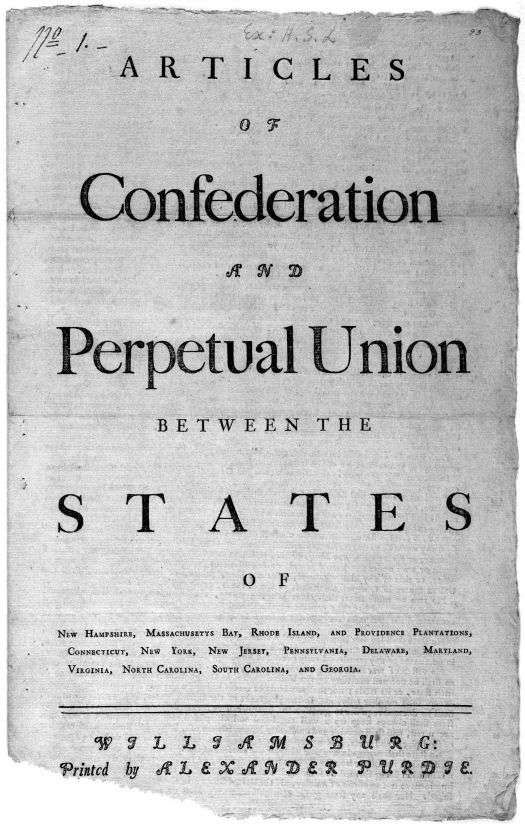
7/13/1787: The Articles of Confederation Congress enacts the Northwest Ordinance.
The Value of Parentheticals in Statutes and the Constitution
Becerra v. Empire Health Foundation presents an exceedingly intricate case about Medicare funding. I won't even try to explain the facts. In dissent, Justice Kavanaugh said the statutory formula is "mind-numbingly complex." Justice Kagan, for the majority, joked "you might be ready to absorb the relevant statutory language (but don't bet on it)." Here, Justice Kagan used a parenthetical, as she often does. But the usage was especially relevant, as this case turned (in part) on how to interpret a parenthetical.
Specifically, the statute uses the parenthetical "(for such days)."
Justice Kagan explained that this parenthetical does not alter the meaning of the statute. And she invokes (gasp) a major-questions doctrine case:
But we cannot understand Congress to have changed the statute's consistent meaning of "entitled to benefits" simply by adding "(for such days)." That slight phrase is incapable of bearing so much interpretive weight. If Congress "does not alter the fundamental[s]" of a statutory scheme "in vague terms or ancillary provisions," then it ordinarily does not do so in parentheticals either. Whitman v. American Trucking Assns., Inc., 531 U. S. 457, 468 (2001). To the contrary, a parenthetical is "typically used to convey an aside or afterthought." Boechler v. Commissioner, 596 U. S. ___, ___ (2022) (slip op., at 5) (internal quotation marks omitted). And nothing about the "(for such days)" parenthetical signals anything different. Empire asks us to read it as transforming the uniform statutory meaning of "entitled to benefits" for the fraction provisions alone. But if Congress had wanted to accomplish that unexpected object, it would simply have said so.
For what it's worth, Boechler was a Barrett opinion that quoted from Garner's Modern English Usage. I, for one, do not disregard Kagan's parentheticals. They usually make me chuckle.
Justice Kavanaugh responds with a textualist argument grounded in the Constitution.
Second, contrary to the Court's suggestion, we cannot brush aside the statutory phrase "(for such days)" simply because that phrase appears in a parenthetical. See Duncan v. Walker, 533 U. S. 167, 174 (2001). Parentheticals can be important, as the Constitution itself makes clear. See, e.g., Art. I, §7 (counting days for bill to become law with "(Sundays excepted)"); Art. IV, §4 (affording federal protection to States on application by the Executive but only "(when the Legislature cannot be convened)").
Art. I, §7, Cl. 2 provides:
If any Bill shall not be returned by the President within ten Days (Sundays excepted) after it shall have been presented to him, the Same shall be a Law, in like Manner as if he had signed it, unless the Congress by their Adjournment prevent its Return, in which Case it shall not be a Law.
Art. IV, §4 provides:
The United States shall guarantee to every State in this Union a Republican Form of Government, and shall protect each of them against Invasion; and on Application of the Legislature, or of the Executive (when the Legislature cannot be convened), against domestic Violence.
I think about the text of the Constitution quite a bit, but I never paid attention to the Framers' use of parentheticals. The usage of parentheticals in the Constitution does not reflect "an aside or afterthought." Kavanaugh's argument is very innovative. And after a quick search I could not find it in Empire's brief, or in any of the (two) amicus briefs. Kudos to Kavanaugh.
There are three other parentheticals in the Constitution:
Art. I, §7, Cl. 3 provides:
Every Order, Resolution, or Vote to which the Concurrence of the Senate and House of Representatives may be necessary (except on a question of Adjournment) shall be presented to the President of the United States
Art. I, §8, Cl. 13 provides:
The Congress shall have Power To …exercise exclusive Legislation in all Cases whatsoever, over such District (not exceeding ten Miles square) as may, by Cession of particular States, and the Acceptance of Congress, become the Seat of the Government of the United States….
Art. 2, §1, Cl. 8 provides:
Before he enter on the Execution of his Office, he shall take the following Oath or Affirmation: — "I do solemnly swear (or affirm) that I will faithfully execute the Office of President of the United States, and will to the best of my Ability, preserve, protect and defend the Constitution of the United States."
These parentheticals are also important. Then again, grammatical conventions shift. I do not know if the usage of the Framers is consistent with modern usage.
Two other stray observations about Empire Health.
First, I think this was the first case in which Justice Thomas assigned a 5-4 opinion to Justice Kagan.
Second, in a few spots, Justice Kagan cited D.C. Circuit opinions that then-Judge Kavanaugh participated in: Hall v. Sebelius (2012) and Northeast Hospital Corporation v. Sebelius (2011).
Justice Scalia's Dissent in Dickerson v. United States Is Vindicated Two Decades Later
Would the current Court have ruled with Justices Scalia and Thomas on Miranda?
Throughout the 1970s and 1980s, the Burger Court limited the scope of Miranda v. Arizona. In Dickerson v. United States (2000), the Rehnquist Court could have halted Miranda altogether. Dickerson involved Section 3501 of the Omnibus Crime Control Act of 1968, which stated that a confession "shall be admissible in evidence if it is voluntarily given." This statute, enacted two years after Miranda was decided, did not require that the suspect be informed of his rights. Dickerson v. United States considered whether Section 3501 was constitutional. Ultimately, three conservative members of the Court — Chief Justice Rehnquist and Justices O'Connor and Kennedy — voted to stand by that landmark precedent. Indeed, these three had previously found that Miranda was wrongly decided.
Justice Scalia dissented, joined by Justice Thomas. They contended that Miranda was not a "constitutional rule" — whatever that is. But more importantly, they identified the limitation of Chief Justice Rehnquist's majority opinion:
One will search today's opinion in vain, however, for a statement (surely simple enough to make) that what 18 U.S.C. §3501 prescribes — the use at trial of a voluntary confession, even when a Miranda warning or its equivalent has failed to be given — violates the Constitution. The reason the statement does not appear is not only (and perhaps not so much) that it would be absurd, inasmuch as §3501 excludes from trial precisely what the Constitution excludes from trial, viz., compelled confessions; but also that Justices whose votes are needed to compose today's majority are on record as believing that a violation of Miranda is not a violation of the Constitution.
Fast-forward three decades. This past term, the Court decided Vega v. Tekoh. Justice Alito states the issue simply in his majority opinion:
Section 1983 provides a cause of action against any person acting under color of state law who "subjects" a person or "causes [a person] to be subjected . . . to the deprivation of any rights, privileges, or immunities secured by the Constitution and laws." The question we must decide is whether a violation of the Miranda rules provides a basis for a claim under §1983. We hold that it does not.
The easiest path would have been to simply say that Dickerson was wrongly decided, and Miranda ought to be overruled. Indeed, I suspect 5 or 6 Justices emphatically agree with these statements. But, there were no votes to abrogate that precedent here--especially after Dobbs. Instead, the Court had to reconcile its decision here with Dickerson. And Justice Alito's majority did so by relying on the precise statement that the Dickerson never made: that failing to give Miranda warnings actually violates the Constitution.
Justice Alito wrote:
At no point in the opinion did the Court state that a violation of its new rules constituted a violation of the Fifth Amendment right against compelled self-incrimination. Instead, it claimed only that those rules were needed to safeguard that right during custodial interrogation.
Alito added:
The Court held that Congress could not abrogate Miranda by statute because Miranda was a "constitutional decision" that adopted a "constitutional rule," 530 U. S., at 438–439, and the Court noted that these rules could not have been made applicable to the States if it did not have that status, see ibid. At the same time, however, the Court made it clear that it was not equating a violation of the Miranda rules with an outright Fifth Amendment violation.
One more:
But the obvious point of these formulations was to avoid saying that a Miranda violation is the same as a violation of the Fifth Amendment right.
Chief Justice Rehnquist said everything but that, as Scalia pointed out. Thus, it was possible for Justice Alito to maintain (1) the fiction that Miranda was some sort of phantasmal constitutional rule and (2) Miranda was not a constitutional right. Once again, the modern-day Court exploits the squishiness of Kennedy-era precedents. Unless a principle was stated clearly, it doesn't count.
In dissent, Justice Kagan quotes over and over (and over) again from Dickerson.
Begin with whether Miranda is "secured by the Constitution." We know that it is, because the Court's decision in Dickerson says so. Dickerson tells us again and again that Miranda is a "constitutional rule." It is a "constitutional decision" that sets forth "'concrete constitutional guidelines.'" Miranda "is constitutionally based"; or again, it has a "constitutional basis." It is "of constitutional origin"; it has "constitutional underpinnings." And—one more—Miranda sets a "constitutional minimum." Over and over, Dickerson labels Miranda a rule stemming from the Constitution.
But Kagan still cannot find the sentence that Chief Justice Rehnquist never wrote.
For good measure, Alito cites a bevy of criticisms of Miranda, which he referred to as a "bold and controversial claim of authority."
Whether this Court has the authority to create constitutionally based prophylactic rules that bind both federal and state courts has been the subject of debate among jurists and commentators. See, e.g., Dickerson, 530 U. S., at 445–446, 457–461 (Scalia, J., joined by THOMAS, J., dissenting); D. Strauss, The Ubiquity of Prophylactic Rules, 55 U. Chi. L. Rev. 190 (1988); J. Grano, Prophylactic Rules in Criminal Procedure: A Question of Article III Legitimacy, 80 Nw. U. L. Rev. 100 (1985); H. Monaghan, Foreword: Constitutional Common Law, 89 Harv. L. Rev. 1 (1975). But that is what the Court did in Miranda, and we do not disturb that decision in any way. Rather, we accept it on its own terms, and for the purpose of deciding this case, we follow its rationale.
If Dickerson came to this current Court, I doubt it would come out the same way. I think Justice Thomas's position would have commanded a majority opinion.
New York Judiciary Law Does Allow Commission To Investigate Judge Who Resigns
The investigation of the soon-to-resign Chief Judge of New York can continue.
Recently, Janet DiFiore, the Chief Judge of New announced that she would resign at the end of August. In June, the New York State Commission on Judicial Conduct served Judge DiFiore with a written complaint that alleged she used her position of proper to influence a disciplinary proceeding.
Can the investigation continue after she resigns? The Wall Street Journal said no:
The formal complaint could have led to a hearing before the commission, which has the power to privately caution judges or issue public admonitions or censures. The commission can also remove judges from office. However, it has no jurisdiction over jurists once they leave office, meaning her resignation effectively ends the investigation.
I don't think that's right. Anticipating this issue, this morning I asked this question of Rebecca Roiphe (New York Law School) and Bruce Green (Fordham Law School). They pointed me to two cases that suggest the Commission can maintain jurisdiction.
First, Matter of Hedges (New York 2013) explained:
* Judiciary Law § 47 provides the Commission and this Court with continued jurisdiction over a judge who resigns from office to prevent the judge from circumventing removal and then seeking judicial office in the future (see Matter of Backal, 87 N.Y.2d 1, 7 [1995]).
Second, Matter of Backal (New York 1995) stated:
That the Constitution was designed to include former Judges within the persons subject to removal for misconduct is apparent from its provisions governing the consequences of removal from judicial office. Article VI, § 22 (h) of our Constitution provides that a Judge "removed by the court of appeals shall be ineligible to hold other judicial office." The grant of continued jurisdiction over a resigned Judge contained in Judiciary Law § 47 provides the Commission and this Court with an indispensable means to enforce the constitutional "ineligibility" mandate against those Judges who, by resigning, might otherwise attempt to circumvent that bar and seek future office to the public's detriment. Moreover, petitioner's position that resignation and a promise not to seek future office clears the slate would encourage Judges to disregard the high standards of conduct they are bound to observe and "avoid the consequences of removal for cause by racing to resign"-- a practice rejected by this Court (Matter of Quinn v State Commn. on Judicial Conduct, 54 NY2d 386, 395). Petitioner's view also ignores the greater institutional goals sought to be achieved by the constitutional provisions governing judicial discipline.
As I read these precedents, the Commission can retain jurisdiction even after the Chief Judge resigns. With this precedent, the Commission can disqualify DiFiore from holding office again in the future. To use an (inapt) analogy, the Senate managed to try President Trump even after he left office, in an effort to prevent him from holding office again in the future. (My views on the Impeachment Disqualification Clause are not relevant here).
Now why did I think to look up this issue? At least two federal judges apparently resigned while they were under investigation for misconduct: Alex Kozinski and Boyce Martin. Under the rules for federal judges, the investigation does conclude upon resignation. But, apparently, New York law operates differently for judges.
It is unclear if former-Governor Cuomo could have been impeached after he resigned. Come to think of it, Sheldon Silver, the New York Assembly Speaker resigned while he was under investigation to avoid removal. I'm sensing a pattern with New York apex officials.
Interesting Defendant Anonymity Opinion in Trademark / Parody / Gun 3-D Printing Controversy
And, even more exciting, there’s personal jurisdiction thrown in.
From Everytown for Gun Safety Action Fund v. Defcad, decided today by Judges Pierre Leval, Barrington Parker & Steven Menashi:
Plaintiff-Appellee Everytown for Gun Safety Action Fund … is the "largest gun violence prevention organization in the United States." … The anonymous defendants have uploaded downloadable files for 3-D printing firearms to Defcad.com, Odysee.com, and thegatalog.com. Pertinent to this appeal, the anonymous defendants have uploaded files bearing Everytown's name, which contain instructions for how to 3-D print gun parts and accessories bearing Everytown marks.
On October 22, 2021, Everytown filed suit against Defcad, Inc. … and the anonymous defendants … [alleging]: (1) federal trademark infringement under 15 U.S.C. § 1114; (2) false designation of origin and unfair competition under 15 U.S.C. § 1125(a); (3) trademark infringement and unfair competition under New York common law; and (4) dilution of the Everytown marks under N.Y. Gen. Bus. L. § 360-L. The defendants contend that the use of Everytown's marks was a parody and therefore non-infringing.
That same day, Everytown applied to the district court for expedited discovery to learn the identities of the anonymous defendants, alternative service, and an order to show cause for why a preliminary injunction should not be entered.
On November 5, the district court granted Everytown's application and entered an order to show cause for why a preliminary injunction should not be issued. The district court further ordered that Defcad, Odysee, Inc., Twitter, and "any third-party service provider" shall "provide to Everytown … expedited discovery, including copies of all documents and records in such party's possession or control relating to … the true identities and addresses of Defendants." Defcad [and the anonymous defendants] moved to stay the order, … [arguing that], "[t]he expedited discovery seeks to immediately unmask parties who have a First Amendment right to engage in anonymous speech."
The district court denied the motion for a stay. The district court held that Defcad lacks standing to assert the First Amendment rights of the anonymous defendants and, in the alternative, that the "objection to the discovery order would fail on the merits." According to the district court, "[a]lthough the Supreme Court has acknowledged that the First Amendment provides some protection for anonymous speech, parties may not use the First Amendment to encroach upon the intellectual property rights of others." Holding that "Plaintiff cannot effectively litigate its claims without obtaining the identities of the infringing parties," the district court denied Defcad's motion for a stay.
"So No Damages for Past Injury, Due to Immunity—and no Injunction to Stop Future Injury, Due to Mootness"
An interesting concurrence by Fifth Circuit Judge James Ho.
From the per curiam in today's Tucker v. Gaddis, signed by Judges Carolyn Dineen King, James Graves, and James Ho:
For years, the Texas Department of Criminal Justice ("TDCJ") has denied prisoner requests to hold religious gatherings for the Nation of Gods and Earths ("the Nation"). Originally, Texas denied such requests on the ground that it perceived the Nation as a racial supremacy group, and that allowing such an assembly would pose a security threat to the prison.
In response, Plaintiff George Lee Tucker II brought this suit against Steve Gaddis, TDCJ's Deputy Director of Volunteer Services and Special Populations, in the hope of vindicating the rights of the Nation's adherents to congregate. The suit was initially filed pro se over half a decade ago. But Tucker began receiving the aid of pro bono legal counsel a few years later.
The State now says that it has promulgated a new policy to govern congregation requests on behalf of the Nation's adherents. As a result, the State contends that this suit is now moot.
We disagree. The new policy merely allows Tucker to apply for a congregation. It does not in fact allow the Nation to congregate. To the contrary, any such requests remain subject to "time, space, and safety concerns." And to date, Texas has never permitted the Nation's adherents to congregate. Nor is there any indication that Texas will allow them to do so anytime soon. So this case is not moot. Accordingly, we reverse….
Here's Judge Ho's separate concurrence:
"Worthy civil rights claims are often never brought to trial." That's because government officials have a number of legal tools at their disposal to avoid being held accountable in the courts.
When a plaintiff seeks money damages, "an unholy trinity of legal doctrines—qualified immunity, absolute prosecutorial immunity, and Monell …—frequently conspires to turn winnable claims into losing ones."
And if a plaintiff foregoes damages and asks for an injunction instead, public officials often try to evade trial by claiming the case is moot: Just stop engaging in the challenged conduct, declare that there's no need for an injunction, and see if enough compliant and deferential judges agree.
So no damages for past injury, due to immunity—and no injunction to stop future injury, due to mootness. Heads I win, tails you lose.
FCC Exceeded Authority in Requiring Broadcasters to Check Sponsors Against Government's Foreign Agent Lists
The D.C. Circuit so held, concluding that the FCC regulation exceeded its powers under the federal Communications Act.
From today's D.C. Circuit decision in Nat'l Ass'n of Broadcasters v. FCC, written by Judge Justin Walker and joined by Judges Cornelia Pillard and Raymond Randolph:
In October 1964, Barry Goldwater's supporters sponsored thirty minutes of television time for an actor named Ronald Reagan to make a closing argument for Goldwater's struggling campaign. The speech—which failed to save Goldwater but launched Reagan on a path to the White House—was introduced with a stock announcement:
The following pre-recorded political program is sponsored by TV for Goldwater-Miller on behalf of Barry Goldwater, Republican candidate for President of the United States.
Today, similar announcements for sponsored radio broadcasts are required by the Communications Act of 1934. To make that announcement, a broadcaster must ask its employees and sponsors for information necessary to determine a sponsor's identity.
Recently, the FCC began to require more. It issued an order mandating that radio broadcasters check two federal sources to verify a sponsor's identity.
Because the FCC has no authority to impose that verification requirement, we vacate that facet of its order….
Mischief Before Ambiguity
Last week I was driving and saw a sign that said "Speed Limit 20 MPH When Children Present." I was driving between 30 and 35 mph, which was fine unless the lower speed limit was in play. But was it? I looked ahead on both sides of the street and saw no children. But there were children in my car! Were children "present"?
I think this illustrates two different approaches to the mischief rule. This is the classic rule of statutory interpretation that directs interpreters to consider the problem precedent to the statute--the "mischief" or "evil" toward which the statute was directed--as part of its context. I explore this rule in a recent paper called The Mischief Rule, and I argue that it should be embraced by textualists.
There is one key point on which readers of the article have divided. I argue that the mischief rule is not just an ambiguity-resolving device--that is, you don't just consider the mischief after you've read the statute and found it ambiguous--but instead you consider the mischief ab initio, both to help you see if there is an ambiguity and to resolve it (as in Bond). Some readers have found that a step too far (e.g., the excellent response by recent Notre Dame grad Timothy Bradley called Getting into Mischief: Reflections on Statutory Interpretation and the Mischief Rule).
But I think the speed limit sign nicely shows why the mischief helps us spot ambiguity, not just resolve it. On the face of the sign, there is no ambiguity. What part of present do you not understand, we might say? The children in the car are just as present as children outside the car, and nothing on the sign restricts the contours of presence to being outside the car. On the other hand, we all know what the mischief is: driving too fast when there are kids, especially when there are lots of kids around a school, increases the risk that the driver will hit one of the kids.
One could hypothesize that the mischief is "kids in the car might be hurt if there's an accident," but we all know that's not the mischief. And the sign shows that to us: if that were the mischief then the speed limit would be different if there are kids in the car (like the highways that have different speed limits for cars and trucks), not just in this one place but even after the driver kept going through it. But the signs are put around schools and perhaps other places where there are likely to be lots of little kids outside the car. We know the mischief. And once we know the mischief, it's clear that there are two ways to read the sign: "20 mph if kids are around outside the car" or "20 mph if kids are around inside or outside the car." And we know the former one fits the mischief.
It's taken longer to explain this in a blog post of course, but it was just a second or two to work through this in my mind--I saw the sign, I knew the mischief, I saw no kids outside the car, and I kept my foot on the gas pedal. Just another day in the life of someone reading texts with the mischief rule.
New York v. United States and Nance v. Ward
Section 1983 should not be read to impose obligations on state legislatures to enact legislation.
Under the Supreme Court's Eighth Amendment jurisprudence, death row inmates have the burden to identify alternative methods of execution that would significantly reduce the risk of pain. And Bucklew v. Precythe (2019) held that prisoners may request a "well-established protocol authorized"--even if that protocol methods are not authorized under state law. Today, several states authorize the firing squad as a method of execution. And, all agree that the risk of pain from a firing squad is far less than the risk of pain from lethal injection. Moreover, a firing squad is far simpler to establish than the elaborate lethal injection protocols.
In the wake of Bucklew, imagine that Congress enacts the following law: all states that permit the death penalty are required to adopt the firing squad as an alternative method of execution. Would this federal law be constitutional? In my view, such a law runs afoul of New York v. United States. Specifically, this federal law commandeers the state legislatures to enact specific legislation, and commandeers the state executives to sign that legislation into law. Such a law would not be a "proper" exercise of federal power because it intrudes upon state sovereignty. (New York, as well as Printz, are Necessary and Proper Clause cases; the Tenth Amendment is only involved indirectly.)
That hypothetical brings us to Nance v. Ward. A Georgia death row inmate wanted to be executed by firing squad. Georgia law authorizes the lethal injection, but does not permit the firing squad. Indeed, to accommodate the prisoner's request, the state legislature would have to enact a new statute, which the governor would have to sign. Then, the state administrative agencies would have to adopt regulations to implement the statute. The Eleventh Circuit, in an opinion by Chief Judge William Pryor, held that the prisoner could not use Section 1983 to accomplish that goal. Indeed, Pryor specifically invoked New York v. U.S.:
If we sanction Nance's decision to proceed under section 1983 by refusing to take the State's law as fixed, we must effectively interpret Nance's complaint as a request for an injunction directing the State to either enact new legislation or vacate his death sentence. By doing so, we invite a collision with more than the habeas statute. Cf. New York v. United States (1992).
Justice Barrett, in her only principal dissent this past Term, echoed Pryor's claims.
The Court finds a way around those requirements with a theory at odds with the very federalism interests they are designed to protect: that an injunction barring the State from enforcing a sentence according to state law does not really bar the State from enforcing the sentence because the State can pass a new law. Unlike the Court, I would take state law as we find it in determining whether a suit sounds in habeas or §1983.
Yet, the majority accepted the prisoner's claim. Indeed, Justice Kagan's majority opinion reads Section 1983--enacted over 150 years ago--as if it mirrored the hypothetical statute I described above.
She breezily assumes that the George legislature can approve the firing squad:
Nance's requested relief still places his execution in Georgia's control. Assuming it wants to carry out the death sentence, the State can enact legislation approving what a court has found to be a fairly easy-to-employ method of execution. To be sure, amending a statute may require some more time and effort than changing an agency protocol, of the sort involved in Nelson and Hill.
Berger v. NC State Conference of the NAACP identifies some of the conflicts that arise when the executive branch and legislative branch of a state are not on the same page.
What authority does Kagan cite to support this proposition?
The Court of Appeals posited that "it is not [a federal court's]place to entertain complaints under section 1983" that would compel a State to change its capital punishment law.981 F. 3d, at 1211; see post, at 3. Except that sometimes it is. One of the "main aims" of §1983 is to "override"—and thus compel change of—state laws when necessary to vindicate federal constitutional rights. Monroe v. Pape, 365 U. S. 167, 173 (1961); see Zinermon v. Burch, 494 U. S. 113, 124 (1990).
Did Monroe really say Section 1983 empowers Courts to "'entertain complaints under section 1983' that would compel a State to change its capital punishment law'"? Here is the relevant passage from Justice Douglas's majority opinion:
The legislation—in particular the section with which we are now concerned—had several purposes. There are threads of many thoughts running through the debates. One who reads them in their entirety sees that the present section had three main aims. First, it might, of course, override certain kinds of state laws. Mr. Sloss of Alabama, in opposition, spoke of that object and emphasized that it was irrelevant because there were no such laws: 'The first section of this bill prohibits any invidious legislation by States against the rights or privileges of citizens of the United States. The object of this section is not very clear, as it is not pretended by its advocates on this floor that any State has passed any laws endangering the rights or privileges of the colored people.'
The word "override" simply referenced preemption. That is, the Ku Klux Klan Act would override contrary state laws--whether embodied in statute, state constitutional law, or common law. Zinermon, which Kagan also cites, makes this point:
In Monroe, this Court rejected the view that § 1983 applies only to violations of constitutional rights that are authorized by state law, and does not reach abuses of state authority that are forbidden by the State's statutes or Constitution or are torts under the State's common law.
Kagan's extension--"and thus compel change of"--does not find any direct support in Monroe. Justice Kagan is usually very careful with precedent, but her citation of Monroe here is loose. Really, the entire opinion turns on this single passage, which lacks support.
Next Kagan makes a related point: after a Section 1983 defeat, the state may have to rewrite a statute.
Or said otherwise, the ordinary and expected outcome of many a meritorious §1983 suit is to declare unenforceable (whether on its face or as applied) a state statute as currently written. See, e.g., Cedar Point Nursery v. Hassid, 594 U. S. ___ (2021). And in turn, the unsurprising effect of such a judgment may be to send state legislators back to the drawing board. See, e.g., Kolender v. Lawson, 461 U. S. 352, 358 (1983).
(Someone is still smarting from Cedar Point.) But choosing to rewrite a statute is different than saying that 1983 "compel[s]" the legislature to preemptively take action. Here, if Georgia takes no action, Section 1983 would be understood to prohibit it from performing any executions. The state is stuck between a rock and a Kagan place.
For the reasons Judge Pryor identified, Kagan's reading of Section 1983 would run into the anti-commandeering principle. Because the text does not command--or even hint--at that result, the statute should not be read to "compel" such a result. The majority opinion in Nance is faulty. Alas, Chief Justice Roberts and Justice Kavanaugh went along with the Kagan-three, thus forming a 5-4 majority opinion.
Yet, the final passage of Nance is a John Roberts special: rule for the prisoner who cannot benefit from the rule.
Finally, all §1983 suits must be brought within a State's statute of limitations for personal-injury actions. See Wallace v. Kato, 549 U. S. 384, 387 (2007). Here, the District Court held Nance's suit untimely under that limitations period. See No. 20–cv–00107 (ND Ga., Mar. 13,2020), ECF Doc. 26, p. 12; supra, at 4. The Eleventh Circuit did not review that holding because it instead reconstrued the action as a habeas petition. Now that we have held that reconstruction unjustified, the court on remand can address the timeliness question, as well as any others that remain.
This sort of whiplash if the Chief's trademark. Indeed, many Section 1983 suits of these sorts will be time-barred. If ever the price of a fifth vote.
Hiring Reputation Management Co. Made Rabbi Limited Public Figure, Making It Harder for Him to Win Libel Case
From Krawatsky v. Avrunin, decided Friday by Judge Christopher Fogleman (Md. Cir. Ct.):
From 2010 to 2015, Plaintiff Steven Krawatsky ("Rabbi K") was a head counselor at Camp Shoresh, a summer camp for children in Adamstown, Frederick County, Maryland. The parents of three boys who had attended the summer camp during that time have alleged that Rabbi K had sexually assaulted the boys. In 2017, Defendant Hannah Dreyfus …, a reporter for The Jewish Week, Inc. …, began investigating the allegations. As a result of Ms. Dreyfus's investigation, on January 17, 2018, Jewish Week published an editorial drafted by its Editor and two articles authored by Ms. Dreyfus.
Rabbi K sued Dreyfus and Jewish Week for various defamation-related claims; the court held, in relevant part, that Rabbi K was a limited purpose public figure, because he had voluntarily injected himself into an existing public controversy:
Status, Conduct, and the Yarmulke Tax
There's a lot going on in Justice Kagan's Marietta dissent.
Marietta Memorial Hospital Employee Health Benefit Plan v. Davita is the sort of case that makes my eyes glaze over. Does a group health plan that does not cover outpatient dialysis for all plan participants violate the Medicare Secondary Payer statute? I have no clue. Justice Kavanaugh wrote an opinion for seven Justices holding that there is no violation. Justice Kagan dissented, joined by Justice Sotomayor, and found there was a violation.
Kagan relied, as she often does, on "common sense." She explained that "Virtually everyone with end stage renal disease—and hardly anyone else—undergoes outpatient dialysis." Therefore, the Court "should not care whether a health plan differentiates in benefits by targeting people with end stage renal disease, or instead by targeting the use of dialysis." That point seems reasonable enough. But to support this proposition, Kagan swings for the constitutional fences.
First, she cites CLS v. Martinez!
When "status and conduct" are proxies for each other, "[o]ur decisions have declined to distinguish" between them. Christian Legal Soc. Chapter of Univ. of Cal., Hastings College of Law v. Martinez, 561 U. S. 661, 689 (2010).
Woah. That citation came from left field (literally). In CLS, Justice Ginsburg's opinion planted this status/conduct "time bomb" to pave the way for gay marriage. Indeed, this passage was cited in the Prop 8 and Windsor litigation. If I had to make a top-ten list of precedents that will be overruled/abrogated soon, CLS would make the cut. That case reached such a sweeping result based on contrived reading of the record. (Fellowship of Christian Athletes v. San Jose Unified School District, a possible vehicle, is currently before the Ninth Circuit on a motion for an injunction pending appeal.)
As if the CLS reference wasn't enough, second, Kagan cites Lawrence v. Texas.
So, for example, we have explained that a penalty for "homosexual conduct" is a penalty for "homosexual persons." Lawrence v. Texas, 539 U. S. 558, 575 (2003).
The Dobbs dissenters insist that Lawrence is in jeopardy--or at least the substantive due process analysis in Lawrence. Then again, the relevant passage from Lawrence--a classic Kennedy mystical aphorism--blends together equal protection and due process because dignity.
Equality of treatment and the due process right to demand respect for conduct protected by the substantive guarantee of liberty are linked in important respects, and a decision on the latter point advances both interests. If protected conduct is made criminal and the law which does so remains unexamined for its substantive validity, its stigma might remain even if it were not enforceable as drawn for equal protection reasons. When homosexual conduct is made criminal by the law of the State, that declaration in and of itself is an invitation to subject homosexual persons to discrimination both in the public and in the private spheres. The central holding of Bowers has been brought in question by this case, and it should be addressed. Its continuance as precedent demeans the lives of homosexual persons.
Kagan's third citation is the most intriguing:
And likewise, a "tax on wearing yarmulkes is a tax on Jews." Bray v. Alexandria Women's Health Clinic, 506 U. S. 263, 270 (1993). The same goes here: A reimbursement limit for outpatient dialysis is in reality a reimbursement limit for people with end stage renal disease.
Bray, a post-Casey case, was written by Justice Scalia. Abortion clinics filed at Section 1985 suit against those who protested at abortion clinics. The clinics argued that the protestors had invidiously discriminatory animus directed at women--after all, only women can have abortions. (Would such a claim even fly today?) The Court rejected that argument. Justice Scalia wrote:
Respondents' contention, however, is that the alleged class-based discrimination is directed not at "women seeking abortion" but at women in general. We find it unnecessary to decide whether that is a qualifying class under § 1985(3), since the claim that petitioners' opposition to abortion reflects an animus against women in general must be rejected. We do not think that the "animus" requirement can be met only by maliciously motivated, as opposed to assertedly benign (though objectively invidious), discrimination against women. It does demand, however, at least a purpose that focuses upon women by reason of their sex—for example (to use an illustration of assertedly benign discrimination), the purpose of "saving" women because they are women from a combative, aggressive profession such as the practice of law.
To support this conclusion, Justice Scalia introduced the yarmulke hypothetical:
Some activities may be such an irrational object of disfavor that, if they are targeted, and if they also happen to be engaged in exclusively or predominantly by a particular class of people, an intent to disfavor that class can readily be presumed. A tax on wearing yarmulkes is a tax on Jews. But opposition to voluntary abortion cannot possibly be considered such an irrational surrogate for opposition to (or paternalism towards) women.
Justice Stevens responds to this point in his dissent:
The limitations of this analysis are apparent from the example the Court invokes: "A tax on wearing yarmulkes is a tax on Jews." The yarmulke tax would not become less of a tax on Jews if the taxing authorities really did wish to burden the wearing of yarmulkes. And the fact that many Jews do not wear yarmulkes—like the fact that many women do not seek abortions—would not prevent a finding that the tax—like petitioners' blockade—targeted a particular class.
Would the proposed tax be a tax on all Jews, or only on those Jews who wear yarmulkes? Stated differently, could a Jewish person who never wears a yarmulke seek an exemption from the tax--would his free exercise rights be substantially burdened? Merely being a Jew does not necessarily entail some obligation to actually wear a yarmulke. I know my post on religious abortion engendered some controversy on this point, but the status/conduct line is not always so clear. I will return to that point in the future.
Finally, we can't talk about Bray without talking about Geduldig v. Aiello (1974). Justice Stewart observed in a footnote that "While it is true that only women can become pregnant it does not follow that every legislative classification concerning pregnancy is a sex-based classification like those considered in Reed, supra, and Frontiero, supra." The Bray majority favorably cited Geduldig. However, Justice Stevens's dissent urged that "Geduldig [should not] be understood as holding that, as a matter of law, pregnancy-based classifications never violate the Equal Protection Clause."
Fast-forward to Dobbs. After the draft opinion leaked, Linda Greenhouse suggested that Geduldig was no longer a precedent. An amicus made the same point. But Justice Alito's majority opinion treated Geduldig and Bray as precedential.
We discuss this theory in depth below, but before doing so, we briefly address one additional constitutional provision that some of respondents' amici have now offered as yet another potential home for the abortion right: the Fourteenth Amendment's Equal Protection Clause. See Brief for United States as Amicus Curiae 24 (Brief for United States); see also Brief for Equal Protection Constitutional Law Scholars as Amici Curiae. Neither Roe nor Casey saw fit to invoke this theory, and it is squarely foreclosed by our precedents, which establish that a State's regulation of abortion is not a sex-based classification and is thus not subject to the "heightened scrutiny" that applies to such classifications. The regulation of a medical procedure that only one sex can undergo does not trigger heightened constitutional scrutiny unless the regulation is a "mere pretex[t] designed to effect an invidious discrimination against members of one sex or the other." Geduldig v. Aiello (1974). And as the Court has stated, the "goal of preventing abortion" does not constitute "invidiously discriminatory animus" against women. Bray v. Alexandria Women's Health Clinic (1993) (internal quotation marks omitted). Accordingly, laws regulating or prohibiting abortion are not subject to heightened scrutiny. Rather, they are governed by the same standard of review as other health and safety measures.
And the Dobbs dissenters did not cast doubt on Geduldig.
There is a lot going on in this paragraph from Justice Kagan's Marietta dissent. A lot is on her mind in this otherwise mundane case.
Short and Sweet Rejection of Anti-Libel TRO Request
Sweet for the defendant, that is.
From Carroll v. Namecheap, Inc., decided yesterday by Judge Lewis Kaplan (S.D.N.Y.) but just docketed this morning:
Plaintiff claims that the defendant hosts a website that has posted "images of Mr. Carroll along with a litany of [unspecified] false and defamatory allegations about him" and, in addition, that the website posts "audio of a surreptitiously recorded phone conversation between Mr. Carroll and his ex-wife [obtained] in violation of Florida eavesdropping law." He now seeks a temporary restraining order barring defendant from "from hosting and publishing content on the website" and a preliminary injunction to the same effect. The application is without merit for a number of reasons including but not necessarily limited to the following:
1. As far as the docket discloses, the defendant has not been served.
2. It is questionable whether the complaint adequately alleges facts that, if true, would establish personal jurisdiction over the defendant, which is alleged to be a Delaware corporation with its principal place of business in Arizona. Indeed, plaintiff claims to be a resident of Florida.
3. A temporary restraining order barring the defendant from hosting and publishing [unspecified] content on the web site would be a presumptively unconstitutional prior restraint violating the First Amendment to the United States Constitution and probably also the Due Process Clause. See, e.g., Nebraska Press Ass'n v. Stuart, 427 U.S. 539, 556-62 (1976); New York Times Co. v. United States, 403 U.S. 713, 714 (1971).
Accordingly, the motion for an order to show cause and a temporary restraining order is denied. Plaintiff may move by notice of motion for a preliminary injunction, bearing in mind that he faces a possibly insurmountable task.
I think the lawsuit against Namecheap, which is only the host and not the author of the allegedly tortious site, is also barred by 47 U.S.C. § 230; but the judge did say, "a number of reasons including but not necessarily limited to …." For more on the case, see the Complaint.
Sig Sauer Libel Suit Bumped from N.H. to Connecticut
A good illustration of how many courts deal with personal jurisdiction in libel cases.
From this morning's decision in Sig Sauer v. Bagnell by Judge Landya McCafferty (D.N.H.):
Sig Sauer's claims relate to a computer-generated animation that Bagnell uploaded to [his] law firm's website and to YouTube. {Bagnell and his law firm are Connecticut residents. Bagnell's practice includes representing plaintiffs in lawsuits against Sig Sauer alleging that Sig Sauer's negligent design and manufacture of the [Sig Sauer] P320 [pistol] allows it to be fired without a trigger pull.} … Sig Sauer alleges that the animation … incorrectly depicts some of the P320's internal geometry. Sig Sauer also claims that the animation makes assertions about the mechanics of the P320 that are physically impossible.
Sig Sauer has moved for a preliminary injunction requiring Bagnell to remove the animation from YouTube, the law firm's website, and "from any other location over which they have control." The preliminary injunction would also restrain Bagnell from publishing the animation elsewhere in the future. Bagnell objected to the motion for preliminary injunction, contending, among other arguments, that the court cannot exercise personal jurisdiction over him and the law firm.
The court agreed that New Hampshire, and therefore the federal court in New Hampshire, lacked jurisdiction over Bagnell:
Foe, a Witch's Curse
Another Ukrainian song I thought I'd pass along (with over 1M page views in a bit over a month and a half): "Foe" ("Враже"), a witch's curse against the enemy; the author is Liudmyla Gorova, and the cover is by Angy Kreyda, with English subtitles. I'm not wild about the video, but I expect some might enjoy it, and it is thematically true to the subject. There's a looser but more poetic English translation here, and the Ukrainian text here.




